In the early hours of October 17, a Canadian citizen was found dead in a Turkish deportation facility.
The Canadian government had not lifted a finger to help her.
Known only as F.J., the 40-year-old woman was detained without charge along with her six children for five years in a prison camp for thousands displaced by military conflict in northeast Syria.
Earlier this year, she escaped to Turkey, where she was charged with membership in an armed terrorist group.
Despite prolonged attempts by human rights advocates to secure her return since 2021, Canadian officials chose not to bring her home, citing unspecified security concerns—even though guidance from the RCMP says that citizens have a Charter-protected right to be brought back to Canada even if facing terrorism charges.
Days before her death, however, she had been acquitted of all charges by a Turkish court and moved to an immigration holding centre pending deportation. She died in the centre under unclear circumstances.
Her death has generated a call for answers and accountability from government officials who had long failed to bring her back to Canada.
It has also placed a renewed spotlight on Canada’s ongoing refusal to repatriate 16 detained citizens (along with four non-Canadian mothers and siblings of Canadian children) held without charge up to eight years in brutal northeast Syrian prisons and detention camps.
Minister of Foreign Affairs Mélanie Joly and Global Affairs Canada office saw the woman as too much of a security risk to return home, despite a report from the UN on her “highly vulnerable” state that advocated for repatriating F.J. and her children as a family unit.
Like many foreign nationals detained in northeast Syria, F.J. had been suspected of involvement with terror organizations without clear evidence, but Canada has a responsibility under the Charter of Rights and Freedoms and international humanitarian law to bring citizens home rather than de facto banishing them to suffer in dangerous overseas detention camps.
Her six children, who were repatriated to Canada in May, had not expected that they would never see their mother again.
In a detailed letter to cabinet ministers Joly and Dominic Leblanc of Public Safety, refugee rights lawyer Hadayt Nazami, human rights law professor Alex Neve and Senator Kim Pate (who met F.J. as part of a 2023 delegation to the region) implored Canada to take immediate steps to investigate the circumstances around F.J.’s death and ascertain whether she was treated improperly by Canadian officials over the past five years.
All three called attention to an internal memo from Public Safety Canada obtained by Global News earlier this year that found Canada was reluctant to repatriate F.J. because there was nothing for the RCMP to charge her with, giving rise to concerns about her “freedom of movement” in Canada.
The potential roles played by Global Affairs Canada officials and the RCMP in events leading up to F.J.’s death recall the troubling history of the involvement of Canadian officials in the overseas detention and torture of numerous Canadian citizens, including Maher Arar, Abdullah Almalki, Ahmad El-Maati, Muayyed Nureddin, Omar Khadr and Abousfian Abdelrazik—the last of whom is currently suing the Canadian government for its complicity in his torture in Sudan.
Canadian citizens in ‘Guantanamo’ conditions
F.J. and her children were among some 50 Canadians who were held for years without charge in a sprawling network of detention sites imprisoning tens of thousands of people—many of them children—by the Syrian Democratic Forces.
The Syrian Democratic Forces are the military arm of the Kurdish Democratic Autonomous Administration of North and East Syria (DAANES), an ostensible ally to Canada in the Global Coalition Against Daesh, an international alliance committed to defeating Daesh/ISIS.
The situation has been described as “Guantanamo on the Euphrates,” both for conditions described by the United Nations as meeting “the threshold for torture, cruel, inhuman and degrading treatment under international law” and because of the absence of an internationally recognized legal regime through which detention can be meaningfully challenged.
The majority of detainees are Iraqis and Syrians uprooted by the mass aerial and ground-level violence unleashed by the Syrian regime’s attacks on Arab Spring protesters, as well as intense bombing by the U.S.-led coalition and the rapid expansion and subsequent retreat of Daesh.
Packed into the prison camps and jails are everyone from Daesh loyalists to trafficked women, Yazidi survivors of genocide and other ISIS victims. There are also several thousand foreign nationals who traveled to the region for a diverse set of reasons: some were humanitarian volunteers who attempted to help civilians as the Assad regime dropped barrel bombs on its people, while others were seduced by the false promise of living under a self-proclaimed “Islamic caliphate” and still others are broadly categorized by security agencies as “radicalized” or “extremist travelers.”
Although some joined in the cut-throat violence of Daesh, many report having regrets the moment they arrived and never took part in atrocities, but being unable to escape.
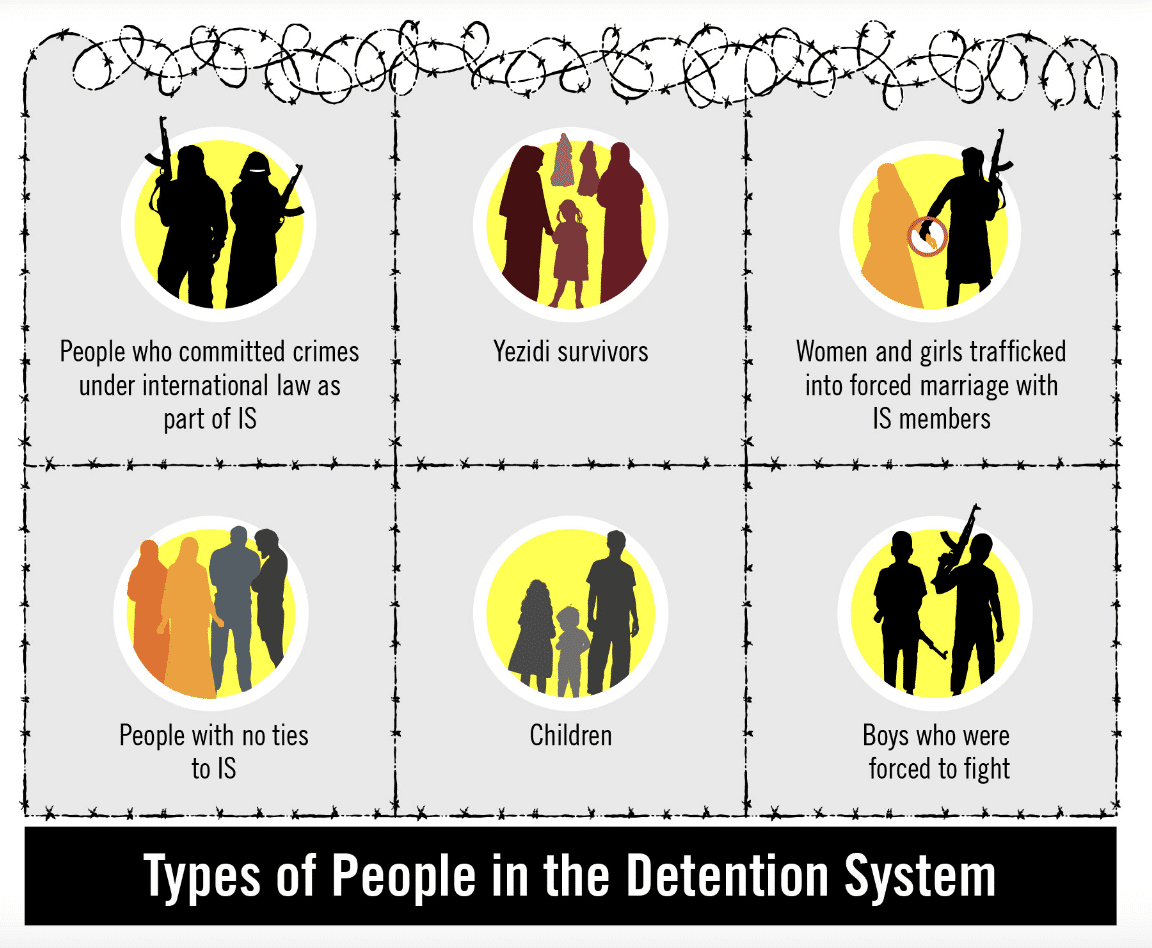
Human rights groups and the United Nations have pointed out that repatriation (which Canadian detainees have sought through both family communication with Global Affairs Canada and court action) is the “only international law-compliant response to the increasingly complex and precarious human rights, humanitarian and security situation faced by those women, men and children who are detained in inhumane conditions.”
As Alex Neve and other delegates reported upon their 2023 return from northeast Syria, Canadian detainees with whom they met expressed an open willingness upon repatriation to face any possible allegations leveled against them “as long as it involved a fair procedure… That, clearly, is not on offer in northeast Syria.”
When dozens of these same detainees had their case heard by Federal Court in 2023, Justice Henry Brown noted that, “Notably the [government] Respondents do not allege any of the Applicants [detainees] engaged in or assisted in terrorist activities. The Respondents affirmed this position at the hearing.” He went on to point out that there was “no evidence” before the Court that any detained Canadians had violated the law.
While thousands of international detainees have been slowly repatriated at the request of Kurdish authorities themselves (often with the support of the U.S.), numerous countries, including Canada, have only brought their citizens home under political pressure and Federal Court challenges.
Forced to choose between her family and their safety
In 2021, Canada invested $2.9 million in the repatriation of Iraqi detainees from northeast Syria. That same year, requests began to be made to repatriate F.J., to little success.
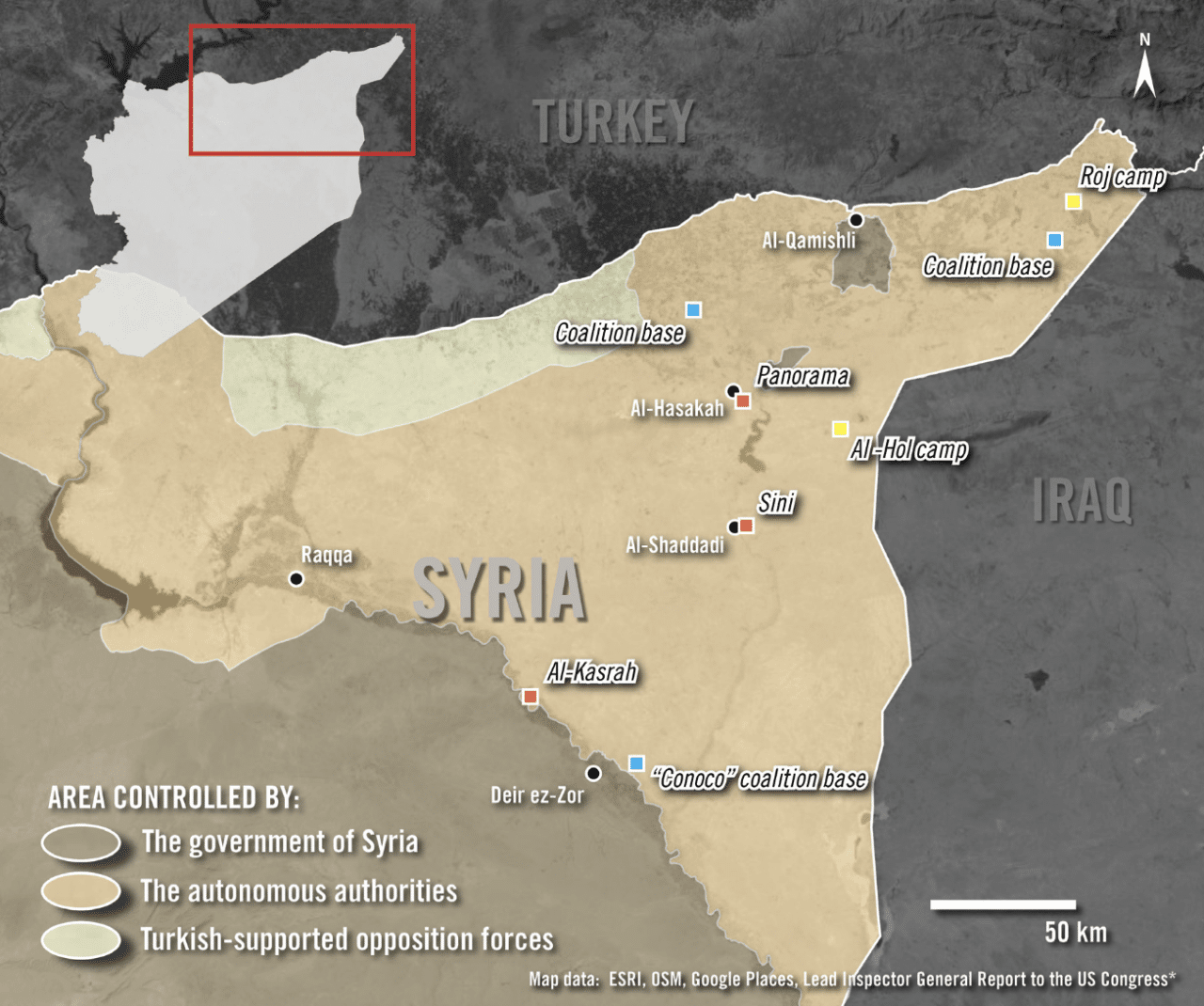
Officials have resisted the return of Canadian citizens despite clear declarations from Kurdish officials that all Ottawa must do is request their return, provide travel documents, and send an envoy or delegate to the DAANES capital of Qamishli for a sign-over, after which the U.S. military would fly the detainees home (as has frequently been done for other detainees, including some from Canada).
Ottawa has gone to court to prevent repatriation, arguing that it has little to no ability to visit the region (even though its officials have shown up for five separate repatriation signing ceremonies) and claiming social services and state security agents would be “overwhelmed” by the return of a small group of traumatized detainees.
However, the federal government’s weak excuses for inaction have been undermined by both the ease with which 32 Canadian women and children have been returned since 2020 and the successful organization and visit of a civil society delegation comprised of Pate, Neve, Nazami and former Canadian ambassador Scott Heatherington ,who visited Canadian detainees and met with Kurdish officials in August, 2023.
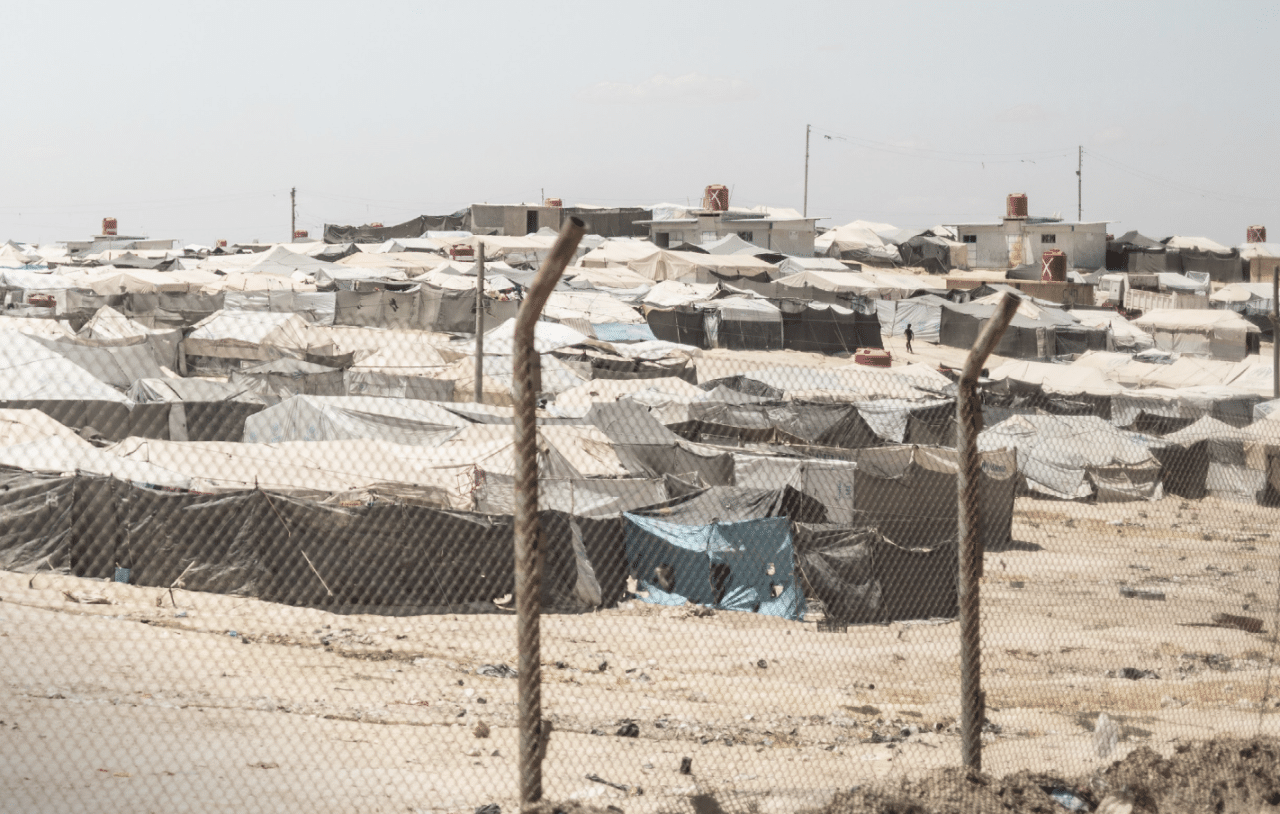
It was during that visit that delegation members met F.J. in the Roj prison camp, which has been described by the European human rights body Rights and Security as a fundamentally unsafe environment “in which physical violence is common and psychological trauma is endemic.”
Neve recalls F.J.’s family as a tight-knit, loving unit, despite being forced to live under the shadow of a Canadian dictate that the children could be repatriated only if they left their mother behind.
F.J. “was essentially being forced to choose between maintaining her close and sustaining relationship with her children or sending them, alone, to Canada,” Neve and other letter signatories wrote.
“She had no assurance as to when, if ever, she would be reunited with her children. At the time we pressed the government to ensure the family would be kept together and repatriated to Canada as a family unit.”
All have been clear that F.J. said she simply wanted to ensure the safety of her children and that she was prepared to respond to any allegations brought against her through a fair legal process in Canada.
‘An extremely traumatized family’
On May 12, 2023, a United Nations Special Rapporteur delivered a disturbing report to the Canadian government, detailing F.J. and her children’s deteriorating mental and physical health and requesting a response within 60 days.
That UN report found “an extremely traumatized family in very poor health,” noting F.J. and the children had undergone a myriad of injuries and health issues, including abscesses, anaemia, calcium deficiencies and recurring bouts of hepatitis.
Both F.J. and the children were described as dangerously underweight, with the UN noting that three had parasites and worms affecting their digestion. All of the children were experiencing severe separation anxiety, and two of them would wake several times each night for fear that their mother had disappeared.
The UN reports that Canada had assessed the children as being eligible for repatriation, but not their mother, leading the rapporteur to remind Canadian officials that “preventing family separation and preserving family unity are essential components of the child protection system.”
Indeed, given “the immense closeness and attachment that they have to their mother as the only element of stability in their lives,” the report continued, separation “would cause these young children irreparable trauma.”
While Canada couched its offer to F.J. as seeking her permission for family separation, the UN Rapporteur noted consent to such an action in her current situation “can never be considered as meaningfully procured” and that considering it as such “could amount to forced and arbitrary separation, a clear violation of international law.”
Canadian officials did not respond to the report.
In June 2023, Canadian officials informed F.J.’s then-lawyer that she was considered a threat to public safety and national security because of her alleged “extremist ideological beliefs” which “may lead her to act in a violence [sic] manner that would pose a security threat in Canada and the government has no ability to ensure that no such conduct occurs.”
The sharp contrast between that dramatic assessment—factual justification for which was never provided—and the UN’s description of F.J. as a “disabled, wounded and highly vulnerable mother” raised serious questions about the baselessness of Canada’s security concerns about F.J.
An internal security memo from Public Safety Canada released to Global News sparked additional doubt.
While it is unclear if the RCMP or Canadian Security Intelligence Service (CSIS) had directly questioned F.J. before the memo was released, the memo revealed that state security officials’ real concern was that they lacked evidence to charge her with anything.
In Kafkaesque language, the memo noted that “in the absence of a charge package or peace bond, F.J. would have freedom of movement upon return to Canada.”
It was unclear how officials believed, without evidence, that someone in such rough shape could pose any threat in Canada, where the broad suite of readily accessible security legislation could have been employed to lay charges or apply for a peace bond, as it has been in the cases of several other repatriated female detainees.
Charter rights call for return of detainees
Despite recommendations from the UN and efforts from F.J.’s advocates, Ottawa remained firm in its refusal to repatriate her family as a unit.
When a U.S. military flight brought them back on May 7, eight months after the delegation visit, the six children were separated into units of two in a series of foster families.
Ironically, a statement from the U.S. Secretary of State that coincided with their arrival included the hope that “thoughtfulness and flexibility” would be employed as nationals are repatriated from Syrian detention “to ensure that to the maximum extent possible family units remain intact.”
The children’s arrival seems to have been part of a plan that F.J.—frustrated with the obstacles Canada placed in the way of her Charter-guaranteed right to return—had conceived in an attempt to reunite her family in Canada.
According to the letter from Kim Pate and others, F.J. likely escaped from the Roj camp several months earlier “out of desperation” and seemingly with the goal of getting travel documents from a Canadian mission in Istanbul or Ankara. She was arrested and detained at the Tarsus Closed Women’s Prison by Turkish authorities on June 14.
Pate and others note that once F.J. escaped from the Roj camp, Canadian officials took “fairly swift steps to then facilitate the repatriation of the children to Canada.”
F.J. received Canadian consular visits on July 16 and October 1, and Pate and others believe that she may have been interrogated by the RCMP on one or more occasions.
Following her acquittal on the charges of belonging to a terrorist group (no small achievement in Turkey, whose judiciary is generally unfavourable to such defendants), F.J. was apparently sent to an immigration holding centre to await deportation.
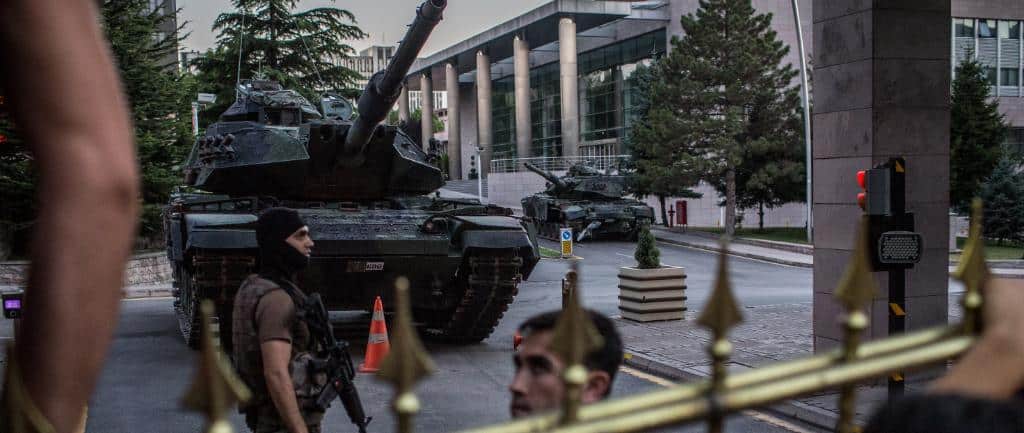
Within 48 hours, she was dead of what Turkish officials claim was a heart attack, even though F.J. was just 40 and had no history of cardiac problems.
Pate, Neve and Nazami have serious questions that they believe should be part of the inquiries made by an independent investigator.
As well as an independent autopsy, they want answers from the Canadian government on what F.J. may have been told about possible criminal charges that would be laid against her in Canada or the U.S. (and whether she was informed of her right to counsel).
They also want to know the legal basis on which F.J. was denied repatriation with her children and how that squares with Canada’s obligation under international human rights law to ensure the best interests of the children, as well as an RCMP briefing document that advises, “The Canadian Charter of Rights and Freedoms guarantees Canadian citizens the right to return to Canada.”
“Therefore, even if a Canadian engaged in terrorist activity abroad, the government of Canada must facilitate their return to Canada.”
Because F.J. had both a right to return to Canada and significant support from the UN for her repatriation as part of a family unit (as happened with other Canadian women and children in similar situations), the decision by Canadian authorities to keep her in a desperately high-risk situation raises serious questions that require investigation.
‘Will my son be next?’
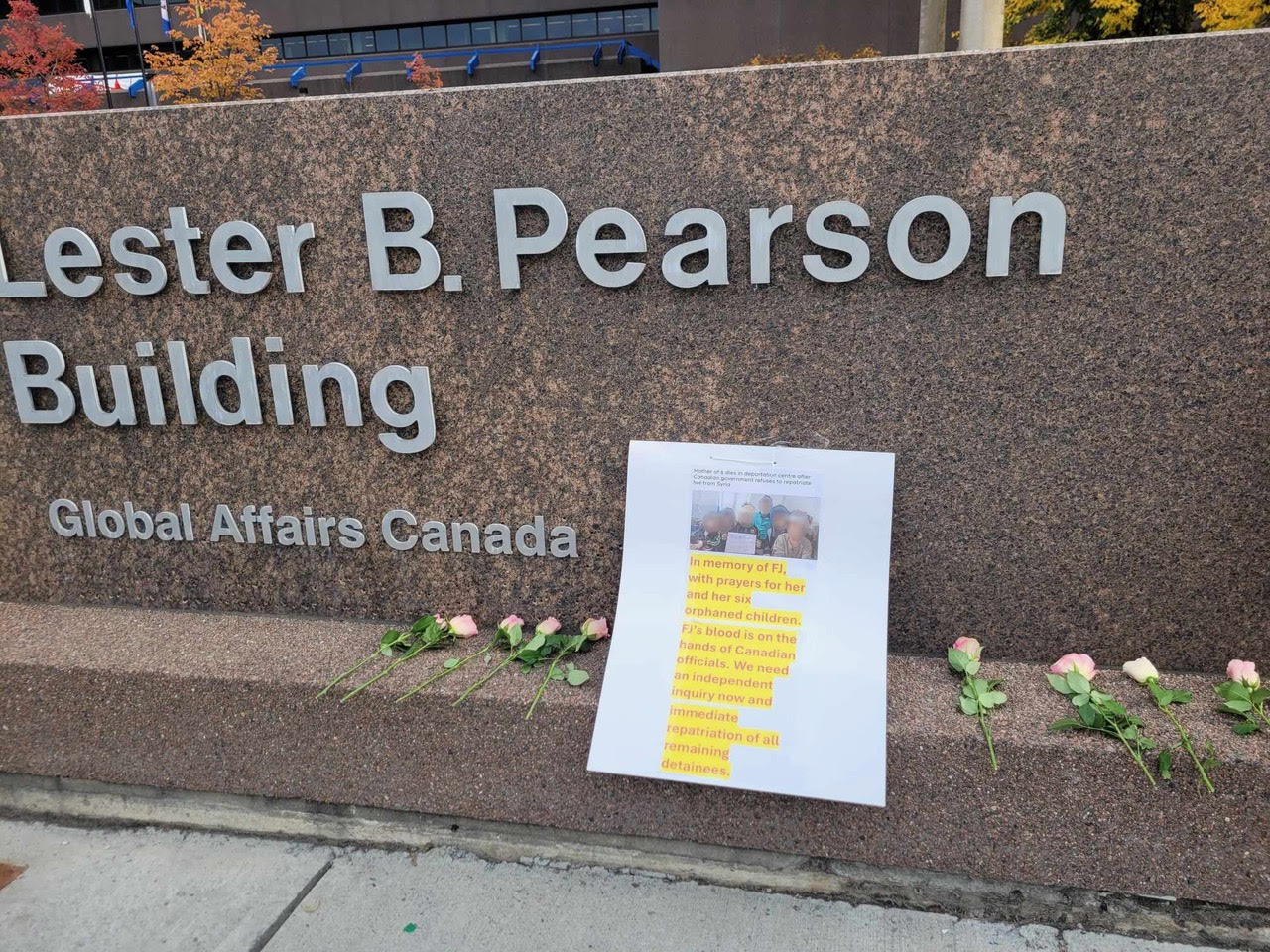
On October 25, Sally Lane, the mother of the longest-held Canadian detainee in northeast Syria, Jack Letts, held a vigil at the entrance to the Global Affairs Canada (GAC) building in downtown Ottawa, where she laid flowers at a makeshift memorial for F.J., along with a sign dedicated to her memory and calling for an independent inquiry.
Lane also delivered a letter as a gaggle of security officers warily warned her against placing flowers on the property.
“We have warned for years that a Canadian will die while this government comes up with one pathetic excuse after another to avoid its clear responsibility to bring our loved ones home,” Lane told a GAC staff member who came out to receive her envelope. “Will my son be next?”
The Supreme Court of Canada refused to consider a hearing on her son’s case and those of three other male detainees in November 2023. Their legal team’s rare application for reconsideration was submitted in March with an urgent plea for an expedited hearing. Last Friday, the Supreme Court declined once again.
“Do you know what it is like to live with that fear for almost eight years?” Lane continued.
“If you have concerns about [their alleged actions], bring them home, end their cruel arbitrary detention, and charge them in a fair and open judicial proceeding. Leaving them there to rot and die because you’re afraid that the monster you have made them out to be is in fact someone who may not have done anything wrong, is a complete abdication of your legal obligations.”
F.J. was buried last week. Following her funeral, Green Party MP Elizabeth May asked if the Liberals would commit to an independent investigation and repatriation for the remaining detainees.
Joly’s parliamentary secretary, Rob Oliphant, offered a boilerplate non-response, declaring his thoughts are with “children who have already endured so much in this situation.” He noted that this situation would be treated with the “utmost seriousness and the sense of urgency it absolutely deserves,” but declined to give further details.
Asked a similar question during an unrelated media conference the following day, Joly told reporters, “We absolutely need to shed light on what happened… We owe [her children] the truth and, not only that, we owe them support. And so they can personally count on me to make sure that that is a priority of mine and of my team.”
Joly failed to outline how the search for truth will ensue. Questions remain about whether Canada will appoint an independent investigator. It is not yet clear whether officials will be sufficiently haunted by this tragic outcome to heed the calls of international human rights organizations, the United Nations, the U.S. State Department, and a parliamentary committee to end the exile of its remaining detained citizens in northeast Syria.

I often hear that I’m lucky to have a full-time job in journalism.
Critical, bold journalism that isn’t beholden to media monopolies should be the norm—not the exception.
By supporting The Breach, you’re supporting a more robust, progressive media. Join us today.
– Katia Lo Innes, Associate Producer, The Breach
Immigration | Canada deporting highest level of migrants in a decade, despite promises to let more stay
Immigration | Deportation of frontline worker shows violence of Canada’s immigration state
War | Canada hasn’t reckoned with its bloody legacy in Afghanistan

1 comment
Comments are closed.
I see that you are still advancing the discredited position that the attempted coup against Syria in 2011, part of a series of imperialist attacks on states refusing to obey US orders, arose from
“… mass aerial and ground-level violence unleashed by the Syrian regime’s attacks on Arab Spring protesters ..”
We really don’t need another outlet for propsaganda almost indistinguishable from the government’s.