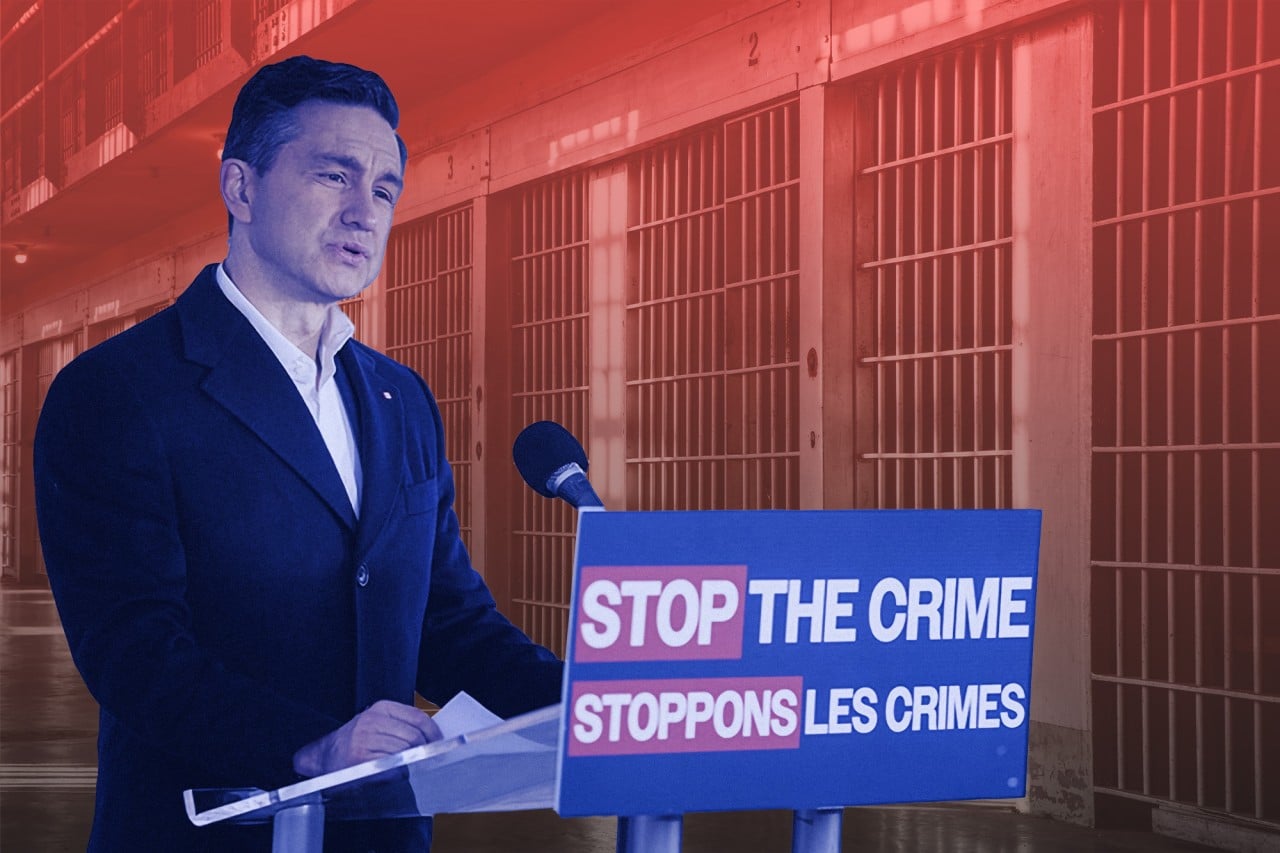
Conservative leader Pierre Poilievre is determined to put more people behind bars if he becomes prime minister.
Poilievre and the Conservative Party of Canada claim that Canada’s criminal justice system is too weak to deter and punish people who break the law. They want us to believe that more incarceration equals more safety.
But the Conservative party rarely talks about the cycles of harm and dysfunction that result from locking people up.
Its proposals for changing the justice system are not evidence-based and will not make the country safer. What they will do is put more strain on the jails and prisons that have become overcrowded, inhumane, and dangerous warehouses for people who are destined to return to the community.
Poilievre has worked tirelessly to undermine the presumption of innocence of those awaiting trial and to suggest that prisoners deserve any harsh treatment they receive.
But as criminal lawyer and advocate Michael Spratt has pointed out, in Canada, “we send people to jail as punishment, not for punishment.” By ignoring this distinction, Poilievre’s rhetoric only makes the country less safe in the long term by destroying people’s mental health, cutting their family and community bonds, and terminating their employment and housing.
The harsh punishment of prisoners is no substitute for a safer society. But Conservatives seem to be counting on voters being scared and angry enough to take whatever they can get.
Poilievre doubles down on failed policies
Poilievre’s plan to expand mandatory minimum sentences, escalate the failed war on drugs, and restrict bail and parole opportunities reflects the same approach adopted by the Conservative government of Stephen Harper, under which Poilievre served as a cabinet minister.
It didn’t work then. While the government jailed more people during the Harper era, the trends for criminal offenses in Canada stayed the same. People who study incarceration say this is because federal government policy—which mostly deals with the aftermath of alleged crime—is only one factor in a complex issue.
But Conservatives have no new ideas on criminal justice. Their current agenda picks up where Harper left off a decade ago and seeks to undo many of the modest reforms the Liberals enacted under Justin Trudeau.
Harper’s introduction of mandatory minimum sentences amounted to a renewed war on drugs, and it expanded the disproportionate numbers of Indigenous and Black prisoners.
The 2024 Black Justice Strategy notes that between 2007 and 2017, “drug offences accounted for 75% of offences punishable by a mandatory minimum penalty for which offenders were admitted to federal custody.” And the imposition of mandatory minimums led to the over-representation of Black people in correctional facilities, the report says.
Poilievre has also boasted that it was the Conservative government of Stephen Harper that accepted Indigenous community demands for a Truth and Reconciliation Commission in 2008. Yet his push for mandatory minimums, and for fewer opportunities for parole and serving criminal sentences in the community, directly contradicts several of the TRC’s 94 Calls to Action.
Instead of heeding these lessons, Poilievre is promising to enact “mandatory life sentences on anyone involved in the trafficking, production and distribution of over 40 mg of fentanyl.” He says this will put “fentanyl kingpins” in prison forever.
But, as legal observers and advocates have pointed out, that would amount to locking up many fentanyl users.
Benjamin Perrin, a law professor and former Harper government advisor, has noted that 40 milligrams of fentanyl—while potentially lethal—is an amount small enough to be considered for personal use. Poilievre’s plan, Perrin says, “would capture people who are sharing small amounts of drugs with one another.”
The Conservative leader also plans to limit prisoners’ access to bail. But many legal experts suggest such measures may be unconstitutional, as Charter rights guarantee that people cannot be denied bail without a just cause.
Stuffing more people into overcrowded spaces
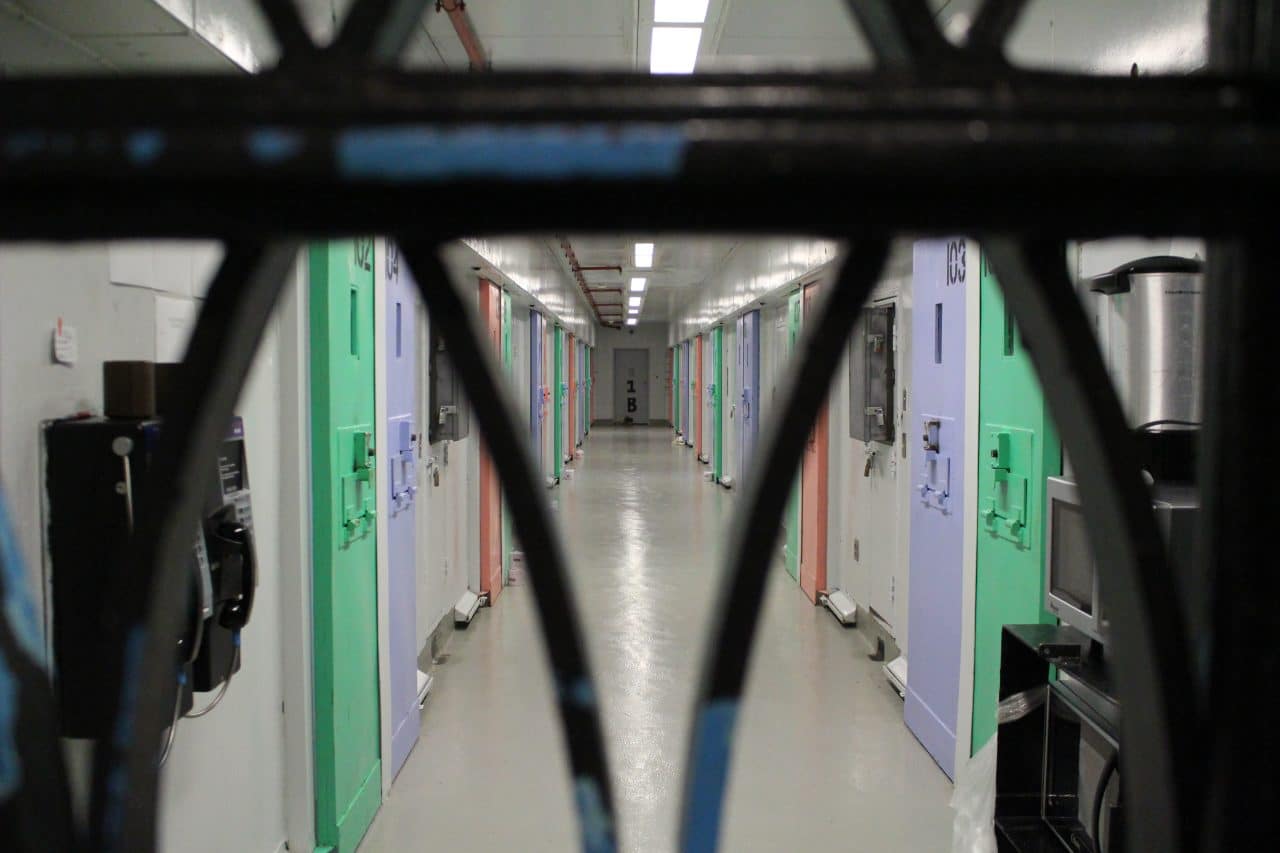
Many of Canada’s jails and prisons are already crowded, unsanitary, and lacking programs and supports that would help prisoners reintegrate after losing their freedoms.
Deaths in custody are a regular occurrence, and they are often shrouded in secrecy and bureaucracy. The Tracking (In)Justice project, a public database of custody deaths, says the average age of a person who died in a Canadian correctional facility over the past two decades is 44.
Many facilities have resorted to “double-bunking,” where two prisoners share a cell designed for one person. During the early days of the COVID-19 pandemic, the virus ravaged populations of prisoners who couldn’t practice social distancing or adequate sanitation.
Double-bunking in federal prisons decreased during this period, as the Correctional Service of Canada focused on releasing more prisoners to finish serving their sentences in the community.
But in recent years, rates of the practice have been returning to pre-pandemic levels.
Things are equally perilous at the provincial level. Some facilities like Maplehurst in Ontario have resorted to triple-bunking inmates. Overcrowding and filthy conditions are so bad in some Ontario jails that judges are giving prisoners credit for more time than they’ve actually served.
Perhaps worst of all, many people who end up in Canada’s jails and prisons have already been dealing with poverty, unemployment, homelessness, and struggles with their mental health.
Incarceration has long been a cover for this country’s failures in providing for people’s basic needs. It’s already very hard for a person to leave the correctional system in better shape than when they entered.
Punishment will not lead to safety
Poilievre has spread many falsehoods to justify his vision of a vengeful justice system.
He has said 40 people in Vancouver were responsible for 6,000 arrests in the city in a single year: not true.
He has blamed the Liberals for serial killer Paul Bernardo’s transfer to a medium-security prison, and claimed they enacted a law “that gives mass murderers the chance to play hockey in medium-security prisons.” That was also false.
Poilievre has also said the previous government enacted “automatic bail for repeat, violent offenders.” It did no such thing, but all these accusations help to explain the Conservative approach to criminal justice.
It’s possible that Poilievre is ignorant of the role that courts play in criminal justice. More likely, though, Poilievre is appealing to people who don’t understand the extremely complex court system, or who just don’t care.
Decisions on bail, sentencing, early release, parole, and serving sentences in the community are subject to decades of court precedent, or jurisprudence. In our system, the whims of the government of the day, or the tempers of the population, are not supposed to decide a prisoner’s fate.
But, to hear it from Poilievre, reckless governments of the past have simply ignored public safety in favour of being soft on criminals. His brand of “common sense” Conservatism is always starting fresh, always framing notions of harsh punishment as new and courageous.
And by tossing in references to “violent offenders” while talking about crime in general, Poilievre primes his audience to react with fear instead of reason.
His bogeyman approach paves the way for an agenda that is often incoherent and counterproductive, because the results do not matter. We have to do something to address crime—preferably something severe—even if it hinders safety and the reintegration of prisoners.
In 2023, McGill University lecturer Terry Newman said Poilievre had an “incurious” attitude toward criminal bail.
“All sentences end at some point, after all, even if the offender was refused bail,” wrote Newman. “What happens then?”
It’s unlikely that Poilievre, now in the midst of an election campaign, will develop a curiosity for criminal justice policy. He is offering punishment as a substitute for safety, and is apparently hoping voters will be too angry or scared to tell the difference.

“We need media that enlarges the sense of what’s possible.”
Naomi Klein, journalist and author
Want to support hope-fuelled journalism? Become a sustaining member.
Municipal Politics | ‘Out of control’: Mississauga mayor criticizes local police budget

Heather Reisman | In stunning pre-dawn raids, Toronto police ‘terrorize’ Palestine activists

Abolition | What if there were no prisons or police?

2 comments
Comments are closed.

45% of all male killers are Indigenous men and their victims are 97% indigenous men and women
Rape is rampant on 1st Nations
Perpetrators are Indigenous men.
Treaty 3 women claim the male leaders are involved in sexual violence
Repeat offenders are released into the community to re-victimize.
In Kenora court – 8 months for rape and a violent assault (kicked in the head) then released into the community.
Perhaps ask the female INDIGEOUS victims whether the men killing and raping in their communities should be given a mulligan (Gladue) for their crimes.
So what is your solution? Clearly the Liberal’s solution of removing mandatory minimums, more readily available bail and putting resources into confiscating legally purchased firearms has failed miserably. So, again, what is your solution. The Breach is very good at pointing out flaws and criticizing the Conservatives but not very good at proposing solutions to problems like violent crime involving firearms.