Content warning: This story contains graphic and disturbing details.
Two Crown prosecutors who were widely criticized for their role in a 2015 trial that saw the accused murderer of Cindy Gladue acquitted have been appointed as judges to the Alberta Court of Justice.
The prosecutors, Carrie-Ann Downey and Carole Godfrey, were part of the team that infamously displayed Gladue’s vagina in the courtroom as evidence. Both were appointed to the bench by Alberta’s governing United Conservative Party (UCP), with Downey’s appointment starting April 17 and Godfrey’s appointment having started in April 2020.
One Indigenous lawyer says that people using the justice system in Alberta, especially if they’re Indigenous women, need to be made aware of the judges’ history.
The Breach sought comment from Downey and Godfrey through the court and did not receive responses from the judges.
But a spokesperson for the Alberta Court of Justice said that the court does not comment on individual appointments but, “Justices of the Alberta Court of Justice come from diverse, professional and personal backgrounds and are expected to approach cases fairly, impartially, and according to the law.”
Cindy Gladue was a 36-year-old Métis and Cree woman and a mother of three children. Friends have said she “lit up the room with her loving, joyful spirit.”
She was found dead in a hotel bathroom in Edmonton in June 2011. The cause of death was blood loss from an 11-centimetre, blunt-force wound to her vaginal wall.
Bradley Barton, a truck driver from Ontario, was arrested and charged with first-degree murder and manslaughter in Gladue’s death. Downey and Godfrey were the two trial Crown prosecutors for the original trial.
Lawyers with at least 10 years at the Alberta bar can apply to become a provincial judge. The justice minister then appoints judges to vacancies from the list of recommendations made by the Alberta Court of Justice committee.

Prosecutors made mistakes, used prejudicial language
Not only were Gladue’s most intimate body parts put on display as evidence, a first in Canadian history, but Gladue was repeatedly described as a “prostitute” by the prosecutors.
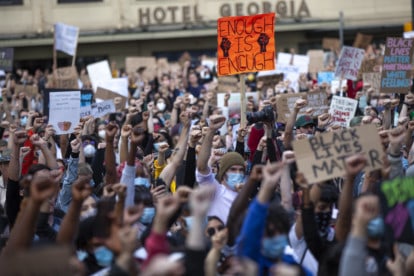
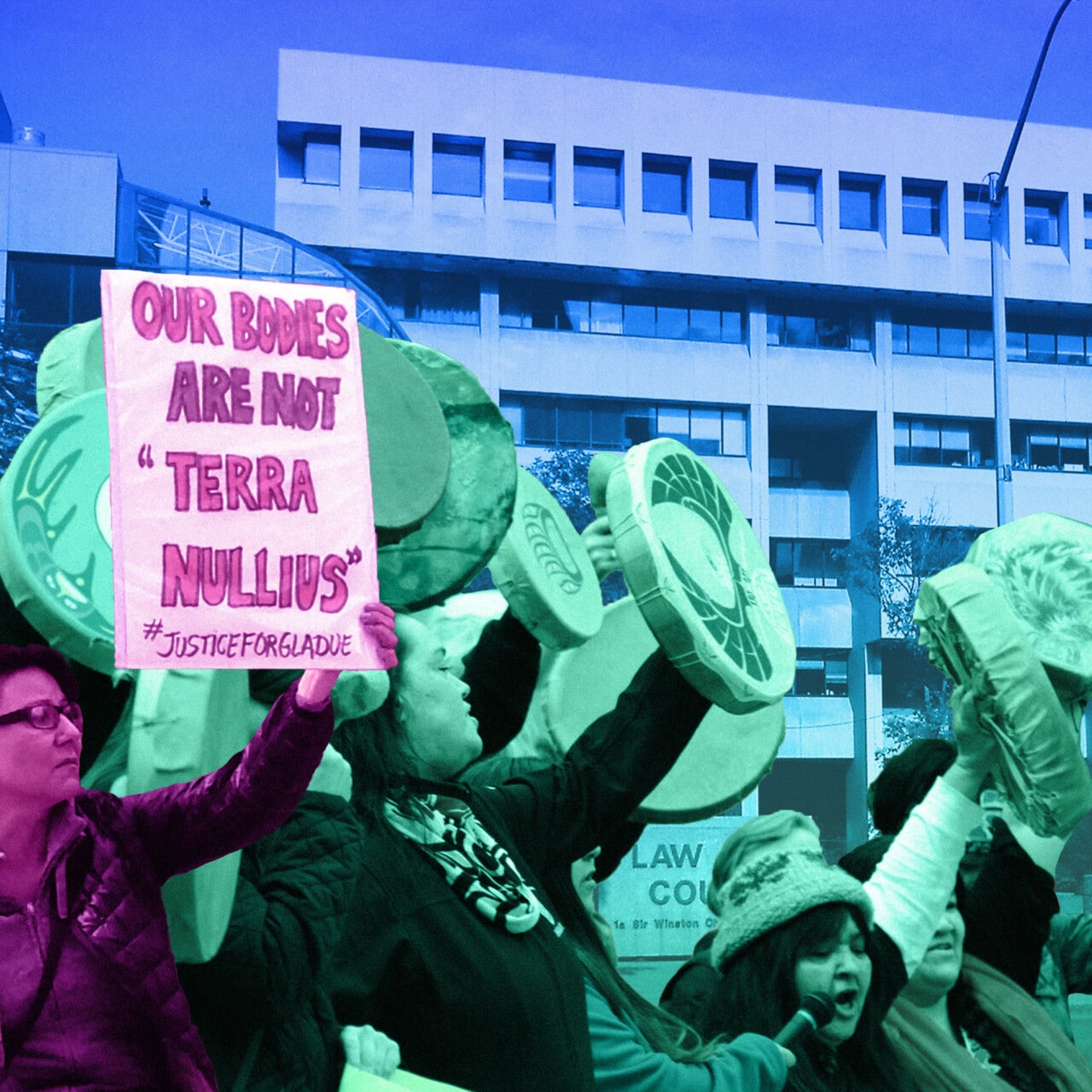
Barton was ultimately found not guilty in 2015 and the acquittal sparked nationwide protests.
In 2017, the Alberta Court of Appeal overturned the verdict and ordered a new trial with a decision that was scathing in both its criticism of the trial judge and the Crown prosecutors.
The prosecutors’ language about Gladue may have prejudiced the jury against her, the appeal decision said. The prosecutors also made legal errors by failing to object to the defence’s submission of Gladue’s sexual history as evidence, which is inadmissible no matter the circumstances.
Appeals led to a new trial and Barton was found guilty of manslaughter in 2021. He was sentenced to 12 and a half years in federal prison. The case is currently being appealed by Barton.
Lawyer says Indigenous women may not get a ‘fair chance’
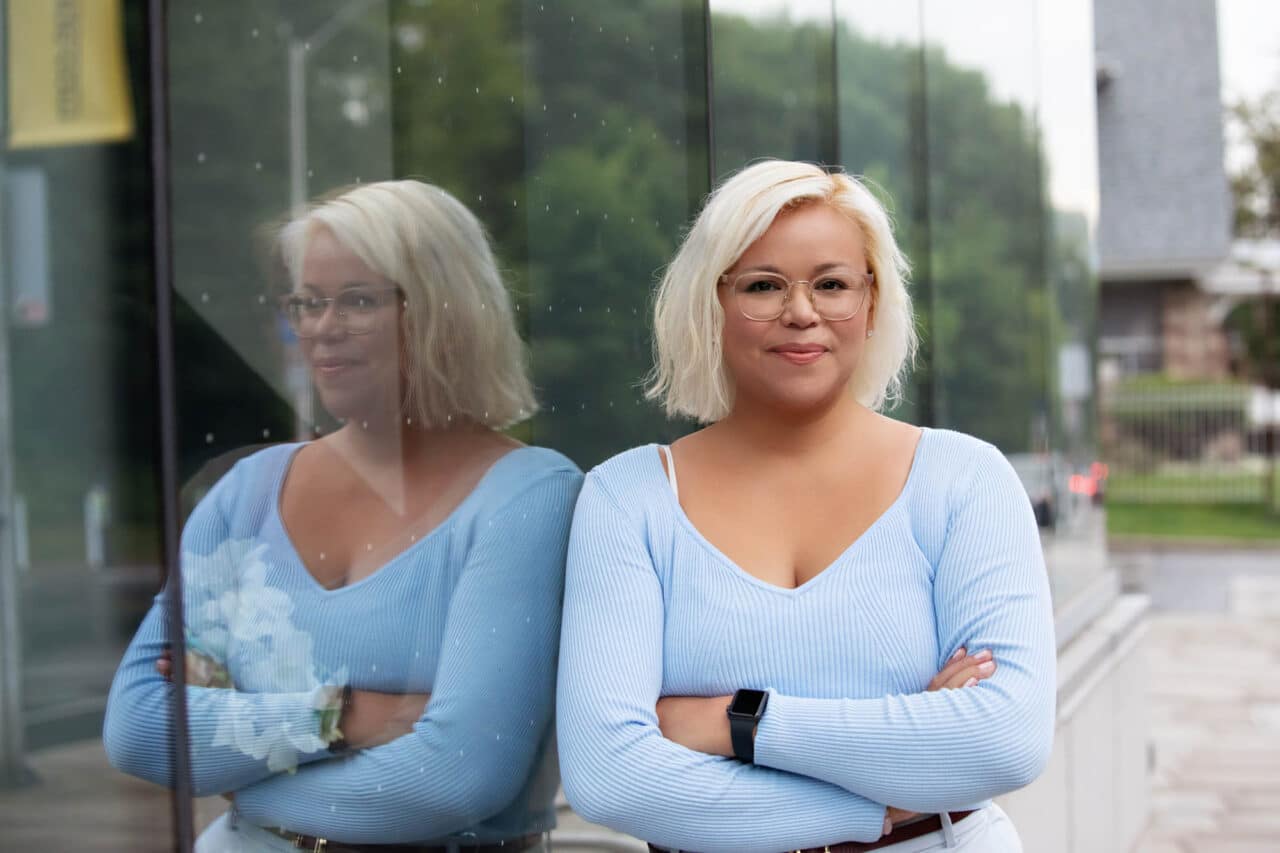
Naomi Sayers is an Anishinabek lawyer from Garden River First Nation in Ontario. Sayers is based in Sault St. Marie, practices law in both Ontario and Alberta and was a law student in 2015 when the original Gladue trial took place.
Sayers wrote an influential piece on the 2015 Gladue trial and the trial helped guide her legal career to what she specializes in now.
As a member of the Alberta bar, Sayers said she has a responsibility to be fair to the judiciary.
“I can’t just say, they [should] not be a judge…But if I had an Indigenous woman client, I would file whatever court application I would need to get them out of there because I don’t think they would have a fair chance,” she said.
“I have a responsibility here. What if people are self-representing [as Indigenous] in front of these judges? They’re not going to know. There is a duty to speak out here about what’s happening.”
Christa Big Canoe is the legal director at Aboriginal Legal Services, a Toronto-based nationally recognized leader in the development of Indigenous-led justice programming and in test-case litigation. She was also lead counsel for the National Inquiry into Missing and Murdered Indigenous Women and Girls.
She said she hopes Downey and Godfrey have learned from the mistakes they made during Barton’s trial.
“I hope that…they would now learn that when they address Indigenous individuals in court, that they do it by name as opposed to ‘Native woman,’ ‘Native prostitute,’ ‘Native girl,’” said Big Canoe.
“It’s my sincere hope that they’ve learned and that they hold themselves to a higher standard when they’re dealing with an Indigenous person before the court.”
‘Her body is not whole’
After Barton’s acquittal, many Indigenous women said the court did worse than fail Gladue.
“Her body is not whole in its resting place. In any other context this could be seen as desecration of her remains, but in this judicial process it is called preservation of evidence,” Big Canoe said in a 2015 report on the trial. “It is simply horrific. It appears that the court did not contemplate Cindy’s dignity, death rites, or any Indigenous perspective on caring for the dead.”
“The presentation of Cindy Gladue’s body parts as evidence in the trial is in itself a criminal act,” Lisa Weber said in the same report. Weber is a lawyer and the current president of the Institute for the Advancement of Aboriginal Women, a group that acted as an intervenor in the appeal of Barton’s acquittal.
Godfrey, one of the prosecutors who is now a judge, said at the time that displaying Gladue’s torn and ripped pelvis could be done in “good taste, almost like a biology class.”
Appointments were part of the court’s expansion
The Breach asked the offices of the ministers of justice and Indigenous relations by email why these prosecutors were awarded with appointments and whether the government believes Indigenous women will get a fair chance at justice in their court rooms. Neither office responded.
The government announced Downey’s appointment as part of its recent $20-million funding boost for the provincial court.
“Budget 2023’s investment in the Alberta Court of Justice is part of a broader strategy to enhance the justice system and make it more responsive to the needs of Albertans,” the government said in a press release.

“It’s about getting to the bottom of things. It’s about unveiling who has the power and what they’re doing with that power.”
Linda McQuaig, journalist and author
As a non-profit, free from powerful corporate interests, we invest in investigations and uncover the cover-ups. Sustain our journalism for transformation.