
It was a rare sunny day in Surrey, B.C. when Phoenix Society hosted a launch of its food truck in spring 2021. Local media were invited to cover the event as a “good news” story for the well-known drug recovery centre.
But staff and clients recall the celebration felt deeply wrong.
“I remember yelling at some of the camera people, ‘Why are you focusing on this?’” one former client, who was present for the food truck event, told The Breach.
“’What about the body bag?’”
In the days before the event, staff had found a client unresponsive after overdosing at Phoenix’s nearby housing project, Rising Sun. The person died shortly after, four sources who either worked at Phoenix or participated in its programming said.
The attempt to put on a happy spin in the wake of a terrible incident was emblematic of the environment at Phoenix, sources said. They said that the recovery centre—which has been hailed in the provincial legislature as a model program—used to have an effective, community-centred approach. But a period of reckless expansion, overseen by a flashy CEO and enabled by the B.C. government, changed everything and left clients neglected.
The Breach’s investigation has revealed that between 2020 and 2021, at least three Phoenix clients died while at the centre’s main campus.
During that period, a staff member was also charged criminally for defrauding a client and another staff member allegedly made unwanted sexual advances on at least two people enrolled. These incidents are in addition to claims that workers were pressured to distort official statistics about relapses, while more than a dozen employees left the organization, sources said, and others experienced workplace injury.

The issue of how to respond to the drug toxicity crisis has become hotly contested political ground in Canada. More than 35,000 people have died because of the toxic supply since 2016, but that hasn’t stopped politicians from using the crisis to boost their campaigns.
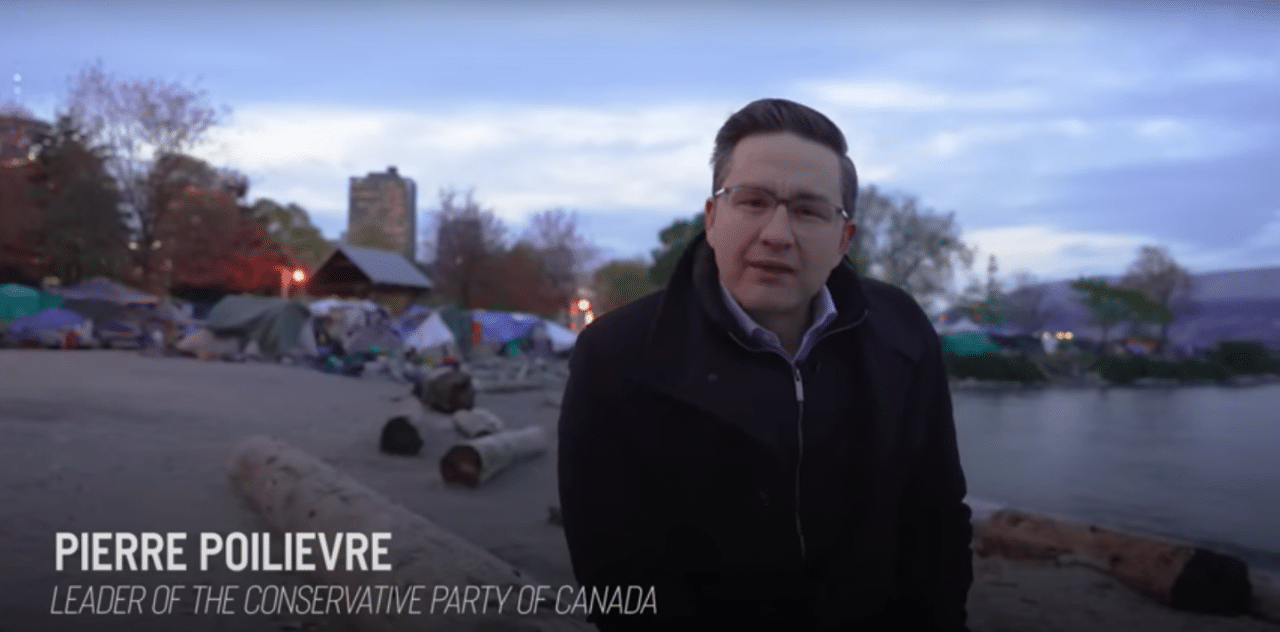
Perhaps no figure has done this more brazenly than Conservative leader Pierre Poilievre, who in November used a tent encampment in Vancouver as the backdrop for a YouTube video. In the video—which even a former Stephen Harper advisor described as “disgusting”—Poilievre made numerous false claims about the crisis and called for all money spent on safe-supply initiatives to be redirected to treatment programs.
But in British Columbia, where another 206 lives were lost to the crisis in April, the NDP government’s primary response to the crisis has in fact already been to fund centres like Phoenix, putting the onus on treatment programs to manage a crisis driven by supply.
The Breach’s investigation exposes what’s at stake when governments pour money into these programs as their primary response to the crisis, while leaving the facilities and the illicit drug supply largely unregulated.
Phoenix Society is a registered charity that provides substance-use treatment programs and a suite of other services at its original facility, a collection of buildings in Surrey known as “main campus.” In 2017 and 2018, the society expanded to other sites in Delta, Abbotsford and the Tri-Cities—something that one current employee said has impacted its ability to appropriately staff the treatment centre, as employees were seconded elsewhere and the program was stretched thin.
The organization was founded in 1989 by Michael and Ann Wilson, who ran Phoenix until they both retired in 2017.
Some who successfully completed the program in the past testified to the centre’s recent transformation.
Don Rock is a writer who was at Phoenix in 2018 and remained connected afterward, hosting community get togethers and residing in a building owned by Phoenix.
Rock describes his arrival at Phoenix with awe. He cited strong support from the counsellors and staff, saying he’d “never met anyone like them.” For him, the tight-knit community and accessible, friendly management were things that worked well for the program. But according to Rock, “all that changed, and it became a bureaucracy.”

New CEO had a penchant for ‘photoshoots’
When the Wilsons retired, Phoenix was low on money and needed funding to stay afloat, one former senior employee told The Breach in an interview.
The Breach is not identifying current and former Phoenix employees by name in order to protect their current and future employment in the sector.
A new CEO, Keir Macdonald, was hired in 2018. He had a Master’s in Business Administration and experience as a CEO at a non-profit housing provider. In a glossy case study announcing Macdonald’s hiring, an executive-recruitment firm said he led the way “with heart and a passion to empower those who need it the most.”
But most sources who spoke to The Breach said that Phoenix’s problems began when Macdonald became its leader. They described a culture that prioritized photo opportunities over community.
“Keir would do anything for a photoshoot,” one former employee said.
Two current employees said they were concerned and confused when a camera person was hired to accompany Macdonald everywhere he went (another former employee contested this depiction, saying that the staff member also wrote successful grant applications).
A video posted to Phoenix’s Facebook in November 2021 shows Macdonald expressing gratitude after being named “Leader of the Year” by a Surrey newspaper. “Wow, it is an incredible honour,” Macdonald tells the camera.
While he was in charge, Macdonald invited figures like psychiatrist Robert Tanguay to speak at Phoenix’s Annual General Meetings. Tanguay has been involved in Alberta government studies of safe consumption sites and safe supply initiatives, which were criticized by academics and described by NDP critics as “rigged” to discredit these types of policies.
Reached by email, Macdonald declined to answer specific questions from The Breach. “I am no longer CEO at Phoenix Society and am unable to comment on matters in my time there,” he said.
Phoenix’s new CEO, Justine Patterson, told The Breach in a written statement that she is focused on leading the team forward and did not comment on Macdonald’s direction when asked.
Rock said he feels the organization abandoned the founders’ philosophy entirely, turning treatment into “a commodity.”
Every source interviewed said they see Phoenix as having unravelled from a community-oriented program—a “true sanctuary,” as one former employee put it—to a business-like entity seeking growth by any means possible.
“Phoenix was the best place I had ever worked,” one current employee said, “then it crumbled badly.”
Macdonald left Phoenix in 2022 and is now the CEO of Coast Mental Health.

Cash from B.C. government came with ‘ridiculous’ pressure
Another former employee said that he believes Macdonald’s “heart was in the right place.” The employee directed some blame for issues at Phoenix on the Provincial Health Services Authority (PHSA), the primary funder of main campus programs.
The person described “ridiculous” pressure from PHSA to do everything, even “when deaths were at a spiral,” despite the fact that solutions to a problem driven by the drug supply, like deploying safe supply on site, were outside the scope of substance-use treatment programming.
The B.C. government, led by the coroner’s office, shifted its language years ago to describe the crisis as one caused by “drug toxicity,” reflecting that many poisonings are caused by an unpredictable street supply. This language also reflects another reality: not all drug users have a substance-use disorder.
But the B.C. government only changed its wording—not its policy.
The NDP government continues to paint substance-use treatment as the main solution to the drug toxicity crisis, a problem that even the government’s language concedes is driven by a poisoned supply. Out of the government’s recent $1-billion investment in mental health and addiction, only $68 million—or 6.8 per cent—will go to expanding prescribed safe supply, a Ministry of Mental Health and Addictions (MMHA) spokesperson told The Breach.
Leaving the supply of drugs largely unaddressed impacts the lives of daily drug users and does little to keep recreational and occasional users alive.
Established research shows treatment does not work for an overwhelming majority of people on their first try, even for those that end up sticking to it. That means after a person attends a recovery program—such as those receiving funding from the B.C. government—they are likely to relapse.
Relapses are risky for two reasons: after a period of abstinence, the person has a lowered tolerance, and the current street supply is more potent (and the ingredients less predictable) than ever.
The BC NDP has funneled most of its “overdose response” funding into recovery programming anyway. That means treatment centres like Phoenix have expanded rapidly, without the government putting safeguards in place for clients who inevitably relapse.
According to Canada Revenue Agency filings, in the fiscal years that overlap with Macdonald’s tenure as Phoenix CEO from 2018 to 2022, the organization grew from receiving roughly $321,000 in provincial funding a year to receiving more than $4.3 million a year.
One former and two current employees said that many workers pushed for “managed growth,” with a focus on support for clients who might be at risk of relapsing. But this feedback felt brushed off in favour of seeking fast funding.
The funding also came with a side of media attention.
In 2020, then-minister of housing Selina Robinson told the B.C. legislature that Phoenix was a well-known “substance use recovery provider” who “really know what they’re doing,” and offered to “facilitate setting up a meeting with Keir” if MLAs had concerns about an upcoming housing project.
In November 2021, then-minister of mental health and addictions Sheila Malcolmson stood with Macdonald to announce 10 new treatment beds at Phoenix.
Macdonald, Malcolmson and fellow NDP MLA Rachna Singh conveyed that these new beds were part of the province’s response to the drug toxicity crisis—and part of its “historic expansion” of recovery services.
The Breach reached out to Malcolmson, Singh and MMHA to ask whether treatment beds are the appropriate solution for a problem driven by the drug supply.
Malcolmson’s office directed requests to MMHA. Singh’s office said in May that the MLA wouldn’t be available for an interview until late June. The MMHA did not directly address the question.
Current Phoenix CEO Patterson said the organization is committed to evidence-based programming and support “within our scope,” but said that it is also critically important to address the toxic drug supply, calling death rates related to the supply “tragically high.”
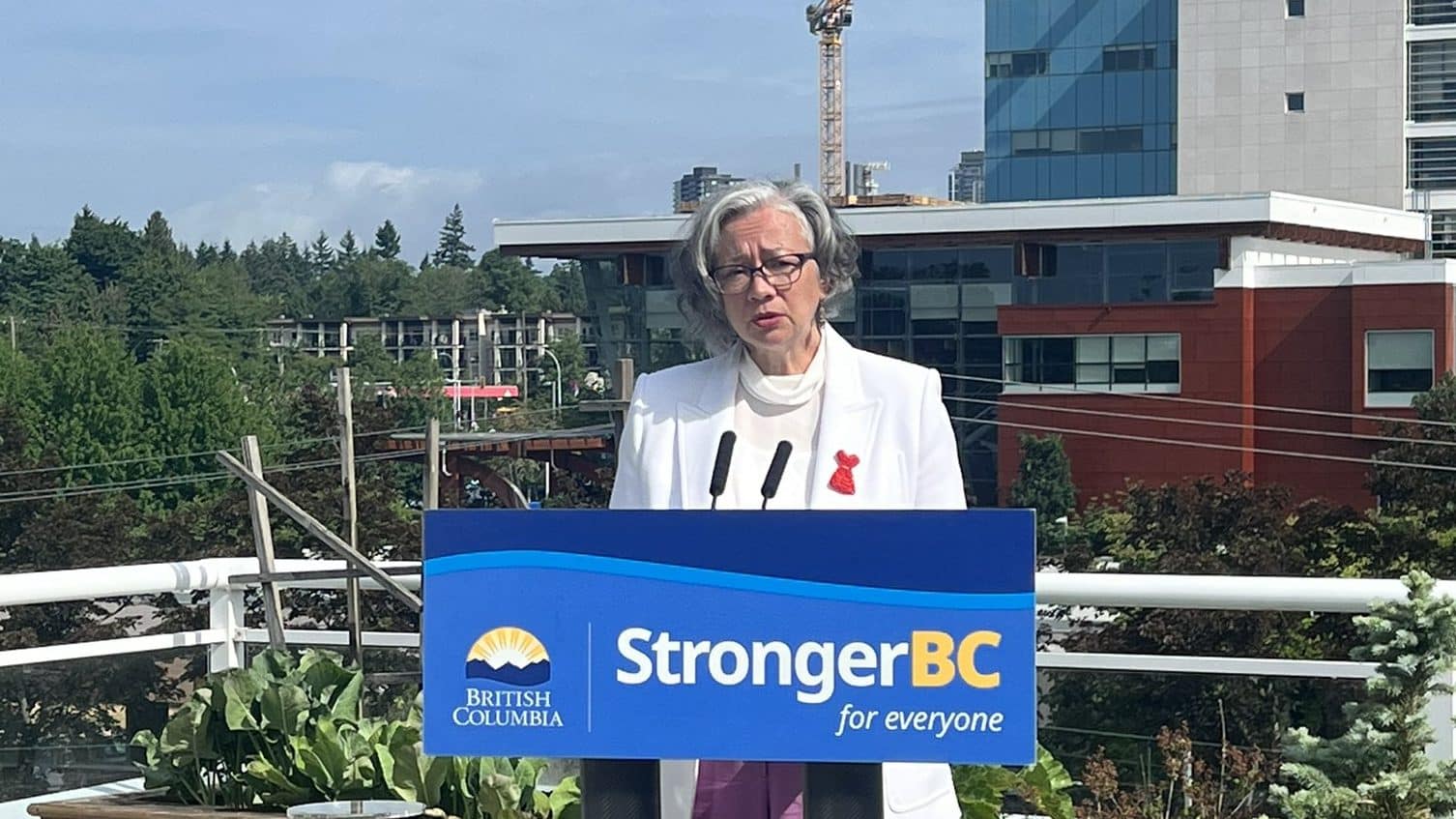
On Thursday, the government’s new minister of mental health and addictions, Jennifer Whiteside, was at Phoenix announcing another 18 new beds.
Program’s ‘poster child’ charged with defrauding client
During the same period that Phoenix received ballooning sums of provincial money, at least two staff members were allegedly taking advantage of clients.
Nelson Mendonca, a former staff member who also appeared at press conferences and who was described by former colleagues and clients as Macdonald’s “poster child,” is currently facing a criminal charge of fraud over $5,000.
His alleged victim, whose name The Breach confirmed through court records, was a client in Phoenix’s programming who met Mendonca when Mendonca was an employee on site, another former client said.
Multiple sources, one current and one former employee and a client, expressed frustration that Phoenix gave Mendonca access to clients’ personal information.
One former client’s identity is being protected because of worries about accessing health care services.
The Breach reached out to Mendonca’s lawyer who responded that he would ask his client about providing a response for this article, but did not hear back.
Citing privacy rules, Patterson said she could not comment on the behaviour of individual employees. But she said Phoenix has strong policies regarding abuse of residents, that all complaints are investigated and that employees found to have engaged in misconduct are subject to discipline.
Another former staffer allegedly made sexually charged comments and sent unwanted, sexualized photos of himself to two clients, according to two current Phoenix employees who told The Breach they saw the messages on clients’ phones.
Earlier this month, another treatment centre the BC NDP has given multiple grants to this year totalling over $500,000 was alleged to have ignored reports of sexual assault by a contracted staff, who is now being charged with three counts of sexual assault. Police have said there were as many as 11 victims.
Worker said they were told to lie about relapses
When clients leave Phoenix, staff are expected to submit paperwork to the Provincial Health Services Authority, including information such as whether someone was given a naloxone kit upon departure and whether they had relapsed during the course of their program.
But two current employees allege that during Macdonald’s tenure, management created an expectation that workers lie on the paperwork submitted to the authority.
One of the employees said that they were pulled into two meetings, one in December 2021 and one in early 2022, after filling out discharge summaries for clients who were leaving after having relapsed. The employee said their manager told them not to report these events as relapses unless the person was visibly under the influence of drugs or alcohol at the very moment of their departure.
“This, 100 per cent, has everything to do with funding,” the staff member said. “The province thought we were succeeding but we were failing people.”
“As a person in recovery, lying about drug use went directly against my values.”
The other staff member said they received similar direction from an administrative employee.
Provincial Health Services Authority provided The Breach with a blank version of the tracking form, which confirmed the questions described by staff. The document clearly requests information about abstinence, not about active intoxication.
Patterson told The Breach that allegations of pressure to lie on paperwork have not been brought forward during her time as CEO.
‘Turfed out with just a garbage bag’
One mother said she was stonewalled when she tried to get information about her son’s eviction from Phoenix in spring 2021.
The Breach agreed not to identify her because she’s worried about causing consequences for her son, who may access other recovery services in the future.
The woman said she attempted to reach Phoenix multiple times so she could support her son through his eviction. “No one was returning my calls…suddenly there was no one who could answer my questions.”
So, she showed up to Phoenix’s main campus in person. When she got there, she was informed that her son had run away.
He’s been homeless ever since.
Leslie McBain, a member of Moms Stop the Harm, a network of Canadian families impacted by substance-use-related harms and deaths, said the group hears stories like this all too often.
She said that irresponsible evictions happen at many centres, not just Phoenix. “This a common thing, to get turfed out with just a garbage bag and be told to go to a shelter.”

Outcomes continue to go untracked
While facilities like Phoenix receive millions of dollars in provincial funding, the B.C. government collects little data about their effectiveness and safety.
Phoenix confirmed that two deaths happened on site in 2020. Patterson said that there have been zero deaths in 2021 and 2022, but the BC Coroners Service told The Breach there is an active investigation into a death that occurred on site in 2021.
“Client deaths are rare and tragic, and we take any loss of life very seriously,” Patterson said in her statement. “Following a death in a program, Phoenix follows a process which
includes ensuring the safety of staff and clients, investigation of the incident, internal review, regulatory reporting, corrective action and the implementation of appropriate preventative measures.”
The coroner also told The Breach that it doesn’t automatically collect any statistics about people who die while in recovery programs, or shortly after leaving one.
“As first reported by the Coroners Service Death Review Panel into drug toxicity deaths in April 2018, there are no provincial regulations for evidence-based standards for addiction treatment in B.C., nor are outcomes monitored or evaluated,” a spokesperson for the coroner’s office added. “As a result, there is no database the coroners can access to confirm whether or not a deceased individual is a current, recent or past client in a treatment or recovery program.”
The coroner’s office also said that it attempts to find out whether a deceased person had been in a recovery program through anecdotes–data the spokesperson described as “unreliable for any statistical purposes.”
This means that deaths that occur shortly after eviction or completion of the program are not linked to recovery programs, even if relapse contributed to the overdose.
A current Phoenix employee called this lack of accountability “ridiculous,” and said they mourn for the clients they’ve lost during the drug toxicity crisis. “Of course this needs to be tracked.”
Rock, the former client who had success at Phoenix, said it is “clearly designed to protect managers and government, not to protect our loved ones.”
Euan Thomson, an Alberta-based independent researcher who writes the investigative newsletter Drug Data Decoded, said reasons behind the lack of evidence around these programs are complex.
He said many government staff and health officials have invested energy and funding into these programs as an answer to the drug toxicity crisis, even with little-to-no evidence for doing so.
“They have played off people’s faith and hope,” Thomson told The Breach, “and think about how many careers are now riding off this. They don’t want to know it doesn’t work.”
McBain of Moms Stop the Harm said the group takes a strong stance that recovery programming should require the same level of regulation and oversight as any other health-related facility. McBain lost her son to the toxic supply in 2014. He was just 25.
Patterson agreed, saying there is a “need for a provincial data system, data sharing, standardized outcome measures and shared data analysis” to measure treatment outcomes. She said the organization can’t track whether their programs are directly preventing drug toxicity deaths.
All of the issues at Phoenix have taken a toll on staff.
Two staff members, as well as Rock, estimate that more than 15 staffers have left Phoenix’s two main programming sites in recent years. One former staff member, who left in 2022, said, “Oh my god, it’s so much higher.”
Employees have also left because of workplace injury. More than five employees made successful claims with WorkSafeBC in just the 11 months from December 2021 to November 2022, statistics obtained by The Breach through a freedom of information request show. An unknown number of additional cases were withheld by WorkSafe, as were details about the nature of the employees’ injuries.
Patterson said there was no significant jump in turnover the year Macdonald took over as CEO and said Phoenix strives to comply with WorkSafe standards.
‘Why change a philosophy that worked?’
Phoenix’s former CEO Macdonald continues to give speeches about how substance-use issues should be treated. Just last week, he was photographed sitting next to Premier David Eby at a fundraiser.
For their part, the BC NDP have not changed course to intervene in the drug supply in an urgent way.
B.C.’s MMHA had planned consultations on prescribed safe supply, but cancelled abruptly on May 30, according to an email to stakeholders and was obtained by The Breach. The ministry blamed the cancellation on unnamed “broader contextual issues.”
Patterson said that Phoenix “recognises the importance of continuously enhancing our programs and services,” and that the field of substance-use care is complex and evolving.
Rock said his biggest question is simple: “Why?”
“Why change a philosophy that worked? It seems self-serving.”
With additional reporting by Emma Paling

‘The first video I ever made with The Breach was on why we need to support the movement for Land Back. Today, it’s being used in educational settings everywhere—in universities and colleges and children’s classrooms too. When I give talks, people will say, ‘I saw your video and it helped me understand the issue.’
That’s what we do at The Breach—reach people where they are at, with bold ideas, principled analysis, and critical investigations.” – Pam Palmater, scholar and author
Become a sustaining member of our work today.