
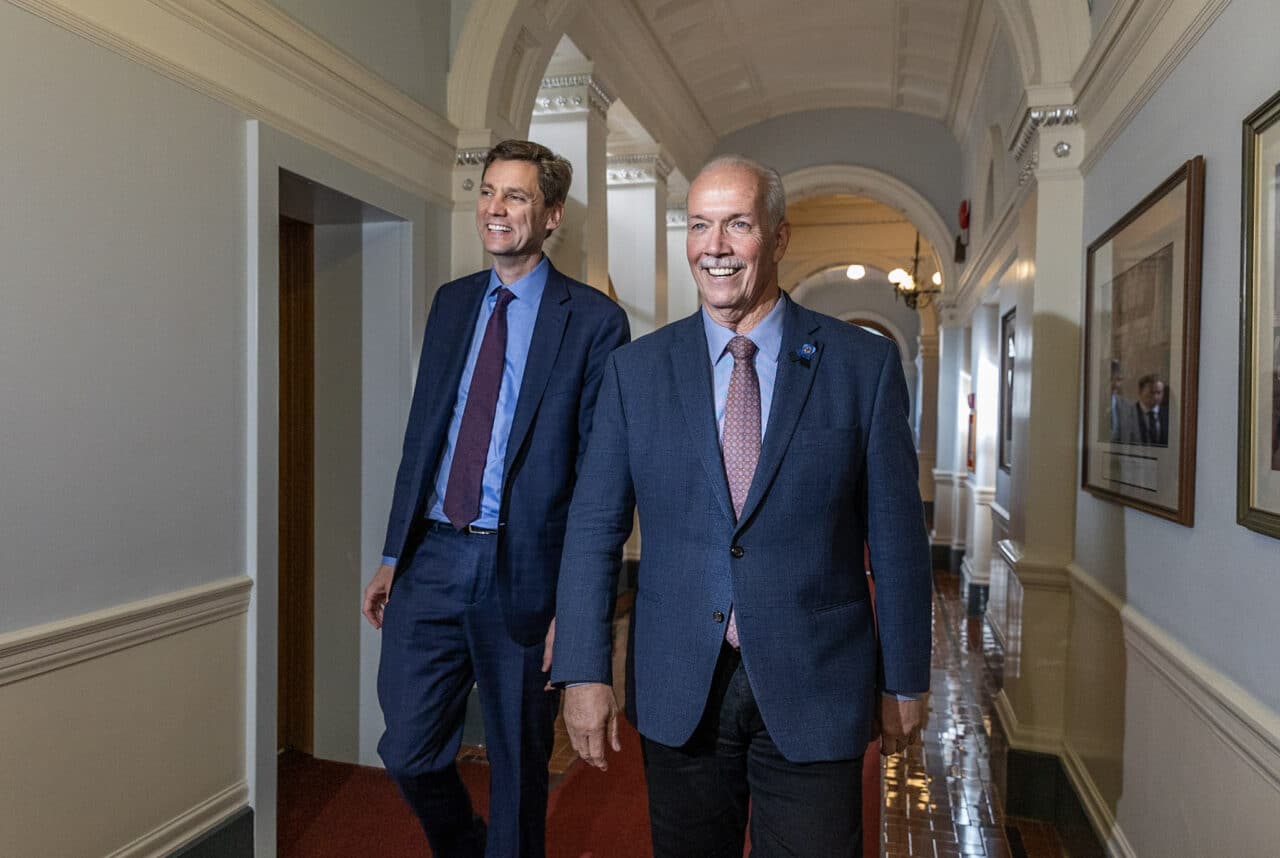
At first it seemed like an April Fools’ joke. John Horgan retired from politics on the last day of March. The next morning, the newspaper headline read: “Former B.C. premier joins board of coal business.” But the quotes from Horgan made it clear he was serious.
“I don’t have a lot of time any more, none in fact, for public comment on my worldview, or what I am doing with my time,” Horgan said. His arrogance only added to the hypocrisy. Horgan won power on a promise to fight corporate influence in politics—and restore trust in democracy.
His new employer Teck Resources is the biggest coal mining company in Canada. It was also the biggest political donor in British Columbia under former premier Christy Clark. Horgan banned corporate donations to political parties, which kneecapped his BC Liberal rivals. But for companies like Teck, that freed up millions for other forms of advocacy.
Teck lobbied Horgan’s government 167 times, according to the B.C. lobby registry. And the BC NDP came through for the company by blocking an international investigation into Teck’s environmental crimes. The company’s open-pit mines are still polluting rivers and poisoning fish in Ktunaxa and Kootenai territory, with plans to expand.
If Horgan was a minister in Ottawa, it would be illegal to go work for Teck. But as B.C. premier, Horgan ignored calls to update key ethics laws. Now he’s profiting from that decision, on top of a public pension worth about $150,000 a year.
Still the ‘Wild West’ in B.C.
Horgan is not the first BC NDP premier to join the board of a coal company—that was Glen Clark. And former energy and mines minister Michelle Mungall now works as a mining industry lobbyist, along with ex-NDP minister Moe Sihota, who now works as a fracking lobbyist. The list of political staffers and NDP officials lobbying their former colleagues is too long to list.
Politicians with the BC Liberals, whose party is now called BC United, did the exact same thing after leaving power. Clark is a senior advisor at corporate law firm Bennett Jones and sits on the board of telecom giant Shaw—though she waited a year after leaving politics.
It’s obvious why corporations hire these people. Their relationships and inside knowledge of government help tilt the playing field in a company’s favour. Sometimes that work starts while politicians are still on the public payroll. Horgan, for instance, admitted he was negotiating his new job with Teck for months while he was still an MLA.
B.C.’s chief forester Diane Nicholls used her platform to defend the wood pellet industry, which clearcuts whole forests to burn in coal plants for electricity. Under her watch, U.K. power utility Drax obtained a near-monopoly on pellet operations in B.C. Last year, Drax rewarded Nicholls with a new job as its “vice-president of sustainability.”
The Site C dam in northern B.C. is the most expensive in Canadian history, funneling $16 billion in public money from the crown corporation that owns it into the private hands of construction and engineering companies that are building it—including $430 million that was awarded through secretive no-bid contracts. $1.6 million went to a consulting firm headed by Tim Little, BC Hydro’s former chief engineer. BC Hydro is exempt from basic anti-corruption rules.
The revolving door also goes in the other direction. The province’s oil and gas regulator is funded, staffed and advised by executives, former executives and staffers in the fossil fuel industry. Last month, the crown corporation handed $16 million to the Coastal GasLink pipeline project. The money came from fees collected for project monitoring (which the regulator makes a point of not doing, hence the refund).
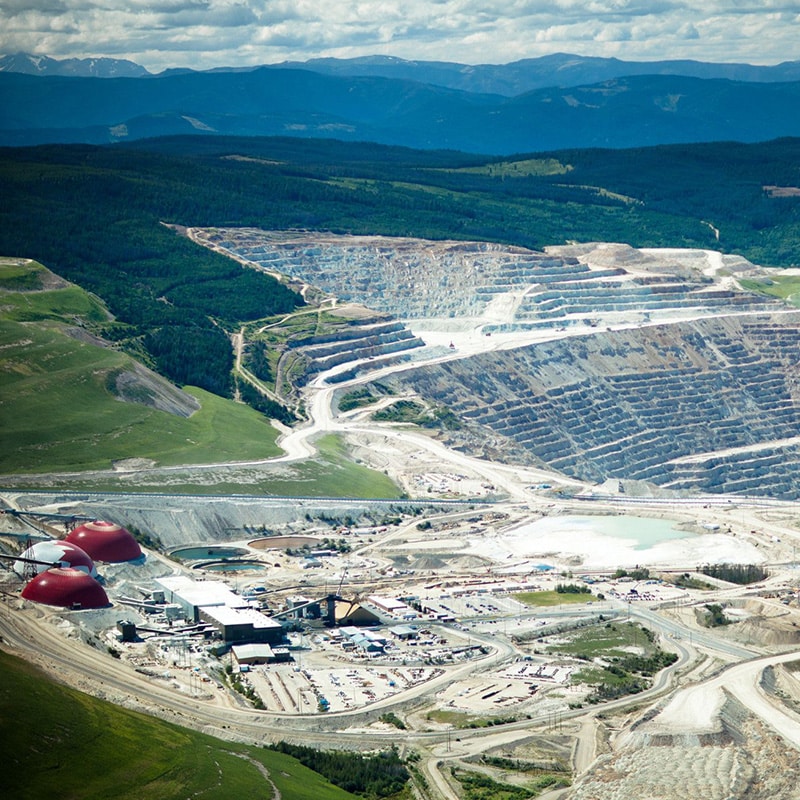
An aerial image of a Teck Resources mine located in the Kamloops area shows the environmental impact of these operations. The coal industry regularly hires powerful officials from the B.C. government, including former ministers and even a former chief forester. Credit: Teck Resources.
Time for an overhaul
Coastal GasLink’s lead lobbyist in Victoria is Maeghan Dewar, one of many NDP insiders enlisted by the oil and gas industry to defend its interests in B.C. Her father Bob Dewar is considered the architect of Horgan’s election wins in 2017 and 2020.
Maeghan Dewar lobbied the premier’s office while her father worked there as a “special advisor” to Horgan. Dewar says there was no conflict. A legal officer for B.C.’s conflict of interest commissioner told a reporter “we have zero ability to look into anything like that because our jurisdiction is restricted just to MLAs.”
A parliamentary committee recommended strengthening the Conflict of Interest Act back in 2013. And the province’s former lobbyist registrar wrote up her own list of reforms. But both the BC Liberals and BC NDP left key loopholes in place.
BC Greens Leader Sonia Furstenau is trying to slow down the revolving door. She introduced a private members’ bill that would create a cooling-off period similar to the federal law. If nothing else, a politician like Horgan would have to play frisbee golf and watch Voyager reruns for a couple years before going to work for Big Coal.
Public trust in government is at a dangerous low. If Premier David Eby wants to change that, he should start by updating the Conflict of Interest Act. Until then, voters can’t help but wonder if B.C.’s two ruling parties are really that different.

‘We need an outlet, a source of information that is credible, that is progressive, that we can cling to and believe in’
David Suzuki
Want to support journalism you can believe in? Become a sustainer today.