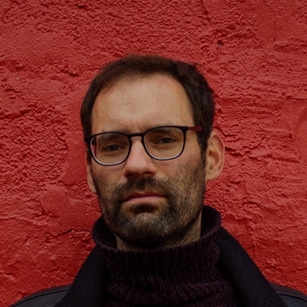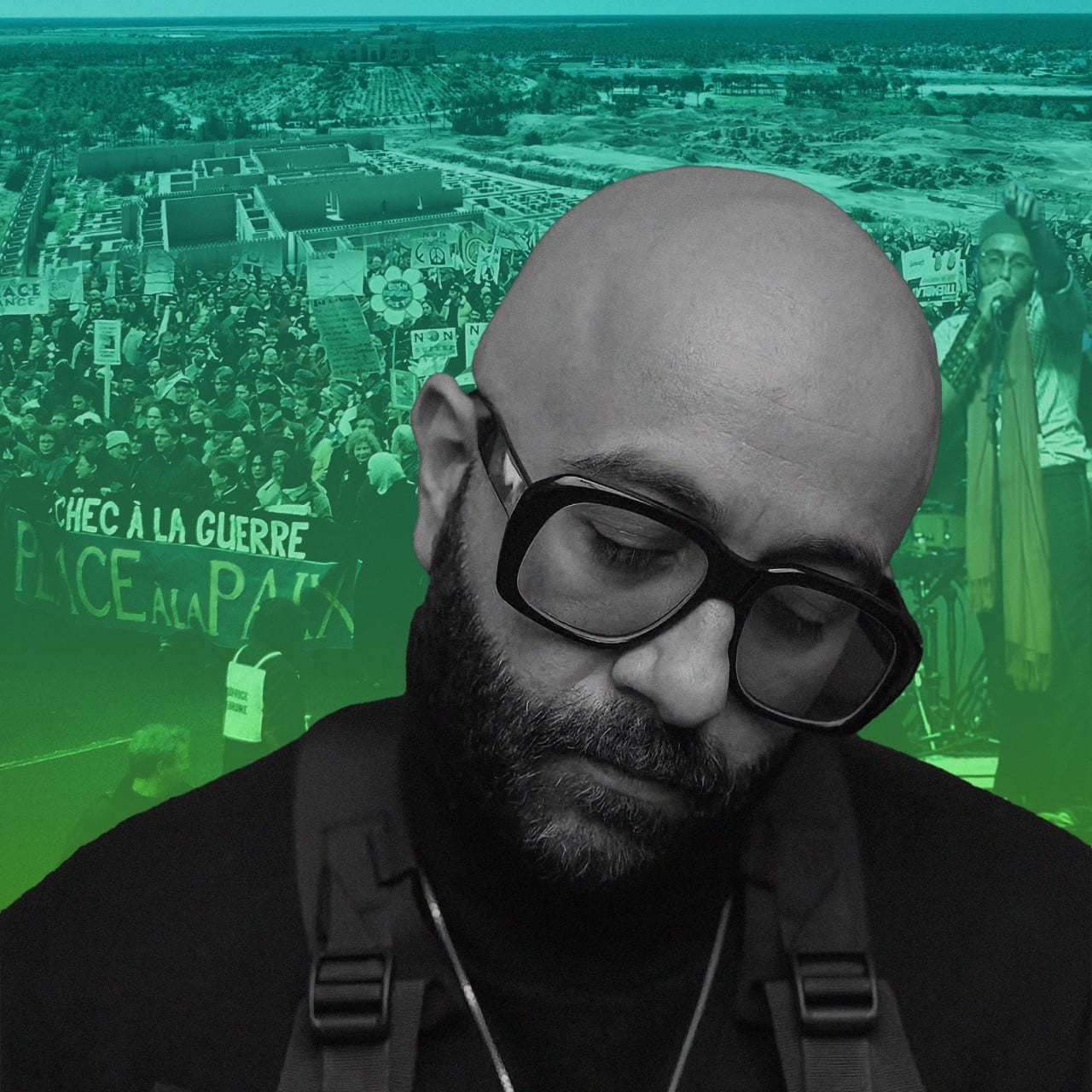
Known on stage as Narcy, Yassin Alsalman is a Montreal-based rapper who has released 10 solo albums and collaborated with artists like Mashrou’ Leila, The Halluci Nation and Yasiin Bey. As a member of the Iraqi hip-hop group Euphrates, he became a prominent voice during the struggle against the Iraq War and opposition to a wave of anti-Arab racism.
In this conversation with Breach contributor Stefan Christoff, Alsalman reflects on moments of civil unrest and social movements, his most “ridiculous” experiences with racial profiling post-9/11, and how those events shaped his artistic evolution.
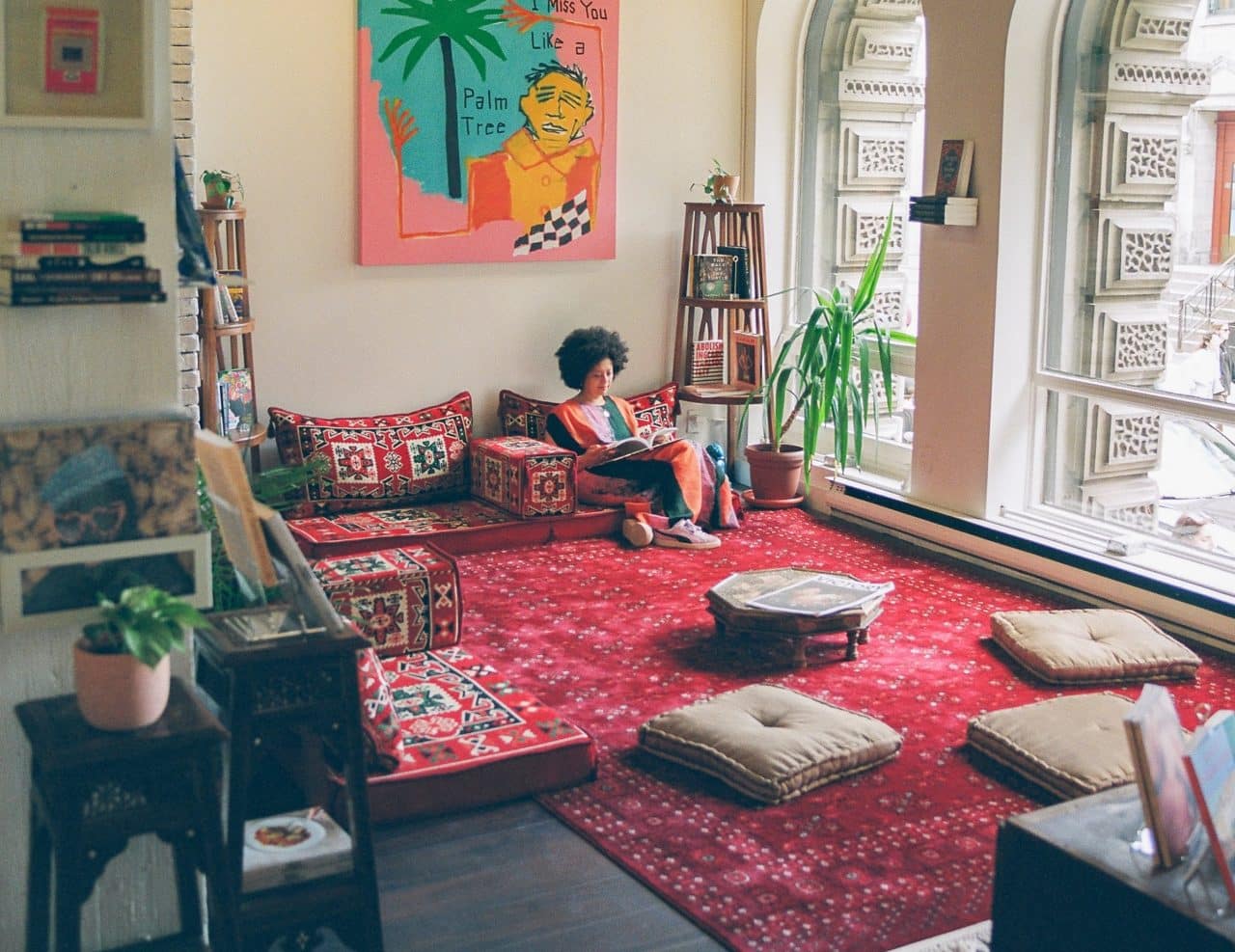
Alsalman spoke to The Breach by phone from the Maktaba bookshop, which he co-founded, in downtown Montreal. This interview has been edited for length and clarity.
Christoff: In 2000 to 2003, A Bend In The River [the album you released with Euphrates] was circulating in Montreal. And there were a lot of hip-hop shows taking place. You were on the scene, but also in the protests—protesting the invasion of Iraq, for Palestinian human rights, joining migrant justice movements. You were also getting media attention. When you were first putting your voice out there with A Bend In The River, are there moments that stand out?
When I was walking around downtown, and we would go into shops—like a candy shop, or a clothing store—to get something like a normal kid downtown, I was 18,19. At the time, we would get followed around the shop. I was loud—I was wearing one-piece outfits, thobes, with head wraps. You could tell where I was from.
On a micro level, there was that sense of surveillance. And there were other forms of surveillance. Situations where we found out we were being watched and somebody that we were interacting with was collecting information.
But then I would say on a community level, one of the primary moments that I remember is when [Israeli Prime Minister Benjamin] Netanyahu came to Concordia and we all got gassed by the police in front of the Hall building—and somebody broke the glass. That was a pretty intense moment we had in the city. We were all in there. And I remember you being there.
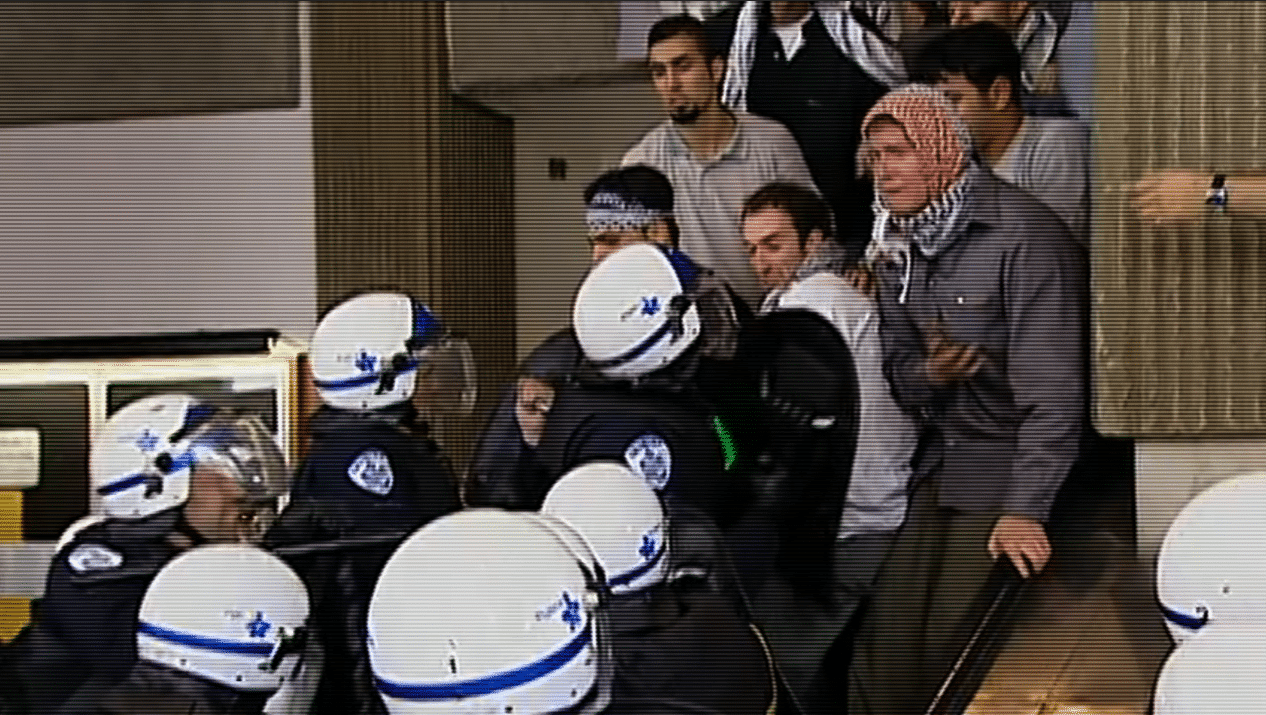
I remember. It was 2002—the Netanyahu team was up on Sherbrooke Street at Ritz-Carlton. And they were waiting to see what would transpire. They didn’t actually come down to Concordia. The police launched tear gas into the university, into the Hall Building. And it went through the whole ventilation system.
Yeah. And then some like Hulk Arab dude came through and broke the glass. I remember that. There were snipers on the roof. I vividly remember this experience. It got so chaotic.
I remember that time feeling very heightened, and immediately knowing that my music was tied to this space, informed by this space.
So when we finished A Bend In The River, the river was really metaphoric, saying that we’re against the current of what is being said about who we are.
Me, Nawar [‘Sandhill’ Al-Rufaie] and Nofy Fannan—we’re all studying media and cultural studies. We were developing knowledge of self while studying representation in the media and propaganda and Edward Said, Homi K. Bhabha, Susan Sontag—all these theories around representation.
So I’m 18, 19, reading this stuff and experiencing it simultaneously in the street.
And in the leadup to the invasion of Iraq, a year or so later, you were getting a lot of press attention.
I remember we were getting a photo taken of us for Time Magazine for an article about Islam in Canada—the biggest form of press that we got. They wanted to film us in the middle of the highway with a time lapse of cars driving by us, so we met on what is now Robert Bourassa in front of the International Civil Aviation Organization building. But we didn’t know that that was the ICAO building. And like four federal undercover cars pulled up in the opposite direction and searched us.
And in the back of the car, we had a head wrap and a baseball bat. Because Hasan carried around the baseball bat in the back of his car—he’s playing baseball. It was always incidents like that—ridiculous—at the height of our press coverage.
We immediately knew that Stereotypes Incorporated was the following album. And we dealt with every representation and stereotype of Arabs in the media on every track on that album, you know. That was the last Euphrates project.
So you mentioned Hasan, Nofy, and Nawar—many people and collaborators. There’s a community going on. There was a lot of attention and interest, but it must have been important to have that crew, that community to come through that process of dealing with so much racism and social violence.
I think I was very protected. But I felt very safe. Because we were six or seven people deep. And we all felt the same way. We all came from the same place. Our families had a very similar experience. We all went to school together. And we all made art together. You know, it felt like a small, tight-knit community of people that support each other, and we’re there for each other. And it definitely guided me through that early, quote unquote, war on terror—or what I like to call the war of terror—on our people.
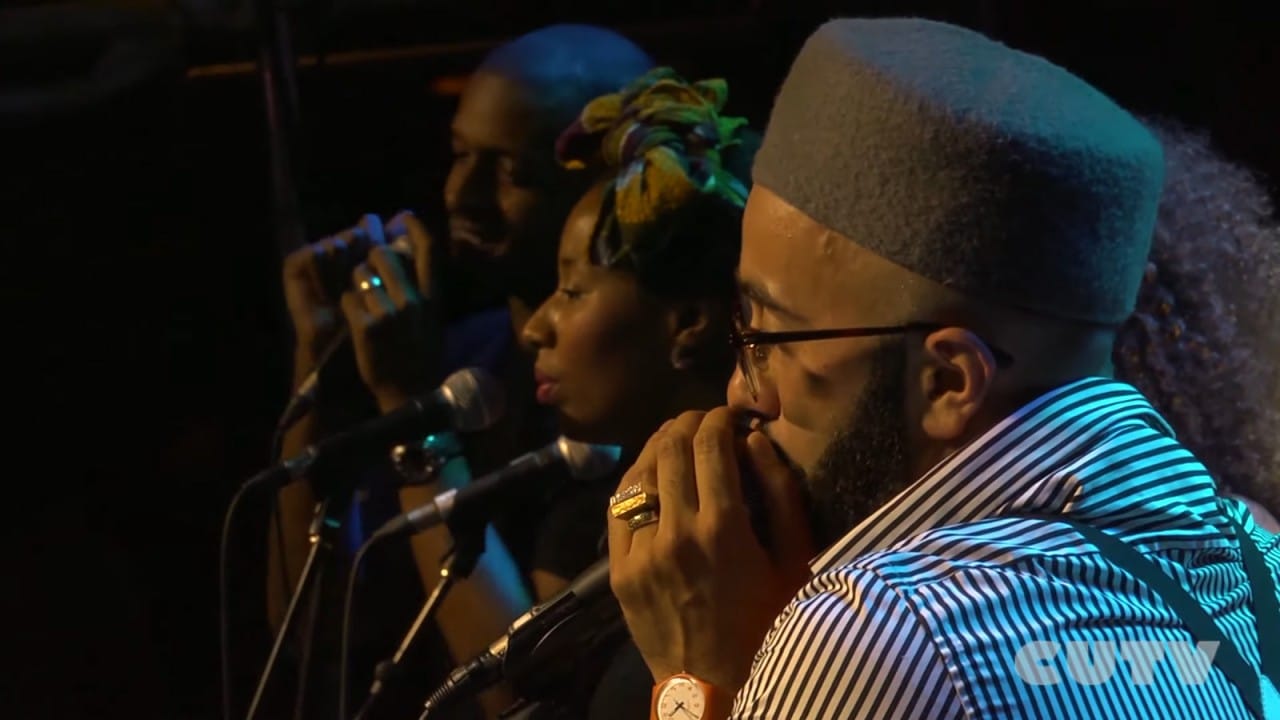
Around that time, I came to empathize what it must be like to be Black in Canada. That pushed me further to study the experience of the community. They influenced me to communicate my own experience. Hip-hop was really a savior for us. I owe a lot to the culture of hip-hop and the community in the city that embraced me as one of its cousins, its sons.
The Canadian Security and Intelligence Service, CSIS, surveilled a lot of artists, a lot of activists and folks in the Muslim community.
Yeah, that was a formative part of our experience. Now we’re surveilling ourselves with our phones, and there’s nothing to hide—go ahead and watch. But at the same time, it was that heightened sense of paranoia and constant presence that was defining in that era of our life as artists.
And there were other artists that weren’t being watched, that weren’t from our community. So we were very aware.
It was hard at that time to figure out where the lines would be drawn. You had people like Maher Arar, or Abousfian Abdelrazik, who had disappeared, right? And these were people with Canadian passports. [Arar is a Canadian who was taken to Syria by U.S. agents and tortured based on bad information provided by the RCMP; Abdelrazik is a Canadian who was imprisoned in Sudan and whose release CSIS obstructed].
Imagine our parents not living here and knowing these things were happening in North America. And we were walking around the streets in our outfits and I’m making music, at the highest political level, talking about what’s happening.
In a way what I was doing wasn’t safe. It wasn’t the most dangerous thing to do in the political scene, but there was a risk.
There’s this concept always that Western liberal democracies have a legal process—that there are going to be checks and balances. But after 9/11, it was like that process went out the window in a lot of cases.
We just hit the 20th—not anniversary—but year of the invasion of Iraq. I looked back on a lot of things that happened. I have magazines from that era. So I read stories—you know, the story of Abu Ghraib and Iraq and Guantanamo. And I got goosebumps.
I was like, I can’t believe we witnessed this in such vivid ways and visually consumed it and internalized all that. It’s really crazy.
Some of the things you mentioned could almost be a comedy sketch, they’re so absurd. But they’re also really intense moments.
Because I’ve focused my expression into the arts, I was able to unload a lot of this and unpack a lot of this in real time. Right after that incident, we went to the studio maybe two or three days later. We put it into music. We kind of unload it and put it outside of ourselves and have a vision of it.
I was in my early adulthood, and then dealing with a huge personal grief—losing Nofy—while my country was being bombarded. And that derailed my attachment to the political sphere in the city—I went into a really personal space for four to five years.
In that process, I learned how to infuse comedy into my work. The arts were an escape for me from all of that noise, but also a space to canvas it and figure out where I stood. It was a saving grace.
It only hit me maybe during the pandemic, when I slowed down. I realized that music and education were very much places that I went to hide, even though they were public—my public persona.
You somehow found a lot of levity in your music—I’m thinking of World War Free Now. There’s that track where you’re talking about being back in the Gulf, looking back on your life in North America, Epiphany.
It’s about going back to where I’m from—and witnessing the detachment from culture, not feeling like I belong anywhere. I just had a child, and I was letting go of a lot of old politics, like romanticizing the cause. And really being real with myself about what needs to be done and what kind of world I envisioned for my kid.
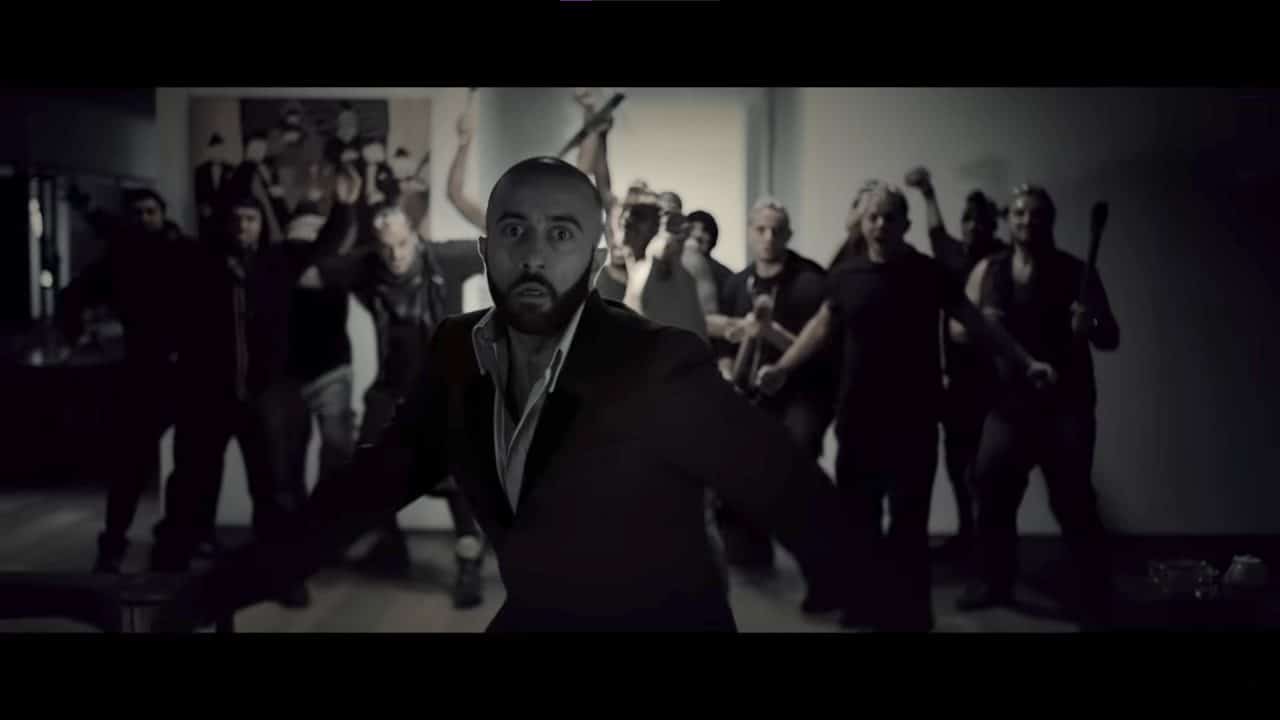
I could see writing the verse in a tower in Abu Dhabi.
Which I did in the video—it’s about a man losing himself in business and corporate capitalist cheese, and not finding his own self worth.
You’re talking about being pigeon holed to be a certain spokesperson, and then going back to that region to try to get some sort of support.
I had several tides that I had to surf simultaneously. One of them was that there was no template for what we were doing. I didn’t have anybody to follow—to carve the lane or the story for it. And no real mentor to teach me how to go through the industry.
And I had also lost like my homie, who was my mentor, but I had a bit of self isolation within the music game. I think when I went solo after the Narcicyst album—in between World War Three, and Spacetime was when I decided to lean on the artistic more than the person, sonically speaking, I didn’t want to fit in like a hip-hop box.
I went for natural collaborations, the people that I collaborate with now are very much outliers to the stream of how to create from whatever region they’re from—Todd Rundgren, Yasiin Bey, the HalluciNation.
I’ve always been in the future and my music is like that. The time that my music is happening is in the future. My albums are not like present-day albums. If they were stories, they would be in the future—as though they’re written in the future. So that’s how I always approach my projects.
They’re always based on something I want to project towards, as opposed to what I’m going through in a moment.
So there’s an expectation as a rapper of a certain identity, to be talking about certain things.
A part of my process was like—you expect me to talk about that, I’m going to talk about this. This is how my community expects me to present myself—I’m gonna present myself in a different way. I always had an artistic element, a fashion element, a comedy element in my videos.
It was a way to set a template for the next person from my community to come up: the next generation. I think only now am I starting to see other artists come to me and be like, “The Euphrates era greatly inspired us, we fell upon it on LimeWire,” or whatever.
Now, there is a second generation of Arab artists that’s coming out that have a template from artists like myself, or Shadia Mansour or Omar Offendum or DAM. There was like a layer that we built, that the next one is being built now.
You talked about going against what’s expected even on the community level, but you’re also talking about care for the community. But you’ve also tried to create an artistic space. Why is that artistic space important for the community?
I think that for a long time, our people’s artistic creation was destroyed. Witnessing lootings of libraries and museums in our countries made me realize that the power structure understands the value of that stuff. They go to that first. So, you know, it’s almost like planting new seeds.
I became disillusioned with protesting when it did nothing for the war against Iraq. I went through that personal experience of losing Nofy. That made me a bit disillusioned with everything. But I think music helped me pick up the pieces.
There was always a sense of resolve. Sonically, at the end, you know.
You’ve made a choice to do educational work. Why is that important for you?
Teaching came into my life in the same way. I was invited to speak at a hip-hop class. Then I got handed the class because the teacher wanted to move on. I grew the class just like I grew my audience.
Recently it got some attention but I was 10 years into the process of teaching at Concordia when the media found out I was a teacher. I had kept it very quiet, because it’s a great responsibility—kind of a private experience between my students and myself.
So when it became public, it became more of a responsibility. Like how can you make studying these large topics like racism, colonialism and exploitation of artists in ways that are colorful and beautiful and healing for the youth?
As opposed to talking down to them, simply asking them, “How are you guys feeling?” Having a whole class about what love means to them, or what fear means to them, or what being part of the Internet age feels like. Having these public releases, similar to what my music did for me, I want my class to do for my students—for them to feel like artists for two hours a week. And make them aware of that institution and aware of the structure around them that’s telling them which way to go.
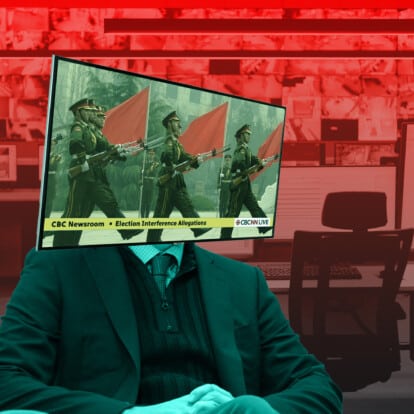
So I was in the car on the weekend, they had a CBC report on about the 20 years after the U.S. invasion of Iraq. It was shocking to hear—an American boy who had been in the army was the person commemorating it on CBC. So there is a sense that we’ve come a long way, but in another sense we haven’t. Can you talk about the importance of challenging narratives today?
Again, I think public platforms and media outlets do not serve us. So you can’t rely on them to carve out space, we have to carve out our own space. They’re always going to represent the larger monoliths that they’re a part of: it’s how they keep the money flowing.
With people like us, they might come to us for our opinion. But at the end of the day, they’re not really looking to change, they’re just looking to report on it. So it’s up to us to carve out our own spaces through art, through activism to independent media, through friendships to continue community bonds to really enact that change in society.
When I went to journalism school 10 years ago, my parents thought that they would eventually read my articles in The Montreal Gazette. Today, that newspaper is a husk of its former self. But I get to explain that I’m working towards critical, independent, and sustainable journalism.
Want to be a part of the future of journalism? Support our work with a monthly contribution. Sign up here.
– Amanda Siino, Development Director, The Breach