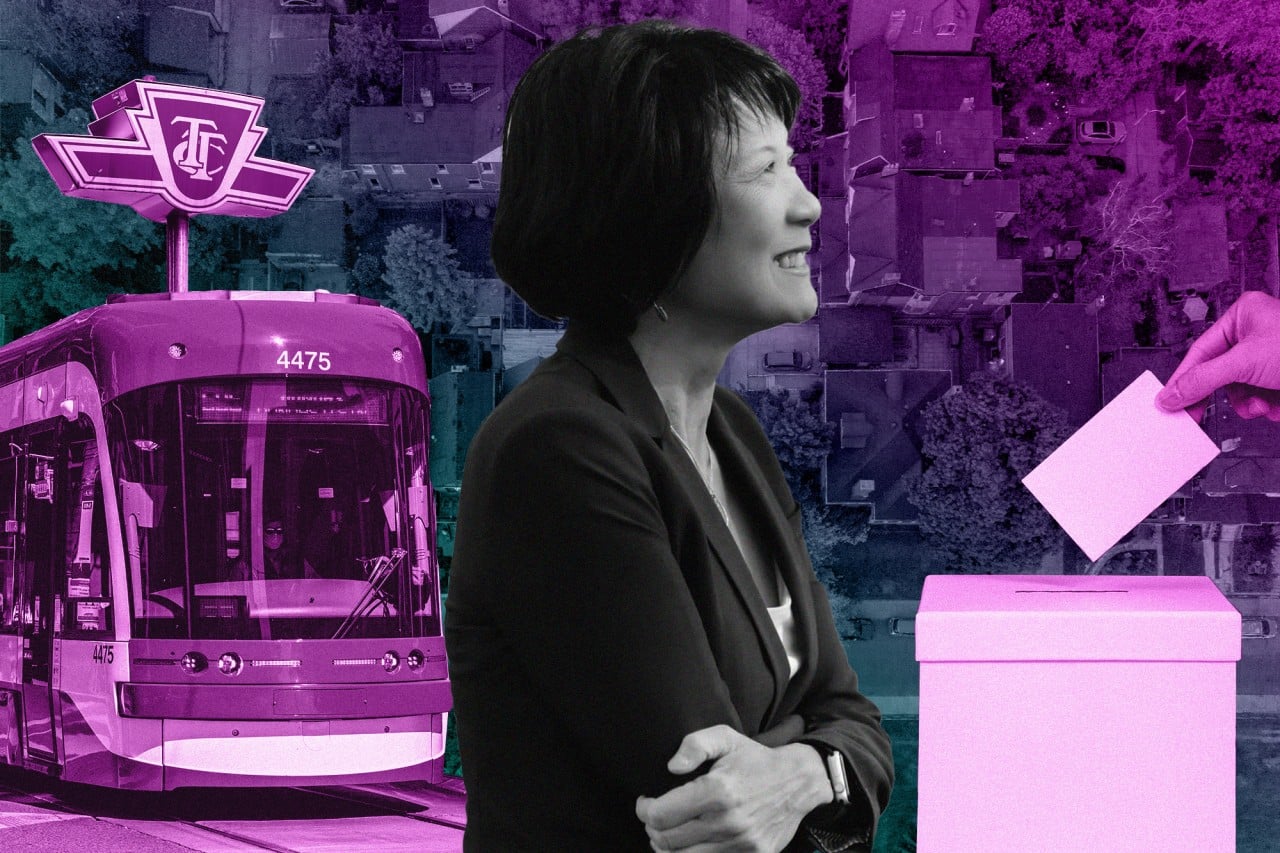
Olivia Chow has won the 2023 by-election to become Toronto’s next mayor. This brings to a close a crowded, divisive election that saw more than a hundred registered candidates competing for the city’s highest office.
She is Toronto’s first progressive-aligned mayor since David Miller left office in 2010. Since then, the city has endured more than a decade of austerity measures and soaring unaffordability under the successive tenures of Rob Ford and John Tory. Coupled with a sobering billion-dollar shortfall in the budget due to the COVID-19 pandemic, Chow faces the daunting task of repairing the battered city Tory left behind while executing her vision to make Toronto “more caring, affordable, and safer” for all.
Here are some ways she can do it.
Fund transit with a parking levy
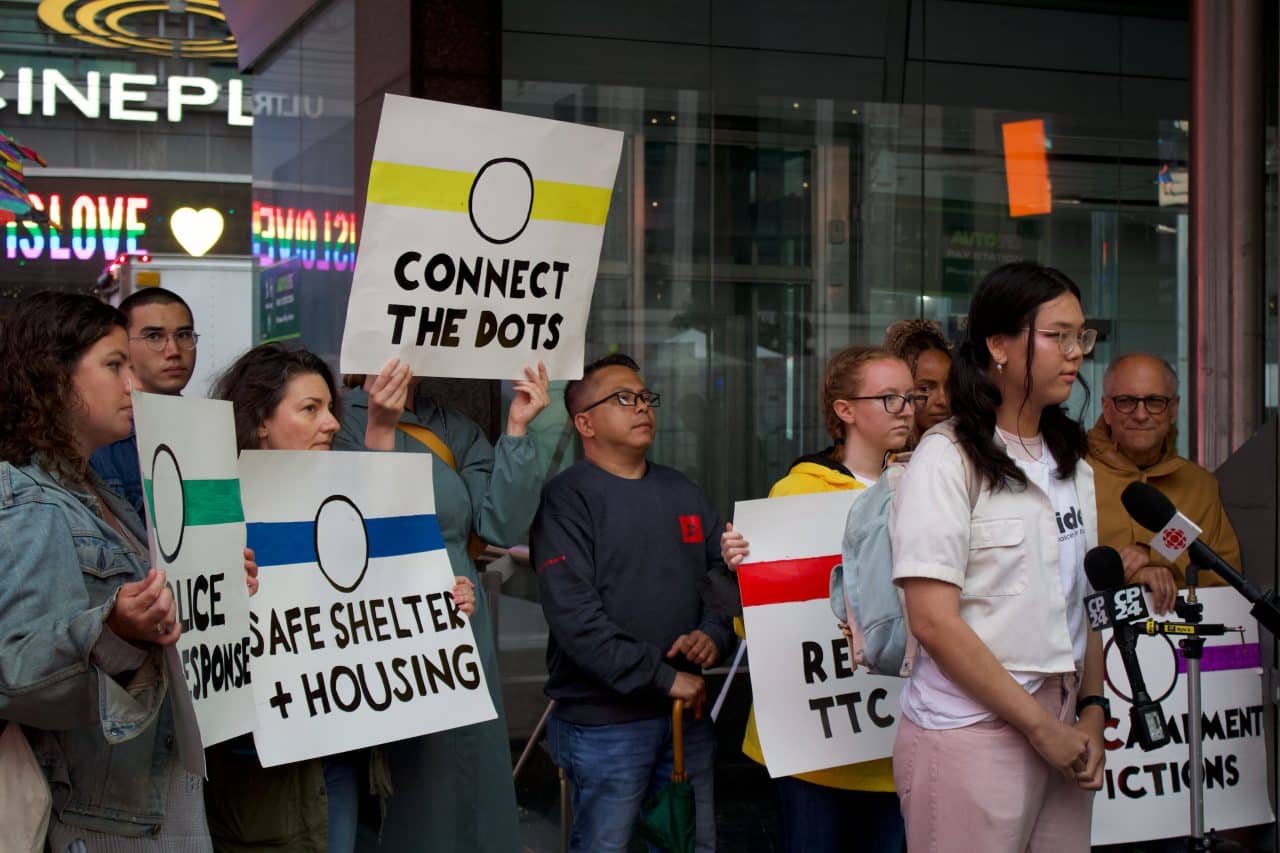
Earlier this year, in an attempt to curb the city’s budget shortfall, Toronto City Council reduced service on dozens of bus routes, along with major streetcar and subway lines. A report from Raktim Mitra and Tess Peterman from Toronto Metropolitan University found that 93 per cent of routes that faced at least a 10-per-cent increase in wait times were connected to neighborhoods with high material deprivation–the vast majority of them with high concentrations of racialized Torontonians and new immigrants.
Chow has already promised to reverse these service cuts, which advocates from the group TTC Riders say is the first step the city can take to avoid a “transit death spiral”—where such delays force daily transit users to opt for alternate modes of transportation en masse, causing a greater loss of revenue and further cuts in turn.
A “first day” solution to this, TTC Riders member Mackenzie Bartlett told The Breach, is to institute a commercial parking levy.
“This would affect big corporate landlords–think about malls, think about anywhere you might see a giant parking lot in the middle of the city,” she explained. “The idea is to raise between $0.50 and $1.50 per parking spot, with the proceeds going to a dedicated fund for public transit.”
In 2016, the city hired the consulting firm KPMG to explore the viability of this idea. They found that a levy of $1.50 per parking space per day could raise as much as $535 million–over half the city’s entire current shortfall.
The group is also concerned about the TTC’s plans to move half its Wheel-Trans customers to “conditional status”–replacing door-to-door service on accessible buses and taxis with a “family of services” approach, where customers would be dropped off at a subway station mid-route to continue the last leg of their journey alone.
“We believe the primary motivation for this is that it’s a cost-cutting measure,” said Chloe Tangponprush, another member with TTC Riders. “So we really need the mayor’s office to be lobbying hard at the provincial level. We need the province to step up and fund Wheel-Trans service so that doesn’t happen.”
Beyond private-market solutions to housing
In just the nine years Tory was in office, the average price for a home more than doubled from $570,000 to nearly $1.2 million, according to the Toronto Regional Real Estate Board.
The price of an average one-bedroom rental has increased from $1,067 to over $1,500 according to the Canada Mortgage and Housing Corporation (CMHC).
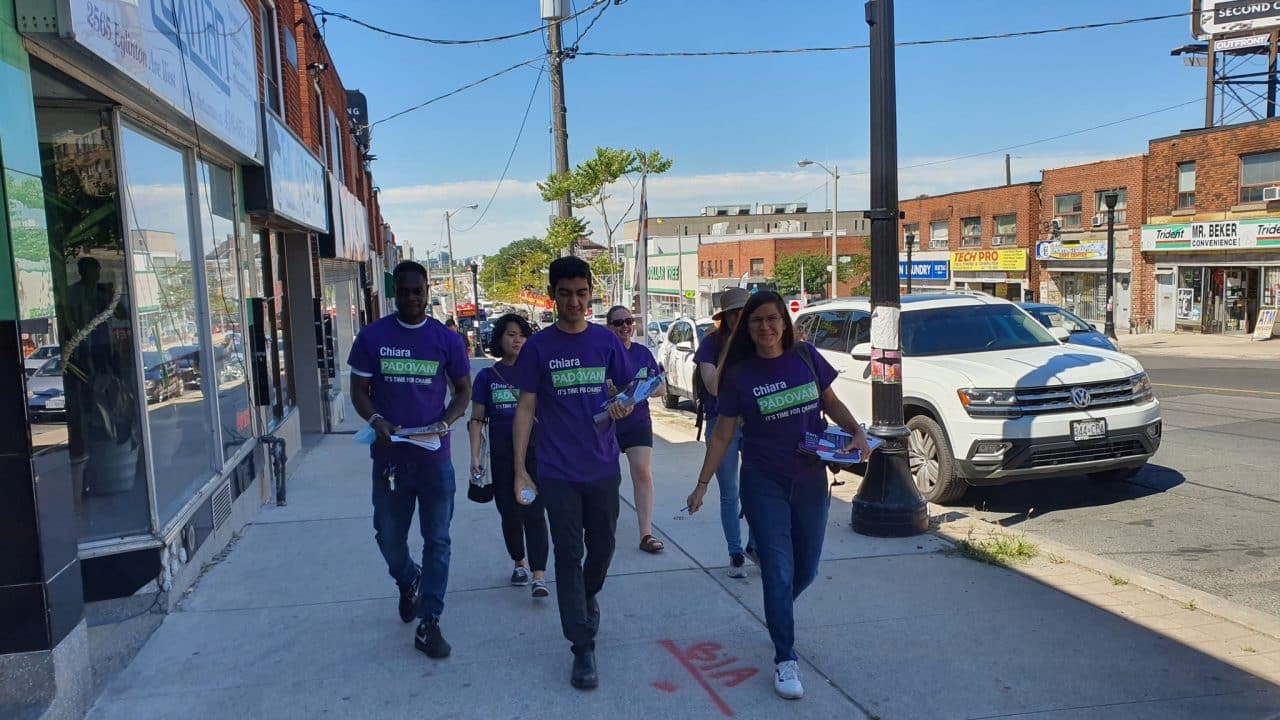
“The City of Toronto has been relying on the market to solve the problem that the market created when it comes to housing,” said Chiara Padovani, founder and co-chair of the York-South Weston Tenant Union and candidate for city councillor in 2022’s municipal election. “We can’t keep waving incentives in front of private developers expecting them to do housing for good instead of for profit, it’s never going to happen.”
Instead, she said, the city needs to take an active role in building affordable housing on public land, with municipally-enforced rent control. Chow has committed to building 25,000 rent-controlled homes over eight years on land owned by the city, using a combination of funding sources including a moderate increase to the City Building Fund and federal grant funding through the CMHC.
She has also vowed to increase the Multi-Unit Residential Acquisition fund to $100 million (from $21 million this year), allowing the city to put over 600 rental units per year into the hands of land trusts and not-for-profit housing providers.
Padovani also advocates for scaling up protections for renters, including by conducting regular inspections of apartment complexes through RentSafeTO.
“Tenants in Toronto are struggling with being stuck in apartments where repairs aren’t getting done because the landlord wants them to move out, so they can increase the rent for new tenants,” Padovani said. “A lot of maintenance and repairs are going unaddressed by landlords all over the city because they have incentives not to address them.”
One solution is to assign apartment buildings colour-coded grades after inspections, that must be prominently displayed, like Toronto Public Health does with restaurants. This would serve the twin purposes of incentivizing maintenance from landlords and informing tenants about the properties they are looking to rent.
“If you walk into a restaurant and see they got a conditional pass or fail, you walk out because you don’t want cockroaches in your food,” Padovani said. “Well, you don’t want cockroaches in your cabinets either.”
As part of her platform, Chow has proposed a $12-million investment in protections for renters, which includes doubling the city’s rent bank (that saw record demand over the pandemic), expanding the Eviction Prevention in the Community (EPIC) program which assists tenants facing eviction, and creating a “Renter’s Action Committee” to work with the City’s Planning and Housing Committee to advocate for renters at City Hall.
While the mayor’s office has its jurisdictional limits when it comes to combatting the housing crisis, Padovani underscores the importance of leveraging every resource available.
“Rather than throwing our hands up and saying things like minimum wage, rent control, or above-guideline rent increases are out of our jurisdiction, we need to think about using the tools we have at our disposal,” she said. “You can absolutely set an example that begins to shift the narrative and challenge the province on the failed policies they’re putting forward.”
Connect climate change to other issues
Anne Keary, a member of the Steering Committee for the Toronto Climate Action Network, told The Breach a progressive mayor could also set an example for municipally-driven climate action.
“We need a mayor who can connect the dots between the housing and affordability crisis and the climate crisis here in Toronto,” she said.
The group notes that there is a $4.5-billion difference between what the City’s Net Zero strategy TransformTO recommended in 2017 and what is allocated in the budget.
Keary agreed that using a commercial parking levy to fund public transit would go a long way towards reducing carbon emissions. She also supports instituting a stormwater charge for property owners to help the city pay for the infrastructural damage caused by water runoff and cancelling city council’s plans to reconstruct the eastern portion of the Gardiner Expressway–a $650-million investment that could be better spent developing climate-resilient infrastructure.
“It’s a significant amount that we could use to build affordable, green buildings that would save energy and provide much-needed housing in Toronto.”
Harness Toronto’s left wing
Over the next four years, Chow will have to wrestle with the intransigence of certain city councillors and Doug Ford’s provincial government to see her vision for Toronto come to fruition.
Ford has made no secret of his antipathy towards Chow, saying her victory would be an “unmitigated disaster” for the city. Under his reign, the Tories have freely interfered in the revenue generation tools of municipalities across the province and took a hatchet to democratic representation in Toronto by slashing city council in half in 2018, creating unwieldy electoral wards the size of small cities. Meanwhile, a powerful contingent of Tory-aligned city councillors have thrown their weight behind her political rival, Ana Bailāo.
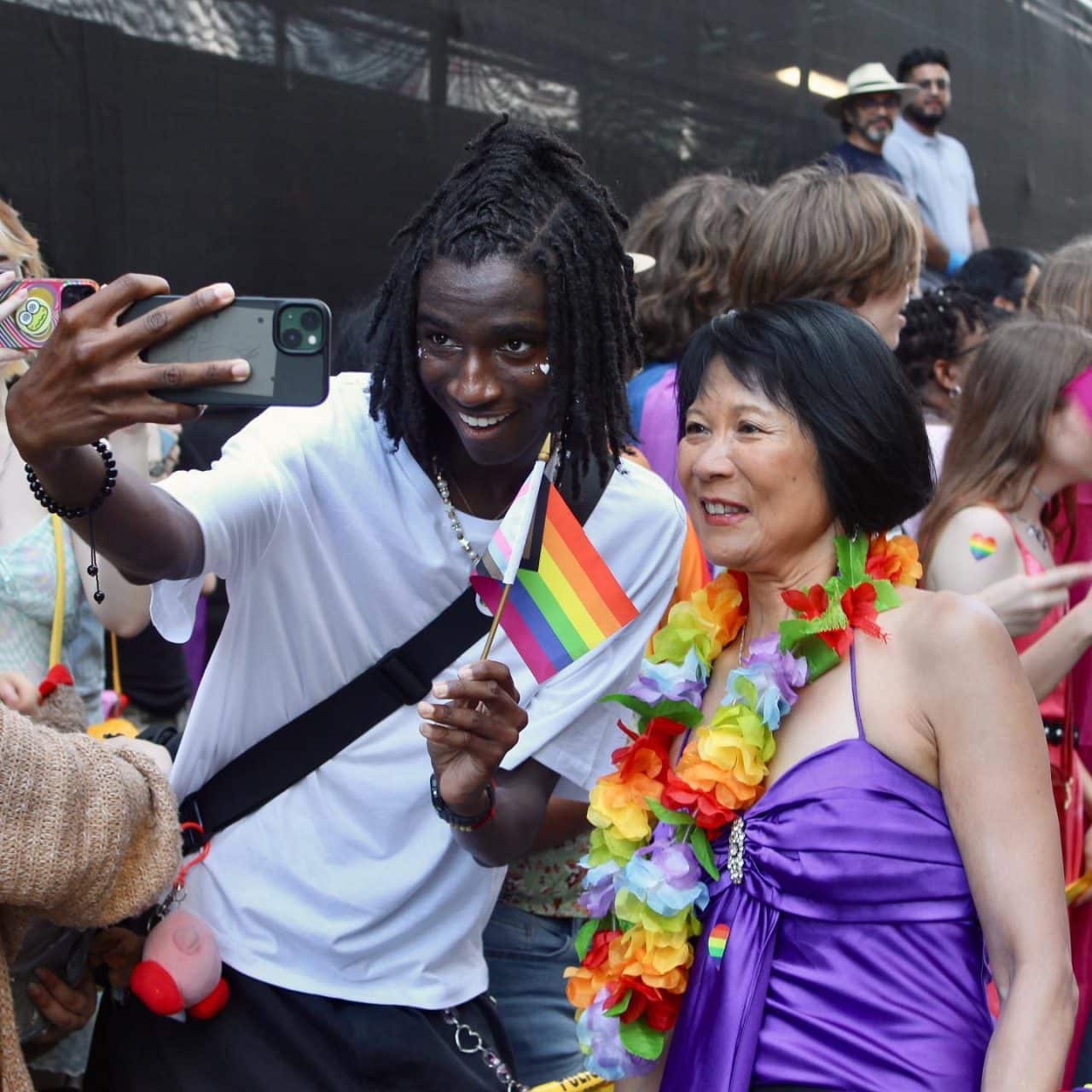
Given these challenges, we are yet to see how progressive a mayor Chow will turn out to be. Since her defeat against Tory in 2014, she has been busy training up grassroots organizers through the Institute for Change Leaders. Once she takes the Declaration of Office, it will be worth watching to see if she is able to channel the city’s considerable resources to fortify grassroots movements in Toronto and secure them a better seat at the table—one with the capacity to influence key decisions shaping the city’s future.
If there is anything to be learned from Miller’s celebrated tenure at the city’s helm, it is that long-term change cannot be built solely on the rare intrusion of a decent person into a position of power. It will take all of us—a broad, diverse working-class coalition—to fashion the city in our own image.
The Breach’s investigations don’t just inform our readers—they force the powerful to react.
An exposé on blood plasma privatization led to national headlines. Our revelations about the government’s cozy connections to Big Pharma sparked a parliamentary probe. A report on high-tech price-fixing by mega landlords resulted in a criminal investigation.
From activists to elected officials, people are using The Breach’s journalism to push for transformative change.
– Dru Oja Jay, Board President, The Breach