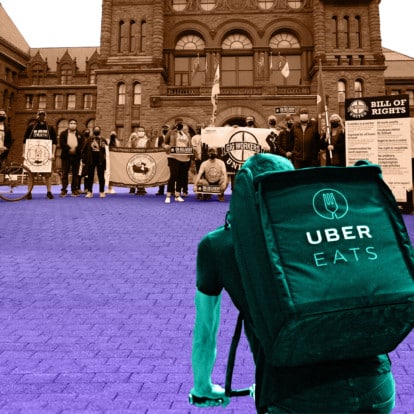
This past May, a small group of Uber and Lyft drivers organized a protest in Vancouver calling on the government to pass legislation declaring app workers as employees, which would guarantee a minimum wage, WorkSafeBC coverage and other protections. They threatened to go on strike if the government did not act.
“Uber drivers, Lyft drivers, they are humans,” driver Kuljeet Singh told CBC News at the time. “We are not machines.”
The workers have not yet acted on their threat and there is no legislation forthcoming from the B.C. government, despite calls from labour advocates. But the protest is telling, all the same.
First, the target of their demands is the government, not their employer, which speaks volumes about the nature of gig work and the likelihood that large app companies will change their behaviour on their own. These workers feel their only chance at decent working conditions comes through the government.
The protest also shines a spotlight on the deplorable working conditions of gig workers in Canada. The big app companies, including Uber, Skip the Dishes and Doordash, play a game of bait and switch with their workers. They promise a job with flexibility and autonomy but instead tether workers to a rapacious algorithm that constantly changes its rules to drive down incomes. Add in downtime, insurance, gas, maintenance and cleaning costs, and most app-based delivery drivers earn less than $10 an hour.
But precarious work didn’t begin with smartphones. Workers’ protections—which were won through bold collective action in the 1970s—were chipped away at for decades by employers and complicit governments. Those protections could be won back again.

Precarious work didn’t start with Uber
Modern gig workers are merely the tip of the proverbial iceberg that is precarious work in Canada. Precarious work is work that lacks two things: security and stability. The absence of those two qualities leads to the rise of a third: vulnerability. Precarious workers are far more vulnerable to mistreatment and exploitation.
Over the past 30 years, precarious work has burrowed its way into every corner of the labour market. It is not just gig workers, baristas and fast food clerks who are precarious. A substitute teacher waiting by the phone to see if they work that day and a government worker stringing together a series of temporary contracts are also precarious. As is the IT tech whose job was outsourced and is now doing the same job, but with less job security and no benefits.
Race and residency status can also compound vulnerability.
While I was writing a book on precarious work, one worker told me he came to Canada in 2017 as a foreign student, but had to drop out when his money ran out.
He chose to stay in Canada to try to earn more money without a legal residency permit. He worked a series of informal jobs for cash, including landscaping and washing dishes at a greasy spoon. When I spoke with him he was out of work, couch surfing and dumpster diving to find food.
Statistics Canada estimates that over one in three workers works in “non-standard” employment. That basket includes part-time and temporary workers, sole self-employed (i.e., do not have employees), and multiple job holders. This calculation, however, misses many key types of workers, including gig workers, migrant workers and people working in the informal economy. Labour researchers estimate that 50 per cent of workers experience at least one element of precarity.
Unsurprisingly, it is women, racialized and Indigenous workers, young workers and newcomers who are more likely to work in precarious jobs.
Precarious work has serious negative consequences. Wages are lower, and workers are less likely to have benefits, a pension plan or be eligible for Employment Insurance, workers’ compensation and other security programs. Precarious workers are more likely to be injured on the job. Precarity forces workers to delay or forego key life decisions, such as starting a family, or buying a house. The effects spill over into their physical and mental health. Precarious workers experience higher levels of stress and have higher rates of cardio-vascular disease, diabetes, depression, and eating disorders among other health consequences. There is even evidence that these negative effects become cross-generational, impacting the children of precarious workers.
But the consequences go beyond workers. We all pay a price. The growth in precarious work has led to increased inequality. A recent OECD study across 44 countries found a direct link between the proportion of precarious jobs in the labour market and wage inequality. It estimates precarious work increases inequality by 20 to 25 per cent. Precarious work also acts as a drag on productivity and organizational performance and, ultimately, even reduces corporate profits.
In a way, precarious work is a false economy; employers lower wage costs in the short term, at the long-term expense of economic performance.
How did we get here? The rise of precarious work is linked to the breakdown of the post-World War II Fordist compromise, which was an unwritten social contract between workers, employers and governments. Employers were pressured to provide stable, well-paying jobs. Governments enacted employment protections and built a social safety net.
Importantly, the so-called compromise emerged as a direct result of workers and their families demanding better. Tens of thousands of workers walked off the job in a strike wave in the years following the war, affecting every major industry including logging, manufacturing, shipping and mining. The year 1949 saw a nation-wide strike of meatpacking workers. These strikes were about forcing employers to share in the postwar prosperity.

Similarly, workers voted for governments that would create a social safety net. The continent’s first democratic socialist government was elected in Saskatchewan in 1944—and that government proved to be crucial to the creation of Canada’s universal health care system.
Between the 1970s and 1990s, this arrangement fell apart. The rise of neoliberalism, the internationalization of capital and the liberalization of finance laws began to transform the economy. Governments, responding to demands from an increasingly aggressive corporate lobby, rolled back workers’ protections, cut social programs and privatized many public services. Employers happily rushed in to lower wages, outsource, bust unions, shift to part-time and temporary jobs and generally degrade the quality of work. These actions constructed the monster that is precarious work today.
The good news is that precarious work is not inevitable. Because it is the result of conscious decisions made by governments and employers to degrade work and devalue workers, it is possible for a new set of decisions to reverse the scourge of precarity. To make alternatives possible, we need a return to the post-war strategies of speaking through the ballot box and through collective action.
Starbucks and Amazon workers lead the renewed fight against precarity
We have seen early indications of the kind of collective action required recently, most of it coming from precarious workers themselves.
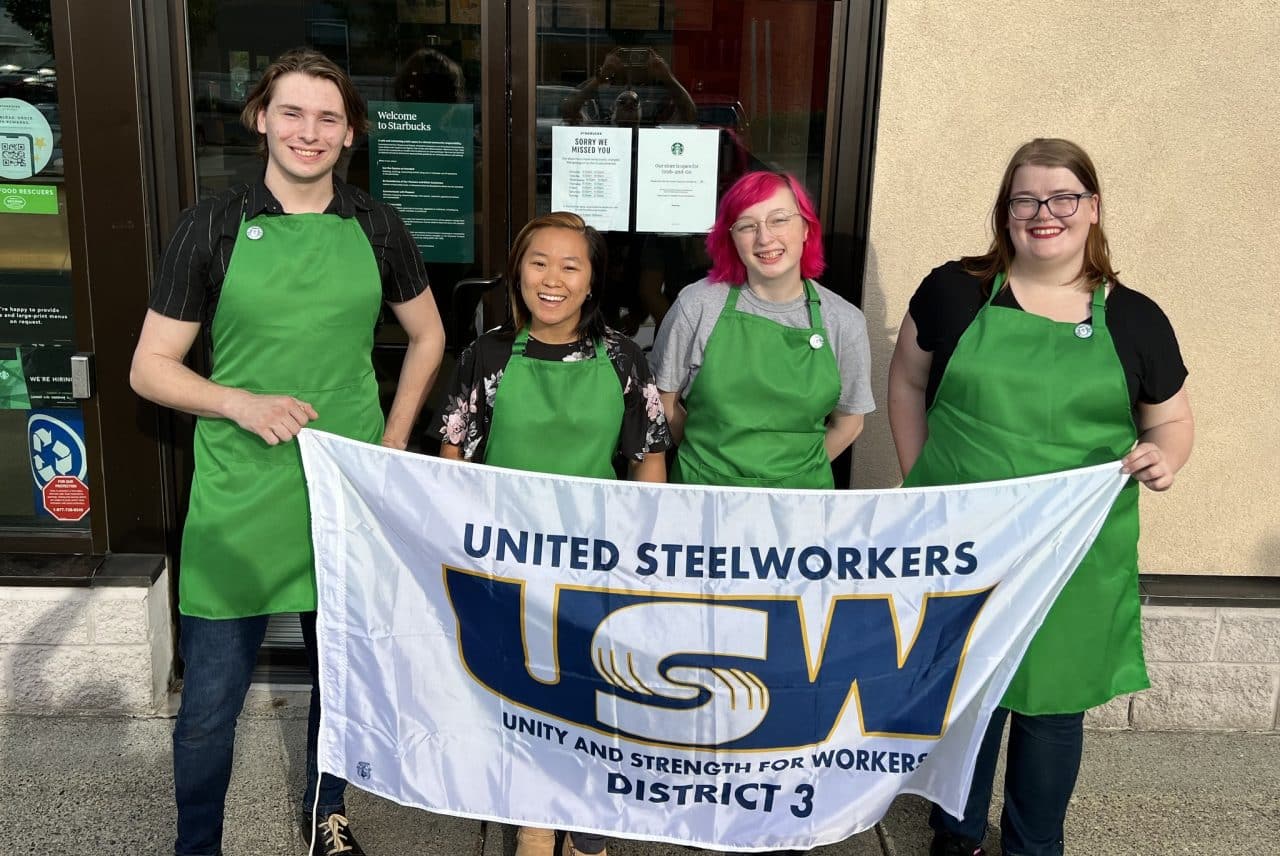
In 2022, a wave of union organizing took place at Starbucks stores across North America.
Under the banner Starbucks Workers United, workers at over 300 stores in the United States have voted to unionize.
In Canada, almost a dozen have done so, including stores in Vancouver; Victoria; Surrey, B.C.; Langley, B.C.; Waterloo, Ont.; Calgary and Sherwood Park, Alta. Most of these stores have unionized through the United Steelworkers union. One store in Victoria is the first in North America to successfully negotiate a collective agreement.
Similarly, Amazon workers in New York famously unionized last year. At least six organizing campaigns are currently underway at various Amazon locations in Canada, although none have met the legal bar for unionization yet. With both Amazon and Starbucks, a key feature of the drives is that they are either being led by new unions formed by precarious workers for precarious workers, or traditional unions are shifting their strategies to place these workers in leadership roles in the campaigns.
For example, the Steelworkers’ approach to Starbucks is brand new for them. Instead of assigning a team of professional organizers to persuade workers to unionize, the organizing drives are being initiated and led by young workers at each store. The union offers advice and legal support, but the organizing happens from the bottom up. Workers quietly talk to each other, often using text and messaging apps to avoid the prying eyes of their managers.
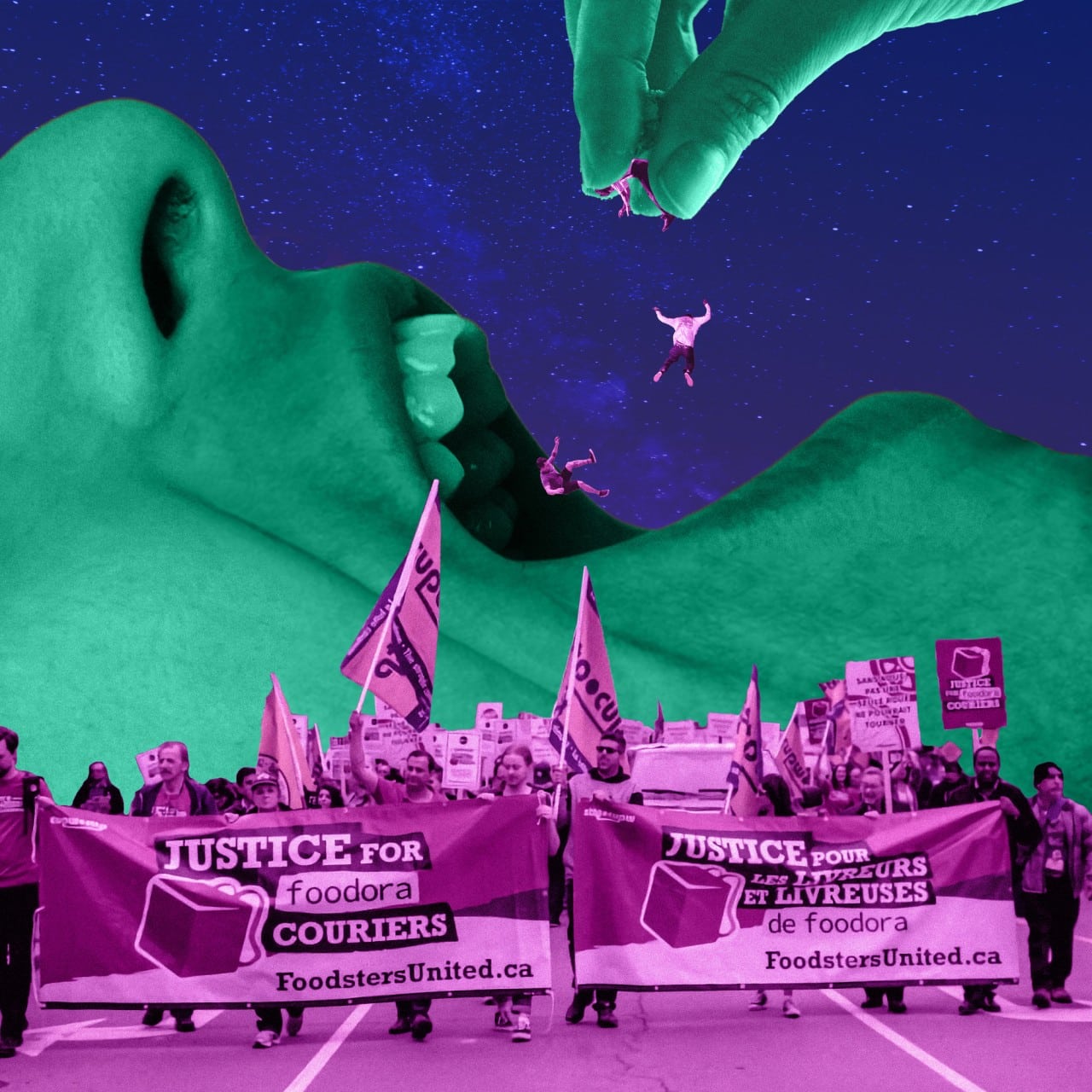
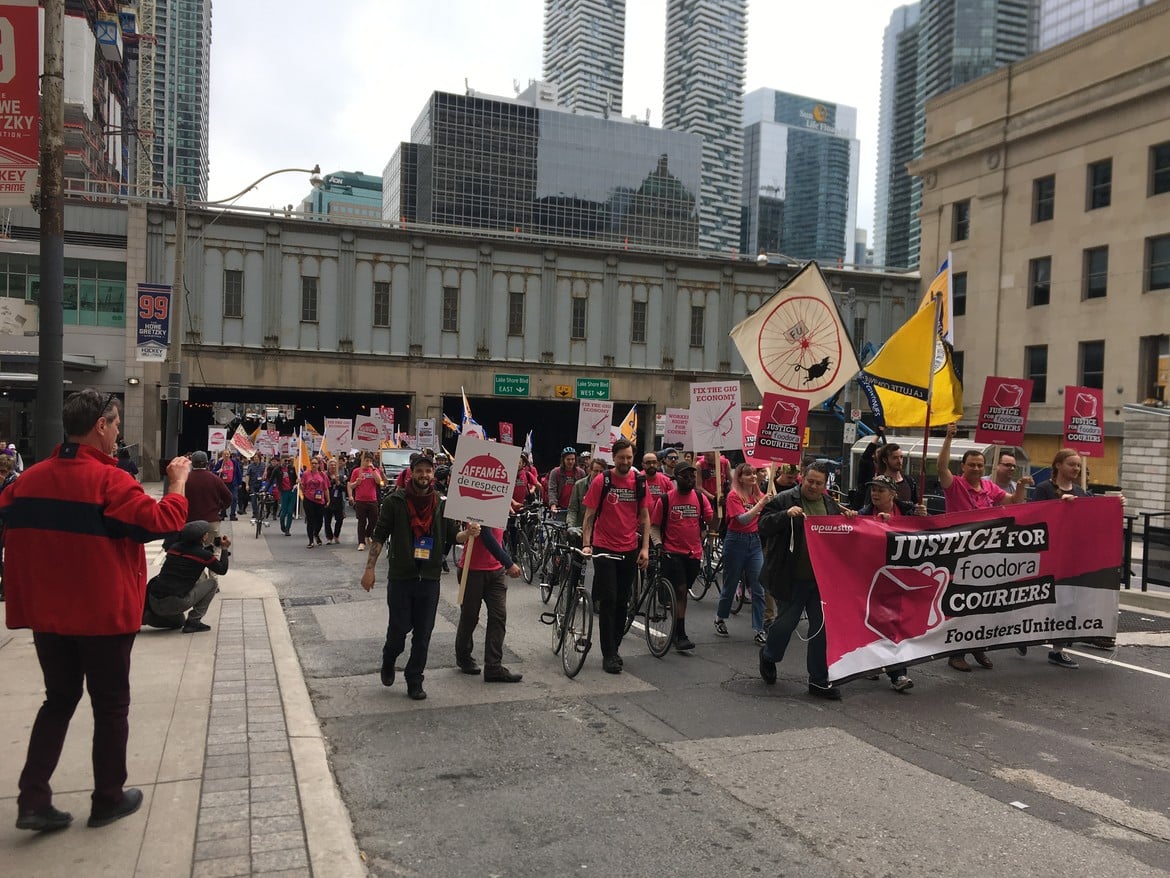
While unions provide the best degree of protection for workers in a workplace, there are downsides to the approach of seeking union certificationConsider the success and subsequent failure of Foodora workers in Toronto. In 2020, after a multi-year campaign, bicycle and vehicle delivery workers voted to unionize and the labour board recognized their right to do so. This was a historic decision that promised to turn the corner for gig workers in Canada. Months later, Foodora ceased Canadian operations in order to evade the union.
Employers of precarious workers have a long history of avoiding unionization. In 1998, a McDonald’s in Squamish, B.C. voted to unionize, only to decertify a year later having failed to bring the employer to the table to negotiate a first contract. In 2005, Walmart preferred to shutter a store in Quebec rather than negotiate a collective agreement with its newly unionized workers.
Workers’ action goes beyond unionizing
Precarious workers understand this dilemma, and have been finding new ways to work together to improve working conditions. Uber drivers create WhatsApp groups to coordinate action to maximize their pay, including orchestrating group logoffs to trick the algorithm into increasing rates. The Foodora workers union, called Gig Workers United, runs bike and care maintenance workshops, as well as presentations on topics such as filing taxes as an independent contractor and on fighting traffic tickets as part of its mobilization efforts.
Similarly, the Canadian Freelance Guild, which formed in 2021, does not try to unionize workers. Instead, it offers practical services to members, including advice on negotiating contracts, a job bank, and a modest health benefit plan. Their goal is to take the edges off the exploitative nature of a freelancer’s situation.
Finally, like the Vancouver ride hail drivers, precarious workers are pressuring governments to take action. In June, pressure from drivers led New York City to implement a minimum wage for app-based delivery drivers of just under $18 an hour. A similar law in Minnesota passed both houses but was ultimately vetoed by the Governor under pressure from app companies. A group of Uber drivers in Ontario have turned to the courts, launching a class action lawsuit against the company for $400 million to get the company’s workers certified as employees. As lawyer Samara Belitzky has said to the CBC, the lawsuit holds the potential to “change the landscape of employment” in Canada..
The labour victories of the post-war era did not come quickly or easily. Neither will the road for today’s precarious workers be without peril and setbacks. But if we are to turn back the tide of precarious work, workers will need to once again demand better from our governments and employers.

I often hear that I’m lucky to have a full-time job in journalism.
Critical, bold journalism that isn’t beholden to media monopolies should be the norm—not the exception.
By supporting The Breach, you’re supporting a more robust, progressive media. Join us today.
– Katia Lo Innes, Associate Producer, The Breach