Arnold Bennett always gets a lot of calls—but this year, his phone has been ringing off the hook.
The 71-year-old housing advocate has run some form of housing hotline for tenants in Montreal since the 1970s. He’s listened to thousands of callers share horrific stories of evictions, rent increases, and abusive landlords. For decades, he’s fought for tenants’ rights in the pages of the Montreal Gazette, at city hall, on television and radio. To this day, he mans the hotline eight hours a day, five days a week.
This year is particularly bad for a number of reasons, Bennett said, explaining that the Coalition Avenir Québec (CAQ) government’s proposed housing legislation, Bill 31, will exacerbate existing tenants’ issues.
“The biggest problem is going to be that if a tenant wants to transfer the lease, the landlord can just say no.”
All the wrong changes
Bill 31 was tabled in June, on the last day of the parliamentary session before its summer break. The legislation would effectively kill lease transfers, which let tenants in Quebec assign their lease to another person with the same rent, allowing them to leave their apartment before the end of the contract. Right now, landlords can only refuse lease transfers for serious reasons, like if a tenant is unable to pay rent. Under Bill 31, landlords could refuse lease transfers without any explanation, allowing them to cancel the lease and jack up the prices of their units.
Tenant groups say the law would cause rent prices, which are already rising because of increased demand and inflation, to shoot even higher. And they say the law could be an omen of worse things to come from the CAQ government.
But Quebec’s tenant movement has a history of beating back harmful policies—and with renewed energy, experts and activists believe the movement could defeat Bill 31.
“Unfortunately, what we’re seeing now is only the beginning of what’s coming for the housing situation in Quebec. All the decisions that have been made over the past years and even recently are going in the opposite direction of the proper solution,” explained Cédric Dussault, co-spokesperson for Le Regroupement des comités logement et associations de locataires du Québec (RCLALQ), a collective of Quebec’s prominent tenants’ groups. “We were not necessarily expecting losing rights…This is basically the only right that tenants have to have a little bit of control over soaring rents.”

‘It’s f—ing expensive’
Many who sought housing this year said that rents were significantly higher than in the past.
“From my experience, and other people I know that looked for places in the past year, it’s fucking expensive,” said Lily Martin, a tenant support coordinator at the Table de quartier sud de l’Ouest-de-l’Île. “The most frequent calls I get are about rent increases. People are pissed off.”
Martin said that often, predatory landlords dupe tenants into paying higher rents than they should, because they know that prospective tenants are desperate to sign a lease after weeks of searching for housing. She decided to move to a different neighbourhood after university, and so she put her apartment listing on Facebook a few months before Quebec’s July 1 moving day. She was immediately inundated with hundreds of messages.
“There were so many. Everyone who came in made an offer immediately,” she said. “I felt so bad. Looking for one is a full-time job. [You have to look] every single second, on Kijiji, Facebook Marketplace, texting anyone you know, posting on Instagram, every single rent group. It’s hard.”
Though Martin tried to transfer her lease, she said her landlord refused the transfer, even though there wasn’t an obvious reason. Since she was leaving the country to travel, she didn’t have time to fight the refusal in court, meaning that when the new tenants took over via sublet, they had to sign a new lease. Though the landlord did increase the rent, the new tenants in the building are likely planning to fight the increase at Quebec’s housing tribunal, Martin said.
“It’s so hard,” Martin said. “you need time, “If you have a million other things going on, if you’re working, it can be really hard to [fight it].”
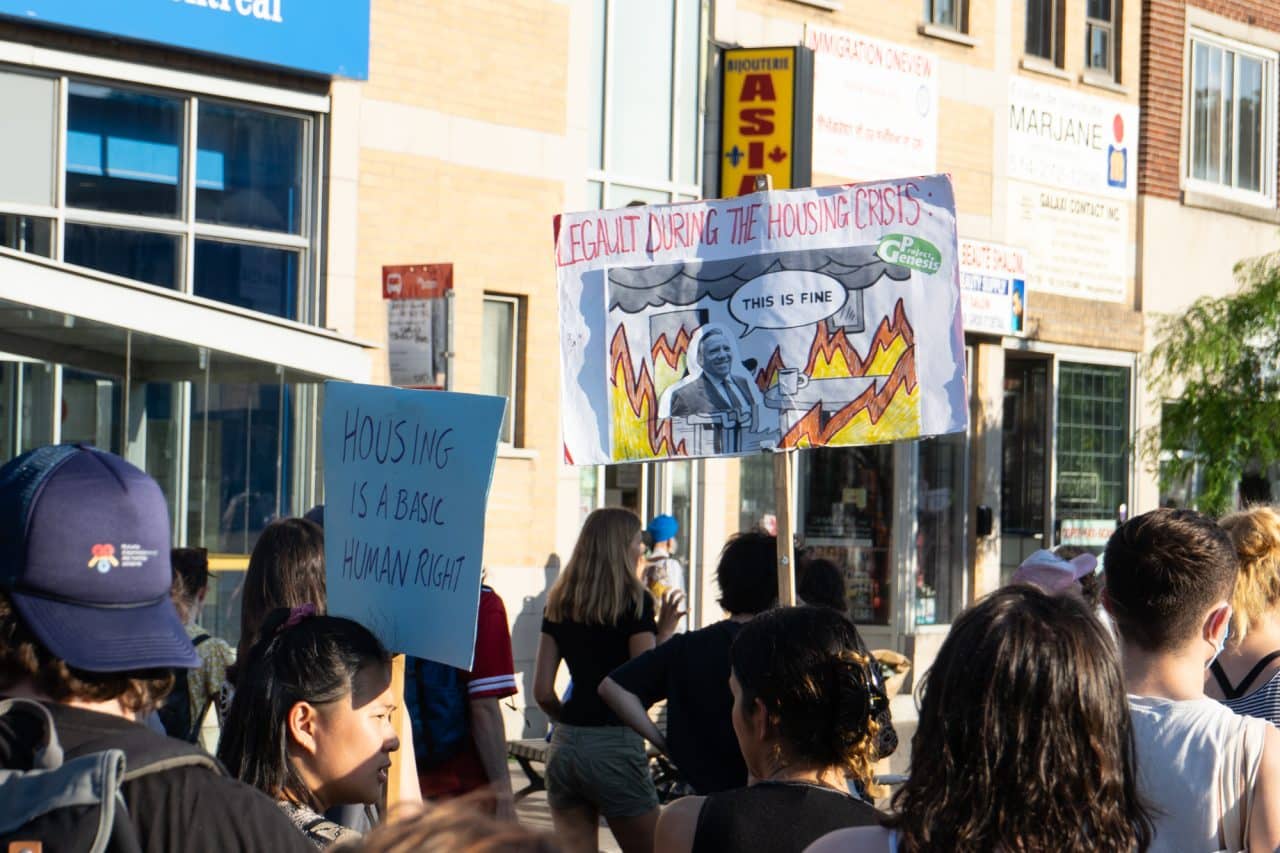
At a tenants’ march last month in Montreal’s Parc-Ex, one couple told The Breach that they only secured their apartment after months of searching because they ventured out in last April’s deadly ice storm for the viewing.
“Nobody else turned up to the showing. There was a power outage, so there wasn’t any power in the apartment when we went to see it,” said Lucy Sharpe. She and her partner signed the lease as soon as they could when they saw they were the only ones there. “It was kind of crazy of us that we did that. But seriously, we were that desperate.”
Tenants in Quebec do, however, have avenues to protect themselves from abusive rent increases. Renters have a right of refusal on increases, having 30 days from a notice of increase to formally refuse the new amount. The case is then taken to the Tribunal administratif du logement (TAL), Quebec’s housing tribunal, where it’s heard, and a decision made to set a rent amount.
“The reality of refusing a rent increase is that it’s very low effort and very low risk. You send back the form within 30 days, and then it’s the landlord that has to go to the TAL. The hearing itself is 10 minutes, it’s procedural,” Martin explained. “But tenants unfortunately don’t know their rights. And people are scared that they’re going to get kicked out.”

Opening the door for exploitation
Bill 31 would open the door for more exploitation by landlords, particularly in the context of lease transfers. If tenants can’t transfer their lease to someone new, landlords will be entitled to set any price they want for the next lease. That will not only drive prices up, Bennett noted, but it also paves the way for landlords to discriminate against tenants.
“To me, the most important thing is that lease transfers are a rock-solid way of getting around all kinds of discrimination. Racial discrimination, gender discrimination, discrimination against people with kids, these have been very serious problems when trying to rent apartments,” he explained. “You cannot refuse a tenant under the current law who’s proposed under a lease transfer unless they have bad credit or something like that. Now, you can just say ‘I don’t want to lease transfer,’ and that’s it. Yeah, discrimination is illegal, but how would you actually enforce anti-discrimination laws here?”
If Bill 31 passes, Bennett worries that there’ll be dire impacts on those already most discriminated against in the housing system.
“To me, that discrimination is the most serious consequence. Even more serious than the rent [price] spiral, where it’s still possible to do something about it,” he said.
Families are already feeling the effects of oppressive rent increases, and are worried about what could come next for renters in the province. Montrealer Felicity Spence lives in the city with her family, and said she worries about future prospects of moving from her current lease. She joined thousands of others at last month’s protest.
“You’re kind of stuck. You can’t move because you’ll lose whatever rent you have, and you’ll end up paying more,” Spence said. “I’ve been in my current apartment for seven years, and if I choose to move right now, I’m going to end up paying double what I currently pay.”
Spence has lived in Montreal for her whole life. When she moved out of her family home for school 20 years ago, she had no problem finding an apartment–a totally different experience than the students of today experience in the city.
“I paid $300 a month for rent. It was super easy to find, I worked a part-time, minimum-wage job and was able to pay my rent, pay for school, pay for food, and even later on it was still always affordable to find a place,” she said. “I really feel bad for young people. It’s also hard for older people. Not everyone has an incredible retirement, a lot of elderly people live in poverty. There’s a lot of fear for the future.”
Rubbing shoulders with the real estate lobbies
Quebec’s Minister of Housing France-Élaine Duranceau said that tenants who wish to transfer a lease to someone else should instead “invest in real estate and take the risks that go with it,” prompting backlash from tenants’ unions.
But it’s not surprising that Duranceau wants Quebecers to invest in real estate. It was recently revealed that Duranceau had been lobbied by her real-estate business partner Annie Lemieux, prompting an investigation by the National Assembly’s ethics commissioner. It’s also been revealed that Duranceau bought a Montreal duplex for $500,000 in 2019, flipping it into a luxury condo building with units selling for $800,000.
“When she was nominated, we knew that choosing a former real estate agent as a minister of housing was clearly taking the side of landlords and real estate lobbies, we already knew that wasn’t a good sign,” Dussault said. “We saw that she met multiple times with landlord associations, but not with the RCLALQ once.”

A page out of the history book
Quebec has faced this kind of battle before. In the 1980s, Bennett remembers interest rates rocketing as governments attempted to kill inflation. He remembers the rental board allowing 15- to 20-per-cent rent increases, with some landlords demanding 30-per-cent increases.
“It was a fight every year to inform people about their rights so that they could refuse rent increases and go to the rental board and everything,” he explained.
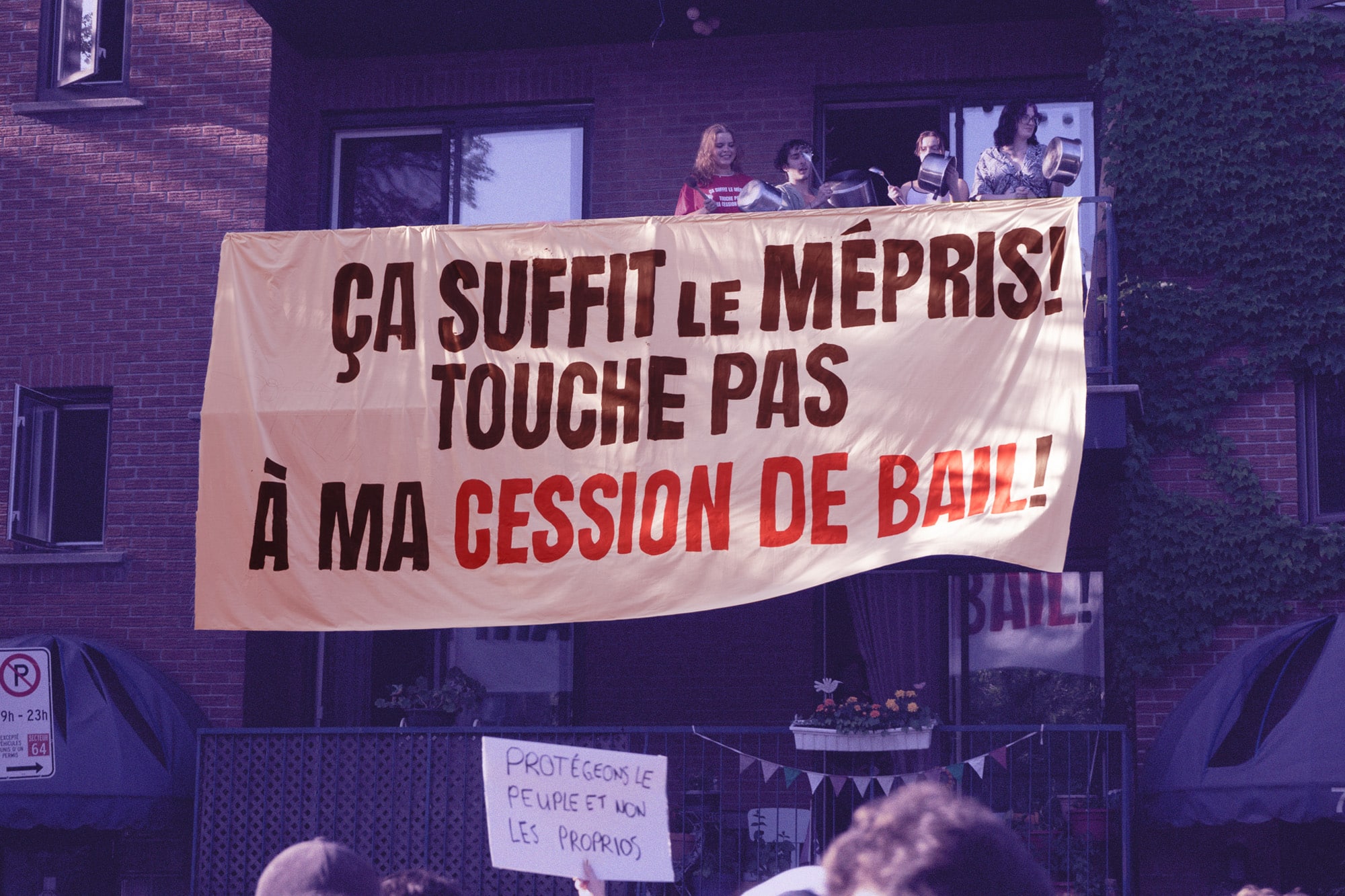
In the early 1980s, the RCLALQ began organizing to encourage tenants to collectively refuse rent increases, with the “Passe-moi ton bail!” (Pass me your lease!) campaign encouraging tenants to leave a copy of their lease for the next occupants of their units. Many continue this practice, including mailing a copy of the lease to new tenants to ensure they receive it directly.

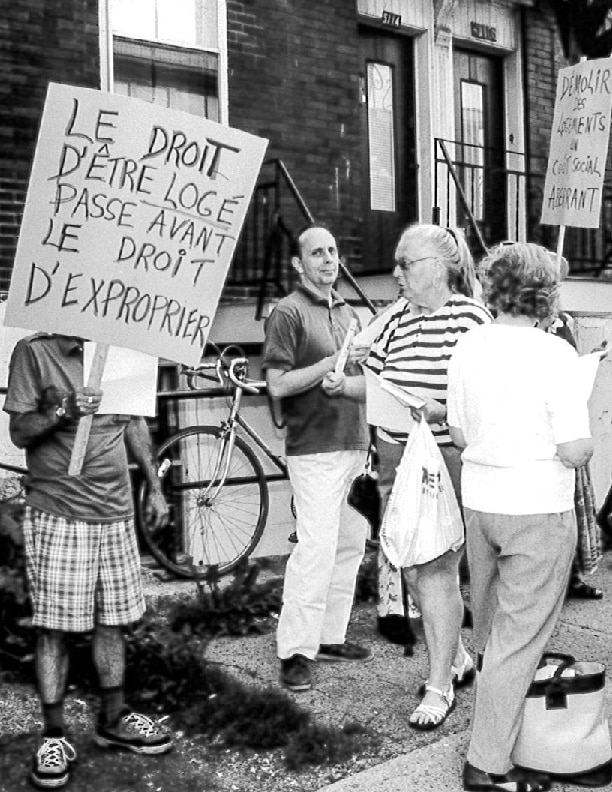
Throughout the years, tenant organizing in Quebec has seen wins for the underdogs, such as Montreal’s moratorium on condo conversions that was secured in 1975, which prevents units from being bought up and turned into condos.
“The intention was that it would be a short-term moratorium, but tenant groups kept lobbying to keep the moratorium and expand it,” Bennett explained.
In 1987, tenant groups showed just how committed they were to maintaining renters’ rights.
“The Liberals were back in power and they wanted to lift the ban on condo conversions, but in exchange bring in ‘ironclad protection’ for tenants, and we weren’t ready to buy that, we said no,” Bennett said.
With the expertise of tenant lawyers, Bennett and his fellow organizers formed a group called the Association of Tenants Against Condo Conversions—better known as ATACC. Together, they reached building associations across the city and encouraged them to lobby their representatives to take a position against condo conversions.
“And Quebec ended up changing their proposed law,” Bennett said. “They continued the ban in Montreal, and for there to be condo conversion on the Island of Montreal, the municipality had to opt-in. So that meant important protection for several more years.”
Bennett believes the province’s ability to fight for tenants’ rights is due in part to its demographics.
“In the early 1970s, 80 per cent of the City of Montreal were tenants,” he said. Even today, Quebec has the lowest homeownership rate in the country. “Tenants are a massive, massive population. If you get them pissed off, they have an impact.”
Is there any hope for the future?
Since Bill 31 was tabled on the last day of the parliamentary session, it won’t be discussed until at least September. But if the bill passes, experts predict the effects on tenants will be drastic. Ricardo Tranjan, senior researcher at the Canadian Centre for Policy Alternatives, explained that the bill could dramatically change Quebec’s rental market.
“[Lease transfers] have helped us slow down a little bit the pace of rent increases, but now we’d be going in the opposite direction. The most direct and probable impact is that we’re going to have rents going up at a faster pace,” he said. “It’s a very clear example of how governments do a lot of lip service to the so-called housing crisis, but they’re unambiguously siding with the real estate industry instead of protecting tenants and families.”
Though Tranjan emphasized that tenants are definitely at risk under Quebec’s Bill 31, he also underlined tenants’ past success in resisting harmful policy.
“The tenant movement in Quebec is so strong. It’s powerful. And I think it has the potential to once again be successful and push back. What I would do now is call on those not directly involved to come forward and support the movement,” Tranjan said.
“Join tenants’ groups, find ways to support them, to channel resources to them, to put attention on them. That’s what we need right now.”
With years of organizing under his belt, Bennett also knows that the tenants of Quebec aren’t going down without a fight. He said that the greatest challenge is ensuring the entire province is jointly mobilized to protect tenants’ rights.
“The question is, how well will the province-wide groups be able to network in areas that are under attack? To get those people cranked up?”
And what does Bennett think will happen in the end?
“I have no idea,” he said. “But I know this isn’t going to go quietly.”

“We need media that enlarges the sense of what’s possible.”
Naomi Klein, journalist and author
Want to support hope-fuelled journalism? Become a sustaining member.