Most days, Robyn leaves her door ajar. The former teacher and current stay-at-home-mother still lives in the small detached home in East York, Ont. where, a decade ago, Toronto police officers stormed inside with guns drawn.
“It was probably 2 o’clock in the morning when, all of a sudden, I just heard a loud bang,” she recounted. A team of police officers had deployed a flash grenade inside her home with her eight-year-old daughter asleep in the next room.
Before she could gather herself and get dressed, Robyn said they shouted at her to come out with her hands above her head.
That night, Robyn—who is only being identified by first name due to fear of reprisal by Toronto police—experienced what is known as a “no-knock raid” or “dynamic entry” search, where police officers enter a home without announcing their presence. The same tactic led to the high-profile death of Breonna Taylor in Louisville, Kentucky in 2020.
Howard Morton, a former director of Toronto police’s Special Investigations Unit (SIU), told The Breach that these raids are a “highlight” for Toronto police.
“They love playing cowboy,” he said. “They seem to enjoy it so much they carry on the way they do.”
In Toronto, police must obtain judicial authorization before executing a no-knock warrant, and only members of the Emergency Task Force can deploy “distraction devices” such as flash bangs. But there is no data available on how often Toronto police execute these raids. This secrecy lets police officers act with impunity, critics say, even while leaving people subjected to no-knock raids with injuries and post-traumatic stress disorder (PTSD).
In the long term, targets of these raids are left with destroyed property, injuries, and lifelong trauma, consequences which critics say have gone unaddressed by Toronto police.
Sexual assault, theft and threats
Robyn said she threw on the first thing she could find in the laundry hamper and emerged to “screaming and lights shining” in her eyes. An officer grabbed her and threw her down onto her dining chair, where she said she was handcuffed.
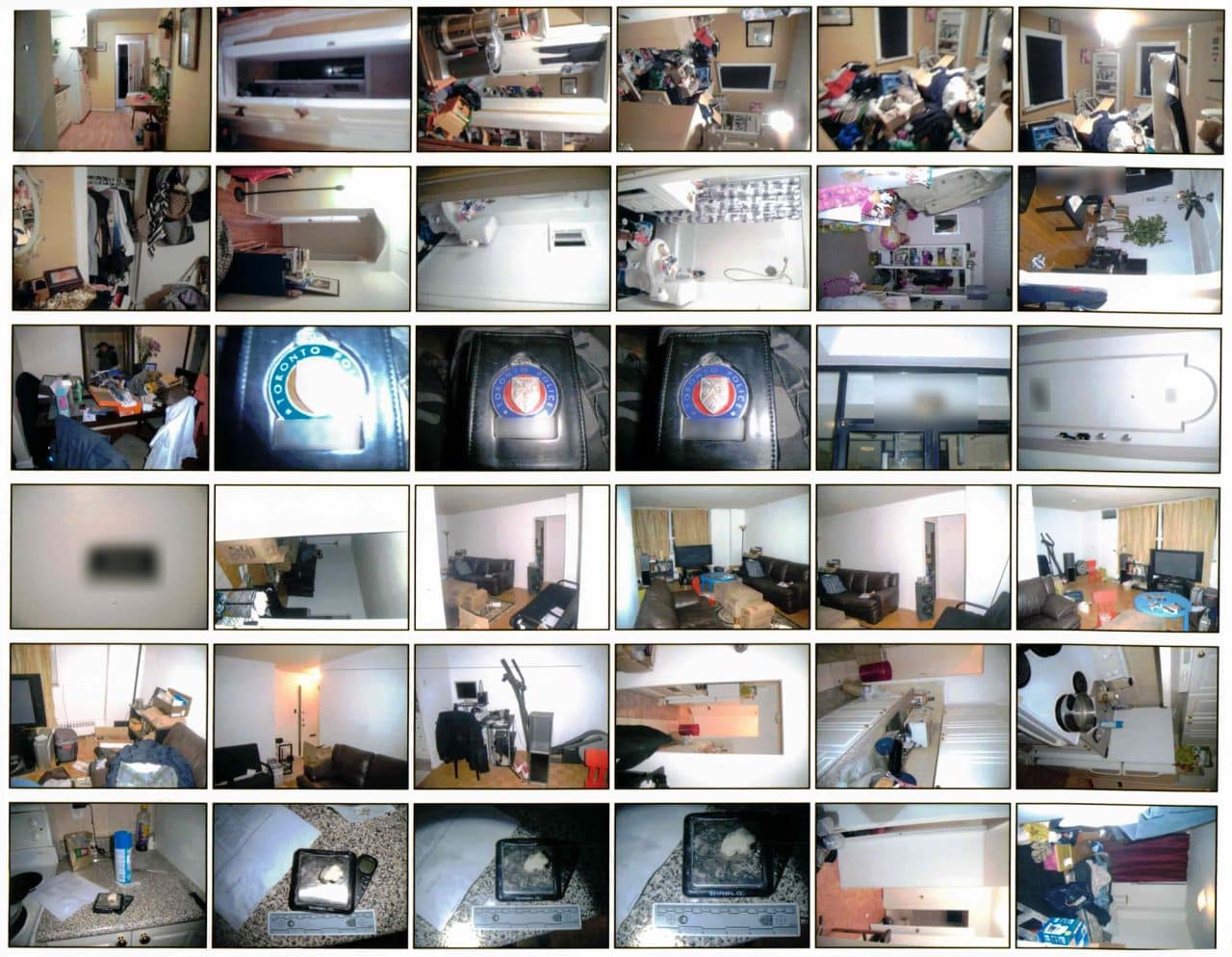
She watched as officers roamed through her house and opened drawers and cabinets, trashing their contents on the floor. Her tenant downstairs began to send her panicked texts, Robyn said, causing her phone to flash and buzz. She managed to reach it and shoved it down the front of her pants to hide it from the police raiding her home.
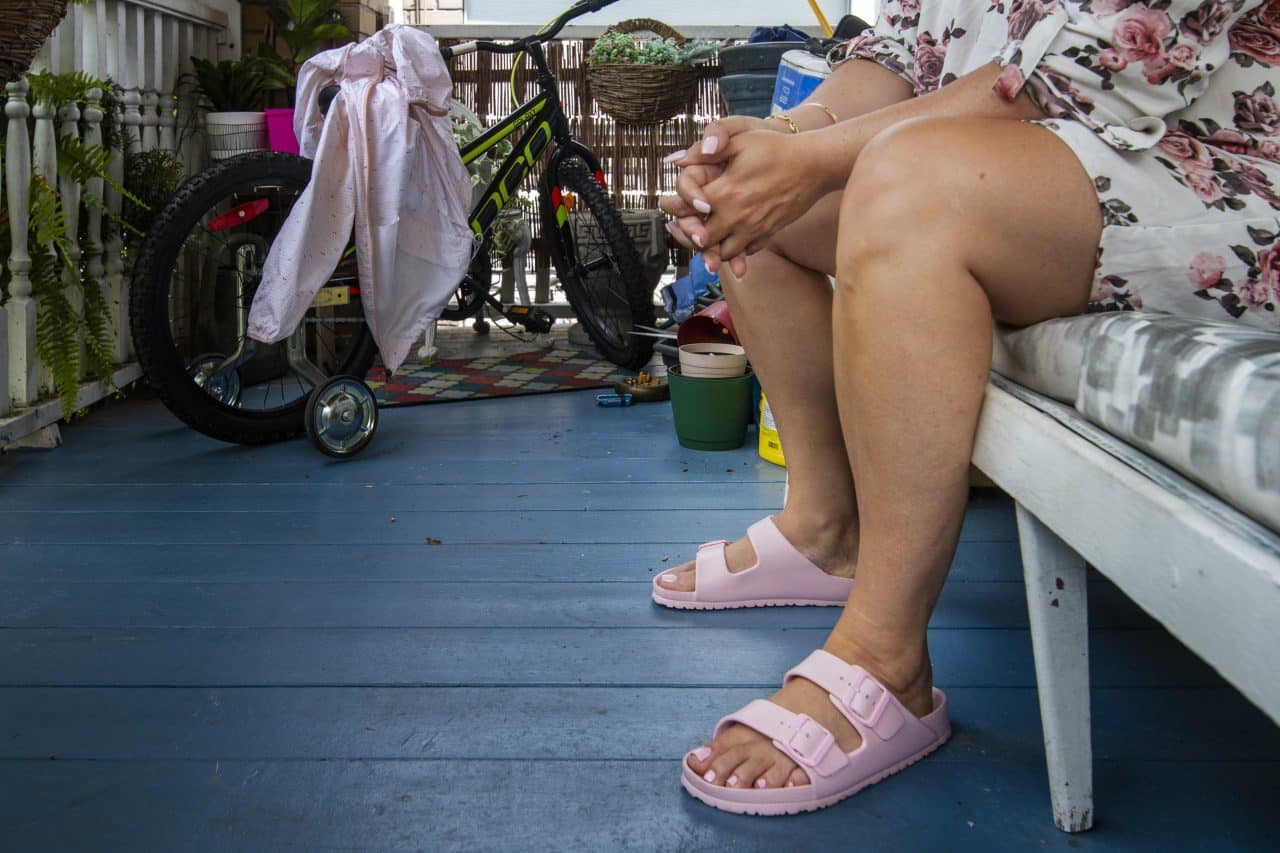
When they stepped up to open her daughter’s bedroom door, Robyn rushed to close it, and then officers pulled her outside. She saw her patio furniture smashed up all over her lawn.
“I don’t know if they had tried the knob or not, but the door was unlocked,” Robyn told The Breach. “Instead, they [appeared to have taken] the wrought-iron furniture off the porch and tried smashing in my door with it.”
She was shoved into the back of an unmarked car, where she watched officers rip apart her outdoor plants and tear their vines off the walls.
At this time, her tenant began another volley of texts to her phone. That was when the plainclothes officer in the front seat shoved his hand between her legs and allegedly proceeded to sexually assault her. After he removed the phone, he walked away, scrolling through her texts.
“Then my phone’s gone, I don’t see it after that,” Robyn said.
A few moments later, officers brought Robyn back into the house and pushed her onto a dining chair. She requested to see a search warrant, and said that an officer replied, “We will get that for you, but not right now.”
“That’s when the plainclothes guys come out and they just close in on me,” she recounted. “They’re like ‘You’re a fucking whore. You’re fucking a drug dealer. I hope you know you’re fucking a drug dealer-scumbag piece of shit.”
This was how she learned that her house had been targeted as part of an investigation into her then-boyfriend’s alleged drug dealing. After a separate raid on his home, he would later be charged and serve a brief sentence in prison.
After verbally harassing her, including additional derogatory and sexually-explicit comments, police confiscated $10,000 of her own cash from a safe in her bedroom and $50,000 in cash from a bag her partner had left in the basement.
“I was going through a divorce at the time; while I had money in the bank, I also like to keep some cash on hand,” she said. “They took all of it.”
In addition, officers took at least $500 from her wallet, an amount that was never declared in the resulting police report. On their way out the door, an officer dangled the lanyard with her work identification in front of her face. At the time, Robyn was working as a teacher in the Toronto District School Board.
“How’s the school going to feel when we call them?” she said he told her. “You won’t be there for long.”
The officer did not follow through on this threat.
‘Secrecy is a powerful tool to protect police interests’
The use of no-knock raids (also called “Feeney warrants”) has long been controversial. In 2005, the last time a case went before the Supreme Court, a narrow majority of justices (4-3) found that police had the “latitude” to execute these searches to the best of their judgment.
It is not known how many no-knock raids Toronto police conduct every year, though a Toronto Star report found that in 2013, police executed roughly four search warrants a day, a threefold increase since 2005. Half of these searches resulted in no charges being laid.
The force’s risk management reports, which were publicly available before 2020 but are no longer, indicate that police used force—including physical force, using a taser, or drawing a gun—218 times in 2015 and 404 times in 2019 while executing search warrants and dwelling address checks.
In 2015, according to the Toronto police’s own report, they considered a fifth of all use-of-force incidents “excessive,” with nearly 90 per cent of people affected requiring medical attention.
Black people are more likely to experience police force than other groups, experiencing 39 per cent of Toronto police officers’ force despite making up only 7.5 per cent of the population. Black, Indigenous and Middle Eastern people are also disproportionately likely to have contact with police in the first place.
Marta-Marika Urbanik, a criminology professor at the University of Alberta, researched the use of no-knock raids in three racialized neighborhoods in Toronto, interviewing 35 people who had experienced a no-knock raid in their home.
“Our findings revealed that police acted without procedural justice,” she wrote, “including warrantless searches, unnecessary violence and destruction of property, and illegal seizures/robbery.”
“Despite talking to people in different neighborhoods, the negative experiences we heard were really consistent,” said Urbanik in an interview with The Breach. “The raids, either in their own homes or their communities, were so frequent that there wasn’t even an aspect of surprise.”

Despite the ubiquity of no-knock raids in Toronto’s racialized, low-income neighborhoods, there is little publicly-available data on the frequency of these searches or the locations where they take place.
“Many researchers are well aware that it’s nearly impossible to access this data,” said Urbanik. “Police will often cite privacy reasons, in terms of not sharing information that might jeopardize identities, but the fact of the matter is this data can be shared while anonymizing it. We can have a spatial outline of where they occur, when they are most likely, how many are completed in a single year, or the different categories [of crimes] these raids are intended to pursue.”
The failure to make such data publicly accessible speaks to the Toronto police’s lack of accountability, she added.
“The secrecy with which police activities occur is a very powerful tool to protect police interests,” she said. “It ensures they do not come under higher levels of scrutiny for these activities. It’s part of the reason this practice is largely unexamined.”
The Toronto police refused to provide comment or additional data, writing in an email to The Breach that they would be “unable to provide the information requested” for any statistics on how often dynamic-entry raids are conducted.
‘I felt close to being killed’
George, who is being identified with a pseudonym due to fear of reprisal by Toronto police, had been a street-level drug dealer since his adolescence.
“Where I grew up, there’s a lot of poverty and not much opportunity for work,” he told The Breach. “I wasn’t in a good school and came from a poor family that had drug issues, so that fed into it, being in that kind of environment.”
He said dealing was often the difference between starving and being able to eat.
On a Sunday night in 2018, George was asleep on his couch when he got a call.
“On my phone, I heard a voice saying ‘Hey George, you home? It’s Sean,’” he recalled. “It turned out to be an undercover cop. Three minutes later, I heard a bang on my door.”
He stood up and peeked through the eye-hole to see a contingent of police officers rearing a battering ram.
“I backed up and the door came flying,” he said. “I heard, ‘Police, police, get on the ground,’ and before I could make my way down they hit me in the face. I don’t know if it was a punch, a glove, or a gun, but the side of my face got all fucked up.”
The Breach has viewed photos of George’s bruises from the day of the incident.
George alleged that officers went on to steal six bags of money from his safe, with a total of $30,000 inside. However, the final police report would only declare $15,000 seized.
As six to seven officers led him out of his apartment in handcuffs, George said they pulled his hoodie up and turned his face away from the camera in the elevator to hide the bruises.
In the end, George pled guilty to possession of property obtained by crime. The rest of his charges were dropped because the judge didn’t like how the evidence was gathered. George got probation for three years and lost the bulk of his savings.
Last spring, just before the end of his probation, officers arrived at George’s door again. It had been years since he had been involved in any street-level activity, he said. This time, they had gotten a key from his building’s management office and entered when George was listening to music on his headphones.
Again, officers threw him on the ground without recourse and started ransacking his house. He was in handcuffs when his phone began to buzz his pocket. He wriggled to try to shut it off.
“At that point, they were accusing me of resisting,” he said.
The next moment, “They had a knee on my back, on my neck too. I just shouted, ‘Listen, I can’t breathe, I’m Indigenous and I can’t breathe.’ They got off me right away, but I felt close to being killed.”
Officers spent 45 minutes tearing apart his belongings and furniture, only to leave without finding anything.
‘Intelligence-led’ policing
Howard Morton, a former director of Toronto police’s Special Investigations Unit (SIU), argues that the abuse of no-knock raids is part of a broader set of failures resulting from the “intelligence-led policing” model used by the Toronto Police Service.
By the time Morton entered the role of SIU director in 1992, the model was beginning to grow in popularity among police forces across the country.
It advocated the use of information gathering as opposed to relationship building and community organizing to prevent and stop crimes. This included informant tips, community tip lines such as CrimeStoppers, and the racially-charged practice of stopping and interrogating members of the public at random, also known as “carding.”
Although carding was outlawed in Ontario in 2017, Morton said it is still practiced. “They just don’t fill out a card anymore,” he said. “But we still follow an intelligence-based policing model, particularly in neighborhoods that need a very different quality and model of policing.”
George, who went on to become an outreach worker, said that police involvement in his life did not end with the no-knock raids in his home. He recounted a number of instances of officers turning up at his place of work, harassing him on the street, and posing as drug users to goad him into selling them drugs. He believes the second entry into his home was due to a faulty informant tip.
“You can say, ‘I just saw whomever at his building, he had a gram of coke on him,’ and they’ll kick in your door tonight,” he said. “That’s all it takes.”
According to Toronto police procedure, no-knock raids are justified in cases where “there are reasonable grounds to suspect that entry into the dwelling-house is necessary to prevent imminent bodily harm or death to a person”; “when there are reasonable grounds to believe that evidence relating to the commission of an indictable offence is present in the dwelling-house and that entry…is necessary to prevent the imminent loss or imminent destruction of evidence”; and in “circumstances of fresh pursuit.”
“The whole notion of intelligence is really an oxymoron because a lot of it is pure and simple nonsense,” said Morton. “But they still firmly believe that’s the best model to prevent crime.”
‘Scared of knocks on the door’
For Robyn, the trauma from her no-knock raid lingers.
“It’s been 10 years but it never leaves,” she said. “I leave my door open as long as I can, even all night long sometimes. It fucked me up so much.”
Morton said the problem is “the execution of the warrant and the total disregard and follow-up with people that have been traumatized.”
“Nobody from the police or the Crown’s office phones up and says ‘We know there was an extremely disruptive search of your premises, is everybody okay?’ It never happens.”
Instead, he said, reflecting on his years of working with police, the destruction and violence associated with these searches are seen as more of a feature than a bug.
“The police love this stuff,” he said. “It’s the highlight of their week when they get to do these.”
George, who experienced his second no-knock search last year despite being “out of the [drug] game” for years, said he is reminded of the violence and destruction of these searches every day.
“I have PTSD from it to this day,” he said.
“My girlfriend and I both jump if we hear a noise. Our hearts race. When I order a package from UPS and they knock, I just get so fucking scared. I’m not even doing anything, I don’t have to be doing anything. I’m just scared of knocks on the door.”

I often hear that I’m lucky to have a full-time job in journalism.
Critical, bold journalism that isn’t beholden to media monopolies should be the norm—not the exception.
By supporting The Breach, you’re supporting a more robust, progressive media. Join us today.
– Katia Lo Innes, Associate Producer, The Breach