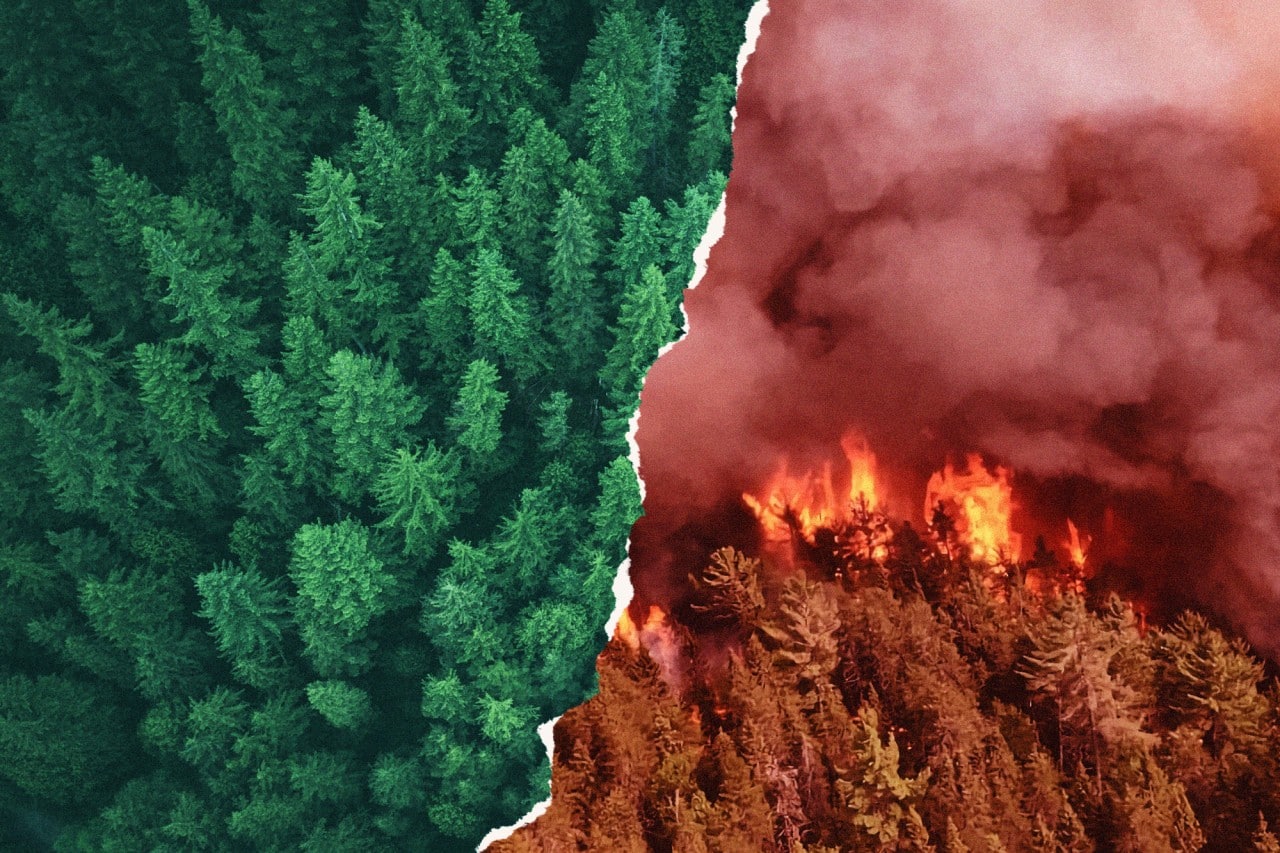
In these photos, the trees aren’t on fire. The forests are safe and serene.
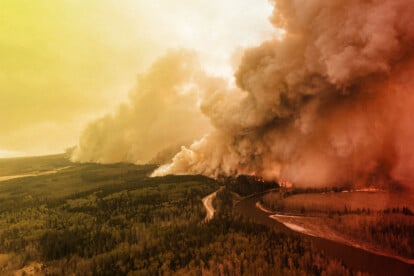
In these photos, a record fire season isn’t burning up hundreds of thousands of hectares, threatening the health of millions of people and forcing the cancellation of public events. In these photos, children aren’t trapped inside, barred from playing outdoors on sunny, summer afternoons.
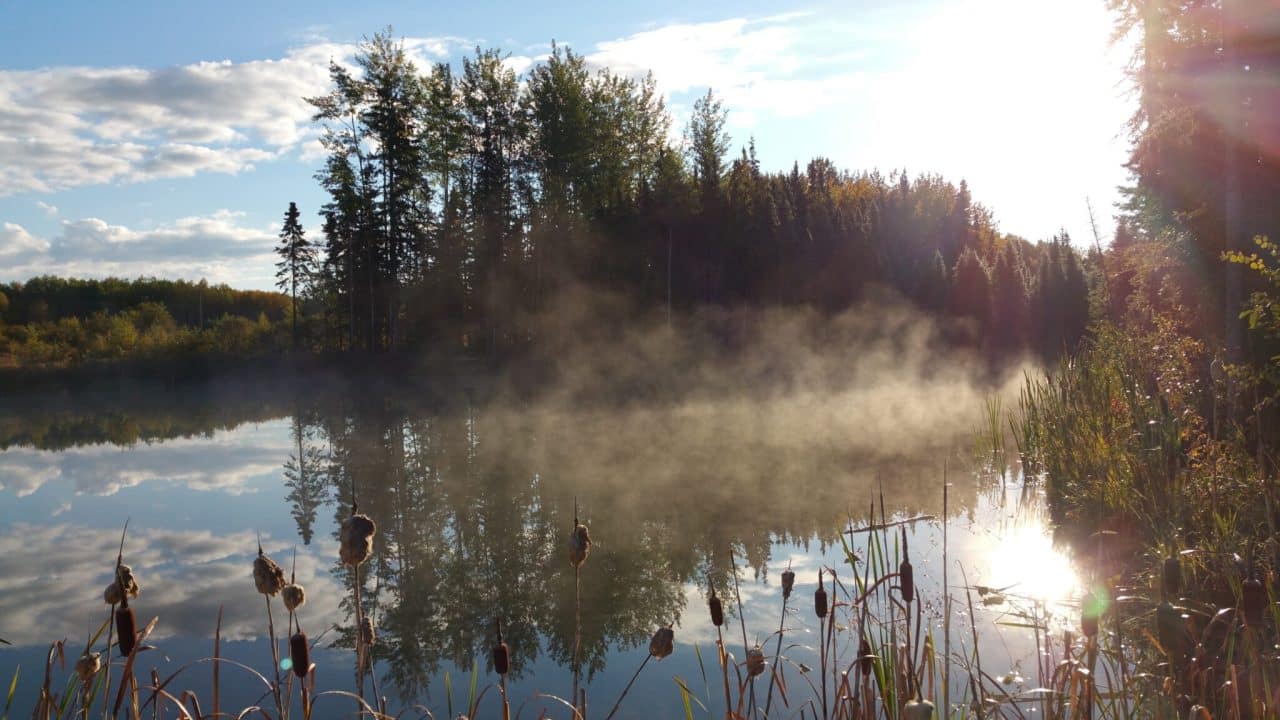
And in these photos, the oil industry sure as hell isn’t responsible for disastrous wildfires that are, in turn, creating climate-warming carbon emissions.
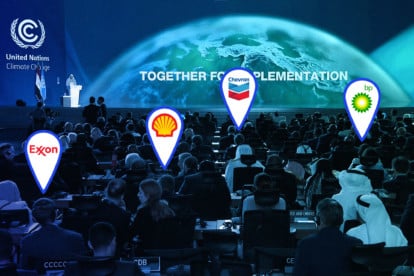
The photos, used in Facebook advertisements and on the websites of Canada’s largest oil lobby groups, portray a completely different reality than the one Canadians are experiencing. They’re part of a deceptive push by Big Oil to deceive the public about its role in the climate crisis—and scientists are calling for it to stop.
Six Canadian players make the list of top emitters
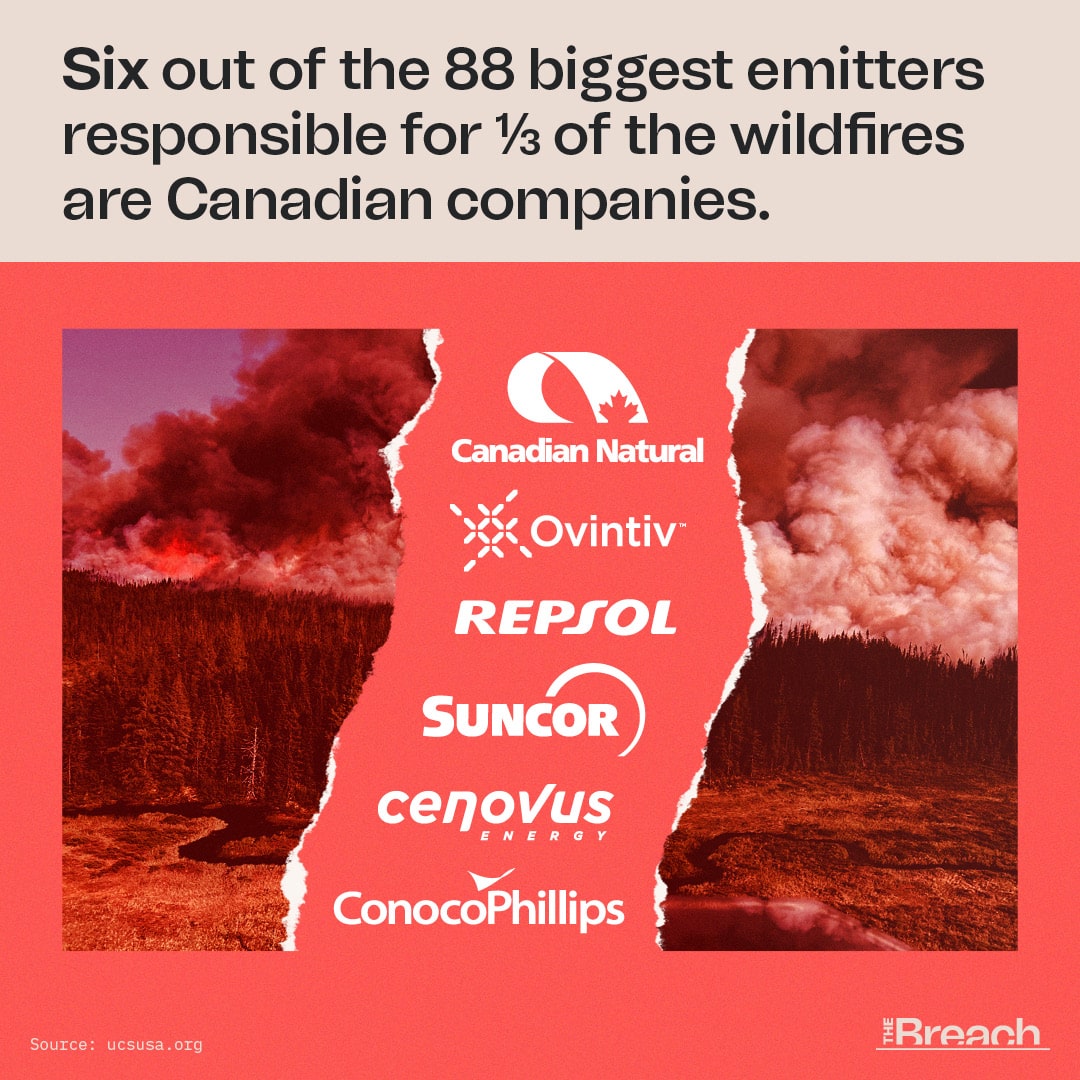
Last month, when it became clear that Canada would see a terrible wildfire season, the Union of Concerned Scientists published a study finding that 37 per cent of the total area burned by forest fires in the western United States and southwestern Canada since 1986 can be traced back to the world’s 88 largest oil, gas and cement companies.
The scientists noted that other factors—including human development in fire-prone areas and “aggressive, widespread” suppression of naturally occurring fires—have also contributed to longer, more severe wildfire seasons. But the scientists found that emissions tied to these 88 companies are responsible for increasing global average temperatures by 0.5°C since 1900—almost half of the Earth’s total warming since then.
Six of the guilty companies are Canadian, have significant Canadian subsidiaries or were headquartered in Canada for most of the time the scientists studied. They are ConocoPhillips Canada, the Canadian arm of the U.S. multinational; Ovintiv, which is now based in the United States but was run out of Calgary under the name Encana until 2020; Cenovus Energy, which merged with Husky in 2020; Talisman Energy, a previously Canadian company which is now owned by the multinational Repsol; Canadian Natural Resources; and Suncor.
The scientists specifically said their work provides evidence that can be used to hold these companies responsible for the damage they’ve caused.
Industry pours thousands into online ads
“As early as 1965, major fossil fuel companies and their industry associations were aware that the use of fossil fuels would negatively affect Earth’s climate,” the researchers wrote in a report published alongside their peer-reviewed study. Instead of warning the public or changing business models, the companies operated decades-long campaigns to mislead people about the causes of science and climate change, the report said.
To see present-day iterations of these industry campaigns, Canadians need only look around (if they can see through the smoke, that is).
Pathways Alliance, an industry lobby group that represents four of the six Canadian companies named by the Union of Concerned Scientists, recently wrapped streetcars in Toronto with advertisements touting its commitment to reach “net zero [emissions by] 2050.” And the group is regularly one of the largest buyers of Facebook ads in Canada. In the last three months, Pathways Alliance spent $89,000 on ads enticing readers to its site with gorgeous photos of the boreal forest and touting carbon capture and storage (CCS)—an industry scheme which does not address 80 per cent of emissions and can actually be used to increase oil production.
CCS is “not a climate solution,” according to a letter sent in 2021 to Prime Minister Justin Trudeau, which was signed by dozens of environmental organizations. The letter warns that CCS will prolong reliance on oil and gas while failing to reduce emissions in any meaningful way.
The Canadian Association of Petroleum Producers—another lobby group representing four of Canada’s six top oil and gas companies—is also pouring tens of thousands of dollars into Facebook ads about its emissions-reduction efforts.
The Union of Concerned Scientists has a word for these types of campaigns: deception. They also propose a solution: governments should investigate climate disinformation and Crown prosecutors should hold companies responsible for both deception and damages.
“Emissions from the products of fossil fuel companies have fundamentally reshaped the climate of western North America and left behind a scarred, charred landscape in which people, their communities, and the ecosystems that enable their existence are suffering,” their report said.
“Having long fanned the flames, the fossil fuel industry must start paying its fair share.”
CORRECTION: A previous version of this article described the six oil and gas companies named as “Canadian.” In fact, ConocoPhillips Canada is the Canadian arm of an American multinational; Ovintiv was a Canadian company when it operated as Encana but is now headquartered in the United States; and Talisman Energy has been acquired by a Spanish multinational.

When I went to journalism school 10 years ago, my parents thought that they would eventually read my articles in The Montreal Gazette. Today, that newspaper is a husk of its former self. But I get to explain that I’m working towards critical, independent, and sustainable journalism.
Want to be a part of the future of journalism? Support our work with a monthly contribution. Sign up here.
– Amanda Siino, Development Director, The Breach