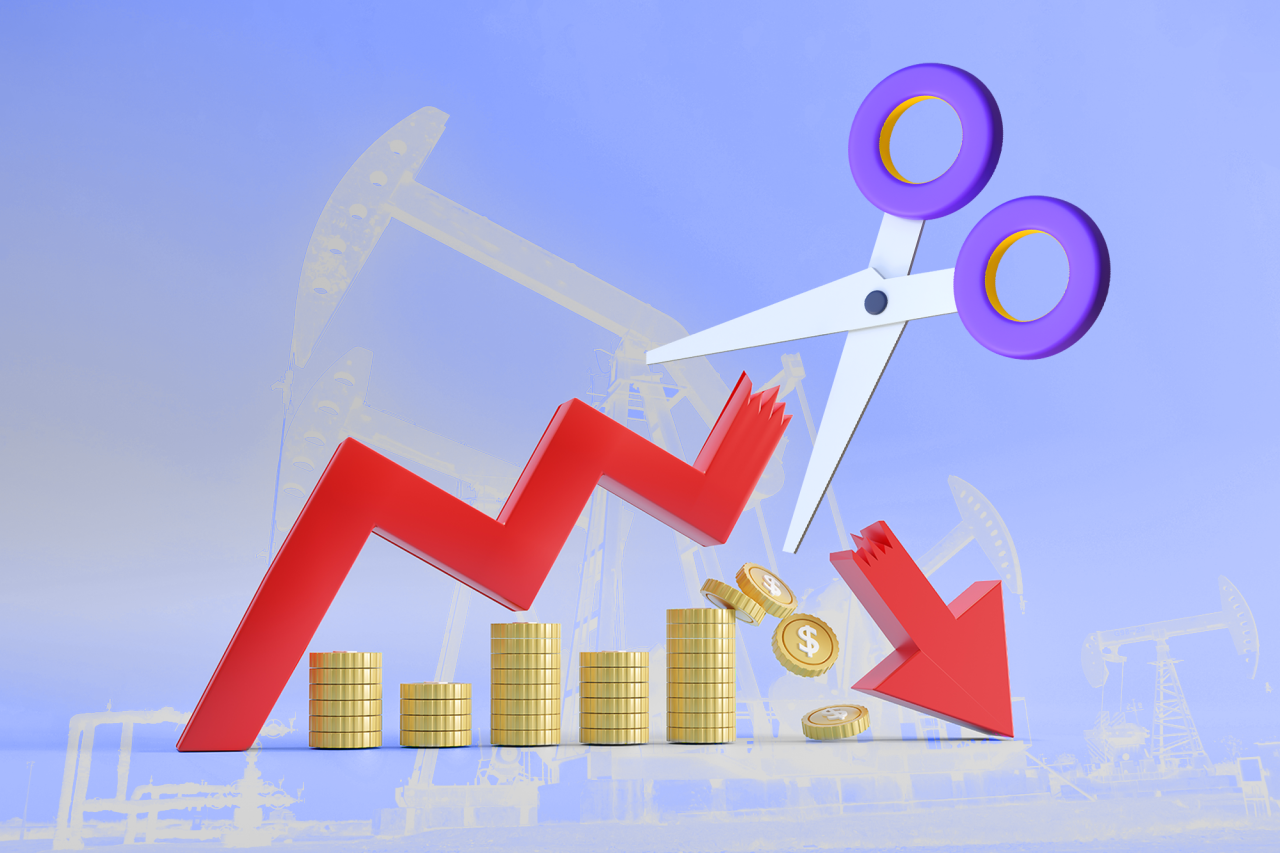
The U.S.-Israeli attack on Iran has caused the greatest disruption in world oil supply in history. But not everyone’s unhappy: Canada’s oil and gas industry stands to make record-shattering profits.
Canadians will feel the pain of the oil price shock in everything from their groceries to mortgage payments, as anything that uses petroleum gets more expensive and the Bank of Canada raises interest rates to compensate.
But that’s a policy decision, not a foregone conclusion. Canada produces three times more oil than it uses, and imports virtually no oil from the Persian Gulf. There’s no reason why our economy should be roiled by a war on the other side of the world.
To stop Canadian oil companies from overcharging Canadians, government could regulate the price of oil in Canada—and tax windfall oil profits to protect consumers and build home-grown renewable energy.
Get ready for a spike in everyday costs
Canadians felt an immediate pinch when oil flow from the Persian Gulf was cut off by the war. Prices for gasoline and other petroleum products like diesel and home heating oil skyrocketed within hours.
And anything that uses petroleum in production is already starting to get more expensive. Many airlines have increased their fares to cover higher jet fuel costs. Grocery prices are rising to cover higher transport costs.
A report last week from the Centre for Future Work has quantified the economic impacts on Canadians from this latest oil shock.
In the best-case scenario—the U.S. and Iran reach a deal and the Strait of Hormuz reopens immediately—Canadians would pay an additional $50 billion over 12 months in higher fuel costs and higher prices for other goods and services. The inflation rate would increase to 4.2 per cent.
In the worst-case scenario—the Strait remains closed for another six months—consumers would pay $128 billion in additional costs, and the inflation rate would rise to a whopping 8.6 per cent.
In either of these scenarios, the Bank of Canada will increase interest rates to suppress inflation. And though that might limit the rise in inflation, it will increase the pain through other channels: consumers will pay billions of dollars in additional interest charges, and already-high unemployment will get significantly worse.
Not everyone will lose out, though. The big winner from this crisis is Canada’s petroleum industry. It set all-time records for high profits in 2022, during an earlier and smaller oil shock that followed Russia’s invasion of Ukraine. Those records will soon be shattered thanks to this new war.
In the coming year, the upstream extraction industry can expect a revenue windfall ranging from $65 billion if the Strait reopens immediately, up to $155 billion if it remains closed for six more months.
Another choice: regulate prices and tax oil profits
Canadians are told that we must accept runaway oil prices as the inevitable result of market forces. This is a lie that resigns us to continuing to pay oil companies far more than the cost of the products they sell us.
It is policy, not economic laws of nature, that explains why prices here shoot up within hours of conflict breaking out in the Persian Gulf.
Current energy policy lets oil companies charge world prices for sales of our own energy inside Canada. This is done under threat of these companies diverting supply to more profitable foreign markets. This policy is enriching petroleum companies—which are largely foreign-owned—at the expense of Canadian and foreign consumers.
It was a policy choice in the 1980s that Canadian oil prices would follow global trends. This practice is not universal: many oil-producing countries regulate domestic oil prices, capping them below the prices companies can charge for exported oil. Canada could do this, too. Our country already regulates domestic prices for electricity and natural gas distribution charges.
Other countries, like the U.K. and Norway, also charge taxes of 50 per cent or more on profits generated from petroleum during times of high prices. Canada could adopt this practice, putting the money toward rebates for low- and middle-income households, or investments in renewable energy projects.
These are policies that the oil industry will fight tooth and nail against, of course. Meanwhile, the best way to prevent future oil price shocks is to accelerate the transition to renewable energy. That’s not just a climate imperative, it’s also a great way to stabilize energy prices and address the affordability concerns that are hurting so many Canadians.
Oil profits swell with every new foreign war. Canadians are weary of sticker shock, from the gas station to the grocery store. Let’s be honest about the causes and consequences of oil price shocks, and put limits on the ability of petroleum companies to profit from our hardship.

The Breach’s investigations don’t just inform our readers—they force the powerful to react.
An exposé on blood plasma privatization led to national headlines. Our revelations about the government’s cozy connections to Big Pharma sparked a parliamentary probe. A report on high-tech price-fixing by mega landlords resulted in a criminal investigation.
From activists to elected officials, people are using The Breach’s journalism to push for transformative change.
– Dru Oja Jay, Board President, The Breach
Fossil Fuels | Mark Carney’s pact with Danielle Smith is climate carnage

Federal Government | A budget for tanks, banks, and oil barons
Resource Extraction | To become an ‘energy superpower’, Canada wants to bulldoze Indigenous rights
2 comments
Comments are closed.
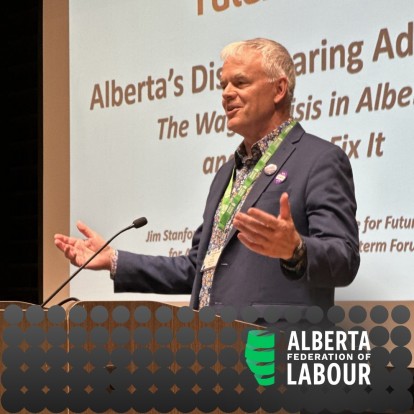
Great article on what governments are prepared or not prepared to do in the face of corporate pressure or influence.
There needs to be a citizen-focused policy initiative to recoup some of the profits. Remember that oil is extracted on a one-time basis. This means that governments must tax at the source of the profit.
Why on earth should oil prices be capped, since the rich are by far the biggest per capita consumers? Why not instead leave prices to float, and instead provide an income tax credit to lower-income households financed by the windfall profits tax Jim quite rightly proposes, not linked at all to their fossil fuel consumption?