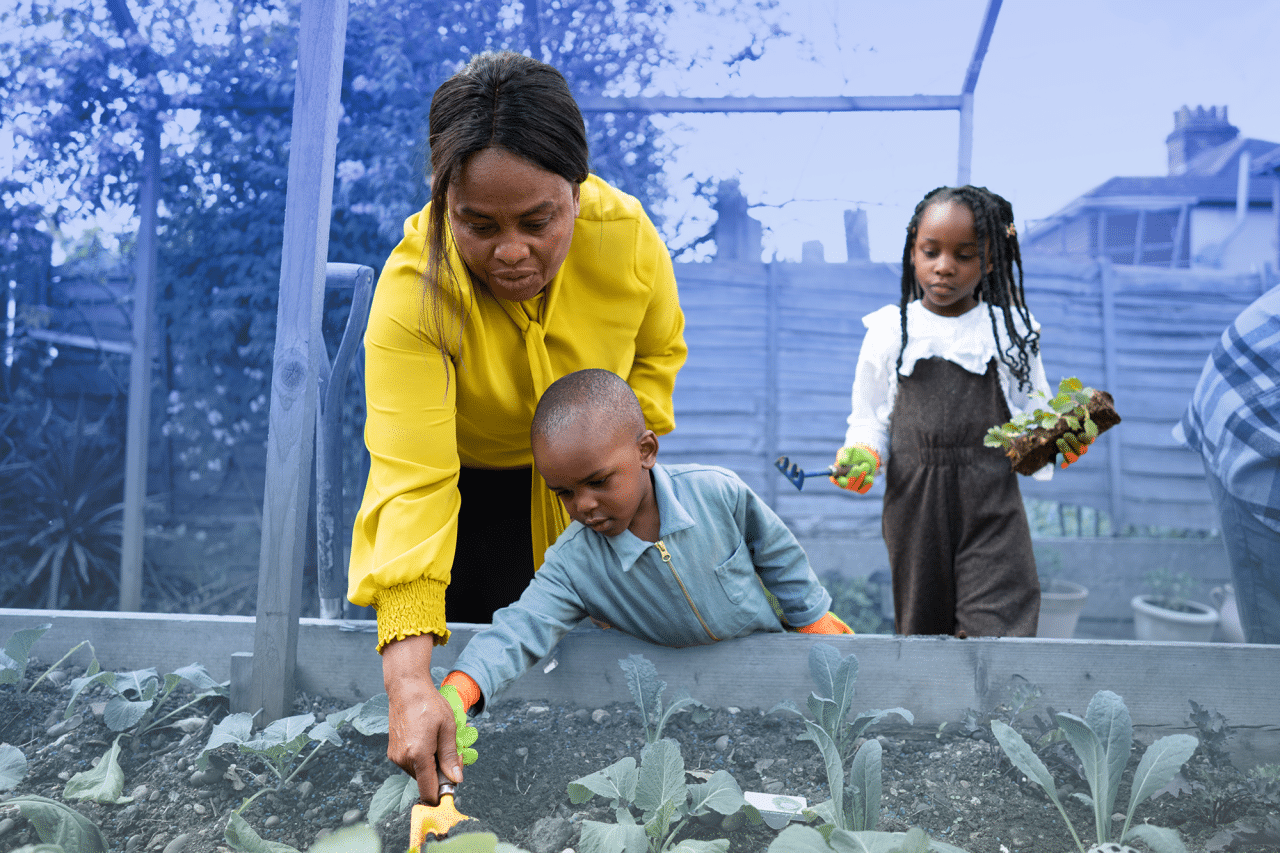
Life as an older caregiver isn’t easy for Christine Read.
After her daughter died of a drug overdose nearly a decade ago, she became the sole caregiver to her 11-year-old twin grandchildren.
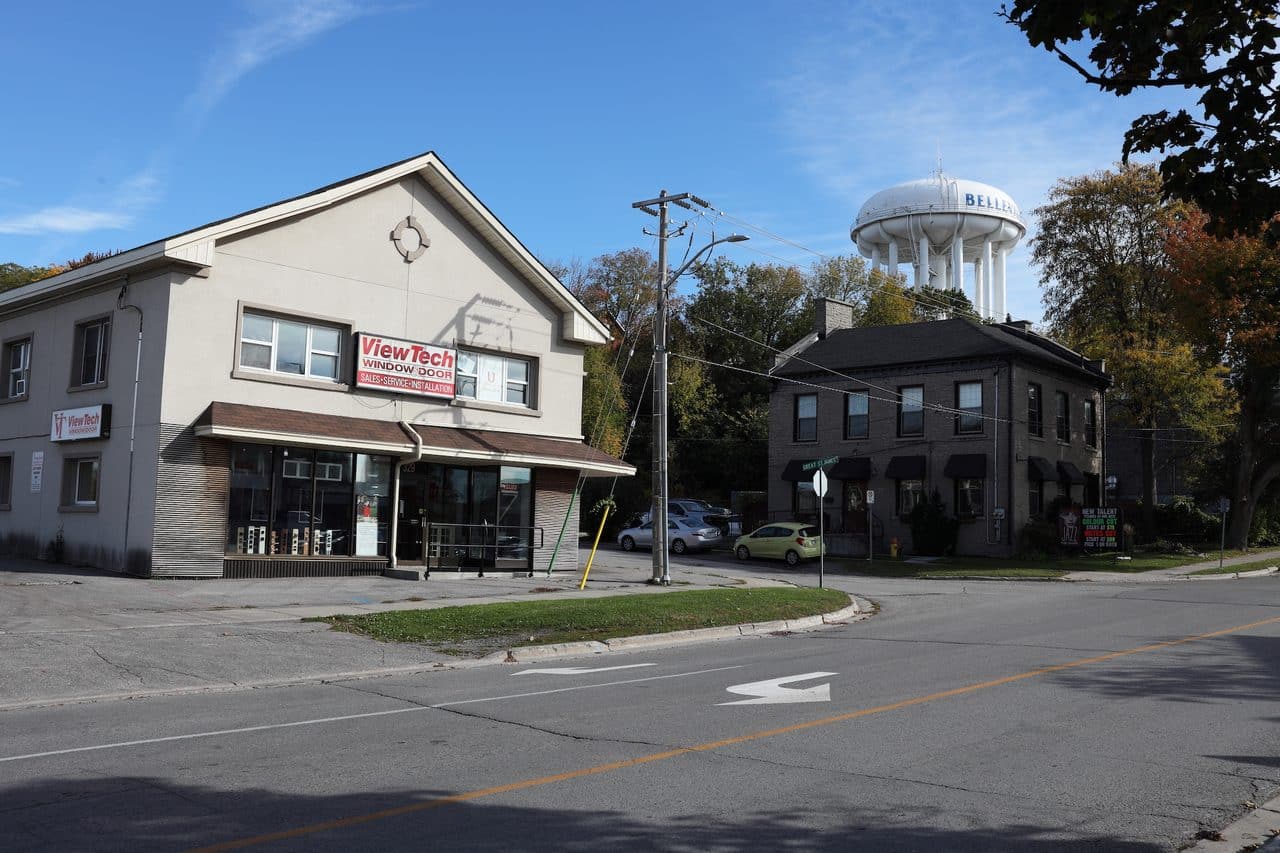
But at 51, her back and hip problems make it impossible to stand for long periods. Her disability support payments barely cover the rent for the apartment she shares with her grandkids in Belleville, Ont. And she has struggled to manage persistent anxiety and depression.
There’s one option, however, she would never consider: placing the pair in the care of a children’s aid society.
That would mean relinquishing control of the children to the child welfare system, which can assume the powers of a parent and decide where the children will live and grow up. So Read pushes on.
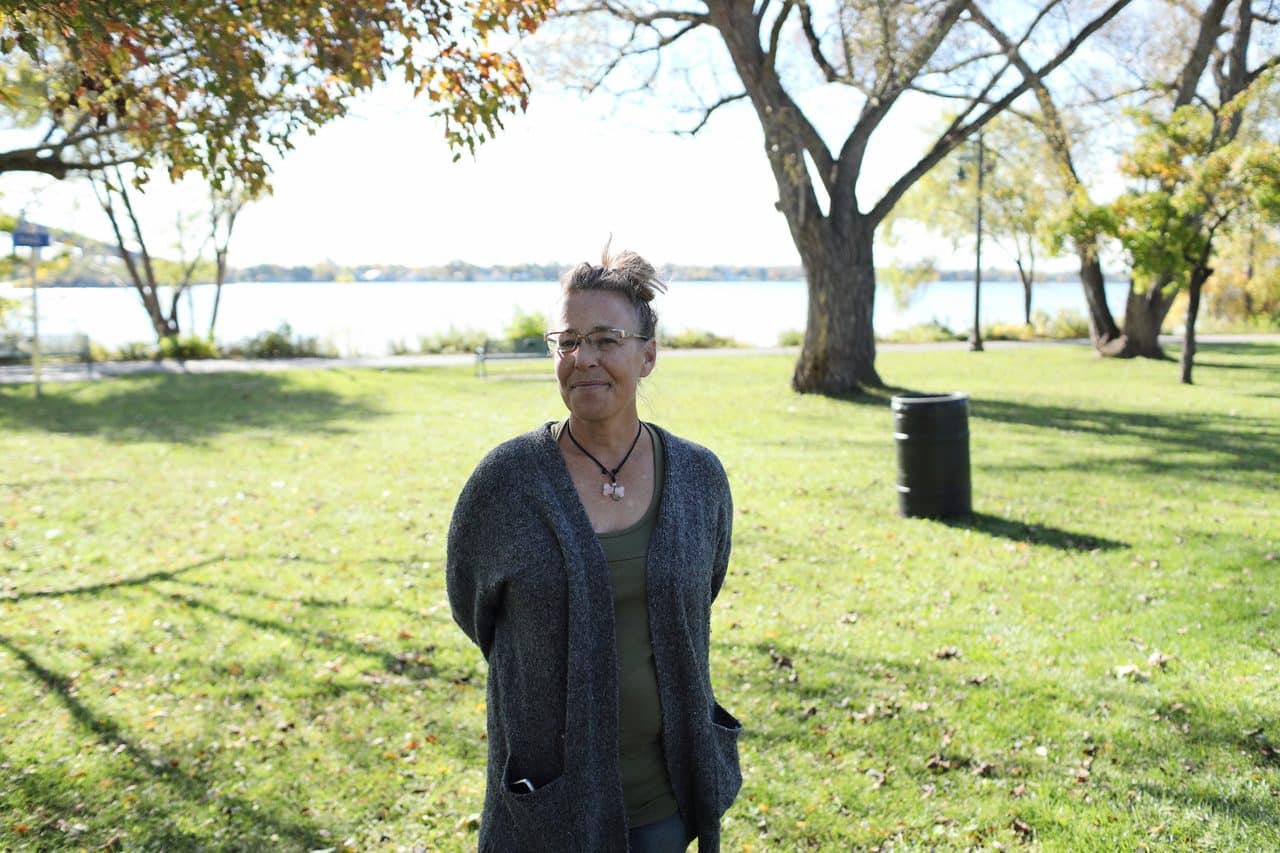
“I’m young enough that I can deal with it,” said Read, who has struggled to find adequate medical and psychological care for her grandchildren.
She is not alone. Across Ontario, grandparents who raise their grandchildren are choosing family unity over financial stability. The caregivers The Breach spoke to, meanwhile, face social isolation, a lack of stable housing, and financial strain—all with little support from children’s aid societies.
Meanwhile, Ontario’s child welfare system gives millions to privatized facilities that house children and youth, while spending a fraction of that on children placed with extended family and other people they know.
Concerns about these unbalanced priorities are not new. The Ontario Association of Children’s Aid Societies has called on political leaders to “prioritize admission prevention,” the investment in social supports that allow families to remain together. The association noted most families who come under children’s aid society scrutiny are not accused of “extreme abuse or neglect.” Instead, they are people “struggling to meet the basic needs of their family.”
Advocates like Thaila Dixon, executive lead for the Collective of Child Welfare Survivors, say more funding from children’s aid societies should be allocated to kinship caregivers.
“The kinship caregivers are spending a majority of their time fighting the agencies for resources that the agencies claim to not have,” Dixon said.
Fighting for funding
Read and others interviewed by The Breach are members of Cangrands National Kinship Support, an advocacy group for grandparents, extended family members, and other people acting as caregivers to kids. Betty Cornelius, the group’s founder, estimates that around 80 per cent of the group’s 1,000 members struggle financially, as many take on the full financial responsibilities of a parent.
“These kids need braces. They need bicycles. They need, you know, the French trip,” she said.
Nearly all of the group’s members act as caregivers because of addiction and mental health problems in their families. 10 members of the group lost their own children to fentanyl overdoses in 2025, Cornelius said.
Members of an extended family often face similar financial hardships: a child’s grandmother and grandfather may be no wealthier than the child’s parents. So a child who moves from their parents’ care to their grandparents’ care may not see an improvement in their conditions.
But despite these families’ financial need, children’s aid societies typically spend far more to support a child in institutionalized settings than to support kids living in family-style settings. This “inverse relationship” between less financial support and more family-style living arrangements has long been an open secret—it was noted in a report by a commission of the Minister of Children and Youth Services all the way back in 2012. (Though the report contains a caveat that the costs between more and less family-style living arrangements aren’t directly comparable.)
Gharabaghi blamed the political pressure on children’s aid societies to stick to their mandate of investigating neglect and child abuse, rather than dispensing funds for essentials.
Children’s aid societies used to spend money more freely to help families with things like rent and food, he said. “And they really got nailed for that, because, of course, the deficits went up and so on and governments clamped down on how they spend money,” he said.
How a child ends up in care
Children’s aid societies investigate allegations of child abuse and neglect. If they decide parents are unsuitable caregivers, they can obtain temporary or long-term control of a child through the courts.
A child who must leave their parent’s home can end up living in one of several places. They could live in a traditional foster home; or in a group home, a medical facility, or another institutionalized setting where they’re cared for by a rotating cast of workers.
They could also live with a family member or someone they know, in what’s called a “kinship” arrangement. Children’s aid societies promote kinship arrangements as a way for children to live with someone familiar, and stay connected to their relatives and culture. In a kinship in-care arrangement, children are under control of a children’s aid society. In a kinship out-of-care arrangement, they remain outside of the society’s legal control.
Like traditional foster parents, kinship in-care providers get training and resources, including a per diem. Per diems vary widely, according to Vanessa Milley, CEO of the Foster Parents Society of Ontario. Milley said she has heard of a per diem as low as $31 a day, with additional expenses likely also covered by an agency, and as high as $110 a day, all included.
People providing kinship in-care may receive additional funds in more complex cases. On its website, the Children’s Aid Society of Toronto offers “Enhanced Foster Caregivers” up to $225 a day for the care of children and youth with “complex needs.”
Kinship out-of-care comes with less financial support. Adults taking on this role for a temporary period can receive up to $274 a month from the province of Ontario for the first child they support and $224 for any additional child. (Caregivers in the north of the province are eligible for additional funding). Out-of-care kinship providers can also receive “episodic/emergency financial assistance from CAS [children’s aid societies],” according to the province, as well as federal support like the Canada Child Benefit.
Still, many kinship caregivers struggle with the high costs of raising kids. “We get calls from kin families who don’t know how to make their ends meet,” said Milley. She believes “the ministry should be funding kin out-of-care at a higher rate.”
There is a spectrum of living and funding situations, and some caregivers, like Read, raise their grandchildren outside the two formal kinship arrangements recognized by children’s aid societies. Read told The Breach she was no longer eligible for temporary care funding after the death of her daughter made her caregiving arrangement with her grandchildren permanent. She said she receives periodic support from a children’s aid society, including things like gift cards for groceries.
Another such grandparent is 54-year-old Tammy Riley, who is raising her seven-year-old grandson and five-year-old granddaughter in Niagara Falls.
Riley’s daughter, the children’s mother, has struggled with drug addiction and frequently loses contact with Riley. Courts granted Riley custody of her grandson and later also gave her and her then-common-law husband decision-making power over her granddaughter. Both children were once under the child welfare system’s scrutiny, but the local children’s aid society has since closed their files, Riley said.
Because the children stayed with family, they remained connected to their relatives and heritage, she said. Riley, who was raised by her Mi’kmaq grandmother, welcomed her granddaughter by giving the child an Indigenous cedar bath after bringing her home from the hospital.
The high cost of care
Ontario spends over $1 billion annually on the child welfare system, which comprises dozens of children’s aid societies, as well as Indigenous children’s service providers across Ontario. The Ontario Ministry of Children, Community, and Social Services did not respond to repeated requests for comment.
Out-of-home placements are among the largest expenses for children’s aid societies, second only to salaries, according to financial reports. These publicly-available reports do not typically break down the data to reveal how much societies spend on different placement options for children.
Children’s aid societies contacted by The Breach declined to discuss how much they spend on kinship care. Some referred a reporter to the Ontario Association of Children’s Aid Societies, which is an advocacy group for children’s aid societies and Indigenous child welfare organizations. They also declined to comment.
A spokesperson for the Children’s Aid Society of the Districts of Sudbury and Manitoulin said in an email that the society spent over $12 million on “boarding”—which includes housing and other essentials—in the 2025-2026 financial year. $153,006 of that, or just over 1 per cent, was spent on kinship in-care placements, suggesting nearly all of boarding costs were spent on placing children in the care of strangers.
Read questions why greater financial support should be attached to greater state scrutiny and control. Some parents worry that their child going into the care of a children’s aid society is the first step toward losing them permanently.
It costs a children’s aid society upwards of $500 a day to place a child with complex needs in a privately-operated group home, says Erin Harvey, retired director of service for Family and Children’s Services of Guelph and Wellington County. Children’s aid societies rely on these private homes for children with challenging behaviour, Harvey said, and incur additional costs when they pay multiple staff to care for a single child, sometimes pushing the daily spending on a single child to around $3,000.
Last year, the Ontario Association of Children’s Aid Societies noted in a document that for-profit care providers “seem to be aware of the limited options [child welfare] agencies face” in securing care for children. These for-profit providers appear to use this as leverage and work only with “agencies willing to pay the highest price” for a child’s care, the association said. The organization also said data suggested the number of children and youth in need of expensive out-of-home care had recently doubled.
‘Fancy accounting’ to support kin care
Children’s aid societies try to avoid placing children in more institutionalized settings, such as group homes, where children interact with shift workers and are unable to form the beneficial bonds that come with traditional foster care or remaining with family members, Harvey said.
Experts interviewed by The Breach maintained that children’s aid societies’ money would benefit individual kinship caregivers. But without a dedicated fund to support children not formally in care, some children’s aid societies resort to “fancy accounting” and find money within their existing budgets, said Gharabaghi.
“We kind of bent the rules by still giving them money,” said Andrew Koster, the former executive director of Brant Family and Children’s Services. Because a kinship caregiver “wasn’t normally going to be a middle class family,” he explained.
Harvey recalled using society funds to help a kinship out-of-care family settle in a new apartment. The alternative, she said, would have been to bring the children into care, potentially separating them from their family and paying a private service provider to house them.
Choosing instead to invest thousands in children not legally in the care of the children’s aid society may not have fit neatly within the society’s mandate, but it was money well-spent, Harvey said.
“If the family has the capacity to make good decisions for this child, and we can support them, and it’s just money that’s gonna solve the problem, then money’s gonna solve the problem,” she said, adding an expletive for emphasis. “We are gonna give them money.”
Kinship placements can preserve a child’s familial and community connections, but they are not perfect, Gharabaghi said, adding that children have died and been harmed while in kinship care.
In 2014, a four-year-old Alberta girl died after falling from a swing while living with her extended family members, after she was apprehended from her mother by Children’s Services. When she died, she was severely underweight and had bruises on her body.
A provincial court judge later said that if the organization had used money to help the girl’s “devoted” mother instead of spending it to keep her children from her, “the end result would have been much different.”
While neither being in the care or outside the care of a children’s aid society guarantees a nurturing environment for a child, the distinction is a meaningful one for women like Read, who recoiled at the idea of surrendering control of her grandchildren.
Absent some injection of money, though, her outlook on her family’s future is bleak.
“The way things are going right now,” she said, “I think we’re just gonna be hobbling along in life.”

“It’s about getting to the bottom of things. It’s about unveiling who has the power and what they’re doing with that power.”
Linda McQuaig, journalist and author
As a non-profit, free from powerful corporate interests, we invest in investigations and uncover the cover-ups. Sustain our journalism for transformation.
Opioid Crisis | In a bid to transform Canada’s drug laws, Vancouver activists risk life imprisonment

Public Health | Doug Ford’s decision to close safe injection sites is a death sentence