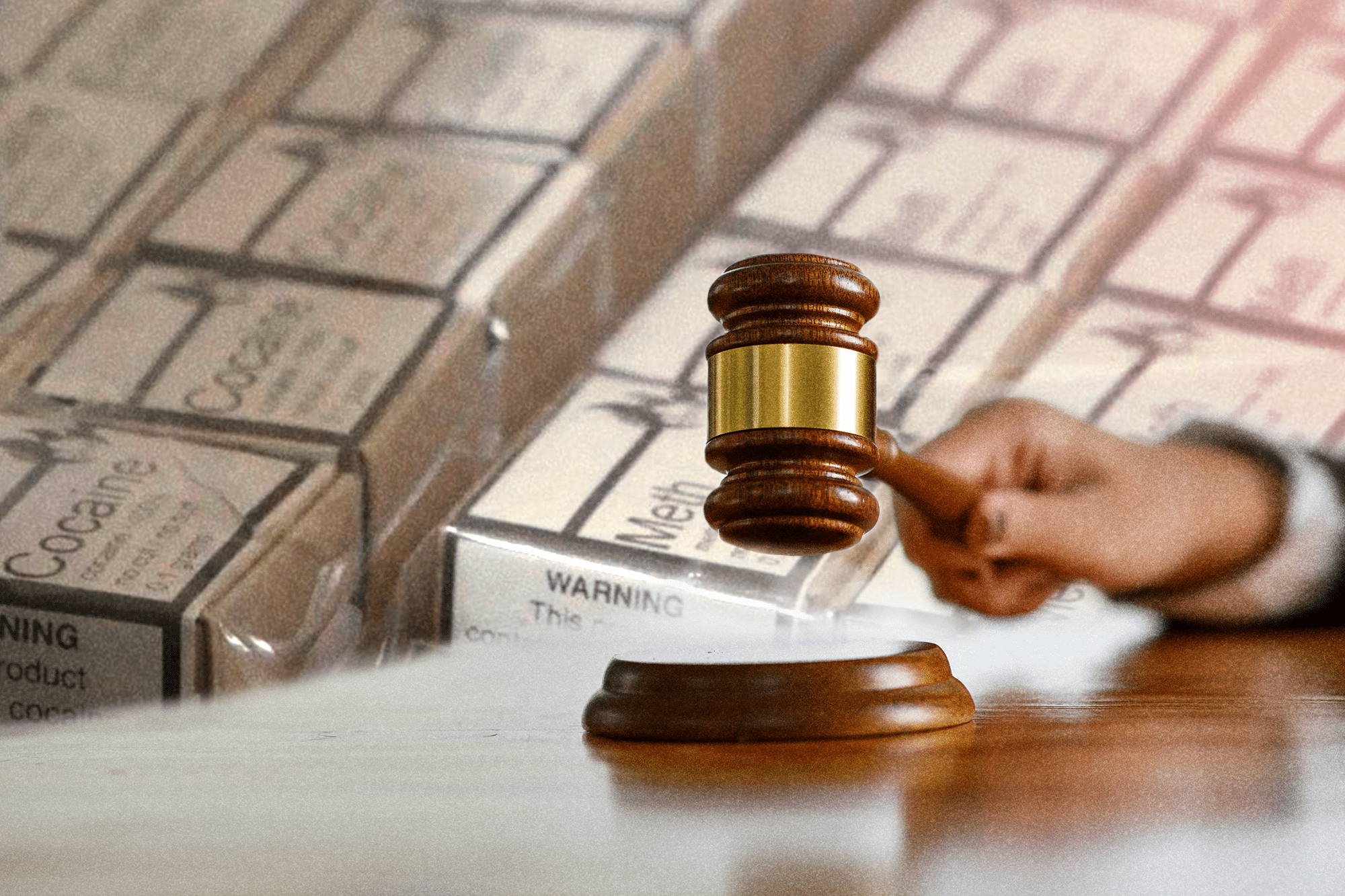
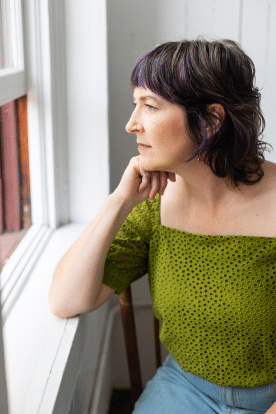
In late 2022, 34-year-old Dee and their boyfriend bought cocaine and fentanyl from a dealer in northern B.C. who assured them the drugs were safe. Dee used first, then their partner. When they awoke two hours later in the van they shared, their boyfriend was dead.
Devastated, Dee began using more frequently, a coping mechanism they had first turned to as a teenager to deal with trauma from sexual abuse and chronic pain from a motorcycle crash.
Dee says dopesickness starts as emotional agony, reliving the trauma of their past. Then the excruciating physical symptoms take hold. “It’s like turning on a faucet of pain,” they testified at the B.C. Supreme Court in December. “You can feel every hair on your body. You can feel every eyelash. You can feel every hair follicle … It feels like your body is failing you.”
In late February 2023, Dee was invited to join a compassion club led by the Drug User Liberation Front (DULF), a coalition of community-based drug user groups and allies. The compassion club bought cocaine, methamphetamine, and heroin from the dark web, which was then tested, packaged, labelled, and sold at cost to its members.
No longer caught in the endless cycle of sourcing drugs to stave off dopesickness, Dee began to feel safer and more stable. They started working. They attended therapy. “I wouldn’t have made it through that year if it wasn’t for DULF,” Dee told the court. “I may not even have made it through two months.”
Dee is one of two members of DULF’s compassion club who testified as part of a constitutional challenge that DULF co-founders Eris Nyx and Jeremy Kalicum launched against the federal government last fall.
In November, the B.C. Supreme Court found the pair guilty of three counts of drug possession for the purpose of trafficking—one count for each of the substances they sold to members of the compassion club. In response, Nyx and Kalicum launched the constitutional challenge, in which they are arguing that the law violates the Canadian Charter of Rights and Freedoms. Kalicum and Nyx’s convictions are suspended until the outcome of the Charter challenge, which will conclude in Vancouver on Friday, July 24. The judgement will be announced in the following months.
At the heart of DULF’s constitutional challenge is the question of whether Canada’s drug laws violate the human rights of people who use drugs. Kalicum and Nyx say yes—and they are risking life sentences in prison in order to change those laws. On their side, they have the testimony of people like Dee who say DULF’s tested drugs saved their lives, and health experts who say programs like the one DULF pioneered can help stop the toxic drug crisis.
As Vancouver waits to hear the verdict, the case will decide how Canada confronts one of its deadliest health crises: by legalizing non-prescribed safer supply, or by plunging further into criminalization.
Arrested for saving lives
Kalicum was alone at DULF’s storefront in the Downtown Eastside on October 25, 2023 when Vancouver police arrived to raid the compassion club. A bystander’s video of the arrest showed Kalicum, dressed in a pink hoodie and light green pants, with his hands cuffed behind his back. He looked calm as two police officers led him toward an unmarked car.
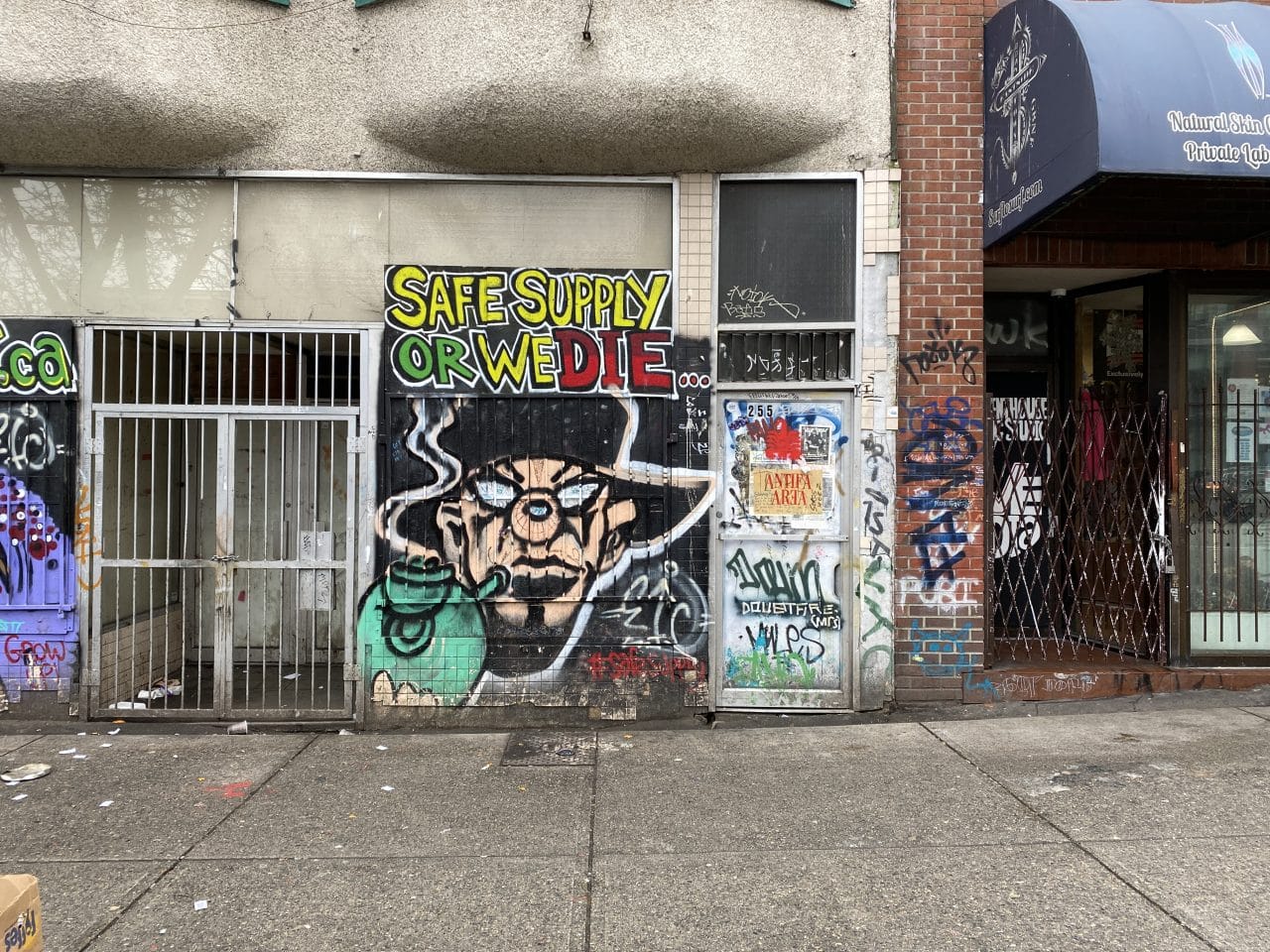
The arrest sent shockwaves through the harm reduction community. Days later, 400 people marched in downtown Vancouver holding placards and chanting, “Safe supply or we die.” DULF began to fundraise to support their legal defence.
Last November, I boarded a float plane in Victoria’s inner harbour to downtown Vancouver, where Justice Catherine Murray was slated to make her judgement in the criminal trial that decided whether Kalicum and Nyx were guilty of breaking the law. Flying a few thousand feet over the Salish Sea, I took in panoramic views of tree-dotted Gulf islands and Vancouver’s north shore mountains. A visitor might have a hard time believing that this picturesque coastline belies one of Canada’s worst modern public health crises.
Like many of those following DULF’s case, for me, the issue is personal. In May 2020, my brother Ian died from fentanyl poisoning, alone in his apartment in Victoria. At the time, the government had imposed social isolation measures, and COVID border closures made the unregulated drug supply increasingly toxic and volatile.
My brother was a quiet, straight-talking guy with a goofy laugh. His friends jokingly called him “The Kid” because he looked younger than his 39 years. During the day, he dangled from the steel skeletons of new condo developments as an ironworker. At night, he hit the gym, training as a mixed martial arts fighter. He had a fierce work ethic and was incredibly loyal to his friends. He had struggled with drug use since he was a teenager and spent a lot of his youth incarcerated.
His death pushed me to document the toxic drug crisis as I tried to understand it. I feel the same sense of powerlessness many do in the face of the overwhelming numbers: more than 56,000 Canadians, including some 18,900 people in B.C., have been killed since 2016 from toxic drugs.
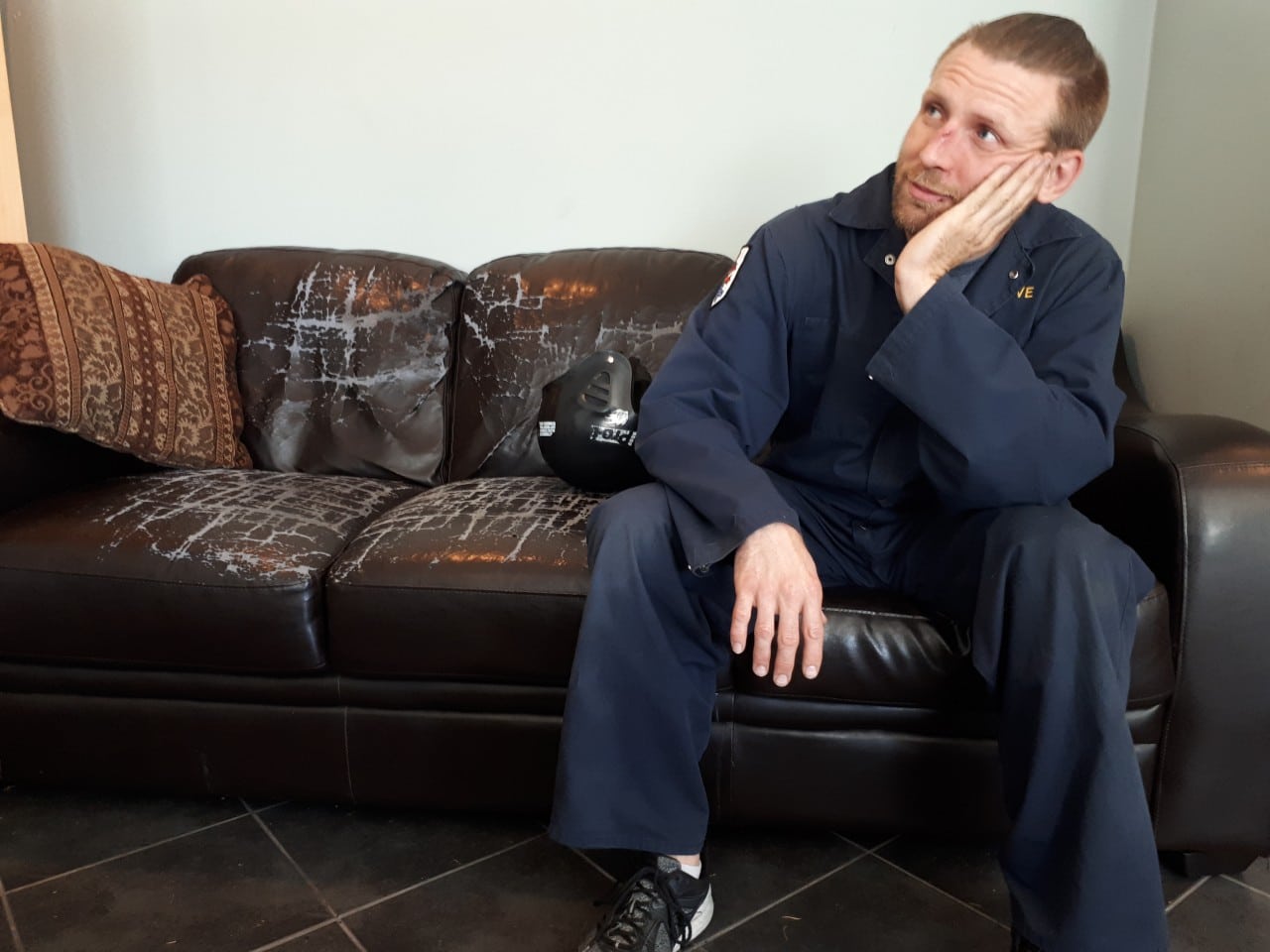
That November afternoon, the court heard that from August 2022 to October 2023, DULF ran Canada’s first non-medicalized safer supply program at an East Hastings storefront in Vancouver’s Downtown Eastside, a neighbourhood where the rate of overdose deaths is more than 20 times the national average.
The group said it tried everything it could to establish a safe supply of narcotics in a law-abiding manner. In August 2021, DULF applied for an exemption from Canada’s Controlled Drugs and Substances Act (CDSA) to run the compassion club. Eleven months later, Health Canada denied their request. DULF had not been able to source a legal supply of methamphetamine, heroin, or cocaine, despite efforts to do so.
Health Canada did not want the group to source drugs from the dark web, which DULF argued was their only option. DULF requested a short-term exemption to prevent their actions from being illegal until they had a legal route to access substances. That application was also denied. Nyx and Kalicum appealed Health Canada’s decision, which was heard in federal court in March 2024. The judgement has still not been released.
Conservative outrage kills compassion
As people around them were dying in record numbers, Nyx and Kalicum decided to move forward with the compassion club, even if it meant going outside the law. They tested the drugs they bought from the dark web for contaminants such as fentanyl, its analogues, and benzodiazepine. After packaging and labelling the drugs, DULF sold them at cost to 47 members of their compassion club, all drug users who were at a high risk of overdose. DULF operated the storefront with the support of the Vancouver Coastal Health Authority, which had backed their Health Canada exemption request and provided DULF with $200,000 for operational funding to run a supervised consumption site and drug-checking services.
The results were groundbreaking. Over the time they operated, no one in DULF’s compassion club died. Members reported fewer overdoses, fewer police interactions, and fewer hospital visits. DULF posted regular updates and operational documents online. Their work was featured in academic journals.
To Leslie McBain, co-founder of Moms Stop the Harm, a network of Canadian families impacted by substance-use-related harms and deaths, Kalicum and Nyx are warriors. “We know they did the right thing,” she told The Breach. “How can anybody argue with saving lives?”
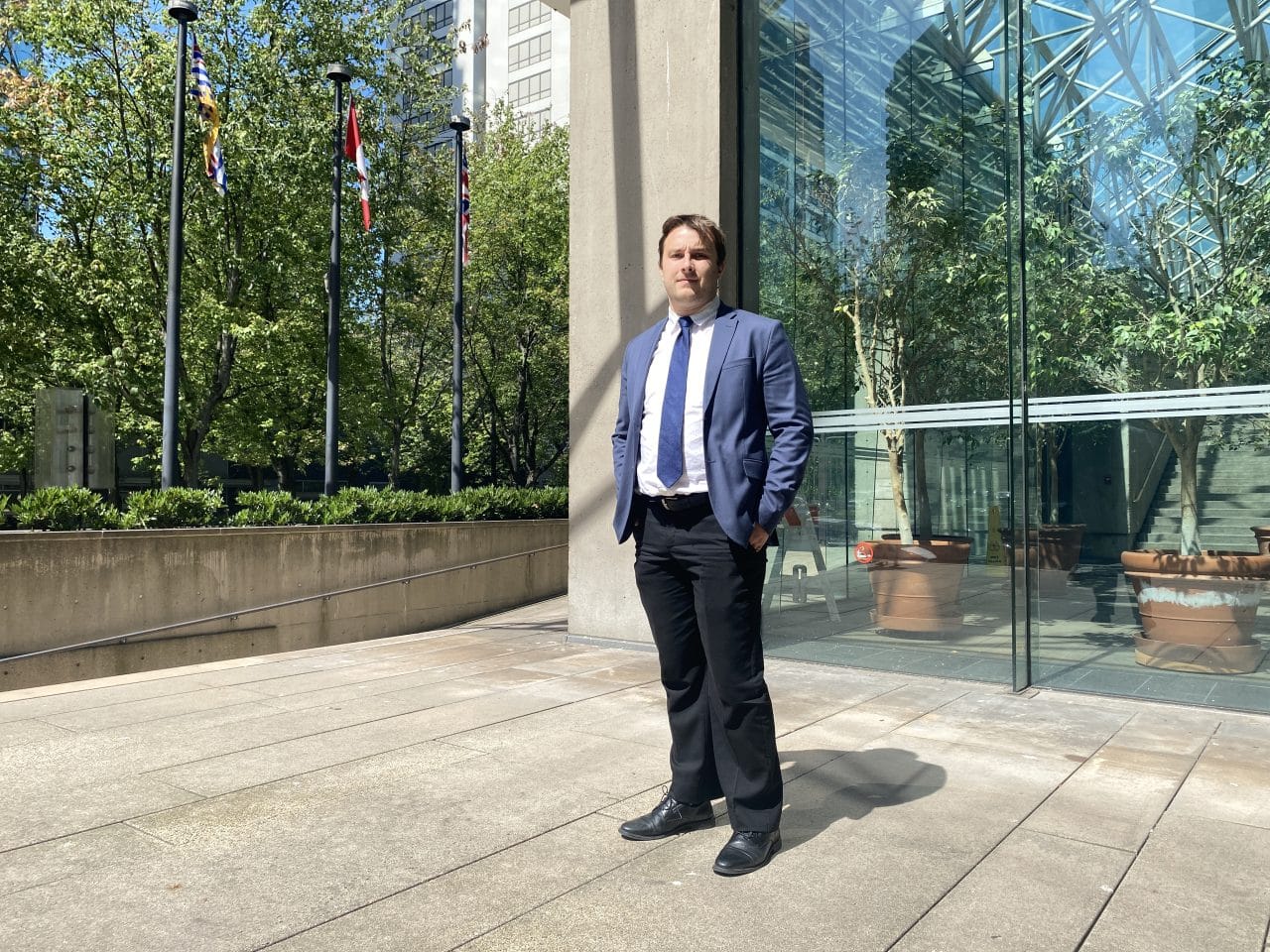
It was one September 2023 article in The Economist that triggered what Justice Murray called a “maelstrom” among conservative politicians. Conservative Party leader Pierre Poilievre and B.C. MLA Elenore Sturko took to social media to express outrage that DULF had received government funding. Bending to the backlash, the B.C. government told the Vancouver Coastal Health Authority to terminate DULF’s funding and their lease. Six days before DULF was due to cease operations, police raided the storefront, cuffing Kalicum and seizing 192 grams of cocaine, 237 grams of heroin, and 364 grams of methamphetamine from two locked safes. DULF’s bold public health intervention had been cut short.
In the November criminal trial, Justice Murray appeared sympathetic to DULF. She had previously commented in court that DULF had been “hung out to dry” by government and police. She called Nyx and Kalicum agitators who wanted to make change. When she read her judgement on a grey afternoon, the courtroom was packed with DULF supporters wearing black hoodies and shirts emblazoned with the group’s logo. “There is no question that their intentions were and are good,” said Murray. “They want to save lives. But were they exempt from criminal liability?”
Murray noted that DULF had exemptions that permitted them to test drugs and act as a supervised consumption site—but they didn’t have an exemption to sell tested drugs. She asked Nyx and Kalicum to stand. When the word “guilty” rang out, supporters gasped.
Some started to cry. A woman sitting in front of me swore as she stood up and walked out. Others put their heads in their hands. For those of us who have lost loved ones to toxic drugs, the verdict felt personal.
But the outcome was not unexpected. Nyx and Kalicum had been waiting to see if they’d be convicted of possession for the purpose of drug trafficking before launching the constitutional challenge, which was scheduled to start in two weeks.
“It’s not over,” a supporter said—a refrain I would hear from others many times that day, and since.
No straight road for safer supply
According to the latest available figures, toxic drugs are killing an average of 15 people a day in Canada. But amid a rise in right-wing populism, harm reduction initiatives are being abandoned in favour of policies that focus on enforcement, treatment, and abstinence.
In June, the Ontario government shuttered the remaining provincially-funded supervised consumption sites, despite evidence showing they prevented deaths. The same month, the Alberta government shut down its last two supervised consumption and overdose prevention services. In B.C., the right isn’t in power, but the NDP government still ended the province’s three-year decriminalization pilot project, saying it had not delivered the results hoped for despite evidence showing the contrary. At the federal level, Mark Carney’s Liberals quietly let pandemic-era funding for prescribed safer supply initiatives run out.
DULF hopes to change this bleak future through their constitutional challenge. Their challenge is against section 5.2 of the Controlled Drugs and Substances Act (CDSA): “No person shall, for the purpose of trafficking, possess a substance included in Schedule I, II, III, IV or V”—covering substances from methamphetamine to novel designer drugs. DULF’s lawyers, Tim Dickson, Stephanie Dickson, and Kaelan Unrau, argue that this section unjustifiably infringes on Sections 7 and 15 of the Charter of Rights and Freedoms, which protect life, liberty, and security of person, and guard against discrimination, including based on disability.
The stakes are high. If their case is successful, the charges against Nyx and Kalicum will be nullified. DULF—and maybe other groups and individuals—will have a legal pathway to sell tested narcotics under a compassion club model. But if it’s unsuccessful, the pair will face sentencing for possession for the purpose of trafficking Schedule I substances, including cocaine, heroin, and methamphetamine. These charges carry a maximum sentence of life imprisonment.
“Trying to bail out a boat with a thimble”
Two weeks after the judgement in late November, I returned to Vancouver as the days grew colder. The arguments in the constitutional case were about to start. They would take almost six weeks, with days in court spread over November, December, January, and July.
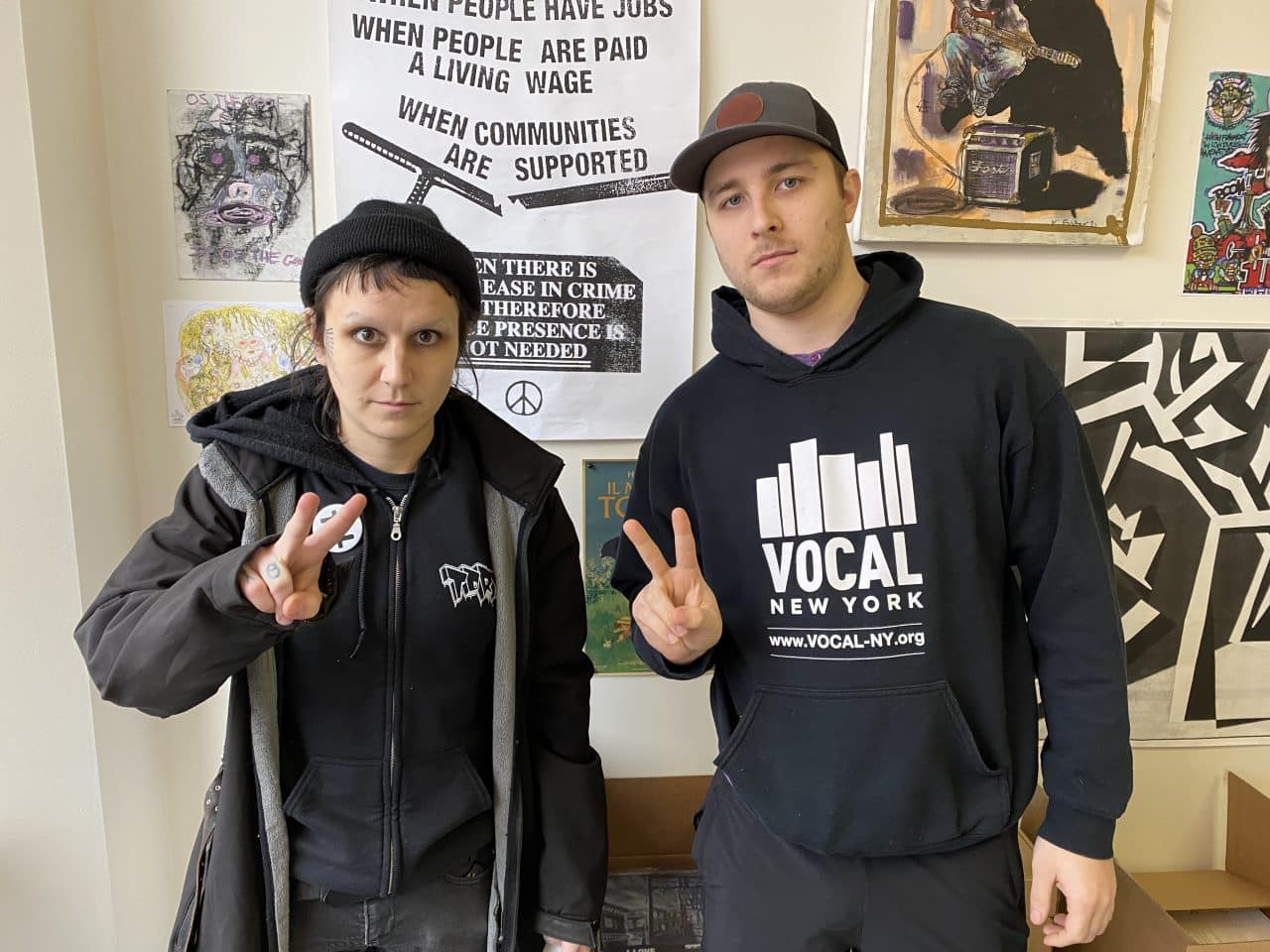
On the first day of testimony on November 24, Kalicum, a master’s of public health graduate who plans to become a physician, spoke of his brother’s struggle with addiction, which drew him to harm reduction. His family’s story hit so close to home that I struggled to take notes.
In 2016, Kalicum helped set up an overdose prevention site in his hometown of Nanaimo. He later worked at the Insite safe injection site in Vancouver’s Downtown Eastside and was hired by Vancouver Coastal Health to test drugs for contaminants. As the toxic drug crisis worsened in 2017 and 2018, Kalicum responded to 10 or 12 overdoses a day, he said in his testimony. He found dead bodies on the street in the Downtown Eastside.
Reserved, scientific, and soft-spoken, Kalicum’s voice strained when he spoke about the “red light emergency” he found himself in. “You’re trying to do the best you can to respond and save people’s lives,” he said. “It’s like trying to bail out a boat with a thimble.”
He told the court of his frustration with Health Canada’s lack of urgency with DULF’s application for a CDSA exemption. He said there was no way for DULF to overcome the regulatory obstacles, namely sourcing a legal supply of drugs.
DULF wasn’t the first to hit this wall. Cheyenne Johnson, executive director of the British Columbia Centre on Substance Use, testified about her organization’s four-year push to develop a heroin cooperative model with provincial and regional health authorities. Their efforts failed because they could not obtain a viable source of pharmaceutical heroin.
In her testimony, Nyx, an artist, UBC graduate, harm reduction worker, community organizer and a long-time resident of Vancouver’s Downtown Eastside, described the psychological toll of the toxic drug crisis. “I have constant night terrors. I’ve watched my coworkers die on the ground on shift,” Nyx told the court. “Friends have left behind children. It’s gutting my community; it’s killing all the people I know in arts.”
Passionate and fast-talking, Nyx has watched the Downtown Eastside, a community she cares deeply about, destroyed by government inaction. DULF’s lawyers have argued that the unpredictability and potency of the illicit drug supply has caused this crisis. The compassion club protected the lives of its members by providing a regulated alternative to the toxic unregulated drug supply, they told the court.
In all, DULF’s lawyers called 14 witnesses, including a senior scientist with the B.C. Centre on Substance Use who worked with DULF on their research papers; and B.C.’s former chief coroner who spoke about the government’s failure to implement recommendations in the B.C. Coroners Service’s death review panels.
Throughout the constitutional challenge, the Crown tried to chip away at the credibility of DULF’s co-founders, their published academic papers, and the evidence supporting the call for non-medicalized safer supply.
On July 13, I again boarded the ferry to Vancouver, this time during one of the hottest weeks of the year, to hear the closing arguments in the trial. The Crown, which had called just three witnesses and no experts during the constitutional challenge, had not given its legal argument. I wanted to be in the room when it happened.
In his closing statement, Crown Counsel Oren Bick argued that the CDSA’s Section 56—which grants case-by-case exemptions from the CDSA’s prohibition on controlled substances—adequately safeguarded against Charter infringements. The problem in DULF’s case was how the legislation was administrated, he said, not the legislation itself. He said that DULF could have pushed harder to get a Section 56 exemption to avoid serious drug trafficking charges.
DULF’s lawyers responded that even if the group received a CDSA exemption to run the compassion club, the group would have broken other federal legislation, specifically the Food and Drugs Act (FDA), to obtain and sell drugs for the compassion club. They argued the CDSA exemption was available in law, but not in practice.
The Crown argued that Justice Murray’s deliberations should focus solely on the CDSA exemption and not include other federal legislation such as the FDA. Bick also suggested that DULF could have obtained access to legalized pharmaceutical-grade heroin to use in the compassion club. Health Canada, Bick argued, remained open to dialogue about non-medicalized safer supply, but DULF did not meet its requirements to protect public interest and safety.
A lineage of civil disobedience
Constitutional law expert Margot Young, a professor at UBC’s Allard School of Law, said if DULF’s constitutional challenge succeeds, Justice Murray has a few options. She could make an exemption in DULF’s case only and let the statute, section 5.2 of the CDSA, stand. She could make a suspended declaration to compel the government to modify and nuance section 5.2 so groups such as DULF are not caught by drug trafficking laws. Or, she could declare the statute unconstitutional and remove the provision for drug trafficking for everybody.
The court’s decision will apply to B.C., but Young said because the case involves federal legislation, any changes could be influential in similar court cases across Canada. Plus, either the Crown or DULF could appeal a decision against them to B.C.’s Court of Appeal. If that happens, the case could eventually go on to the Supreme Court of Canada, which would give a ruling that applies to all of Canada.
Changes to drug laws have never come easily. Drug users and their allies have had to fight for them.
Author, broadcaster, and activist Garth Mullins remembers a time in the ’80s when activists risked arrest for handing out syringes and drug users set up unsanctioned overdose prevention sites to stop each other from dying. “Change happens in a lot of ways,” Mullins told me in a telephone interview during closing arguments in July. “But civil disobedience has chipped away at the prohibition regime,” he said.
A member of the Vancouver Area Network of Drug Users (VANDU), Mullins was a co-founder of DULF. He sees the compassion club and the constitutional challenge as part of the lineage of civil disobedience and legal action that’s made progress against drug prohibition possible. Mullins hopes Nyx and Kalicum will avoid serving time, and wants the CDSA to be found unconstitutional. Though his goal is ending prohibition, he said a more narrow technical judgement could clear a pathway for compassion clubs like DULF to operate.
DJ Larkin, a lawyer and the executive director of the Canadian Drug Policy Coalition, also hopes the DULF case will result in a legal pathway for compassion clubs. “We need to be prioritizing safety now,” Larkin said. “If governments’ concern is, ‘We don’t want people committing crime,’ and community concern is, ‘We don’t want people to die of drugs,’ the fastest way to solve that problem is to divert people toward a compassion club.”
Larkin likened DULF’s case to the 1988 Supreme Court of Canada’s decision in R. v. Morgentaler, which legalized medical abortion. “When you are dealing with politicized topics where the government can avoid doing the thing they know needs to happen, you will find communities moving toward civil disobedience because it’s the only choice left,” Larkin said.
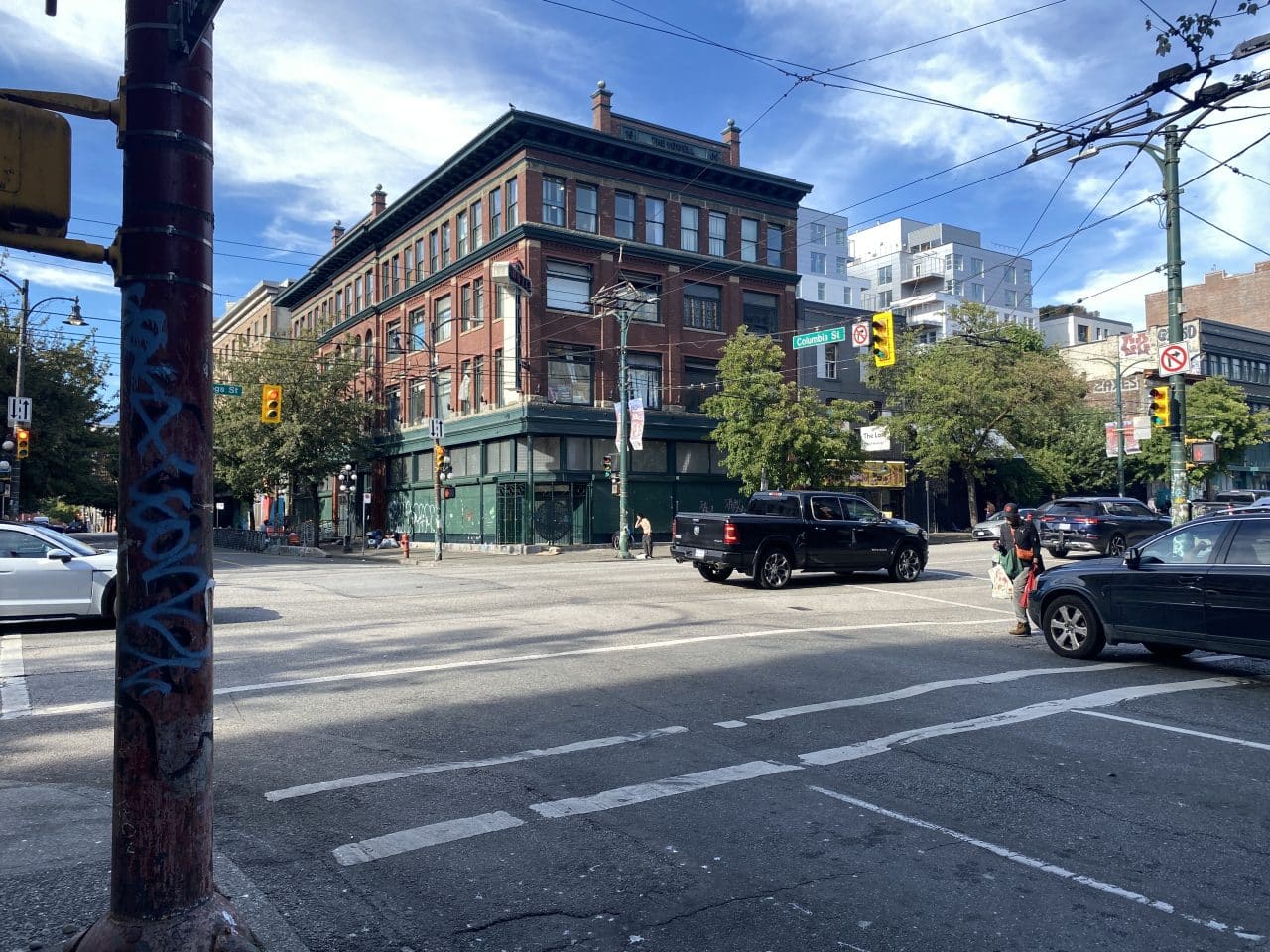
Last week, after court ended for the day, I walked to Vancouver’s Downtown Eastside. There, I found DULF’s old storefront, still boarded up, a hand-drawn cartoon of a cop etched on the door behind the gated entryway.
Standing in the neighbourhood hit hardest by the toxic drug crisis, I think of Dee, the former DULF compassion club member, who against all odds, managed to start and stay on treatment for opioid addiction. I think about the people around me in this Downtown Eastside neighbourhood trying to survive. I think of the thousands of people who didn’t survive. I think of my brother.

When I went to journalism school 10 years ago, my parents thought that they would eventually read my articles in The Montreal Gazette. Today, that newspaper is a husk of its former self. But I get to explain that I’m working towards critical, independent, and sustainable journalism.
Want to be a part of the future of journalism? Support our work with a monthly contribution. Sign up here.
– Amanda Siino, Development Director, The Breach
Public Health | Doug Ford’s decision to close safe injection sites is a death sentence
Drug Toxicity | Decriminalization worked. B.C. killed it anyway
Drug Policy | Media, politicians are rebranding coercion against drug users as ‘care’

4 comments
Comments are closed.
Stupid use of the term their, regardless of excessive undermining of the English language the preferred use more accurately without gender bias would be to use Dee’s friend rather than the misuse indicated above. Poetic license does not apply, nor an excuse of brevity in an overly wordy article.
DULF: this is a heroic act on the part of heroic people who are willing to go the distance to save lives. The shame lies squarely at the feet of a Government, while professing care and compassion for ALL its citizens, is woefully negligent and behind the times. Take a look at the progress a country like Portugal has made through their harm reduction practices. Why are we trying to criminalize those who are putting their lives on the line to insure that people won’t die. Why are we, in fact, allowing the genocide of 1000’s of our citizens, traumatized by a laundry list of heinous abuse?
And why is the system creating a “Catch 22” at every bend in the road? These Heroes did everything humanly possible to make it safe. Canada, its government and policies, need to take a deeper look at its failing to REALLY CARE. And not give lip service to this idea of confusing care with coercion. Don’t you think that these citizens, with the right to health and safety, deserve a process that clearly WORKS? What a low blow to all the science, academic research, and on the ground proof: questioning in court, the validity of these findings.
As a psychologist, having worked in the field of addiction, in the United States, I’m saddened and appalled, and yes, angry, that Canada, for all the good that we profess, is dragging its feet, seemingly unwilling to really do the right thing.
These young people are our true Heroes.
Will this Judge have the courage to open the gates of legislation to create a pathway for true compassion?
This is my hope and prayer.
Brilliant reporting on a heartbreaking reality with which too many people people and too many families endure. Safe drugs might have saved so many we have loved and lost. The government should do everything in its power to protect, not prosecute, those working to keep people alive.
I am not a drug addict and have never been one but those who are should have access to safe drugs and timely treatment when they are ready.