It’s the documentary Thunder Bay’s police don’t want you to watch—or at least, they don’t want their officers watching it.
When the trailer dropped for the TV series that we’ve been making for two years—entitled “Thunder Bay”—the city’s police service acting chief Dan Taddeo sent a notice to staff (a source leaked us a copy). He called it “sensational and unfair,” “disturbing, biased, and triggering.” Const. Jeff Elvish of the police’s Peer Support Team sent a complementary email, telling officers to “fight the urge to watch it,” because “this series is biased, and only includes the people who can forward a [sic] vile rhetoric.”
Among those who are supposedly spreading this vile rhetoric in the trailer are lawyers who represented the First Nations communities of Nishnawbe Aski Nation in the 2015 inquest into the mysterious deaths of seven Indigenous youth. The youth were in Thunder Bay for services like high school, which Canada doesn’t make available in their home communities.
It also features Gerry McNeilly, the former head of the province’s police watchdog, the Office of the Independent Police Review Director (OIPRD). McNeilly spent two years comparing how the Thunder Bay police investigate the deaths of Indigenous people versus non-Indigenous people, before he reached his conclusion in the Broken Trust: Indigenous People and the Thunder Bay Police Service report in 2018 that “systemic racism exists in the Thunder Bay Police Service on an institutional level.”
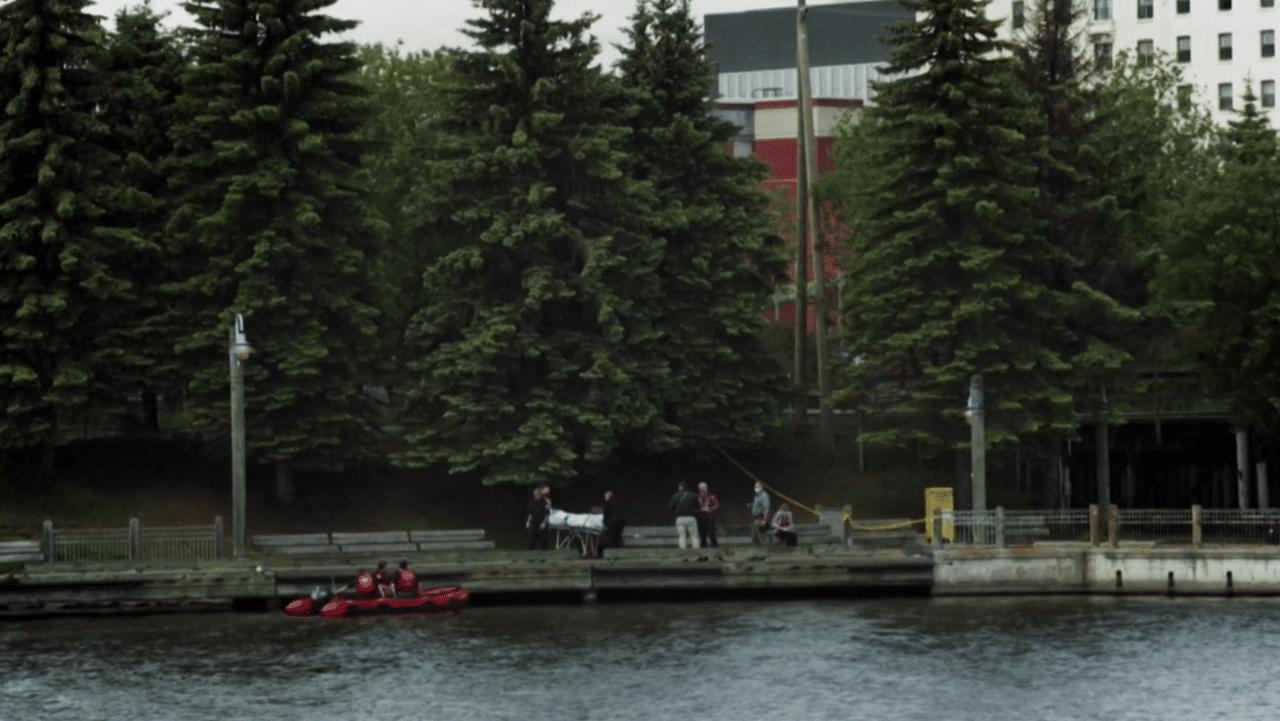
His team uncovered nine investigations that were performed so poorly they needed to be reinvestigated. Four of those cases were the ones deemed inconclusive after the inquest into the deaths of the seven Indigenous youth, many of whose bodies were discovered in rivers.
These are the voices that police leadership dismiss when they think they’re behind closed doors. We featured these voices in the TV series because they all played a role in raising the fog about Indigenous deaths in this mid-northern city, and they all did it professionally, working through institutions of government.
Reckoning with systemic racism
Other voices the trailer features include Beulah Wabasse, whose 15-year-old grandson Jordan’s body was found in the Kaministiquia River in 2011. Inconsistencies in the official story of how he died continue to ring out today.
We hear the voice of Jim Leonard, chief of Rainy River First Nations in 2015 when the body of a band member, 41-year-old Stacy DeBungee, was discovered in the Neebing-McIntyre Floodway that runs through the middle of Thunder Bay. And we hear Stacy’s brother, Brad DeBungee. They issued the complaint that brought in the province’s police watchdog, alleging police prematurely reached a conclusion that there was “no foul play” in Stacy’s death.
That watchdog’s two-year investigation—which resulted in the Broken Trust report—corroborated those allegations. The OPP is now reinvestigating, while the officer that oversaw the first investigation of Stacy’s death has been found guilty of neglect of duty and discreditable conduct for making racist assumptions about the conditions under which she died.
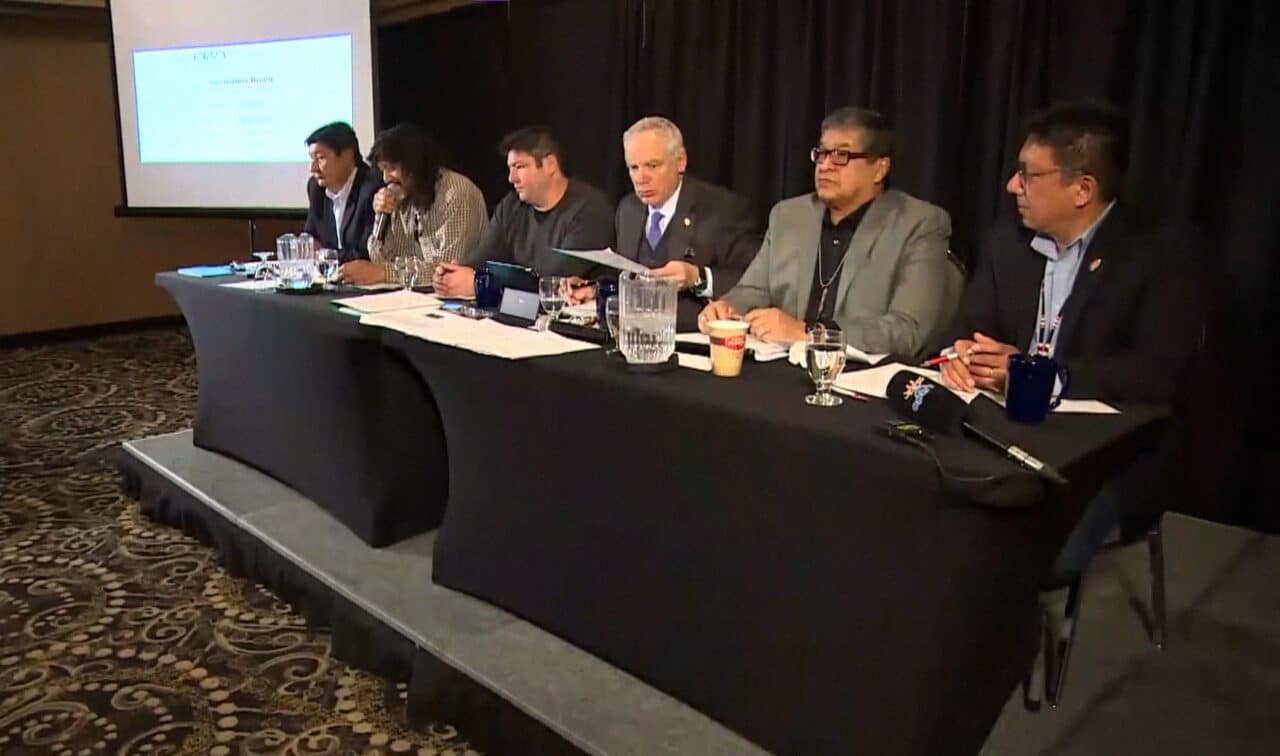
So when these emails talk about “those who only can forward a vile rhetoric,” they’re including the families who’ve sought justice for their deceased loved ones, whose deaths were improperly investigated by this police service—because they were Indigenous.
None of this is “vile rhetoric.” It’s conclusive and damning evidence, even according to the system itself.
The scary thing is, officers who received this email might not even know that. According to officers with whom we’ve spoken, the leadership of Thunder Bay’s police has never held an information session for staff on the meaning of systemic racism or how these findings might impact their relationship with Indigenous people. In fact, when two officers, Staff Sgt. Shawn Harrison and Sgt. Shawn Whipple, took the stand in a hearing over their mishandling of Stacy DeBungee’s case last summer, neither was able to define “systemic racism.”
Whipple—who was found not guilty—estimated he had attended “hundreds” of sudden death scenes. Harrison trained officers in major case management. They both testified they hadn’t read the report of Ontario’s policy watchdog that explained the systemic shortcomings of those investigations, four years after the findings were released. No one had ever asked them to.
It’s all consistent with a culture of resistance and opaqueness that has defined the Thunder Bay police. We wouldn’t even have been able to attend the hearings that tried those officers it hadn’t been for CBC winning an appeal over the police leadership’s attempt to lock the public out.
As for us, we’ve been trying to interview police leadership since September 2020, when Canadaland first greenlit the “Return To Thunder Bay” podcast. The police denied every request to appear on the podcast and the series, which acting chief Taddeo says in these emails was “for somewhat obvious reasons.”
Classic.
No access granted. No explanation needed.
On the same day the trailer for our Crave series was released, five former Memphis police officers were arrested for murdering Tyre Nichols. Not only did the Memphis police take decisive action to fire and charge the officers involved in his killing, but their leadership also released the skycam and body cam video footage as a transparency measure.
While the Indigenous experience here is different from the Black experience with police in the United States, that’s a long way from what we’ve seen in Thunder Bay.
‘Deflecting and denying’
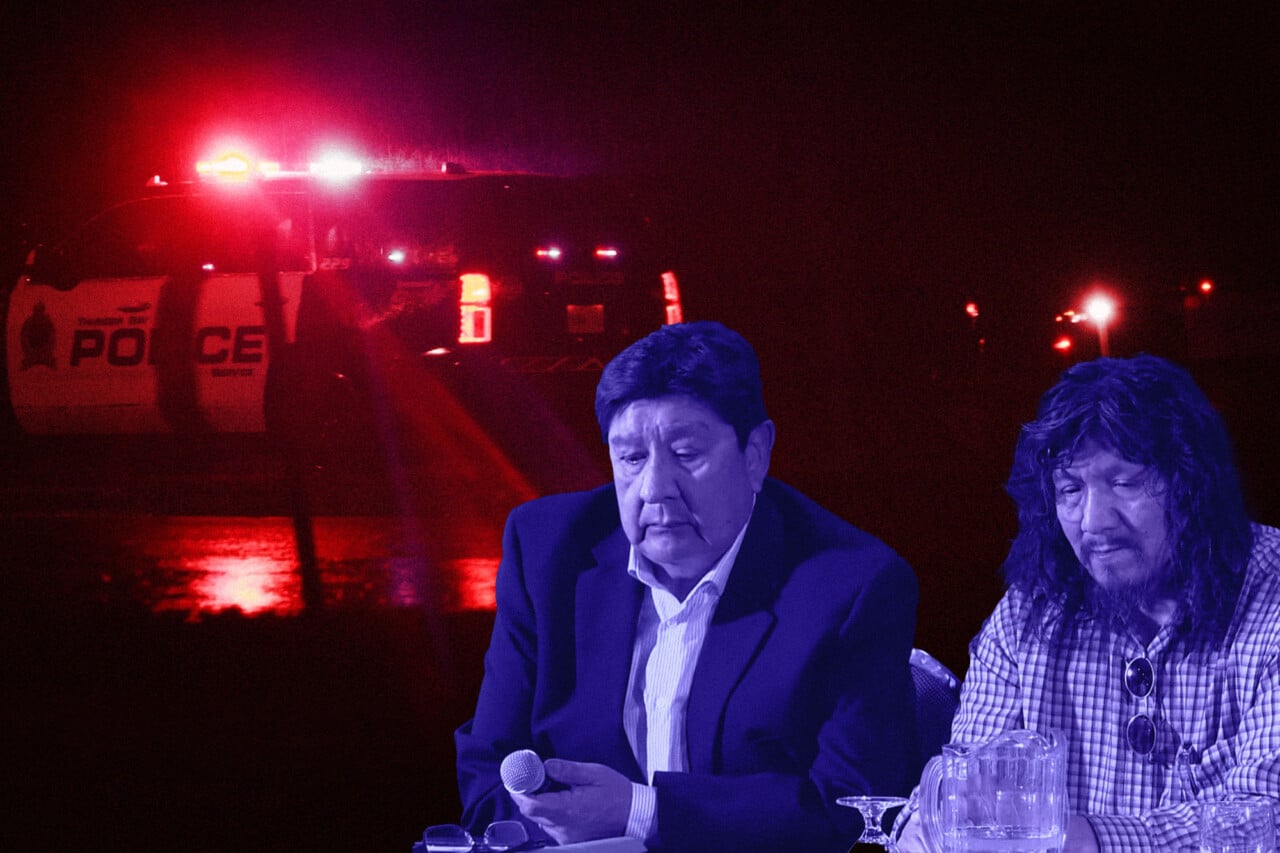
Early in June 2022, the production team on our “Thunder Bay” series was invited to a press conference. In attendance was a large contingent of family members whose loved ones’ deaths were being reinvestigated as a result of recommendations brought forward by the Broken Trust report. Local media, various non-profit organizations, and local government were all invited to attend. The Thunder Bay Police Service was also invited. They declined.
At that press conference, human rights lawyer Julian Falconer called for reinvestigations to start over, this time with Thunder Bay police having less influence. Each family member took to the podium and outlined their experience, detailing how and why they lost faith in the reinvestigation. It was horrifying to hear how they felt their interests continued to be sidelined.
Knowing the story the way we do, we can’t for a second imagine the leadership of the Thunder Bay police appearing next to the families. It’s clear that we have reached a point in time, politically and socially, when our communities and our society writ large knows that what we have is not working.
In the spring of 2021, in response to a recommendation in the Broken Trust report, the Thunder Bay police spent $1.8 million on vehicle, taser, and body cameras. By November, those cameras had been put to use producing a monthly, high-quality copaganda series entitled “Our Call.” The second video they released featured an officer saving a woman who was attempting to take her own life by jumping into a river. Considering the long-standing mystery around river deaths, enhanced by the police’s incompetence and racism, the choice was a slap in the community’s face.
Yet they can’t offer transparency and accountability to be able to stand with the families, because those families say they’ve seen no evidence that communication or work is improving. It would seem the police are still looking for support and validation from anyone but those most directly affected.
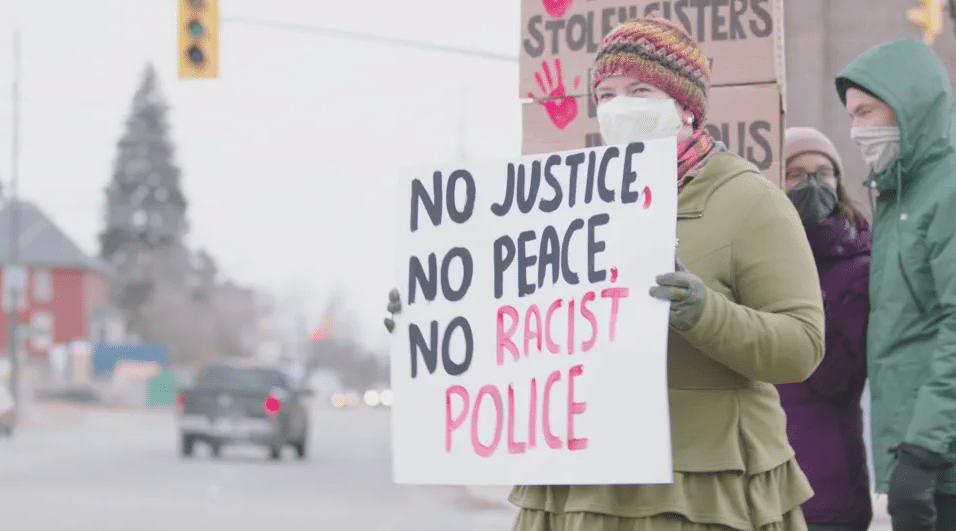
By continuing to control the message so tightly with a public relations approach, the police aren’t building meaningful trust. The defensiveness of Taddeo and Elvish in their internal emails doesn’t point to a leadership looking to defend itself by showing its work. Deflecting and denying is what got them into this mess in the first place.
The only way forward is to repair relationships with Indigenous communities. At the last police board meeting before the Crave series was released, police secretary John Hannam said four years after government reports underlined the need to mend relationships, the board has yet to hold a single meeting with the region’s Indigenous leadership.
Through four episodes, “Thunder Bay” lays bare the cost of failure of the institutions we all depend on in our towns and cities. This cost has been paid by the Indigenous community for decades and until now, the powerful in the city could protect itself. Those days are squarely over.
Const. Elvish, in his message to his officers, quoted Mahatma Gandhi, saying, “You can’t change how people treat you or what they say about you. All you can do is change how you react to it.”
We could hold our noses as one of the country’s most notoriously racist police forces quotes a pacifist, anti-colonial revolutionary, if it’s helpful. But when it comes to serving families who have lost loved ones without explanation, or being transparent to the public, the Thunder Bay Police Service changing “how they react” would be altogether welcome.
“Thunder Bay” is now streaming on Crave. W5 CTV will also air episode 1 on February 25.
The Breach’s investigations don’t just inform our readers—they force the powerful to react.
An exposé on blood plasma privatization led to national headlines. Our revelations about the government’s cozy connections to Big Pharma sparked a parliamentary probe. A report on high-tech price-fixing by mega landlords resulted in a criminal investigation.
From activists to elected officials, people are using The Breach’s journalism to push for transformative change.
– Dru Oja Jay, Board President, The Breach