In November 2022, Jason Kenney resigned as a member of Alberta’s Legislative Assembly with a proverbial finger wag at what he called political “polarization.”
Citing “efforts to cancel our history” on the left and “vengeful anger” on the right, the former Alberta premier gave a moral “tsk tsk” at all of those who weren’t upholding the “bedrock institutions and principles” he holds dear.
Kenney’s assertion that Alberta has become polarized between political extremes reflects a common theme from pundits and academics ahead of a consequential provincial election on May 29. In the conclusion to our new book, Anger and Angst: Jason Kenney’s Legacy and Alberta’s Right, my co-editor Trevor Harrison and I argue that this isn’t an accurate portrayal of Alberta’s current political reality.
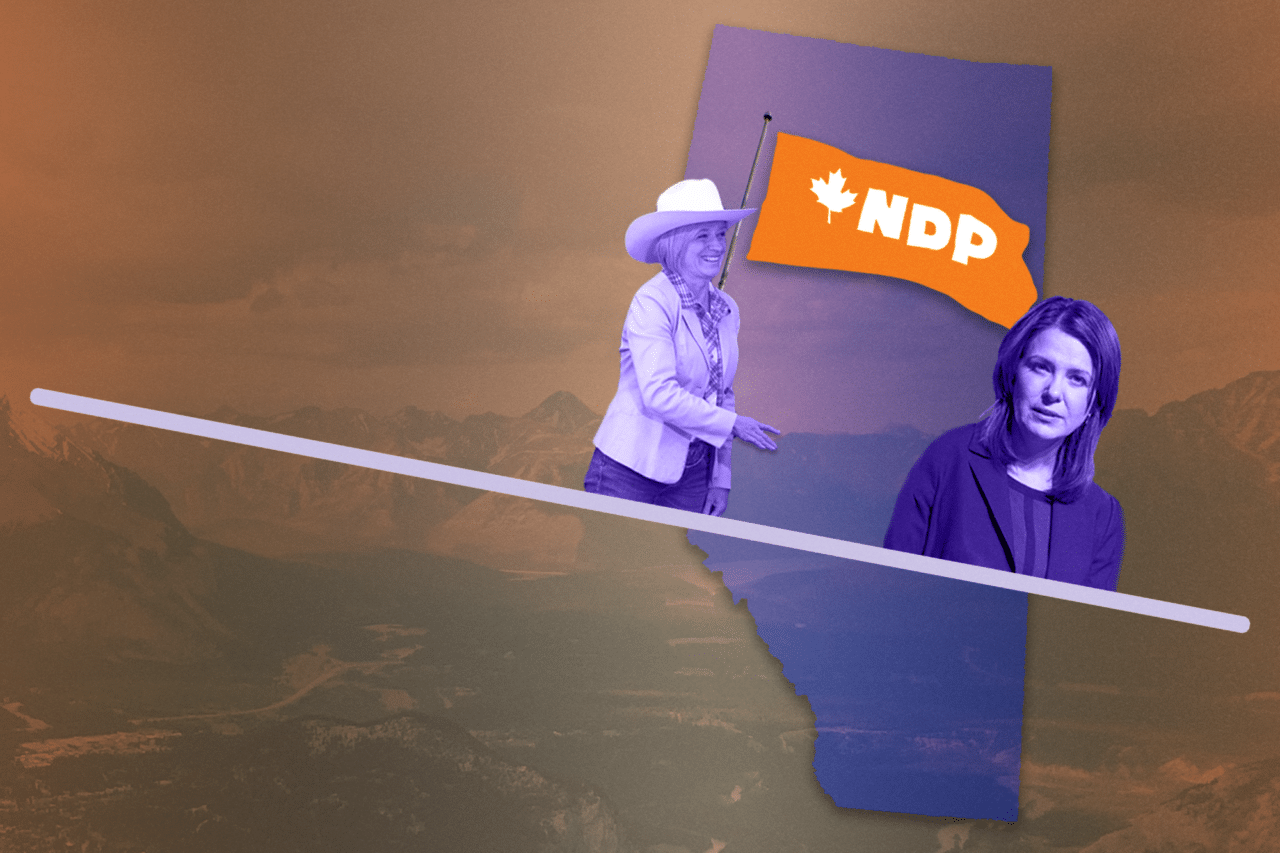
It’s true that Alberta’s political landscape has largely turned into a two-party system with Rachel Notley’s New Democratic Party (NDP) on one side, and Danielle Smith’s United Conservative Party (UCP) on the other. But as both parties have shifted to the right, there’s actually less political space separating the two parties today than between the NDP and the UCP’s predecessors in 2015.
Yes, the NDP acknowledges that climate change is real, supports a moderate carbon price, aggressively champions public health care, and fights against homophobia, racism, and misogyny—but these are not hard left positions on today’s political spectrum. And they’re far from the NDP’s purpose “to promote the principles of democratic socialism in Alberta, and to establish and maintain a democratic socialist government in Alberta,” as stated in its party constitution.
The NDP’s march to the right
The truth is, Alberta no longer has a party that advocates for traditional left policies such as nationalization of the oil and gas industry, raising royalties to capture 90 to 100 per cent of oil and gas profits, reversing privatization of public services on a broad scale, or even significantly increasing corporate taxes. There is no viable party on the “extreme” or “radical” left in Alberta, and for any pundit or politician to suggest otherwise lacks credibility.
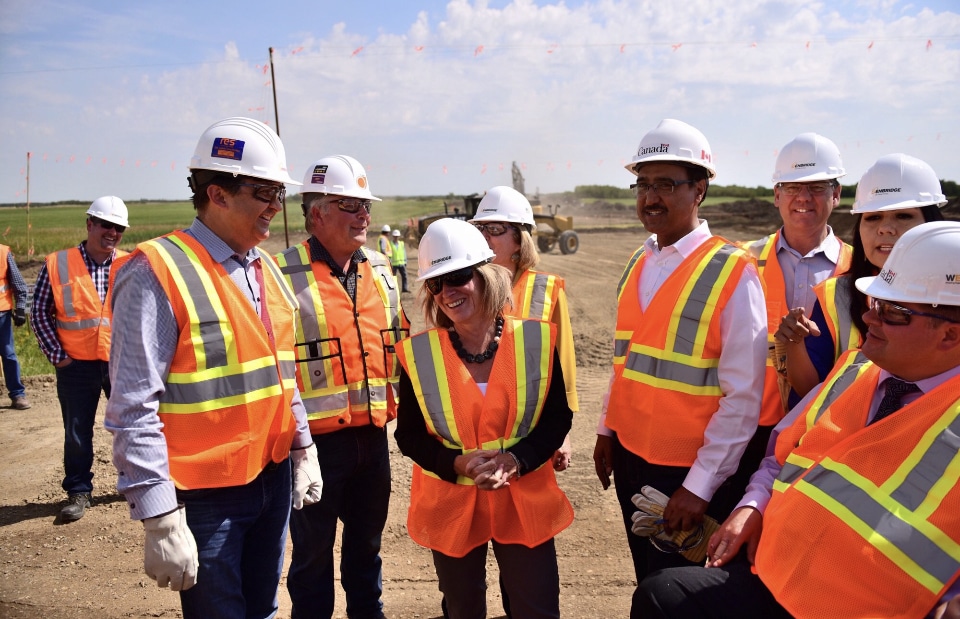
The reality is that Alberta’s NDP has spent the past decade—especially since forming government in 2015—moving rightward in search of a spot in the centre of the political spectrum. The pressure to moderate some of its past ideas and views, especially around energy policy, started the day after the 2015 election, when energy industry and investors sent them a clear signal. That day, world oil prices rose above $62 a barrel for the first time in months, yet as a sell-off began, the energy sub-index of the Toronto Stock Exchange saw a drop of three per cent.
The Canadian Federation of Independent Business warned of major job losses if taxes were increased. Then-premier Notley spent that morning on the phone with oil and gas executives and corporate leaders, reassuring them that her government would be a moderate one and would introduce no radical changes to existing energy or corporate policy. That position was rewarded when, six months later, the heads of Alberta’s major energy corporations stood on stage with Notley as she launched her climate leadership plan.
In December of that same year—when the NDP bungled the development and roll-out of a bill extending occupational health and safety provisions and Workers’ Compensation Board (WCB) coverage to farm workers—farmers pushed back. They mounted boisterous rallies at the legislature, and Notley’s approval rating tumbled. The government responded by appointing a multi-stakeholder panel to research and consult retroactively, which compromised the final rules much more than necessary.
Throughout their time in office, the government used this approach of appointing panels chaired by centrist or conservative experts as a way to justify advancing more moderate policies than they had previously advocated. This included appointing Dave Mowat, former president and CEO of ATB Financial, and energy economist Peter Tertzakian, to key roles in their oil and gas royalty review—a review that resulted in no changes to royalty rates in the province, despite years of NDP campaigning to the contrary. A similar approach was used to moderate bolder positions on the WCB, the Labour Relations Code, and Employment Standards. The government made some progress, but nowhere near the level of ambition the NDP had advocated for throughout their time in opposition.
Electorally, this rightward move was facilitated, perhaps even encouraged, by the virtual collapse of the Alberta Liberal Party and the Alberta Party—two parties that aspired to present themselves as centrist “pragmatists” or even post-partisan (in the case of the Alberta Party) after being completely shut out in the 2015 election.
Courting the right
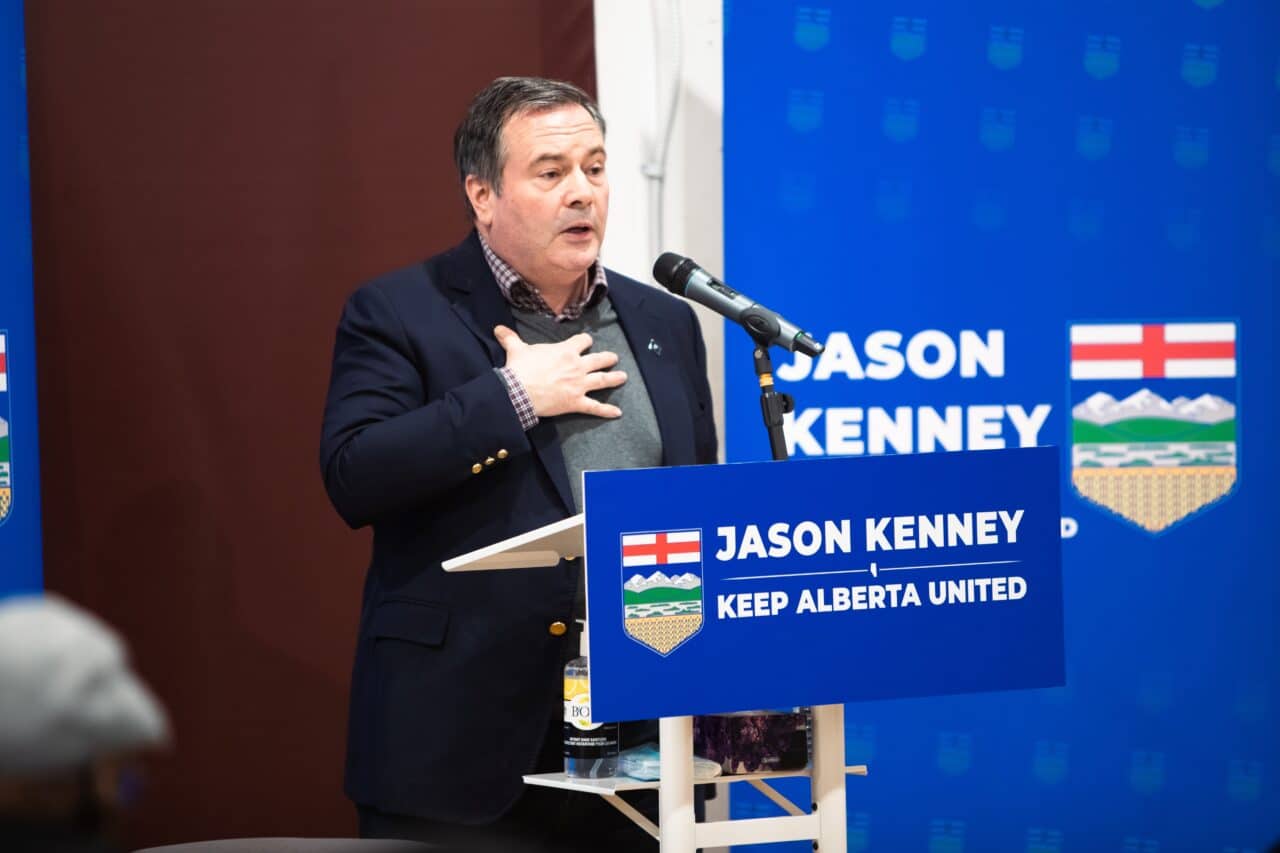
On the other side of the political spectrum, a different (but related) dynamic has played out. Kenney, who had spent most of his adult life working to move the dominant political paradigm to the right, steadfastly refused to moderate his views or move to the political centre after being elected as Alberta’s premier in 2019.
He won by painting himself as the saviour of Alberta’s right from “anti-Alberta” environmentalists, the “left-wing ideologues” in the NDP, and the evil “Trudeau-Notley alliance.” And when in government, he kept serving red meat to his base and showed no interest in passing policies based on how a majority would react to them.
Kenney slashed corporate taxes, stopped the already-in-progress construction of a modern medical lab facility so he could privatize it, launched a formal witch-hunt inquiry against environmental groups, repeatedly demonized teachers and health care workers, and went to war with doctors—none of which had the support of even a significant minority of Albertans.
Eight months into his mandate, Kenney’s approval rating dropped by 15 points to 40 per cent—the largest drop, and third lowest approval rating, among all Canadian premiers.
And it only got worse with his pandemic response.
Facing irrepressible public pressure and a health care system on the verge of collapse, he reluctantly introduced the country’s weakest public health protections against COVID-19, and started losing his far-right base. Once that happened, it was inevitable that Kenney would not have enough support in the 2022 leadership review to lead the UCP into the next election.
The politics of fear and anger
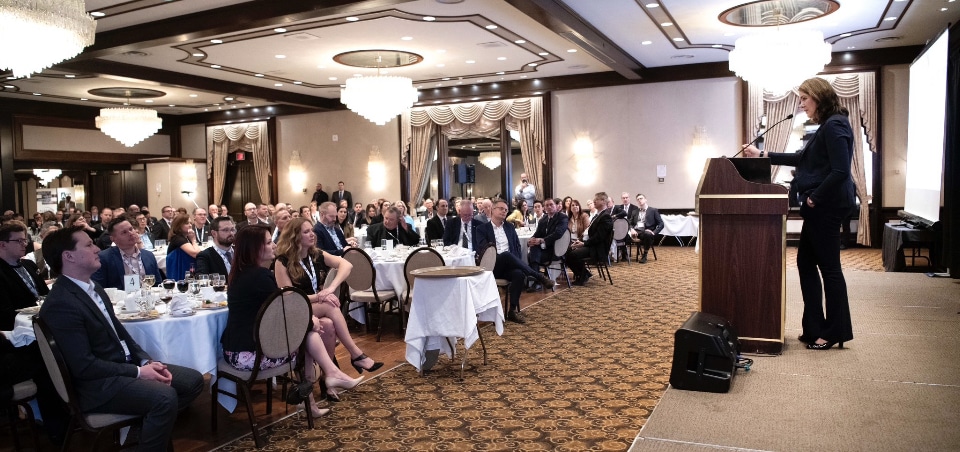
Seeing how a disgruntled far-right base tanked Kenney’s leadership, the incoming Smith knew exactly who she needed to court to become the new UCP leader and premier.
She ran an angry and conspiracy-laden, anti-mask, anti-vaccine, anti-Ottawa campaign to re-energize the far-right base. It worked. She won the leadership on the sixth and final ballot, and doubled down on her campaign themes in her victory speech: “We will not be told what we must put in our bodies in order that we may work or travel. We will not have our resources landlocked or our energy phased out of existence by virtue-signaling prime ministers.”
She has since staffed her office with vocal proponents of the right, such as her current chief of staff Rob Anderson, one of the architects of the Free Alberta Strategy. As premier, she has led from the right, pushing ideas such as the formation of a provincial police force, public handouts for oilwell clean-up, more private health care, an Alberta sovereignty act, and legislation to keep federal public servants from “trespassing” on private property.
The effects of this strategy have been two-fold. First, it brought the far right back into the UCP fold. Between March 2022 and December 2022, support for Alberta’s separatist Wildrose Independence Party dropped from 11 per cent to one per cent, mirrored by a 10 per cent bump in UCP’s support. That shift in popular support moved the UCP ahead of the NDP in popular opinion polls.
Second, Smith’s move to the far right has left a large group of centre-right voters politically homeless. These are the folks that historically formed the base of Alberta’s Progressive Conservative (PC) party; the ones that reluctantly elected Kenney as PC leader in 2016 because they felt only he could unite the right and take power back from the NDP; and the ones who abandoned Kenney almost immediately after he was elected.
Battleground Calgary
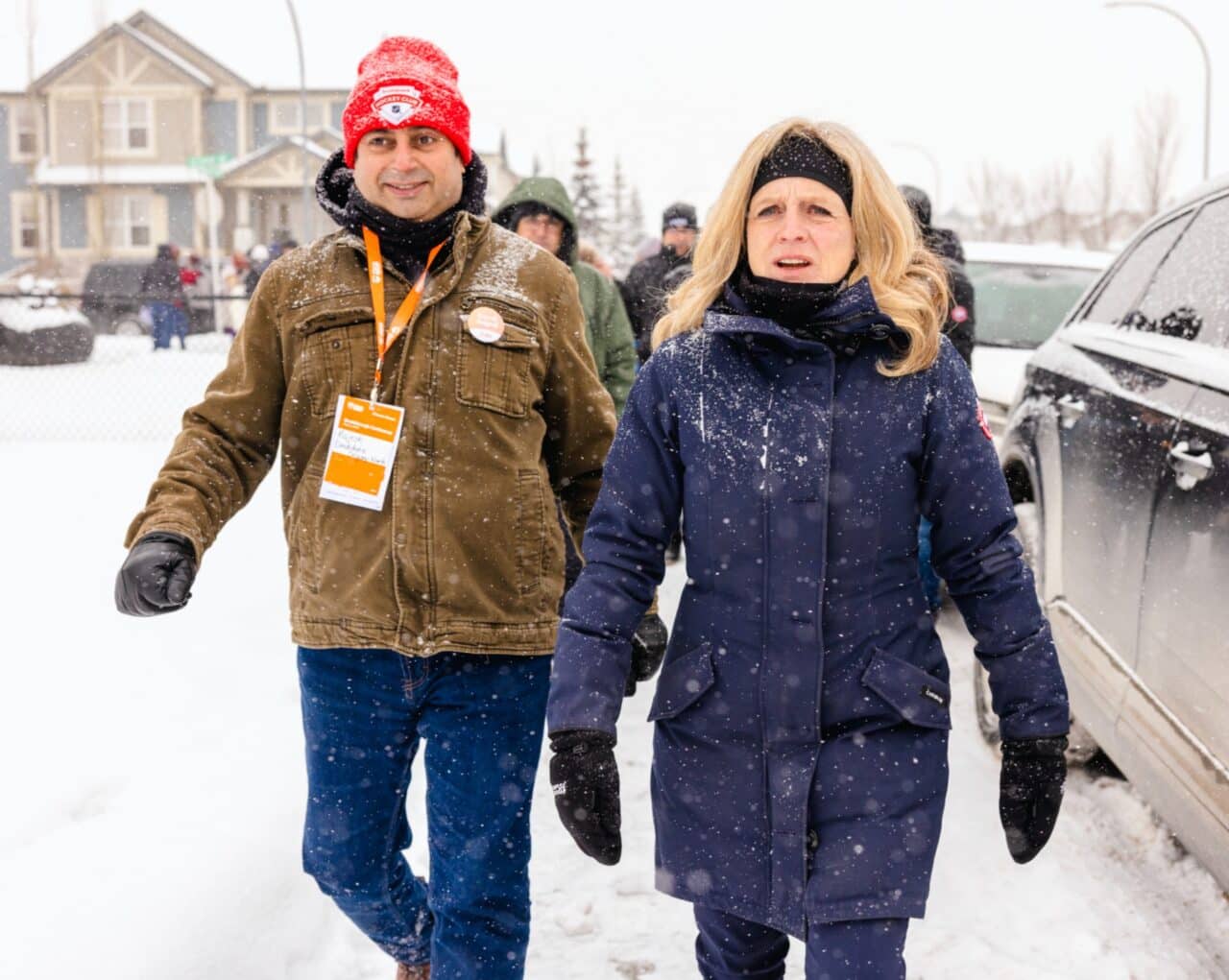
It is these same centre-right voters that Notley hopes to bring into the NDP’s centrist camp. In Alberta, they tend to be concentrated primarily in Calgary and the doughnut of bedroom communities around Edmonton. They tend to have a strong allegiance to the oil and gas industry, oppose increases in personal taxes, and care more about balanced budgets than about who owns long-term care homes.
Pollsters, academics and the NDP’s strategists agree on the political math: they cannot win a majority government without these voters. That’s why the party has worked hard to appear anything but leftist in their policy proposals.
Since 2015, the party has embraced carbon capture, utilization and storage; rejected increases in oil and gas royalties; advocated for pipelines to the point of encouraging the federal government to actually buy one; adopted the language of spending restraint and balanced budgets; and shown no interest in increasing personal taxes or introducing a sales tax. The party has also recently announced that they will move their campaign headquarters to Calgary from their traditional Edmonton stronghold.
It is this dynamic which gives observers the impression that Alberta has become polarized between political extremes. While Smith caters to the far right with her policy ideas, her rhetoric paints Notley as a radical leftist who is in cahoots with Justin Trudeau to kill Alberta oil and gas jobs and squash Albertans’ freedoms. This is a naked strategy to scare centre-right voters away from the NDP.
Likewise, as Notley and her team cater to the centre and centre-right with their policy ideas, they call out the UCP’s ultra-right positions—on Alberta “sovereignty,” support for the Coutts trucker blockade, or cash handouts to oil companies for well clean-up. This strategy keeps their left base afraid of the UCP, and provides cover for the NDP’s own move to the right. The NDP needs to be seen to be calling the UCP out, as they themselves embrace fossil fuel expansion and push back against the federal Just Transition bill.
Ultimately, centre-right and traditional left voters will determine the outcome of Alberta’s election. Will they perceive enough of a threat from the far right and vote NDP? Will they buy the fear-mongering from either side and fall in line? Or will they resent being told that their only option is to vote for the least offensive alternative, and simply stay home on election day?
Whatever they decide will impact not just this election, but Alberta’s political and electoral landscape for the foreseeable future.

When I went to journalism school 10 years ago, my parents thought that they would eventually read my articles in The Montreal Gazette. Today, that newspaper is a husk of its former self. But I get to explain that I’m working towards critical, independent, and sustainable journalism.
Want to be a part of the future of journalism? Support our work with a monthly contribution. Sign up here.
– Amanda Siino, Development Director, The Breach
Pierre Poilievre | Pierre Poilievre’s Fake Populist Playbook

Ontario Election 2022 | “No more confusion about Doug Ford”: the fight for decent work in Ontario
Public Health | Conservative provinces exploiting pandemic surgery backlog for privatization assault

1 comment
Comments are closed.

A “must read” for all members of the NDP. What is not mentioned is that Notley’s NDP is an anchor dragging back any move to the left when it comes to the federal party. (Not that the federal leadership has been anything but supportive.)
One criticism. It is always disturbing to see left wing columnists suggesting the introduction of a sales tax as a positive option for raising revenues.