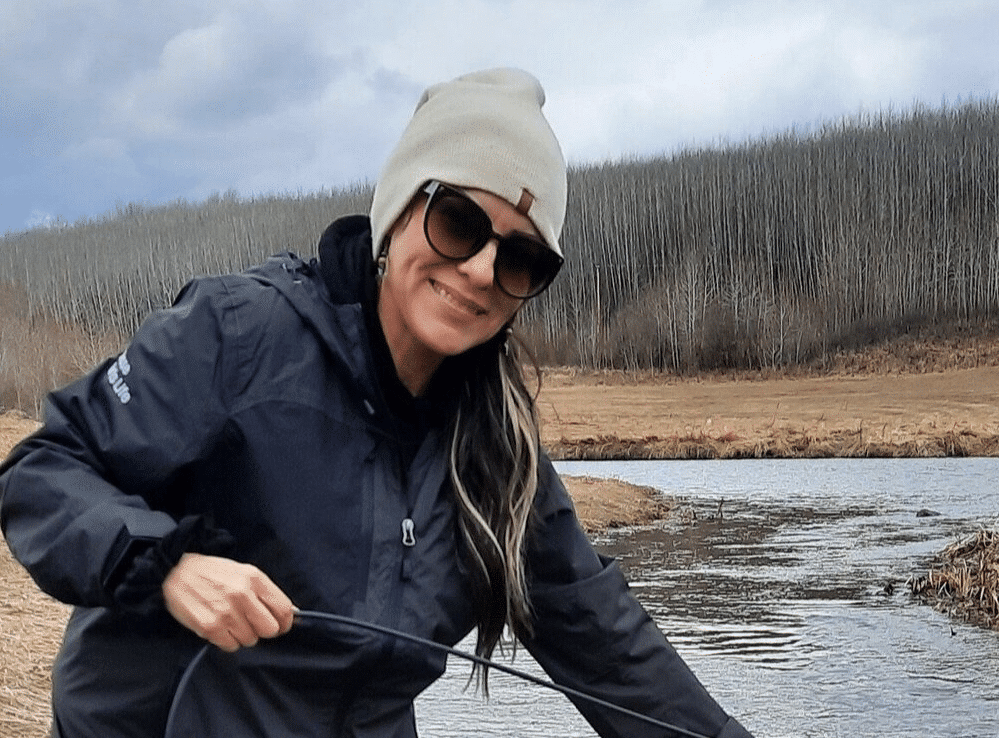
Jesse Cardinal is one of the many Indigenous people in Alberta whose quality of life flows in tandem with the Athabasca River.
Cardinal—who is from the Kikino Métis Settlement northwest of Edmonton and has family in Fort McMurray—grew up eating wild meat and picking medicines upstream of the Athabasca, which winds its way in a 1,230-kilometre diagonal across the province.
The further north you go, the more people rely on the waters and lands—as food insecurity and soaring costs in remote and fly-in communities have made survival dependent on hunting, fishing and gathering.
“This river is literally the life-giving river for the north,” said Cardinal, who is the executive director of the Indigenous-led environmental group Keepers of the Water.
So when her organization became aware in 2019 that the Alberta government was considering letting the oil industry release massive amounts of partially-treated wastewater into the Athabasca and its tributaries, the group was in shock.
“We were like, ‘Holy shit, they’re trying to do what?’” she said. “How could they even propose this?”
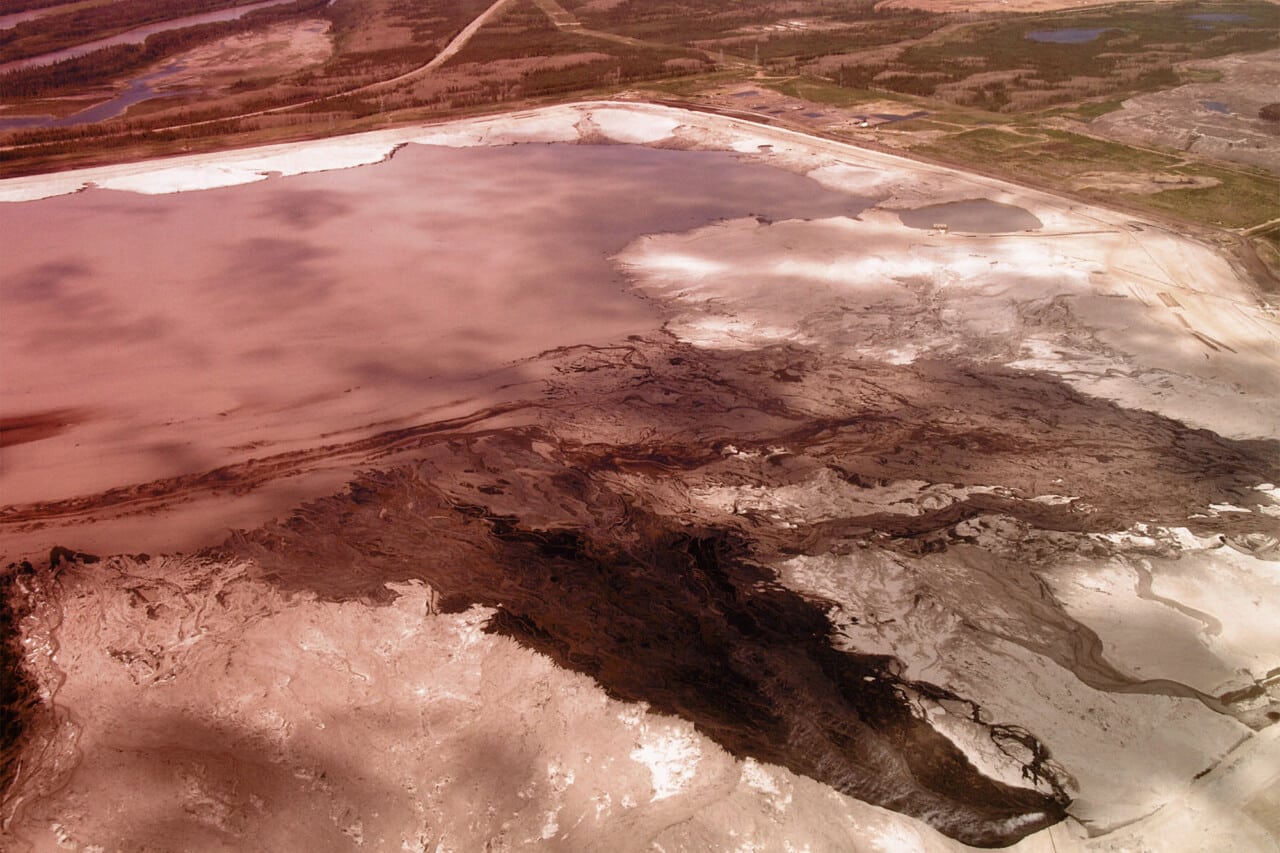
Prohibited for decades, the Alberta and federal governments are now considering regulations that would permit the discharge of the toxic byproduct of oil sands mining known as “tailings.”
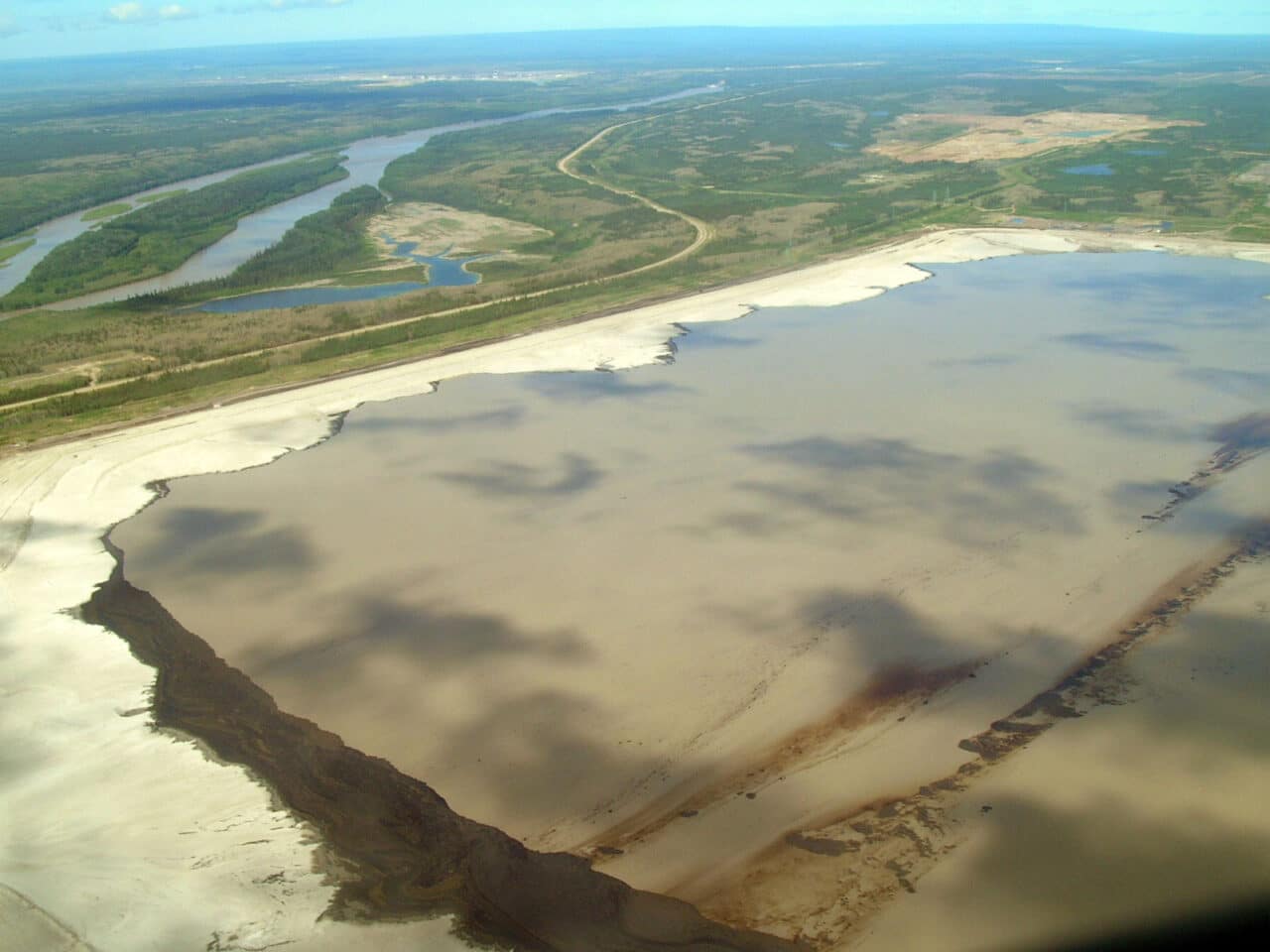
Despite frequent promises from industry and government to curtail their growth, the artificial ponds that store the tailings now hold an estimated 1.4 trillion litres—the equivalent of 560,000 Olympic-sized swimming pools.
Cardinal said Keepers of the Water wants the ponds removed, but not at the cost of impacts on the river. For industry, meanwhile, releasing the treated tailings is the cheapest and therefore preferred option.
Keepers of the Water has been at the forefront of a campaign to stop this from happening. Thanks in part to their efforts—and the growing power of Indigenous rights—the federal government is now including select Indigenous nations in Alberta in a process to develop the regulations and consider alternatives.
A spill of 5.3 million litres of wastewater at Imperial Oil’s Kearl mine in January—following seepage last spring that was kept hidden from neighbouring First Nations for months—has brought heightened attention to the mismanagement of decades of accumulated tailings.
But it’s still an open question whether this Indigenous-led movement can push government to force tar sands companies to clean up the tailings—or whether they will simply do what industry has wanted all along.
The world’s biggest industrial project—on the bank of your river
Born in the 1970s, Cardinal has seen many environmental impacts from the tar sands during her lifetime.
The Alberta oil sands—the world’s third-largest deposit of oil and among its most carbon-intensive—are located in the province’s north, near several First Nations that have been opposed to the pace and scale of its development.
Keepers of the Water formed in 2006, Cardinal said, when Dene people in the North West Territories, as well as Cree and their allies, became alarmed by drastic changes—including reports of increased toxicity and decreasing water volume.
“People were finding deformed fish and a lot of lesions and cancers in the animals they were hunting,” Cardinal said.
“To have one of the biggest industrial projects on the planet, literally on the bank of the river, has caused so many problems in so many ways.”
Tailings result when bitumen, after being extracted from underneath the boreal forest, is separated from clay, sand and silt using high volumes of water and chemicals.
In 2009, after 1,600 ducks died after landing on a Syncrude tailings pond, Alberta’s energy regulator issued a directive requiring companies to dry out and bury the tailings.
But industry found the process expensive and ignored it, according to previous media reports. The government took no subsequent action, removing the directive.
A few years later, then-Alberta premier Alison Redford announced that tailings ponds would “disappear from Alberta’s landscape in the very near future.”
But the ponds have continued to grow, doubling in size since the directive was first issued.
The industry has other options to treat the tailings ponds, Cardinal said, but they would need to do what’s right, rather than what’s fast and easy.
The ‘risks’ of not consulting First Nations
A process initiated by the Alberta government collapsed in 2021 when First Nations walked away from it, saying the province wasn’t reporting updates and wasn’t willing to consider alternatives to releasing treated wastewater into the Athabasca.
That’s when the federal government stepped in.
The federal Fisheries Act prohibits the release of “deleterious substances” in fish-bearing bodies of water, so the Canadian government would have to authorize any industry plan by developing new regulations.
The government invited the province, industry, and several First Nations to be involved in the process, known as the Crown Indigenous Relations Working Group (CIRWG).
Though Keepers of the Water were excluded, Cardinal has been pleasantly surprised.
“These processes are usually on industry’s clock,” she said. “The faster the better, and it’s not about ethics, not about cumulative impacts, not about working meaningfully with Indigenous peoples. The attitude is ‘extract as much as you can, as fast you can.’”
But this time around, the government has appeared to be ready to shift their approach.
“When the federal government first started the process, we asked, ‘What about other options?’” Cardinal said. “They said: ‘It’s out of our jurisdiction. We can only look at the dumping.’
“But now they are looking at it more broadly.”
According to Cardinal, the working groups are considering human health and impacts, whereas the Fisheries Act usually just deals with aquatic health.
Daniel T’seleie, who is K’ahsho Got’ine Dene from Fort Good Hope and is the Northwest Territories outreach manager for Keepers of the Water, thinks the change has to do with the shifting power of Indigenous rights.
“I think the provincial and federal governments have realized there is a lot of liability involved and there might be a risk if they don’t consult adequately with First Nations,” said T’seleie, who is a former lawyer.
“I think they are concerned with the domestic legal requirements to ensure the Fisheries Act is in line with the United Nations Declaration on the Rights of Indigenous Peoples.”
In a written statement, a spokesperson with Environment and Climate Change Canada said “a range of options” are still being explored.
Any regulations “would place strict conditions on the treatment of effluent for its release,” and “would only be developed with strict protective standards reflecting the best available scientific information and Indigenous knowledge.”
In 2022, Minister of Environment Steven Guilbeault insisted “the solution will not be decided by industry.”
“We’ve never said that this is the only solution we’re contemplating,” he told media right after UNESCO officials visited Wood Buffalo, Canada’s largest national park, to investigate its labelling as a World Heritage Site In Danger, partly because of threat of tailings. “We haven’t ruled out the possibility of finding technical solutions to tailings ponds issues.”
T’seleie said he is still “skeptical” and “not holding my breath” that the government won’t end up pushing through regulations to allow industry’s preferred solution.
“But if what they are telling us is true and they’ve expanded the scope of options, the way they are undergoing this process is different than the past.”
‘Just like a Brita filter’?
Toxicologist and risk assessment specialist Mandy Olsgard is a former senior environmental toxicologist at the Alberta Energy Regulator (AER) who now runs her own consulting firm.
One of the reasons that Olsgard left the regulator was because it was “very much aligned with industry’s needs and wants.”
“We were not limited by the state of science within the AER but we were limited by the appetite for it,” she said an interview with The Breach. “I think we need to move towards a system where we are balancing economic and environmental sustainability. Right now it’s tipped towards economic.”
Olsgard is concerned about the potential release into the Athabasca because, based on her reviews, treatments on the wastewater would still leave heavy metals and trace elements.
“Picture if you mix mud with water and let it sit in a cup for a little while. You’ll get a clear water float. It doesn’t mean clean water,” she said.
“That’s what happens in tailings ponds. They want to take that clean water off the top and they want to passively treat it, do as little as they can. And that’s what they want to release into the river.”
John Brogly, the water director for Canada’s Oil Sands Innovation Alliance, a coalition of the main tar sands companies, has boasted that their treatment method “works just like your Brita filter works at home.”
But a group of scientists penned a letter to Minister Guilbeault in December 2022, expressing deep concern about any potential release into the Athabasca.
The group—including environmental toxicologists and human health risk assessors—called on the federal government to release key information to the public, including the total volume of wastewater that would be released into the Athabasca, and a list of chemicals and substances that would go into the river.
“These process waters are highly contaminated with a complex mixture of chemicals that could pose significant risks to human and environmental health due to their known and/or suspected toxicity,” the letter said.

A ‘pretext’ for more tar sands expansion
On the heels of reports about the spill and seepage at the Kearl mine in northern Alberta, Minister of Natural Resources Jonathan Wilkinson may have tipped the government’s hand about their plan to greenlight the release of tailings.
“The oilsands ponds were never intended to be a long-term solution,” Wilkinson said while at a global mining convention in Toronto. “These were essentially a temporary solution that have been there for quite a long period of time and you have a large volume of water that has accumulated there.”
“But that’s the whole point behind the development of the (regulations): to find longer-term solutions to what is a real environmental challenge.”
Aliénor Rougeot, a program manager at Environmental Defence Canada, noticed the comments and tweeted that it was an “unacceptable use of a tragedy to push for the industry’s agenda.”
She soon received a phone call from an official at Environment and Climate Change Canada, who told her that Wilkinson, the former environment minister, was speaking out of order—and that his comments didn’t reflect the ministry’s process.
Rougeot’s greatest fear is that the government not only authorizes the release of tailings, but that will become a “pretext” for oil companies to continue exploiting the tar sands.
“The companies all intend to expand their operations, and so they will keep filling the ponds and then releasing the tailings,” she said. “It will be like doing a huge science experiment on a lot of downstream communities. That’s the catastrophic scenario.”
Keepers of the Water, meanwhile, is holding out hope that pressure from the outside can still force the government’s hand.
“If industry engagement greatly outweighs the voices that oppose this release of tailings, then that’s going to justify Canada pursuing that option,” T’seleie said.
“But if there’s massive public outcry, it puts pressure on them to live up to seriously pursuing the alternatives.”
Cardinal said that, while industry and government tends to look at resources individually, Indigenous people view things in a much more holistic way.
“We’re the first scientists of this land, and so we understand how everything is connected,” she said.
“The water can exist without us, but we cannot exist without water.”

“It’s about getting to the bottom of things. It’s about unveiling who has the power and what they’re doing with that power.”
Linda McQuaig, journalist and author
As a non-profit, free from powerful corporate interests, we invest in investigations and uncover the cover-ups. Sustain our journalism for transformation.