
The atmosphere was unusually raucous at a normally mundane Bracebridge Town Council hearing on Oct. 12, 2022.
Fowler Construction had submitted a rezoning application to increase its annual gravel extraction rights from 210,000 to an unfathomable 2 million tonnes at its Childs Pit/Quarry site in a historic expanse of rural Muskoka.
Infuriated, most of the surrounding neighbourhood had shown up to oppose the application.
One long-time resident shouted, “Shame on the Town of Bracebridge for approving a mega-quarry in an environmentally sensitive and residential area.” Michael Opara, a local hobby farmer and then-mayoral candidate, demanded to know whether Fowler had “undue influence on the town’s politicians.” Mayor Rick Maloney bristled with offence, shouting back, “Respect, respect.”
When the crowd refused to settle down, Maloney threatened to have Opara removed and called a recess.
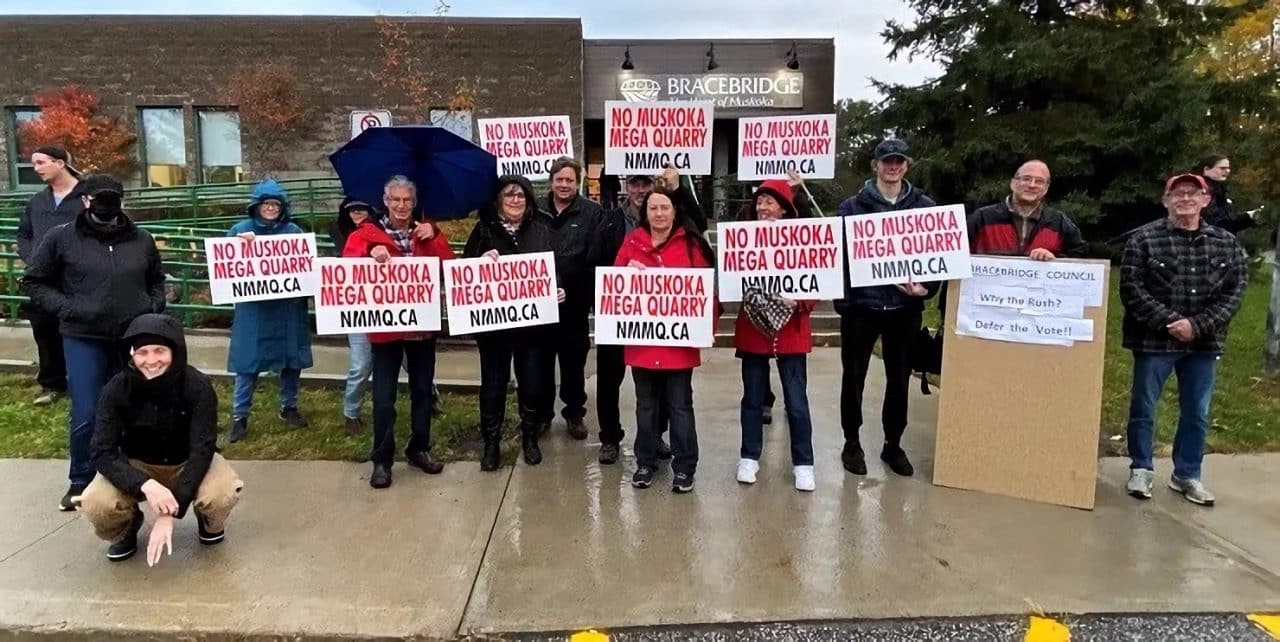
At the hearing, the first resident to speak was Laura Pratt. She grew up next to the quarry and is now leading the local fight against its expansion with her group Muskoka Environmental Alliance (MEA).
Locals say an expanded quarry would damage parts of Muskoka’s famous landscape—wetlands, threatened species’ habitats, rivers and lakes—and make roads unsafe. They’re also fed up with their municipal government and its lack of oversight. The only environmental assessments of the project that have been released to the public were commissioned and paid for by Fowler itself.
On Oct. 12, Bracebridge Town Council approved Fowler’s application—and the crowd of approximately 50 residents who had shown up to oppose it let out a loud, collective groan.
Undaunted, Pratt filed an appeal of the town’s decision with the Ontario Land Tribunal. Her appeal will be heard on Friday.
“The expansion of Childs Pit in Muskoka is concerning to all Muskoka residents,” she told The Breach in an interview, “not just those who live near the site.”
The ‘grey gold’ behind new highways and other projects
Sometimes referred to as “grey gold,” aggregates like gravel are some of the most sought-after commodities in the world.
In Ontario, demand for aggregates is driven by development: new housing, factories, hospitals and schools. Other priorities of Premier Doug Ford’s government, like new highways, require aggregates for construction.
For decades, Fowler Construction has consolidated pit and quarry holdings throughout Muskoka to build a dominant market position. According to the website Open Aggregates, Fowler now owns 14 pits and quarries in the District of Muskoka covering almost 1,000 hectares of land.
Within the district, this represents about 30 percent of all lands licensed for extraction, Open Aggregates data shows. Fowler also owns and operates the only two asphalt plants in the Muskoka District, according to an industry association sourcebook. This makes Fowler the dominant aggregate and asphalt supplier in the region, wielding significant influence over the market and over local public works contracts.
Across Ontario, of some 480 quarries, less than 10 per cent have annual extraction tonnage rights greater than a few hundred thousand. Those with licences to extract more than a million tonnes annually are typically owned by giant multinational conglomerates such as Lafarge, Colas and Votorantim Cimentos, who supply mega projects.
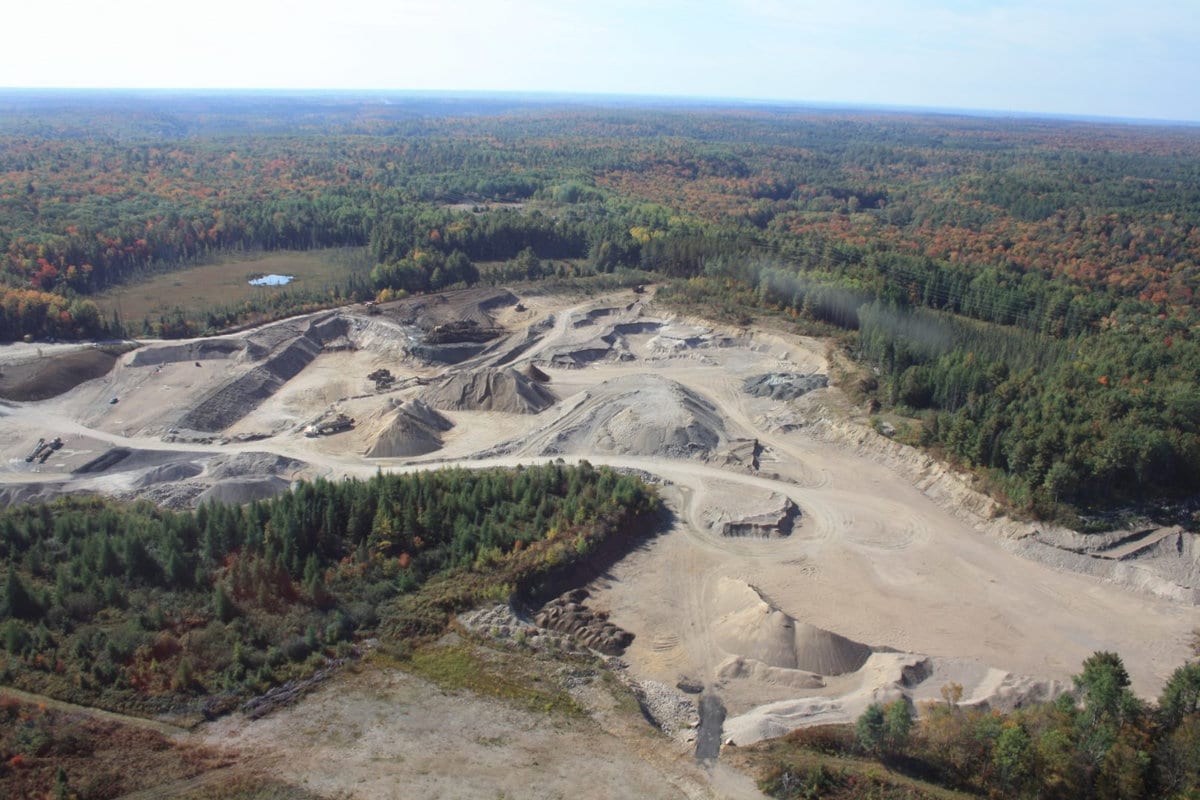
Most locals suspect that the aggregate from Childs Pit/Quarry is now destined for mega projects in the Greater Toronto Area such as Highway 413—not Muskoka.
Alan Wunsche, another Bonnie Lake Road resident who attended the Oct. 12 meeting, told council he believed “outside” corporate interests were driving the town’s agenda. Wunsche urged the town to “prioritize Muskoka’s natural heritage and its majestic beauty over the interests of Southern Ontario expansion and corporate bottom lines.”
Bracebridge’s chief administrative officer Stephen Rettie told The Breach by email that town officials were unable to comment as the matter is before the Ontario Land Tribunal. He also said that some residents’ concerns have been addressed by municipal staff who submitted an analysis of the project to council.
Fowler executives did not respond to a request for comment.
Residents learned of expansion application by chance
Even though her golf course borders Fowler’s pit, Pratt was never notified of the company’s application to expand it. In rural Muskoka, next-door neighbours often live a kilometre apart. Yet provincial regulations only required neighbours within 200 metres to be notified.
So, she learned about Fowler’s application by chance. Opara happened to notice the rezoning hearing listed on the council’s meeting agenda and called Pratt to advise her.
She jumped into action, calling neighbours and other residents to tell them about Fowler’s application and encourage them to attend the meeting.
Pratt told The Breach she is deeply concerned about safety on Bonnie Lake Road. She said she believes the traffic studies provided in Fowler’s application are inadequate, as they were conducted during the COVID-19 pandemic when almost no residents were out on the road.
She remembers when travelling the road was a quiet drive in the country, with only the occasional gravel truck rolling by.
Over the past decades, hauling volumes from the pit have increased sharply. These days, a heavily loaded truck speeds by almost every three minutes.
“Nowadays, you take your life in your hands riding a bicycle along Bonnie Lake Road,” Pratt said. “Near-miss traffic collisions happen almost every week.”
She said she’s distraught by the prospect of truck traffic increasing to roughly one every 30 seconds, bumper-to-bumper along the Bonnie Lake Road haul route, which is what she estimates the frequency will climb to once Fowler expands the site.
She’s also concerned about the environment.
Fowler’s proposed expansion will most certainly have a severe adverse effect on Muskoka’s pristine landscape. Under a provincial permit to take water, Fowler can currently draw up to 6.9 million litres per day from the Muskoka River to wash aggregates. Details of this permit were not included in the application materials for the rezoning. Pratt protested to council that the Muskoka River already has a problem with silt levels and demanded to know how many contaminants would be added to the Muskoka River when this water is returned.
According to the Wetland Evaluation Report Fowler submitted to the town, the proposed expansion site contains five wetlands totalling 37.5 hectares. The expansion would remove 14.8 hectares, or about 40 per cent of those wetlands.
Pratt said she finds it impossible to believe that such extensive loss of wetlands would not violate environmental protection laws. But, she said, the “self-regulating” gravel industry can “write anything to pass by the public” in reports it commissions on itself.
‘A spectacular piece of nature’
One of Pratt’s neighbours, Lois Cooper, doubts one of the major findings of Fowler’s wetland assessment: that the affected wetlands are not significant.
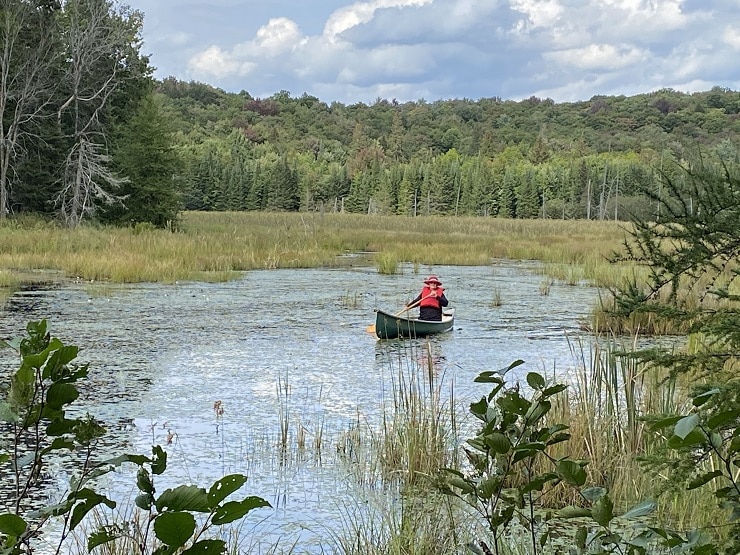
Like Pratt, Cooper is a multi-generational property owner with lands bordering the pit. She has written that she’s walked almost every foot of the property, calling it “a spectacular piece of nature.”
Cooper also pointed out that Fowler’s reports on the expansion project contradict each other.
The company’s Natural Environment Report found three endangered or threatened species in the study area and three significant wildlife habitat features. Confoundingly, Fowler’s Wetland Evaluation Report says there are no endangered or threatened species and therefore the affected wetland is not significant.
The Natural Environment Report commissioned by Fowler does make recommendations—50 of them—to mitigate risks to the environment and wildlife.
Yet the Town of Bracebridge has no authority to enforce the wetland evaluation report’s recommendations for mitigation. Once the rezoning is approved, the town can only reiterate the report’s recommendations to the applicant.
Environmental oversight falls under the purview of the provincial Ministry of Environment, which Ontario’s auditor general has given a failing grade on protecting species at risk.
Thus, implementation of any of the environmental report’s recommendations ultimately relies entirely on the goodwill of Fowler Construction and is not subject to public scrutiny.
Pratt fears the future of her rural community is at stake. Wetlands could be lost, deforestation could destroy sensitive species’ habitats and the Muskoka River watershed may have ever more silt and toxins released into it.
If the expansion of Fowler’s site proceeds, with the degradation of the area’s quiet and natural setting, Pratt worries about an exodus of homeowners selling their properties to Fowler and abandoning the picturesque community.
With each incremental decision by Bracebridge council to develop wetlands and natural spaces, Muskoka’s majestic beauty and natural habitats are diminished and increasingly threatened.
This is a grave concern that MEA’s legal counsel, who previously fought against the town’s decision to approve a massive private school on a wetland, has noted.
“Bracebridge Council appears unaware of Ontario’s surplus of licenced pits and quarries, or doesn’t care,” David Donnelly told The Breach.
“Either way, putting the new Fowler quarry in this sensitive location is a bad idea. This is Muskoka for crying out loud.”

The Breach’s investigations don’t just inform our readers—they force the powerful to react.
An exposé on blood plasma privatization led to national headlines. Our revelations about the government’s cozy connections to Big Pharma sparked a parliamentary probe. A report on high-tech price-fixing by mega landlords resulted in a criminal investigation.
From activists to elected officials, people are using The Breach’s journalism to push for transformative change.
– Dru Oja Jay, Board President, The Breach
To stop a pipeline, a three-week jail sentence was a small price to pay
Transportation | Canada’s trains are key to a sustainable future

Indigenous Sovereignty | Indigenous communities fight Canada’s ‘holy shit’ fix for tar sands wastewater
3 comments
Comments are closed.

What happens when all the gravel is gone? Wasteland!! Tourism lasts forever!!
Aggregate costs are largely driven by hauling/ transportation and so proximity of pits to the construction sites they service is very important. This aggregate will not be used in Toronto/ GTA, it will likely all be used locally for future growth in Muskoka and surrounding areas. This is why you see pits all over and in increasing numbers adjacent more developed areas
Sad that as the world burns and federal government seemingly promotes environmental protection while provincial policies do the opposite? People can see were being played pull money from middle class and catering to rich corporations. Glad I’m older and won’t be here for the apocalypse driven by capitalism and our leaders-very sad