In the face of a deepening housing crisis, Canada’s political elite have converged around a deceptively simple explanation: immigration is to blame.
“It’s very simple math,” declared Pierre Poilievre last year. “If you have more families coming than you have houses for them, it’s going to inflate housing prices.” Quebec Premier François Legault went further, claiming that “100 per cent of the housing problem comes from the increase in the number of temporary immigrants.”
And last fall, then-Prime Minister Justin Trudeau’s Liberals caved to mounting pressure, slashing immigration targets under the guise of “stabilizing population growth” so the government could “catch up” on housing and services.
But this narrative obscures a crucial fact: migrants have been actively recruited to help fix the very problems they’re blamed for—specifically, by building the homes that politicians across the spectrum claim are the solution to the housing crisis.
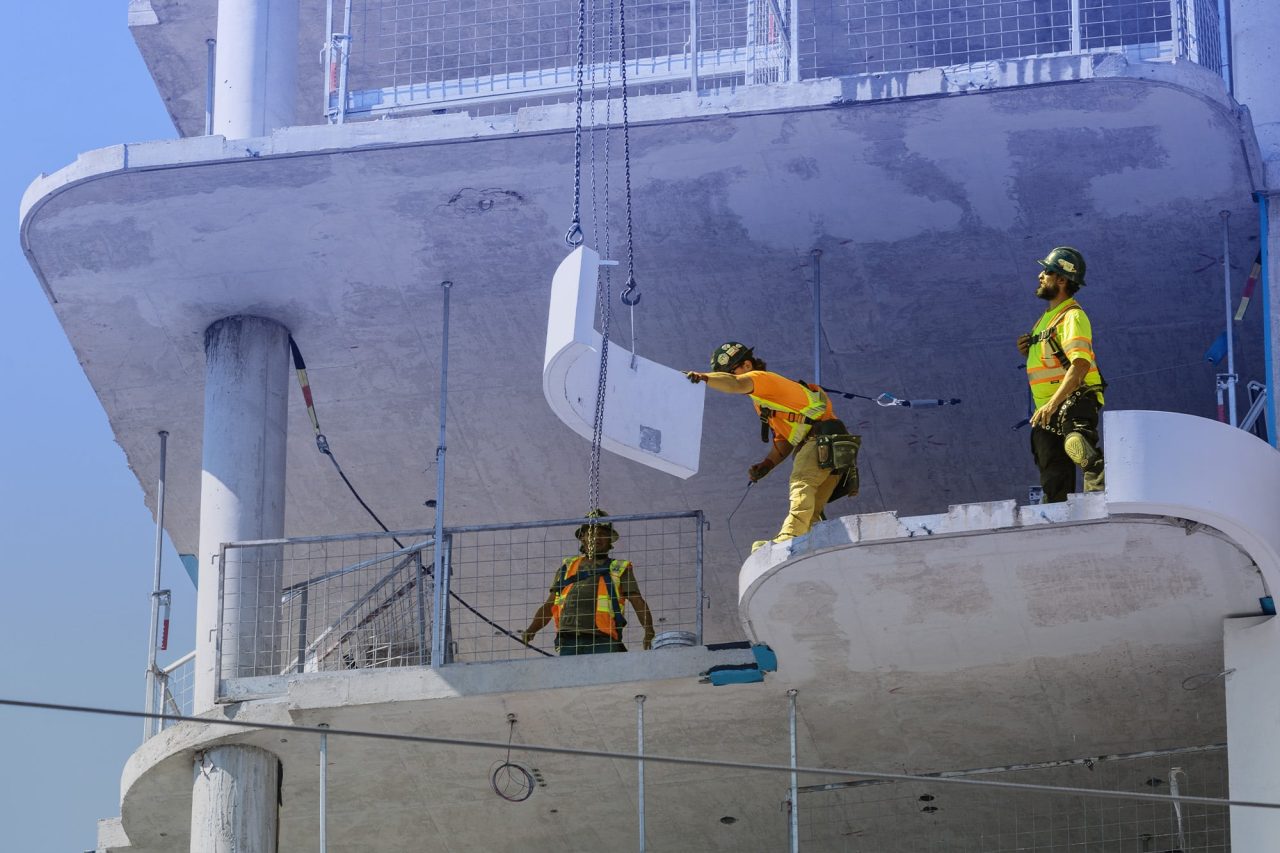
Immigrants now make up nearly one-fifth of Canada’s construction workforce while the number of Temporary Foreign Workers employed in the sector has skyrocketed over the past decade, our research has found.
With persistent labour shortages in residential construction, there’s no plausible path to meeting the federal government’s homebuilding targets without heavily relying on migrant labour.
Far from driving the housing crisis, migrants have been central to the government’s own proposed solution for fixing it.
Yet, many of them are left vulnerable to abuse and exploitation by immigration policies that keep them precarious. And while they’re scapegoated for a lack of affordability, they are themselves among the most housing-insecure people in Canada.
As governments at all levels double down on market-driven housing strategies—building for profit, not for need—migrant workers are shut out of the very homes they’re brought in to build and the market they are accused of overwhelming.
Filling the construction gap
Labour shortages in residential construction are often cited as a key barrier to addressing Canada’s housing crisis.
With an estimated 22 per cent of residential construction workers expected to retire over the next decade and enrollment in trades programs stagnating, migrant workers have increasingly filled the gap.
In 2023, immigrants made up nearly 20 per cent of Canada’s construction workforce. Temporary residents now also account for a growing portion of the sector, with more than 30,000 Temporary Foreign Workers (TFWs) employed in construction in 2024—an increase of 443 per cent since 2015.
These figures don’t include the many undocumented migrants and asylum seekers also working in construction—something the federal government tacitly acknowledged with its 2019 pilot offering permanent residency to 500 out-of-status construction workers in the Toronto area.
The program was later expanded to include another 1,365 workers, and the federal government has since signaled plans to introduce more sector-specific regularization pathways in construction to address labour shortages.

Migrant workers take on a wide range of roles on job sites, but many face labour exploitation tied to their precarious immigration status. Interviewees described widespread racism, wage theft, and harassment. Some worked in higher-paid trades but were uninformed of their right to union representation.
“There are all kinds of abuse,” says an organizer who works with migrant construction workers in Montreal, “and when problems arise, there is often little intervention.”
Many arrive in construction not by choice but out of desperation—and once there, they face systemic barriers that make them especially vulnerable.
Some entered the sector after fleeing abusive jobs tied to closed work permits. They received Open Work Permits for Vulnerable Workers, allowing them to find new employers without immediately losing their immigration status. But these permits are non-renewable and expire after just one year—meaning workers must quickly find a new sponsor or risk falling into undocumented status.
Others, already non-status, took off-the-books construction jobs just to make rent while navigating immigration limbo. One undocumented worker said a contractor withheld her wages but that she feared pursuing legal action because it could mean risking detention or deportation.
Federal immigration policy has helped sustain lucrative profits in construction—a sector known for its high profit margins—by creating a tiered labour force that keeps a pool of workers vulnerable to exploitation.
That precarity doesn’t end at the job site. It also shapes where and how migrant workers are able to live.
Priced out and precarious
Despite their essential role in residential construction, migrant workers are often priced out of the housing market themselves.
Trade workers—citizen and non-citizen alike—often face the paradox of being unable to afford the homes they build. But the barriers are even steeper for working-class migrants.
Those without permanent status are excluded from most subsidized housing programs and overrepresented in low-wage jobs. Pushed into the worst corners of the rental market, many face overcrowding, poor living conditions, unaffordable rents—and, increasingly, homelessness.
Precarious immigration status also brings housing vulnerabilities that can quickly escalate into detention or deportation. “If you’re behind on rent, the landlord can threaten to call immigration,” one worker told us. “And they do.”
For Temporary Foreign Workers living in employer-provided housing, the risks are compounded.
“Your landlord is maybe also your boss,” explains an organizer at the Immigrant Workers’ Centre in Montreal. “When there’s a problem at work, people often get kicked out of their homes.”
In one case, a group of migrant construction workers lost their belongings in a fire at their employer-provided housing. Rather than offer support, their employer relocated them far from the job site, adding hours of unpaid travel time to their already long work days.
Migrant workers face the same housing crisis as others in the working class—but with an added layer of control and exclusion. Tied to employers and targeted by immigration enforcement, their housing becomes another tool of discipline and dispossession.
Picking up the slack
The use of migrant labour to build homes is part of a larger pattern: relying on migrants to sustain public systems gutted by decades of state neglect.
As Canada’s social infrastructure has been hollowed out by austerity and the retreat of the state from providing social supports, migrant workers are increasingly being recruited to plug the gaps left behind.
From health care to elder care, child care, and education, migrants are being used as stopgaps in sectors the state has abandoned. Residential construction is no exception.
After decades of sustained public housing construction, the federal government withdrew from housing provision in the 1990s, halting new construction and offloading responsibility to the provinces.
Since then, almost no new public housing has been built, and much of what remains is crumbling after years of neglect. At the same time, provinces rolled back tenant protections, leaving renters with fewer safeguards while housing costs surged.

These policy decisions unfolded alongside a financialization boom. Low interest rates and financial deregulation turned real estate into an attractive investment. And as pension coverage eroded, more people turned to property investments to fund their retirement.
Today, one in six Canadian homeowners owns multiple homes. And despite the political focus on supply, housing starts have been outpacing household formation since the early 2000s, according to the Bank of Montreal.
The issue here is that housing is built to satisfy investor demand rather than the needs of the people who will live there.
Building on the backs of migrants
No supply-side solutions to Canada’s housing crisis will work without addressing the fundamental question of what kind of supply is being built—by whom, under what conditions, and for whom.
The federal Liberals’ housing strategy—prioritizing real estate investors and higher-income buyers—has failed to resolve the crisis of working-class housing and rests on the continued exploitation of migrant workers.
“Housing needs to retain its value. It’s a huge part of people’s potential for retirement,” former Prime Minister Justin Trudeau said last year.
More recently, when asked by a journalist if housing prices needed to come down at his swearing-in ceremony, the newly appointed housing and infrastructure minister and former Vancouver mayor, Gregor Robertson, simply said “no.”
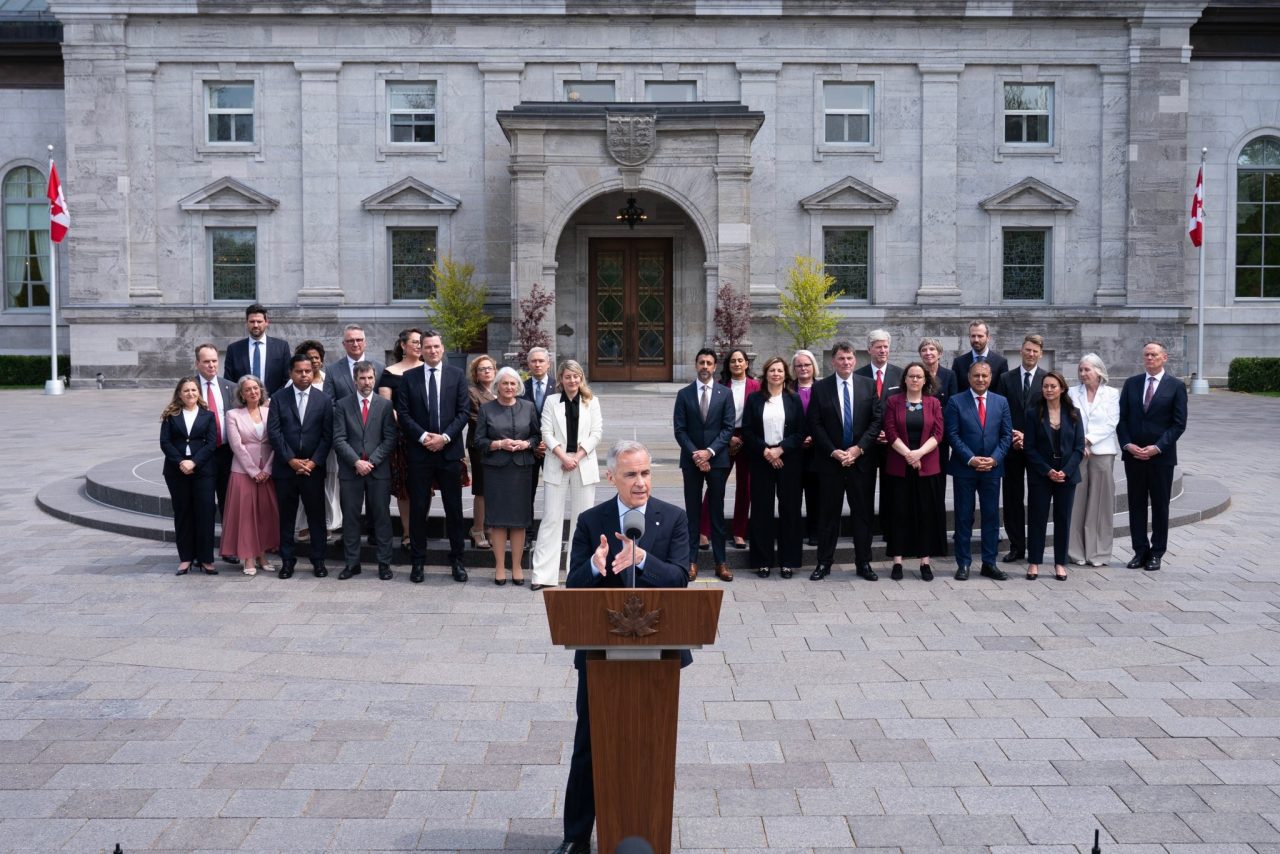
This logic of value retention sits at the heart of Prime Minister Mark Carney’s proposed housing strategy.
Despite so-called “ambitious” plans to double the rate of residential construction through a new public agency, Carney also pledges to “catalyze private investment”—with public-private partnerships, relaxed regulations, financing incentives, and the opening up of public land for private housing construction.
There is no meaningful commitment to new public housing, and only marginal attention to those most acutely affected by the housing crisis.
What’s more, his plan sidesteps a core structural constraint: current and impending labour shortages in construction. It simply cannot be realized without migrant workers—yet it does little to protect them.
His immigration plan reserves pathways to permanent residency for only a highly educated class of immigrants, while continuing to recruit working-class migrants into precarious, temporary roles.
There is no commitment to regularizing people who are already our neighbours, and no protection from future status insecurity. Instead, the plan promises faster removals and more deportation infrastructure.
A housing future built on solidarity
Migrants are essential to realizing Carney’s plan to expand housing supply, yet excluded from its benefits and blamed for its failures.
The scapegoating of migrants provides political cover for both immigration policies that enable exploitation and housing policies that fail to deliver.
We cannot build—or deport—our way out of Canada’s housing crisis. But we can build solidarity.
Fighting for housing justice means fighting for migrant justice—and for a reinvestment in the public systems hollowed out by decades of austerity. It means rejecting scapegoating and protectionist logics that have grown louder since Trump’s trade war and the nationalism that has risen in response.
We can—and must—fight for a housing future grounded in justice: for those who live here now, and for those still on their way.

The Breach’s investigations don’t just inform our readers—they force the powerful to react.
An exposé on blood plasma privatization led to national headlines. Our revelations about the government’s cozy connections to Big Pharma sparked a parliamentary probe. A report on high-tech price-fixing by mega landlords resulted in a criminal investigation.
From activists to elected officials, people are using The Breach’s journalism to push for transformative change.
– Dru Oja Jay, Board President, The Breach
Migrant Justice | Canada’s elite are scapegoating migrants—and here’s why they’re wrong

Corporate Power | Investors, not immigrants, are fuelling the housing crisis

Immigration | Canada deporting highest level of migrants in a decade, despite promises to let more stay

1 comment
Comments are closed.


Of course it’s financlization of housing stock by investors. But the question is why?
Is it to provide rental accomodations at inflated prices to the same migrant population because they are vulnerable and desperate?