As Canada’s housing woes spiral out of control, corporate media and politicians have landed on a scapegoat: immigrants.
“It’s very simple math,” Federal Conservative leader Pierre Poilievre has said. “If you have more families coming than you have housing for them, it’s going to inflate housing prices.”
While this makes for a convenient soundbite, it bypasses the root cause of much of the housing issue in Canada: investors gone wild.
Private investors have taken over the housing market in Canada, accounting for up to one-third of all new home purchases in the past few years. In some cities, that problem is even worse —in Edmonton, for example, researchers have found that almost half of all purpose-built rentals are owned by big-money investors.
Housing advocates have warned that it’s part of a growing phenomenon of “financialization” in the housing market, that stands to punish ordinary people while profiting real estate CEOs.

As rents have shot up not only in Toronto and Vancouver but in smaller cities like Halifax and Regina, the focus has turned to immigrants, international students, and the insidious creature known as the “foreign investor.”
The government has not only failed to counter this rhetoric but have seemingly fully accepted it, capping the number of international students and temporary foreign workers allowed into the country on the basis of a lack of housing—all while failing to actually invest in building more of it.
A limited ban on foreign investors—the only kind of investors that the federal Liberals seem to care about—has done little to increase housing affordability. Meanwhile, domestic investors are buying up Canadian housing at record rates, pushing up prices and causing havoc for working people.
The real reasons that housing prices in Canada have been on a never-ending upward trajectory are less palatable to politicians and media outlets than blaming immigrants, and less mysterious than a murky cabal of “foreign investors” pulling the strings on the Canadian economy from some undisclosed location.
When politicians in Canada want to avoid responsibility for their own failures, immigrants are often an appealing punching bag. But the fault lies with the politicians and investors—and with the profit role that housing plays in our economy.
Ignoring the lack of public housing
Across the mainstream media, unnamed government documents and public opinion polls demonstrate the supposed link between immigration rates and housing.
In spite of all of this, there is no real evidence that immigration rates and housing prices are connected in any meaningful way. But the media and political elites have created a “common sense” narrative that immigration rates are to blame for rising rents that centres on xenophobia, not logic.
In recent decades, every level of government in Canada has slowed or totally stopped building new social housing, so there’s no meaningful non-profit alternative to the housing market.
Starting in the 1980s, as governments began to embrace the neoliberal agenda of privatization, the federal government began backing away from its commitment to building at least a modest amount of non-profit housing; in 1993, it made this non-commitment official by fully relegating responsibility for social housing to the provinces.
Since provincial governments have significantly less money at their disposal than the feds, this devolution of responsibility has necessarily been bad for the availability of social, affordable housing.
Speaking to The Globe and Mail about B.C.’s housing unaffordability, B.C. Non-profit Housing Association CEO Jill Atkey said that “federal funding is crucial—we have a housing crisis in every corner of the province. The province can’t solve this by itself. They need a strong federal partner. But when you look at CMHC [Canada’s federal housing agency], they haven’t run an affordable housing program for 25 years.”

Some of the blame also lies with provincial leaders who refuse to do what is within their power—many of whom are all too happy to sound Poilievre’s anti-immigrant alarms.
Quebec Premier François Legault, for instance, has claimed that the housing crisis in his province is “100 per cent” the fault of immigrants, especially asylum seekers. Meanwhile, his government has repeatedly been criticized for failing to put enough money into housing, and in particular for failing to build new social housing.
Investors, not immigrants, are reshaping housing landscape
While politicians fail to move on regulating the market or building more housing stock, new kinds of housing investors are starting to pop up across Canada.
Anyone who’s walked around a bustling Canadian downtown might have seen signs advertising buildings owned by companies with the acronym “REIT” in their name.
Real estate investment trusts (REITs) are a relatively new type of company, having only existed for a few decades. They exist to turn housing into a financial product, disconnected from its use as a form of shelter.
These companies now manage between 20 and 30 percent of Canada’s purpose-built rental stock, according to the Canadian Human Rights Council.
Driven solely by profit, they are using bizarre new financial technology innovations such as Zenbase, which lets tenants split up their rent payments, ostensibly for easier budgeting
Zenbase bills itself as a “financial health solution” and functions by paying tenants’ rent for them, then recouping the money from tenants in installments. As long as a tenant doesn’t fall behind, it seems like a good deal: but if you miss a payment you not only owe your outstanding rent, but also a user fee for Zenbase. And to top it off, the late payment will go on your credit record.
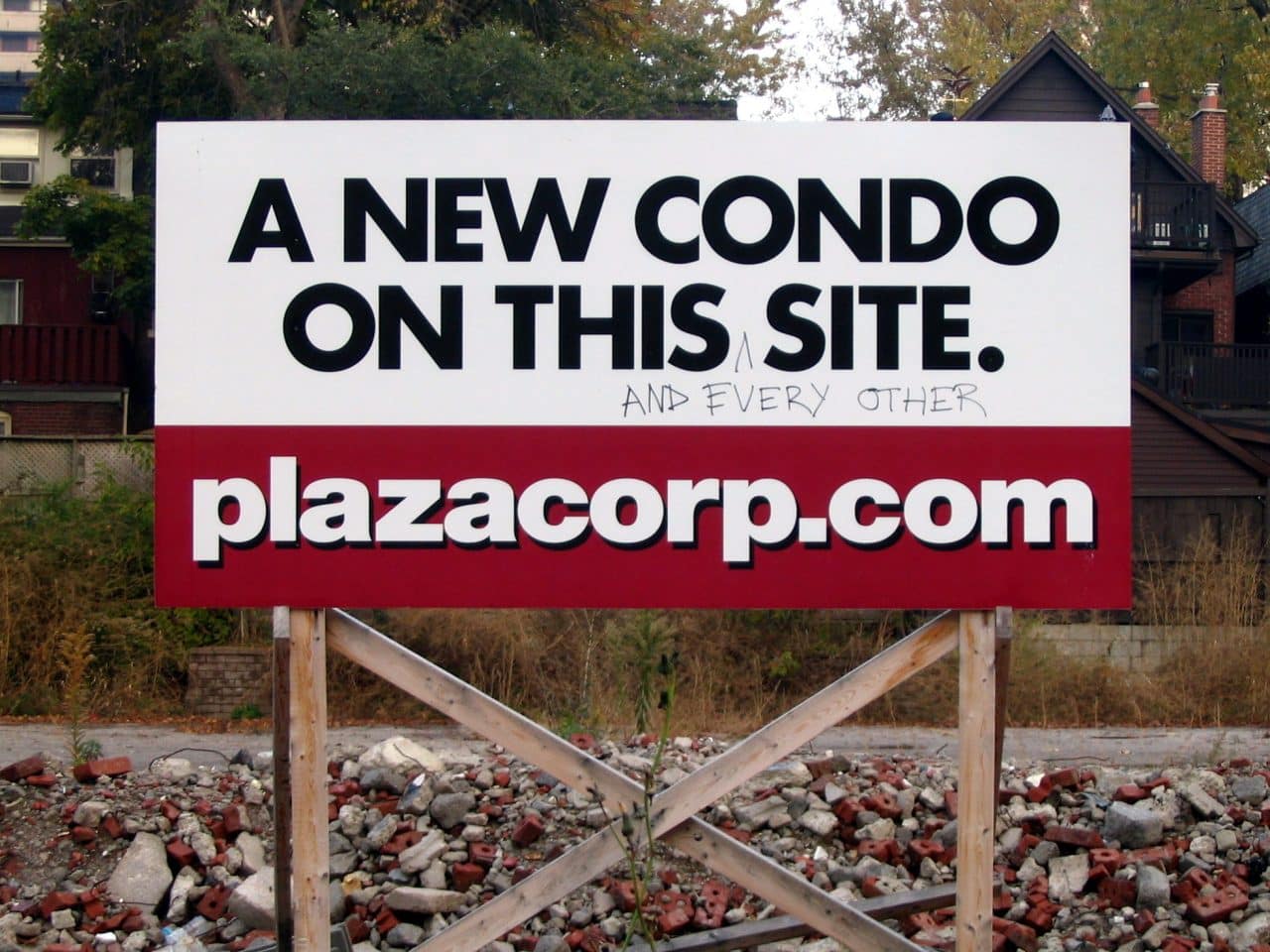
In many cities, investors take ownership of housing before it even exists.
In Toronto, for instance, investors now own around two-thirds of all condos, and developers often rely on investors to buy up large chunks of a proposed building before they even break ground.
This means that investor preferences can shape what gets built, with a strong preference for ever-larger numbers of tiny units rented out at exorbitant rates that a huge proportion of Canadians can’t afford.
The important factor is not the occasional foreignness of investors, but rather their role as investors. There are plenty of Canadian investors doing the exact same thing as foreign investors, buying up properties and renting them for eye-popping sums—or, sometimes, refusing to rent at all until they can get the rate they want.
Governments are empowering developers to keep housing unaffordable
Housing serves two purposes in our current economic system: it is shelter, but it is also a commodity, a product that allows a small number of people and companies to park capital and make enormous profits.
Anybody whose retirement plans include selling their house and living off the profit implicitly understands this second purpose (even though they might still be paying mortgage payments to the bank and thus technically don’t even own it). A house is a home, but it is also a profit centre.
A housing landscape in which many people own the one home they live in but no “income properties” or “investments” does not a crisis make, however.
When politicians and policymakers bemoan the lack of “supply” of housing, they ignore the fact that developers have no reason to build housing that people can actually afford.
The definition of “affordable housing” used by government bodies is 30 percent of the resident’s income. But units in new housing developments are often touted as “affordable” based on a city’s “average market rate,” rather than how they compare to a resident’s income.
But a city’s average rental rate has no relationship to your ability to pay—in fact, a 2023 study by the Canadian Centre for Policy Alternatives found that there are only three cities in all of Canada where a worker earning minimum wage can properly afford an average one-bedroom apartment.
Here again we see the shift from viewing housing and the price of housing as “a thing that a person needs” to “a financial product related to the housing market.”
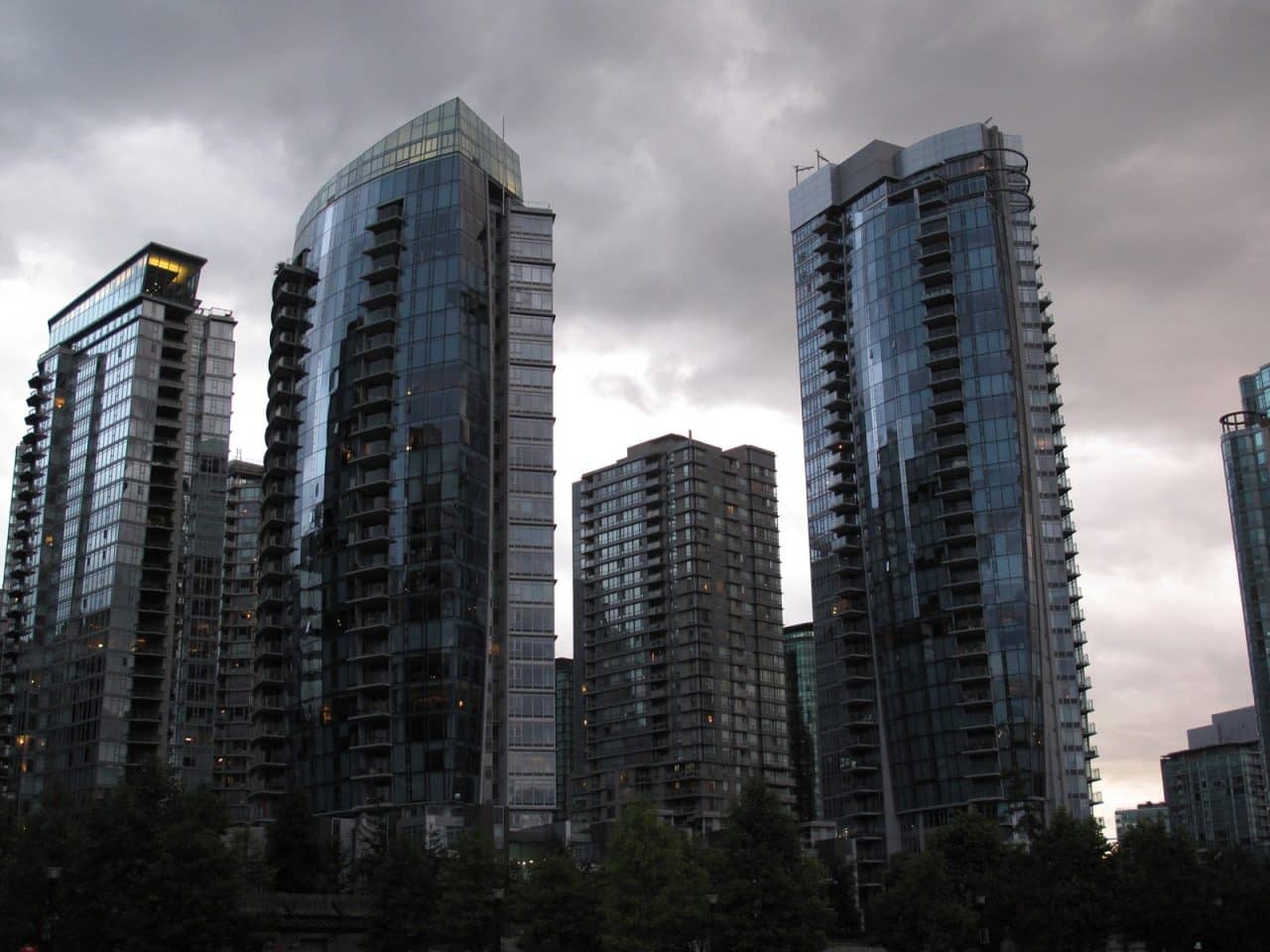
Investing in housing as a commodity alters the market by inflating rents and real estate prices beyond what people can afford to pay.
It even affects what kinds of housing get built, leading to tower after tower dotting the skylines of Toronto and Vancouver, with miniscule condos that barely deserve to be called “one bedroom.”
Unfortunately, the establishment Canadian media is far too busy feigning horror at the idea that some unknown group of investors outside the country is manipulating our economic system to ask the next logical question: if it’s bad for our housing system to have people from outside the country injecting tons of cash into it and making money off of it, wouldn’t it make sense that it’s also bad for Canadians to do that?
None of these changes has anything to do with immigrants or with the nationality of the investors involved. The only way to resolve these issues is to tackle the role of housing investors head-on.

‘We need an outlet, a source of information that is credible, that is progressive, that we can cling to and believe in’
David Suzuki
Want to support journalism you can believe in? Become a sustainer today.
Migrant Justice | How to fight back against Canada’s anti-immigrant backlash

Immigration | Canada’s open secret: International students are here to be exploited
‘Nightmare’ landlord greenwashes move to displace low-income tenants
12 comments
Comments are closed.

Where are these foreign investors from? China and India? I think it is both foreign investors and these international students plus inflation that are driving rents up.
So Canadian investors have nothing to do with the problem? Hmm…
Did you even read the article?
Great article! Well written. I disagreewith it entirely though. Just think. If there was a net emigration of say a million or so people a year then what would happen? Speculators would vanish, wages for the remaining people would rise. Large corporations would have to pay their employees more but that seems ok to me. First nation’s peeps would also have easier paths to employment. I like my idea better.
Interesting article. On the one hand it’s nice to read someone talking about the simple truths of the long term outcome of commodifying shelter. And calling out the scapegoating.
On the other hand it is ironic the tone that implies we need to tackle the issue head-on but then places the blame at the hands of “political elites.”
It removes one wrong target and replaces it with another.
“Political elites” are not the problem.
It’s us!
“We the people” are the ones that demand special investment status of our shelter. It’s started with the “dream” of homeownership but then we blindly over incentivized it, romanticized it, and eventually, and naturally, commodified it as an investment. One led to the other as naturally rain leads to wet.
If we are to make meaningful change that’s where it has to (start to) end. No more capital gains exemptions for primary residence. No more incentives of any kind that increase the demand for real estate. It’s ironically, given the tone of the article, such a pedestrian and ill-informed thinking that blames “political elites.” There’s a lot of practical thought in there, just sift out the boogeyman and let’s get the real issues on the table.
The investors are still renting out the units and wouldn’t get the price if it were not for the demand caused by immigrants.
As far as affordable housing goes, a toilet seal used to cost $2.99 and now it costs $14.99 as a small example of the increased costs of building and all the labour costs have gone up too, plumbers, framers, electricians etc., it is $300 a sq ft to build so how are we ever going to affordable housing again?
Again, wrongly placing the blame squarely on immigrants, most of whom can’t afford the rising rents either.
This is dumbest piece I ever read.
High school economics – all things being equal, more demand (aka more people needing a place to live) will drive up prices. Period. That is fundamental.
You can argue that supply side should adjust but arguing that more demand does not increase prices is stupid.
“None of these changes has anything to do with immigrants or with the nationality of the investors involved. The only way to resolve these issues is to tackle the role of housing investors head-on.”
Let us know when you figure out a way of stopping people (in every sector of society) from enjoying themselves. Having more money means more enjoyment for everyone: that’s the big lie.
You will never hear about the damage being done to the stuff that keeps everyone alive. H o m o gormlessi has become the dominant species on the planet.
Great article stating a truth the established media (capitalist propaganda sheets) refuse to print/broadcast and your commenters close their minds to because – it’s easier to punch down.
The statement that “Government is empowering developers…” is serious misdirection. Its blaming the bent nail on the hammer, not the carpenter. Let’s look at who are the politicians swing the hammer… of course they are good story tellers and for the most part believers in, or disciples of the profit seekers. Clearly political parties are special interest groups, putting their goals ahead of all others. Why wouldn’t the investor class seek to capture control of the parties and so protect and enhance their opportunities. Setting policy / goals should not be left in the hands of those who seek that power. A better way way needs to be found to put the tool that is Government in hands that aren’t reaching into the pockets of everyday people.
Politicians of both stripes stopped building public housing 40 years ago and are fully responsible for 300,000 homeless and millions more searching for a place to live for years. The gap is so huge they are never going to fill it without a monumental push to build and they are just not going to do that. They need to be called to account loud and clear!