
This article is the second entry in The Breach’s ‘Racism and Housing Series,’ an ongoing investigation into how systemic racism is shaping the housing crisis across Canada. Read part one here.
When the bulldozers came to Heron Gate, Falah Rashed had already lived this story once before.
His family fled war in Iraq, before finding refuge in one of Ottawa’s most diverse neighbourhoods, building a new life in a patchwork of aging townhomes.
The units were old and poorly maintained. But for new immigrants, the neighbourhood offered something priceless: community.
“It wasn’t fancy,” he said. “But we had each other. It was home.”
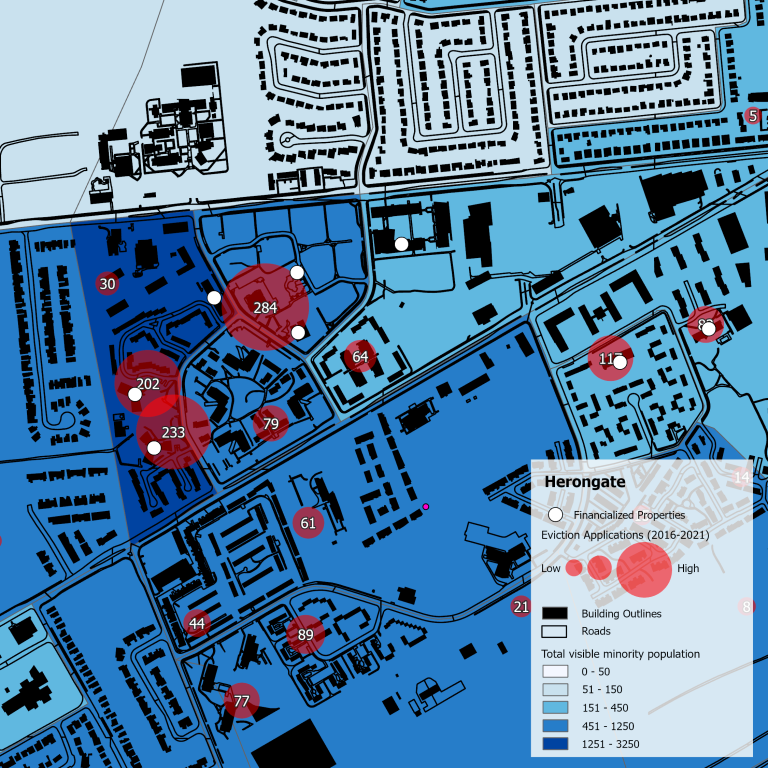
Then came the fences and eviction notices. In 2018, landlord Timbercreek Asset Management evicted more than 500 tenants, many of them Arab or Somali families, to make way for luxury apartments that now rent for over $2,000 a month.
The expulsions have been described as the “largest urban eviction campaign” in recent Canadian history. They triggered protests, national headlines, and a human rights complaint that is still crawling through the Human Rights Tribunal of Ontario.
Now, data analysis conducted by a team of academic researchers shows that Heron Gate’s destruction was not unique. It followed a playbook used by corporate landlords across Canada that allows them to profit from the displacement of racialized communities and the dismantling of affordable housing options.
While The Breach’s recently explored a report that traced how financialized landlords target Black and Arab neighbourhoods for profit, these new findings, gathered by a team of researchers including the author of this article, show that those same areas are also where tenants face the greatest housing precarity.
The overlap between racialized communities, financialized ownership, and what the Canada Mortgage and Housing Corporation calls “core housing need” exposes how deeply race and class are intertwined in Canada’s housing crisis.
In cities like Ottawa, Toronto, Vancouver, St. John’s and Winnipeg, the same neighbourhoods with the highest concentrations of Black and Arab residents are where tenants are most likely to live in inadequate, unaffordable, or overcrowded housing—and where financialized landlords are heavily invested.
It suggests that these big corporate landlords are deliberately targeting neighbourhoods with Black and Arab residents, buying up properties and then forcing tenants out through evictions and neglect to make way for wealthier, whiter renters. Their objectives are clear: maximize profits by raising rents as quickly as possible.
“This is happening across Canada and it can be observed across all major urban centres,” said Daniel Tucker-Simmons, the lawyer for Heron Gate’s expelled tenants, who commissioned some of the groundbreaking research being submitted as part of the upcoming Human Rights Tribunal of Ontario case. “Financialized landlords treat properties located in predominantly racialized areas much differently than their properties in disproportionately white areas. It’s impossible to ignore the correlation.”
“Discrimination is a very subtle, cynical force—but it’s like gravity,” he said. “It can be imperceptible up close, but zoom out and it becomes undeniable that some invisible force is coordinating the motion of huge masses of people being displaced.”
Mapping the geography of Canada’s racialized housing crisis
The first entry in this series was based on a report produced by Dr. David Wachsmuth, the Canada Research Chair in Urban Governance at McGill University, which examined data across six of Canada’s most populous cities.
The research showed that, after controlling for other variables (including income, access to services and condition of housing), Black and Arab neighbourhoods have significantly lower growth in real estate values, or what the authors call “especially strong racialized devaluation.”
Building upon these findings, another team of researchers that included Neal Rockwell, one of the authors of this article, compiled a database of 21 of the largest financialized landlords operating in Canada. Together, these companies own 4,585 properties, containing 374,611 rental units across the country.
Financialized landlords are entities like real estate investment trusts (REITs), asset managers, and pension funds that treat rental housing as an investment to generate shareholder profits, rather than a place for people to live.
Researchers compared the locations of these properties with Statistics Canada data on race and income at the neighbourhood level, then measured them against city-wide averages.
The pattern is unmistakable. In neighbourhoods with financialized rental housing, Black and Arab populations were consistently, and often dramatically, overrepresented compared to city averages.
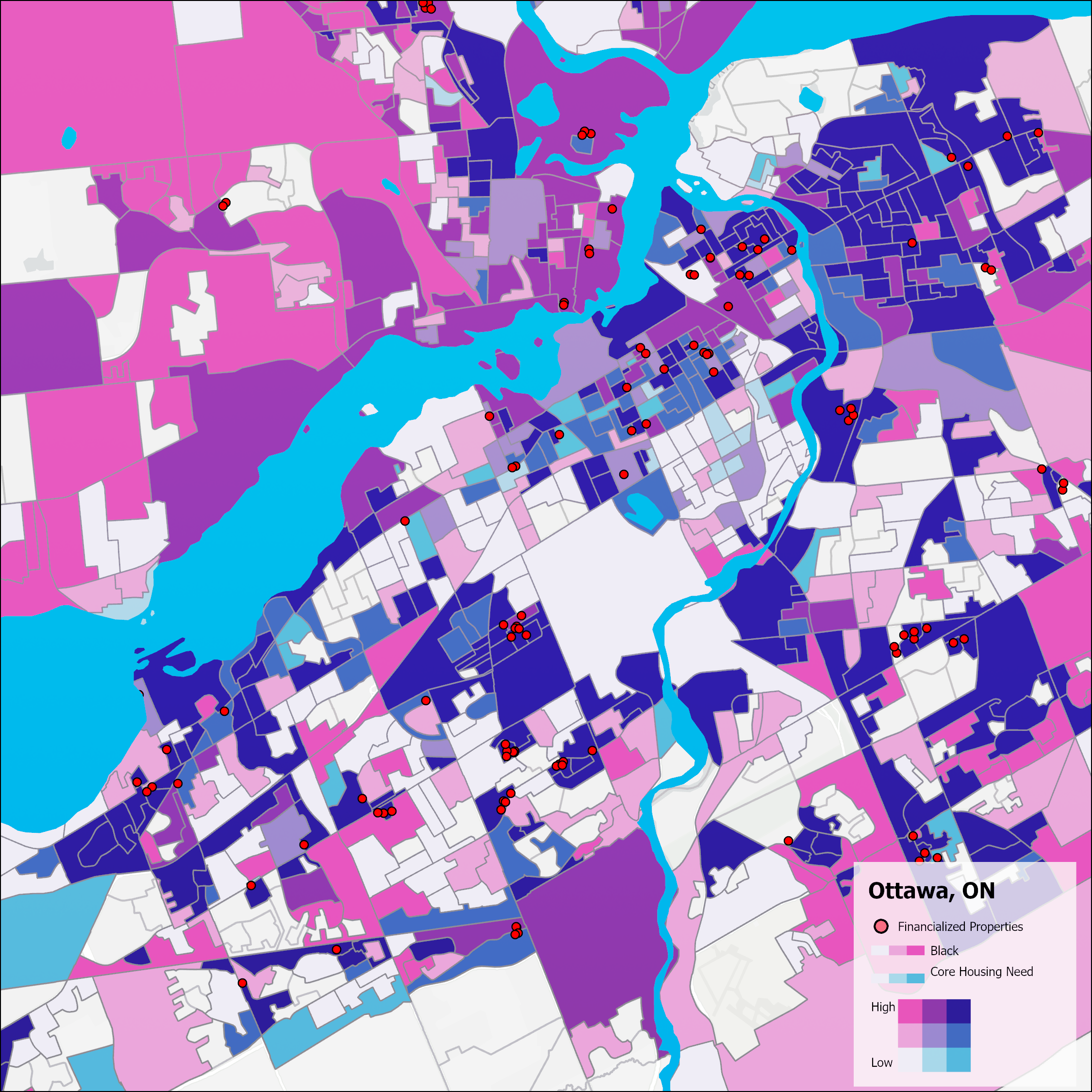
Heatmaps of cities across Canada show the share of Black residents by neighbourhood. Darker areas indicate higher concentrations of Black residents and areas of “core housing heed.” Credit: Neal Rockwell and Monika Imeri 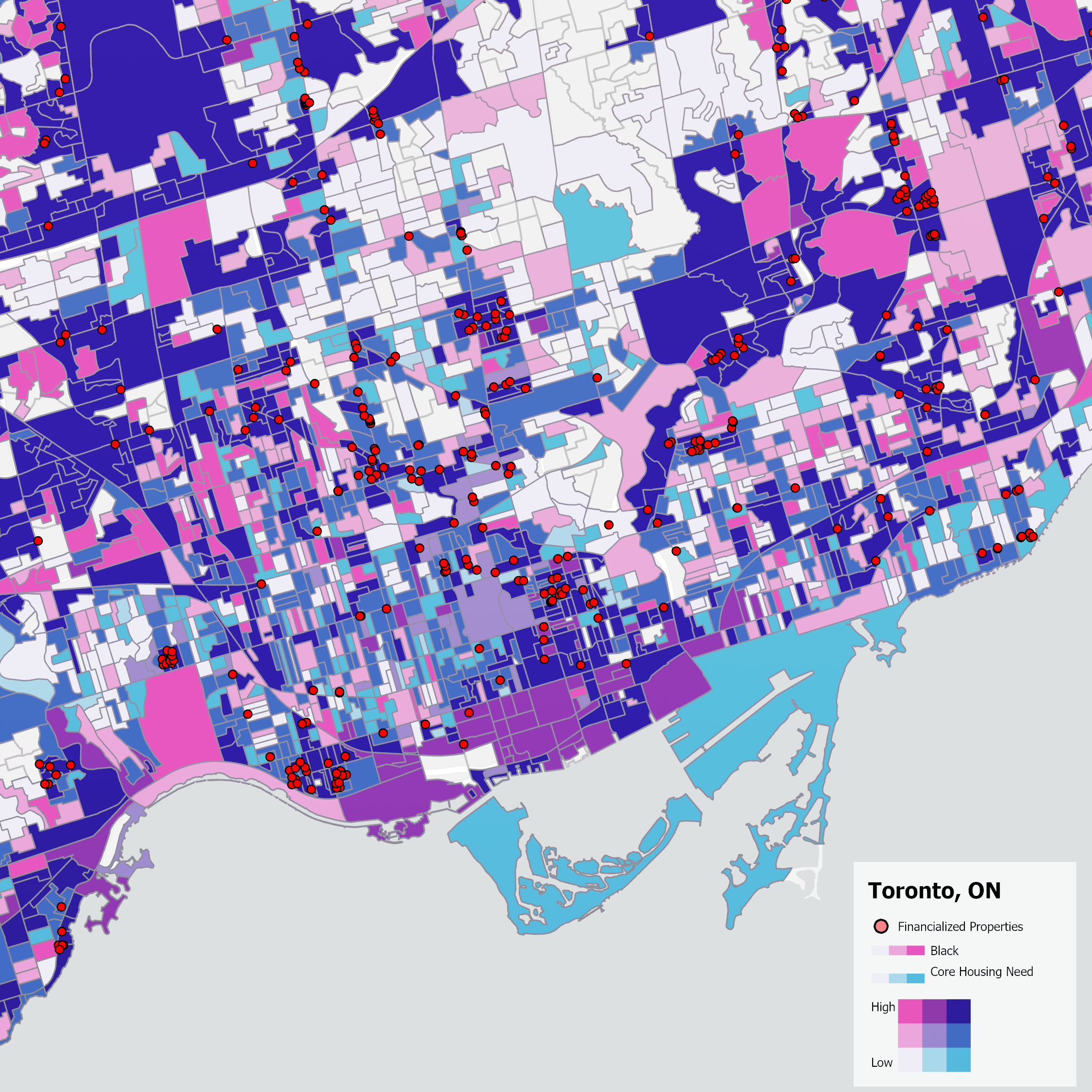
Heatmaps of cities across Canada show the share of Black residents by neighbourhood. Darker areas indicate higher concentrations of Black residents and areas of “core housing heed.” Credit: Neal Rockwell and Monika Imeri 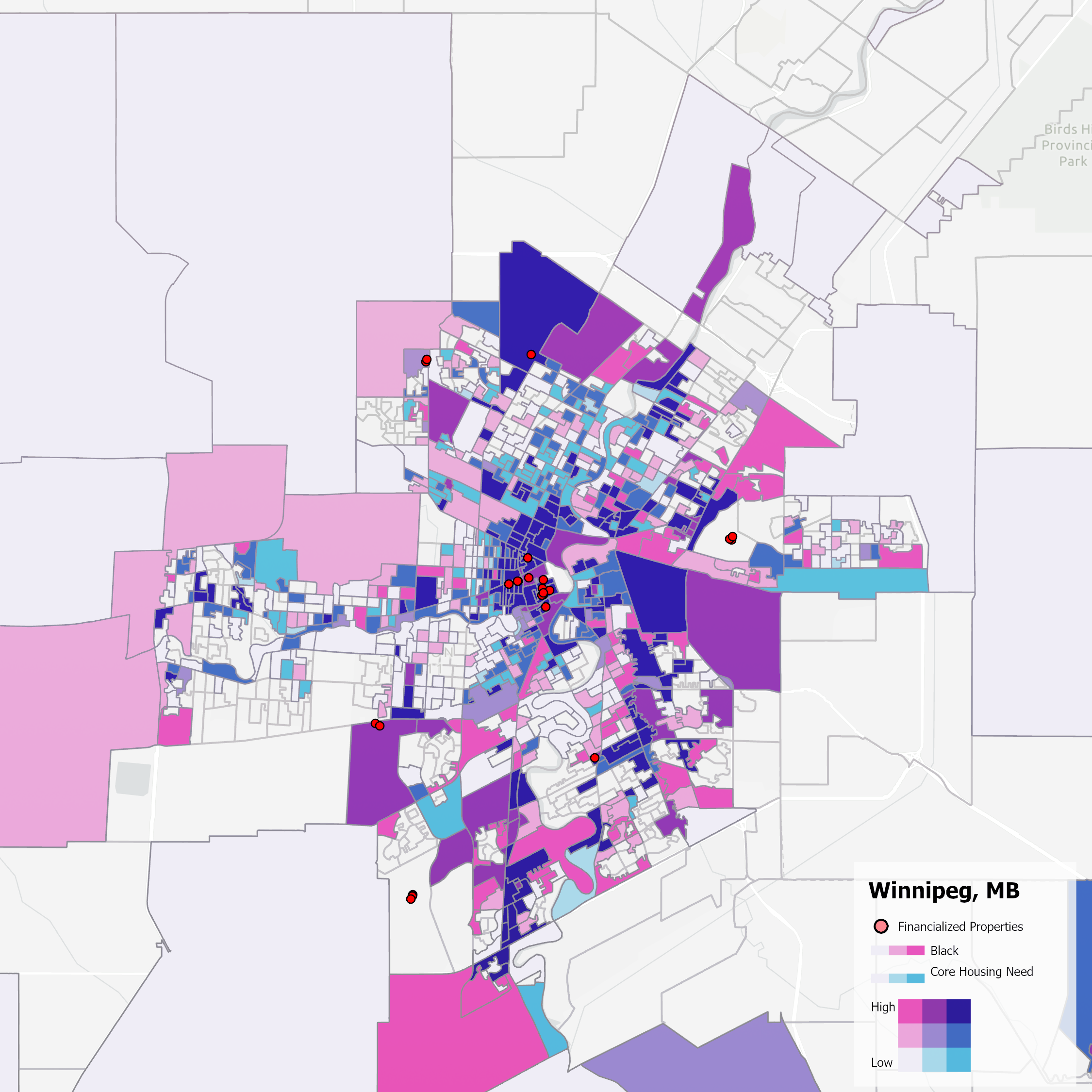
Heatmaps of cities across Canada show the share of Black residents by neighbourhood. Darker areas indicate higher concentrations of Black residents and areas of “core housing heed.” Credit: Neal Rockwell and Monika Imeri 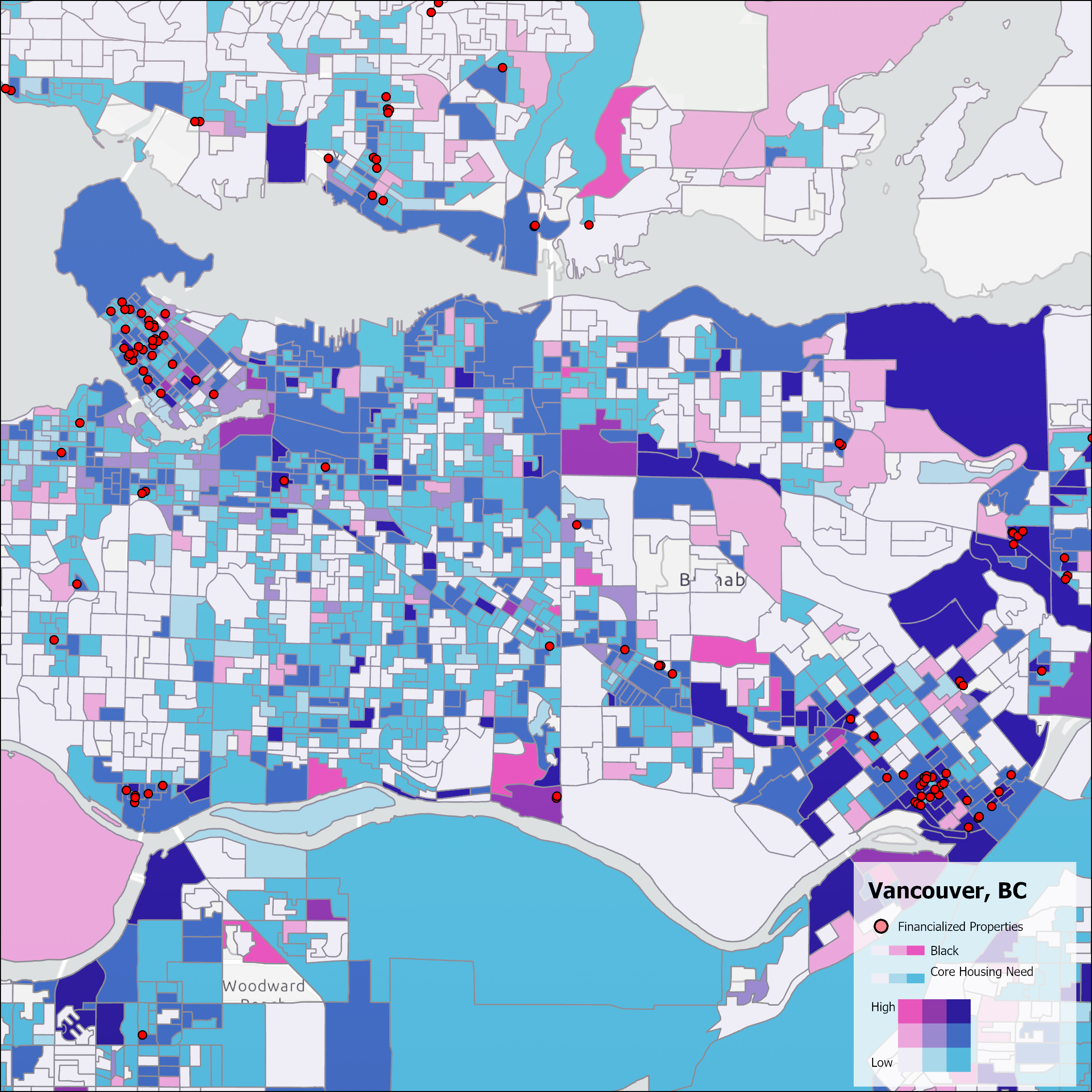
Heatmaps of cities across Canada show the share of Black residents by neighbourhood. Darker areas indicate higher concentrations of Black residents and areas of “core housing heed.” Credit: Neal Rockwell and Monika Imeri 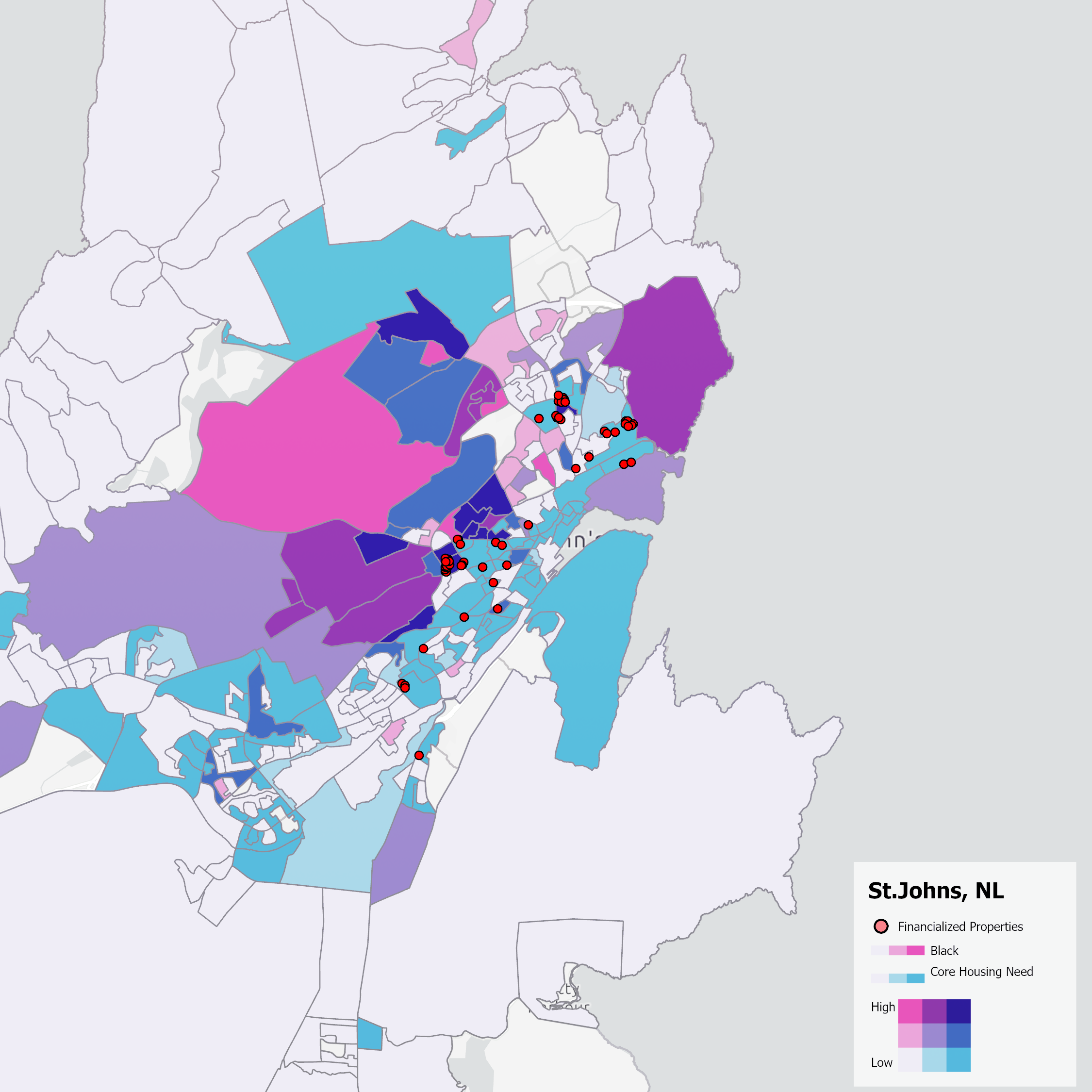
Heatmaps of cities across Canada show the share of Black residents by neighbourhood. Darker areas indicate higher concentrations of Black residents and areas of “core housing heed.” Credit: Neal Rockwell and Monika Imeri 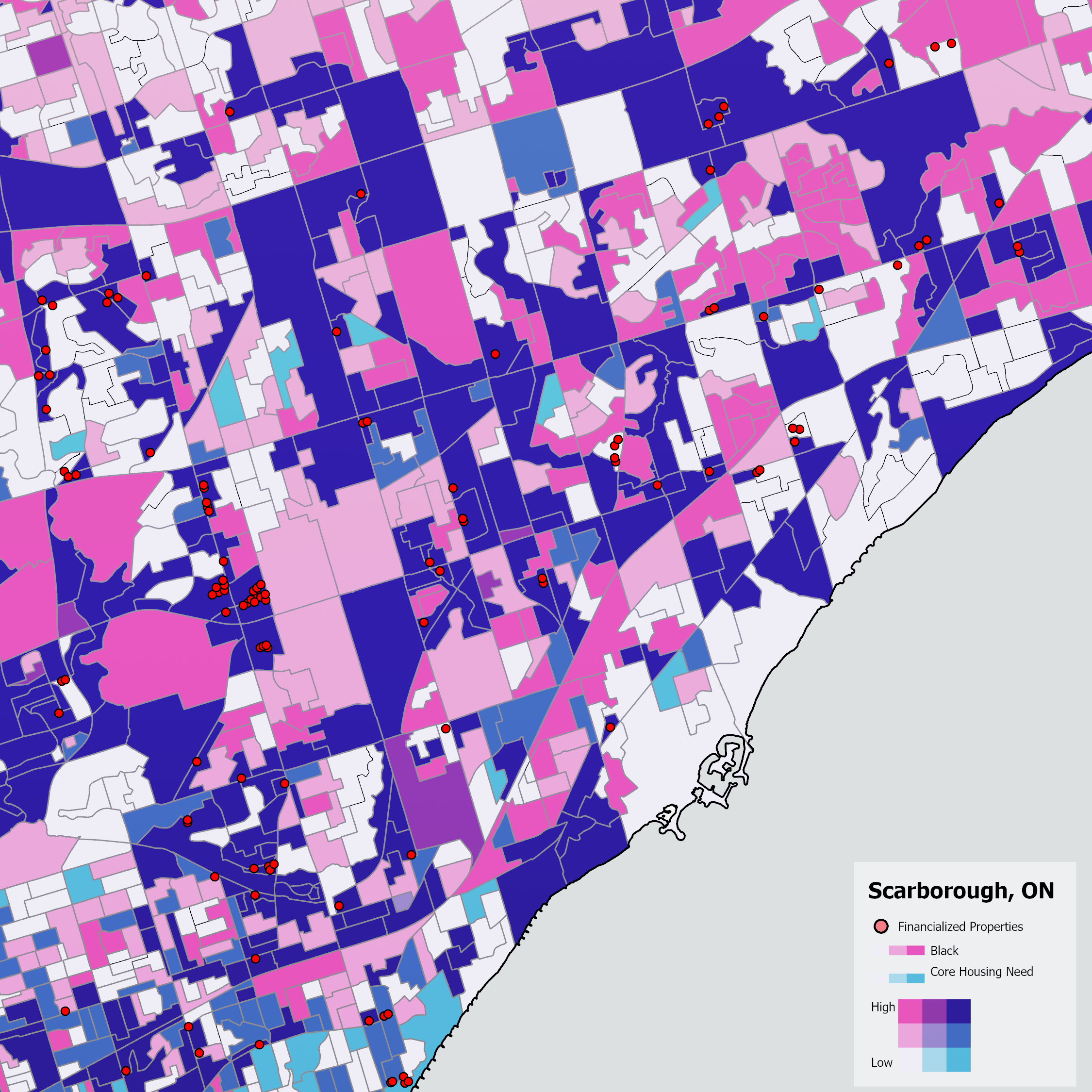
Heatmaps of cities across Canada show the share of Black residents by neighbourhood. Darker areas indicate higher concentrations of Black residents and areas of “core housing heed.” Credit: Neal Rockwell and Monika Imeri 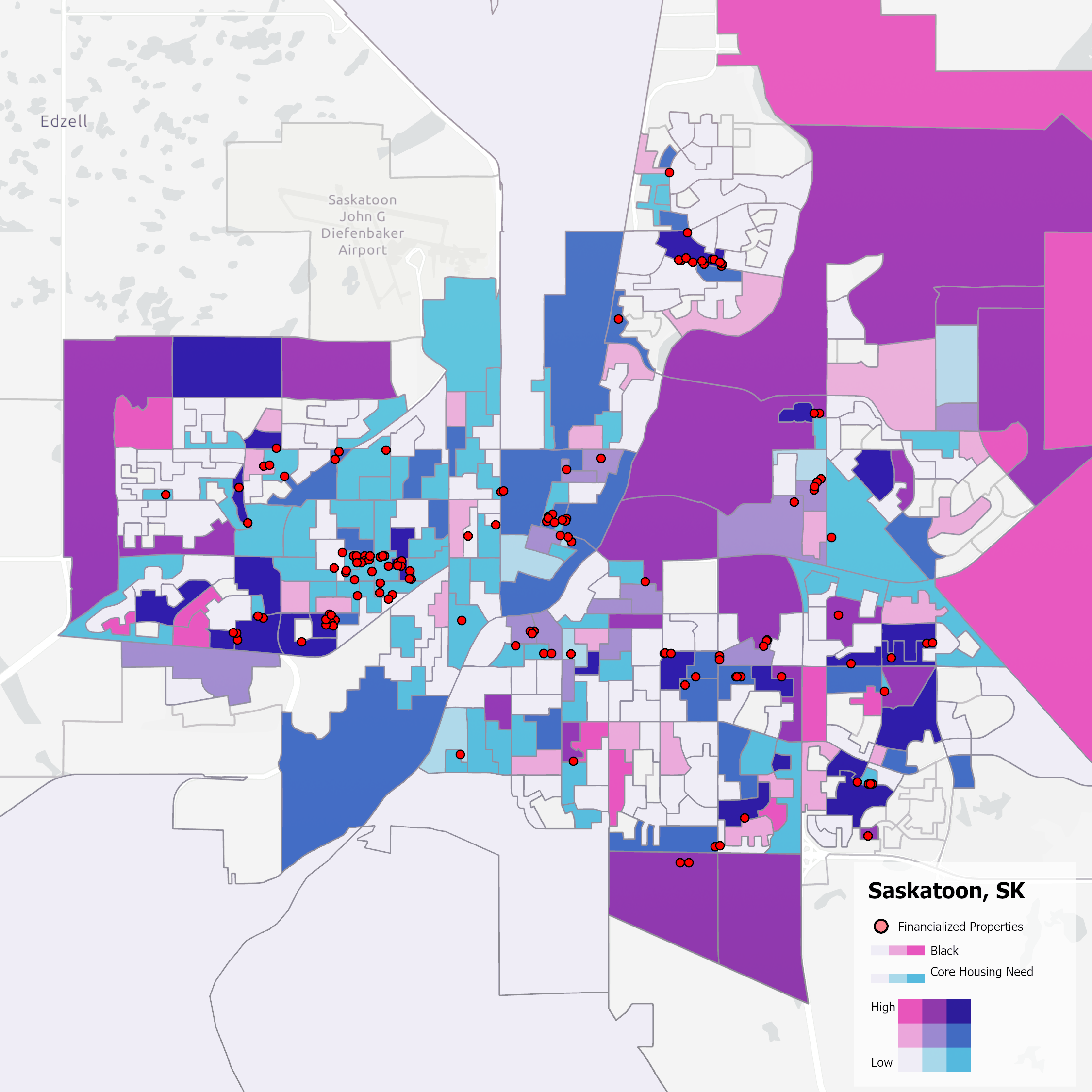
Heatmaps of cities across Canada show the share of Black residents by neighbourhood. Darker areas indicate higher concentrations of Black residents and areas of “core housing heed.” Credit: Neal Rockwell and Monika Imeri 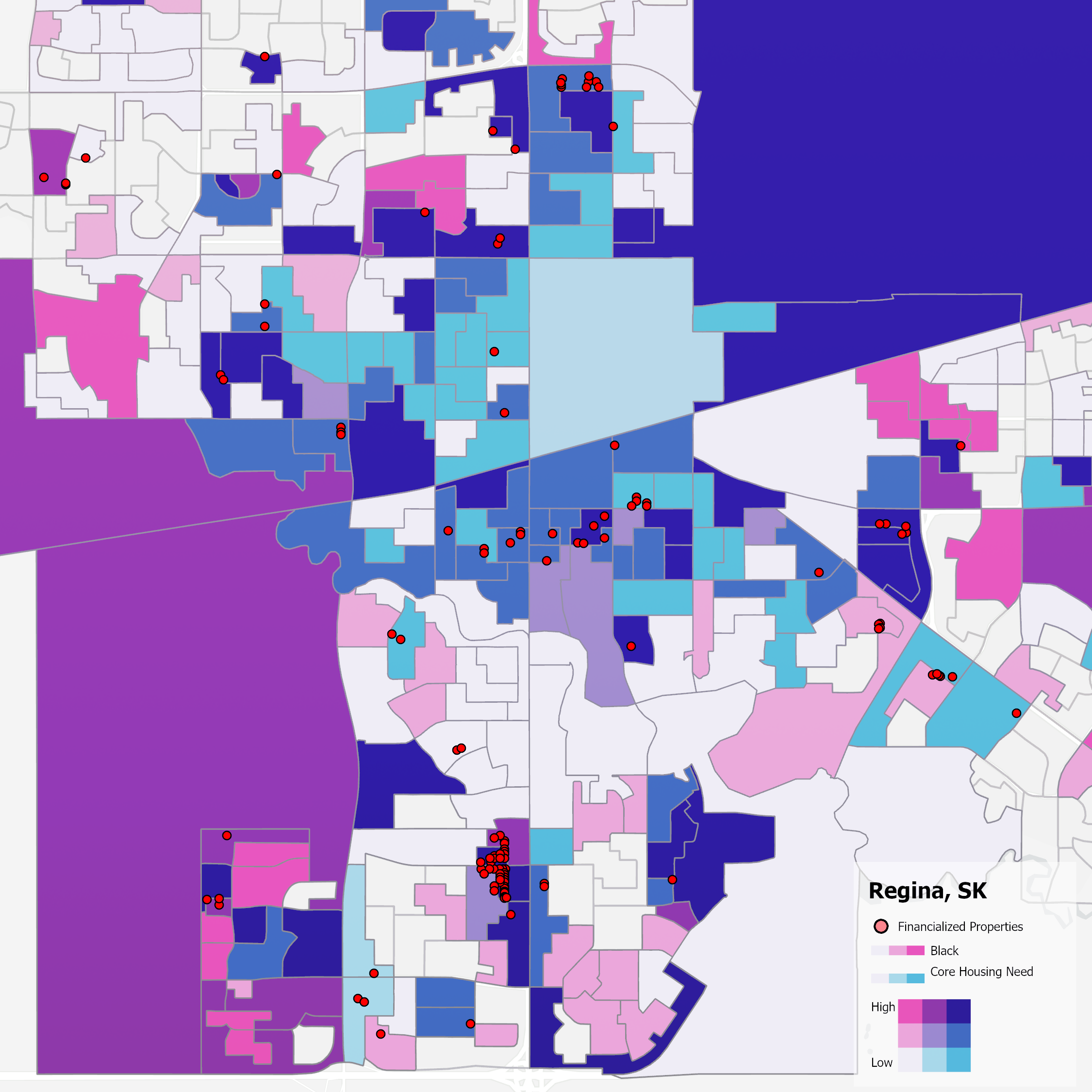
Heatmaps of cities across Canada show the share of Black residents by neighbourhood. Darker areas indicate higher concentrations of Black residents and areas of “core housing heed.” Credit: Neal Rockwell and Monika Imeri 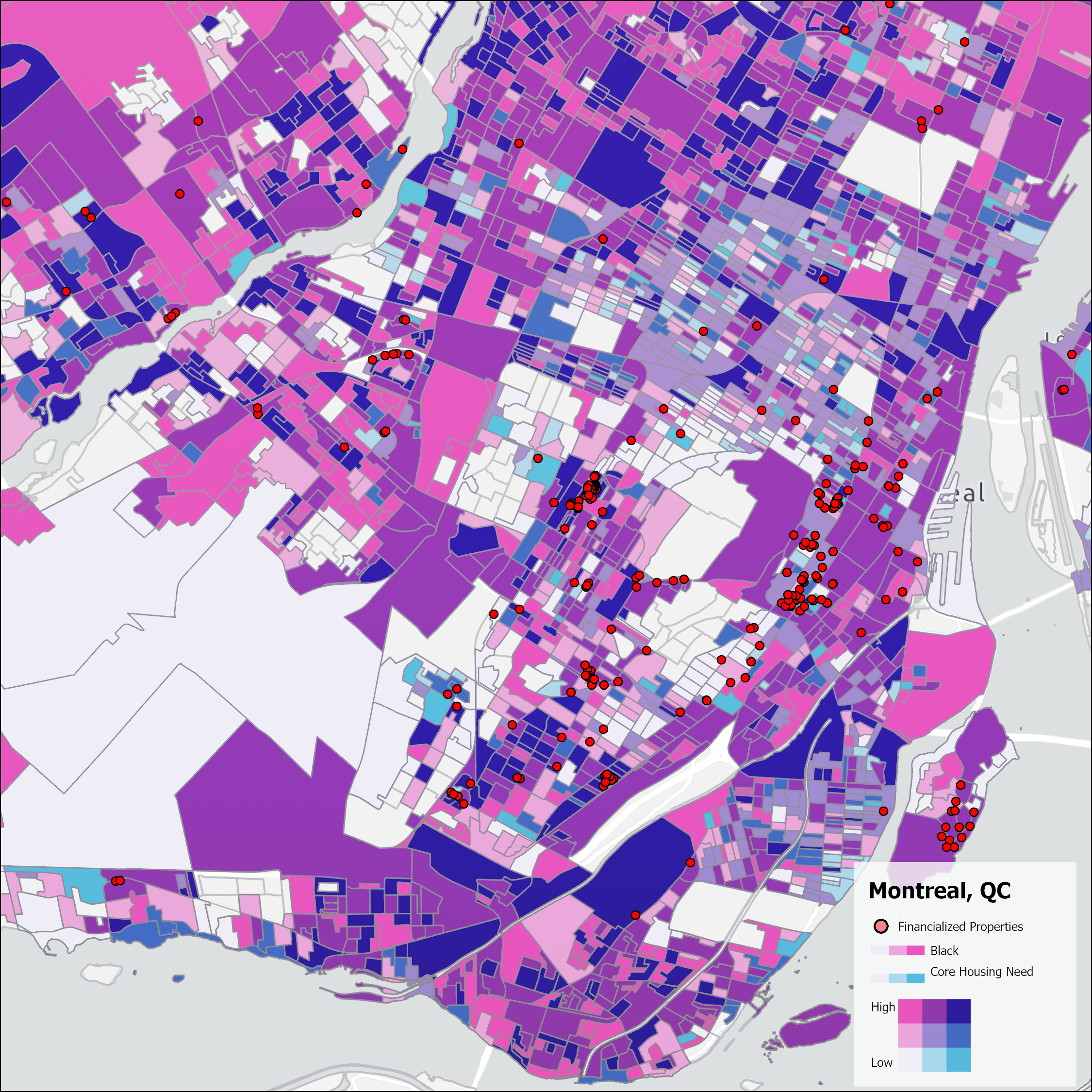
Heatmaps of cities across Canada show the share of Black residents by neighbourhood. Darker areas indicate higher concentrations of Black residents and areas of “core housing heed.” Credit: Neal Rockwell and Monika Imeri 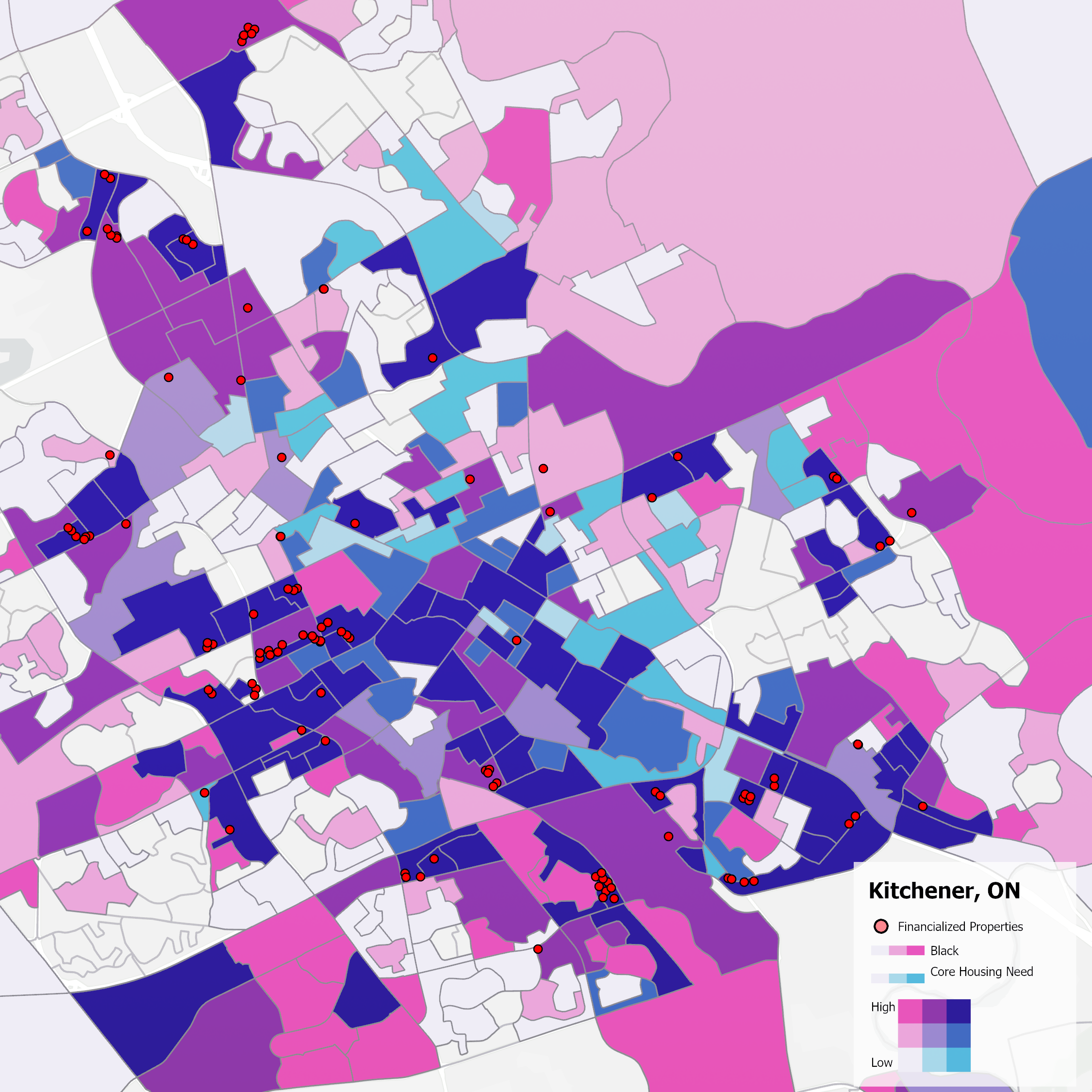
Heatmaps of cities across Canada show the share of Black residents by neighbourhood. Darker areas indicate higher concentrations of Black residents and areas of “core housing heed.” Credit: Neal Rockwell and Monika Imeri 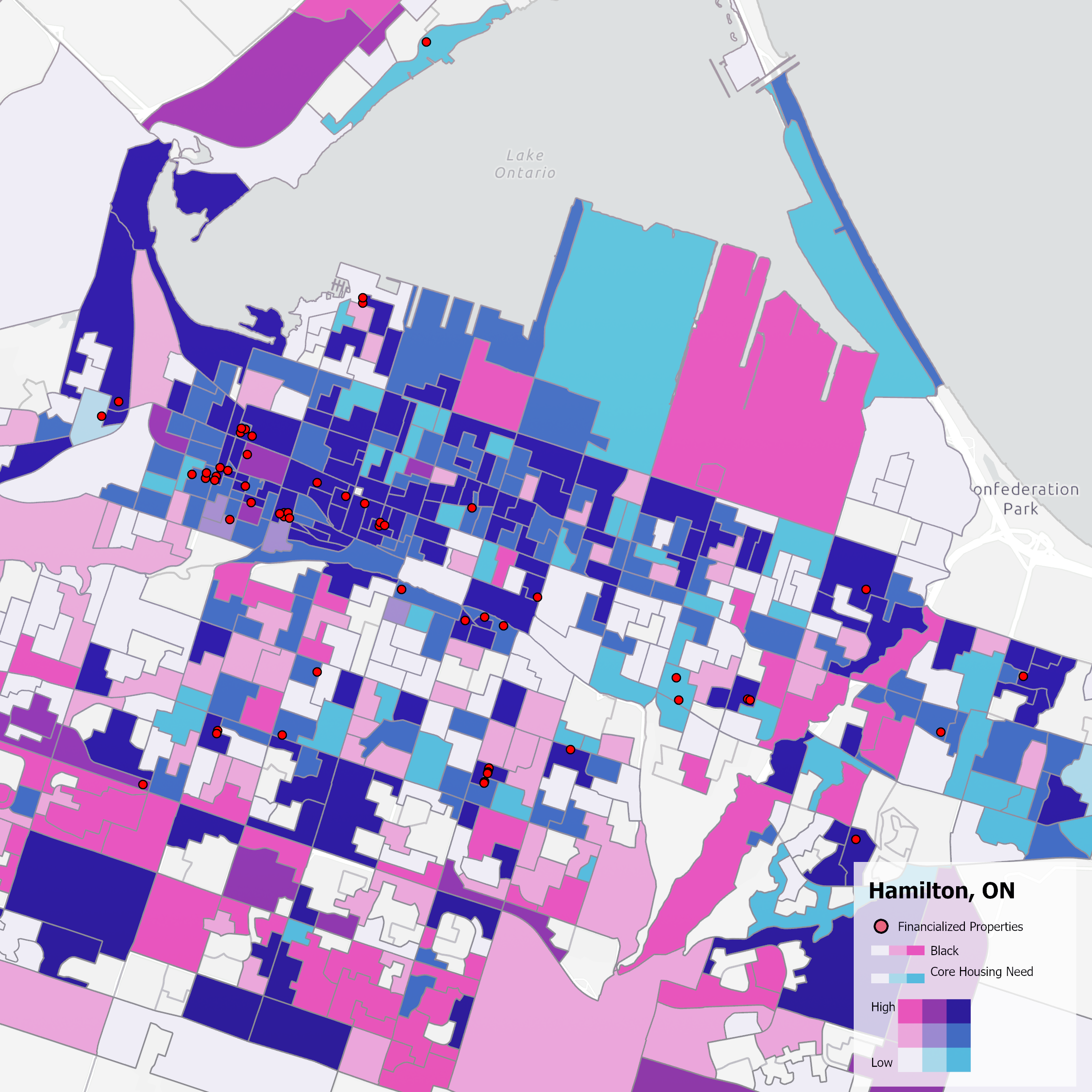
Heatmaps of cities across Canada show the share of Black residents by neighbourhood. Darker areas indicate higher concentrations of Black residents and areas of “core housing heed.” Credit: Neal Rockwell and Monika Imeri 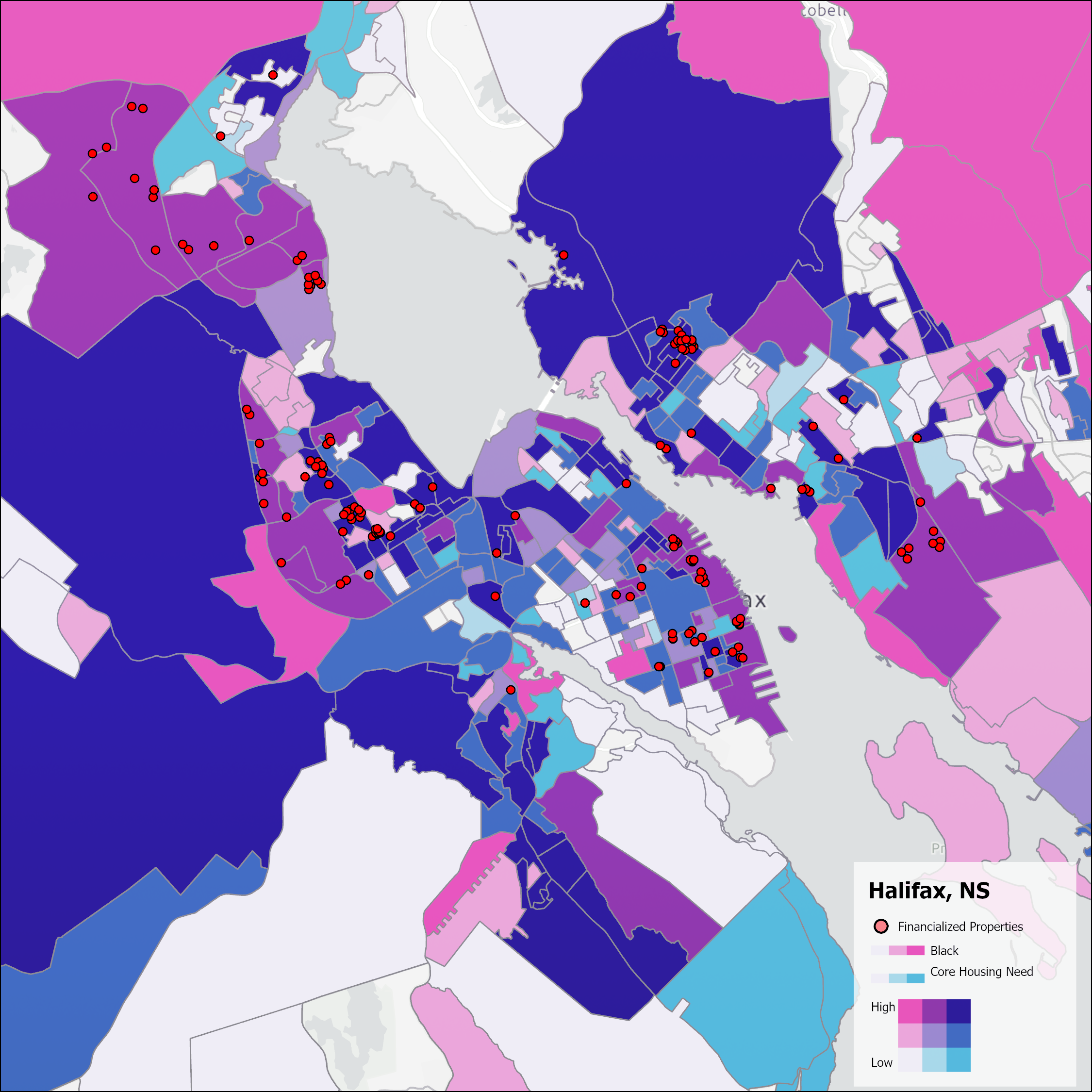
Heatmaps of cities across Canada show the share of Black residents by neighbourhood. Darker areas indicate higher concentrations of Black residents and areas of “core housing heed.” Credit: Neal Rockwell and Monika Imeri 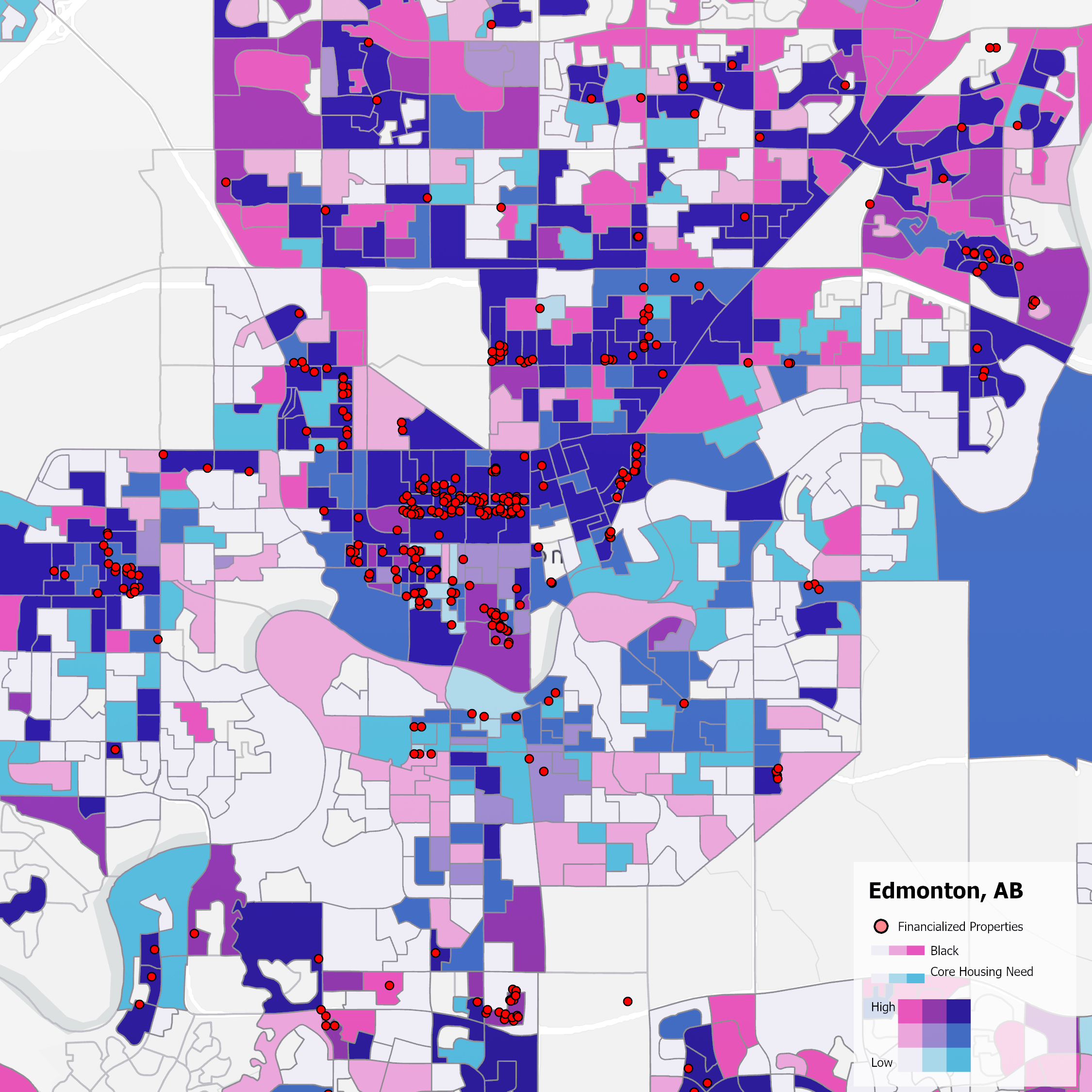
Heatmaps of cities across Canada show the share of Black residents by neighbourhood. Darker areas indicate higher concentrations of Black residents and areas of “core housing heed.” Credit: Neal Rockwell and Monika Imeri 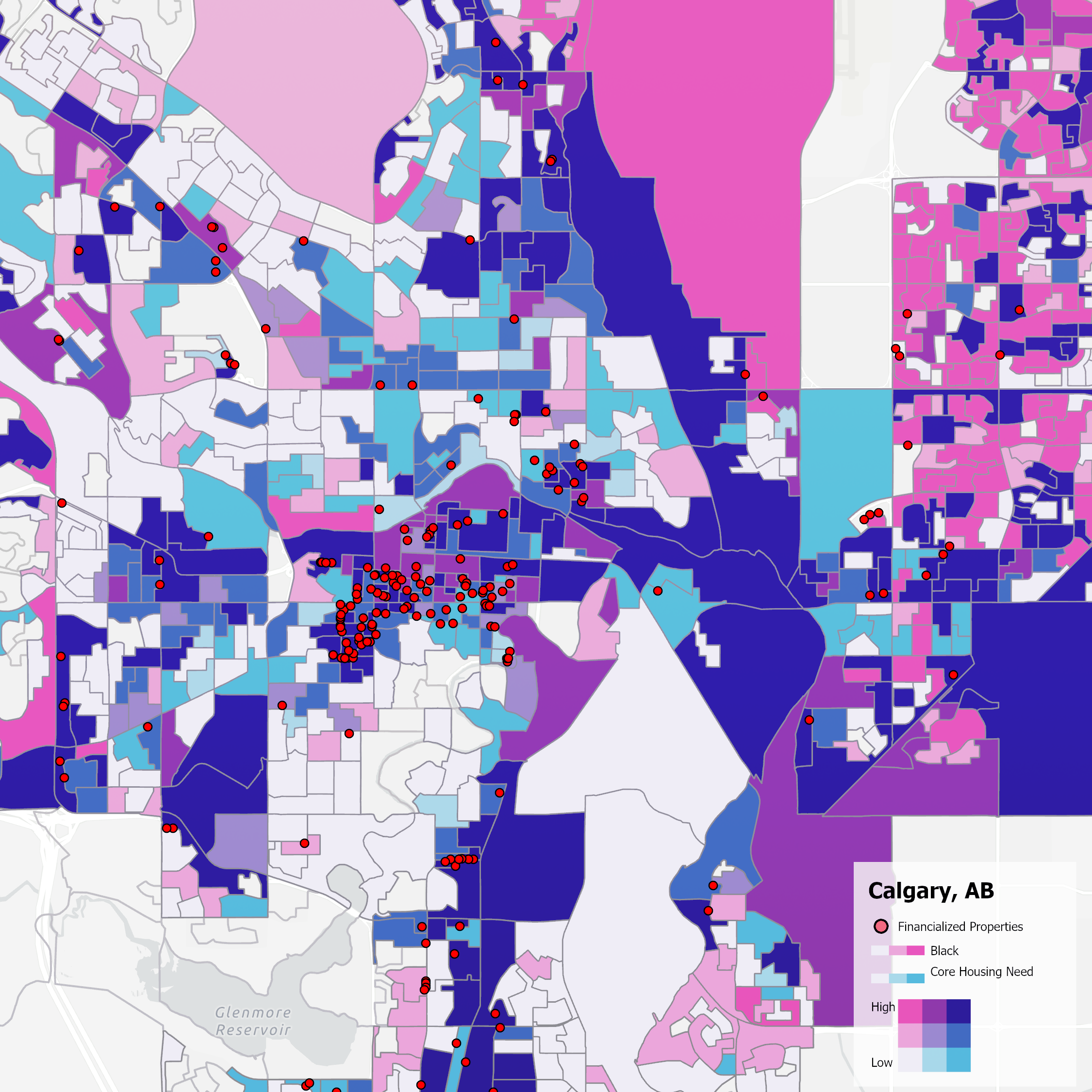
Heatmaps of cities across Canada show the share of Black residents by neighbourhood. Darker areas indicate higher concentrations of Black residents and areas of “core housing heed.” Credit: Neal Rockwell and Monika Imeri
In Newfoundland, financialized neighbourhoods had Black populations 300 per cent higher and Arab populations 200 per cent higher than the provincial average. This is remarkable in a province where Black residents account for just 0.36 per cent of the total population, suggesting landlords are actively seeking out even small concentrations of Black and Arab tenants.
British Columbia initially appeared to diverge from the pattern, as visible minority representation in financialized areas was lower than city averages. But closer examination revealed that while Chinese and South Asian populations were underrepresented, Black populations were twice as high and Arab populations more than double the urban average, suggesting that landlords are specifically targeting these groups. Weak tenant protections in particular attract speculative investment.
Provinces with virtually non-existent rent control (Alberta, Saskatchewan, and others) have the highest concentration of financialized properties, demonstrating how policy choices leave tenants vulnerable to speculative investors. For example, nearly half of Edmonton’s purpose-built rental units are owned by financial firms, in a province that is one of the most favourable for landlords due to its absence of rent control, streamlined eviction processes, strong property rights, and flexible tenant screening rules.
Across the country, these patterns suggest that financialized investment is not evenly distributed, but focused on areas where homes in racialized communities—especially with Black and Arab populations—can be acquired at a relative discount.
According to Monika Imeri, a PhD candidate in Geography and Environmental Studies at Carleton University, who assisted with this data analysis, such consistency across the country makes coincidence impossible.
“This pattern holds consistently across all provinces we examined, suggesting that racialized populations, especially Black and Arab communities, are heavily overrepresented in areas where financialized landlords operate or own properties,” she said.
“This is systematic.”
Heron Gate: a case study in ‘repositioning’
Buying up real estate and housing complexes in racialized communities is step one.
Step two is “repositioning”—the industry’s euphemism for eviction-driven gentrification.
The multi-billion-dollar company at the centre of the Heron Gate expulsions, Hazelview (formerly Timbercreek), describes repositioning in investor documents as “acquiring older, under-managed properties in gentrifying neighbourhoods and selectively deploying capital to improve the amenity base and renovate suites on resident turnover, driving strong valuation and rent growth in the process.”
In plainer language, this means: purchasing neglected buildings cheaply, allowing conditions to deteriorate, then evicting tenants and redeveloping. The new buildings will attract higher-paying renters, usually whiter and more affluent.
The Breach contacted Hazelview for comment, but the company did not respond.
“Repositioning is a strategy used by financial firms that involves investments, upgrades, cost saving measures, and renovations to apartment buildings that ultimately ‘add value’ and generate higher profits for investors and landlords,” said Martine August, a professor at the University of Waterloo who studies financialization.
“This approach often targets so-called ‘undervalued’ properties for upgrades that will allow firms to raise rents substantially, often for new, higher-income renters. Landlords often generate additional value by targeting areas dominated by racialized residents, where property values and rent levels are low and can be profitably repositioned.”
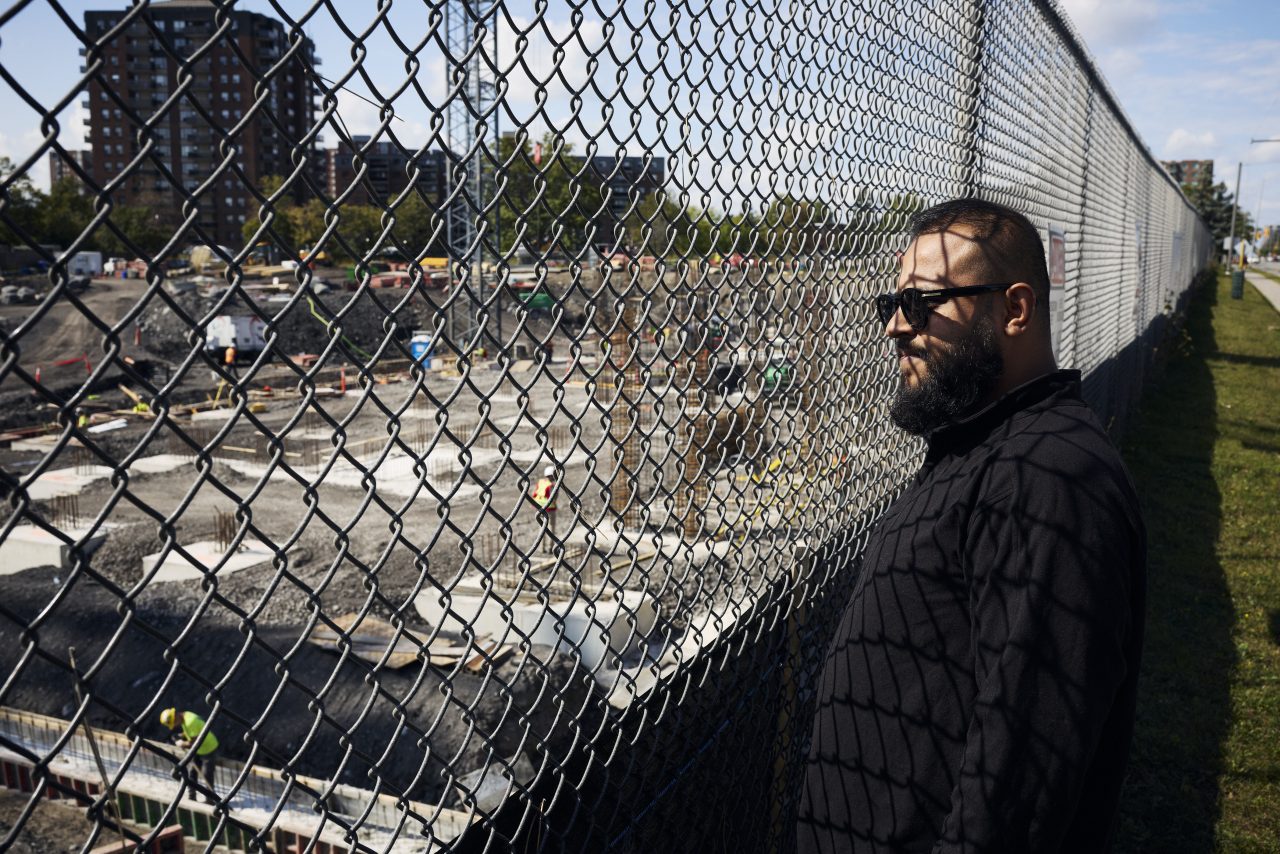
In 2016, Hazelview launched its first round of demolitions, forcing out 80 households—including Falah Rashed’s family—to make way for luxury rental apartments now branded as Vista Local. They were relocated to another section of Heron Gate, into aging brown townhouses. Few tenants knew that those units, too, were slated for demolition.
Conditions were grim. Rashed remembers constant infestations of rats and cockroaches. Worse, the basement flooded repeatedly—six or seven times in just two years—causing some $10,000 in damage. The family rented fans to dry it out, but the mould never went away. Complaints to management went nowhere. “Every time we put in a report, management said it was lost,” Rashed said.
One day, after heavy rain, Rashed’s mother slipped on the wet basement stairs. She has lived with chronic back pain ever since.
In 2018, the second wave of evictions hit. Rashed’s family, like hundreds of others, was pushed out for good. They lost not just affordable housing but the social fabric that had sustained them as newcomers. Hazelview demolished the homes, and then left the land empty for years.
Heron Gate Village is a striking example of how this process plays out in practice. The neighbourhood is low-income and home to Ottawa’s most diverse population, yet it sits directly beside the Alta Vista neighbourhood, which is much whiter and wealthier.
In the new Vista Local developments—where luxury apartments now rent for $1,629 per month for a bachelor and $2,119 per month for a two-bedroom unit—the renter base includes far fewer Black and Arab tenants.
Despite the scale of these expulsions, Hazelview could claim it had followed the rules. Ontario law, as per the Residential Tenancies Act, entitles tenants to three months’ rent as compensation when homes are demolished. The company added a one-time payment of $2,000 for moving costs—a sum that seemed generous on paper but did little to offset the financial and emotional upheaval of displacement.
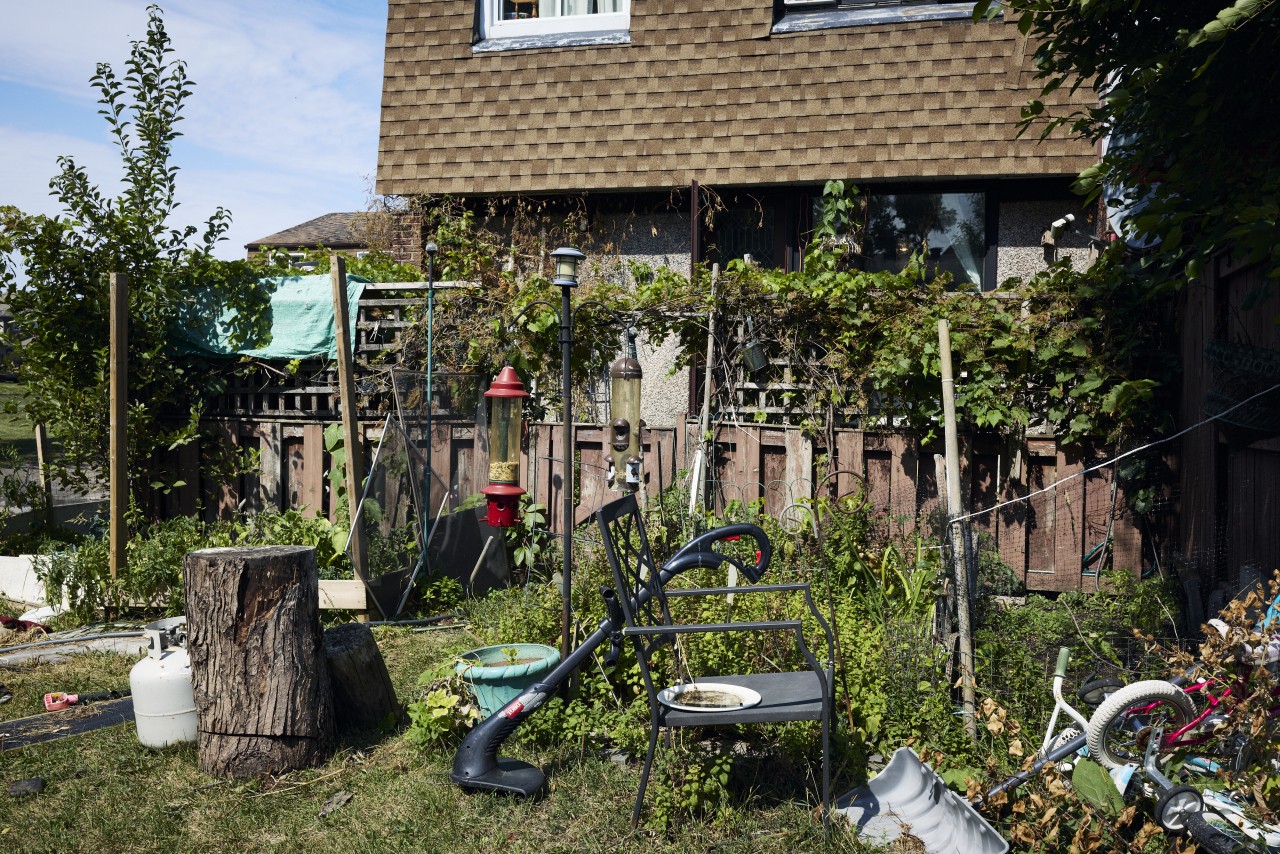
Scenes from Heron Gate Village, years after the mass evictions took place. Crumbling townhouses and overgrown lots reveal the neglected remains of a once-vibrant, predominantly Black and Arab community. Credit: Neal Rockwell 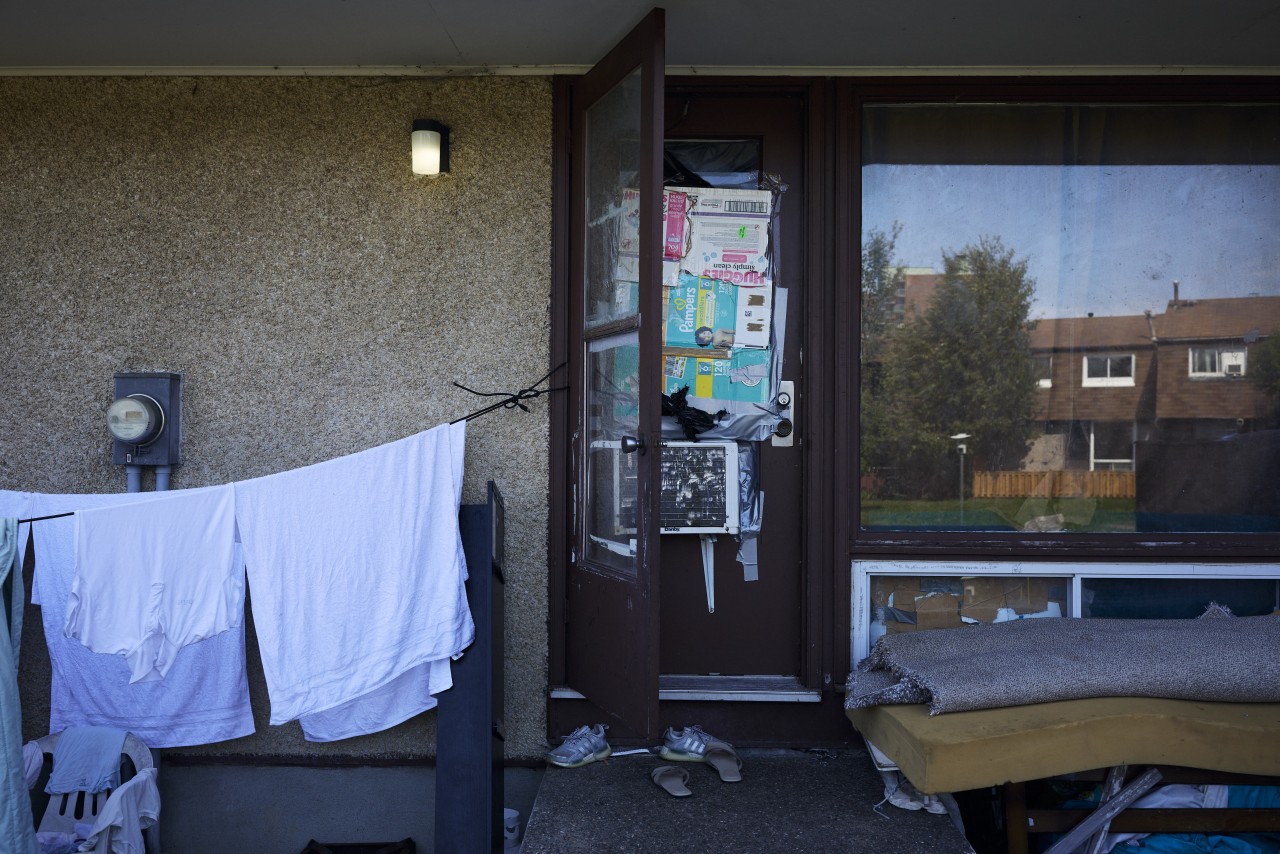
Scenes from Heron Gate Village, years after the mass evictions took place. Crumbling townhouses and overgrown lots reveal the neglected remains of a once-vibrant, predominantly Black and Arab community. Credit: Neal Rockwell 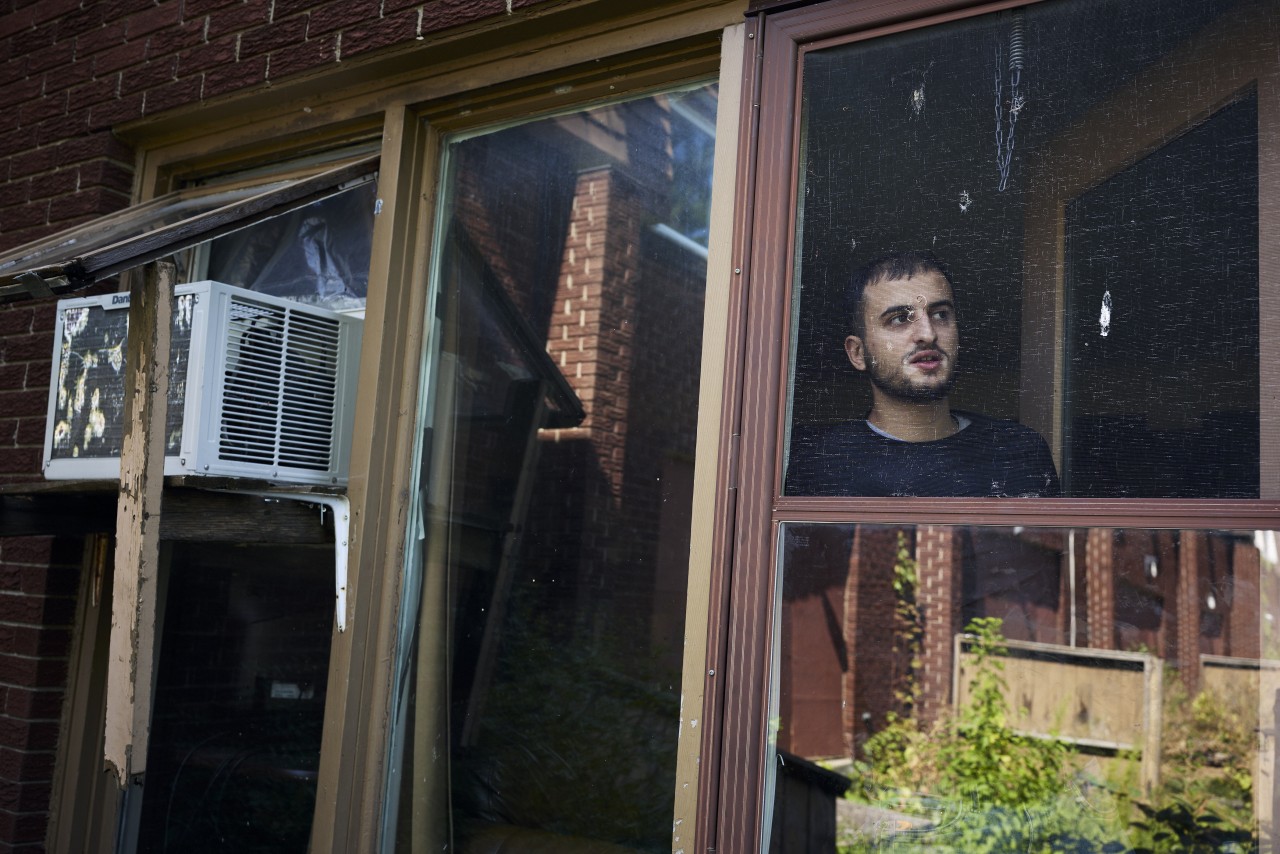
Scenes from Heron Gate Village, years after the mass evictions took place. Crumbling townhouses and overgrown lots reveal the neglected remains of a once-vibrant, predominantly Black and Arab community. Credit: Neal Rockwell 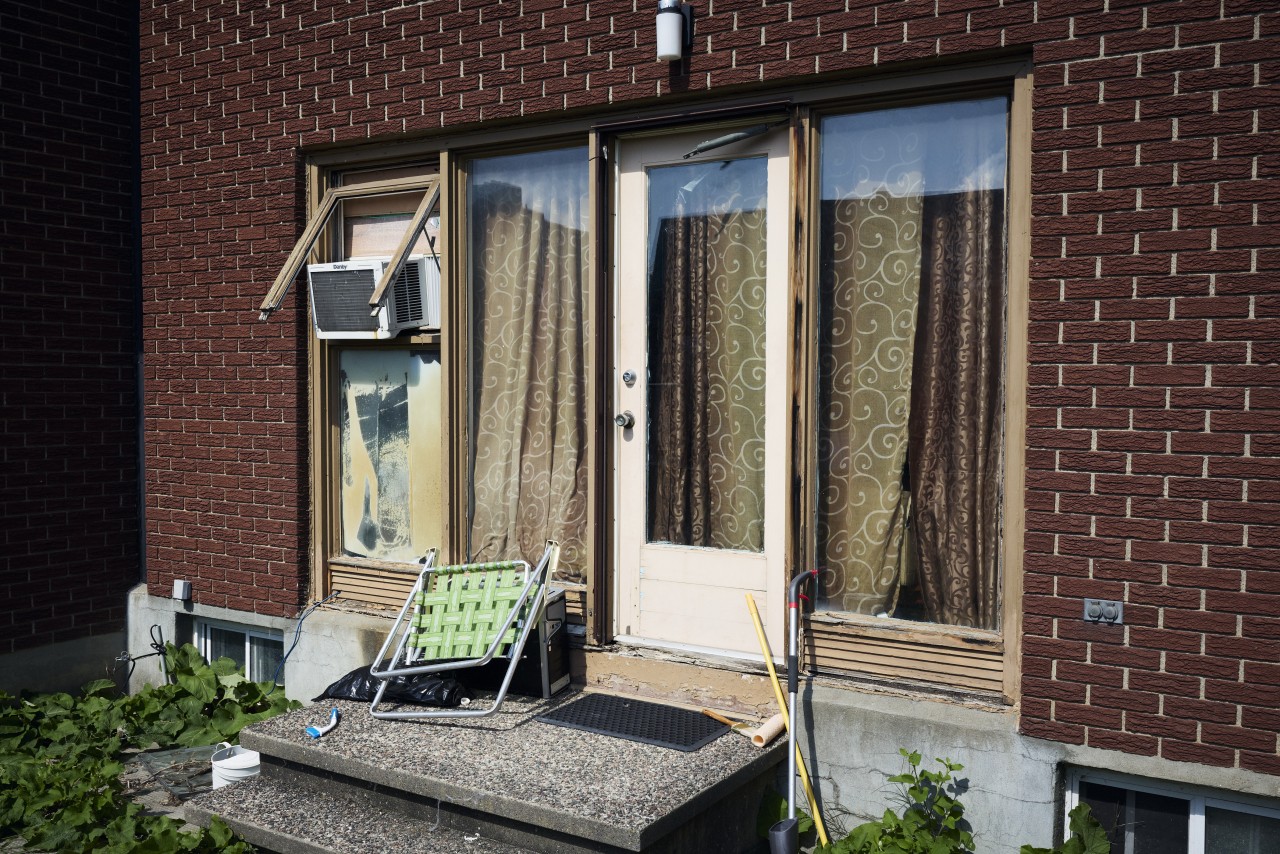
Scenes from Heron Gate Village, years after the mass evictions took place. Crumbling townhouses and overgrown lots reveal the neglected remains of a once-vibrant, predominantly Black and Arab community. Credit: Neal Rockwell 
Scenes from Heron Gate Village, years after the mass evictions took place. Crumbling townhouses and overgrown lots reveal the neglected remains of a once-vibrant, predominantly Black and Arab community. Credit: Neal Rockwell 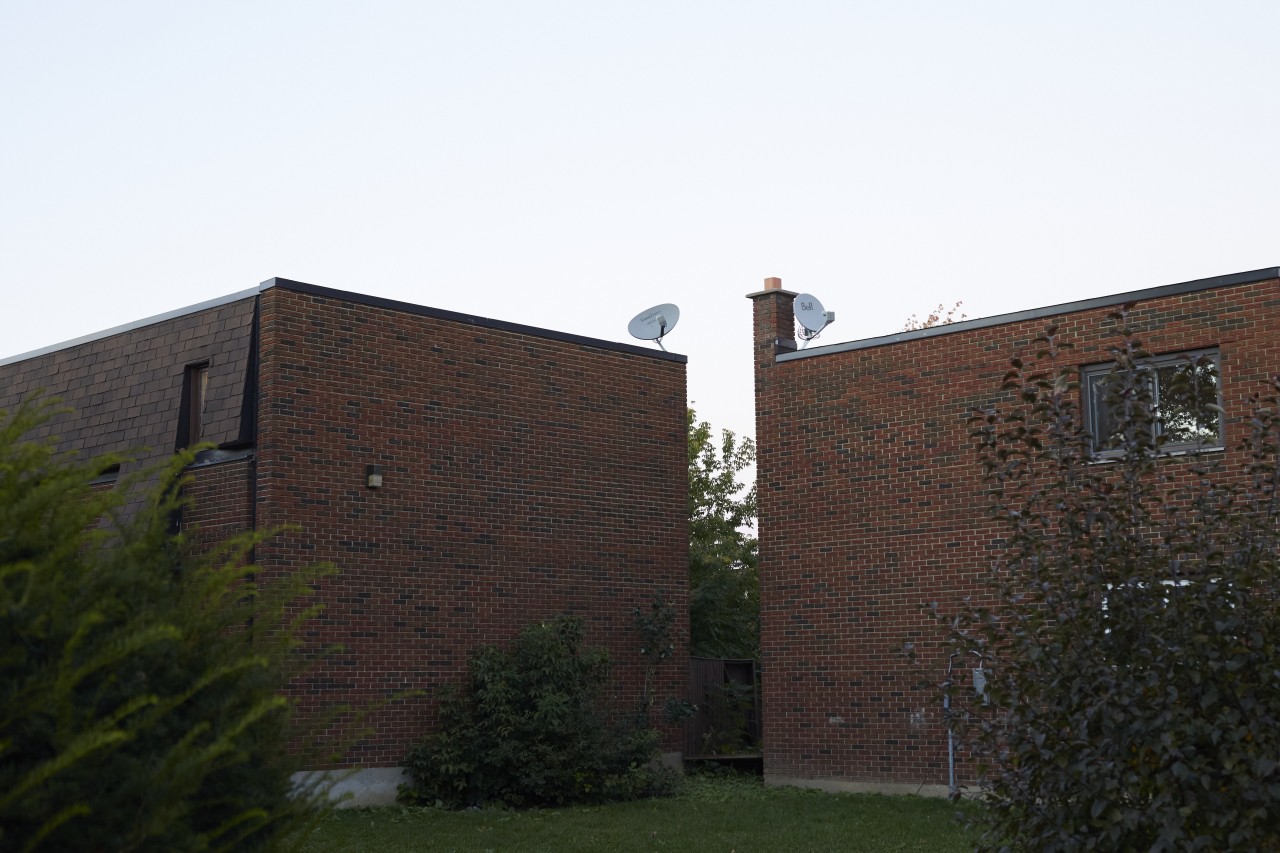
Scenes from Heron Gate Village, years after the mass evictions took place. Crumbling townhouses and overgrown lots reveal the neglected remains of a once-vibrant, predominantly Black and Arab community. Credit: Neal Rockwell 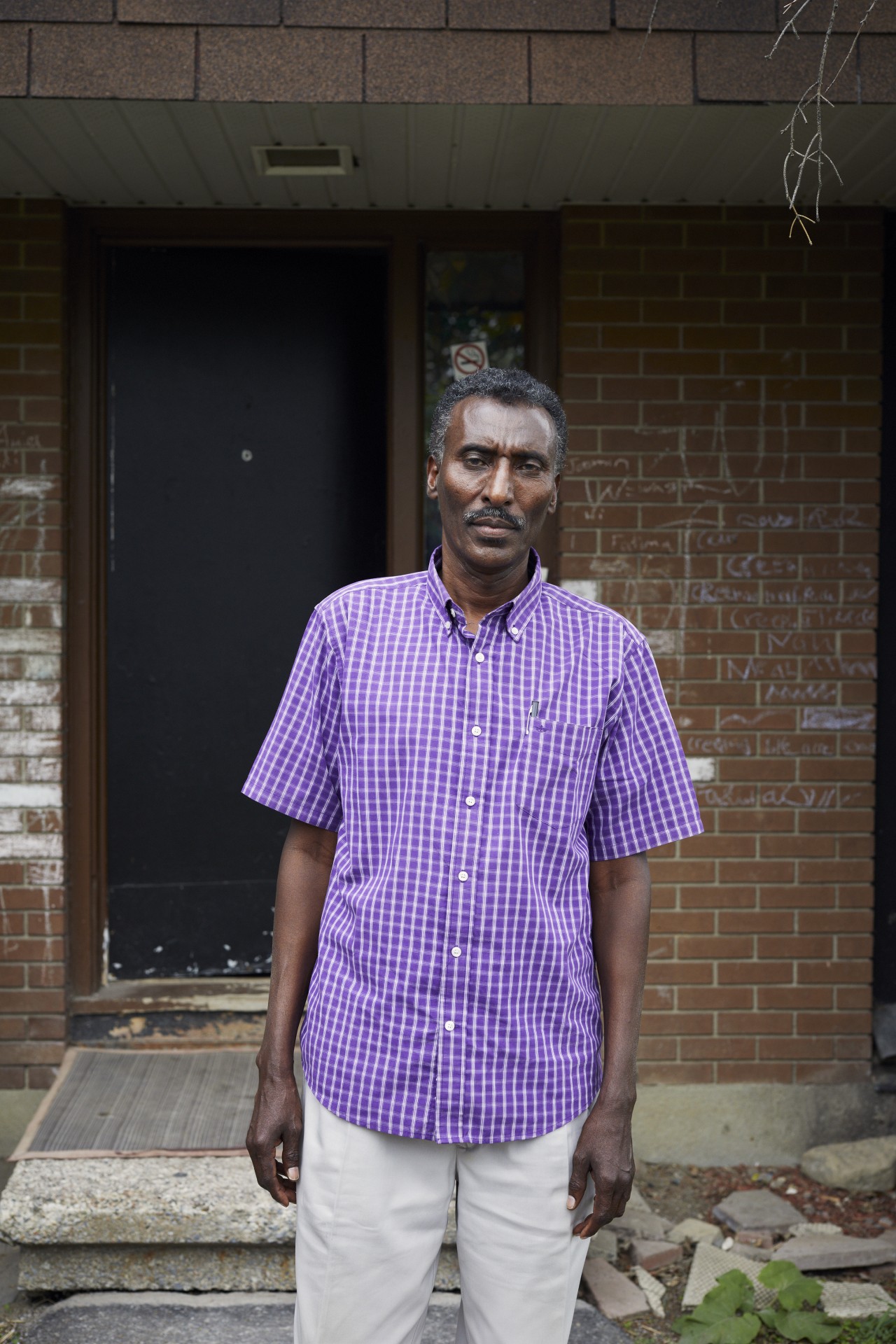
Scenes from Heron Gate Village, years after the mass evictions took place. Crumbling townhouses and overgrown lots reveal the neglected remains of a once-vibrant, predominantly Black and Arab community. Credit: Neal Rockwell 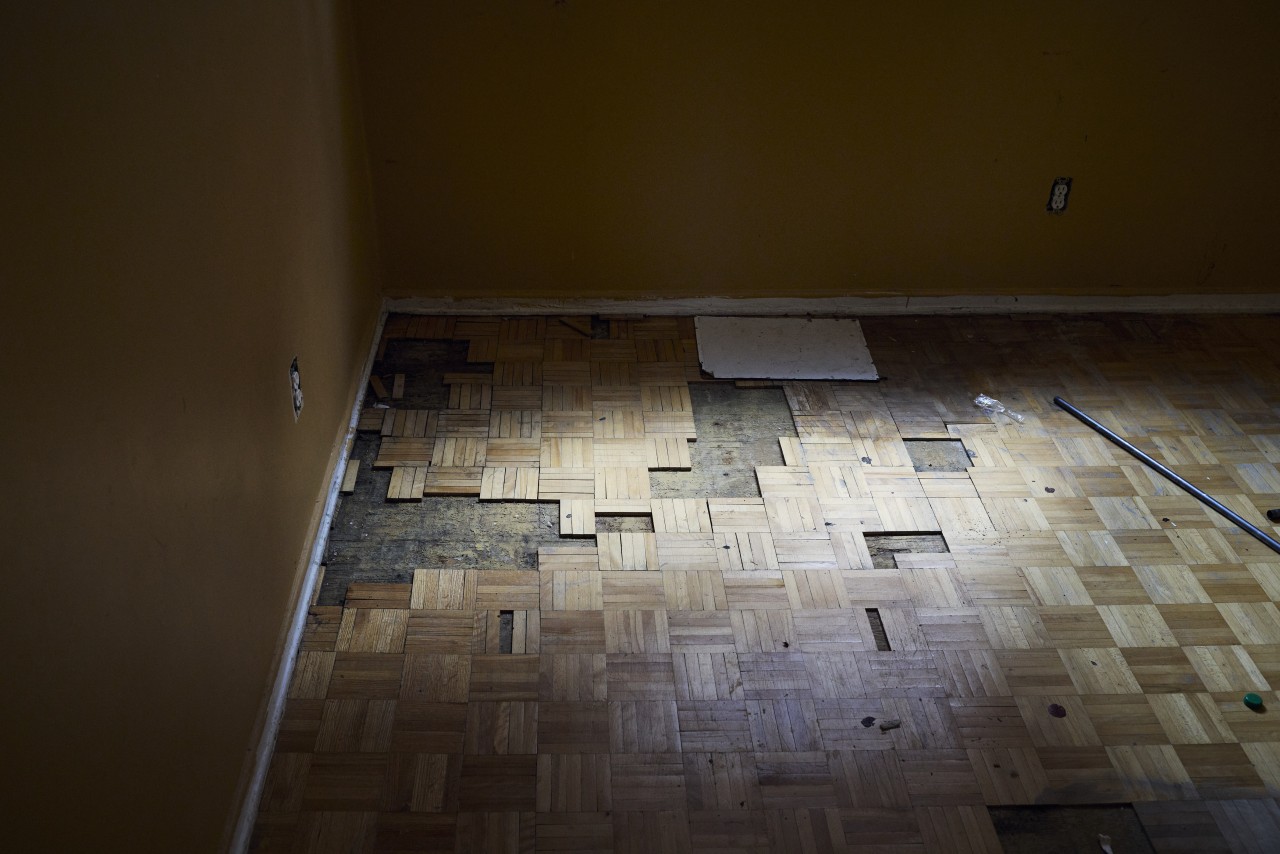
Scenes from Heron Gate Village, years after the mass evictions took place. Crumbling townhouses and overgrown lots reveal the neglected remains of a once-vibrant, predominantly Black and Arab community. Credit: Neal Rockwell 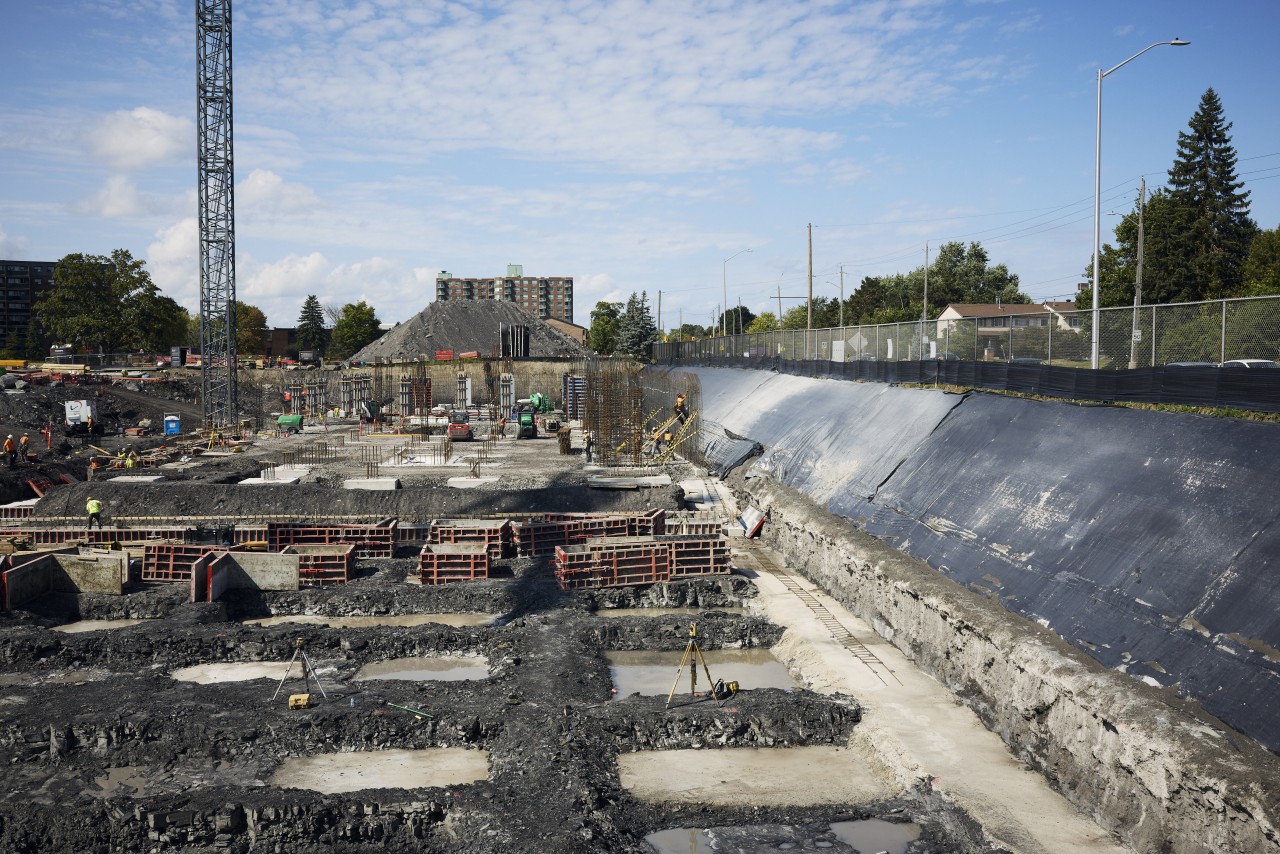
Scenes from Heron Gate Village, years after the mass evictions took place. Crumbling townhouses and overgrown lots reveal the neglected remains of a once-vibrant, predominantly Black and Arab community. Credit: Neal Rockwell
For most of the eviction period, Hazelview made it clear to residents that there would be no right of return. The message was straightforward: everyone had to leave. Only after the tenants’ lawyer, Tucker-Simmons, sent a letter to the company in late August 2018 did Hazelview issue a vague statement suggesting tenants could return “when development is completed.”
By that time, however, nearly all 105 households had already been forced to relocate. The few who remained understood the offer as meaningless—there was no promise of comparable rent, no clear terms, and no intention to make returning feasible.
The compensation, the legal compliance, even the polished promises of “revitalization” could not disguise what was happening: a predominantly Black and Arab community was being dismantled in the service of real estate profits.
After the new Vista Local apartments were constructed on the rubble of the demolished townhouses, the demographics of the area shifted dramatically. Between 2016 and 2021—the period spanning the mass evictions and the opening of Vista Local—the Arab population in the area plummeted from 27.1 per cent to just 14.3 per cent. The Iraqi population dropped from 25.4 per cent to zero. The white population, by contrast, more than doubled, from 11.9 to 32.4 per cent.
This is repositioning in numbers: the systematic conversion of a racialized, working-class neighbourhood into a wealthier, whiter one.
The legal test ahead
Evictions have major social and economic consequences: they destabilize communities, accelerate tenant turnover, and allow landlords to replace lower-income, racialized residents with higher-paying tenants, effectively repositioning entire neighbourhoods for profit.
Understanding this pattern sets the stage for the legal test currently unfolding in Ottawa. The Human Rights Tribunal of Ontario is hearing a case brought by Heron Gate tenants and their lawyer, Tucker-Simmons, which argues that Hazelview’s mass expulsions are racially discriminatory. The tribunal offers a rare opportunity to examine whether these systemic, racially skewed eviction practices are a violation of human rights in Canada.
The case has been ongoing since 2018, slowed by procedural delays and cuts to tribunal adjudicators, yet its stakes extend far beyond Ottawa. “There are landlords doing exactly the same thing across Canada with impunity,” said Tucker-Simmons. “We’re confident the Tribunal will see things our way.”
Tucker-Simmons is keenly aware of the procedural obstacles ahead. He has called out Hazelview’s attempt to have the Tribunal throw the case out on the basis that this is “economic” rather than racial harm, and he’s blunt about the scale of the work ahead.
“Proving systemic discrimination is inherently challenging,” he said. “Our biggest challenge is the cost and labour involved in obtaining and analyzing the requisite data.”
If successful, the case could create a precedent that protects tenants across the country from financialized landlords’ strategies.
The tenants are seeking restitution, and potentially a “right of return” to units of similar size and rent. Many displaced residents, having established themselves elsewhere, may never come back—but securing legal recognition of the harm inflicted could help prevent similar patterns in other cities.
The lawsuit is about more than money—it’s Black and brown working-class tenants insisting that these kinds of systematic, racially targeted displacements are unacceptable in Canada.
And for former residents like Rashed, the implications are deeply personal. “We lost a lot of community values,” he said. “You don’t see these anymore in other neighbourhoods.”

The Breach’s investigations don’t just inform our readers—they force the powerful to react.
An exposé on blood plasma privatization led to national headlines. Our revelations about the government’s cozy connections to Big Pharma sparked a parliamentary probe. A report on high-tech price-fixing by mega landlords resulted in a criminal investigation.
From activists to elected officials, people are using The Breach’s journalism to push for transformative change.
– Dru Oja Jay, Board President, The Breach
Corporate Power | Mark Carney and Doug Ford keep serving Big Landlords

Housing | Canadian mega landlord using AI ‘pricing scheme’ as it massively hikes rents

‘Nightmare’ landlord greenwashes move to displace low-income tenants

5 comments
Comments are closed.


It almost sounds the same as driving the jews out of their villages. Only disguised as legitimate business . It’s not what I would have expected from Canada in the 21st century
If this form of financialized rental housing is part and parcel of Carney’s plans to build fast and big……then racism is alive and well in Canada. But I suppose its past time we accepted that Race Discrimination to the point of Slavery was a large part of what created the entire western world’s so called ‘prosperity’.
That we continue to imagine that privateers working for maximum profit are going to solve the housing crisis they almost single handedly caused….then neoliberalism may be a zombie ideology, but it’s still up and running.
To all our peril.
A stunningly biased article, written as though the tenants had no personal responsibility in maintaining their own lives. I spent many years as a renter and I can say that dealing with deadbeat landlords was a major fact in motivating me to get my financial act together and ultimately buying my own home.
carney and liberals will make money, bring in mass immigrants, they go to poor areas, REIT companies do their evictions. Wef Planed this to destroy countries with division and hate due to excess people.
Sounds like corporate greed. But yeah, ethnic displacement fits too. European colonizers driving out Jews, partnering with zionists, continuing colonization, creating apartheid, committing massacres, taking selfies and rape videos of the genocide livestreamed today to millions… of “specifically Black and Arab communities” around the world