The Breach Show is our podcast featuring sharp analysis on politics and social movements in Canada. Subscribe to the podcast on Apple, Spotify, Iheartradio, Youtube Music or your favourite service.
Desmond Cole: Welcome to The Breach Show, featuring sharp analysis on politics and social movements in Canada. I’m your host, Desmond Cole.
Israel has initiated a full scale war with Iran, and there’s reason to fear it could escalate in the coming days and potentially even draw in the United States.
Last week, Israel launched a major military operation inside Iran, declaring that Iran was planning an imminent nuclear attack against Israel. This claim has not been confirmed by the international community, including Israel’s closest allies.
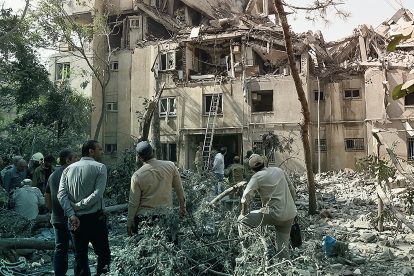
For seven days now, Israeli airstrikes have targeted Iran’s nuclear facilities but also residential and commercial sites, killing at least 224 people and injuring more than 1277 others, according to Iran’s Health Ministry. We note that Iran has not been issuing regular updates about casualty figures, and so it’s feared that those numbers are much higher.
Iran has also retaliated with its own missile strikes into Israel, many into civilian areas, and has killed 24 people and wounded at least another 590. We’re recording this conversation on the morning of June 19th, Thursday. And just this morning, Iranian missiles hit several sites inside Israel, including the largest hospital in southern Israel.
U.S. President Donald Trump has expressed his support for Israeli aggression and says he’s considering U.S. military support to further erode Iran’s nuclear program or even to assassinate Iran’s supreme leader, Ayatollah Ali Khamenei, as Trump has threatened in recent days to talk about this conflict.
My guest today is Donya Ziaee, our senior editor at The Breach, who grew up in Iran and left the country for Canada in her teens. Welcome, Donya.
Donya Ziaee: Hi, Desmond, good to talk to you.
Cole: You too. I want to start by saying I know you have relatives and friends and loved ones in Iran right now and I wonder what you have been hearing from them this last week.
Ziaee: It’s hard to describe the heartbreak and agony that people are experiencing right now.
How after watching a livestreamed genocide for the last 20 months in Gaza, they woke up to find themselves the latest targets of violence by the Israeli state.
I do have quite a lot of family in Iran and every single one of the members of my family are right now living in fear. There are relatives of mine who live in major cities that have been targeted, from Tehran to Mashhad to Isfahan, who have had to suddenly uproot their lives and evacuate to somewhere safe, for who knows how long.
And that’s if they can, right? There are lots of people, including in my own family, who simply don’t have that option. They don’t have anywhere to go, or they’re too frail and elderly, or they just prefer the comfort of their own home in the midst of this destabilizing conflict.
I should also say that the roads leading out of the major cities are all jammed with cars full of desperate people trying to get out. Trips out of Tehran, for example, that used to take two or three hours, these days have been taking 10 or 11 hours.
You can imagine the anxiety of the people just sitting there in their cars, stuck on the highway, not moving, completely exposed and wondering if there’s going to be a strike while they’re completely vulnerable on route.
There’s also the added factor that gas is really limited in Iran right now. It’s being rationed by the government because of fuel shortages. There are huge lineups outside petrol stations and this has really limited people’s mobility as well.
There are very few good options for people right now other than waiting and hoping for some form of urgent de-escalation, a ceasefire, and for this whole nightmare to end.
The very fact of this nightmare is so hard to fathom. It’s been 46 years, since the 1979 revolution, that people in Iran have lived under the shadow of the possibility of exactly this war. Those of us who went through the Iranian school system or ever turned on state television, we grew up on chants wishing death to Israel and the United States. The specter of war was always alive and present.
So now to finally see that fear—that nightmare—come to life, it’s really hard to describe what that’s like in words.
I was moved by the words of a friend who wrote online, “War was always on our doorstep and now it has come in.”
This is the psychological reality that people are facing. But you know, the Iranian people are also very resilient. In the last just four to five decades, they’ve experienced a massive transformative revolution, an eight-year war, endless internal political turmoil, and waves and waves of repression and violence internally, and then endless hostilities with foreign powers as well.
Nevertheless, despite all of that, people in Iran keep up a spirit of hope and resilience, even humour. I’m sure any Iranian you talk to these days will tell you about how their loved ones are dealing with everything that’s going on with a particular brand of humour.
It’s like someone else wrote online, “Iranians are condemned to hope.”
Cole: You talked about the chaotic situation in the streets, lineups at petrol stations, lineups to try and get out of parts of Tehran and other places on the highway.
This has been exacerbated and fueled by calls from both Israel and by U.S. President Donald Trump saying “you’ve got to get out of there, you’ve got to evacuate,” in Trump’s case without any other context or direction, and in Israel’s case, sometimes with about an hour before a strike will hit, for example, a certain region inside of Tehran.
I’m just wondering about how these warnings fuel the chaos and the confusion that’s happening.
Ziaee: Yeah, it’s absolutely sowing chaos and confusion—and that’s the point. People have pointed out these evacuation orders follow the same pattern that they did from Israel in Lebanon and Gaza, where they really seem more aimed at creating exactly that kind of panic and confusion rather than offering any form of safety or protection to civilians.
Like you said, there are sometimes warnings that a strike is coming within the hour. Well, where are people supposed to go in that hour? For one thing, the Internet is continually cut off in Iran.
Right now, we’re coming up to almost 48 hours of blackout in Iran, and so people aren’t even necessarily getting that information. Or in one case, the warning came at 3:00 a.m. local time.
I mean, who’s even seeing that? People are sleeping.
One of the evacuation notices was for District 3—that’s a district where 300,000 people live.
As you said, we also had Trump repeating these kinds of statements. He abruptly left the G7 meeting and told the people in Tehran that they must all immediately evacuate. That’s a city of 10 million people.
You have this casual hinting at mass atrocities by the leader of the most powerful country in the world. I mean, this is nothing short of pure psychological warfare.
Cole: It’s also the case that Iran really hasn’t been prepared for these kinds of major strikes inside of its country. In terms of options for what people can do and where people can go, there are very few options.
Then, of course, you mentioned that there are some people who are maybe too afraid to leave or who just don’t want to leave the safety or comfort of their own home. There are also people who cannot leave. Isn’t that right?
Ziaee: Yes, either it’s just not physically possible or they have nowhere to go. Not everybody has relatives or a summer home or somewhere safe to evacuate to.
There are also lots of fears about the fate of political prisoners who are rotting in Iranian jails in places like Evin Prison, which right now is filled with protesters and dissidents, most recently from the 2022 Women, Life, Freedom movement. Who exactly is looking after their safety and their evacuation? What’s their fate going to be?
There is, on the one hand, the chaos and destruction that Israel is creating, and then on the other hand, people in Iran are faced with a government that has not protected them from this war.
Unlike in Israel where there are dedicated bomb shelters to protect people from incoming strikes, there are no such shelters or bunkers in Iran to protect people.
A couple of days after the attack started, the government opened up mosques. I mean, these are overground. They are not at all safe havens from military attacks, but they opened up mosques as shelters and some metro stations that are underground.
Imagine as an Iranian: your government has been boasting about its military capacity to one of the most genocidal regimes on this earth, Israel, and promising it that it will wipe it off the face of this earth—and yet it has done nothing to prepare and protect its own people from the military facedown when it actually arrives.
That’s what the Iranian people are experiencing right now—a real sense of abandonment by their own government in the face of this genocidal regime.
Cole: Now, Israel says that its goal is to destroy Iran’s nuclear program and the ballistic missile systems that it could use to launch a nuclear attack. Obviously, the strikes are having much broader consequences for the civilian population.
Donya, when I’ve been researching for this show, it’s been really hard to get up to date information. Can you help us understand why that is and to give a little insight into the extent of the damage and to the extent of casualties and deaths?
Ziaee: Yeah, first of all, it’s very hard to have real comprehensive accounts of what’s going on on the ground because of a lack of independent journalists. We’re getting some reports from Iranian state media and a lot of reports from citizen journalists on the ground, ordinary people with their phones. We’re seeing less and less of those now too, because of the internet blackout that I mentioned that’s been in place over the last two days. So there’s a real dearth of information coming out.
But yes, Israel claims it’s targeting nuclear sites or individuals with ties to the state’s military apparatus.
Netanyahu had the gall to say to the Iranian people, “we’re clearing the path for you so that you can achieve your freedom.” I mean, that’s a blatant lie.
First of all, anyone who’s watched Israel historically and especially over the last 20 months knows that that military has zero regard for the lives of civilians or for human life and freedom. And their strikes in Iran have killed dozens, hundreds of civilians.
As you said, the official count right now from the Health Ministry is in the 200s, but that’s likely a very conservative estimate because, again, collecting that information right now is so difficult.
You can just look at the places they targeted.
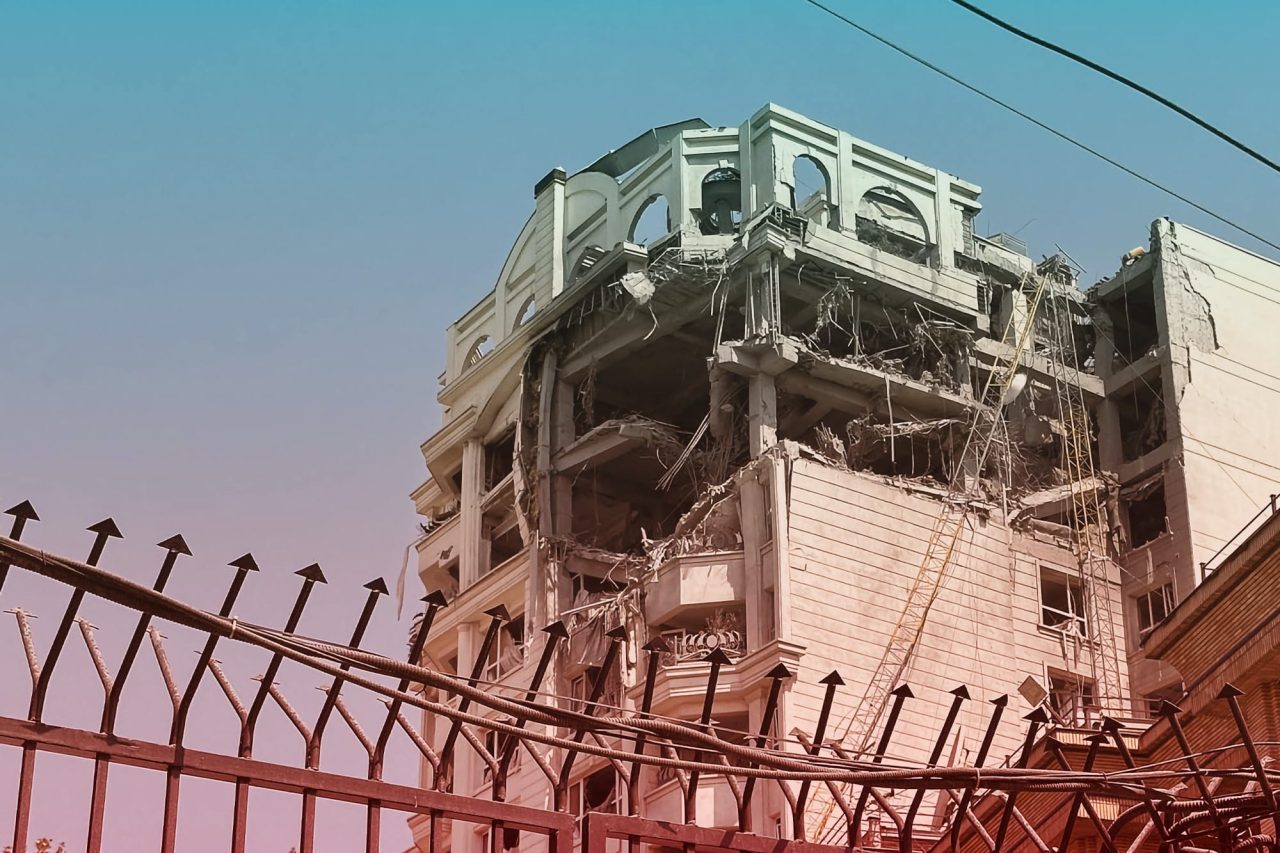
The first strikes that came in on that early Friday morning local Tehran time, they all hit heavily populated residential areas, entire residential buildings. One of them was just one street over from where I grew up, where my grandparents lived until they died.
People’s entire homes were decimated, their loved ones dead. Why? Because some nuclear scientists live two floors above.
I mean, they even hit, in the days after, some of the busiest squares in Tehran shopping districts. Imagine if they attacked Younge and Dundas in Toronto—that’s the kind and scale of damage and devastation that we’re talking about.
When I hear this claim that Israel’s attacks are precise and that they avoid civilian casualties, I mean, I just have to laugh. It’s as if the last 20 months of genocide didn’t happen. As if we don’t know what this military is actually capable of and what it’s after.
It’s also about this fear that they’re instilling in people where they just don’t know what’s going to come next and where is going to get hit next. I have people in my family who literally have to do this twisted calculation of “do I happen to live near some site that may in some form or another have a link to the Iranian military apparatus or intelligence or something?”
First of all, how would they even know that? But if they do happen to live near a targeted area, the calculation is, “could I be the casualty of an indiscriminate bombing of this entire surrounding area because this one individual or building happens to be housed here?”
Again, as I mentioned, we are seeing psychological warfare here in addition to the widespread destruction, displacement, and death.
Cole: I want to talk about the timing of Israeli strikes starting last week, and I know we’re speculating here, but I want to think about what the possible end game of these strikes are.
Israeli PM Benjamin Netanyahu has invited Iranians, as you mentioned, to rise up and join him in helping to take down their own government, which suggests that actually deposing the government is maybe a broader goal for Israel.
Is this not simply a pretext for a war that Israel has always wanted? When they say, “well, there’s an imminent nuclear threat (which again, hasn’t been demonstrated) and we have to take it out right now,” does that not feel to you like they have objectives? This is their opportunity to achieve those objectives.
Ziaee: Exactly. I’m no geopolitics expert, but there are a few very obvious things going on here.
First of all, there were negotiations underway, as the attacks happened, between the U.S. and Iran over its nuclear ambitions, and it’s very clear that Israel wanted to completely torpedo and sabotage those negotiations—not because they were failing, but more likely because they were succeeding.
The chief negotiator for Iran, Ali Shamkhani, was one of the people who was targeted and killed in Israel’s strikes, and he had just been expressing optimism about the status of the talks and about Iran’s relations with the U.S. improving. Even Donald Trump had signaled that he was open to a deal with Iran and that they were close to one.
You mentioned Israel is claiming that they’re trying to prevent Iran from developing a nuclear weapon, but most reports suggest Iran was nowhere near that.
Even U.S. intelligence reports are telling us now that Iran was years away from developing a nuclear weapon and that it wasn’t even actively pursuing one right now. The United Nations have also said that there is no imminent nuclear threat from Iran.
We also should say that even if a threat did exist, it would still, under international law, not justify a preemptive strike by Israel.
This is 2003 all over again. It’s the Iraq War playbook—trumped up claims about Saddam Hussein’s weapons of mass destruction used to overthrow him and sow complete chaos and instability in the country and the broader region.
I’ll add the other indication that this is about more than just Iran’s nuclear ambitions is that many of the targets from Israel in the last few days have not all been related to Iran’s nuclear program.
They’re hitting police headquarters, intelligence headquarters—they’re trying to destroy the entire regime apparatus. They hit the state broadcaster while it was live on air.
There’s clearly an attempt here to weaken the apparatus as a whole, not just to target the nuclear facilities and ambitions.
This is happening at a time when Iran is significantly weakened regionally as well. Most of its closest allies in the region have been weakened.
Not to mention that this escalation with Iran gives Israel the perfect cover and excuse and distraction to carry out its atrocities in Gaza.
We’re dealing here with a state that’s been emboldened by an utterly ineffectual system of international law. Israel has been carrying out, with complete impunity for the last 20 months, a genocidal mission in Gaza with support from Western allies like Canada.
The international system has been completely useless in stopping that massacre. Why wouldn’t Israel feel emboldened at this moment to now escalate its longstanding hostilities with Iran?
The last thing I’ll just add is, you mentioned Netanyahu invoking regime change in Iran. There was a line from Israel’s foreign minister where he recently said regime change is not an objective of this war, but it could be a result.
Whether it’s regime change or just the complete collapse of the regime, Israel will benefit from the chaos that is going to come out of it.
Cole: I think it’s worth mentioning also, Donya, that some of the first strikes that Israel launched last week were against high-value military officials inside of Iran. They’ve killed several of them and they’ve been kind of sharing that news and celebrating the fact that they’ve taken out a whole swath of senior military command inside of Iran too—just thinking about motives outside of the stated one for a nuclear destruction.
Obviously I don’t think that the Israeli government has Iranians’ best interests at heart. But as you mentioned, this is a government that has really done a lot of harm to its own people, that did not prepare, as you said, for this kind of eventuality, even as it threatened and saber rattled with Israel.
How might Iranians deal with the government that has led them into this conflict with Israel?
Ziaee: It’s the old adage: The enemy of my enemy is not my friend. It’s that simple.
We’re talking about people who’ve lived under authoritarian rule for more than 45 years—under a government that’s repressed basic individual and collective rights for women, for minorities, for labour organizers, for environmental activists, for human rights advocates, for journalists, the list goes on.
This government has systematically removed and repressed any organized resistance over the last 45 years. Even then, there have been sustained attempts at that resistance. There have been waves and waves of uprisings and protests that have claimed hundreds and thousands of lives, people ending up in droves in Iran’s prisons.
The latest uprising that I’m sure we all remember is the one in 2022 under the banner Women, Life, Freedom. We’ve seen people in Iran painfully, painstakingly, and very courageously keep making small inroads in their own fight for justice and freedom.
Now all of those gains from these popular struggles risk getting rolled back. There’s this fear that the war and its aftermath is going to allow the Iranian regime to further consolidate its power, to rally its base against the foreign enemy as it always has.
This was exactly what happened in the Iran-Iraq war in the 1980s. Iran used the war as a pretext to execute thousands of political prisoners—most of them on the left—and to crush dissident parties and organizations and remove any organized resistance. Right now, that fear is alive and well again.
You can begin to understand why even some of the most respected human rights activists in Iran right now have focused their wrath on the Islamic Republic more so than Israel. I don’t agree with it, but I can understand the historical trauma that brought them there—their rage at their government for dragging people into this, for leaving them so vulnerable, for failing to secure the basic peace and stability that people deserve and have been denied for so long.
I will also say that a lot of Iranians have also learned in the last 45 plus years to walk and chew gum at the same time. They know that no matter how deep their disdain for their government is, that Israeli bombs are not going to liberate them. Their liberation will not come from Israeli bombs.
There was a short write up that was making the rounds on social media that I think really perfectly encapsulates that sentiment. It was written by the daughter of a former political prisoner who was herself born in prison while her mother was in jail in the 80s. This is what she wrote, she said:
“I was born in an Iranian prison.
My parents were held in their jails.
My uncles lie in their mass graves.
Nothing you can tell me about the crimes of the Iranian regime that I haven’t lived in blood and bone.
That doesn’t mean I want my people bombed, maimed, killed, their homes in ruins.
If your vision of liberation comes only through the destruction of innocent lives, then it’s not freedom you’re after.”
I think that that’s such a perfect encapsulation of this, no?
Cole: It actually reminds me of Samira Mohyeddin, who is a journalist here in Toronto and who’s also Iranian, who had a piece in The Globe and Mail this week.
She said that these attacks by Israel amounted to “a lifeline to the Islamic Republic of Iran.”
And she said, “at the end of the day, Iranians may hate their government, but they love their country more,” just expressing that dual sentiment that you talk about of having to be able to walk and chew gum at the same time.
Ziaee: People want to assert their agency in determining their fate.
This was also a sentiment that came through really clearly by another statement that I was reading recently by a joint group of independent labour organizations. Mind you, these are unions that have been relentlessly pursued by the Islamic Republic, thrown into jail for fighting for basic labour rights. I’ll read you just a part of what they wrote.
They said “we, the working people of Iran—teachers, nurses, labourers, retirees—gain nothing from war, militarism, bombings, or imperialist policies. Economic sanctions, military budgets, and repression have already created hunger, death, and displacement. War will make this worse.”
They go on to say they have no illusions about the character of their own government, that they faced its crackdown for decades. But then they also say, “we rely on our own strength and continue the path of protests for bread, jobs, and freedom.”
My own academic research in the past focused on how women’s rights in particular often get weaponized, in Iran and the Middle East more broadly. Women have been no strangers to seeing their rights be used as an excuse for the advancement of various state interests, be it their own governments or the colonial and imperialist ambitions of foreign powers.
They’ve been down this road many times before, and they’ve stood steadfast against it over and over. In Iran, they had to do this just two weeks after the revolution happened in February 1979.
On March 8th, 1979, tens of thousands of Iranian women were on the street to protect their revolution—because they were a part of it, they were committed to their liberation from the U.S.-allied despot that they had in power, but they also wanted to assert the primacy of their rights as women. Again, they knew how to walk and chew gum at the same time.
Those struggles have continued since day one of the Islamic Republic, protecting their rights both from their own government and from the war-hungry foreign powers at their doorsteps.
The latest manifestation of that was again, the Women, Life, Freedom movement of 2022. And even though their gains were very modest, you really can’t overstate how important they nevertheless were. And, you also can’t overstate how much of a setback this war will be for all the gains that women and other popular struggles have made in Iran over the last few decades.
Cole: I’m grateful for you sharing those words from ordinary people inside the country. We haven’t actually heard enough of that in the last week.
The country with the most power, obviously, to mediate this conflict is the United States. And yet, as we mentioned, Trump is playing with us right now. He’s saying, “I might attack, I might join in, I might not.” He’s keeping people on edge. Some people think it’s a negotiating tactic.
We don’t know.
But what do you see happening if the United States does decide to engage itself more fully in this war?
Ziaee: It’s hard to know what to make of Trump’s statements, and that’s something we’re all used to by now. It seems, though, that what Trump really wants from Iran is total capitulation, at least on the nuclear issue, if not more. This is the problem: this game could have no end.
In Canada, we know what that’s like. We’re familiar with this. Trump has asked for Canada’s capitulation on a number of policy issues as a sort of blackmail in removing the tariff threat. Most of our corporate and political class are eager to give in to that blackmail. But we’ve heard cooler, smarter heads prevail and say the blackmail with Trump may never end. If we give in on this or that other issue—if we give him this tough border bill, if we reignite these zombie projects—we may win this battle, but the fight isn’t going to be over and this won’t be the end of his demands.
Iran faces a very similar situation. There’s really no guarantee that even if Iran completely surrenders on the nuclear issue, gives up all of its ambitions, that this would be the end of U.S.-led or Israeli led aggression.
What would be the end point here? Is it Iran’s complete defenselessness as a state? How far are they willing to go?
This is why a lot of analysts are suggesting that Iran has basically been backed into a corner where it has no option other than to keep fighting back. We know that ultimately it’s the people who will pay the heaviest price for a protracted conflict like that.
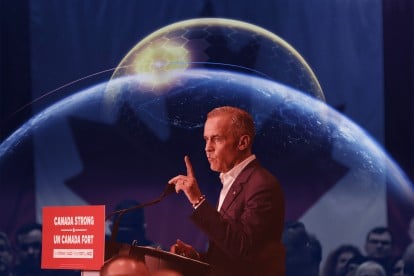
Cole: You mentioned Canada understanding the situation with the words and the posturing of Donald Trump. I just want to quickly share what Prime Minister Mark Carney has said. He came out at the onset of these attacks. He hasn’t said much since, but his statement said that “Iran’s nuclear program has long been a cause of grave concern and its missile attacks across Israel threaten regional peace.”
He went on to say, “obviously Canada reaffirms Israel’s right to defend itself and to ensure its security. We call on all parties to exercise maximum restraint and move towards a diplomatic resolution.”
Ziaee: And Desmond, he wrote this on the day of Israel’s attack on Iran while we were still counting bodies and assessing the damage.
The first words that came out of his mouth in response to that were that Iran is the cause of grave concern and what threatens regional peace and it’s Israel’s right that we defend.
Canada has historically been one of the most extreme defenders of Israel and this has fully been the case under Mark Carney as well.
We saw the same thing happen in the G7 meeting that happened earlier this week, where again, the so-called leaders gathered and, the most they could utter was, you know, some commitment to peace and security. And I quote “in this context, we affirm that Israel has a right to defend itself. We reiterate our support for the security of Israel. Iran is the principal source of regional instability and terror.”
The degree of impunity and license that countries like Canada are granting to Israel to carry out its genocidal mission in Gaza and its violence across the Middle East is staggering.
Canada just in the last year alone in 2024 exported $19 million worth of arms and military equipment to Israel. This despite the fact that now almost half of Canadians believe that Israel is committing a genocide in Gaza. This is a poll that just came out earlier this week. Half of Canadians/
But Carney and the Liberals not only have no regard for public opinion, they also have utter disregard for international law. None of these things matter.
Cole: You mentioned the statement coming out of the G7, which was held in Canada this week, Donya.
There was a lot of analysis going into it that this was going to kind of dominate the conversation.
It’s a private meeting, so it’s really hard to actually know what people talked about. But as this was all going on, Trump left early. He left to go back to the United States, presumably to huddle with his own people to decide whether or not he’s in or out of this conflict. At any time now we could presumably hear what he’s deciding to do.
Ziaee: He’s been, as we said, sending really mixed signals about the U.S. intention. He says one thing, his press secretary has to clean up the mess after him and then clarify what he actually meant. But we should remember, too, that Trump won his re-election with the promise not to drag America into another useless war.
His recent statements and hints on Iran are already causing major rifts within his base of support. We know that the United States would pay a heavy price if it gets dragged in. There could be loss of life for American soldiers.The thing that is guaranteed is there’s going to be skyrocketing oil prices and inflation in the United States. There are really no winners here as far as people are concerned.
Of course we know who the real winners are going to be. We know because we’ve seen previous attempts at regime change in places like Afghanistan, Iraq, and Libya. Those winners, we know who they are. We know that it’s a long list of American oil companies. It’s arms manufacturers, it’s private security firms, and of course, it’s American and Israeli influence in the region.
But for the Iranian people, the threat of a U.S. intervention brings the specter of regime change of the kind that they’ve already seen in the region.
We’d be talking either about a U.S. puppet in power—or if not an immediate replacement, then more likely, analysts are saying, regime collapse: with the U.S. and Israel doing everything they can to destroy the infrastructure of the state in order to leave a power vacuum and then reap the benefits from the chaos that’s going to follow from that.
Either way, the Iranian people would be talking about a possible disintegration of their country, a complete loss of control over resources like oil, lack of democratic process, and as we’ve seen in other regions, the rise of paramilitary groups.
Cole: I want to end back here in our country, in Canada. We know that there are mass mobilizations planned for this weekend, in part by the very large Iranian diaspora here in this country. Unions are mobilizing for demonstrations this weekend.
What do you see Donya as the demands for progressives in Canada right now who want to see this conflict come to an end?
Ziaee: The demand is quite simply for Canada to end its complicity in enabling Israel’s crimes and its unspeakable violence.
Canada has to unequivocally condemn Israel’s attacks on Iran and do everything it can to work towards an immediate ceasefire, and if the United States gets involved and tries to drag Canada into a war with Iran, we need our government to unequivocally say no.
We need to step up like we did in 2003 in those historic mobilizations to make it impossible for the government to join that war effort.
I remember as a teenager those massive anti-war demos in 2003. It was a formative political experience for me, for that 100,000 person strong protest to be the first protest I ever attended.
Those protests made it impossible for the Chretien government to join the war effort at that time.
Now, of course, the Liberals found other ways to quietly support the Americans in their war effort. But we need mobilization on that scale.
I’m also energized by all the mobilization that we’ve seen in the last 20 months in response to the genocide in Gaza, and we really can’t stop talking about Gaza. We have to keep talking about Palestine.
Just the other day, while all eyes were on Iran, the Israeli military killed 50 people in Gaza who were just waiting for aid trucks to arrive.
There’s a very good likelihood that Israel will try to use this escalation with Iran to distract from its crimes in Gaza, and the very modest gains that we have made and pushing our governments in the West to put pressure on Israel could get rolled back too.
Canada had just last week announced, for example, that it was putting sanctions in place against two far right Israeli ministers [Finance Minister Bezalel Smotrich and National Security Minister Itamar Ben-Gvir].
This was a very small step, but it was welcomed by pro-Palestinian solidarity organizations. Just two days after that announcement, when the Israeli attack on Iran started, we already heard Carney revert back to reiterating his support for Israel’s right to defend itself and so on.
We can’t let this happen. We have to keep up the pressure, we have to keep talking about Gaza, and we have to stop our government’s complicity in all of this.
Cole: I want to thank you for joining me today, Donya.
As we advocate for an end to these hostilities, we send our wishes for the safety of all of your family and loved ones in the region.
Ziaee: Thanks, Desmond. I appreciate that.

“It’s about getting to the bottom of things. It’s about unveiling who has the power and what they’re doing with that power.”
Linda McQuaig, journalist and author
As a non-profit, free from powerful corporate interests, we invest in investigations and uncover the cover-ups. Sustain our journalism for transformation.