We are now into week three of the public inquiry into the foreign interference scandal and already there have been no shortage of apparent bombshells. Presided over by Quebec appellate court judge Marie-Josée Hogue, the hearings in Ottawa have witnessed a parade of politicians and government bureaucrats offering up alarming testimony.
The inquiry’s focus is on whether foreign governments interfered in the 2019 and 2021 federal elections. Canada’s intelligence agencies, the Canadian Security Intelligence Service (CSIS) and Communications Security Establishment (CSE), say China, India, and other governments attempted to meddle in both.
For the Conservative Party, these claims have been the source of outrage, as they feel they were the target of the alleged meddling. Last week, former Conservative leader Erin O’Toole told the inquiry that foreign interference likely cost his party five to nine seats in 2021. “The small number of seats would not have impacted the minority government that Canada has right now, but the difference of two, three, five seats may have allowed me more of a moral justification to remain as leader,” he said.
At the root of the scandal is whether foreign interference had any real impact on the elections’ outcomes. On this matter, there were differences of opinions between some intelligence officials and their political overseers in Ottawa. Hogue’s final report, which won’t be completed until the end of the year, should finally put to rest who was correct.
But the inquiry itself clearly would not exist if not for a cascade of so-called scoops that emerged from Global News and The Globe and Mail, beginning in the fall of 2022 and continuing through the spring of last year—stories claiming that China has been interfering in Canada’s political system. These stories whipped Ottawa into a frenzy of recrimination and finger pointing for months and finally pressed Trudeau to appoint the public inquiry last September.
The controversy was clearly a gift for Conservative leader Pierre Poilievre and his party, who often twisted the allegations into blatant fabrications—such as claiming that China was responsible for Tory candidates losing seats during the last federal election and China helped Trudeau return to office.
There is indeed evidence China interferes in Canada—whether it’s intimidating the Chinese diaspora, laundering money, conducting espionage, or trying to steal industrial and government secrets. Yet other governments carry out similar activities in Canada.
But a closer examination of these media stories finds they contain glaring oversights and omissions, unjustifiable conclusions, issues often taken wildly out of context, and outright falsehoods.
“I didn’t get a sense from the media reporting either from Global News or The Globe and Mail that they frankly really understood the larger process through which intelligence worked, and they didn’t have much interest in trying to understand that,” says Wesley Wark, a former international relations scholar at the universities of Toronto and Ottawa who served two terms on the Prime Minister’s Advisory Council on National Security under Stephen Harper.
Last year, Wark did a deep dive into the media coverage of the foreign interference controversy, which he posted on Substack. “Ultimately, I was concerned about the political impact that the media reporting was having by generating a very polarized debate in parliament,” he explains. “I just thought it was an extraordinary chain reaction, where you went from leakers with unknown agendas to media reporting that was cherry picking the stories.”
A shady history of fear-mongering
One thing missing from the current media narrative is the fact that CSIS has made allegations about Chinese interference before—and leaked them to the press. Allegations that were later found to be exaggerated or non-existent.
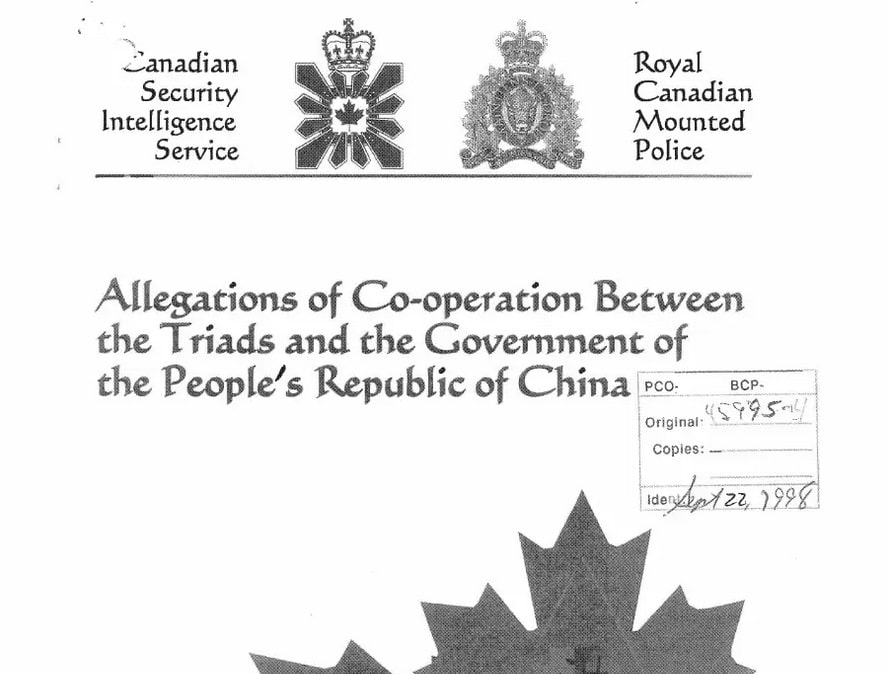
In 1995, CSIS and the RCMP embarked on a joint research project called Sidewinder to examine China’s influence in Canada’s political, corporate, media and cultural circles. “And they gathered their information and subsequently wrote a 23-page report setting out their findings,” says Andrew Mitrovica, who was working at The Globe and Mail as an investigative reporter at the time.
The Sidewinder report claimed that as many as 200 Canadian companies were under direct or indirect control of China, that many of the immigrants coming from China had ties to triads—Asian organized crime groups—and were engaged in stealing Canadian industrial and economic secrets for Beijing. It said China had infiltrated all levels of the business community and was even wielding influence in Ottawa—including financing the Liberals and Conservatives. And it named names. “The main thrust of Sidewinder was that Chinese influence campaigns were deeply embedded in Canadian society,” says Mitrovica.
But were the claims in Sidewinder actually true?
In 1999, The Globe and Mail was leaked a copy of Sidewinder, and Mitrovica and his colleague Jeff Sallot wrote front-page stories about its contents and efforts by CSIS to suppress the report. Consequently, the Security Intelligence Review Committee (SIRC), the body that oversees CSIS, investigated.
In their report, SIRC said they found no evidence of Chinese political interference, no threat as envisaged by Sidewinder, and the government was made aware when threats manifested. They also found dysfunction among the CSIS and RCMP researchers, differences of opinion over the validity of the evidence (with CSIS saying Sidewinder’s findings were “unsupported by facts”), and an earlier version of the report that was flawed.
“You know, for me, I think this is one of the fundamental differences between the way that Sallot and I approached our reporting about China and Sidewinder—we weren’t wedded to these reports,” says Mitrovica. “We weren’t married to Project Sidewinder. It wasn’t our role as reporters to defend Sidewinder. My own view of Sidewinder was that it was a reach.”
This lack of certitude over Sidewinder’s findings is not surprising. After all, CSIS is an intelligence agency—not an evidence-gathering organization like the RCMP. For law enforcement, their standard of proof is what would stand up in court. CSIS has a lower bar.
Intelligence can come from a variety of sources, including what people say or overhear— which can often be rumour, speculation or hearsay. “The CSIS Act is meant to collect, analyze and provide information to government,” says Huda Mukbil, who spent almost 16 years as an intelligence officer at CSIS. “And so CSIS doesn’t collect evidence. It collects information which it analyzes.”
Adding to the problem is that CSIS has a long history of suffering from institutional biases that likely impact its research. Many of its employees discover when it comes to issues of gender, nationality, sexuality and skin colour—CSIS discriminates. “I experienced it throughout my career,” says Mukbil, a Black Muslim woman. “The comments, the discrimination, not seeing people like me who are fully qualified to get into the organization.”
In 2017, Mukbil and four other intelligence officers sued CSIS for $35-million after suffering years of racial, sexual, homophobic and abusive harassment. The allegations in their statement of claim were shocking, leading to media headlines across the country. “There is very much a culture that’s very macho,” says Mukbil. “Like ‘we can say what we want to say’. You know, we don’t have to consider professionalism in the way that we conduct ourselves within the workplace.”
At the time, audits by the Canadian Human Rights Commission found no visible minorities or Indigenous people among CSIS’s managers, and only about one in six were women. Overall, less than 15 per cent of its staff were racialized people. In 2017, CSIS conducted an in-depth probe of its Toronto office and found a lack of diversity and an old boy’s toxic culture where sexist, racist and abusive language was commonplace. In 2020, David Vigneault, the current director of CSIS, admitted that “yes, systemic racism does exist here, and yes there is a level of harassment and fear of reprisal within the organization.”
CSIS quickly settled the employees’ lawsuit for an undisclosed sum, although the agency is currently engaged in litigation with another Muslim employee over new discrimination and harassment charges.
Why does this internal culture of racism at CSIS matter?
Mukbil points out that this internal hostility to racialized communities means there’s a shortage of Chinese experts. “There is definitely a lack of intelligence officers that can speak Mandarin,” relates Mukbil. “I can’t give you the numbers that would be classified, but it’s very low. Very, very low to the point that it would shock Canadians. So we don’t have a lot of analysts that really understand China in depth and have the linguistic skills to be able to go out in communities and recruit really good sources and have quality information. That’s a problem.”
CSIS’s—and Robert Fife’s—dubious track record
The evidence that CSIS makes mistakes based on poor information or racial bias is not difficult to find. Or that it has an ethically dubious track record.
CSIS has been caught spying on environmentalists, Indigenous people, social justice and peace groups and lawyers—with little or no justifiable cause. In 2016, it was discovered CSIS obtained the tax records of Canadians without obtaining federal warrants, and then lied about keeping the records after saying they’d deleted them. In 2020, a federal judge said CSIS had a cavalier approach to candor and the rule of law—after he discovered the agency had approved an illegal operation without consent and then used information based on this operation to get warrants without informing a judge of the illegality involved.
CSIS’s most glaring mistakes involved the rendition of Canadian citizens. After 9/11, the U.S. government set up secret prisons around the world where they brought suspected terrorists to torture and interrogate.
CSIS and RCMP got into the act, too. They adopted a form of rendition where they tipped off authoritarian regimes to arrest Canadians who were visiting those countries and have them interrogated and tortured. CSIS would sometimes even provide the torturers with questions. From 2001 until 2016, at least six Canadian citizens were arrested in foreign countries and tortured and beaten—sometimes for months.
The most famous case was Maher Arar, an engineer living in Ottawa. In September 2002, Arar was flying home, passing through New York, when the Americans detained him based on misinformation supplied by RCMP and CSIS. Arar had fallen under suspicion because he was spotted meeting a man by the name of Abdullah Almalki one day in Ottawa. Despite no evidence, the RCMP and CSIS were convinced Amalki was an al Qaeda sympathizer.
The Americans sent Arar to Jordan, and ultimately onto Syria. Arar was held for 10 months by Syrian military intelligence in a cell he described as being the size of a grave—a dark, wet, rat-infested chamber. Arar said he was beaten constantly and even whipped with an electrical cable. The physical attacks were later replaced with psychological torture. What’s more, CSIS visited with Syrian intelligence while Arar was incarcerated but did not seek his release. Arar was finally let go in October, 2003.
Yet, before and after his release, anonymous sources within the intelligence world selectively leaked damaging claims about him to certain journalists. Mukbil says these leaks were designed to keep Arar in Syria, or once he was released, undermine calls for an official inquiry.
One reporter who received and published erroneous information about Arar was Robert Fife. Nicknamed “Fife the Knife”, he’s been reporting from Ottawa since the late 1970s and has worked for the Canadian Press, National Post, CTV and CanWest Services. Fife has broken big stories involving the SNC-Lavalin and Senate spending affairs.
Back in 2003, Fife was bureau chief for CanWest and wrote numerous stories about the Arar affair. In July of that year, he wrote a front-page story published in the Ottawa Citizen that quoted an unnamed government official saying that Arar “is a very bad guy” who apparently received military training at an al-Qaeda base.
In December 2003, almost three months after Arar was released, Fife wrote another story that appeared in newspapers across Canada. Based on confidential intelligence sources, it said Canadian and American officials were “100 per cent” sure Arar had trained with al-Qaeda. It also quoted a “senior Canadian intelligence source” saying that “this guy is not a virgin…There is more than meets the eye here.” (The story did quote an Arar spokesperson saying there was an effort underway to smear him.)
The Arar Commission later found the information in Fife’s stories was not true and had a devastating impact on Arar. In the end, Arar was paid $10-million by the federal government. Three other Canadians who were victims of rendition—including Almalki—were paid another $31.3-million.
Today, Robert Fife is Ottawa bureau chief for The Globe and Mail. “Ironically, 20 years later, who’s one of the reporters who is publishing the stories from CSIS on China interference?” observes Mitrovica. “It’s Robert Fife. Why is he being leaked this information? If I were an editor at The Globe and Mail and understood Fife’s history with intelligence services, I would treat this cautiously to put it diplomatically. But that doesn’t seem to be the case here. Calling another human being a terrorist falsely—that’s a disqualifying offense as far as I’m concerned when it comes to reporting.”
The three journalistic amigos
Today, terrorism is less of a concern. Instead, it’s about whether governments like Russia and China interfere in the elections of other countries.
After Xi Jinping came to power in 2013, China began taking an increasingly belligerent approach with critics internally and abroad, and with other nations.
Part of this intimidation is done through the auspices of its United Front Work Department, which spies on and neutralizes critics of the regime inside the country and within the Chinese diaspora. Canada’s Chinese community has long complained about pro-Beijing forces intimidating people here who criticize China on human rights and democracy.

Another source of concern emerged on Canada’s west coast, where money has flowed from China into cities like Vancouver. Claims arose that some of the money was dirty cash and laundered in real estate and BC’s casinos by Chinese criminals—many with ties to China’s communist party. A reporter at the Vancouver Province and Sun, Sam Cooper, began covering this issue.
In 2018, Cooper moved to Global News, working out of its Ottawa bureau. Partially as a result of Cooper’s reporting, the BC government set up the Cullen Commission in 2019 which eventually concluded billions of dirty cash was indeed being laundered—and not enough was being done about it.
Cooper even wrote a book called “Wilful Blindness,” which laid out his case that Canada had become a critical money laundering hub for transnational drug dealers—some with ties to China’s communist party.
But Cooper’s journalism has been criticized. He’s currently facing at least nine libel lawsuits from individuals stemming from his China-related reporting, although none of these suits have been heard in court.
Ng Weng Hoong, a Chinese Canadian journalist in Vancouver, wrote a lengthy critique of Cooper’s book for the Georgia Straight newspaper. He felt that Cooper negatively characterized Chinese people, failed to mention Canada’s long history of Sinophobia, and made sweeping statements that were often unsubstantiated, noting some errors of fact. For instance, Hoong pointed out that Cooper claimed that a Chinese crime boss “was allowed to monopolize China’s oil trade with his access to the country’s military vessels and ports.”
Hoong said this was false. “No company has ever monopolized China’s oil trade. Given that oil is strategic to China’s national security, Beijing will never allow a single entity to dominate energy supply, especially one that was run by an out-of-control maverick entrepreneur turned criminal.”
But Cooper was not alone in taking an interest in China’s influence in Canada: two reporters at The Globe and Mail, Robert Fife and senior parliamentary reporter Steven Chase, were reporting on the topic too.
Cooper, Fife and Chase all appear to share the mindset that China has aggressively targeted Canada. They also have a track record of not being very critical of CSIS, and don’t seem to care about its long history of racism and internal dysfunction. So it was no surprise that people either within CSIS or civil servants in the federal bureaucracy with access to CSIS material—who felt the government was not doing enough about the perceived China threat—sought out these reporters to leak material to.
The unravelling of the interference story
The first story suggesting China was interfering in our elections appeared on November 7, 2022, produced by Cooper for Global News.
The story said confidential sources claimed China had filtered $250,000 to 11 candidates during the 2019 federal election—both Liberals and Tories—and that Trudeau had been briefed about this clandestine network. The story, based on CSIS information, said the money flowed through intermediaries and China had even placed agents in MPs offices.
This story triggered an outcry in Ottawa.
Yet there’s no evidence Global’s claims are true. “The story on the 2019 (election) that Sam Cooper advanced tended to fluctuate,” says Wesley Wark. “Sometimes he said, well, there was a network, but there may not have been any money. The story went back and forth.”
Indeed, the $250,000 claim was refuted by multiple sources. In December of 2022, The Globe and Mail ran a story saying their sources said there was no evidence of covert funding from China, and none of the 11 candidates had been compromised. Last year, the National Security and Intelligence advisor, Jody Thomas, testified before a parliamentary committee saying there was no evidence backing the funding claim.
David Johnston, the former Governor General who was appointed special rapporteur by Trudeau last year to get to the bottom of the foreign interference matter, found the same thing, and said there was no proof the candidates were acting in concert with each other. He also found Trudeau was never briefed on the matter. “It was never very clear to me how this alleged network was supposed to operate and how money was meant to flow,” says Wark. “All of those kinds of details never made its way into the media reporting from Global.”
In December 2022, Cooper ran a story that admitted Trudeau had not been briefed and China hadn’t earmarked any money for the 2019 election.
Then in February 2023, Cooper wrote a new story that repeated similar claims: it said that his confidential sources informed him that Trudeau had been warned more than a year prior to the 2019 election that Chinese agents were assisting Canadian candidates running for office—and once again claimed China was funding an interference network.
Cooper based this on a four-page intelligence memo. He also quoted an anonymous source claiming there was ample evidence placed in front of the Liberal Party of such Chinese interference – yet the Liberals had essentially done nothing.
Yet Johnston found Cooper based his story on an early draft of the memo. The later draft sent to Trudeau did not contain the claim China was assisting candidates, nor suggested any recommendations. In short, Cooper’s story suggested inaction by the Liberals, when the memo seen by Trudeau did not say China was helping candidates—therefore no action was required.
By then The Globe and Mail was wading into the fray: it was being fed intelligence documents by a national security official within the government. In March of last year, they ran an op-ed article written by this source who said: “I endeavored, alone and with others, to raise concerns about this threat directly to those in a position to hold our top officials to account. Regrettably, those individuals were unable to do so.”
In mid-February, 2023, The Globe and Mail ran its most sensational story headlined “CSIS documents reveal Chinese strategy to influence Canada’s 2021 election.” Based on secret CSIS documents, the story said China had an orchestrated machine operating in Canada that had two primary aims—to ensure a minority Liberal government was returned in 2021 and to defeat certain Tory candidates. The story claimed China had employed a “sophisticated strategy” and one of the MPs they’d targeted to take down was Kenny Chiu, a Tory who lost his seat in BC.
Yet when Johnston looked at the intelligence behind the Globe’s story he found there were unconfirmed indications a very small number of Chinese diplomats expressed a preference for the Liberals over the Tories during the 2021 election. But he found no evidence that China had a plan to orchestrate a Liberal minority government that year. Overall, he found China preferred neither party—merely candidates who were sympathetic to them.
Regarding Kenny Chiu, Johnston discovered there was online misinformation about him— but it couldn’t be traced to a state-sponsored source. The Globe and Mail also reported that sympathetic donors were encouraged to provide campaign contributions to candidates favored by China. Johnston found CSIS was aware of this allegation but had no intelligence showing it was actually occurring.
Wark points out that good intelligence agencies know the difference between intent and capabilities: just because someone says they would like to do something doesn’t mean they have the capacity to carry it out. “It very much struck me that the Globe was not willing or able to make a distinction between expressions of intent and real capabilities,” he remarks. “You know, the evidentiary base was not clear about forms of interference with nomination processes and so on and the role of proxies. It was all pretty murky.”
Here is another curious thing about this and other Globe and Mail stories: it’s not certain if Fife and Chase had in their possession intelligence reports it was basing their scoops on. Instead, the paper repeatedly said they “viewed” these reports.
“I asked The Globe and Mail senior editors what does this mean?” recalls Wark. “I got no answer, of course. And I have to assume that what it means is that The Globe and Mail was not allowed by its source to retain any of the documents…They could view them for how long? We don’t know to what extent they were allowed to make notes and take away notes on the documents they viewed. In other words, a lot of questions about how they were able to extract stories from documents that they viewed.”
China’s ‘man in Canada’?
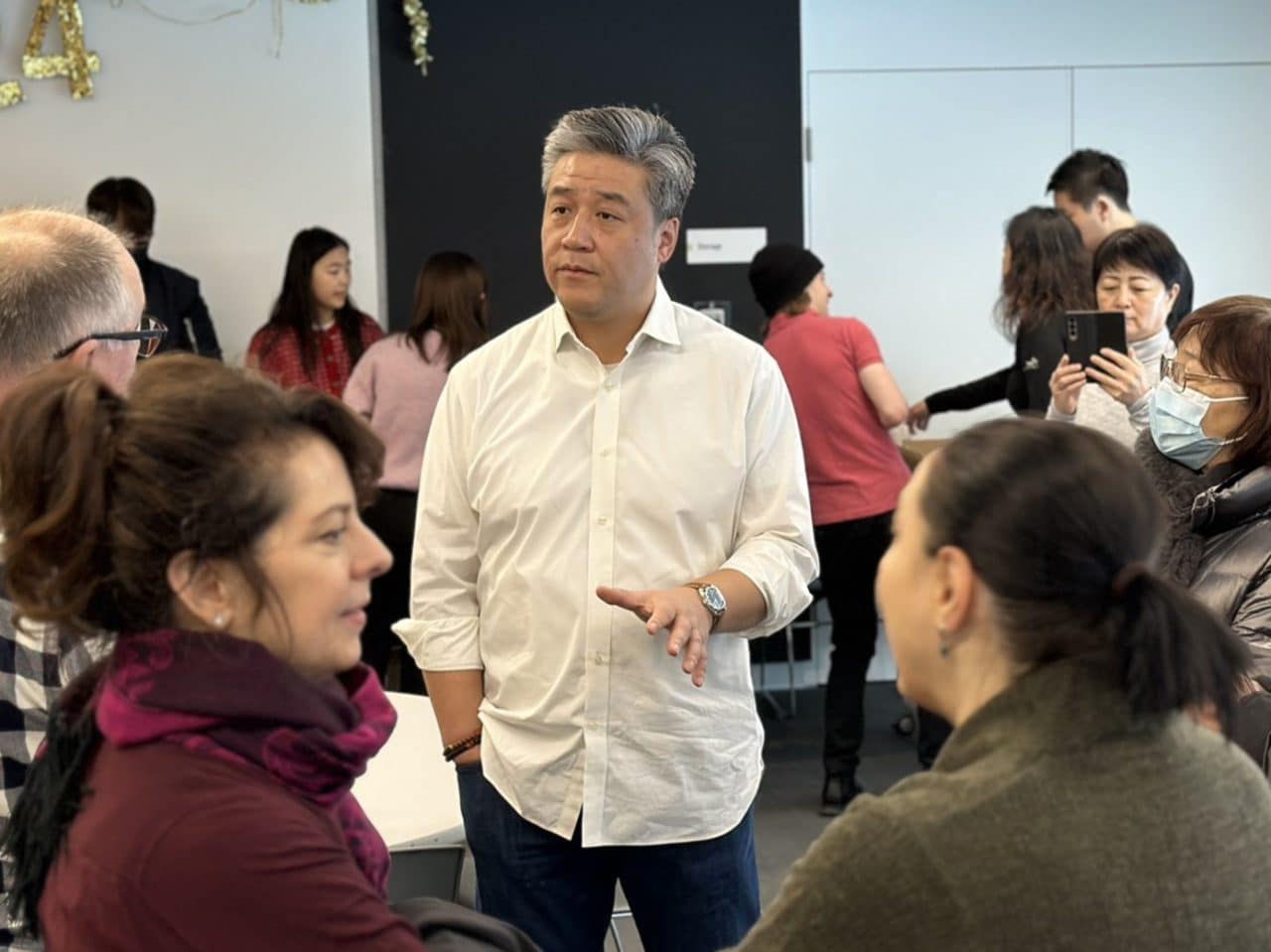
But arguably the most sensational stories surrounded those of Liberal MP Han Dong.
The mauling of his reputation got underway on February 24 of last year when Global News aired an “exclusive” story claiming he was part of a Chinese foreign interference network.
Produced by Sam Cooper, and based on confidential sources and intelligence documents he had “reviewed,” Global alleged Dong was basically an agent working for China—or “a witting affiliate”—whose 2019 nomination in the Ontario riding of Don Valley North was impacted by Chinese operatives. The story said CSIS had had Dong under surveillance since June, 2019—and that Prime Minister Justin Trudeau’s office knew of Dong’s involvement in an interference network, yet seemed unconcerned.
The story even alleged that Dong travelled to New York state and met with a senior official working for China’s United Front Work Department.
Then a month later, Global ran another “exclusive” story that was even more damning: again, based on confidential and intelligence sources, it claimed that in a conversation between Dong and China’s Toronto consul general in February, 2021, the MP urged the Chinese diplomat not to release Michael Kovrig and Michael Spavor—the so-called “two Michaels”—because doing so might help the opposition Conservatives. Kovrig and Spavor had been arrested in China in December of 2018 after Canada had detained Huawei’s chief financial officer Meng Wanzhou.
Dong, who denied these allegations, resigned from the Liberal caucus and promptly sued Global for $15-million.
To this day, no credible evidence has emerged that indicates any of Global’s claims Dong was working for China are true.
As part of his review, David Johnston looked at some of the intelligence behind Global’s stories about Dong. He found that while there were some “irregularities” with Dong’s nomination race, there was no evidence the MP was aware of them or about any involvement by the Chinese consulate in his nomination. Johnston said the story of Dong encouraging the consul general to keep the two Michaels in prison was “false”.
Moreover, in his lawsuit against Global, Dong said he went to New York not to meet with a Chinese agent but to attend a Buddhist conference (Dong is Buddhist).
Tellingly, in Global’s statement of defence in response to Dong’s lawsuit, the network said their stories on Dong “are not presented as factual findings” but as allegations. In other words, if the stories are not true—it’s not Global’s fault, but their sources.
Wark says the story about Dong urging China’s Toronto consul general to continue detaining the two Michaels made little sense. After all, the release of the two Michaels would clearly have benefited the Liberals and Trudeau instead of the Tories—as it would have given Trudeau a diplomatic coup without having to hand over the Huawei executive. “And in Sam Cooper’s reporting, again, we see this indication that this is an allegation for which he doesn’t have corroborating evidence,” observes Wark.
Yet The Globe and Mail was also running stories with unsubstantiated allegations.
In March, 2023, they printed a piece claiming that, based on CSIS documents, China’s Vancouver consul general interfered in the city’s municipal politics, including grooming politicians to run in the city election held the previous year. What was missing from the story was any evidence this had actually occurred.
In that election, the incumbent Kennedy Stewart—who’s been critical of China—lost in a landslide to a Chinese Canadian candidate, Ken Sim, by 36,000 votes. But Stewart was unpopular because of his failure to deal with Vancouver’s growing homelessness, housing, violent crime and toxic drug supply crises. The Globe stories failed to mention any of this, though, while Sim angrily denied he had received help from China.
Then last May, the Globe reported that a secret CSIS report said Chinese officials had targeted Tory MP Michael Chong. The story said a Chinese diplomat in Toronto was involved. Chong has been critical of China’s human rights records, in particular their treatment of the Uighurs.
This story made little sense either. For one thing, Chong had been completely unaware he was of any interest to China, having only been informed he was a target by The Globe and Mail reporters themselves just before publishing their story.
The claim about Chong originated in a 2021 CSIS report. Yet there was no evidence Chong or his family had been harassed by Chinese officials. Last August, Global Affairs Canada said there were some negative stories about Chong on WeChat, the Chinese social networking app—some of which appeared to be coming from state-sponsored sources. When David Johnston examined the intelligence, he found that there were indications Chinese officials contemplated action directed at Chong and family members in China but there was no proof they’d taken steps to threaten anyone.
These distinctions didn’t matter, though: Poilievre and Chong made political hay for days that the Tory MP was a victim of Chinese bullying and the Liberals had done nothing to stop it.
Furthermore, it’s common for countries like China to carry out research on politicians in foreign countries who they think will be players in future governments—which would be clearly true in Chong’s case if the Tories win power in the next federal election.
Overall, Wark found that the total specific intelligence reports that The Globe and Mail referenced in their reporting came to about seven or eight.
“The concern is if you have access to seven or eight intelligence documents, you have access to seven or eight out of how many thousands?” he said. “In other words, you only have a tiny slice of the picture…It’s a tiny handful of the overall production of the intelligence community…We’ve not seen, for example, any reports out of the RCMP, which is a principal player in national security and intelligence. We haven’t seen any leaked reports from the Communications Security Establishment. So we certainly don’t have a waterfront picture.”
In June of last year, Sam Cooper suddenly left Global News. He’s since set up a Substack page to continue his work. The timing of his departure was curious in that he quit an established mainstream media outlet at the peak of his success as a reporter. Which is not the usual career move of any investigative journalist these days.
In the end, the thrust of the Global News and The Globe and Mail’s stories has been that the Liberals benefited during the last two elections from China’s meddling at the expense of the Conservatives. So far there’s no compelling evidence this is true.
Parts of this story originally appeared in a Bruce Livesey podcast for Canadaland.

“It’s about getting to the bottom of things. It’s about unveiling who has the power and what they’re doing with that power.”
Linda McQuaig, journalist and author
As a non-profit, free from powerful corporate interests, we invest in investigations and uncover the cover-ups. Sustain our journalism for transformation.
Racism | Canada’s China panic is an omen of dangerous Cold War politics
Surveillance | ‘Terrifying’: Canada’s police going all in on ‘pre-crime’ intervention

Socialism | Is the enemy of my enemy my friend?

2 comments
Comments are closed.
Bruce Livesey: You make a compelling rebuke of the kind of feeble security intelligence Canada has. I love your presentation and style of writing too. It’s to the point and no nonsense. You either have the evidence or you don’t. This is the kind of reporting Canadians should be expecting from our MSM but don’t get. For the past 11 years I have read the reporting from the MSM with scepticism and outright rejection. I don’t listen to or read the MSM to get the facts but to observe the propaganda it serves to the public. Keep up the good work.
The Breach is one of a few very good newscasters. In these hard times for newsmedia, I wish these quality media could consolidate, making it easier to donate to.