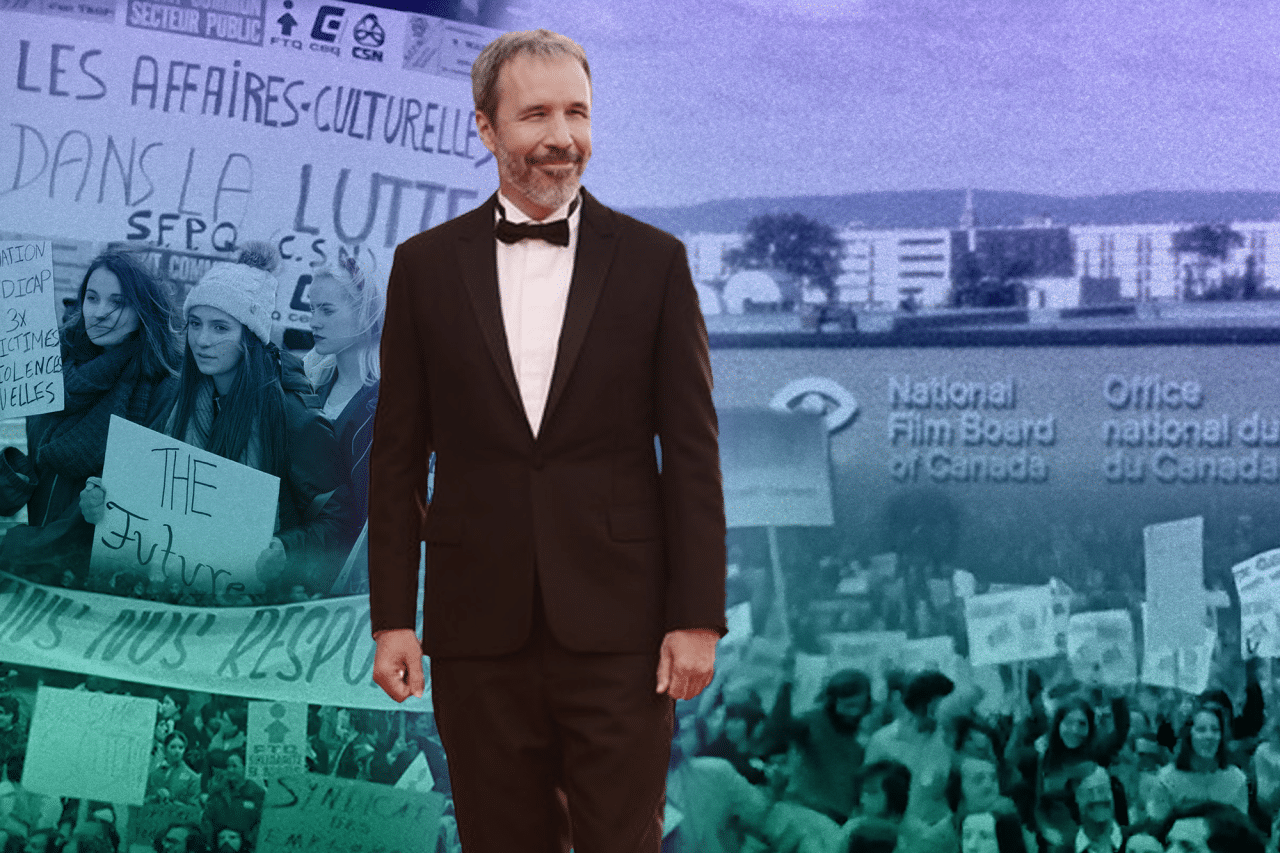
In a few decades, Canadian director Denis Villeneuve’s career has taken him from a tiny riverside village in Quebec to the pinnacle of the global film industry. His Dune Part 2 opened with $178 million USD in ticket sales, prompting Forbes to call it the “first blockbuster” of 2024.
Observers frequently cite Villeneuve’s raw talent, eye for stunning visuals, and rich, emotional scriptwriting as the causes of his success.
But you don’t need to deny his personal accomplishments to see that his trajectory is in significant part due to something else: the policies won by social movements in Quebec and Canada. At each step of Villeneuve’s journey from Gentilly, QC to red carpets in New York and Paris, social democratic institutions supported him on the path.
Feminist, labour movements helped make Villeneuve’s early career
Villeneuve’s interest in filmmaking began in high school, when friends gave him the nickname “Spielberg” in honour of his early cinematic efforts. He attended a CEGEP—Quebec’s tuition-free college system created in the wake of the Quiet Revolution—before moving to Montreal to study film. The Université du Quebec à Montréal had been founded in the year he was born—the result of the same sweeping education reforms that created the CEGEPs—paving the way for hundreds of thousands of working-class Francophones to attend university. Villeneuve followed in their footsteps.
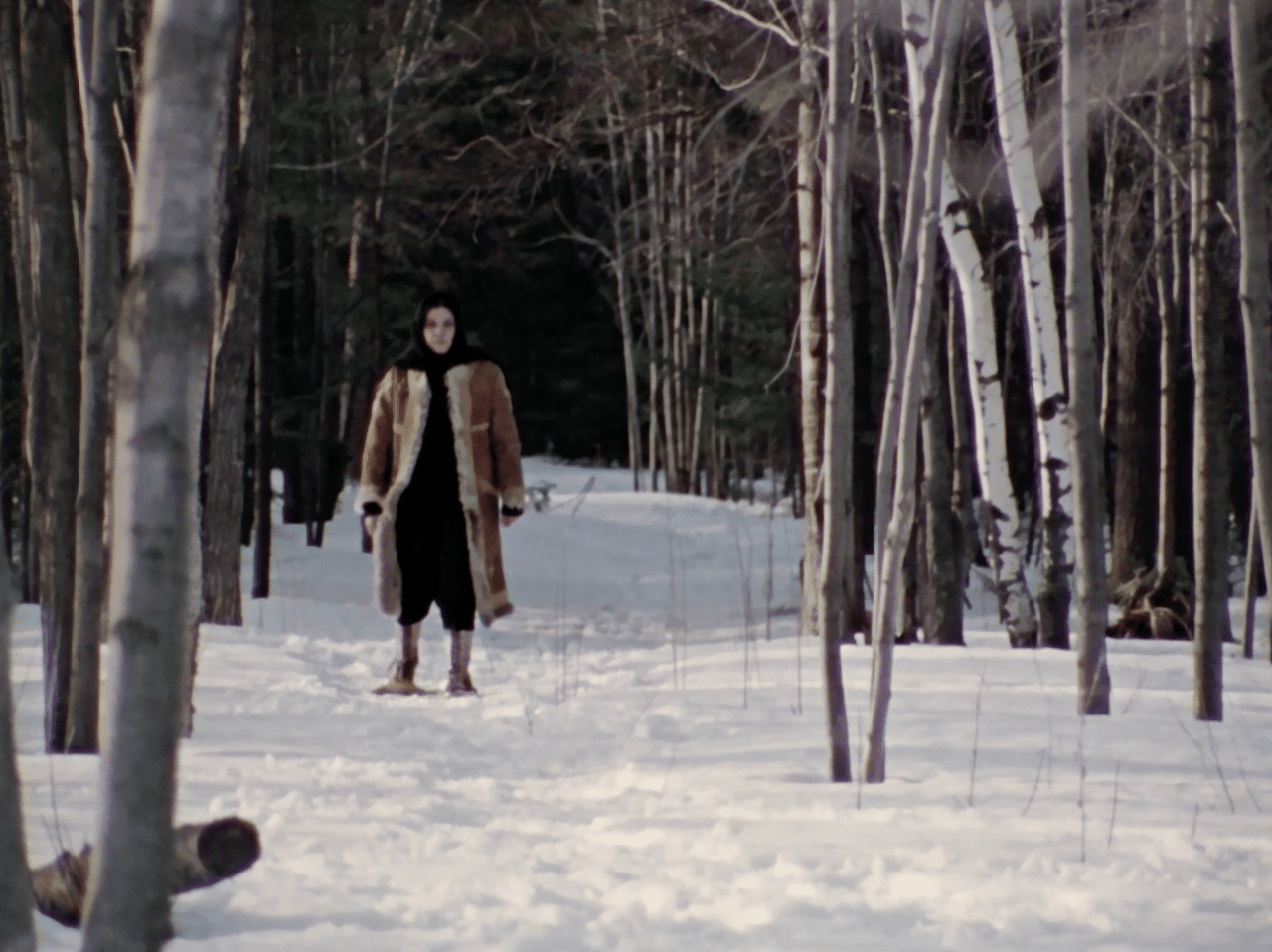
Villeneuve continued his entry into the film world by winning a contest sponsored by the publicly-funded broadcaster Radio-Canada. He quickly gained experience working in the world of the National Film Board (NFB), a sprawling publicly-funded film production agency that would finance the 25 year-old VIlleneuve’s short film REW-FFWD in 1994. Both institutions were founded in the 1930s, but expanded their activities under the NDP-backed Liberal minority government of Lester Pearson in the 1960s, against a backdrop of post-war labour militancy and cultural upheaval.
The NFB had been instrumental in establishing a vibrant film culture in Canada and particularly Quebec. It produced films by directors like Anne Claire Poirier, who explored working class experiences and introduced feminist themes to a broad audience, and opened the way for a slew of feminist filmmakers in the 1980s. Indigenous documentarian Alanis Obomsawin, another NFB collaborator, released her influential Kanehsatake: 270 Years of Resistance a year before Villeneuve made his directorial debut there, but had already been at the NFB for two decades when Villeneuve was making his first film.
Villeneuve cites his mother and grandmother’s feminism as a key influence, but this influence was doubtless reinforced by the institutions and publicly-funded filmmaking culture of early 1990s Montreal.
His first feature film showed Villeneuve’s early interest in placing complex female characters at the center of his films. The influence of Quebec’s feminist movement became even more evident in the director’s 2009 and 2010 features, which put him on the map as an international talent. Polytechnique was an unflinching treatment of the 1989 Montreal Massacre, where a shooter targeted women engineering students, and Incendies was a heart-piercing story of war and sexual violence based on the play by Wajdi Mouawad.
Both films were financed by Telefilm, a production fund established under the same NDP-backed Pearson government that, even today, makes dozens of films possible every year. SODEC, Quebec’s provincial equivalent, was founded by Quebec’s social democratic Parti Quebecois government in the 1990s.
By contrast, consider Greta Gerwig and Christopher Nolan, the two auteur filmmakers whose 2023 entries rival Villeneuve at the top of the box office charts. Both went to private schools and name-brand universities.
Nolan’s first film was funded by…Christopher Nolan. In the United Kingdom where Nolan grew up, the near-disappearance of film actors from the working class is a topic of lively discussion. A broader UK study published in 2022 found that the number of creative workers from working class backgrounds has dropped by half. Similar numbers are harder to come by in Canada, but a parallel decline in working class people in the arts is unmistakable.
In Villeneuve’s Montreal of the 1990s, artists could afford to experiment
Other factors have contributed to supporting the development of filmmakers like Villeneuve, including a premium placed on maintaining and developing Quebec culture that has largely transcended partisan divisions and changes in government.
Villeneuve’s career developed at a propitious moment when institutions like the NFB still maintained some of their vitality and influence from the 1970s, and barriers to entry were much lower. Since Villeneuve’s era, the NFB’s budget has been repeatedly slashed by Liberal and Conservative governments. (Its entire annual budget today fits comfortably into the amount that Dune Part 2 earned in the first weekend at the box office in the US alone.)
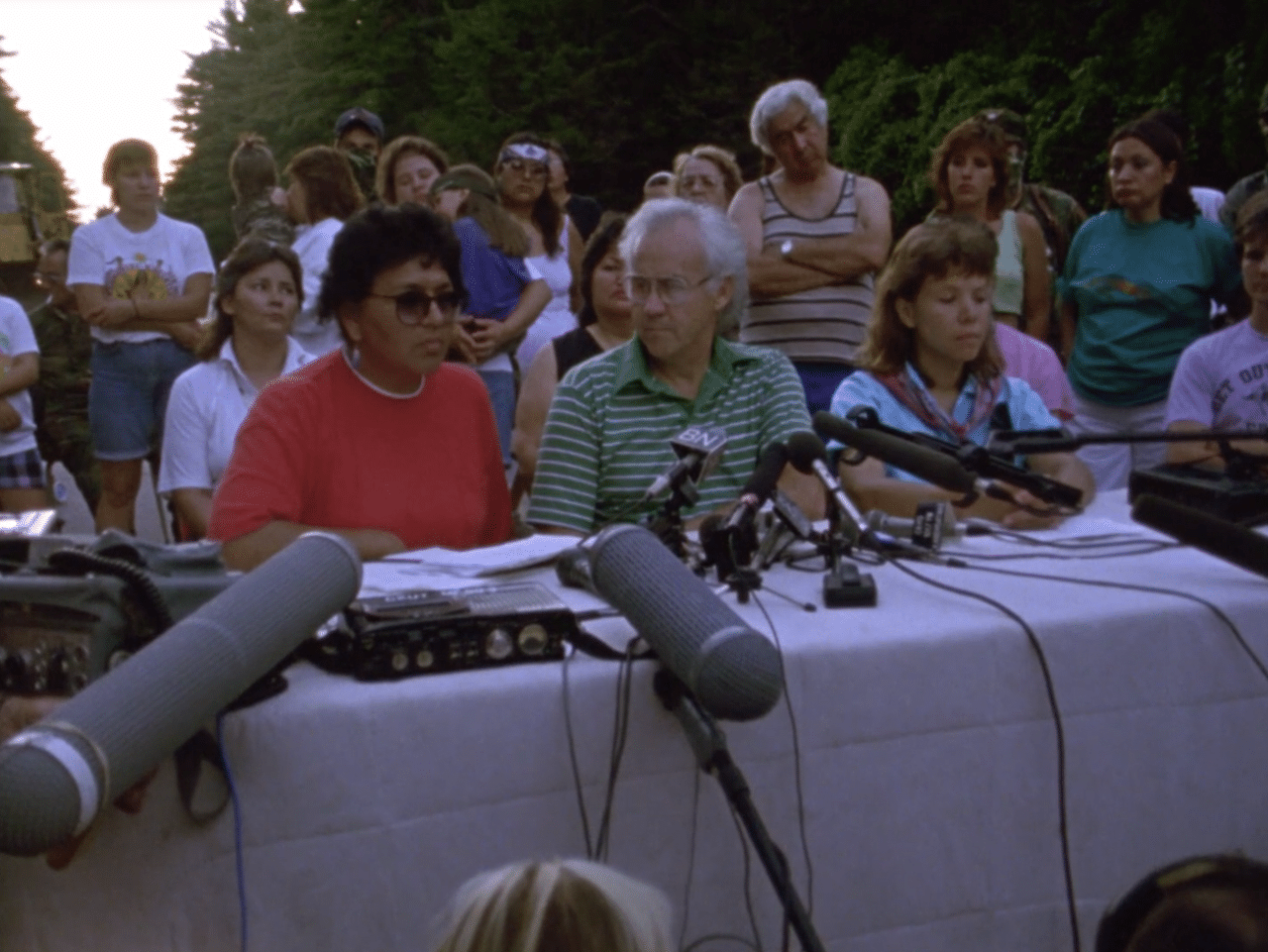
Meanwhile, since Telefilm backed Incendies and Polytechnique, its own budget has been cut by tens of millions of dollars. Quebec, however, remains a relative exception on the financing front, standing out for its devotion to mid-career support for directors, and recent years have seen modest annual increases to government funding for SODEC.
Just as important as funding for the development of filmmakers, is the absence of costs. Montreal’s affordability in the 1990s was the stuff of legend, thanks to a combination of post-referendum capital flight and rent controls created in the wake of a 1972 general strike by militant labour unions.
Greta Gerwig’s acting debut LOL was made with director Joe Swanberg on a budget of $3,000. Filmmakers early in their careers often need other sources of income, but low costs can also be a support for those lean first projects. With rent in Montreal nearly three times as high as it was just a decade ago, the prospects are more grim for the slow cultivation of talent that made a Denis Villeneuve possible.
Today, the consequences of three decades of cuts and cost-of-living increases are evident. While some emphasis has been placed on supporting emerging BIPOC filmmakers, the overall picture depicts continuously shrinking funding at the federal level. The NFB, once a catalyst of movements and social discussions, is now perceived by at least some in the industry as a top-heavy organization that is shedding talent and concentrating power among bureaucrats.
Some of the conditions that helped develop a career like Denis Villeneuve’s are easier to implement than others. But his example shows us that at their best, movements and culture feed each other and strengthen the struggles they share.

When I went to journalism school 10 years ago, my parents thought that they would eventually read my articles in The Montreal Gazette. Today, that newspaper is a husk of its former self. But I get to explain that I’m working towards critical, independent, and sustainable journalism.
Want to be a part of the future of journalism? Support our work with a monthly contribution. Sign up here.
– Amanda Siino, Development Director, The Breach