As Donald Trump threatens Canada with an economic war, a new consensus is quickly emerging among the country’s political, business, and media class: we must tear down so-called barriers to trade across provinces.
Interprovincial trade barriers, we’re told, “handcuff” the movement of goods, labour, and investment across Canada—so much so that it is supposedly much easier to do business across international borders than inside our own country.
Internal Trade Minister Anita Anand claims lowering these barriers would reduce prices by an incredible 15 per cent and add $200 billion to Canada’s GDP.
And Conservative Party leader Pierre Poilievre has echoed the same numbers in a recent video, insisting Canada could be its own best trading partner.
With all this cheerleading, it’s no wonder 95 per cent of Canadians asked in a recent poll said that they want these trade barriers eliminated—despite likely never even having heard of them before.
But if the promises sound too good to be true, it’s because they are.
Interprovincial trade is healthy and growing. There are no customs agents collecting fees at provincial boundaries.
Policy barriers to selling Canadian goods and services across the country are so few that you can list them on a paper napkin.
Yet corporate lobbyists and right-wing think tanks have been working hard to convince Canadians otherwise. They’re taking advantage of the crisis generated by Trump to push their long-standing agenda, repackaging their self-serving proposals as integral to the national interest.
And those eye-popping numbers? They come from reports funded by the very think tanks pushing this narrative.
What these corporate-backed groups really mean when they talk about removing internal trade barriers is dismantling regulations that protect workers, consumers, the environment, and nascent industries.
They tout “cutting red tape” and “streamlining government processes” like resource project approvals as simple “no-cost” solutions to the Trump tariff threat.
But there are costs—and they will be borne by workers, the public, and the environment while any economic gains from deregulation will flow directly into the pockets of corporate giants, both Canadian and American.
The federal government, in a panic and desperate to seem in control amidst the chaos unleashed by Trump, is latching onto their idea.
Misleading numbers offering easy solutions
Leading the charge against so-called interprovincial trade barriers has been the Macdonald-Laurier Institute–a right-wing outfit backed by the Atlas Network, which funds a global web of libertarian and ultraconservative groups.
The Institute’s founder, Brian Lee Crowley, who has spent his life attacking public health care, routinely calls for an “economic charter of rights”—a federal guarantee that no government rules would restrict the free movement of goods, services, labour, and capital, with clear legal options for individual citizens to challenge such policies.
(Crowley also once floated a plan to merge parts of Eastern Canada and the U.S. into a low-regulation free-trade zone called “Atlantica.”)
The astounding $200-billion figure cited by Anand and Poilievre comes directly from a study funded by the same organization.
In the report, economist Trevor Tombe estimates that eliminating interprovincial barriers would boost Canada’s gross domestic product by as much as 7.9 per cent, bringing Canadians thousands of dollars per person per year.

But the numbers are speculative at best, misleading at worst.
Studies like these are impossible to prove or disprove in the real world. Tombe himself admits it’s difficult to say whether a company’s decision to choose one place over another is affected by policy-related costs (like regulatory differences, for example) or other factors like geography.
Just today, Statistics Canada revealed that transportation costs and distance are still the top barriers to internal trade.
Big, promising numbers are useful tools in pushing politicians to promote the illusion of easy solutions—and they’re appealing to a public desperate for answers. But they mask the real costs: a regulatory race to the bottom that benefits corporations at the expense of the people.
Deregulation as ‘mutual recognition’
Business lobbyists and right-wing think tanks have been railing against provincial regulations for decades—labelling environmental protections, food safety inspections, and professional licensing requirements as “non-tariff barriers” to trade.
But to call such essential protections “barriers” fundamentally misunderstands their purpose.
Preventing companies from cutting corners, busting unions, polluting the environment, or bringing in cheap labour isn’t about distorting the market—it’s about setting basic rules to protect workers, communities, and the planet from capitalist exploitation.
What’s more, there is little evidence these regulations are stifling trade and investment between provinces.
Banks and telecoms companies operate nationwide, offering the same services in all provinces. You can buy Canadian-made Fruit Loops cereal at Canadian-owned Loblaws or Sobeys brand grocery stores everywhere. Coffee shops like Tim Horton’s clearly have no trouble running franchises across a dozen different political jurisdictions.
This isn’t about making trade easier. It’s about gutting protections for workers and the environment.

One of the key demands from the business lobby, recently echoed by Anand as a top policy pursuit, is broad “mutual recognition” of regulations between provinces—respecting the rules in place in other jurisdictions.
It might sound harmless, but what it amounts to is moving toward the lowest standards across the country.
Rather than enforce their own more protective rules, provinces might have to accept weaker rules from others.
Take truck driver training. It took nearly seven years after the tragic Humboldt Broncos crash for provinces to adopt minimum entry-level training requirements for heavy truck drivers.
Mutual recognition could undo that kind of harmonization.
In several Western provinces, mutual recognition is also being pushed as a way to make it harder to block pipelines and environmentally hazardous mining projects—giving fossil fuel interests more power over local opposition.
When it comes to booze, mutual recognition could come at great cost to both provincial revenues and public health.
While Canada’s patchwork of provincial liquor monopolies actually do hinder interprovincial business, they do so with reason. By keeping alcohol prices higher, they not only boost government revenues but also curb heavy drinking.
Libertarian groups in Canada have repeatedly tried to convince the Supreme Court that the right of B.C wineries or Quebec brewers to sell across provinces should trump the responsibility to regulate the impact of alcohol on public health. They’ve failed every time.
As a compromise, provincial governments are making it easier for individuals to order wine from out of province and easing personal use exemption limits.
The case for a national free market in booze is simply not there.
Building up, not tearing down
Instead of gutting protections, Canada should focus on smart industrial strategy—a pro-worker, pro-environment approach to increasing interprovincial trade.
When it comes to supporting labour mobility, we already have solutions available like the Red Seal program, which helps skilled tradespeople work across provinces. We should expand programs like this to build minimum requirements in hazardous professions like trucking.
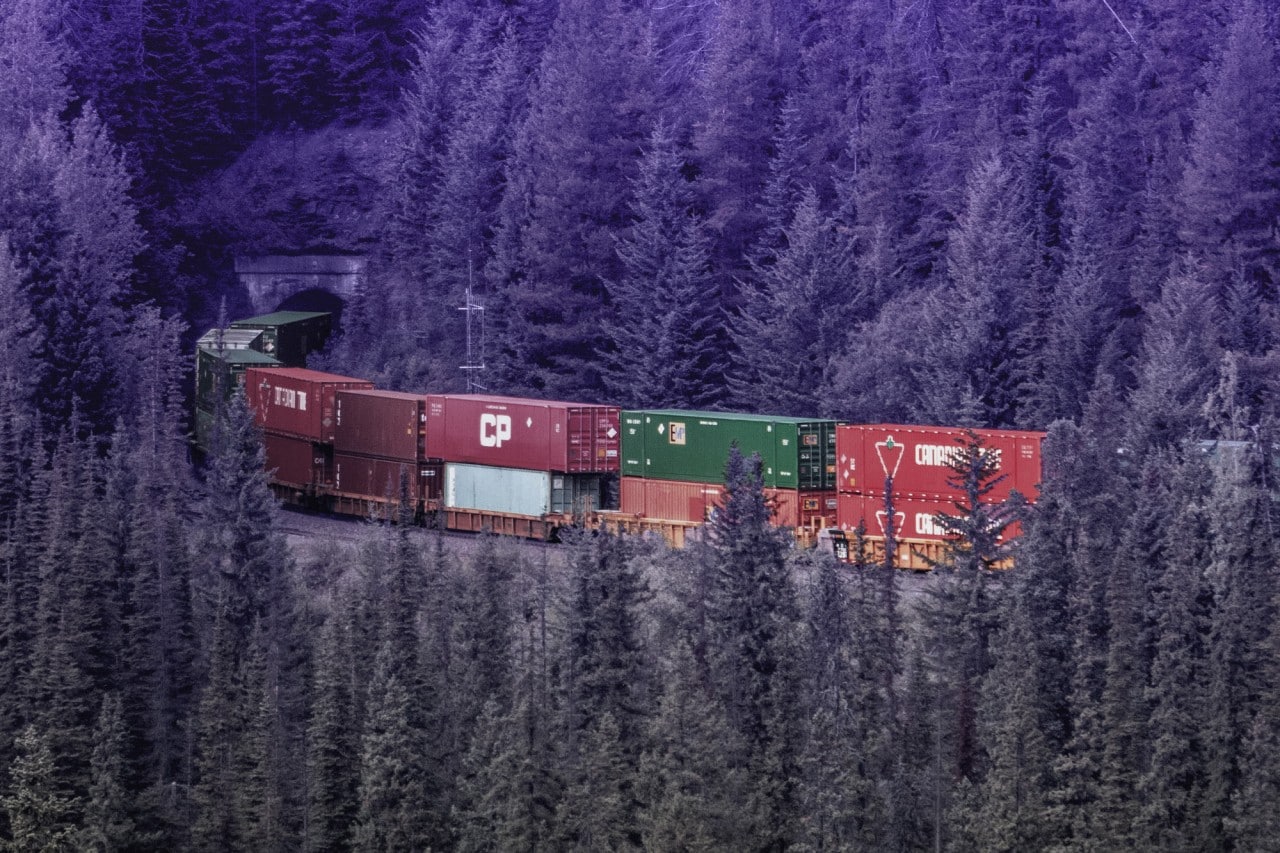
We also need better east-west trade infrastructure. Stronger rail, roads, and electrical transmission lines would make it easier for companies to ship across Canada. Ironically, Trump’s tariffs might push more Canadian companies to trade within the country, making this investment in our infrastructure even more necessary.
East-west infrastructure could also connect with ports to help diversify exports away from the United States.

We can use this opportunity to make large-scale investments in green energy generation and transmission and modernizing our telecommunications network to bring uniform, top-quality service to communities in all parts of Canada.
Government contracts with Elon Musk-backed Starlink should be cancelled so that Canadian public and private sector firms can do the job and connect remote and rural communities to the internet.
We also have a golden opportunity to expand public investments and employment in industries that serve Canadians. We should be investing in affordable housing construction, modular home manufacturing, and expanding high-quality care.
If U.S. steel and aluminum tariffs hit, Canadian steel mills in particular would be at serious risk. Instead of waiting for the impact to hit, we should be making plans now to use our own steel for projects that benefit people—like building affordable housing, roads, and public transit. By lowering the cost of living in Canada, we also lower the cost of doing business.
And while there is a growing national chorus to “Buy Canadian,” for that to be feasible we need to be making more goods and services in Canada.
That means fostering and scaling up local industries and services as well as the care economy—in all parts of Canada, not just in central Canada. Every region will be affected by U.S. tariffs and will need to benefit from investment programs and job creation efforts.
A self-serving fixation
In a much-loved Simpsons episode, Mr. Burns is coaching an all-star baseball team and badgers baseball legend Don Mattingly to shave his sideburns—even though he doesn’t have any. Mattingly shaves higher and higher to satisfy his coach’s delusion. In the end, frustrated, he quits.
Canada is having its own sideburn moment over interprovincial trade.
Overheated rhetoric about imaginary barriers will not help us meet the existential threat of an autocratic U.S. administration. It will not get resource projects up and running faster or ensure there are global markets for Canada’s energy products.
Like Mattingly in The Simpsons, we should walk away from this fool’s errand.
In the weeks, months, and years ahead, governments will need more—not less—leeway to preserve and expand manufacturing capacity and good jobs.
This ought to be the fixation, not chasing the fantasy of frictionless trade.

When I went to journalism school 10 years ago, my parents thought that they would eventually read my articles in The Montreal Gazette. Today, that newspaper is a husk of its former self. But I get to explain that I’m working towards critical, independent, and sustainable journalism.
Want to be a part of the future of journalism? Support our work with a monthly contribution. Sign up here.
– Amanda Siino, Development Director, The Breach
Corporate Power | Canada’s CEOs want to cash in on Trump’s tariff threats

Neoliberalism | Ontario for sale: how Doug Ford is dismantling the province

Foreign Policy | Trump’s tariff tantrum against Canada explained
9 comments
Comments are closed.

As we develop increased interprovincial trade it will be important to aim for the highest common denominator, not the lowest common denominator. To d that, the people of Canada must demand access to information snd make educated decisions – not social media based decisions and not decisions based on any one source.Left-wing sources are just as prone to hyperbole as right-wing sources.
The article about interprovincial trade is so misleading. You say it’s important to fight alcohol abuse, protect the environment and safeguard against lower safety standards. There is zero reason why this is true. And can provinces agree on standards for safety, workers standards, and environmental protection? Of course they can. And you advocate for better trade infrastructure, manufacturing, construction, etc. Can these priorities not coexist? Of course they can. I am very much a lefty. Never have nor will vote conservative. But your writing pushes a bizarre and uncooperative agenda. And you just lost a new subscriber.
Not all that convincing an argument. All polkitical parties are advocating reducing interprovincial barriers and on jobs that hurts workers too especially in areas like health, education and construction. Reecognizing other provinces qualifications doesn’t drop everyone to the lowest common denominator, it could raise qualifications in some regions by virtue of incoming skilled workers. This is too kneejerk a reaction. However, if the author is correct that the numbers on the benefit of interprovincial trade come exclusively from the MacDonald-Laurier Institute then it needs to be verified by other economic sources.
Keep in mind that “deregulation” means the working class will be the ones to lose out. How so? By having your provincial labour regulations removed in the name of saving costs. This will be an open door to trash safety regulations, work week requirements such as 40 hrs and then time and a half pay rates, holiday pay, retirement funds, sick leave etc! Expect none of this to be revealed if Pierre or any other party leader is questioned on the topic. I have experienced these deregulations first hand, in the aviation industry when Brian Mulroney and Ronald Reagan deregulated the aviation workplace. It set the work environment on its head and to this day it has not recovered.
Is it possible for you to actually describe some or all of these interprovincial trade barriers?
You say they are few so it shouldn’t take much time or space. I’d appreciate it.
“Rather than enforce their own more protective rules, provinces might have to accept weaker rules from others.” This is akin to what happens every time we enter into another ‘free’ trade agreement. There’s always a move towards the lowest common denominator.
The last thing we need is to make it easier to build fossil fuel infrastructure. We are already experiencing the disaster effects of climate change. We can’t afford more fossil infrastructure.
Provincial trade barriers in Canada are costing us. And it is not right wing or corporate misinformation. A 2019 IMF study founds that the barriers are costing the equivalent of a 21% tarriff on goods. The barriers also cost Canada 4% of GDP. To sell goods in other provinces requires a series of federal inspections and applications, in spite of already being licensed by a provincial board. It is just too costly. A 2024 Queens University study founds that provincial trade barriers add 8% to 15% to the cost of goods. There are 600 provincial bodies regulating goods and services. Food inspections vary between provinces. Milk, chicken, eggs and cheese must be inspected federally to be sold in other provinces. Then those goods must be approved by the marketing boards in the other province. The trucking industry faces barriers between provinces. Safety standards, weight allowances and what goods can be carried by certain trucks vary. Permits can be difficult to obtain, holding up projects for days or weeks. Very costly. Forked River Brewing Company in London, Ont. can ship beer to Japan but not to another province. In Canada they must sell their beer to a government agency in the other province. Trade barriers must go.
Ya I felt like this article was lacking in citations. The only metric on interprovincial trade barriers that was backed by a source was that “transportation costs and distance are still the top barriers to internal trade.”