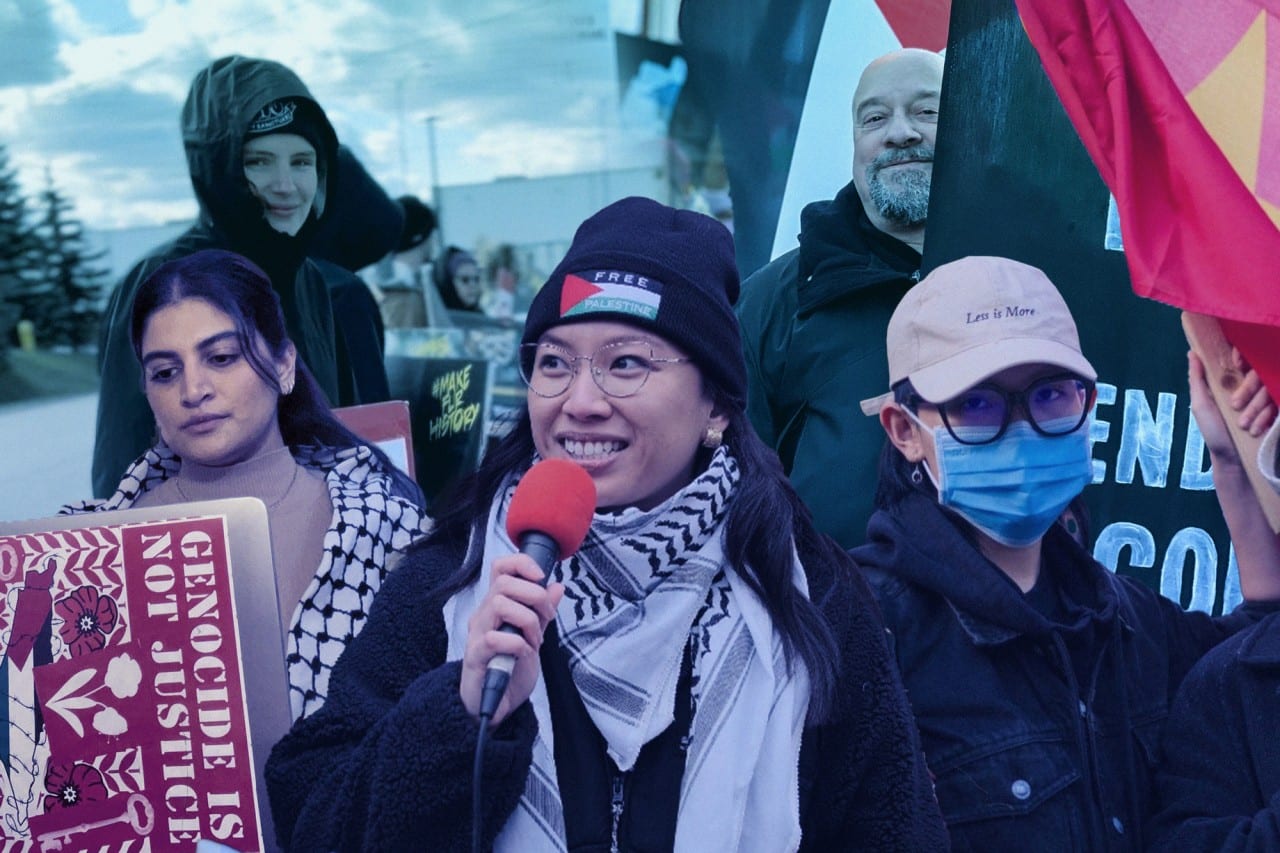
David Kahane spent decades hand-wringing alone about the situation in Palestinian territories occupied by Israel.
Kahane is Jewish. The 61-year-old Edmonton political science professor was raised in an environment where the pro-Israel perspective was deeply entrenched, but he had long harboured strong opinions about Israel’s apartheid regime in Gaza.
“To have grown up in my generation of Jewish people was to have Israel playing a really central place in the story of your Judaism and the story of what it is to be Jewish,” Kahane said.
When Israel began its assault on Gaza in October, Kahane felt something inside him shift and realized he was no longer content with standing idly by. A couple of days later, he received an invitation to turn his rage and frustration into action.
“A neighbour who I have political conversations with just said, ‘Some people are organizing an occupation at [Liberal Minister Randy] Boissonnault’s office, are you interested?’”
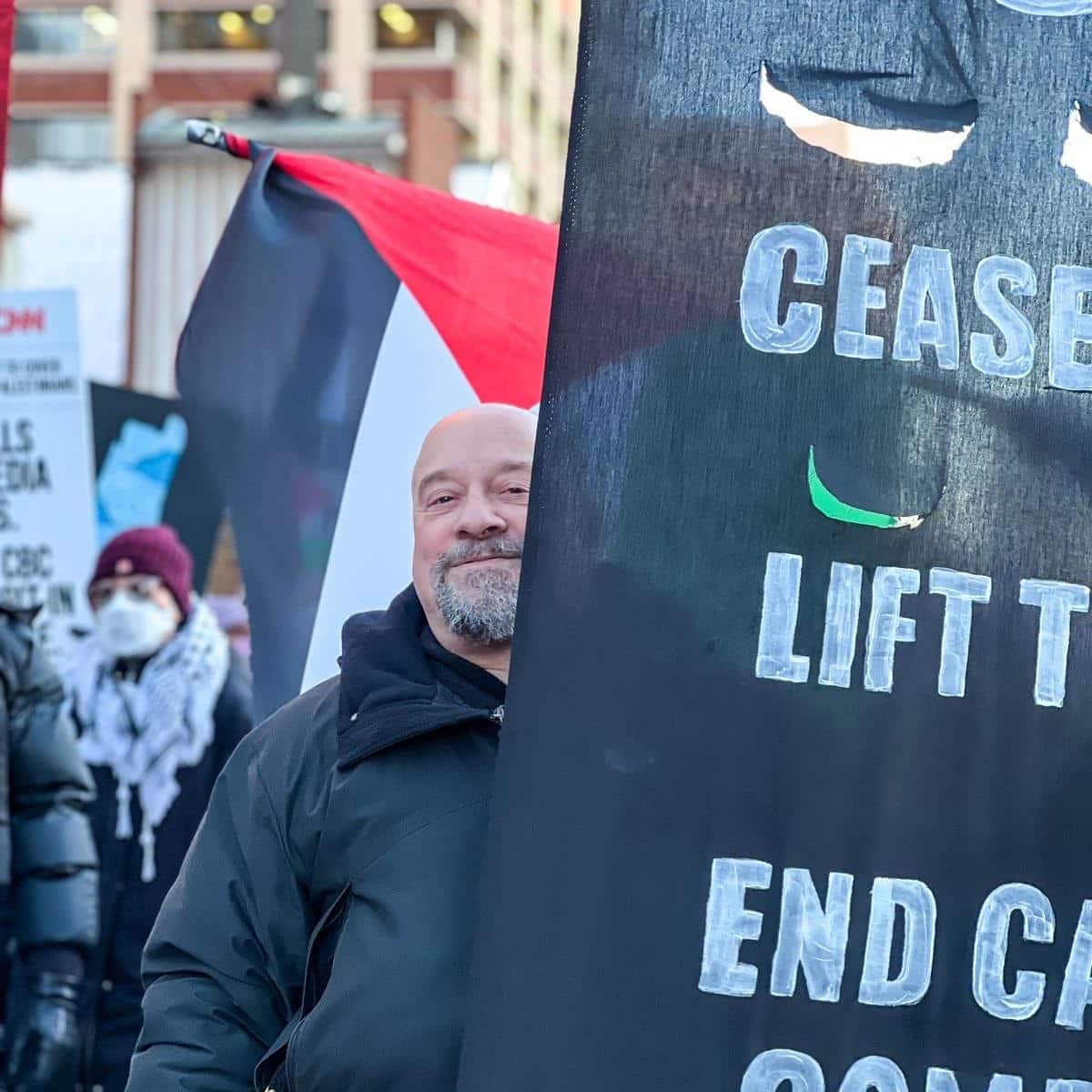
After that action, Kahane become an active member of Independent Jewish Voices – Edmonton, attending events and protests.
And it didn’t stop there. Kahane said he’s now more willing to engage with other movements than he was four months ago. Recently, he stood in solidarity with unhoused Indigenous community members when Edmonton police officers violently cleared their encampments.
“Extend lots of invitations,” Kahane said his advice is to other organizers. “You don’t really know what little side conversation is going to be that person’s entry point into something that could really transform their political vocabulary and their political capacity.”
Kahane is right: it really does take person-to-person interactions to build a social movement.
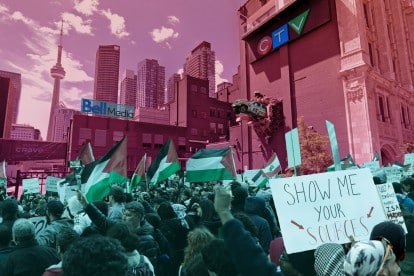
Since Israel’s assault began, the Palestine solidarity movement has seen a groundswell in Canada, as well as around the world.
From Victoria to Halifax, thousands have joined rallies, protests, and direct actions in support of a ceasefire, divestment from businesses that support the Israeli military and state, and an end to Israeli apartheid.
The rallies are among some of the largest anti-war rallies in Canadian history, with a march on Ottawa with more than 50,000 participants in late November. Independent Jewish Voices (IJV), a Jewish Canadian organization that advocates for justice and peace in Israel-Palestine, saw its membership grow from around 1,000 to 1,500 members since October, a spokesperson told The Breach.
From 3 organizers to 60,000 protesters in Montreal
Another organizing group, the Palestinian- and Arab-led Palestinian Youth Movement (PYM), has also seen huge growth. Reem Said, one of the founding organizers with PYM Montreal, said the chapter has grown from a small group of three to a core group of 30 organizers as well as over 50 new volunteers.
“We’ve seen a surge in this moment of interest in joining PYM, not just in Montreal, but across the organization.”
Said said that calls for mobilization, which once drew a couple of hundred participants prior to October 2023, have steadily increased, with thousands of people showing up to protests every weekend. At the height of the action in Montreal, PYM says they saw more than 60,000 march on Nov. 9.
In the Toronto area, 12 neighbourhood groups organize weekly actions and phone zaps through WhatsApp and Instagram. One of the groups, Davenport for Ceasefire, has about 400 members, according to organizer Justine Abigail Yu.
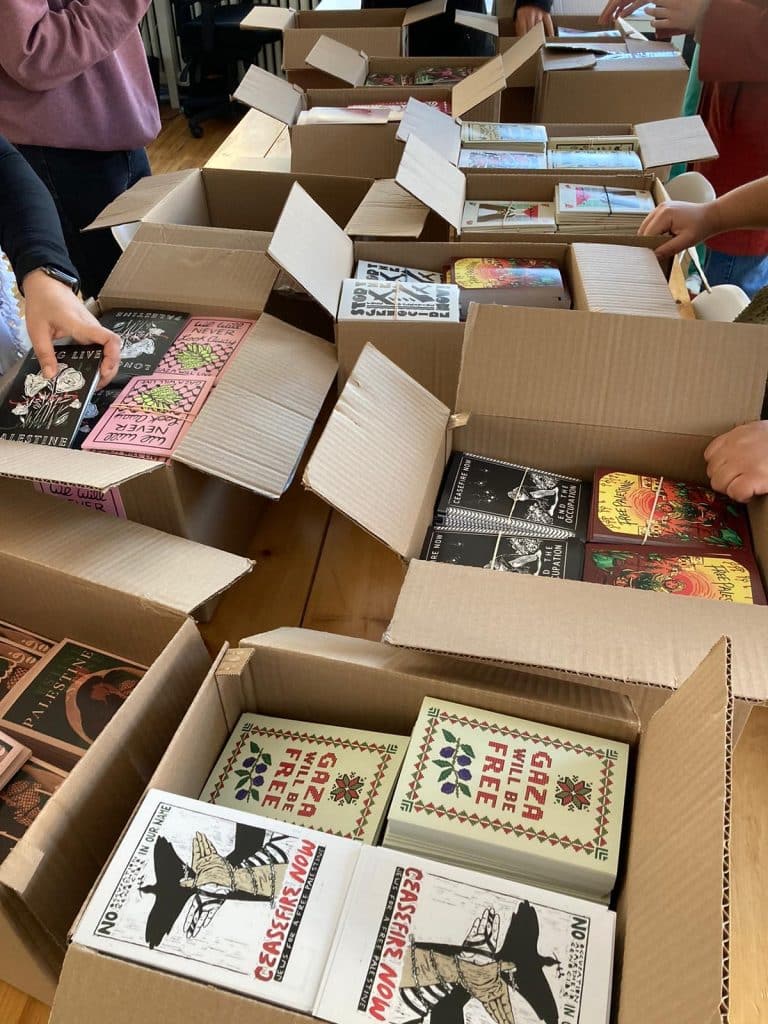
The group was created after a disappointing meeting with the area’s Liberal MP Julie Dzerowicz, Yu said.
Dzerowicz called two online town halls in late November to respond to constituents who’d expressed outrage with the Liberal government’s unconditional support of the Israeli government and its refusal to call for a ceasefire.
“I was completely disgusted with the lack of information and action that she shared in that meeting,” Yu said.
Shortly after the meeting, Yu received a message from another constituent who had seen her there and recognized her from Instagram. A few attendees had taken it upon themselves to write down the names of their neighbours and invite them to organize in a WhatsApp group.
“They did a little creeping online—and thankfully so, because we all connected,” Yu said.
For Yu and countless others, this is the first time they have organized or stood in solidarity with Palestine. Yet, regardless of background, Canadians have found that their concerns and passions for other social movements, such as climate justice, racial justice, and abolition, go hand in hand with their concern for the people of Gaza.
The Breach spoke with activists and organizers across the country to understand how this moment has changed their lives and why they believe in a Palestine free from Israeli occupation.
Tayyaba Farooq, 30, behavioural therapist, independent organizer, Saskatoon
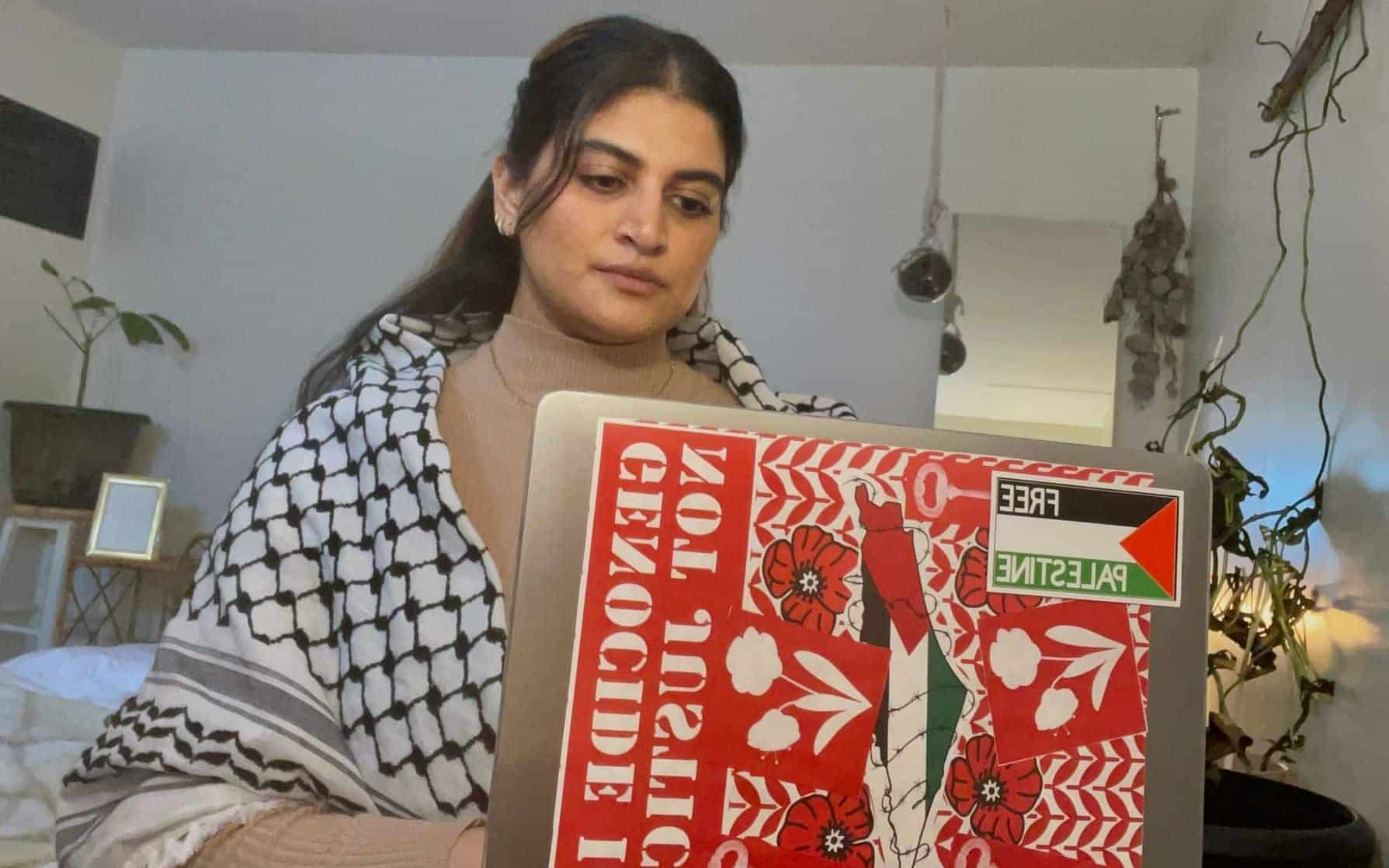
“I started with one poster in front of the police station, way back in October…I tried reaching out to a lot of people, but I guess everybody was super hesitant or scared. Within a week or two from when I started, other people started coming forward and organizing. Since then, we’ve been doing something every weekend.
“It feels like all the things that Muslims have been just screaming into the void for the past few decades are finally being heard and they’re coming to surface. There’s no beating around the bush anymore.”
Noémi Rondeau, 30, social worker, Chinatown Youth Committee, Montreal
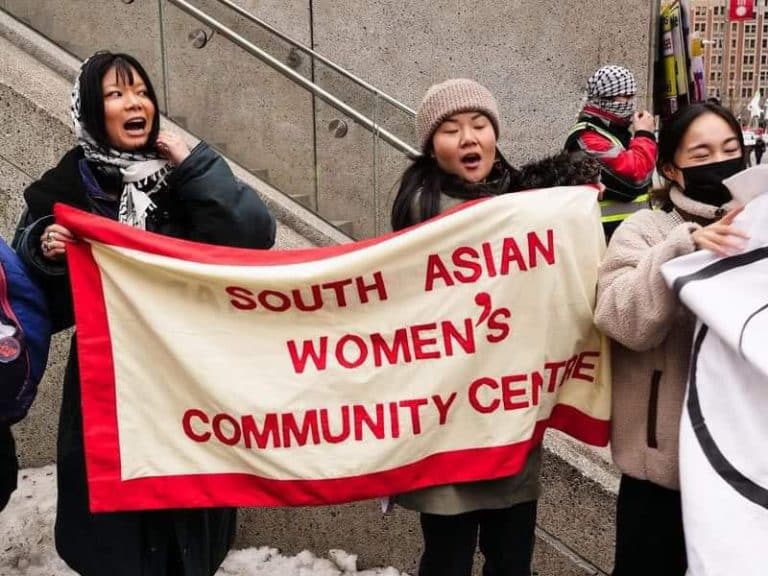
“I went to a protest at the beginning of November, and I started sharing posts that I was seeing on Instagram. I started reposting educational posts, and there were people on my Instagram who started speaking to me. They were telling me that they were going to protests so I started going with them, and I met other people. The [first] protest was really a turning point for me. I was feeling all the energy of the people there and I just found it touching, the solidarity among people and the power that it has.
“Caring for Palestine is caring for yourself. It’s to care for someone who you could have crossed on the sidewalk. [The Palestinians being killed by Israel] could have been your mom. They could have been your dad. They could have been your child. I just feel like if you don’t care about what’s going on in Palestine, like there’s a part of—this is going to be strong, but I’m gonna say it—there’s a part of you that is dead inside.”
Youssef Baati, 25, student, Go Gauche climate and social justice group, Montreal
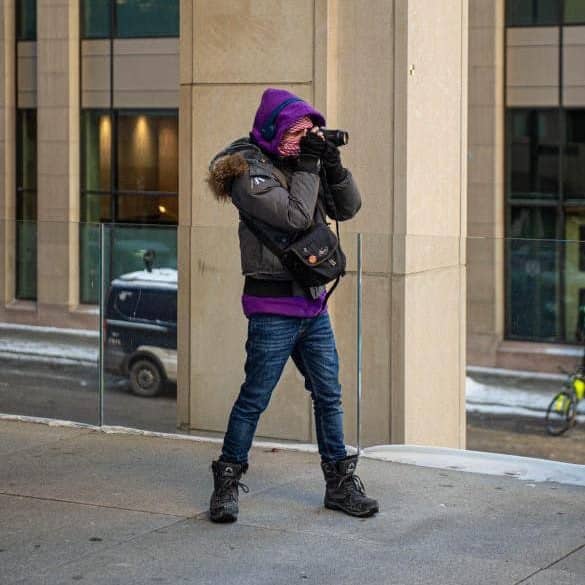
“I have other Muslim friends who don’t go to protests. I think it’s often because there is that feeling that nothing is gonna happen, there’s some kind of numbed despair.
“For that, my best argument is how dynamic the movement is right now. Because you have people who—independently through interpersonal networks—organized targeted actions. In November and December, railroads were blocked, bridges were blocked, many things happened.
“The fact is that it kind of works—if not to change the positions of the government, at least it works to, for example, jam their phone lines so that they cannot operate while ignoring us. The change is in the way our officials speak. I think they feel it, too. They feel the climate. They feel tense when they go to speak at fundraising events. And when finally someone stands up and is like, ‘Free Palestine,’ it turns out that, yes there are protesters here. So that’s something we can be proud of.”
Zoe Newman, 53, professor, Jews Say No to Genocide, Toronto

“Something just clicked or fell into place and I was able to see the connection between abolitionist arguments about policing and incarceration, and the ways in which we’ve been sold a story about policing as something that keeps us safe, but that actually just commits us to violence against whatever designated group.
“I suddenly was able to understand something that’s so clear to me: the lie of policing, of keeping us safe, and how Israel was sold to people as a way of being safe. That kind of lie of a place is built on settler colonialism, and it requires constant violence against Palestinians.”
Giang Pham, 20, student, Pan Asian Collective, Montreal
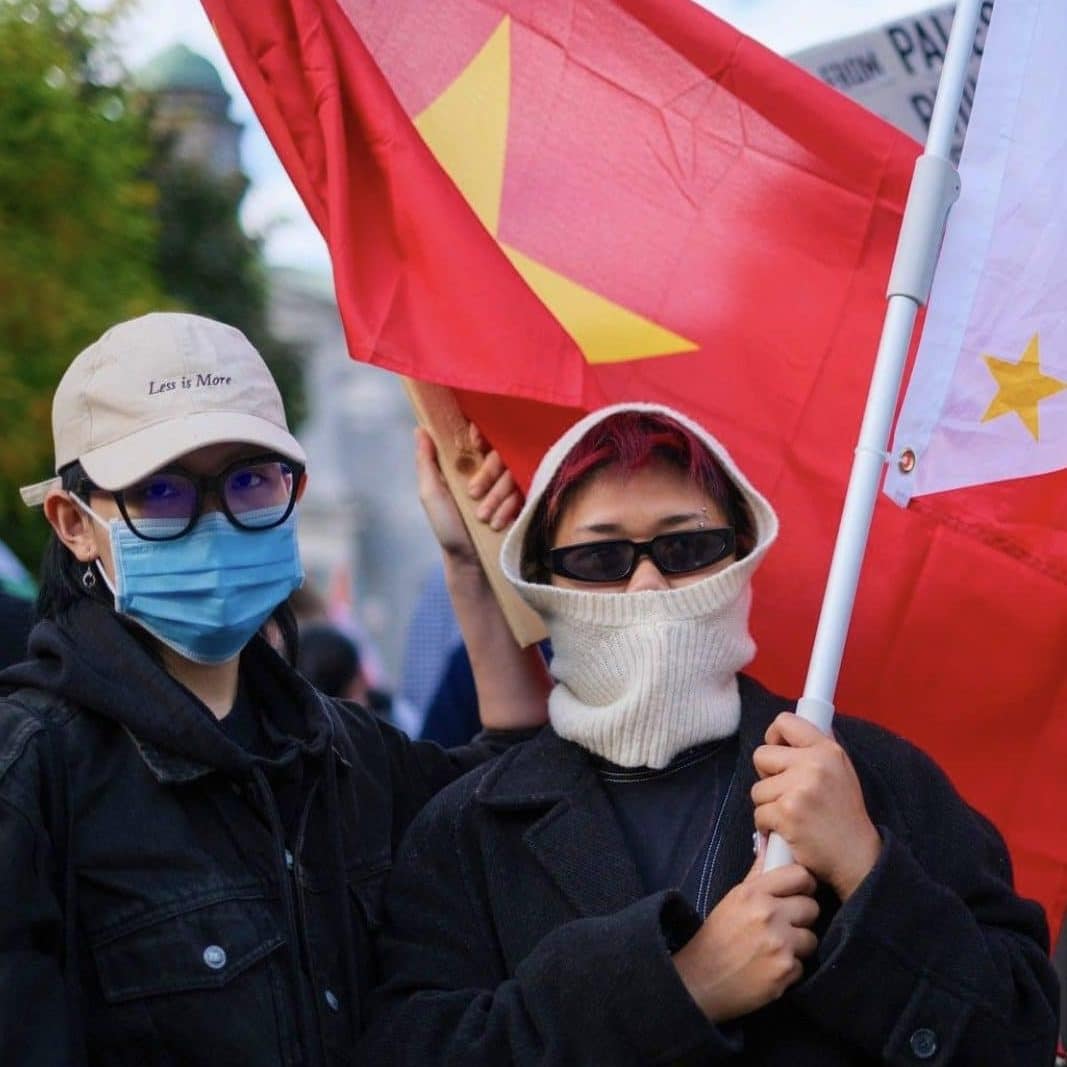
“I was doing research about the Vietnam War because I’m from Vietnam. Being [in Canada] and being back home, I hear two different sides of the story. Usually, what people think it was, here in Canada is the usual belief, because the Western influence over the world is obviously greater than Vietnam’s influence on the world.
“So, I started doing more research into what happened in the past with Palestine. It gave me a gateway to understand myself, and also how the world works on a bigger spectrum. Because the way that it’s turning out right now, it’s very similar to how it started out with a lot of different assaults on different countries, including mine back in the day.”
Andrea Baker, 24, student, Stand Up Guelph, Guelph
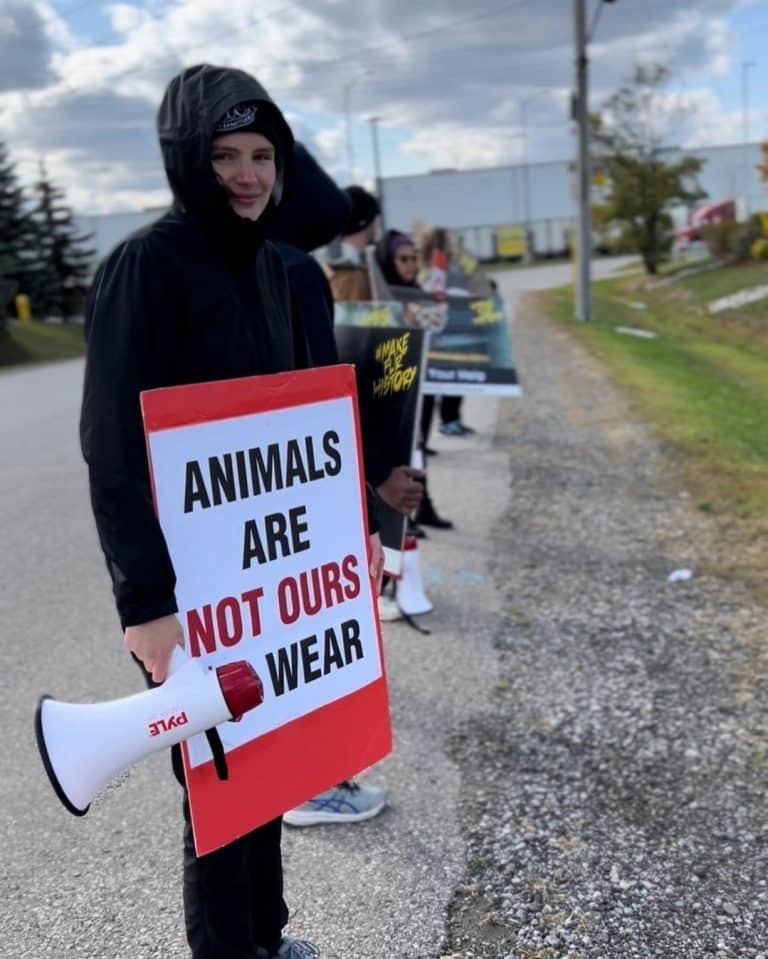
“My first introductions to the topic of Palestine were pretty Zionist. I had seen a panel on intersectionality with Jewish people, but it was largely about how the Free Palestine movement can be anti-semitic. And from there, I even introduced myself to more Zionism. I followed Zionist accounts on Instagram. I didn’t really know that talking about Israel [critically] would also be considered anti-semitism.
“I saw a video on social media of someone speaking into the camera. They were saying, ‘I’m a student, I was putting these stickers up around campus that said [‘Boycott Israeli Apartheid’]. They put a few up around and were [told to leave campus] for anti-semitism. That was when I was like, ‘Wait, this is considered anti-semitism? Like, what? There’s no way.’
“I am really fortunate to be in a community with people who haven’t held my previous beliefs [against me] that I’m really not proud of now…In a matter of less than a week’s time, I went from being like, ‘Oh, I don’t know that much,’ to doing actions. Holding those opinions that I had before, I think, was somewhat careless.”
Justine Abigail Yu, 34, founder of arts organization Living Hyphen, Davenport for Ceasefire, Toronto

“I moved to Canada when I was just four years old. I was born in Manila, Philippines. My family moved for the stereotypical cliché to have a better life here.
“I have been doing a lot of work trying to uncover and understand my lineage there, and our history and our heritage. It is so deeply tied to colonization. We were first colonized by the Spaniards for over 300 years, and then by the Americans for 48 years. I don’t even know what it means to be Filipino without the influence of colonization. The very name of the Philippines and to be a Filipino comes from King Philip of Spain.
“I have been waking up to the fact that so many of our histories are interconnected with each other. I’ve worked with so many diverse communities, many of whom are from different diasporas around the world, but also different Indigenous nations on this very land.
“We all share this history of displacement and disconnection to our homelands, and seeing it happen live in Palestine right now…to see the physical displacement of this group of people and the death and destruction and seeing how it is being funded by the American government: this is another example of settler colonialism.”
Amanda Dominguez, 46, ESL teacher, Parents for Palestine YVR, Vancouver
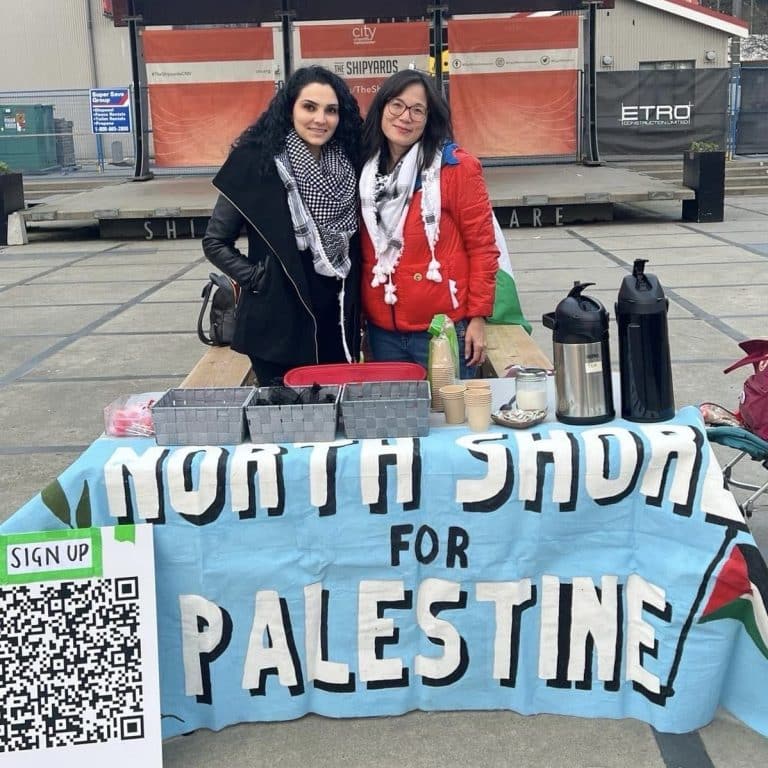
“Watching this genocide unfold and seeing every day be worse than the next, I was feeling this deep sense of mourning for the lives lost, but I was also realizing that there were all these people in my life who didn’t care or were indifferent or apathetic. I felt really alone.
“I was going to all the protests, and I got a keffiyeh and I was wearing buttons and walking my kid to school hoping that other parents were too, because so many children are affected. In downtown Vancouver, there was a tent that was organized by Parents for Palestine. There was a family tent and I was like, ‘How can I help here?’ Talking to some of the organizers there, I got into a WhatsApp group, Mamas for Gaza. I started talking to other moms in North Vancouver and saying, ‘We need more political action on this side, everything’s focused on downtown.’
“From there, we got involved in some petition canvassing and some other people found out that there was this group of three moms that were starting our own group, and they got on board. We organized our first protest a few weeks ago.”
With files from Emma Paling
I often hear that I’m lucky to have a full-time job in journalism.
Critical, bold journalism that isn’t beholden to media monopolies should be the norm—not the exception.
By supporting The Breach, you’re supporting a more robust, progressive media. Join us today.
– Katia Lo Innes, Associate Producer, The Breach
Palestine | Cops crashed my talk on Palestine (and proved my point about colonialism)
Heather Reisman | In stunning pre-dawn raids, Toronto police ‘terrorize’ Palestine activists
Corporate Media | CTV forbids use of ‘Palestine,’ suppresses critical stories about Israel
2 comments
Comments are closed.
Thank you and commendations for your work. Can you consider including Vancouver Island when describing support for Palestine. We have been peacefully marching every Saturday for 21 weeks.
No wonder we are seen as one of the most hypocritical country.