
Martin Lukacs, managing editor: Welcome to The Breach Show, featuring sharp analysis on politics and social movements in Canada. I’m The Breach’s managing editor, Martin Lukacs, and today I’m talking with my colleague, Emma Paling, our senior editor.
Hey Emma, how’s it going?
Emma Paling, senior editor: Good, thanks. How are you?
Lukacs: Good, despite the world at large. There are two wars unfolding right now in the Middle East. One is Israel’s one-sided destruction of Gaza, and the other is the battle over how that story is told in our country’s media. At The Breach, we’ve not only been reporting on Canadian government and industry complicity in Israel’s treatment of the Palestinians, but we’ve been focusing a lot of energy lately on covering the media’s depiction of the situation.
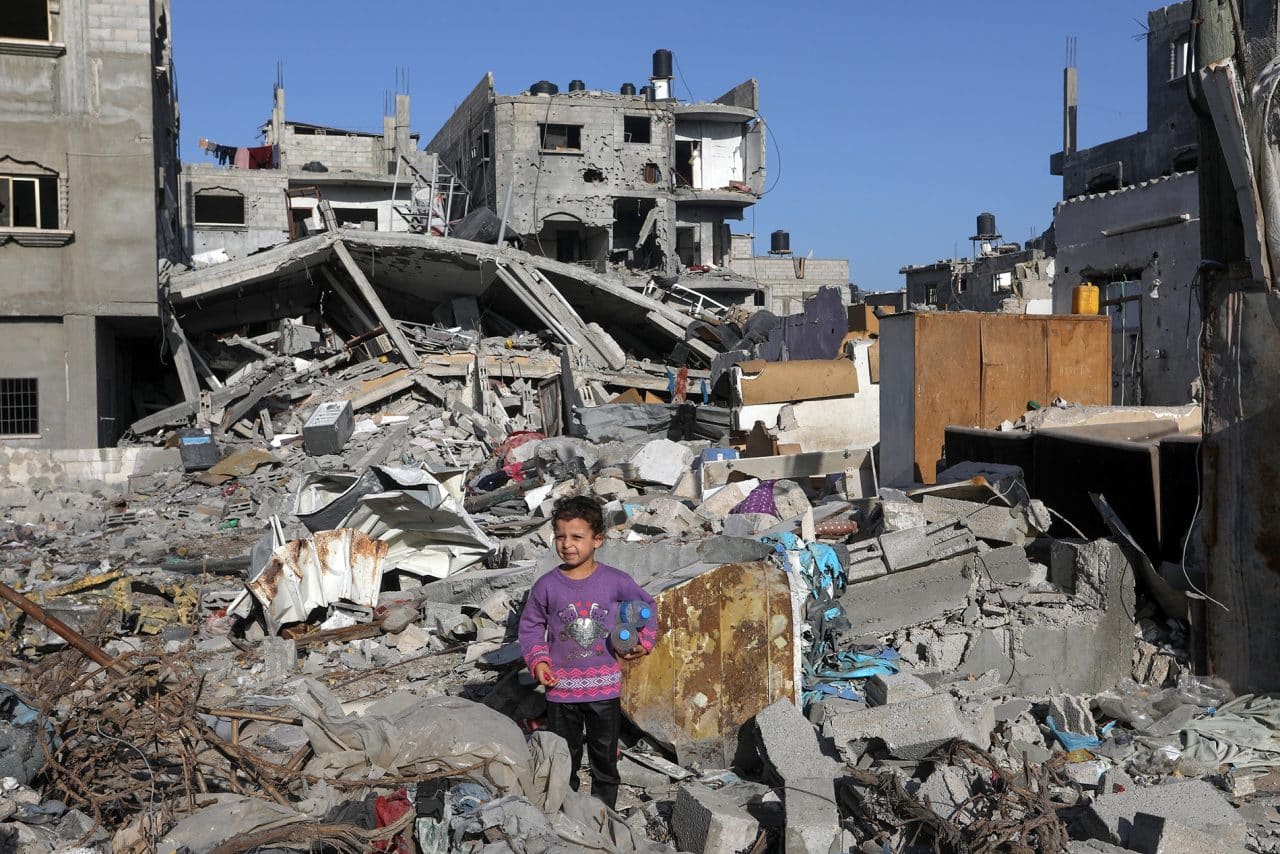
How The Breach saw inside Bell Media
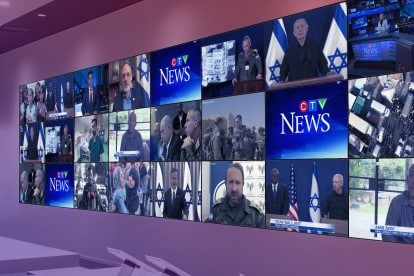
Emma, last week you reported this piece that generated a lot of interest about Bell Media—that’s the media conglomerate that runs CTV, CP24, and BNN Bloomberg—about how its workplace culture is distorting the truth about Israel’s violence in Gaza, according to its own journalists. Tell me about that piece.
Paling: So I spoke to several journalists across multiple different newsrooms within Bell Media, and the journalists said that the company has a culture of fear around reporting on Israel. They say they’ve seen senior producers and editors disparage Palestinian guests, refuse to invite Palestinians on if they’ve been too critical of Israel in the past. They said stories that included too much context or too much history about Israeli occupation get edited to death, in a way that makes the reporter wonder if they’re actually being deterred from covering this or pitching stories on this in the future.
And in one case, a story like this was finished but never actually appeared, which is really unusual for a piece which resources had gone into. It had already been approved. It just never appeared.
The journalists themselves are really troubled by this. They say Bell Media’s journalism does not reflect their values and it’s doing a disservice to the public, but they’re afraid to speak up because there’s so much tension around this.
The leadership has not initiated any open discussion about the violence or how to cover it, and the journalists just feel like there’s extraordinary pressure to not rock the boat or to not piss off more senior leaders by saying anything or writing anything that could be controversial. One of the journalists said they’re afraid of being seen as having sympathy for Palestinians, for people who are experiencing genocide.
The media’s ‘Don’t say Palestine’ rule
Lukacs: One of the parts of the story was that you were leaked an email that was a directive sent by Bell Media or CTV to journalists across the platforms to not use the word “Palestine” because in their words, “Palestine as a nation does not currently exist.”
These directives are a bit of an open secret, but it’s striking to me that CTV’s had never been reported on. A U.S. journalist actually tried to kind of “gotcha us” about it on Twitter. They pointed out that Associated Press guidelines in the U.S. also direct journalists in the U.S. to not use the word Palestine.
But her tweet ended up going viral because I think no one had actually heard about these AP guidelines. It seems to me [to be] part of this broader silencing of journalists who want to write truthfully about Israel and Palestine.
Tell us about what you heard from people within CTV.
Paling: So at CTV, as you said, the guidance said for a geographic locator, the journalists should only be using Gaza or the Israeli-occupied West Bank because Palestine as a nation does not currently exist. We already knew from past reporting that CBC tells its journalists that Palestine is not a country and at CTV saying Palestine as a nation does not exist, is a bit different and it’s actually kind of worse because they’re denying an entire people’s national identity.
One of the journalists who received this guidance thought it was totally biased and not in the spirit of fact-based journalism at all. They told me the neutral thing for the editor to say would have been, “We don’t use the word Palestine because Canada doesn’t recognize Palestine as a state,” which is a statement of fact, but the editor said “Palestine does not exist,” which this journalist said is an opinion—a strong opinion—and they thought that it reflected the opinions of the leadership which they’re expected to then parrot.
This person actually said that receiving that email was one of their first signals that they should not be speaking openly with their colleagues about their point of view or their understanding of history because they felt like their point of view was just not welcome at work and would not be received well.
And of course, Canada is in a very small minority of countries because it doesn’t recognize Palestine. The majority of the world does recognize Palestine’s existence. So, for our media to take our government’s stance as truth is incomplete because Palestine’s existence is actually contested and it’s only countries that are allied with Israel for strategic reasons that deny Palestine’s existence, but none of that context or nuance is allowed to be included when journalists are just told not to use the term.
And across Bell Media platforms, there’s a lot of inconsistency because there are just so many different newsrooms. There’s all the local stations, there’s CP24, and then all the teams that produce the national news shows and the 24-hour news channel are all separate teams. So, there’s inconsistency. Some of them will say in a headline, “pro-Palestine protests.”
But in one case, we saw one of the stations that put up a headline that said—it was in Montreal—it said, “Jacques Cartier Bridge reopens after demonstration for Palestine.” That was changed later in the day. They had changed it to say, “pro-Palestinian demonstration” instead of a “demonstration for Palestine.” So they’re removing the reference to the nation.
And at CBC, it does seem like they enforce this even more harshly than they do at CTV and elsewhere. A radio host has had to apologize for accidentally saying “Palestine” instead of “Palestinian territories.” And a couple of years ago, The Intercept reported that a CBC Toronto producer told her staff not to even use the term Palestine in their private conversations because it might slip into their vocabulary or they might get used to saying it and it might end up in a rough draft.
This really is a double standard that only applies to Palestine. There are many other places with multiple names or places that have been colonized where the colonizing force refers to it with a different name than the people who were colonized. But Palestine is the only case that we’ve seen where journalists actually have to apologize if they say it or they’re banned from using the word at all.
Another journalist made a really good comparison on Twitter that I thought was helpful, Pacinthe Mattar. She pointed out that Taiwan is another place that Canada doesn’t technically recognize as a state. We don’t have diplomatic relations with Taiwan because China says it’s not a country, it’s part of China. But at CBC and CTV, the word Taiwan is not banned and nobody has to ever apologize if they use it. You use it in your copy, use it in headlines, no problem.
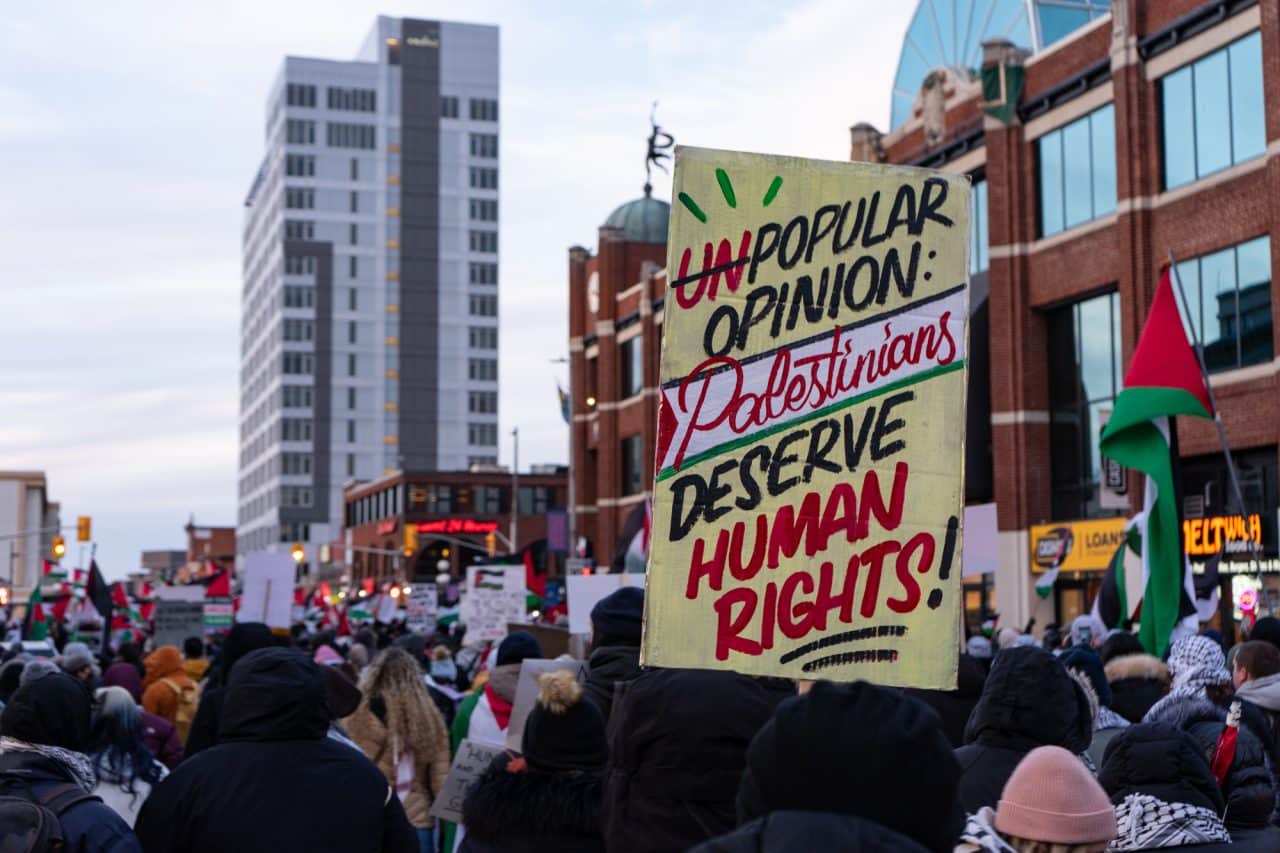
Lukacs: That’s a great point. One of the other reasons that I’ve appreciated our ongoing look at CTV is that it feels like CBC gets all the critical attention. There was a big demonstration in Montreal a few weekends ago that actually ended up in front of CBC Montreal headquarters and CTV was across the street.
It didn’t get any attention. I feel like its managers were probably inside watching chuckling. I feel like we’re filling a gap here. Abit of equal opportunity media criticism.
Paling: Mm-hmm. And you know, what’s really interesting is one of the Bell Media journalists that I spoke to felt the same way.
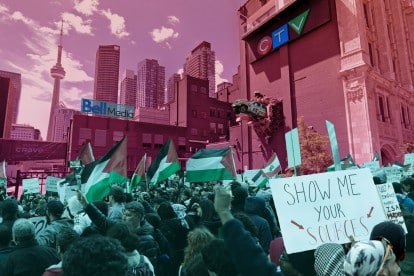
This story happened because we first did an analysis of CTV National News, where we found that, in their shows, for the first month since Oct.7, [they] featured far more Israeli voices than Palestinians.
And I got a message from a Bell Media journalist right away saying, “Thank you so much for criticizing us. We really need to be criticized right now. The public should be putting pressure on our leadership at Bell Media because not even the journalists who are producing this work think that it’s good.”
They were just as disturbed as other people are by their portrayal of Palestinians, but they’re afraid of losing their jobs or being labelled biased if they challenge their bosses too much.
Lukacs: There was a really big rally in Ottawa, which—however you judge the controversial art of counting rally numbers—[was] probably the largest in Ottawa’s history. In my estimation, probably in the range of 30,000 to 60,000.
What’s your sense of how that coverage continues to play out?
Paling: Well, it’s funny that you say that because in none of the articles that I read, did anyone describe this as the largest rally in Ottawa’s history or one of the largest rallies in Ottawa’s history for Palestine. That has not been reported, it seems. And as I said, within Bell Media, there’s a lot of inconsistency.
CTV Ottawa put up a decent story. The reporter didn’t add any of their own research or history on Israel and Palestine, but they gave a lot of space to the organizers. So, there were organizers from Palestinian Youth Movement and Jews Say No To Genocide, listing their demands, calling out Israel’s genocide of Gaza, and colonization of Palestine and also naming Canada’s complicity as a problem. That was on CTV Ottawa.
Then, on CTV Calgary, where there was also a march, there was a story that was four sentences, and the focus of the story was that a road was closed. Not that there was a demonstration or that it was about Palestinians being killed by Israel or that Calgarians are calling for their government to stand up to this. That’s one of the most surprising things I’ve noticed in Bell Media’s coverage.
There was another example a couple of weeks ago when one of the big rallies in Toronto happened and CP24 put up a story that didn’t even mention the demonstration or what it was about. It was literally just like: “University Avenue is closed. Police say that it will reopen later.” It did not mention that there was a protest, that it was about Palestine, that the organizers [had] demands, they didn’t interview anyone there. It’s just unbelievably negligent journalism that’s really suppressing the truth, not just about what’s happening in Gaza, but also the truth of how many Canadians are outraged by it.
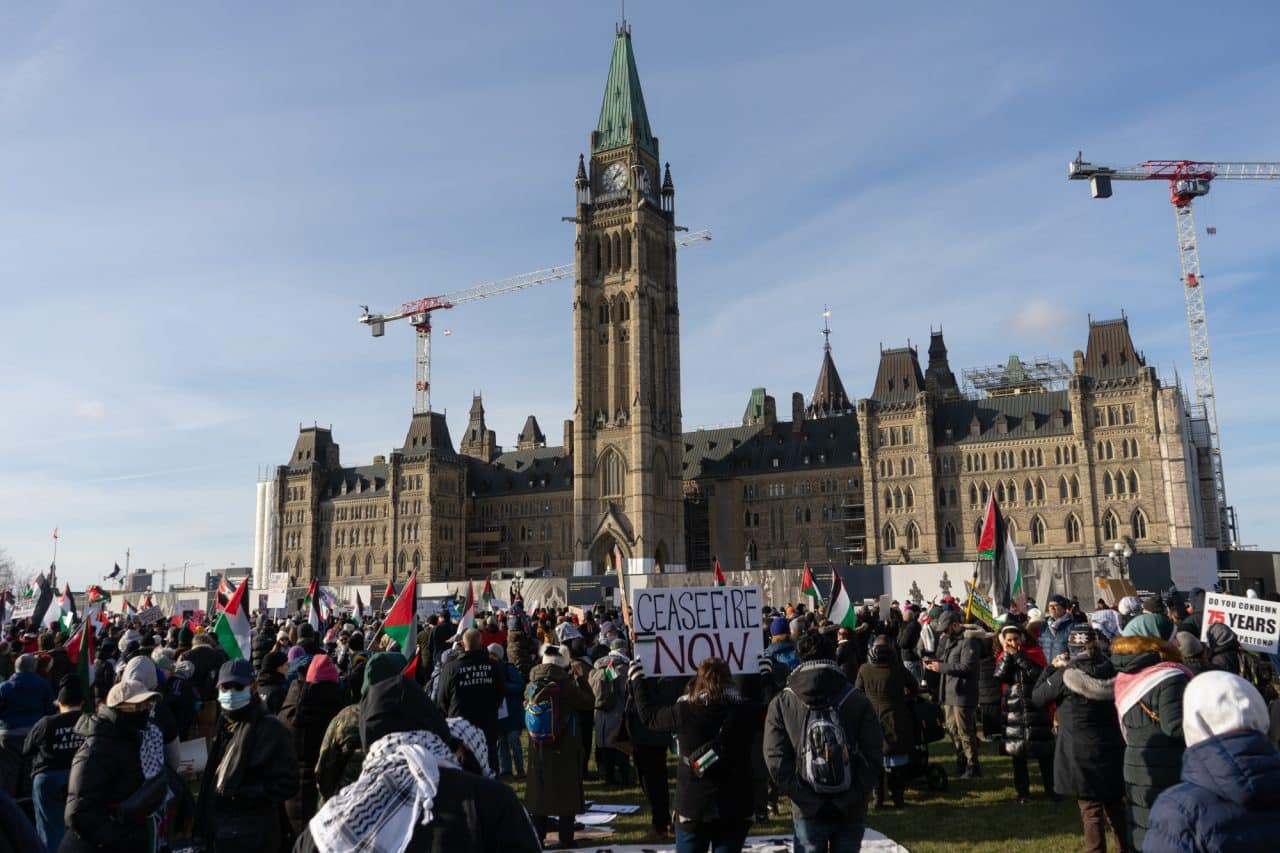
I checked what CBC did after the march in Ottawa as well. They also had a decent story. They interviewed three people, but the headline said, “Protesters call out Canada for unclear stance on Israel-Hamas war.” But I don’t think anyone is saying that Canada’s stance is unclear. The Canadian government has been very clear. Every senior minister has said, “We support Israel, we stand behind Israel, Israel has a right to defend itself.” The organizers have also been extremely clear every single week. They’ve said they want a permanent ceasefire, an end to Israeli occupation, an end to Canada’s economic relationship with Israel and its arms sales to Israel. But for that to just not be reflected, it’s worse than disappointing. I think it’s distorting the truth of what’s happening and the people at these rallies know this.
There are always chants every weekend, not just about Trudeau and Biden, but about the media. At one of the rallies I was at, someone who knows that I have worked at some of these places before—because I was a temp at CBC briefly—she turned to me and was like, “Emma, you’re booing yourself,” when the chant about the media came on.
It’s funny, but it’s also sad because I know that some of the journalists within these organizations just feel helpless to change the culture, and actually one of the Bell Media journalists whom I interviewed said that. They said they went to a protest and when the chants about the media started they just felt so terrible because they actually really want to do good work on this but they just feel totally stifled by their editors.
Canada’s allies treated with kid gloves
Martin, you’re someone who’s written about Palestine for a while, a couple of decades at this point.
Lukacs: Just two decades. I’m not that old, Emma.
Paling: I said a couple of decades, but with that experience: what is the reason? Why do you think Palestinians are treated this way, in a way that’s so different even from other oppressed groups?
Lukacs: I guess I would gently push back on the idea that they are treated so much more unfairly than other oppressed groups. I think that there are some very important similarities, and maybe there are reasons for why Palestine is exceptionally bad in terms of the coverage in the Western media.
But I really think you have to engage in an institutional analysis of how the media works. And how the framework of media coverage when it comes to Palestine, but also when it comes to so many other colonized populations is determined, in Canada, by essentially shared interests of corporate and state power. The media tends to very dutifully follow the framework set by government and corporate power.
In this case, the Canadian state is a longstanding partner to the U.S. which backs Israel fully as its client state. As the client state of the U.S., it follows generally that in the media, Israel’s behaviour is praised, justified, sanitized, assumptions are made about its leaders, its government seeking peace and democracy, opposing terrorism and telling the truth. By contrast, Palestinian leaders are criticized, assumptions are made about them lusting for war, and the Palestinians are depicted as terrorists and liars.
It’s fascinating to just, consider one example, the willingness of Western media to believe the Israeli military as it consistently lies about its operations in Gaza. Meanwhile, they go out of their way to cast doubt on, for instance, the Palestinian Health Ministry’s tally of deaths, which has now quietly been accepted by Israeli media and the Israeli government. What falls outside of this framework of consideration by the media, is the unambiguous history of U.S. and Israeli and Canadian rejectionism of peace, and the violence and terrorism of the Israeli state—sponsored by the U.S., supported by Canada—that has always been incomparably greater than anything the Palestinians have committed.
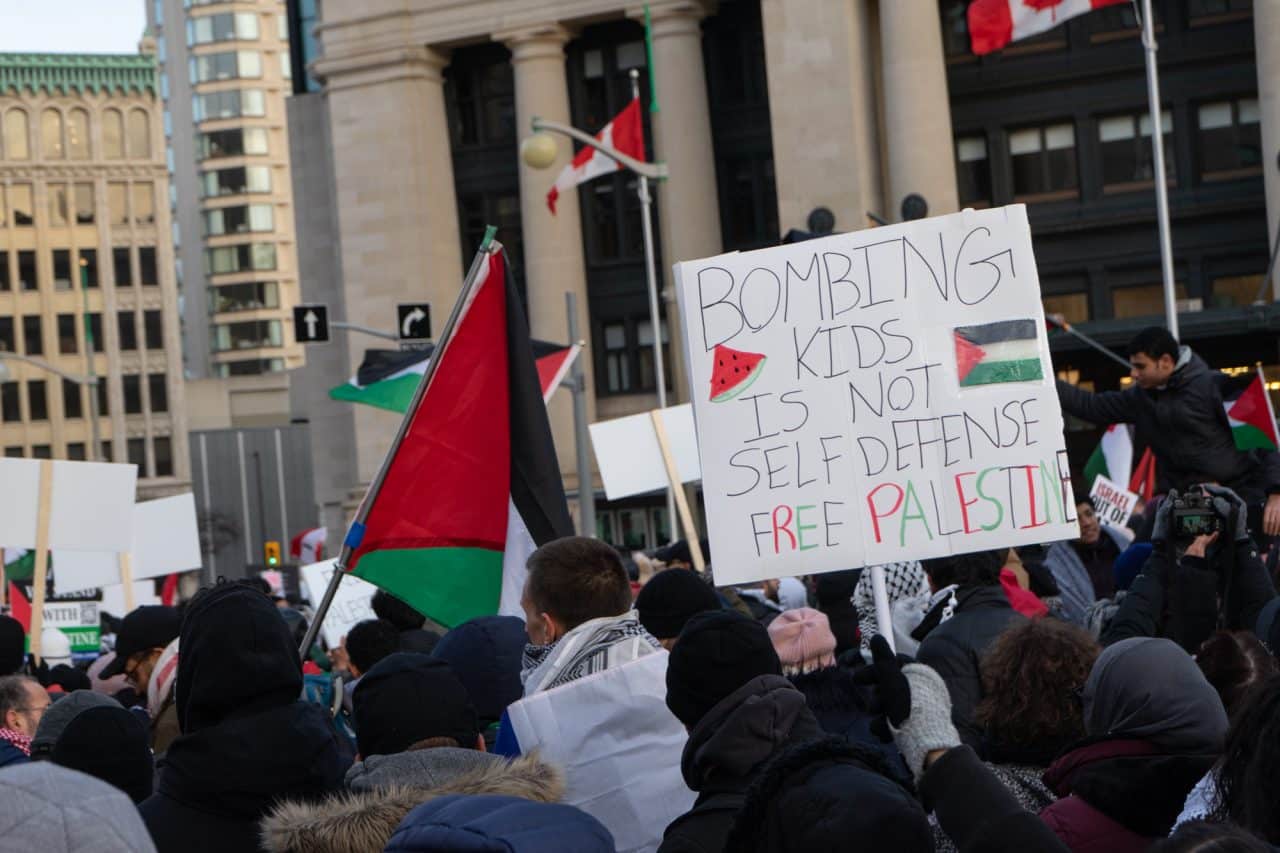
But these are things that are not expressible by our media. Let me give just one more example where I think this double standard and discrepancy is so grave. Since the Hamas attacks on Israel on Oct. 7, we have heard constant repetitions in the media about Israel’s right to defend itself.
Mind you, international law doesn’t even grant the right of self-defence to an occupying power, which is what Israel is towards the Palestinians, even in Gaza, where it withdrew from its settlements in 2005, but basically maintained control over land, air [and] sea. Therefore, according to the UN and other international bodies, it’s still an occupying power. So, they don’t actually have the right to self-defence against a people that it is occupying when those attacks come from within the occupied territory. Yet we have heard endless repetitions of their right to self-defence, which to my mind [has] given them a carte blanche in terms of what they’re doing in Gaza.
Now, there’s an example that is comparable to what happened on Oct. 7 in terms of human tally. In December 2008, Israel launched Operation Cast Lead, which involved them bombing Gaza for three weeks straight. It wasn’t a war. It wasn’t even asymmetric warfare: it was a one-sided massacre. There were 13 Israeli people who were killed and the Gazans’ death tally numbered 1,400. Was the Western media at that time full of calls for the Palestinian right to self-defence? Of course not. Palestinians are never accorded the right to self-defence, even though again in this case, in international law, they are precisely granted the right to resist occupation, even violently with arms, so long as it targets the military, the occupying force, but in the Western media, only the U.S., only Canada and its client states have the rights to invoke the right to self-defence—never, ever its victims.
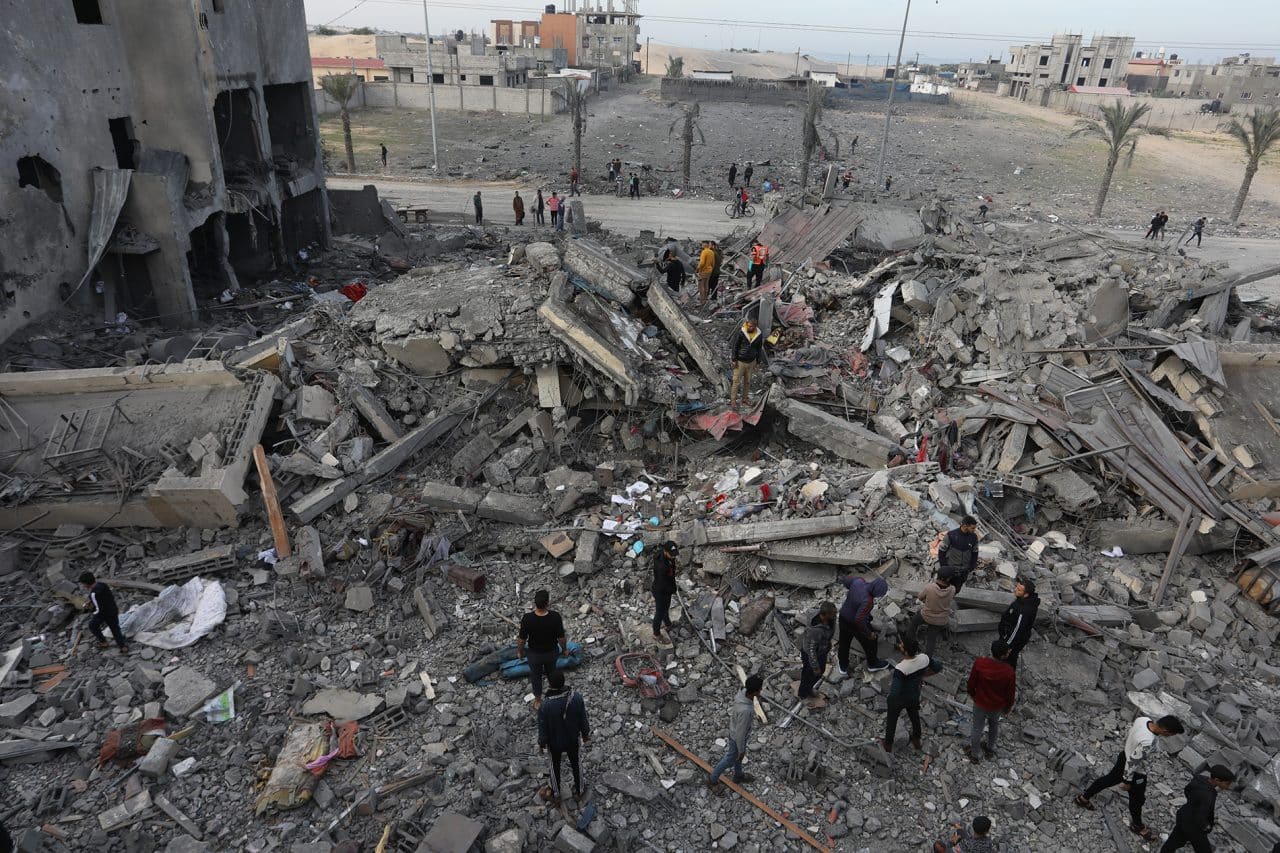
‘Worthy and unworthy victims’
In terms of why Palestinian victims are treated so differently in our media, I think it’s helpful to use the concept of worthy and unworthy victims, which comes from the work of Edward Herman and Noam Chomsky.
In situations where we have firm allies like Israel, a firm kind of client state of the U.S., it almost always follows that their citizens from the standpoint of dominant interests in the West are worthy. The victims of our enemies, like the Palestinians, are unworthy. All of these bigger conceptual differences in moral and political treatment trickle down into other aspects of the coverage in terms of the placement of stories, tone, context, [and] fullness of treatment.
As in the CTV story that we did a few weeks ago, you see the differences in sheer volume of voices that are granted access to the media. We found that Israeli voices were depicted [62] per cent more than Palestinian voices. It goes beyond that. Worthy victims, Israelis in this case, are featured prominently, dramatically on the front covers of newspapers and photos. They’re more humanized. Their victimization receives far greater detail and context to elicit more sympathetic connection.
Davide Mastracci of The Maple did an interesting comparison of photos and front covers and just the discrepancy in how Palestinian victims were treated as opposed to Israeli ones. Unworthy victims like the Palestinians don’t get that kind of treatment. They’re often faceless in photos. They receive far less humanization, less detail about their lives, and as you mentioned earlier, far less context.
As was the case among those CTV journalists, context that would elicit sympathy, empathy and connection and understanding and outrage. These things are sometimes hard to taxonomize in terms of empirical analysis.
One of the things that I think has been noted a lot often on Twitter is, even when it comes to the construction of sentences, Israeli deaths are often presented in active tense with their killers identified whereas Palestinian deaths are often presented in passive voice. Rather than “Hamas killed Israelis,” you’ll get “Palestinians died,” and their killers [have] disappeared. You’re left to wonder who [they] might be.
This kind of systematic silencing, I don’t think it’s unique to Israel and Palestine. This happens whenever there are victims of Canada’s allies. They’re always “disappeared.” Think of Saudi Arabia, which Canada has been sending weapons to, signing big economic deals with. They, in the past few years, have murdered hundreds of thousands of Yemenis. Canadians in the Western media heard almost nothing about them.
You can think of Haiti as well, where Canada was involved in a coup. They overthrew a democratically elected leader. Aristide and his supporters were demonized as thugs, anti-democratic. Meanwhile, Canada has supported a string of unelected puppets.
What you got in the Western media in Canada was characterizations of Canada’s good intentions and of its democracy promotion, all of it in absolute contrast to the actual historical and factual record.
I think in sum, the media coverage presents highly dichotomized treatment of worthy and unworthy victims, depending on how useful it is to elite interests in Canada. In this case, Palestinians have gotten the short end of the stick.
Paling: It does seem like more people are noticing it right now.
Lukacs: I think you’re right. I think we’re in a moment where the Israeli bombardment and devastation of Gaza is so severe and inhumane and grotesque and the Canadian media coverage is so sanitized and one-sided, that I think we are seeing far more people become aware of this chasm between the myth and the reality. I think that’s why you’re seeing so much outrage, both about what Israel’s doing and also about the media coverage in this country.
Media helped smear Palestine solidarity activists
Paling: I also want to ask you about your most recent article, which has a media angle to it.
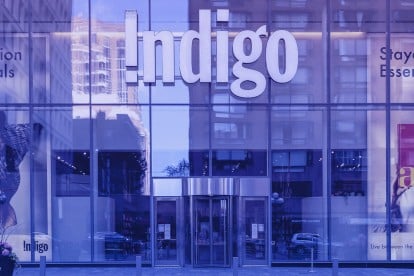
Martin just reported on the arrests of some activists in Toronto. They had put up posters at an Indigo store downtown and splashed red paint on the door. As far as direct action goes, it’s pretty run-of-the-mill. We’ve seen these actions at weapons manufacturers, at other companies that have financial ties to the Israeli state or military.
But in this case, these activists were treated to police raids that you would normally see for a major gun or drug bust. There were multiple officers at each person’s house. They barged in between four and six in the morning. In one case, they broke down someone’s door. The activists had targeted Indigo because the CEO runs a foundation that gives scholarships to foreigners who join Israel’s military. So there [are] direct financial incentives being given to people who joined the military, but the cops said that the activists were motivated by hate. They sent the Hate Crimes Unit to investigate.
Lukacs: This is a group of 11 anti-war activists. Some people have started calling them the Indigo 11, which I quite like. For what is typically a minor mischief charge, they have been subjected to police raids reserved for violent and dangerous offenders. As you were saying, to top it off, the police are now pursuing hate crime charges, which carry severe sentences.
The situation is surreal and upside down. I think none of this would have been possible if not for the abysmally slanted media coverage, which I think laid the seeds for the policing operation.
When the act of vandalism, political protest, first happened, the headlines in the media were more or less unanimous. Global News ran with this headline, “Toronto Indigo store splashed with red paint, posters attacking Jewish founder.” CTV ran with “’Vile antisemitic attack:’ Police investigating graffiti targeting Indigo CEO outside downtown Toronto store.” And even independent media critic Jesse Brown of Candaland tweeted that, “A Jewish-owned bookstore was vandalized.”
But I think this media coverage, which was bereft of context about how the Indigo CEO has been targeted for years—almost 15 years in fact—in campaigns because she supports the Israeli military with direct financial support by incentivizing Canadians and foreigners to join a military that is engaged in grievous human rights violations and war crimes. That was nowhere to be found in the stories. They also uncritically amplified the idea, which was pushed by right-wing lobbyists who are in the habit of weaponizing antisemitism, that this was a hate crime.
One of the anti-war activists is Jewish herself. The media mostly ignored the fact that Jewish organizations like Independent Jewish Voices, like the new organization, Jews Say No to Genocide, support protests against Heather Reisman. And that she’s not some kind of racial target. She’s a legitimate political target.
All of that was vacated from these stories as well. And to my mind, it created political pressure and the justification for the police to target protesters in this way.
What I was struck by was that even after the arrests were made, and despite the fact that there have been lots of organizations pointing out the erroneous and even libellous style of media coverage, most of the media coverage in the aftermath of these arrests has continued to reinforce this slanted story. We know the [Toronto] Sun headline the day after the arrest was, “11 people charged after hate-motivated vandalism of Indigo bookstore.”
You know a Toronto Star article had it as the suspects were charged with hate-motivated mischief over $5,000 and a CityNews article said “10 people identified in hate-motivated mischief.”
Police haven’t actually pressed charges of hate motivation because, for one thing, they can’t, they need to sign off from the attorney general, and two, because they won’t be able to prove it. Yet despite that, the mainstream media, again, uncritically amplified these hate crime allegations from the police that were in the first place, absolutely trumped up. To my mind, this is a really glaring example of how mainstream media coverage has slanted the terms on which Palestinian solidarity activists are trying to speak up for justice and peace for Palestinians.
Paling: If they’re not actually charged with being motivated by hate or a hate crime, then it’s remarkable that the Sun headline included that. When someone’s charged with a crime, they’re innocent until proven guilty. So as journalists, you’re not supposed to say that they’re guilty or report that they actually committed the crime, and to comment on their motivations is taking it even a step further.
Lukacs: I think in exceptional circumstances, like sticking the boot a little deeper into the neck of Palestinians, a lot of these standards go out the window.
Paling: Has the media coverage in Canada always been this bad?
Lukacs: There have overall, I think, been significant improvements in how Palestine and Palestinians are covered by the media. Not because the mainstream media has changed, but I think because Palestinian solidarity movements globally have just made greater inroads over the last decades.
I think ultimately the most decisive factor is how much our own populations are willing to protest, raise our voices, elevate pressure on our government and our media. I think domestic dissent is what leads ultimately to changes—not in the structure of large media conglomerates—but certainly in their ability to continue to publish slanted untruths about Palestine.
I think what we’re seeing right now in Canada, which is a really incredible uprising for Palestine, I think that will have over the medium to long term also a marked impact on how the media covers Palestine.
Emma, we are not finished with our work critiquing the Canadian media. We have some other work in store. Are you able to tease any of that?
Paling: No, we are not finished. We’re really just getting warmed up. We have a number of projects that we’re working on, on media coverage, including a few more empirical analyses similar to the one that we did of CTV National News, that will show, incontrovertibly, in newly persuasive ways, just how biased the Canadian media is against Palestinians.
Lukacs: Thanks. Well, people can look out for those. If you like what you’ve heard on The Breach Show, please subscribe to the podcast or our YouTube channel. And if you want to support our work, please become a sustaining member to help us produce more journalism for transformation. You can do that at breachmedia.ca/support.
Emma, thanks so much for joining.
Paling: Thanks for having me.
Lukacs: Thanks everyone else for listening. See you next time.
“We need media that enlarges the sense of what’s possible.”
Naomi Klein, journalist and author
Want to support hope-fuelled journalism? Become a sustaining member.
Heather Reisman | In stunning pre-dawn raids, Toronto police ‘terrorize’ Palestine activists
Corporate Media | CTV forbids use of ‘Palestine,’ suppresses critical stories about Israel
Corporate Media | CTV reports on Gaza with anti-Palestinian double standard, data shows
1 comment
Comments are closed.
Thanks for telling the truth about Palestine! We can’t let the mainstream media get away with their lies!