
Justin Trudeau’s recent high-speed rail announcement may have been hailed as a positive step towards fulfilling a long-held Liberal promise—but experts warn it’s a privatization scheme in disguise, one that over-promises and under-delivers.
On February 19th in Montreal, Trudeau ended months of speculation by announcing that Ottawa was moving forward with plans to build high-speed rail in the Toronto-Quebec City corridor.
The winning bid for leading the project came from Cadence, a consortium that brings together a mix of public and private players, including a rebranded SNC-Lavalin, Quebec’s public pension fund manager, Air Canada, and France’s state-owned railway.
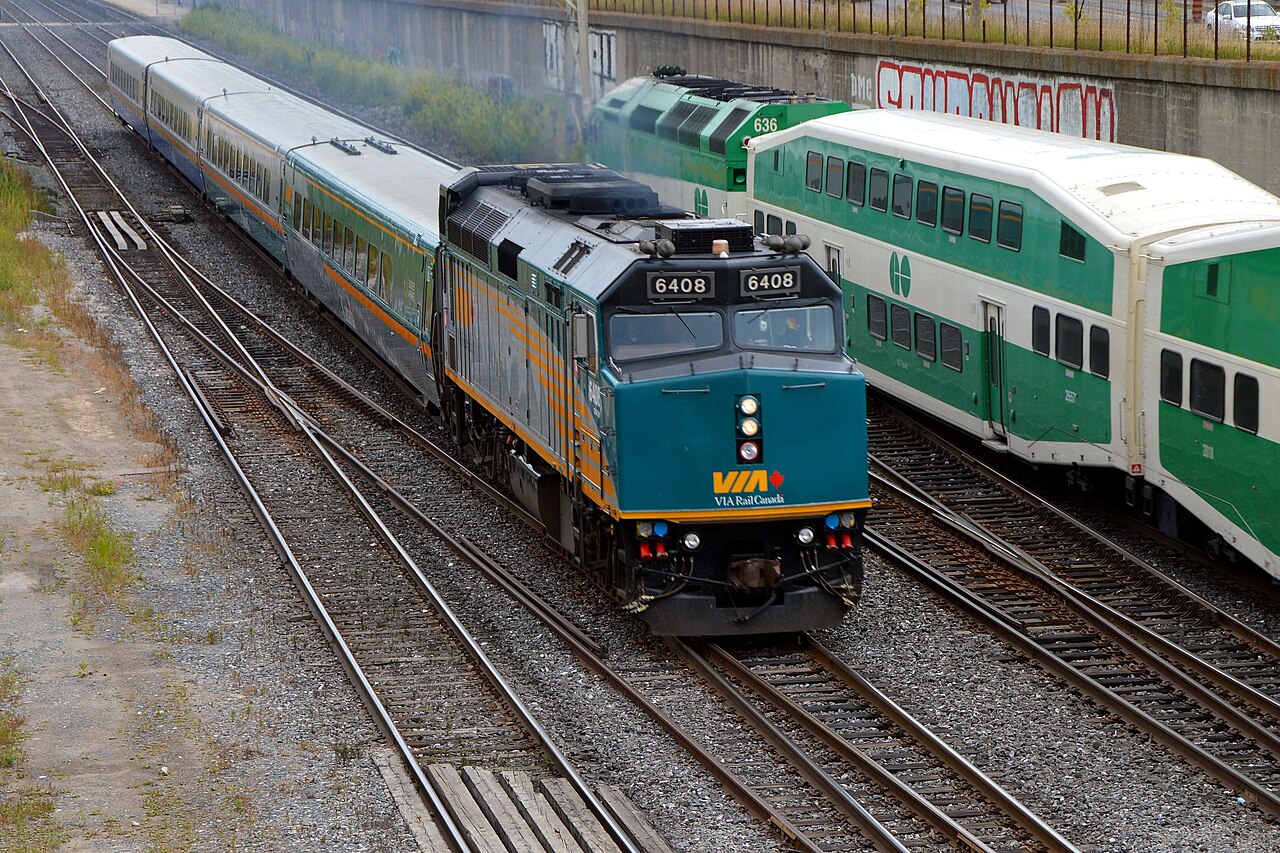
Conspicuously absent is VIA Rail, the only company in Canada with any experience running daily passenger railway services.
Trudeau waited until the last weeks of his term as prime minister to make the announcement. Whether any of the plan is realized may depend on who wins this year’s federal election.
‘Privatization through the front door’
Trudeau’s high-speed rail plan provides public subsidies to a private consortium responsible for the project. But if previous experiences with public-private partnerships are any indication, and the track record of a key Cadence partner is taken into consideration, the government will likely have insufficient oversight.
The consortium includes the CDPQ Infra, which is the infrastructure development arm of the Caisse de dépôt et placement du Québec (CDPQ), the province’s institutional investor and public pension fund manager.
It also includes Air Canada, as well as SNCF, France’s national state-owned railway company, and Keolis, a private French company that operates public transit systems.
Also part of the consortium is AtkinsRéalis, the new name for SNC-Lavalin, Quebec’s largest engineering firm. In 2019, SNC-Lavalin and the federal government were embroiled in a major corruption and fraud case that led to the dismissal of two cabinet ministers and calls for Trudeau’s resignation.
The plan notably excludes involvement from VIA Rail, Canada’s only company with experience running a national daily passenger rail service.
VIA Rail first proposed a high-frequency rail project in 2016 and created VIA-HFR as a wholly owned subsidiary, described as “operating at arm’s length” from VIA Rail.
Now, VIA-HFR has been rebranded as Alto.
While Cadence will technically report to Alto, the consortium will maintain control over both building the line and running its trains.
Research by Unifor suggests that the federal government will subsidize the consortium’s work but will have little control over how its money is used.
“This isn’t a backdoor to privatization: it’s privatization through the front door,” the research concludes about the plan.
“There’s a mentality in government that a public corporation can’t do things, even though there’s no reason why VIA Rail couldn’t be tasked with developing higher-speed rail by itself.”
Feds abandon VIA Rail
VIA Rail has been undermined for decades by underfunding and the prioritization of freight traffic.
Jennifer Murray, Unifor’s Atlantic Regional director who was a VIA employee for nearly 30 years and served as an elected union representative, has serious concerns about how the federal government is approaching the high-speed rail project.
“There’s no doubt VIA Rail is the crown jewel of Canada’s rail service,” said Murray in an interview with The Breach.
But political discussions about improving the Crown corporation have gone on for so long—and without producing any results—that Murray believes Canadians have become cynical.
“We know VIA Rail has problems, but the major problem is that the government has consistently underfunded” it, she says.
Decades of cutbacks, downsizing, and a “do more with less” approach to passenger rail service, coupled with increases in freight train operations, have had the cumulative effect of significantly lowering Canadians’ expectations of what VIA Rail is capable of.
Unifor’s analysis suggests the government has ignored simpler and faster ways to achieve a generally higher-speed passenger rail service in Canada, such as granting VIA Rail a priority right of way over freight rail on the existing network.
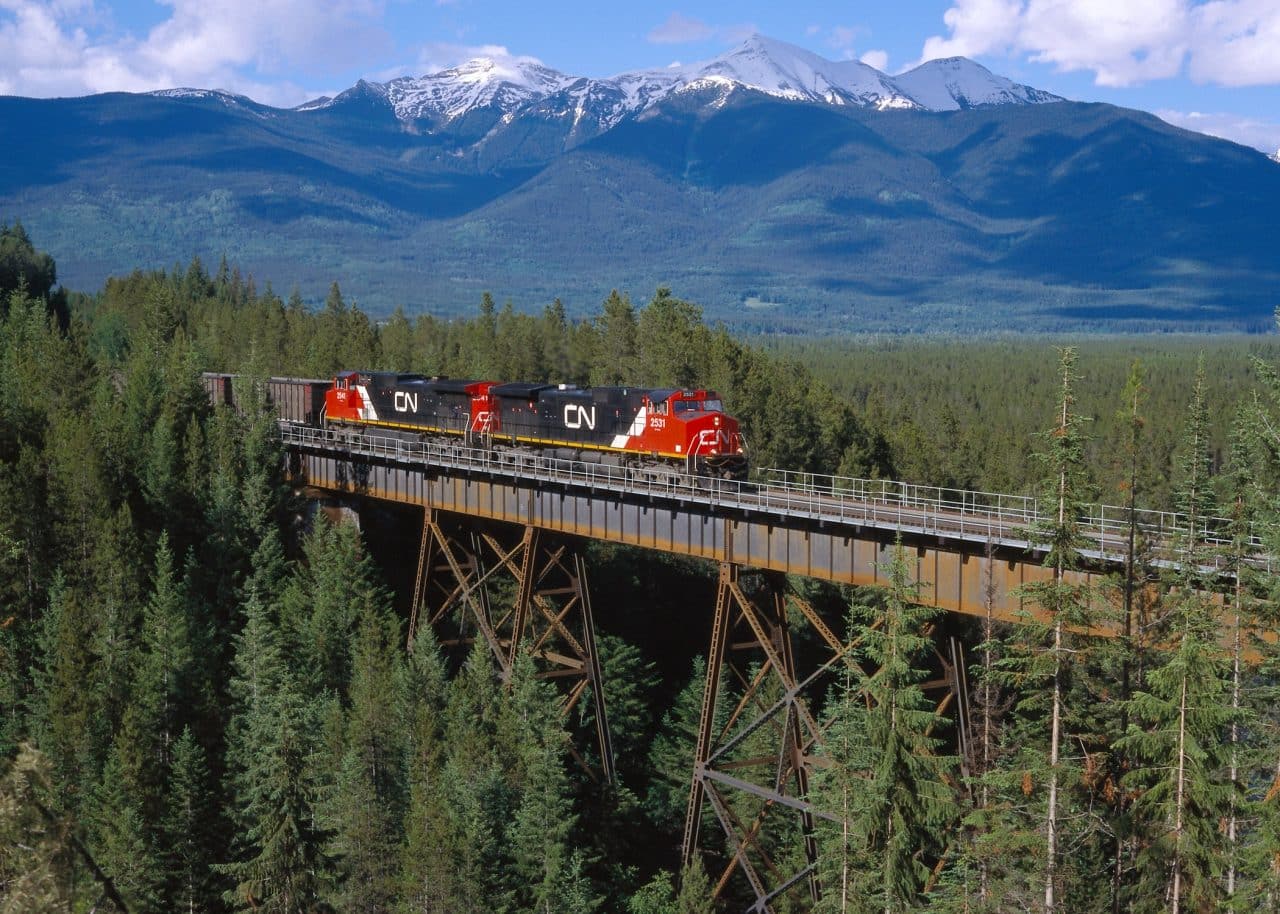
“The Canadian government once owned the [railway] infrastructure and it was basically given to a private entity when CN [Canadian National Railway] was privatized,” says Murray. Since CN used to be a Crown corporation, she adds, its tracks should be prioritized for VIA Rail.
“If there can’t be some sort of agreement that passenger rail gets priority on this infrastructure, then I think the Canadian government has to consider taking these tracks back.”
Another option, far less expensive than the proposed high-speed option, involves building a new dedicated passenger railway alongside existing CN and Canadian Pacific (CP) rights of way.
Unifor’s analysis also suggests that an incremental approach to improving VIA Rail could permit higher speed passenger rail far sooner than the current high speed rail project.
The REM playbook
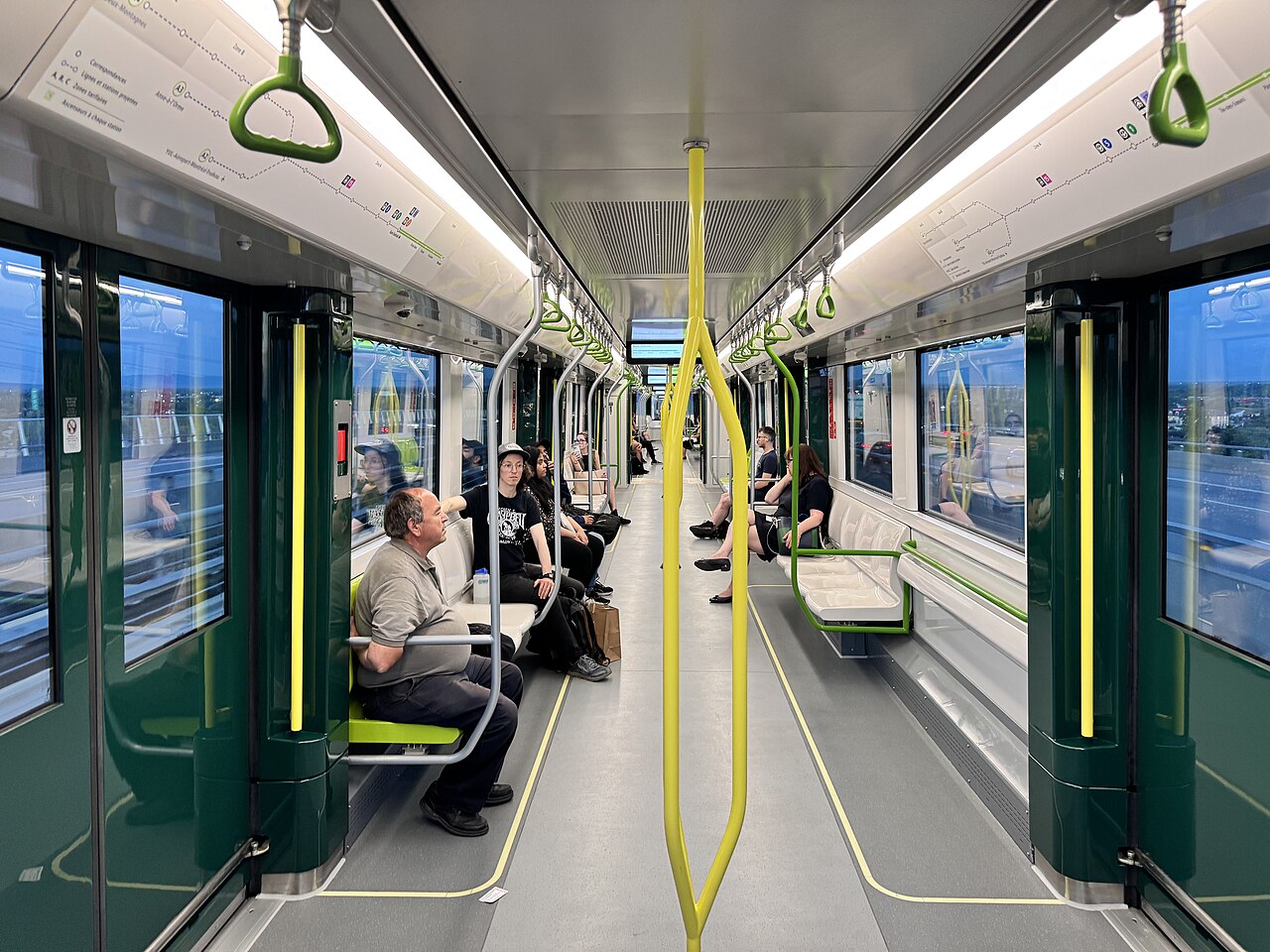
The exclusion of VIA Rail mirrors what happened with Montreal’s troubled Réseau express métropolitain (REM)—built and operated by CDPQ-Infra, one of the partners in the Cadence consortium.
The REM is a four-line, partially complete light-rail system that’s behind schedule, over budget, and regularly breaks down in winter. It runs on privatized, formerly public railway and corridors.
Marketed as a major investment in Montreal’s public transit by the Quebec government, the REM is essentially a privatized system handed exclusive access to public infrastructure—including the federally owned Champlain Bridge, the provincially owned Mount Royal Tunnel, and the Deux-Montagnes commuter-rail line, formerly Montreal’s busiest commuter train.
The CDPQ initially promised to keep the Deux-Montagnes line open, but instead it rebuilt the entire railway line for the REM’s exclusive use, ending more than a century of regular commuter service.
The result has been a considerable drop in regular transit users and a lack of revenue for commuter rail service throughout Greater Montreal. Budget pressures now threaten the viability of other commuter rail lines.
This privatization of public infrastructure has had other trickle-down effects on transit in the city.
A non-compete clause from the REM insists public transit systems direct their passengers onto its trains and eliminate lines it considers competition.
This clause was dreamt up by CDPQ-Infra in order to guarantee the REM had a steady supply of passengers, in turn guaranteeing a return on its investment. The real-world consequence of this has been commuters stranded during recent snowstorms.
There is a distinct possibility that Alto will bring much of the same for the future of passenger rail service in the Toronto-Quebec City corridor.
Its FAQ page states that while VIA Rail will continue to operate normally as the new high-speed rail project is developed, “eventually, these local services will be integrated with Alto services into a single network that will maintain connectivity to these existing communities in this corridor.”
That might seem benign—until you realize the new high-speed route doesn’t connect to dozens of communities in the corridor, and Alto management is already closing the door to potential expansion.
In an ironic twist, the CDPQ’s decision to rebuild railway infrastructure (including Mount Royal Tunnel) for the REM’s exclusive use makes it highly unlikely any new high-speed train will be able to access Gare Centrale, Montreal’s principal railway station and downtown public transit hub.
Effectively cut off from the centre of Canada’s second largest city, the government’s promise of efficient high-speed rail service may have already been undermined by the shortsightedness of its infrastructure development partner.
Overpriced and over-hyped
Although the cost of the high-speed rail project hasn’t been confirmed, Alto President and CEO Martin Imbleau told The Globe and Mail the working estimate is between $60 and $90 billion. Nearly $4 billion has been earmarked for a design phase that is expected to take up to five years to complete.
By comparison, Morocco has budgeted $37 billion USD for a massive 15-year railway construction project, including a 430-kilometre high-speed line slated for completion in 2029.
If all goes according to plan, Morocco’s line will be up and running before Alto even finishes the design phase.
The Moroccan plan includes 1,100 kilometres of high-speed rail for $14.31 billion USD (roughly $20.46 billion CAD)—about 300 kilometres more than the current Canadian plan at a fraction of the cost.
It also covers an additional 1,600 kilometres of conventional rail and upgrades to another 1,600 kilometres of the nation’s existing railway network for less than $18 billion CAD.
While the exact reasons behind the Moroccan project’s lower costs and faster timelines are unclear, it’s apparent that Canada’s infrastructure construction costs are exceptionally high—and they’re rising, even as they fall in most other countries.
Part of the problem may be Canada’s reliance on for-profit companies for infrastructure proposals, construction, and operations, along with inconsistent public funding of infrastructure and a lack of in-house expertise and standardization.
The government has also made misleading claims about the project’s expected performance.
As an example, it claims the new trains will reach a top speed of 300 kilometres per hour and cut the trip between Montreal and Toronto to only three hours.
That may seem impressive when compared with VIA Rail trains that are frequently immobilized behind freight trains, but it’s underwhelming by global standards.
French and Japanese high-speed trains routinely travel at upwards of 320 kilometers per hour, while Chinese and German models travel at 350 kilometers per hour.
And if the proposed Montreal-Toronto trip takes three hours, then the new high-speed train’s average speed will be closer to 180 kilometers per hour—barely 20 kilometers per hour faster than the top speed of VIA Rail’s newest trains.
Lessons from the past
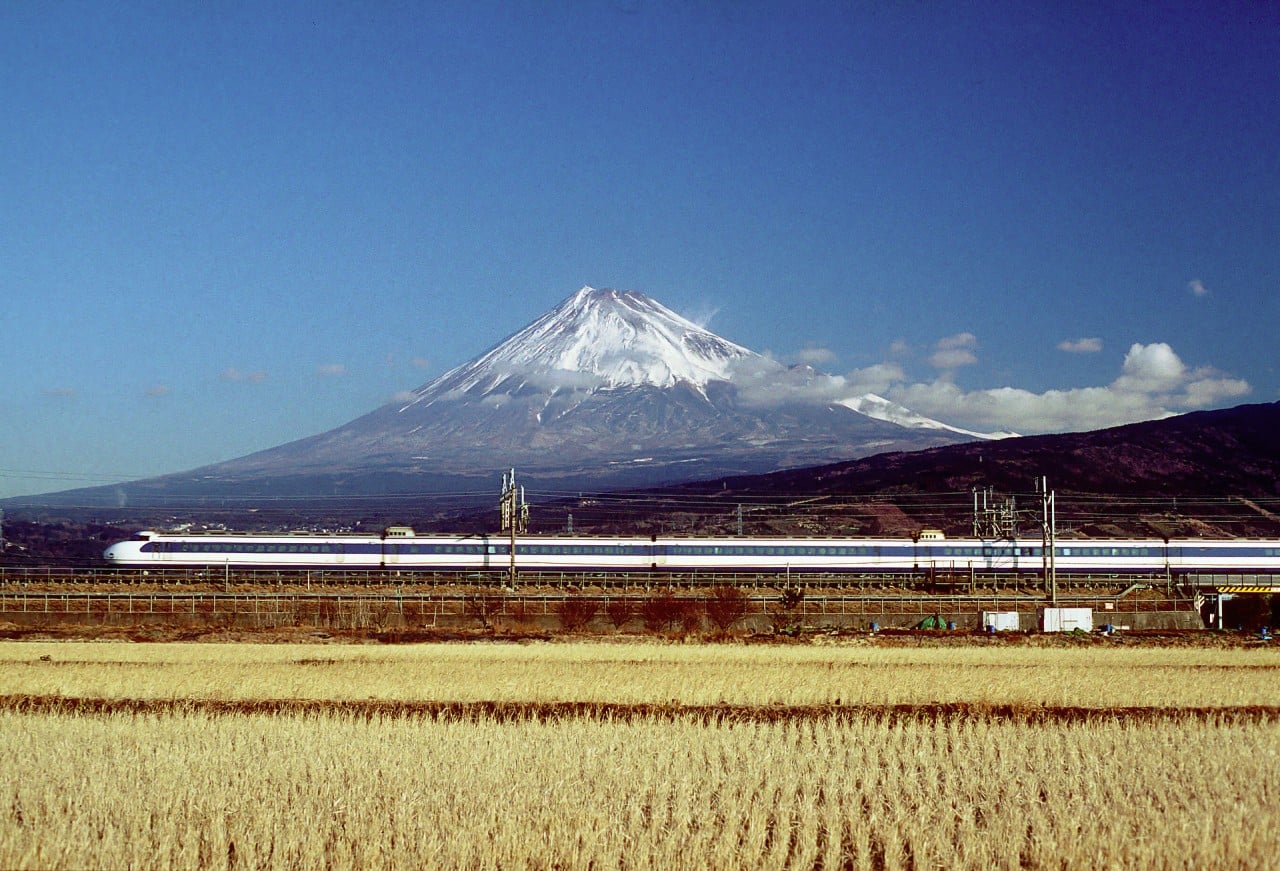
When the Shinkansen Japanese bullet train network began operations 60 years ago, it effectively pulled passenger rail transport out of the dustbin of history and made it a decidedly futuristic technology.
It seems like the Canadian federal government was impressed by Japan’s achievement and soon invested in the TurboTrain, a gas turbine-powered passenger train running on an express schedule between Toronto and Montreal. It was the closest Canada ever got to high-speed rail.
That said, higher speed was a benefit, not the purpose.
Like the Shinkansen, the TurboTrain’s genesis lay in the desire to move larger numbers of people between the nation’s two largest cities as efficiently as possible. Reductions in travel time were a consequence of innovative design and adapting to the existing railway network.
Getting from Toronto to Montreal in under four hours on a Turbo wasn’t much faster than on CN’s previous express service, but that wasn’t the point. The Turbo offered a smoother ride and a high level of service, and it cost less to operate than previous generations of passenger locomotives.
Most importantly, one Turbo carried 300 passengers—about three times as many as the Air Canada DC-9s flying the same inter-urban route.
Canada’s first experiment with high-speed rail, some 50 years ago, was the result of Crown corporations seeking new and innovative ways to move large volumes of people between Canada’s two biggest cities as smoothly, comfortably, and efficiently as possible.
The Turbos were built in Canada, as were their engines, and were operated by a public corporation whose duty was primarily to serve the public, not shareholders. They had priority access to public infrastructure and operated as a public service.
In this respect, Canada’s first high-speed rail project had a lot in common with all the other successful high-speed rail systems the world over.
Where we differ from many other high-speed-capable countries is that our governments have spent more than forty years defunding public rail transport, privatizing our national railways, and dismantling the public corporations that provided us with quality services.
Now, to get us back to where we were fifty years ago, the only solution they’ve come up with is something that is quantifiably far less impressive in every conceivable way.
Worse still, it is extraordinarily expensive by design, and once it’s up and running twenty years from now, will likely leave passenger rail service in this country even worse off than what we have today.
This is not a new story. It is virtually identical to every other major public infrastructure project in Canada undertaken in the last quarter century.
Governments may not learn from their mistakes—but that’s not their responsibility; it is ours.
Canada isn’t getting a new high-speed rail system. What we’re getting is a reminder—once again—of the failures of neoliberalism.
Correction: The reference to VIA-HFR has been updated to reflect that it has been rebranded as Alto.

The Breach’s investigations don’t just inform our readers—they force the powerful to react.
An exposé on blood plasma privatization led to national headlines. Our revelations about the government’s cozy connections to Big Pharma sparked a parliamentary probe. A report on high-tech price-fixing by mega landlords resulted in a criminal investigation.
From activists to elected officials, people are using The Breach’s journalism to push for transformative change.
– Dru Oja Jay, Board President, The Breach
Federal Government | The sun sets on Justin Trudeau’s faux progressivism

Transportation | Canada’s trains are key to a sustainable future
Free Public Transit | A growing movement demands free, expanded public transit in Canada
1 comment
Comments are closed.



The only thing you missed is the debacle of the PPP project in Toronto. The CROSSTOWN is years behind in delivery, billions over budget and still mired in litigation. PPP is a sham. But it has resulted in a loss of competence in the public sector to scope and manage these large projects. One more consequence of the Regan dismantling of the concept that government is there to serve the public. Good and important article on your part.