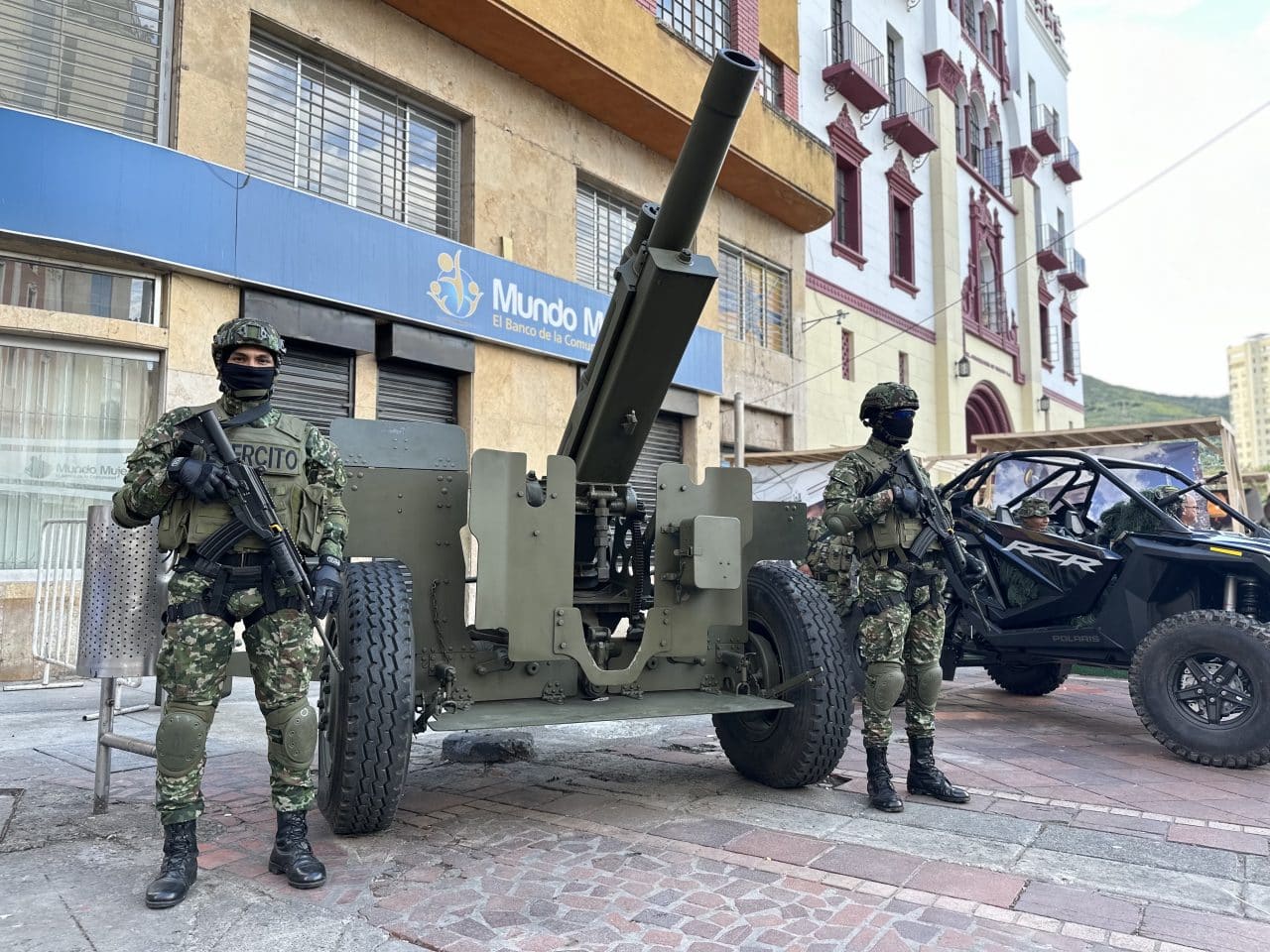
In the last weeks of October, the Colombian city of Cali looked like a temporary war zone. Heavily militarized with tanks and artillery stationed around its core, the streets were patrolled and cordoned off by the state military, police officers, and private security.
Just north of the city, delegates from around the world, including Canada, were descending for the sixteenth annual meeting of the United Nations Convention on Biological Diversity (CBD), or COP16. They gathered to introduce new agreements and review progress on targets established last year, with the goal of helping nature recover from biodiversity loss by 2050.
But behind the veneer of tropical fauna adorning the official stages and the conference’s stated vision of finding “Peace with Nature,” there was a different, grim reality. It was a reality of environmental destruction, mafia rule and black markets, and the persecution of Indigenous peoples, land defenders and community leaders in Colombia—one in which Canada is implicated.
A few hours north in Antioquia, one of the country’s most exploited regions and a gold mining heartland, Canadian multinationals like Aris Mining and Quimbaya Gold have entangled themselves in a community already deeply marked by human right abuses, cartel networks, and sustained armed conflict.
Even as Colombia takes steps toward protecting critical ecosystems and meeting targets set out under the Kunming-Montreal Global Biodiversity Framework, set at last years CBD meetings, these companies continue to expand destructive extractivism across the region, monopolizing land rights, displacing communities, and profiting from a land still bleeding from war.
The country has been torn apart by conflict since a decades-long revolutionary war ignited out of anti-imperialist and peasant movements in 1964, which sought to resist the neoliberal capitalism that was sweeping across South America and encouraging foreign enterprises to exploit Colombian natural resources.
After decades of brutal fighting, former Colombian president Juan Manuel Santos signed a peace agreement with the communist Revolutionary Armed Forces of Colombia guerillas in 2016. But not all warring parties signed this deal, and guerillas and cartels continue to fight for control over key resources like coca, oil and gold.
Current President and former leftist militant Gustavo Petro has picked up Santos’ legacy through a diplomatic approach to Colombia’s transition to peace in negotiations with all armed groups. Through land titles and mining reforms, this approach intends to restore lands to people displaced during the height of war, including Indigenous and Afro-descendent communities, and artisanal miners and peasants.
Canada, on the other hand, has had other priorities. Starting with Canada’s Gran Colombia first staking its claim on Colombian gold in 1997 as rightwing counterinsurgency paramilitaries were enforcing their brutal regime, to the signing a Free Trade Agreement with Colombia in 2008 during some of the bloodiest years of conflict under the Alvaro Uribe administration, they have aimed at keeping Colombia’s gold veins flowing at any cost.
Petro’s reforms threaten the power of Canadian multinationals, which have long taken advantage of Colombia’s lax mining and environmental regulation to expropriate land, displace communities and expand mining projects, all while keeping gold supply chains opaque.
Delegates at COP16 set up and left the country within two weeks.
While the ink had yet to dry on its official statements about stopping the war on the environment, Canadian companies continued their own aggressive expansion. Left in the wake of the UN delegates are the long-burning embers of disenfranchisement of local communities that are at the root of unresolved armed conflict today.
Canadian multinationals benefit from Colombian cartels
The blueprint of exploitation is etched across Antioquia, a mountainous region that sprawls between the departments of Choco and Santander.
Here, Andean gold has been carved up by mining multinationals, including those based in Canada. The region sees a mix of alluvial gold mining (gold extracted from rivers) and underground mining, and almost one-quarter of its gold mines are located in the municipality of Segovia.
Alongside global mining giants like South Africa’s AngloGold Ashanti and China’s Zijin are Toronto-based Continental Gold and Antiquia Gold, along with Vancouver-based Aris and what was formerly Gran Colombia Gold. They are among 29 Canadian companies holding over a billion dollars of mining assets in Colombia.
All have exploited the armed conflict and are well-versed in navigating cartel territory.
Antioquia is at a critical intersection between Colombia’s most remote regions, known for illicit coca cultivation, and which connect to cocaine supply chains with Panama and Venezuela. The region’s gold has consequently also attracted interest from the Clan de Golfo (or Autodefensas Gaitanistas de Colombia), the country’s largest drug cartel.
The Gaitanistas hold a firm grip over underground gold vein tunnels and small-scale mining operations around Antioquia. Illegal gold mining in Colombia surpasses cocaine trafficking as the primary source of financing for armed groups.
One of the biggest mining companies in Antioquia over the past three decades was Toronto-based company Gran Colombia Gold.
As The Breach previously reported, Gran Colombia has worked with sub-contractors that are implicated in laundering illegal gold into legal markets and have ties to right-wing paramilitaries. While Colombia has committed to reintegration initiatives for former combatants, some paramilitary fighters continue to participate in the black market and work with criminal organizations even after taking part in such programs.
Consequently, Colombian peace efforts are undermined even as the largely unregulated artisanal mining sector provides crucial labour to Canadian multinationals.
Gran Colombia Gold merged into Vancouver-based Aris Mining in 2022, and continues to operate the Segovia mine in Antioquia, an underground mine currently being expanded to produce over 300,000 ounces of gold per year.
Aris states that approximately half of Segovia’s gold is produced by “contract partner miners” with whom the company collaborates. External mining companies and contracts with third-party miners currently represents 23 per cent and 13 per cent of Segovia’s total production respectively
Many artisanal miners in Colombia are deemed illegal and have historically lacked power as a direct result of the transnational mining regime. Since many are largely extorted and controlled by armed groups and criminal organizations like the Gaitainistas, contracting artisanal miners blurs the line between legality and criminality, making accountability on human and environmental rights abuses difficult.
Artisanal miners are fighting for land rights, legal status and to be integrated into Colombia’s formal economy–known as formalization–with some progress being brought about by Petro’s reforms. But as many artisanal miners remain in limbo, multinationals are moving quickly to take over land and gold, and either displace artisanal miners or profit off their labour as contractors.
In Antioquia, they are largely controlled by the Gaitanistas that exert a regime of violence and fear over local communities: engaging in racketeering by charging protection fees, running sex trafficking rings, murdering workers for multinational mining companies, stealing gold, and setting bombs in tunnels under the mountains.
Yet thousands of hectares continue to be claimed by Canadian companies for mining and exploration in Antioquia, many of them specifically targeting areas populated by artisanal miners.
Toronto’s Quimbaya Gold has 33,223 hectares in applications for exploration around its existing Maitamac project south of Medellín, with one of the land titles specifically targeting territories where small-scale artisanal gold mines are present.
Bram Ebus, investigative journalist and consultant with the International Crisis Group, a non-profit organization researching peace and security in conflict zones, notes that the extortion of mining companies is the second-largest revenue stream for the Gaitanistas, outside of their own cartel activities. The mafia also charges companies for using roads in and out of the small mining towns.
“Beyond mining, they often use drug profits to invest in physical gold bars, as gold is one of the easiest assets for laundering illicit gains,” he said. The illegal gold can then easily be funneled into legal supply chains.
Meanwhile, Canadian gold mining expansion continues a legacy of operating in cartel hotspots, and is digging deeper into a region where the Gaitainistas are expanding their criminal networks.
Following in the footsteps of fellow Canadian company Eco Oro into neighbouring Santander, Aris bought a controlling share of the $1.2 billion Soto Norte gold project this past May. Soto Norte is considered one of the world’s largest undeveloped underground gold projects, and Aris expects to start operations in 2029 and formalize an association with the region’s artisanal miners.
Continental Gold found itself in the middle of a crime network bust in 2016, when then Vice President Eduardo Otoya was arrested for involvement in illicit mining in Buritica and collaboration with the mafias Clan Úsuga (a former name of the Gaitanistas) and Oficina de Envigado, which was associated with Pablo Escobar’s Medellín cartel.
And the Gramalote mine, a gold mine development project in San Roque, notorious for displacing local communities, changed hands from AngloGold Ashanti to Canadian company B2Gold last year.
According to ASOVISNA, a Medellín-based human rights organization promoting reconciliation and peace, Gramalote was doing business with the company Clamasan S.A.S., which was partnered with the Gallón Henao drug lords—a narcotrafficking family that financed the right-wing paramilitary Autodefensas Unidas de Colombia.
As corporate land grabs continue amid Colombia’s peacebuilding efforts, no decisions were made at COP16 on actions to prevent human rights abuses by corporations.
Meanwhile, Canadian companies are relying on contract mining amid poor regulation, expanding without community consent into unprotected areas, and continuing to source gold in a murky territory run by Colombia’s most powerful cartel—all amid what the UN Refugee Agency has described as a deteriorating humanitarian situation.
Indigenous leaders demand action on mining regulation
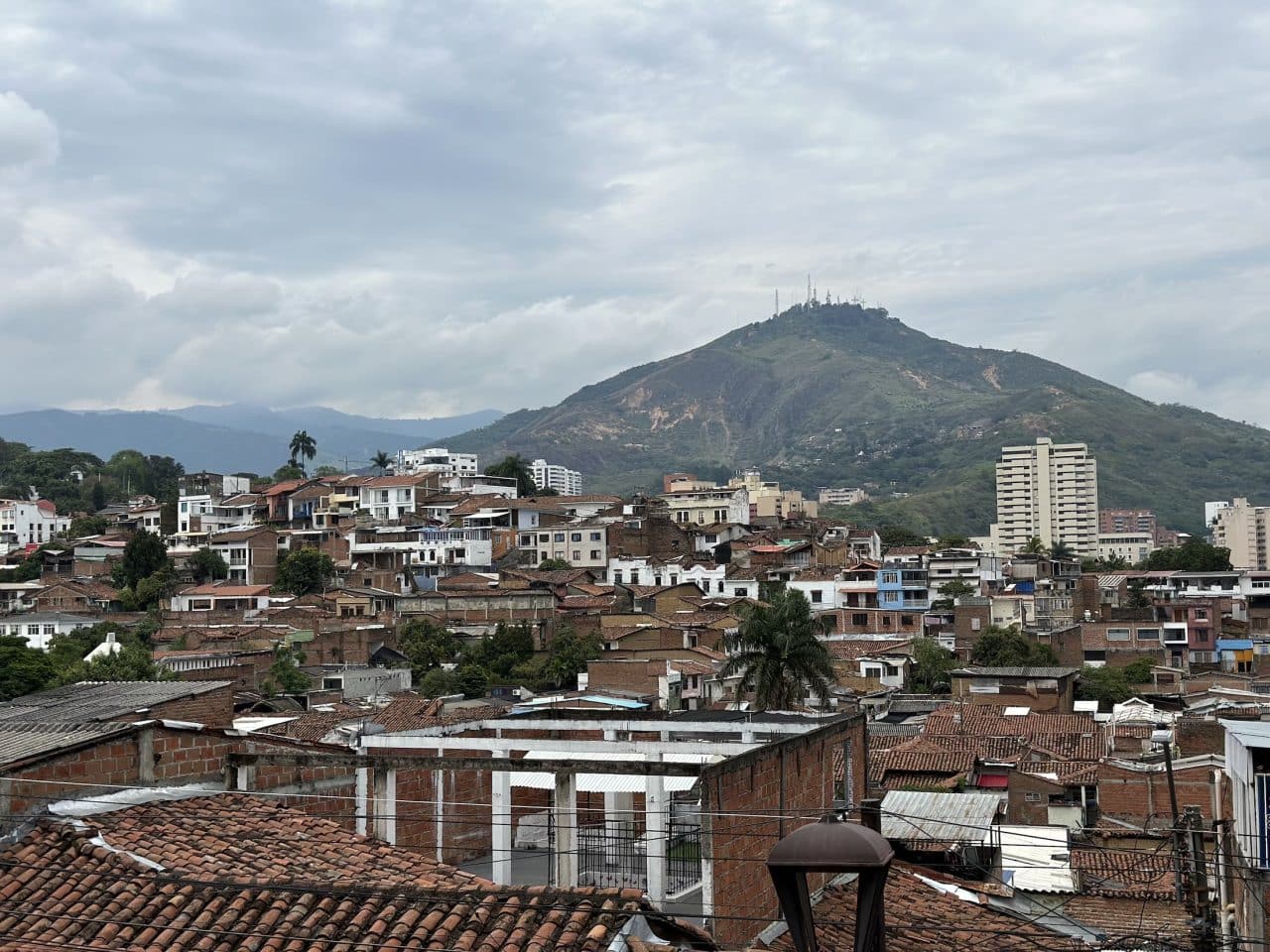
As dusk crept over the peaks of Farallones de Cali mountain range, thousands of people crowded the boulevard along the banks of the Cali River for the People’s COP, or the Green Zone, a public venue at the heart of the city with booths for international development funders, Colombian corporations, NGOs, and Indigenous communities.
As international delegates debated, Indigenous leaders without access to official negotiations or state audiences gathered at the Peoples’ COP to raise awareness about the exploitation of destructive mining enterprises across Colombia, including Canadian companies.
Among them was Elena rio Valencia, an Indigenous leader from the Embera Dóbida people in Antioquia who has come to Cali with the Autoridades Tradicionales Indigenas De Colombia Gobierno Mayor, a coalition of Indigenous authorities across Colombia.
Valencia came to Cali from an Indigenous reserve near Vigia del Fuerte on the edge of Bojayá, a historically neglected region bordering Antioquia and Choco which the Columbian state has allowed to fall into the control of armed groups. At the People’s COP, she spoke out against extractivism in Antioquia and shared some of the impacts of extractivism and conflict.
Valencia explained that the multinational companies operating between Antioquia and Choco engage in extortion by paramilitary groups who provide protection to heavy machinery in exchange for permission to transport drugs.
“In exchange, [the paramilitary groups] ask for permission to transport drugs,” she explained. The Gaitanistas are known to share a cocaine supply chain with Mexico’s brutal Sinaloa cartel. “The zones where they transport drugs are Indigenous territories,” said Valencia. “When a leader tries to stop this, they end up dead or disappeared.”
Amid what nonprofit Cultural Survival has described as an increasing global trend toward the criminalization of Indigenous activism, Colombia remains the most dangerous country in the world for land defenders opposing extractivism.
Global Witness has reported that more than a third of global killings of land defenders last year occurred in Colombia, with at least 461 such murders reported in the country between 2012 and 2023. The number of land defenders assassinated each year has more than doubled since 2021, with nearly half of these attributed to paramilitaries—more than anywhere else in the world.
Out of 148 killings of social leaders in Colombia just this year, the Institute for Development and Peace Studies (Indepaz) has recorded 23 assassinations in Antioquia. Murders include community leaders in all social spheres, including community council members and artisanal mining leaders like Rubén Antonio Jaramillo, leader of the Association of Small-scale Miners of Northern Antioquia.
As environmental activists, Indigenous land defenders, and other community leaders are murdered with impunity, control over gold drives escalation in conflict and displacement. Antioquia has one of the highest levels of internal displacement in Colombia, and artisanal miners are also often victims of forced displacement by corporate land grabs as well as armed conflict between guerrillas and cartels fighting to control drug trafficking routes and illicit gold mining operations.
The Gaitanistas have clashed with leftist guerrillas at Antioquia’s Mina Nueva, which is known for Colombia’s purest gold. The cartel’s militia has also raided villages in the Segovia region, causing the displacement of hundreds of people across Northeast Antioquia.
About a month before COP16, fighting between the two groups displaced more than 100 people in El Bagre and confined around 30 families in Segovia. In February, the Norway Refugee Council (NRC) reported that 3,500 people were forcibly confined in villages in the Segovia municipality—including the Indigenous community Tagual La Po—during clashes between the Gaitanistas and FARC dissidents. The NRC has reported that “confinements have been on the rise throughout 2023 and show no signs of decreasing in 2024.”
The status of Indigenous land defenders and community leaders was on the table for discussion at COP16—but only marginally, with no clear commitments that would force countries to undertake legislative reform.
One issue under discussion was Target 22 under the CBD’s Kunming-Montreal agreement, which calls for the inclusion and representation of Indigenous peoples and local communities in environmental decision-making, ensuring access to information, and respecting their rights over traditional knowledge, lands, territories and resources.
Groups like the Office of the United Nations High Commissioner for Human Rights (OHCHR) and Global Witness emphasized the importance of this target emphasized the importance of this target leading up to COP16, with Global Witness calling for specific language in national policies recognizing the role of land defenders in protecting biodiversity and combating climate change, collecting national data on killings and attacks against activists, and reporting on measures taken to protect activists.
But there was a lack of engagement at the conference with a critical commitment tacked onto the end of the Kunming-Montreal Global Biodiversity Framework’s Target 22, which is to “ensure the full protection of environmental and human rights defenders.”
The target might be addressed at COP30 in Brazil next November, but it will require countries to take seriously the role of extractive industries in conflict zones, the human rights abuses that accompany biodiversity loss, and the financing of criminal organizations.
That seems unlikely when no decisions at COP16 directly addressed the global crisis of the criminalization of land defenders, or the complicity of multinationals in the host country’s ongoing conflict—much less reparations for decades of environmental destruction and murders linked to extractivism.
In Cali, Canada didn’t offer much more than voicing support for cooperation with the UN on a human-rights based approach on conservation, calling for a progress report ahead of COP17.
But without meaningful action by Canadians—including regulating transnational companies on human rights and environmental obligations and advocating for the highest standards to prevent conflict minerals from entering global supply chains—mining companies will continue to take precedence over violations of international humanitarian law.
Legislation within Colombia lacks long-term solutions
While Canada fails to act, Colombia is taking hold of its own land.
President Petro’s land and mining reforms threaten the monopoly and unregulated land grabs that Canadian mining companies and other multinationals have enjoyed in Colombia.
Colombian legislation has historically had a critical gap: no license has been required for mining exploration, only extraction and production, granting multinationals carte blanche to prospect for gold and lay claim to land and minerals without any formal commitment to regulations and responsible business conduct.
Petro’s policy on temporary natural reserves restricts the free rein of mining companies laying claims to unprotected lands, and his mining reforms have pushed to introduce environmental licenses for mineral exploration.
As part of a multifaceted peacebuilding and conservation strategy that seeks to restore lands to landless farmers and Indigenous peoples displaced by war, and transition former combatants into civilian life, Petro’s rural reforms are granting land tenure rights to various communities and ethnic groups across Colombia.
The industry is threatened by the recent approval of the state company EcoMinerales, which is intended to reign in state control over illicit mining, nationalize certain mining projects, and solidify Colombia’s control over its own strategic minerals.
Experts have raised doubts about the permanence of such reforms, however, particularly as the 2026 election draws closer. Colombia’s Mining Code has been in place since 2001, favouring multinational enterprises over local communities and their priorities.
In Buriticá, for example, artisanal miners have sought formalization amid conflict with multinationals and the Gaitanistas who aim to expel or control them. But while many small-scale miners just want the right to a livelihood without having to rely on multinational clients, the informal mining sector is known for rampant human rights violations including the use of slavery and child labour.
Large-scale companies in Colombia are known to purchase gold from artisanal miners under a coexistence model. But tracking collusion with criminal organizations in the mining sector gets murkier when formalization programs aren’t matched with regulation of multinational companies.
Without these measures, the industry continues to lack traceability and accountability for gold mined by contractors working with cartels and entering global supply chains through multinational partnerships.
As Bram Ebus of the International Crisis Group explained, the Gaitanistas may continue to push for the legalization of illicit Antioquian mining projects in peace negotiations initiated in March 2024, much like the Marxist guerrillas Comuneros del Sur have in the department of Nariño. Formalization is an important part of Colombia’s peacebuilding strategy: but where is the line on normalizing criminal liaisons and introducing gold that finances right-wing paramilitaries and mercenaries into global supply chains?
Apart from experimental apps and proposals for blockchain traceability, there is no systematic way to trace illicit gold in global supply chains and no accountability tools to keep tabs on Canadian multinationals with a predilection toward cartel hotspots.
In Cali, Colombia launched an effort for a new legally binding global treaty on traceability for critical minerals. But while Colombia is currently considering gold as a critical mineral, this is not a universal view and leaves room for ambiguity.
Canadian regulation lagging behind rest of world
“The natural world simply won’t wait for us to get our act together,” Canada’s Minister of Environment and Climate Change Steven Guilbeault reminded the international community on the opening day of COP16. Guilbeault himself was not in Cali, perhaps indicating just how seriously he took the proposition.
At a closed meeting between senior state representatives, Assistant Deputy Minister Tara Shannon stated on his behalf that “[o]ur country knows Indigenous-led conservation is one of the most important pathways for achieving Canada’s biodiversity goals and sustaining long-term conservation and climate gains.”
Yet Canada is falling behind other developed countries in holding its companies accountable for collusion with criminality, and human and environmental rights abuses.
While regulation has been developed for the diamond industry to prevent human and environmental rights abuses, the production of conflict gold still lacks meaningful oversight.
In April, Europe approved the Corporate Sustainability Due Diligence Directive that tightens regulation around due diligence, obligating large companies, suppliers and the supply chain, including multinationals with markets in the EU, to make a transition plan compliant with the Paris Agreement.
Though watered down through last minute moves by France, and currently applying only to large enterprises, companies must comply with EU-wide standards on corporate due diligence, identify and address risks to human rights and the environment in their global supply chains, and pay full victim compensation.
Failure to comply can result in maximum penalties of 5 per cent of annual worldwide annual net turnover and introduces a right for victims of corporate abuses to sue companies in national courts of EU member states.
No such directive currently exists in Canada or for the Americas.
The Escazú Agreement for Central and South American states, the closest equivalent, only strengthens national laws around deforestation and other environmental impacts, and unlike the EU’s directive, does not apply to multinationals.
In Canadian law, there are no restrictions on corporate mergers, acquisitions, or shareholding with the exception of the Investment Canada Act (that keeps critical minerals out of Chinese hands). There is currently no law holding Canadian corporations retroactively responsible for human rights abuses.
Unlike the EU’s 2021 law concerning tin, tantalum, tungsten, and gold, Canada has not passed conflict minerals regulation to stem trade of minerals used to finance armed groups, launder money, and support slavery. According to Catherine Coumans, Research Coordinator at MiningWatch, blood diamonds have been “the only mined product that Canada tried to curtail in terms of links to conflict overseas.”
In May 2023, Canada passed Bill S-211 on the use of child and slave labour. It was immediately criticized by the Canadian Network for Corporate Accountability (CNCA) and Secretary General of Amnesty International Canada Ketty Nivyabandi as a “meaningless reporting law.”
While Bill S-211 requires reporting on what steps companies have taken toward preventing child and slave labour in their supply chains, the law does not require any action if companies are made aware of slave labour, nor does it offer assistance to victims.
Shane Moffatt of the CNCA emphasized that even obligatory reporting doesn’t guarantee compliance: a study by KPMG on the first year since the child and slave labour reporting law came into effect found fewer corporate compliance reports than expected, which was attributed to potential ambiguity around what companies fall into scope under the law. Reports also lacked specificity, not naming sources and importers of goods.
Coumans explained that Canada hasn’t developed anything more than the Responsible Business Conduct (RBC), a five-year strategy between 2022-2027 for companies to “integrate leading responsible business practices into their operations.” It draws on other standards such as the UN Guiding Principles and OECD Guidelines for responsible management of supply chains of minerals from conflict-affected and high-risk areas.
However, Moffatt notes that Canada’s RBC guidelines are not legally binding, and thus are “insufficient to prevent corporate abuse.”
More recent Environmental and Social Governance (ESG) guidelines for institutional investors—a framework by which to judge a company’s environment and social responsibility and ethical practices—might fill in some of those gaps to make assassinations, ecocide and dirty money less appealing to investors.
These voluntary reporting mechanisms are not standardized and are entirely dependent on private sector adoption, meaning that the reporting power is ultimately in the hands of the companies themselves. If companies are unwilling to disclose sources, importers and specific risks in supply chains under Canada’s reporting law, how could they be expected to voluntarily disclose sources of conflict gold that has been mined under extortion and violent force?
Canadian economic interests ‘undermine’ peace in Colombia
Though the absence of robust laws on accountability for responsible corporate citizenship have long been exploited with impunity by Canadian corporations, human rights organizations have continued to pressure the Canadian government for legislative change.
The Canadian Network for Corporate Accountability has lobbied for mandatory due diligence legislation that would force companies to fix and prevent risks for human rights violations, and empower harmed communities to seek remedy for harms from Canadian companies. Proposed in 2021 and supported by over 50,000 Canadians, the CNCA’s model law was adopted in full and tabled in Bill C-262—but that bill has not made it past the first reading.
“[Trade Minister] Mary Ng has a mandate to “ensure that Canadian businesses operating abroad do not contribute to human rights abuses,” Moffatt said. By not advocating for corporate duty to prevent human rights abuses from happening in the first place, “she has failed to deliver on her critical mandate.”
In advance of upcoming talks in Geneva towards an international treaty on business and human rights, the CNCA has written to Minister Mary Ng urging Canada to pass new mandatory human rights and environmental due diligence legislation and strengthen the powers of the Canadian Ombudsperson for Responsible Enterprise (CORE).
This position, currently held by Masud Husain, has a mandate to “look into complaints about possible human rights abuses from people, organizations, and communities” when those complaints relate to Canadian multinationals in the mining and apparel sectors.
“However, the CORE lacks essential powers to investigate complaints and compel witness testimony,” Moffatt explained. Those powers were left out of the mandate when the CORE was launched in 2019. “As a result, it is unable to take meaningful action and impacted communities risk wasting their time if they file a complaint.”
Global Affairs Canada is currently undertaking a five year review of the CORE’s effectiveness.

Colombia’s call for “Peace with Nature” at COP16, and the project of transitioning the country toward lasting peace amid neoliberal extractivism that is fueling conflict, has immense bearing on Canada’s responsibilities toward people in Antioquia.
“Colombia signed a peace agreement eight years ago and Canada has expressed and offered support for peace efforts in Colombia,” Viviana Herrera, Latin America program coordinator at MiningWatch, told The Breach. “However, Canadian trade and investment interests in Colombia have instead undermined peace by promoting Canadian mining operations in the country.”
At COP16, Colombian Minister of Foreign Affairs María Ángela Holguín stated that “making peace implies rethinking the economic model.” So amid a conflict that was triggered by neoliberalisation and extractivist capitalism, and that nourished a brutal regime of cartel and paramilitary violence, how can apathy for the status quo continue to be accepted?
It is hard to say if any gold in Antioquia has avoided being tainted by a conflict that has been kept alive by extractive capitalism. The entrenched conflict and systemic corporate impunity has meant all multinational mining companies tread in treacherous territory between complicity with transnational crime networks, brutal human rights violations, and assassinations of activists and community leaders in Antioquia.
While gold mining executives keep lining their own unchecked pockets at the expense of the people of Antioquia, Canada has shown in word and in action that none of this matters to our country’s elites. If it did, the conflict in Colombia’s gold mining heartland would trigger real commitment to prevent introducing conflict gold into global supply chains, and to protect the people who live in the shadow of conflict every day.

“We need media that enlarges the sense of what’s possible.”
Naomi Klein, journalist and author
Want to support hope-fuelled journalism? Become a sustaining member.