
Known for his clear-eyed analysis of the most pressing issues facing humanity, Noam Chomsky is one of the most famous intellectuals in the world.
Despite not appearing in Canadian media very often, many of his books have topped the country’s bestseller lists.
In late March, Chomsky joined The Breach’s publisher Dru Oja Jay for an interview. Their conversation covered the ongoing privatization of Canadian health care systems, the war in Ukraine, climate change, how best to challenge capitalism—and that time he pissed off a CBC Radio host known as “Captain Canada.”
The interview has been edited for length and clarity.
Read the whole interview or skip ahead:
- Canada’s media and ‘war criminal’ former prime minister
- NATO’s role in U.S. hegemony and its provocation of the war in Ukraine
- War and climate catastrophe: why capitalism is a suicide pact
- The most urgent fights for Canadians are against mining and privatization
- What an ‘authentic left’ should look like
- Building a better future through worker control and cooperative movements
Canada’s media and ‘war criminal’ former prime minister
Jay: It’s amazing that you’re taking so many interview requests recently. I’m curious about the ethos behind that.
Chomsky: Well, I’m too old to go out to demonstrations anymore—civil disobedience and stuff like that, I can’t manage it. So I do what I can.
To start off, I wanted to ask you about an appearance of yours on CBC Radio nearly 40 years ago. You were being interviewed by Canadian liberal radio icon, Peter Gzowski [also known as “Captain Canada”] on the public broadcaster’s flagship show, Morningside. You’ve talked about how, when you were previously invited onto Morningside, Gzowski would encourage you to speak about the misdeeds of the U.S. government. But, on this occasion, you turned the tables and started talking about the crimes of Canada—in particular during the Vietnam War. At that point, Gzowski descended into what could be described as a tantrum.
Do you think this interview style reveals something about how the Canadian media operates?
Well, every time I came to Canada, which was in those days pretty common, I would have an interview with Gzowski, but this was the last one. I have a feeling if you look back, you’ll find that this was the second one in a pair. The first one did break up in a tantrum, and there were a lot of listener protests. So he called me back and said, “Could I have another one?” We had another one.
That was it. You don’t talk about Canada. In the first interview of this pair, he invited me as usual to give a talk. And when he asked, “When did you get here?” I said, “I just landed at War Criminal Airport.”
He said, “What do you mean, War Criminal Airport? We say Lester Pearson here.” And then he went off [laughs]. I used to be on CBC fairly regularly, but not in recent years.
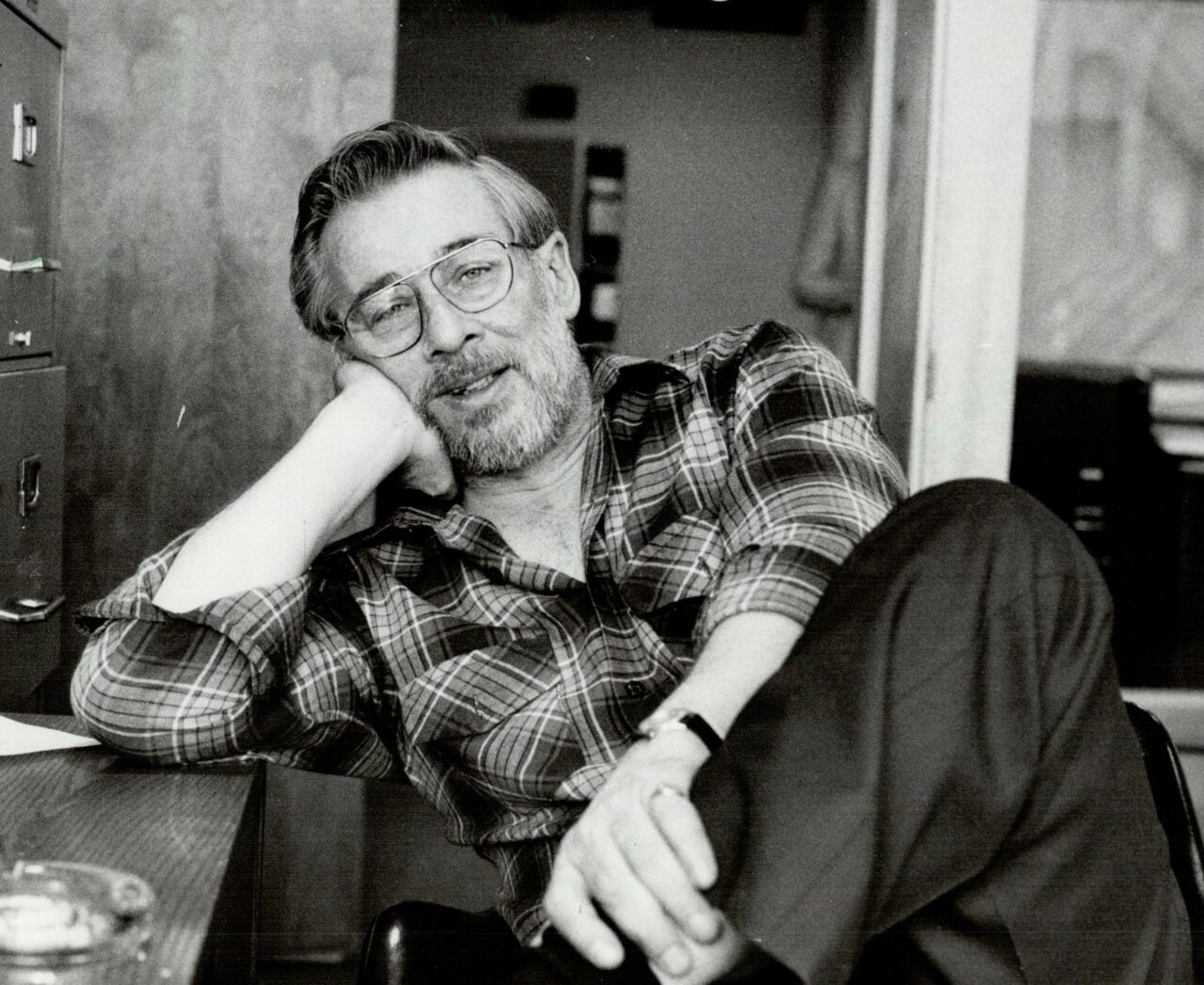
I mean, it sounds like you’re being provocative, intentionally challenging the media strictures—the limitations of debate in Canada. What are your observations about what’s allowed to be debated in Canada?
If I come to talk about crimes in the United States, it’s fine. In fact, I have a book called Necessary Illusions, which was broadcast as a Massey Lecture on CBC. Those were all about U.S. crimes, the U.S. media suppression, doctrinal control, and so on. It was a bestseller in Canada for months, but never mentioned in the United States.
Inverse is also the case. It’s fine to talk about U.S. crimes in Canada. I could talk about Canadian crimes in the United States, but there are some things you don’t talk about.
We see this right now, very dramatically. It happens to be the 20th anniversary of the Iraq War. This the worst crime of the century by far. There’s a lot of commentary about it. Here’s a challenge: see if you can find one statement anywhere near the mainstream that says there was a war of aggression in violation of the UN Charter. The kind of war for which Nazi war criminals were hanged.
It’s obviously true, but can you find one statement? I haven’t read everything, but I read a lot. What I’ve read is what you’re hearing now: “It was a mistake. Bad, bad war. The United States wanted to save the Iraqi people from an evil dictator, but we did it badly. Didn’t turn out right. A couple of things went wrong.”
Hans Von Sponeck—a distinguished figure internationally—wrote a detailed book about Iraq under the sanctions. He knew more about Iraq in the 1990s than anyone. He had inspectors all over the place. It’s called A Different Kind of War. It’s a discussion of how the sanctions were vicious, brutal, destroying the civilian population while strengthening that dictator.
What happened to the book? Well, you tell me how often it was reviewed in Canada. I can tell you in the United States, it was zero. England was participating in the sanctions too. Reviews in England? Zero.
In terms of the Iraq War, it seems like Canada thinks of itself as not having participated. What would you say to that view?
I don’t know the exact details of Canada’s participation. They didn’t join in the direct invasion, but I think they participated in the later actions of the occupation—you can look into that.
Typically, Canada follows along with whatever the United States does. During the Vietnam War, that wasn’t just people like Lester Pearson. Canada was a member of the International Control Commission, which was basically spying for the United States.
George W. Bush—the same criminal who invaded Iraq—when he decided the time had come to overthrow the elected government of Haiti once again, as the U.S. had before, Canada happily joined in the kidnapping of the president and sending him off to Central Africa.
Our foreign minister at the time in 2004—Bill Graham—actually said that what Canada had to do to get back in the good graces of the U.S. after not participating in the invasion of Iraq, was to invade Haiti instead.
[Laughs dryly]. That’s a nice comment. Canada has joined the United States and France—which was the worst criminal in torturing Haiti for years, going back to 1798, when the Haitian revolution took place. The countries of the West, led by Britain and France—the United States joined in—essentially attacked Haiti. They were not going to permit a free country of formerly enslaved people in the Western Hemisphere.
It was continuous—the U.S. didn’t recognize Haiti until 1862.
One of the worst cases was 1915, when Woodrow Wilson invaded Haiti. Haiti was refusing what was called “progressive legislation” proposed by the United States, which gave U.S. corporations the right to buy up Haiti. It was also toying with Germany and other countries—can’t have that, this is our hemisphere. The invasion was murderous: maybe 15,000 people killed, torture, a lot of war crimes.
NATO’s role in U.S. hegemony and its provocation of the war in Ukraine
I wanted to get into NATO. “A primary function of NATO,” as you have written, “is to ensure the subordination of Europe to the U.S.” In the context of Canada, can you explain how that works and how Canada contributes to that military alliance and that agenda?
It’s through military production, participation in NATO activities, and support for NATO expansion.
Remember that at the last NATO summit the mission was expanded to the Pacific and the Indian Ocean. Those are part of the “North Atlantic” now.
The idea is to enlist Canada and Europe in the U.S. campaign against China. Vladimir Putin’s invasion of Ukraine—apart from the criminality of the invasion—was also an act of criminal stupidity from [Putin’s] point of view. It drove Europe into the pocket of the United States.
Europe has other options: the natural commercial trading partners of Europe are to the East. The German-based industrial system in Europe, which has been very successful, is highly reliant on resources from Russia. Russia doesn’t have much of an economy, it’s about the same level as Mexico, but has enormous resources—not just petroleum, but also minerals. Also, it’s a path to the huge China market.
That’s their natural alliance. It’s been a long issue—right through the Cold War—whether Europe should become an independent force in world affairs with interactions with the East, or should it be in Washington’s pocket under NATO? Putin solved that problem. He gave the United States its fondest gift on a silver platter: Europe.
Europe’s suffering for it. They’re declining—they may even de-industrialize. The United States is doing fine.
At a small fraction of the colossal U.S. military budget, it’s seriously degrading one of its only military competitors. That’s a bargain.
Fossil fuel industries and the military industry are just ecstatic over their huge profits. The military industry has new markets opening up as they show off their weapons in Ukraine. Just from every point of view, it’s a huge bonanza for the United States.
For the rest of the world, it’s quite different. I mean, Ukraine itself has been devastated, along with, partially, Russia. The countries of the Global South are suffering from the curtailment of grain and fertilizer resources from one of the main producers, the Black Sea region.
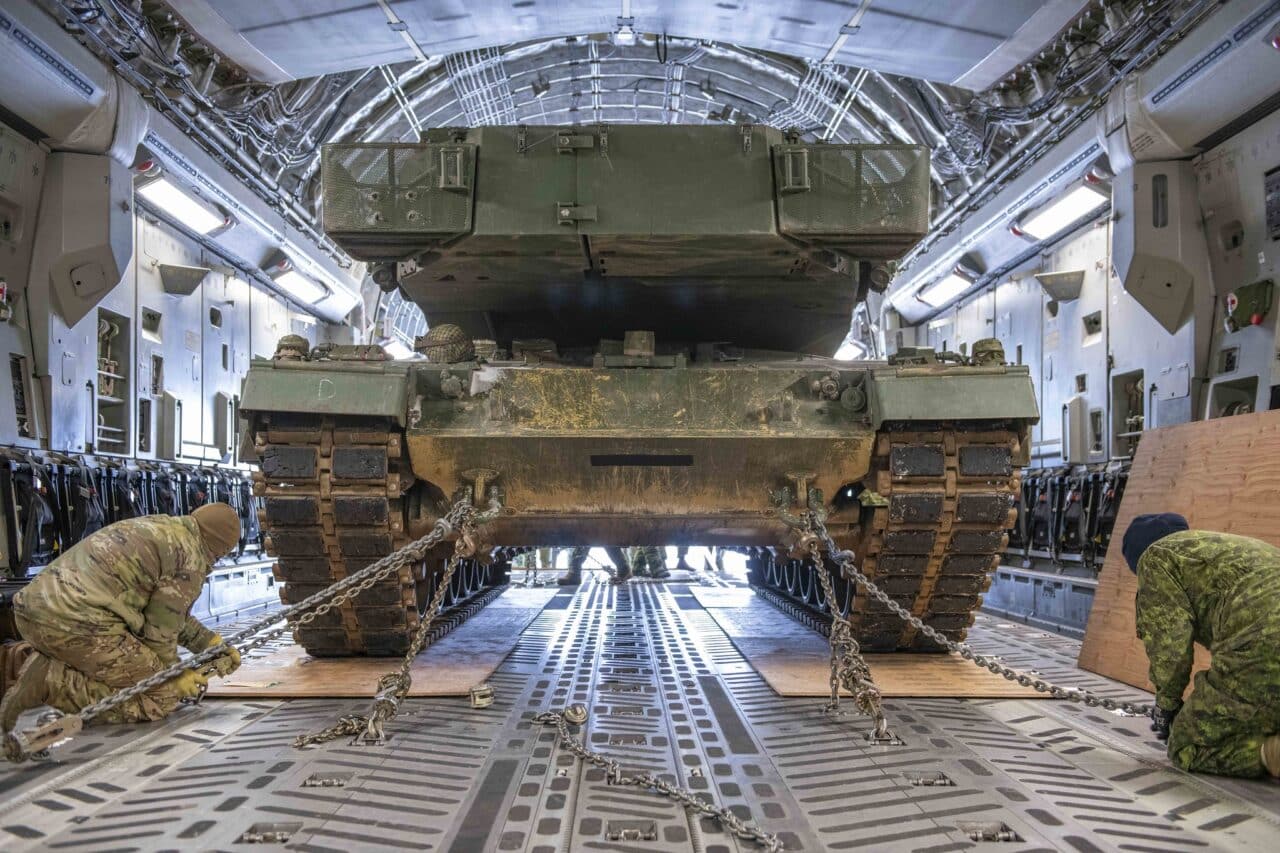
For years, it’s been a standard demand on the left that we should disband NATO—that Canada should pull out of NATO. It’s become much more difficult to make that case. Elite opinion in Europe and Canada has shifted even more dramatically in favor of the alliance. And even in long-term NATO holdouts, like Finland and Sweden, the tide has turned.
And to join, as you said, means military spending, joint activities, promoting expansion, submitting to U.S. leadership. What do you think that activists or anti-war groups should be saying about NATO in the present context?
Well, they should be telling the truth. That’s what the left should be doing. The truth is that Putin did give Washington a tremendous gift. He gave a pretext for NATO to not only exist, but expand.
Finland and Sweden are interesting. They are under absolutely no threat. They’re just gloating over the fact that the Russian military is so weak—they can’t conquer cities a couple of kilometres from the border. But all of a sudden, they’re going to attack major military powers like Finland and Sweden. It’s beyond comical.
The left in Finland and Sweden has been talking about what’s actually happening. They’re already partially integrated into NATO—they join exercises and so on. If they fully join NATO, their advanced military industry will have great prospects, access to markets. They can move towards becoming more militarized right-wing societies, integrated with the NATO system.
Is Canada being defended by NATO? Who’s been defended by NATO? Nobody. I mean, in fact, one very good East European historian Richard Sakwa pointed out a couple of years ago that NATO exists mainly to deal with the consequences of its existence.
It’s the NATO expansion to the borders of Russia that was the provocation that led to the invasion of Ukraine. If they didn’t expand, you wouldn’t have an invasion. In fact, the crucial issue up till almost days before the invasion was: can Ukraine be neutralized?
No Russian leader is going to accept Ukraine, right in the geopolitical heartland of Russia, to be a couple of hundred kilometres from Moscow over an open plane—the scene of invasions. They’re not going to allow it to be heavily armed as part of a hostile military alliance. Not a single Russian leader would ever tolerate that.
Up to the end, Putin was saying, “We insist on a neutral Ukraine, move towards the Minsk agreements.” No reaction from Washington: “Not our business, we’ll expand as we like.”
What would the reaction be if China wanted to bring Mexico and Canada into a hostile military alliance aimed at the United States. No objection, I’m sure.
Do you think it’s silly for Russia to feel threatened by Ukraine on its border, given that it’s a nuclear power?
It’s not Ukraine, it’s Ukraine as a part of NATO. NATO is the most violent, aggressive alliance in the world. Here, we talk about it as a peacekeeping alliance—really?
Serbia, Iraq, Libya—what’s the peacekeeping alliance?
One of the things that the United States did in this century, which isn’t discussed enough, is that they started dismantling the arms control regime, which had been steadily established with difficulty over 60 years. George W. Bush dismantled the Anti-Ballistic Missile (ABM) Treaty.
That’s very serious for Russia, it means putting ballistic missile defences close to the Russian border.
The pretext was that you have to defend Europe against non-existent Iranian missiles. You’re a Canadian intellectual, you may buy that story. Everybody else in the world laughed. In reality, these are actually first-strike weapons.
Then along comes Trump. He eliminated the Intermediate-Range Nuclear Forces (INF) Treaty—the Reagan-Gorbachev treaty. That means short-range missiles in Europe, 10 minutes flight time from Moscow.
Ukraine is a traditional invasion route. Take a look at a map: flat terrain right to Moscow and St. Petersburg. I’m sure Germans went through there twice in the last century. No Russian leader is going to allow it to be part of a hostile military alliance.
In the past, you’ve said you support the right of Ukrainians to defend their territory and you’ve said that the military aid is on the one hand provocative, but on the other hand justified to an extent and that it has to be carefully calibrated. Where do you feel like the calibration is at right now?
Up until recently, it’s been pretty reasonable. The weapons sent were defensive, but now that’s changing. It’s been acknowledged and public that U.S. so-called advisors and personnel are actually directing much of the fire of the advanced missiles, like the HIMARS and so on. Now the U.S. is supplying tanks. It’s recently moved up to jet planes. Where’s it gonna go next?
Russia recently announced that they might consider putting tactical nuclear weapons in Belarus. That’s very dangerous. But why are they doing it? I think it’s almost certainly a warning to NATO, to the United States saying, “If you keep escalating, we’re going to react.”
Notice that Russia has not yet seriously hit western Ukraine. Joe Biden went to visit Kyiv, Janet Yellen went to visit Kyiv.
How many foreign leaders do you remember going to visit Baghdad when the United States and Britain were smashing it to pieces? They didn’t visit.
Peace activists were pulled out of the country, inspectors were pulled out of the countries so they had a chance to survive. This is a very different thing. It’s not a British-American kind of war, it doesn’t go after destroying everything.
It could expand to Kyiv, to western Ukraine, to supply lines, run into NATO supply lines. Then you’re moving up the escalation ladder.
You can move up to terminal war with not much difficulty.

War and climate catastrophe: why capitalism is a suicide pact
In the recent budget, Canada announced hundreds of millions more for military aid to Ukraine. It also placed its faith in the private sector to get us out of the climate crisis. You’ve talked about the American government’s willingness to risk nuclear war by escalating in Ukraine, and in similar terms, there’s the lack of meaningful action on climate change.
The common thread seems to be that elites are driving us toward global disaster. What do you think accounts for this collective inability to step away from the edge of the cliff? Is there some kind of death drive among global elites?
It’s very simple, a word that we’re not allowed to think about: capitalism.
Suppose you’re the CEO of ExxonMobil, or JPMorgan Chase, which is funding fossil fuels. You know perfectly well that you’re destroying the life of your grandchildren. It’s not a secret.
And you ask them, “Why are you doing it?” They have a pretty good answer.
They say, “Look, if I don’t do it, I’ll be kicked out. Because those are the rules of the game. The rules of the game are you maximize profit or you’re kicked out. So if I don’t do it, I’ll be replaced by some other guy who’s not as nice a guy as I am. I, at least, sort of care about these things a little bit, so maybe I can slightly mitigate it. That next guy who’s coming on is just gonna make it worse. So for the benefit of my grandchildren, who I’m killing, I’ll continue to reduce fossil fuels.”
Notice: that’s a logical argument. And it goes back to the insanity of the institutions. If you have a society run by institutions which are driven by the need to maximize profit whatever the consequences—it’s a suicide pact.
You see it even more clearly when you look at the actual legislation. The United States Congress just passed the Inflation Reduction Act—it’s actually largely a climate program. It’s hailed all over as the greatest achievement to bring the end to the climate crisis. Take a look at it. It says, “Let’s bribe the fossil fuel companies to ask them to act nice, and maybe they won’t destroy [the planet] as quickly as possible.”
We solve the crisis by bribing, by offering subsidies to the fossil fuel companies, by offering them things like the Willow Project. In return for that, they’ll allow us to do a certain amount of work on sustainable energy.
It’s as if the Mexican government was to say, “Can’t deal with these cartels, they’re murdering everybody, so let’s bribe them to be nicer.”
You can’t blame the individuals. It’s institutional insanity.
What do you see as the horizons of the possibility of moving past capitalism? What do you see as the pathways that people can take to make tangible, lasting gains in the face of these institutions?
Well, remember that there are many varieties of capitalism. The period of the ‘50s, and the ‘60s is quite different from the period of the ‘80s until today—what was called regimented capitalism. Financial institutions were under control, the Treasury Department controlled them, no financial speculation, no crises, no crashes, some degree of social services and so on.
What followed—the so-called neoliberal period, from Reagan and Thatcher up to the present—is a particular version of unrestrained class war. It’s quite different. It’s had an enormous toll.
So let’s talk about the time span for overcoming capitalist autocracy. It’s much too long for the immediate crisis, but eliminating the savage part of capitalism, that’s feasible.
It’s not exactly utopian to say, “We can go back to a system like Eisenhower.” There’s still plenty wrong with it. My view is it should be eliminated. But at least it offers opportunities to carry out the measures to address threats to the climate, which are pretty well known.
I’m sure you’ve looked at the latest Intergovernmental Panel on Climate Change (IPCC) report. Usually, IPCC reports are pretty conservative. These are consensus documents. Everybody has to agree. That means they understate, they hit a lower common denominator. Not this time. This time they pulled out the stops, no more time mincing words. It’s now or we’re destroyed.
The most urgent fights for Canadians are against mining and privatization
To blunt the worst kind of savagery of the capitalist system, as you put it, what do you see as the sort of most effective or most promising actions that people have taken either collectively or individually to make that happen?
Several levels. On the one hand, it’s critically important to move to put an end to the fossil fuel system. For Canada, there’s a special case: the mining catastrophe. Canadian mining is a scourge all over much of the Earth. Canada can rein that in.
The second is to reverse the move of the state capitalist systems like Canada. Take the Canadian health service: It wasn’t the greatest in the world, but it was moderately decent. Now it’s been moved towards the worst system in the world, the one right to the south of your border: double the costs of comparable countries, with some of the worst outcomes.
Because it’s privatized, it’s bureaucratized and inefficient.
There was a comparison recently—Harvard Medical School did a comparative study of Massachusetts General Hospital, the major hospital in the Boston area, and the main hospital in Toronto. One of the things they compared was administrative costs of bureaucracy. You go to the Mass General Hospital, or the cancer ward, in the middle of the ward, there’s 20 people sitting with computers, figuring out who’s going to pay what, which insurance company will do this and that the other thing. They went to the Toronto hospital and asked, “Where do you have the offices for dealing with these things?” And they were kind of puzzled. They said, “Oh, yeah, we have one person dealing with that, you should come here.”
Now, Canada wants to be like the United States. From one of the better health systems in the world to the worst one.
In England, it’s incredible. The National Health Service was the best in the world. They’re now turning it into the worst in the world, consciously mimicking the American system. It’s very profitable for a lot of people. Insurance companies make a ton of money, private hospitals are very rich. It’s destructive for society.
That’s just one example. Across the board, all of these moves of the last 40 years have to be reversed. Maybe you have the kind of capitalism that allows at least dealing with urgent crises before you go on to try to move to a more just social order altogether.
What an ‘authentic left’ should look like
On that theme of utopianism, it seems that we’ve seen a resurgence of interest in communism and even Stalinism or Maoism, certainly among young people. A lot of people are losing faith in the traditional modes of trying to advance the electoral gains. And part of that is the idea that the only way to hold the line against capitalism for more than a short time is to create a centralized party that exerts a high degree of control. This view seems to be increasingly popular.
My question for you is, do you think that principles of autonomy, democracy and freedom come with a price in terms of the longevity of whatever project we’re talking about?
It’s the other way around. It’s the lack of autonomy and freedom that are bringing about these problems. The elements of what’s called the left among younger people who are kind of neo-Stalinist—that just illustrates the complete collapse of the left in the West.
Any authentic left would be well aware, as people like Rosa Luxemburg were a century ago, that the Leninist and later Maoist reaction is a strong attack on socialism. These countries are farther from socialism than the United States was. Working people had more rights in the United States, than the Soviet Union or China.
But wouldn’t the counter to that be that the U.S. only allowed those rights because the Soviet Union was a threat of a good example—to use a phrase that you pulled out of the U.S. archives at one point.
A little bit of history is useful. The rights were basically won in the 1930s by militant labour struggle, popular activism, so they weren’t worried about the Soviet Union. It was not considered a threat.
You don’t think they were worried about communist revolutions in Europe and so on?
In Europe, the rise of fascism was motivated in part by the fear of a worker revolution. I mean, they call that communism, but it didn’t come from Russia—it came from German workers, French workers. And the Russians were mostly opposed to it.
Take a look at Spain, where there was a revolution in 1936—the Spanish anarchist revolution. Who crushed it? Stalin, the Russians, Communist Party was in the lead in crushing the revolution. They don’t want workers’ revolutions.
This is a brutal, harsh state capitalist autocracy that has nothing to do with socialism or communism. The parties, the activist groups, sometimes laboured under illusions about Russian socialism, but they were illusions all the way through. We have to disabuse ourselves of these illusions. There’s nothing progressive in those movements.
Maoism was a much more complicated affair. But it’s certainly no model for the West.
Building a different future through worker control and cooperative movements
You’ve certainly spoken about anarcho syndicalism quite a bit in the past. In today’s context, how do you see those ideas having relevance in terms of how social movements organize themselves?
Let’s take the labour movement. At the end of the First World War, a century ago, the labour movement in the West was aiming for worker control over industry. In Italy, workers were taking over the industrial system and running it for themselves. In England, the guild socialist movement is pretty close to anarchism. It was workers who should take over industry and run it by themselves.
In the United States, the major labour movement—the Knights of Labor—its main slogan was “those who work in the mills should own them—we don’t want to be the slaves of bosses, we’ll run it ourselves.”
Radical farmers’ movements were the authentic populist movement. Texas, Kansas—it was an agrarian society. They wanted to free themselves from the control of northeastern bankers, market managers, and to run affairs themselves—set up a co-operative commonwealth linked to the labour movement. By force, a lot of them went to Canada, became part of the background for the radical movements in Canada.
This is not that long ago. It can be reconstructed.
I get the sense that in your life you’ve had a lot of different experiences with co-operative structures and I’m curious to hear your reflections on attempts at creating genuine, micro examples of socialism.
Let’s take Canada. Canada has broadly functioning cooperative movements in commerce, retail, and so on. Those are the basis for co-operative movements, they can expand to production. If you look at the old rust belt in the United States, it looks devastated. But in a lot of places, small worker-owned enterprises are beginning to crop up. They’re being organized, there’s quite a lot of them, in fact, integrating into the more service-oriented economy. Well, actually there’s organized movements behind that. The Next System Project—Gar Alperovitz has been doing very good work.
It’s difficult, of course. Class war is not easy.
And there’s plenty of forces on the other side. If you allow them to win the war without confrontation, okay, they win. If the mass of the population becomes organized and active, they can win gains.
Notice that when the savage class war began with Reagan and Thatcher, think back what was the first thing they did? They attacked the unions. Why?
We’re gonna carry out a war against the working class and the poor. First thing we have to do is destroy their lines of defence. Quite sensible.
Attacks on unions opened the door to the corporate sector, effectively saying, “You guys can come in and crush strikes by illegal methods, which we’ll allow.” Runs right through the Clinton period.
That’s class war. If you allow it only on one side, you know what the outcome is going to be.
You’ve said a few times that we don’t understand human cognition and interaction well enough to know what a cooperative society and economy would really look like. You say it will require a lot of experimentation. So what areas strike you as the biggest unknowns here?
All sorts of things. Take some of the concrete proposals, very concrete proposals. Probably the most detailed ones that I know of are those of what’s called Parecon, participatory economics. Michael Albert, Robin Hahnel, wrote very detailed programs.
We don’t know whether these can in fact function, whether people will accept them. Will people be willing to participate in these? There is only one way to find out: experimentation.
Turns out that worker-managed production is extremely efficient. In Spain you have Mondragon, a huge industrial conglomerate—production, banks, housing. It’s worker owned. It’s worker managed. Of course, it exists within a broader capitalist society. So there’s all kind of cutting corners necessarily. But there are examples of success.
Sometimes these worker-owned enterprises are so successful, that big capital moves into try to buy them. They offer the workers who own it pretty magnificent pay, if they just sell out their ownership shares so the big corporations can take it over, then you guys can live in luxury for the rest of your lives. That’s pretty tempting.
If you are a researcher of humanity’s future—blue sky—what would you say would be the questions that you would find the most interesting to pursue or explore when it comes to figuring out what a cooperative society would look like? What kinds of experiments would we have to do to figure out what that looks like?
We have guidelines. The kind of work that Gar Alperovitz has been doing as well as David Ellerman and Christopher Mackin. Or Staughton Lynd when he was alive, and others who were directly involved at the theoretical intellectual level and the activist engagement level.
If you don’t know the details, get involved in trying to implement them. That’s the way you learn.
Is there any one area that would be of interest to you?
The central areas are workers’ control of production and the popular control of communities.
Should communities be run by the community council, town halls, something like that? Or by the rich people and the real estate developers, the bankers and so on? Those are concrete questions. “Should we have a mass transit system?” for example. It’s a very concrete problem.
Take 2008, the huge financial housing crisis. Part of it was that in the United States, the Obama administration pretty much nationalized the auto industry. They just took it over. Well, there were a couple of possibilities.
One possibility was bail out. The owners and managers pay them off, return it to the same class of people, have them continue to produce SUVs and pickup trucks to cause traffic jams.
Another possibility is to hand it over to the workforce and the community, have them work on what we really need, like efficient mass transportation.
If there had been a left—not fantasizing about Stalin, but a real, activist left—they would have built up a popular movement to bring this to public attention first of all—it wasn’t even discussed. Turn it into an issue, then move to implement it. I mean, take a look at mass transportation.
I lived in Boston most of my life. New York is 200 miles away. New York, Boston, Washington is the most heavily trafficked area in the world. It’s ludicrous: you have to take an airplane because there’s no public transportation. There is what’s called a train, but it takes about as long as it took 60, 70 years ago—the first time I took it. If it even makes it—maybe it breaks down halfway through.
People have to live with this? Why don’t we have a high speed train that will get there in an hour, like they do in Europe? You can take a high speed train from Beijing to Kazakhstan, but not from Boston to New York. There’s nothing utopian about that.
I wanted to come back to something you mentioned earlier. You were talking about how to curb the apocalyptic tendencies of the global elite driven by capitalist institutions—and you started talking about defending and improving the health care system.
Would you explain that link a little more—between improving health care and addressing climate change or stopping escalation toward terminal war?
Improving the health care system means providing whatever ought to be a basic human right: available health care for the population. That means universal health care, locally organized, for the benefit of the population, not for the profit of the insurers and the private hospitals. That’s certainly feasible, many countries come pretty close to it.
What that does, first of all—just at the level of consciousness and understanding—develops the understanding that we can work together for a better society. We don’t have to subordinate ourselves to the rich and the powerful, and just sit by while they do every rotten thing that comes to mind.
It also cuts back at the predatory parts of the savage capitalist system. The financial institutions, which are mostly predatory—it cuts back at them. It reconstructs more constructive parts—you can move on to other areas and do the same thing. We can work together to build a better society.
At the same time, move to cut back to fossil fuel use. The fact of the matter is that the government could actually buy the fossil fuel industry at market rates. And it wouldn’t be much different from what the Treasury Department pours out to rescue investors who lost out during the pandemic. It’s the same order of magnitude. Buy it out and turn to sustainable energy.
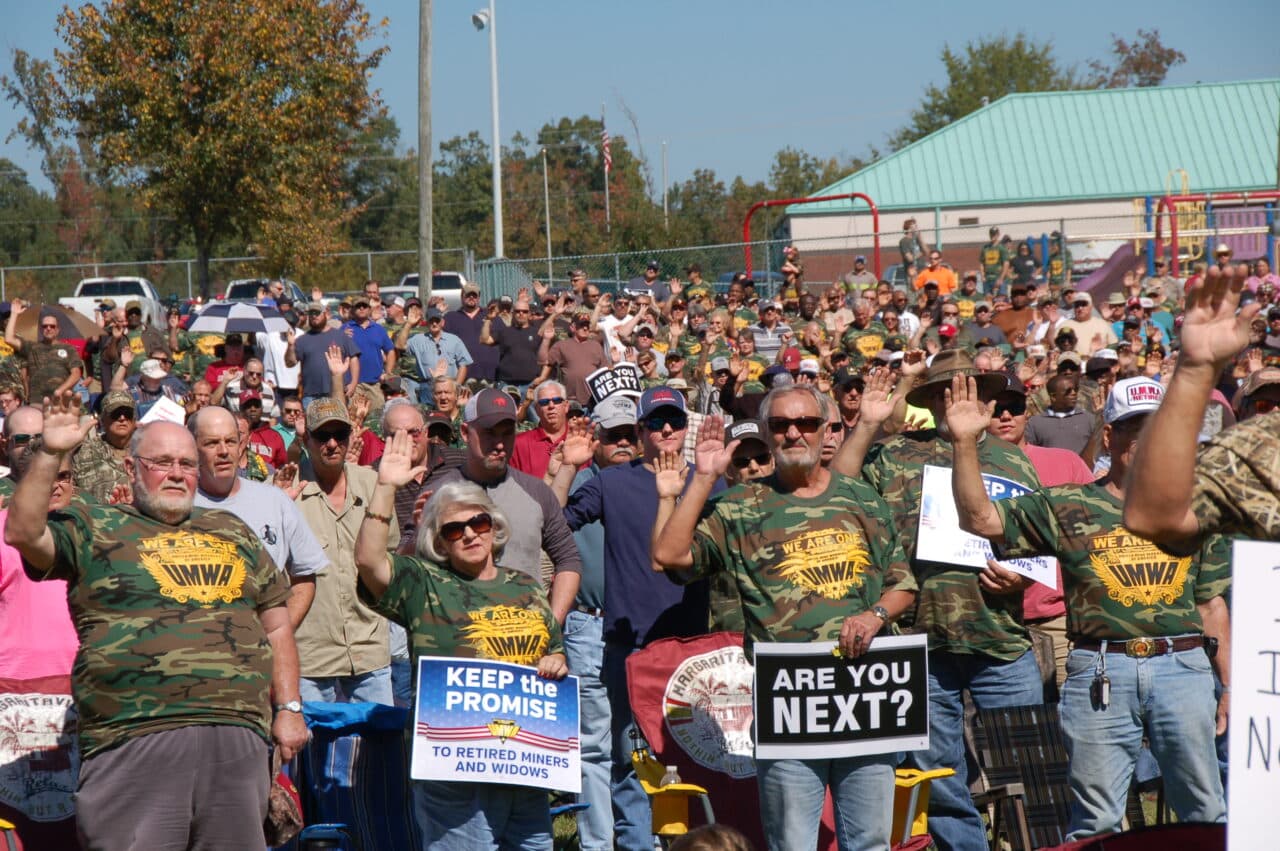
Work with the mine workers, then the oil workers. It’s being done. Take West Virginia, a coal state, very reactionary. My friend and colleague, the economist Robert Pollin, he and his group at the University of Massachusetts have been working with mine workers in West Virginia, Ohio and California. And they’ve actually gotten the United Mine Workers to accept a transition program.
The mine owners accepted. Their own legislator, Joe Manchin, right-wing Democrat, who happens to be a big coal baron himself, is strongly against it. But you’re getting the working people in the mines and the fossil fuel industry to recognize that for a better life for them and their communities, they have to move in this direction. It’s not impossible.
Organizing is possible. In Canada, this is a major issue because of its huge mining and exploitative industries.

“We need media that enlarges the sense of what’s possible.”
Naomi Klein, journalist and author
Want to support hope-fuelled journalism? Become a sustaining member.
NATO | Noam Chomsky says NATO “most violent, aggressive alliance in the world”
Banks | Revealed: BMO bankrolled Israeli weapons maker with a $90M loan

Palestine | War crimes and misdemeanours: Double standards reveal how Canada contributes to Israeli apartheid

1 comment
Comments are closed.
I have a question. Is the reason the co-operative movement a minor player (observation only) because, for the most part, they are membership-owned and directed by membership-elected boards? Worker owned and directed co-ops are practically non-existent. (Again, observation only)