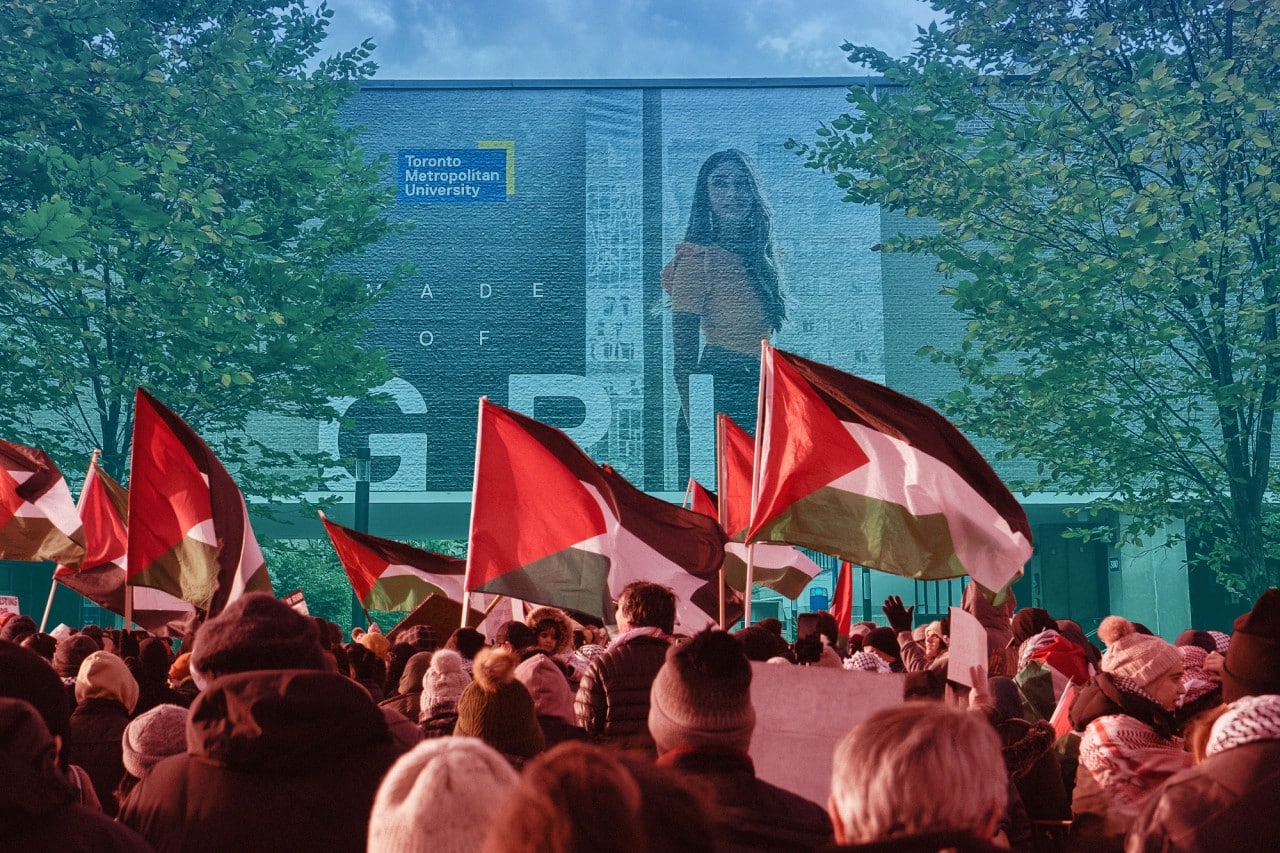
Ontario’s Ministry of the Attorney General required law students from Toronto Metropolitan University who have “current or upcoming employment opportunities” with the ministry to sign a form saying that they did not join an open letter in solidarity with Palestine, which scores of students at the university signed in October—in a hiring policy experts say is designed to punish those who support Palestinians.
The Ministry of the Attorney General’s form represents one of the most extreme moves in Canada to retaliate against students who have protested against the Israeli bombardment and invasion of Gaza, though it is far from the only one.
On campuses across the country, students and faculty who have expressed solidarity with Palestine have received racist messages and death threats, been falsely accused of supporting terrorism and have faced formal discipline by university administrations.
Joshua Sealy-Harrington, a law professor at Toronto Metropolitan University (TMU), said the Ministry of the Attorney General move represents a “flagrant disregard for legal and constitutional rights.”
“For public bodies—bodies with express mandates related to racial justice—to institutionalize racist hiring practices and punish the few brave enough to speak out against the humanitarian catastrophe in Gaza, this reaches a whole new level of legal and moral turpitude.”
And it’s far from the only employer targeting students for expressing these views.
“This is a pervasive phenomenon,” he said. “I’ve talked to many people, students and people in practice, and there’s a big lockdown at major firms against Palestinian solidarity. People have been fired, students are getting these attestations, and social media has been monitored. It’s quite widespread.”
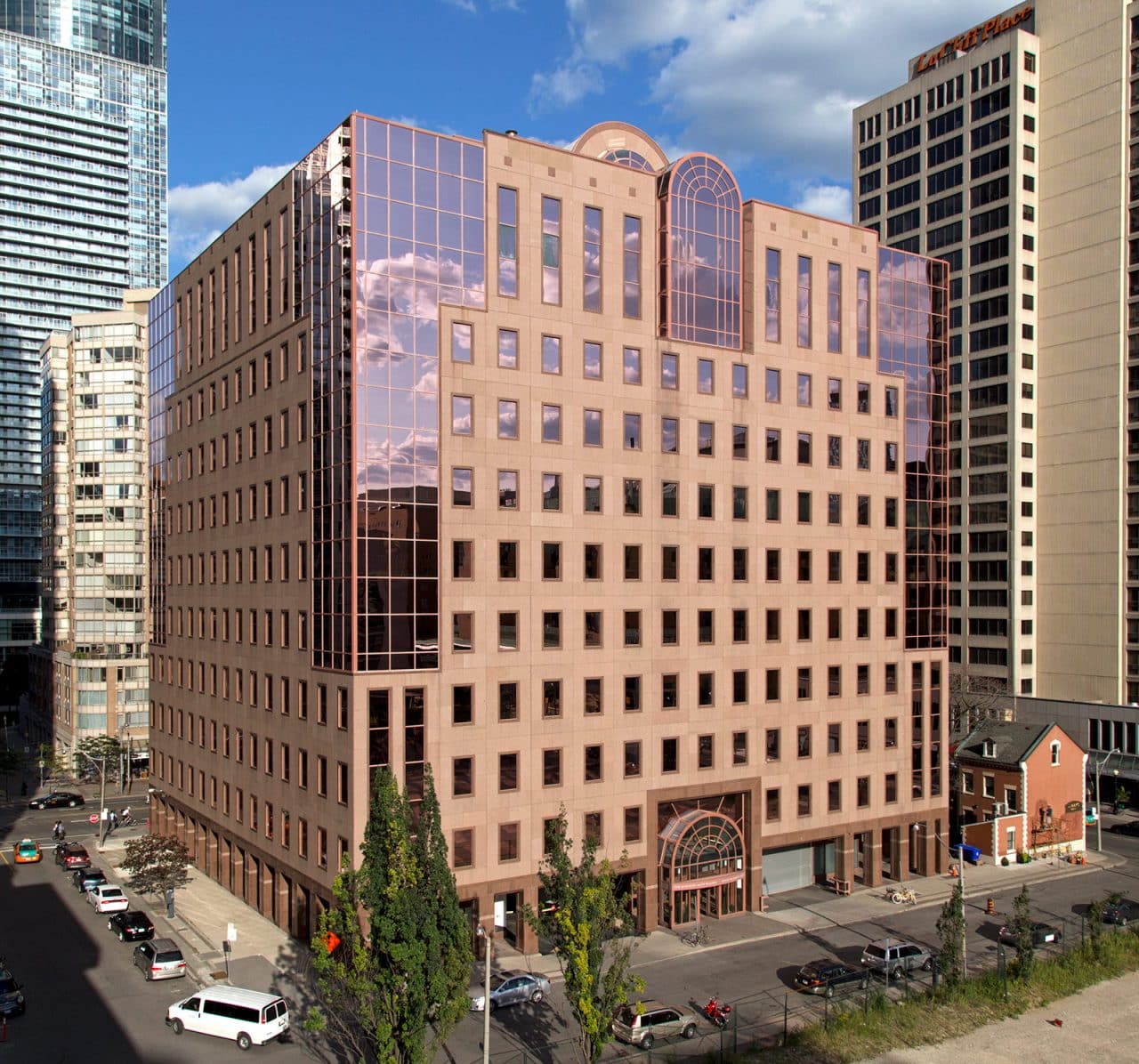
Attorney General’s characterization of student statement called ‘outrageous’
The TMU students were asked to sign a statement that “false reporting on this attestation may be subject to either a revocation of any job offer made to me or discipline up to and including dismissal from employment with the Ministry of the Attorney General, as the case may be,” according to a copy of the attestation that was obtained and verified by The Breach.
In an emailed statement to The Breach, the Ministry of the Attorney General wrote that it is ensuring its workplace is “free from all forms of discrimination” including “Islamophobia and antisemitism.” They also confirmed that “Operational and Human Resource decisions are made by [the ministry] and not by the Minister or the Minister’s office staff.”
“This represents the further entrenchment of anti-Palestinian racism in the public sector,” said Dania Majid, a lawyer and co-founder of the Arab Canadian Lawyers’ Association. “This is a very dangerous direction we’re moving into. Mark my words, as we have seen in the past, this is going to be used as a template against other communities who speak out.”
The students’ open letter, released Oct. 20, was signed by more than 70 students at TMU’s Lincoln Alexander School of Law.
The letter stated that Israel “is not a country, it is the brand of a settler colony,” and argued that Hamas’ attack on Oct. 7 was “a direct result of Israel’s 75-year-long systemic campaign to eradicate Palestinians, and that Israel is therefore responsible for all loss of life in Palestine.”
“There would be no death if not for Israel’s apartheid regime,” the letter said.
But it also described Hamas’ attacks on Oct. 7 as “war crimes,” while condemning “any organization that only condemned Hamas’ recent war crimes killing 1300 Israelis, but has been and/or remains silent on the historic and ongoing war crimes committed by Israel.”
The Ministry’s attestation accused the students who signed the letter of using “their platform as students of the law to express antisemitic views, display intolerance, and excuse terrorism,” which one expert called “outrageous.”
“The language in the law student statement isn’t necessarily language I would use,” said Michael Bueckert, vice president of Canadians for Justice and Peace in the Middle East. “But it’s totally misrepresented as support for terrorism. The letter itself is saying the actions of Hamas on Oct. 7, including the killing of Israelis, amount to war crimes.”
“It also supports the rights of armed resistance and effectively puts the blame for the violence on Israel due to a history of occupation and apartheid,” Bueckert told The Breach. “That might not be how I would present that, but to say this argument is support for terrorism is outrageous.”
Three days after the students’ letter was posted, the law school released a statement saying it “did not issue, endorse, or condone this letter and unequivocally condemns all statements that promote terrorism, discrimination, racism, violence, and hate.”
The same day, the right-wing pro-Israel advocacy group B’nai Brith Canada called for the expulsion of the students, and many of them began to receive hate-filled abuse, harassment, and death threats in emails and private messages. The letter was pulled off the internet.
Later that week, a group of lawyers led by Jonathan Rosenthal, a criminal defence attorney in Toronto, wrote an open letter to TMU alleging these students had endorsed “rape, torture, murder and kidnapping of Israelis, including children and the elderly,” as well as engaged in speech to incite “violence, terrorism, and the destruction of Israel and its people.”
“It is very much an open question,” their letter read, “whether, in light of your inaction, the legal community will continue to offer your students the professional placements that are a requirement of your curriculum.”
In response, a group of more than 700 lawyers released an open letter in November in support of students and colleagues who have faced reprisal for expressing solidarity with Palestine.
It called out practices such as lawyers advocating the blacklisting of pro-Palestinian legal professionals, contacting employers of colleagues and “encouraging they be fired for their pro-Palestinian advocacy,” rescinding interview offers to students, and “bullying and defaming” those who have openly voiced their support for Palestine.
“A disproportionate number of these lawyers who are being bullied…are junior members of the bar, racialized and/or Muslim,” their letter read.
Signatories and supporters received racist messages, threats
A law student at TMU and signatory of the letter spoke to The Breach about racist, Islamophobic tirades signatories were subjected to online, which they said were forwarded to the university but went unaddressed. The Breach has agreed not to name the student due to fear of further reprisal.
“I was shocked by how little it was acknowledged,” the student said. “Even though staff were aware of the death threats, the rampant Islamophobia and racism in the messages we were getting on a regular basis. They were vile, and there was no response from the school.”
Sealy-Harrington, who is Black and who signed the lawyer’s letter supporting the students’ right to criticize Israel, received emails calling him a “f***ing baboon,” “f***ing monkey,” “c*** sucker” and threatening, “You will get yours motherf***er.”
The Breach has viewed screenshots of messages sent to students and faculty in emails, group chats, and social media.
In an emailed statement to The Breach, TMU wrote, “All TMU community members have a shared responsibility for ensuring a culture of respect and inclusion and we do not tolerate anti-Semitic or Islamophobic rhetoric in our community.” The university also wrote that the campus is “working with community partners and law enforcement in an effort to keep our campus safe and welcoming for all.”
TMU did, however, make an official response to the students’ original letter. In November, TMU hired retired Chief Justice of Nova Scotia Michael McDonald to undertake an independent review of the letter, to “determine whether the Student Code of Non-Academic Conduct has been breached and, if so, what actions are appropriate.”
The TMU law student, who is visibly Muslim, said the response to the letter revealed a broader strain of Islamophobia in their profession.
“At first, I was worried about my future, worried they weren’t going to hire me,” they said. “Now, I have to wonder, as someone who doesn’t fit into their culture, if I was ever going to work there anyway.”
A nationwide crackdown on Palestine solidarity
The events at TMU are part of a broader push on campuses to crack down on Palestinian solidarity.
In November, the Students Society of McGill University (SSMU) voted nearly 80 per cent in favour of ratifying a “Policy Against Genocide in Palestine.” The policy called for divestment from corporations complicit in “settler-colonial apartheid against Palestinians.”
An injunction submitted to the Quebec Superior Court has halted the ratification of this vote.
A nearly identical policy was passed by the SSMU in 2022. That time, McGill served them with a notice that threatened to cut their funding and block their use of the university’s name and facilities.
At York University in Toronto, student unions faced similar institutional pushback.
The York Federation of Students, along with two other unions, released a “Statement of Solidarity with Palestine” in October which drew attention to Israel’s bombing of residential neighborhoods, use of white phosphorus bombs, denials of food, water, power, and medical supplies to Gaza’s civilian population, as well as York University’s investment in weapons and arms manufacturers.
In response, York University undertook formal remedial action demanding a full retraction, a public statement that the unions “do not endorse or support antisemitism,” and the immediate resignation of all student union executives involved.
It threatened sanctions, “the most severe of which would be the University withdrawing recognition of the union.”
In Ontario’s legislature, Minister of Colleges and Universities Jill Dunlop read out the names of the executives representing the York student union, as well as those at the University of Toronto Mississauga, inviting another surge in online doxing and harassment.
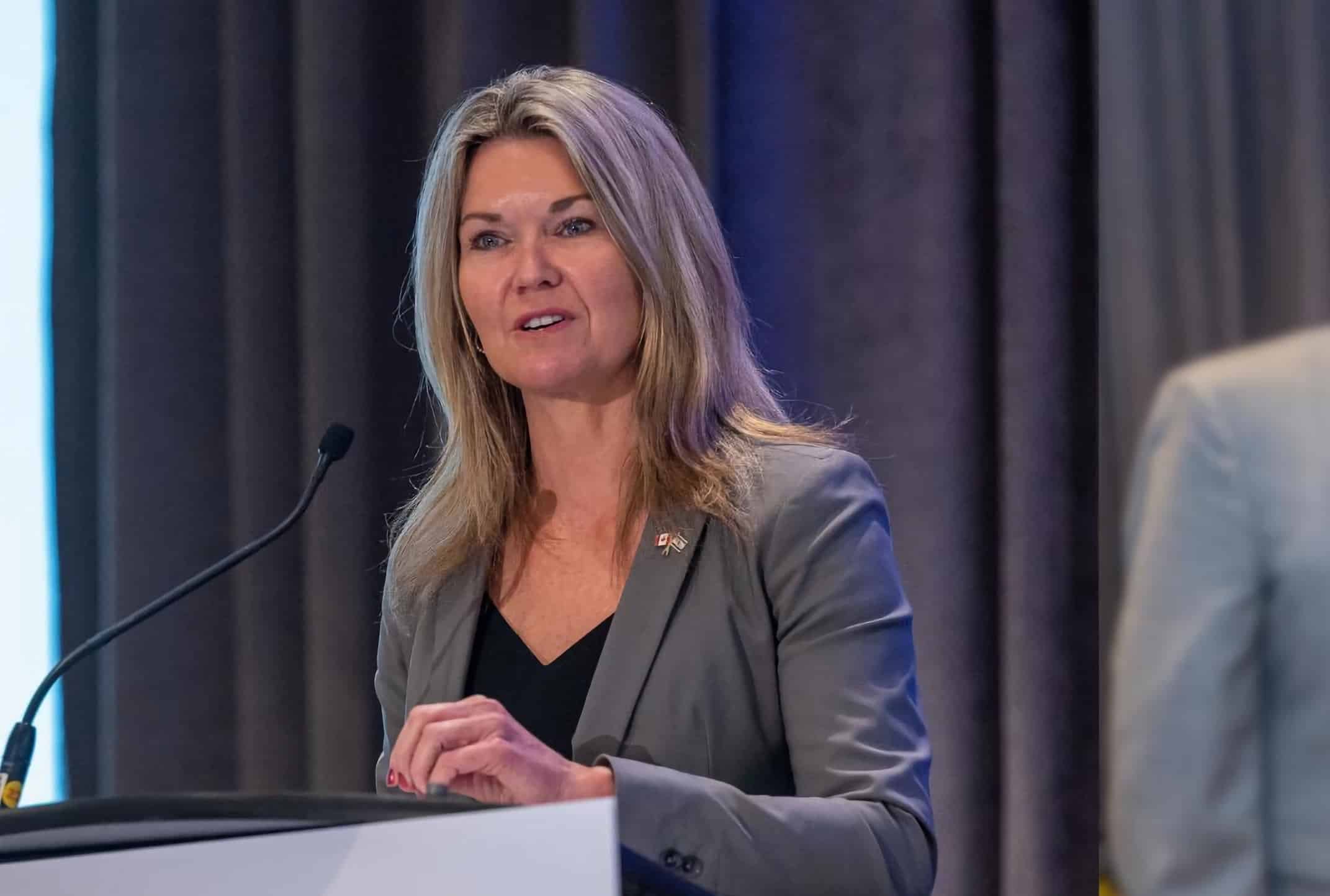
A ‘deliberate attempt’ to smear pro-Palestinian advocacy
At the University of British Columbia (UBC), Palestinian students say they have been abandoned by their university.
An arcane 30-day room booking rule was used to justify the cancellation of one such planned event in November.
“It’s not a rule we ever had imposed on any of our events,” Ria, a UBC student, told The Breach. Her full name is being withheld for fear of harrassment.
In November, a series of posters by the Social Justice Centre (SJC) were plastered with stickers reading “I [love] Hamas.”
“The stickers were specifically placed on Palestine posters, that was deliberate,” said Ria, who is affiliated with the SJC.
A number of high-profile people with large online followings, including former senator Linda Frum, shared images of the stickers.
“We received a lot of hate messages and harassment, with people calling for us to be purged and burned, or expelled from the university,” Ria said. “Some even threatened to leak our addresses and hunt us down.”
It was later reported by student publication The Ubyssey that a contractor working for Hillel–the largest pro-Israel campus advocacy group in the world–had been behind the stickers.
“There’s just something so dangerous about the fact that, in this environment where there’s rising Islamophobia and rising anti-Arab racism, to try and paint a group of marginalized students and associate them with Hamas,” Ria said. “It was a very deliberate attempt to smear our movement.”
In the aftermath of the incident, Hillel BC said it “terminated its relationship” with the contractor, but no further action has been taken by either Hillel or the university.
“We have been told in meetings with UBC admin that there are ‘fears’ around investigating Hillel BC,” Ria said. “We have attended meeting after meeting with admin who force us to retell our pain and our stories only to tell us that they ‘hear us’ but refuse to take any tangible action, even to so much as identify the contractor and hold them accountable for the harm they’ve caused racialized students.”
Mohammed Rafi Arefin, a professor in the Department of Geography at UBC, said the administration’s response has been inadequate.
“I would say the university response could be characterized as absent, or overly cautious to the detriment of Arab, Palestinian, Muslim students, but also those students and faculty that are allied and working against Israeli genocide,” he said.
“What we’re seeing is a one-sided valuation of student comfort and safety.”

“It’s about getting to the bottom of things. It’s about unveiling who has the power and what they’re doing with that power.”
Linda McQuaig, journalist and author
As a non-profit, free from powerful corporate interests, we invest in investigations and uncover the cover-ups. Sustain our journalism for transformation.