
Conservative leader Pierre Poilievre has been blasting CBC News as a “biased propaganda arm of the Liberal Party” as he campaigns to defund the public broadcaster.
The only problem with his claim? It’s verifiably untrue. If anything, CBC is biased toward Canada’s establishment, which includes both the Liberals and Conservatives.
While Poilievre has never cited any actual facts to back up his assertion that CBC is out to get Conservatives, there is hard evidence to show it’s not the case.
Back in 2010, when the Conservatives were in government and the Liberal Party in opposition, an independent research firm conducted a major study of CBC’s content—the only large empirical survey done in recent decades.
The study found that the broadcaster covered the Conservatives more positively than Global News and CTV News.
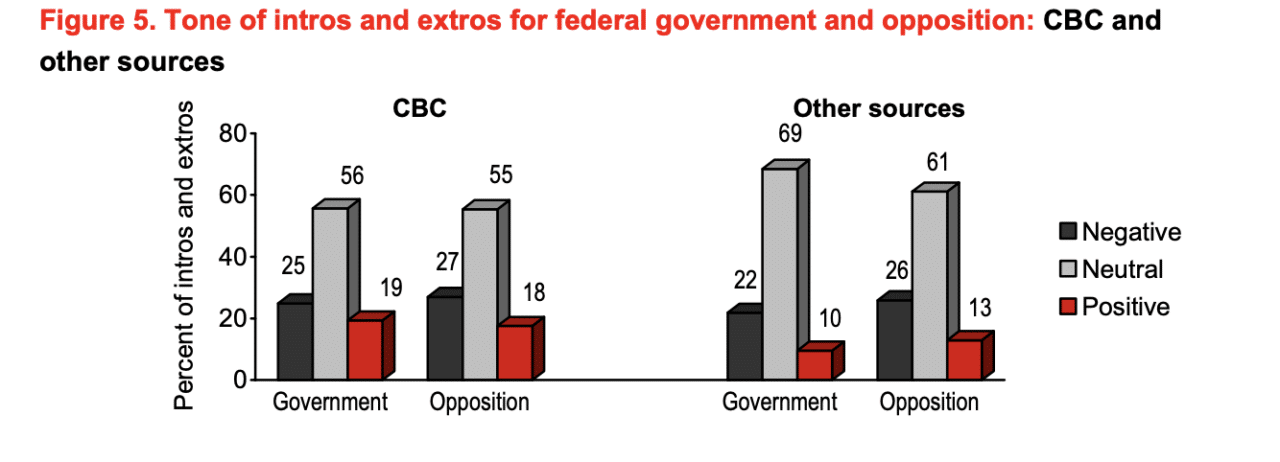
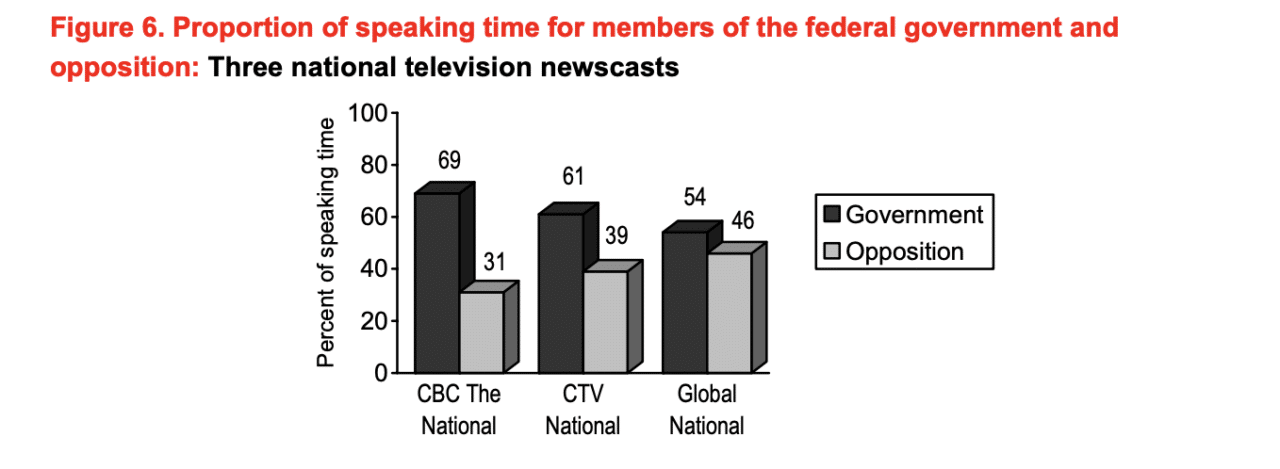
Not only was their coverage more favourable, but CBC also gave more airtime to Conservative politicians on The National than the other outlets did on their flagship national newscasts.
On top of that, CBC’s coverage, compared to Global and CTV, was more positive about the military—a pet issue of Conservatives everywhere—and only a bit less positive about the police and the corporate sector.
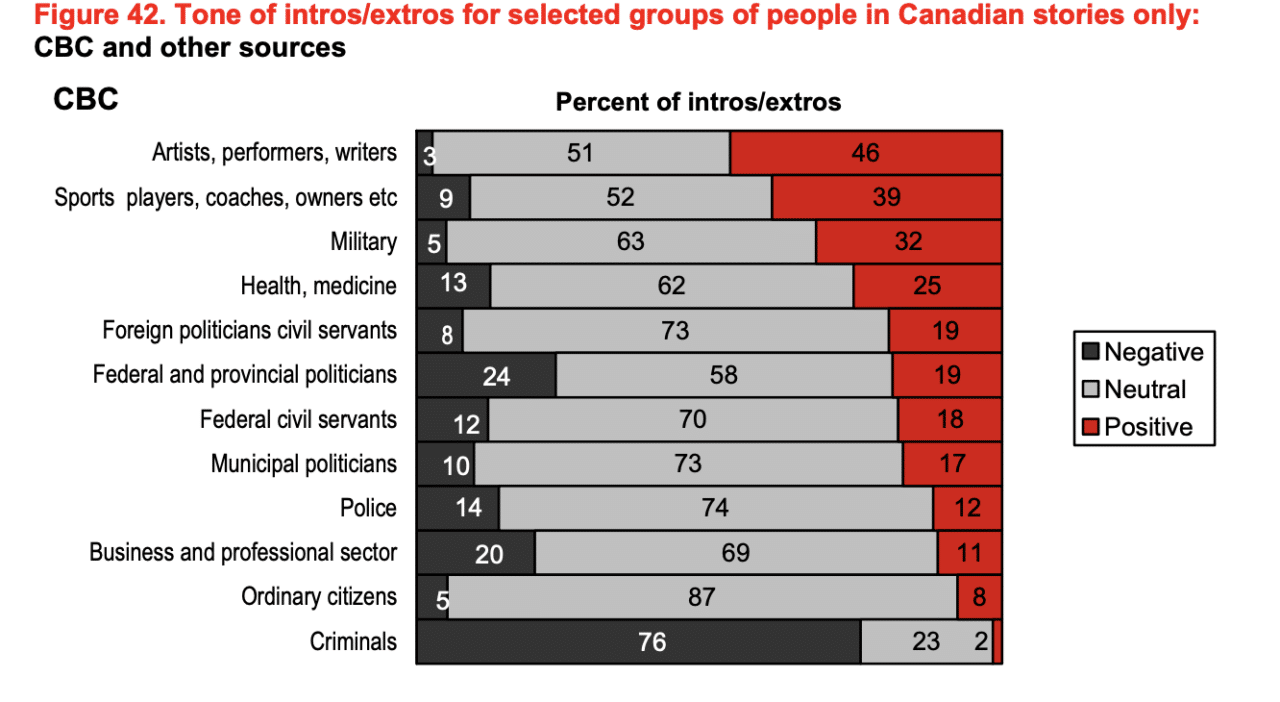
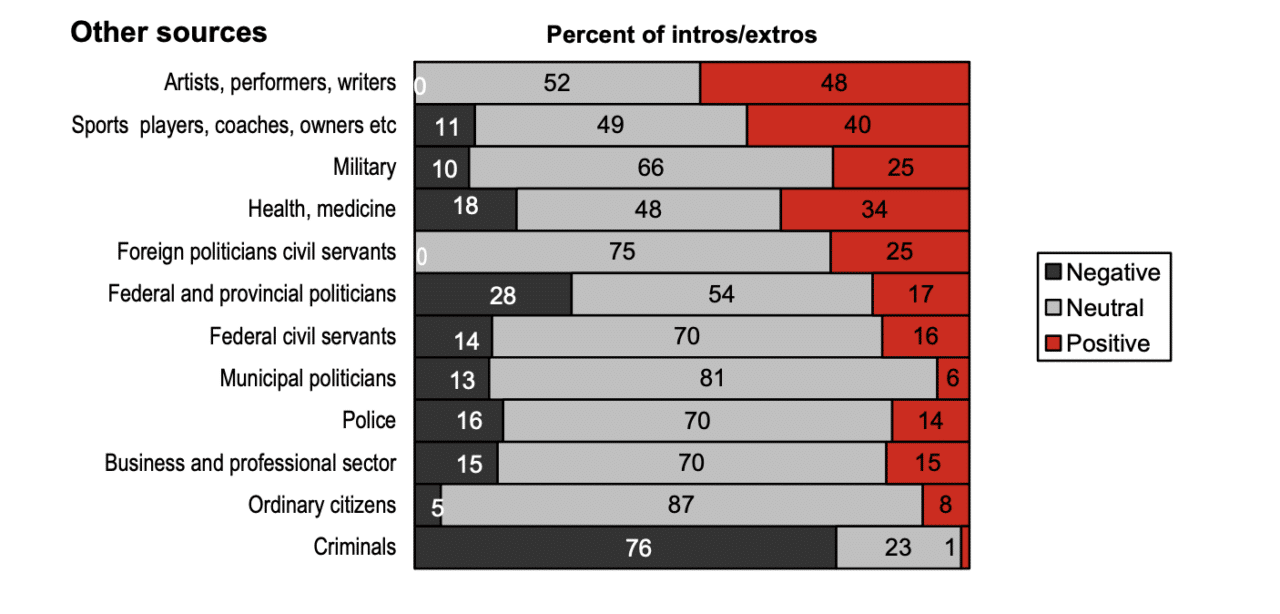
The study, which was commissioned by CBC but done by academic researchers, evaluated thousands of television shows, radio programs and online articles published in 2009 and 2010—but there’s no evidence to suggest this pattern has changed in the years since.
Would updated data like this put an end to Poilievre’s constant accusations of Liberal bias?
Of course not.
That’s because he’s not engaging in fact-based analysis of how CBC operates—it’s a rhetorical weapon intended to badger the CBC to be even more favourable to Conservative perspectives.
Media scholar Robert McChesney likens the approach to basketball coaches who “work” the refs. The goal is to bark in their faces so relentlessly that they eventually start ruling your way.
This right-wing strategy, deployed over many decades in Canada, has been enormously successful in tilting CBC’s coverage.
CBC now dreads Conservative attacks and potential funding cuts and its employees have internalized a fear of anything deeply critical of the status quo. They go to incredible lengths to avoid the appearance of being “left-wing,” in a futile effort to prove how unbiased they are to their right-wing detractors.
There’s an irony about this response to years of Conservative criticism: the biggest cuts to the public broadcaster’s funding have in fact been made by Liberal governments.

The most accurate picture is that the CBC is neither pro-Liberal nor pro-Conservative—it’s simply pro-establishment. It reflects and echoes the range of opinions amongst the Canadian political and economic elite, which includes both the dominant parties.
But as a public broadcaster, it to some degree also reflects the broader culture. In periods like the 1960s and 1970s, when dissident, anti-war and labour currents were strong, CBC made more room for critical journalism. That legacy reached into the 1980s and 1990s, which is why you had left-wing figures like Judy Rebick and Avi Lewis hosting shows like Face Off and CounterSpin, or Robert Fisk sending dispatches from the Middle East.
Journalism like that would have been unimaginable on other outlets. CBC’s role as a counterweight to corporate media is why it has always been so loathed by the right-wing.
But the 1990s ushered in an era of market triumphalism, leading to business-oriented priorities and programming, an influx of managers and journalists from the professional instead of working class, and a 24-hour news cycle whose demands for constant content was ripe for exploitation by public relations firms.
In tandem with the right-wing “working the ref” strategy outlined above, it transformed CBC.
The result of this has been to vanquish progressive voices in place of giving pedestals to right-wing ones (think Rex Murphy, Andrew Coyne, Kevin O’Leary, to name just the most high profile).
The shift was so resounding that someone like National Post columnist Jonathan Kay, who in the 1990s regularly assailed CBC, could by the 2010s be defending the importance of an “ad-free substantial public broadcaster.”
Changes in the broader culture can still lead to developments in the right direction—take, for instance, the introduction of an Indigenous reporting unit in the aftermath of the Idle No More movement. But today, CBC hardly fulfills its potential as a counterweight to the private media.
It more often defers to the reporting agenda set by Canada’s daily private newspapers, which are owned by hedge funds or billionaires.
Its coverage is usually pro-corporate, reporting on climate change as if it’s a nuisance to oil company profits and providing fawning portraits of Canadian wealthiest.
And lobbyists for banks, arms manufacturers and corporate PR firms are frequently allowed to masquerade on its shows as dispassionate “analysts.”
There remain brave and rare exceptions, but in the main CBC amplifies establishment perspectives rather than scrutinizing them.
But it shouldn’t surprise us that Conservatives continue attacking it—short of getting rid of the CBC, their approach will keep slanting it in their favour.

‘We need an outlet, a source of information that is credible, that is progressive, that we can cling to and believe in’
David Suzuki
Want to support journalism you can believe in? Become a sustainer today.
Corporate Media | Trudeau’s fight with Google won’t save Canadian journalism

Corporate Media | Profits wrecked the media—public interest journalism can save it

COVID-19 | How the media misdiagnosed the pandemic

2 comments
Comments are closed.

“no evidence to suggest this pattern has changed in the years since.”
I would suggest that it has gotten worse. But why should we expect differently? Trudeau left the Harper-appointed board of directors in charge.
Great article! It’s handy for me to think of this as psychological gaslighting at an organizational level: undermining citizens’ sense of reality, especially if they grew up with the CBC as their only source of information about the greater world, as did so many rural Canadians.
Of course, those who had access to multiple news outlets very often recognized the limitations of the CBC. And those who devoted extra time and energy to seeking extensive sources of information could understand the CBC’s allegiance to the establishment.