How Mark Zuckerberg created a social networking empire that accounts for over 3 billion users is well documented. Facebook was sleek, loaded faster than its competitors, and leveraged social capital to the maximum by starting on the most prestigious college campuses and moving outward from there. Now, Zuckerberg’s Meta owns Facebook, Instagram, Whatsapp and Threads, among other properties.
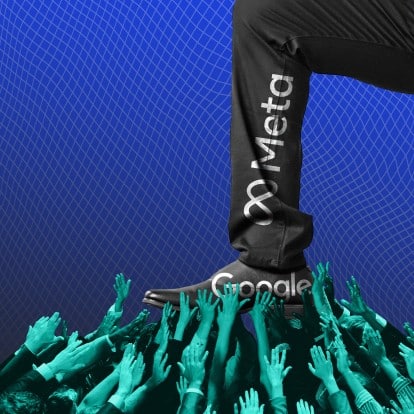
Along with Google, Meta dominates the global digital ad market while maintaining tight control over the ways people maintain social relationships, discuss common interests, and learn new information.
Social ties, public discussion and learning about new topics are not marginal functions of the internet. They are the core of its utility. These functions would be better served by a publicly funded platform than the profit-motivated Silicon-Valley giants that currently fill those roles.
And in the case of Meta specifically, the question of what to do about its lock on social media has recently become more pressing.
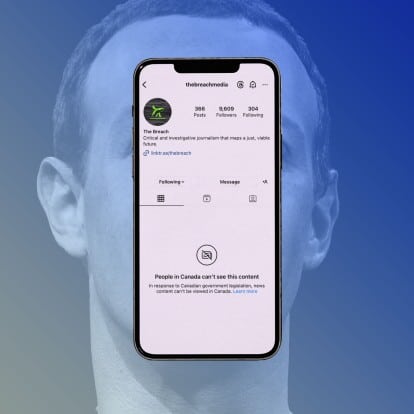
Meta has announced that it’s blocking news in Canada, yes. But that’s just the top of a large pile of evidence that the social media giant is eroding the social fabric globally, from harming childrens’ mental health to inciting large-scale violence in Ethiopia, from promoting genocidal violence in Myanmar to aiding the Trump campaign in the United States and tilting political discourse to the right.
As we face a climate crisis, do we need platforms that make us anxious, farm our rage and pit people against each other? Or could we build something that facilitates cooperation through collective effort, deliberation and mutual aid?
A slew of competitors that could’ve chipped away at Facebook’s control have risen and, in most cases, fallen.
In 2014, Ello got to about a million users before pivoting and then folding. Diaspora got close to the same number. Planetary, based on another open source codebase, is building slowly. Small right-wing platforms from Gab to the Trump-branded Truth Social have sought to harness anti-woke backlash but most have struggled to surpass the one-million users mark.
Mastodon, the most successful so far, has benefitted from a few brief exoduses from corporate platforms, but its 10 million users are barely two per cent of the number on Twitter and a speck compared to Facebook.
The trends are encouraging when it comes to the scale of adoption. The Fediverse model—where posts from a variety of platforms can be viewed through different sites and apps—is increasingly popular. That approach, more akin to how email or other internet standards work, is decoupling new platforms from corporate control and the profit-friendly “walled garden” approach favoured by Meta, Apple, Google, Microsoft and others.
But to wrest control from social media monopolists will require something that has been unthinkable to many observers: government intervention.

Mark Zuckerberg stands in front of a screen displaying the Facebook logo. What began as a site to connect Harvard students evolved into Meta, a global empire with a near-monopoly on social media technology. Credit: Wikimedia Commons
Policy reforms have to come first
The prolific Canadian author and blogger Cory Doctorow recently wrote that “big tech steals from the news but what it steals is money, not content.” Instead of the cash-for-links compensation scheme pioneered by Australia and imitated by Canada in Bill C-18, Doctorow proposes an overhaul of the Google-Facebook advertising duopoly.
The companies’ lock on advertising, Doctorow argues, may be resulting in widespread fraud. While Meta and Google get to collect half or more of every dollar that is spent on online advertising, we know that Meta has fudged the numbers in cases like video views, and could be doing so to an even greater extent.
In lieu of Bill C-18, Doctorow proposes several big reforms: break up the advertising components of Facebook and others to remove the conflict of interest, put strong privacy measures in place to eliminate the competitive advantage of spying on users, and adding transparency requirements for ad sellers.
As Doctorow correctly observes, removing the duopoly’s lock on ad revenue—billions annually in Canada alone—through antitrust, privacy and transparency regulations is what will make it possible for media to sell ads again, and for alternative platforms to emerge.
Crucially, making space for alternatives to emerge is just the first step. The alternatives will still need to be created.
Taking back control of the social graph
Zuckerberg’s Meta has gone to great lengths to protect its position of control. It jealously guards its privileged position in relation to what Zuckerberg calls “the social graph”—the vast trove of data about each user’s relationships to people and brands that is the key to its annual $100 billion-plus in ad revenues.
The company has used a lot of that money to consolidate its power. It has made 101 acquisitions in its 18 years of existence.
But even if Facebook’s control over advertising is severely curtailed by government—and with the lobbying power $100 billion can buy, that’s a big if—the question is how to effectively replace it.
To have a chance at displacing even a severely-weakened Meta, an alternative will need three things: staying power, speed and a hyper-refined user experience.
Staying power means being able to keep things running while momentum grows. Speed is a question of server space and engineering.
User experience comes down to gathering detailed data about how people use the platform, designing improved user interfaces, gathering data on those and testing to create further refinements. That’s a critical but largely invisible part of what has made Facebook and some of its peers world leaders.
In a 2021 discussion, Planetary.social CEO (and Twitter’s first employee) Evan Henshaw-Plath explained that Facebook “has an entire team—a big team—just for the text area of posting new comments…there’s a whole team at Apple just for the first page at apple.com.”
That level of polish is only possible with large groups of experts dedicated to designing and implementing a user experience so seamless that the user doesn’t notice it, but feels drawn to use the application again.
To compete with a corporate giant like Meta, in other words, an open system will need money for engineers, money for servers, money for designers, and of course, money for marketing.
That’s where governments come in.
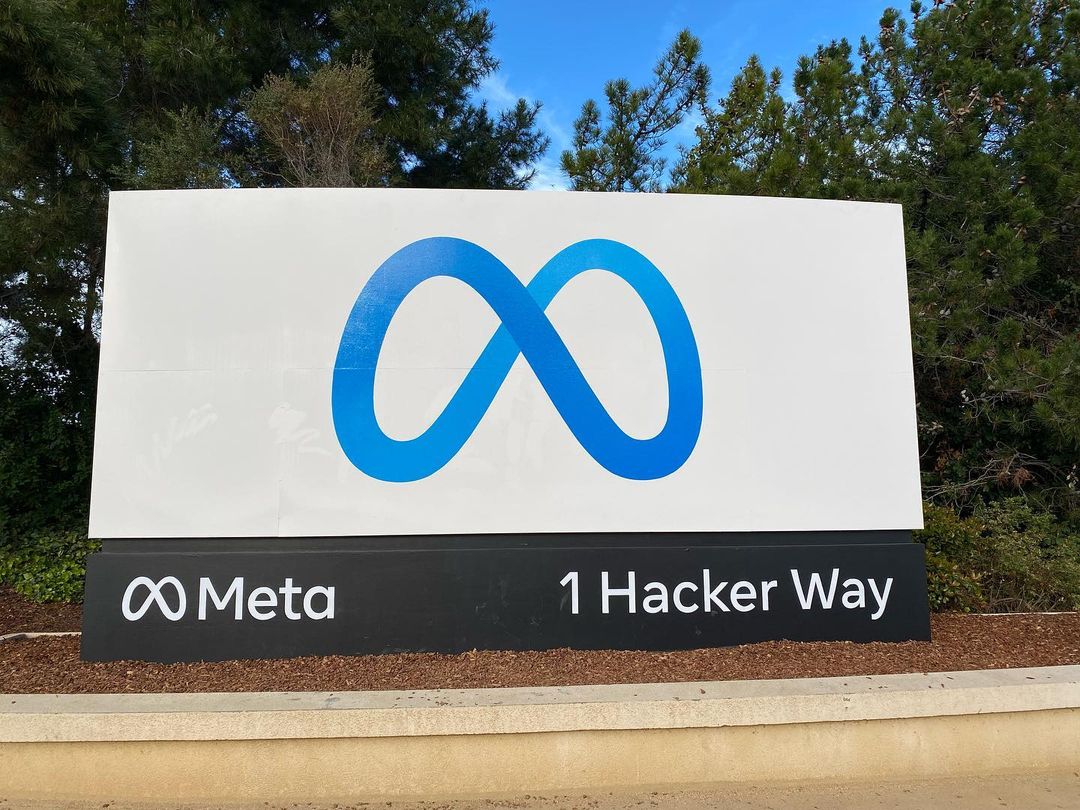
A sign marks the entrance to Meta’s headquarters in Menlo Park, Calif. Credit: Wikimedia Commons
Money for social (and democratic) infrastructure
Raising $30 million a year—a baseline cost for a team of engineers, designers and infrastructure for a truly competitive alternative—for up to a decade while trying to take on one of the most powerful and entrenched companies in the world is a nearly impossible ask for private investment.
But that same amount of money is a rounding error for a national government. And if those governments prove too captured by neoliberal thinking to fund crucial infrastructure, a similar sum could be cobbled together without too much trouble by a coalition of forward-thinking municipalities.
(Montreal increased its already-bloated police budget by over $60 million, last year, so a motivated city council could surely find some change in the cushions for crucial global civic infrastructure. A public telecommunications provider could also cough up the cash fairly easily, not to mention they would be well-placed to run data centres.)
A government-run alternative to Meta and other social networks could be doomed by wrong incentives, be it political meddling, spying or bureaucratic risk-aversion. However, a government-funded ecosystem could be incredibly powerful. What is Silicon Valley and its supposed innovations after all, if not the result of decades of cold war government largesse?
Things like server farms are best run by large, stable entities with oversight—perhaps Canada Post. A variety of independent entities could make use of the physical infrastructure to create innovative variations.
Open source software with a critical mass of users and contributors tends to create its own ecosystem of organizations—cooperatives, non-profits and for-profit companies—all with an established interest in giving back to the commons that sustains them.
On top of a Fediverse-style information base, different service providers fueled by government investments or grants could compete to provide the best way to access the same information.
And while Facebook had Harvard and Stanford students, municipalities could create their own kind of leverage by using new social infrastructure to gather public interest data, provide services or facilitate neighborhood democratic decision making.
The government of Estonia, for example, has put a huge amount of citizen data in a secure cloud, creating opportunities for a variety of developers to build on that—within a regulated framework.

Founded in 1867, Canada Post is the primary postal operator in Canada. The company’s large physical infrastructure and entrenched history in Canadian life could make Canada Post an ideal host for server farms. Credit: Wikimedia Commons
Not starting from scratch
Decades of neoliberalism have melted our collective imagination. We can build a digital infrastructure that doesn’t sacrifice the public good—not to mention our civic stability and mental health—for private profit.
Meta’s vision of keeping us tuned out with celebrities and memes is great for their ad revenues and terrible for the planet.
A variety of open source programs are challenging the “walled gardens” of corporate control. But it will take ingenuity, collective will, and a decent pile of funding for those programs to be adopted on a large scale.
Whenever we decide to wake from the recurring nightmare that is life under Meta, Google and others, the tools are available. The ability to swap out big tech for something that actually helps us solve our problems is at our fingertips.

‘We need an outlet, a source of information that is credible, that is progressive, that we can cling to and believe in’
David Suzuki
Want to support journalism you can believe in? Become a sustainer today.