“There are wide open spaces to breathe in,” promises Saguenay’s tourism website, displaying fjords, forests and snowshoe trails.
What it neglects to advertise: the timber, phosphate and niobium projects spoiling its landscape.
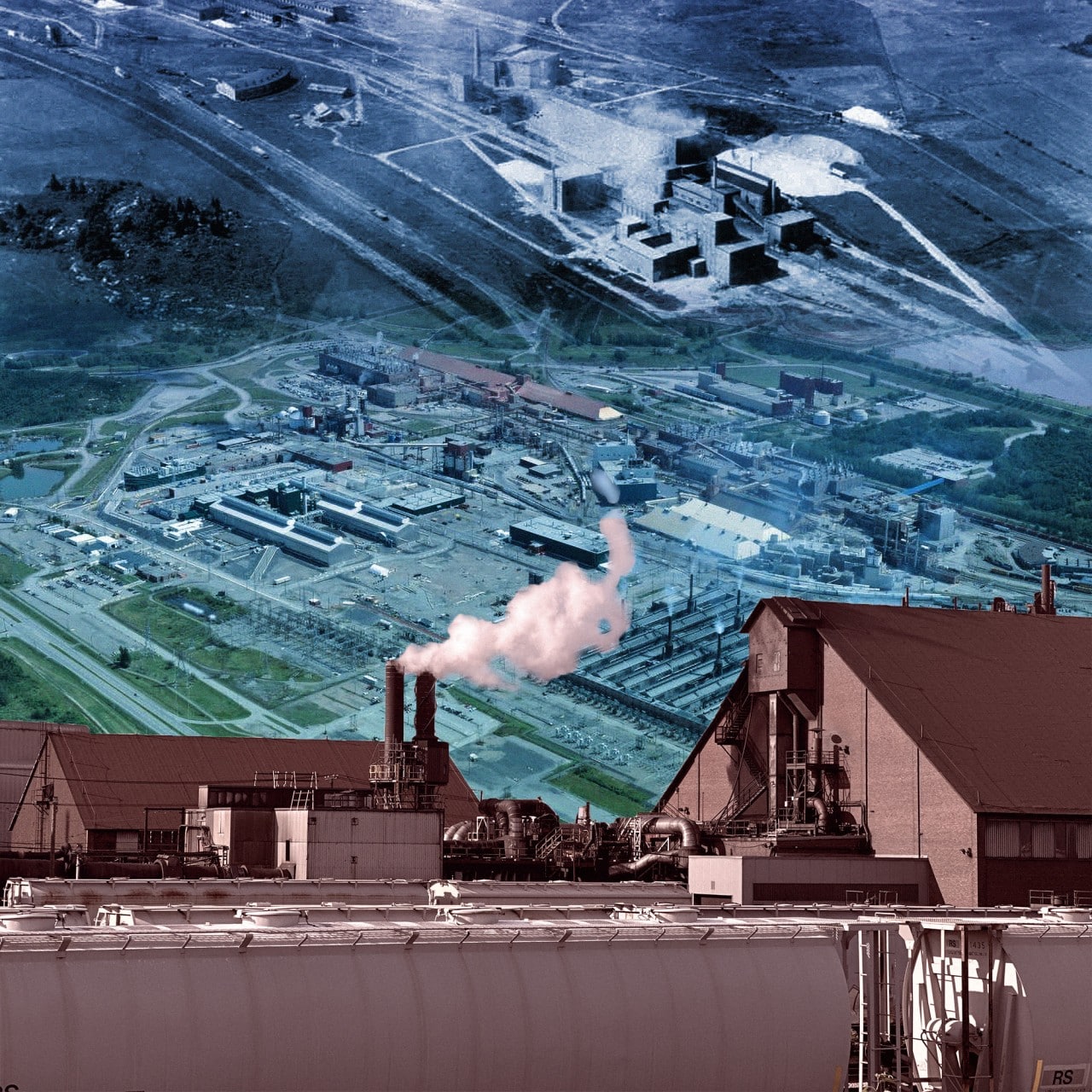
About 200 kilometres north of Quebec City, Saguenay’s boroughs are clustered around mines and plants that include some of the province’s largest industrial polluters.
The imprint of the aluminum industry is felt most strongly. Just one company—the giant Rio Tinto—produces half of its aluminum in the region. Rio Tinto says it spends $1 million a day on its local operations, making it the largest private investor in the area.
Just like the city’s tourism site, the company has made some big promises about decarbonization. Rio Tinto developed a new smelting technology, which it says is among the lowest carbon and most efficient technologies for aluminum production in existence. The technology—called AP60 and massively subsidized by the provincial government to the tune of $150 million—promises to cut carbon emissions from aluminum production in half.
While Rio Tinto’s new technology would reduce carbon emissions, critics say there are other environmental problems with the company’s plans—as well as with the region’s economic dependence on one heavy industry.
Residents of Arvida—the company town that predated and has now become part of Saguenay—have already endured almost a century of pollution, which many in the community believe has caused disproportionate rates of cancer. While many locals are proud of the area’s aluminum production and multigenerational labour in the industry, there’s also a sense of resignation. Ask residents what they think about the future and the region’s dependence on Rio Tinto, and you’ll hear it again and again: “We don’t really have a choice.”
Higher-than-average cancer rates
The Sainte-Thérèse district of Arvida is a historic district famously constructed in 135 days by the American company Alcoa to bring Québecois and immigrant workers from the United States closer to the smelters.
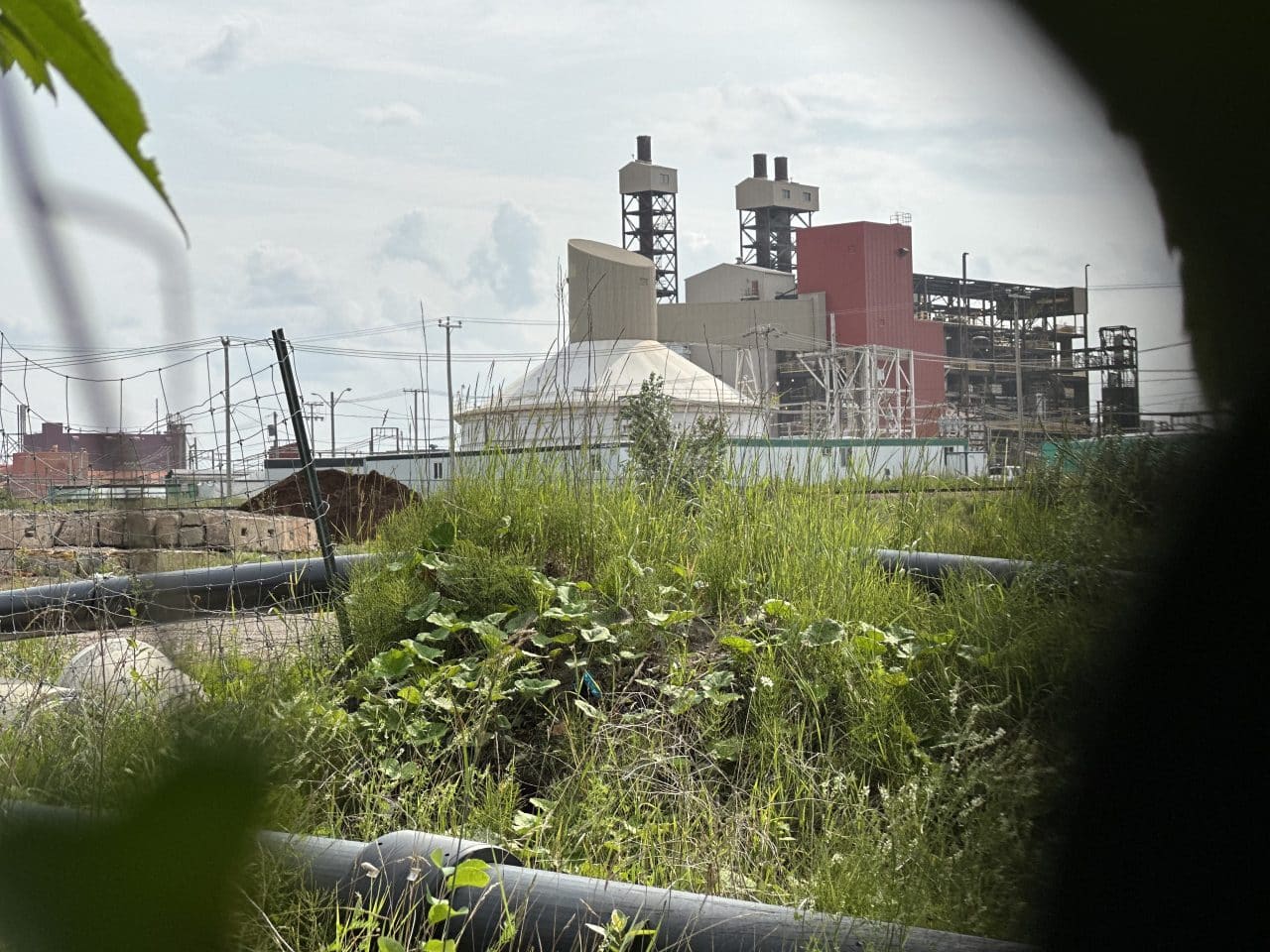
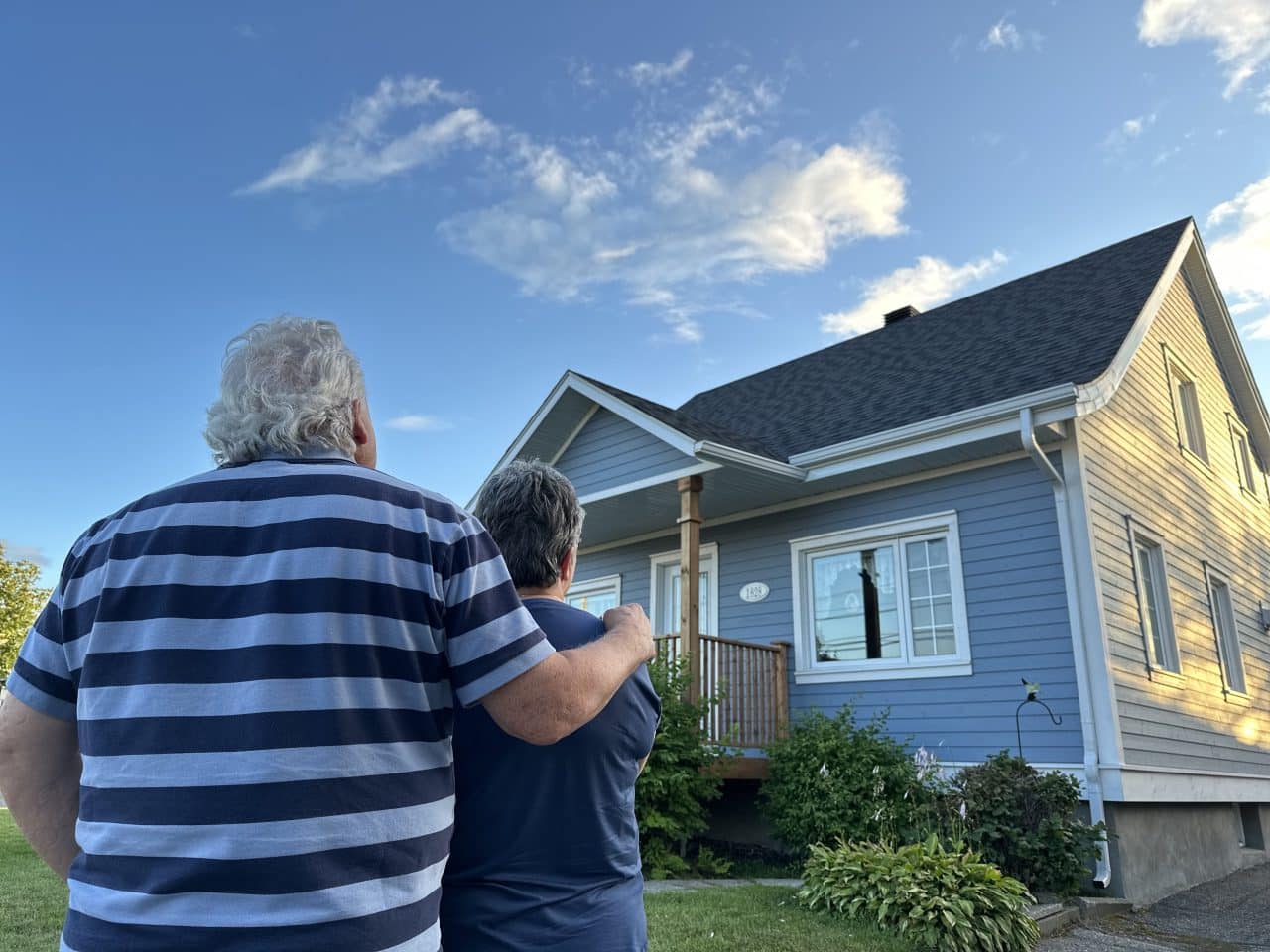
Dorothée Beaumont lives across from Rio Tinto’s Arvida smelter in Sainte-Thérèse.
Her neighbourhood is more affected by aluminum dust than the bauxite further south. Snow is sometimes black, Beaumont said. The aluminum dust deposits onto homes, cars, yards, and into pools. Residents have to replace windows and siding periodically. Dust enters homes when windows are opened in the summer.
“It’s difficult” not being able to open the windows in the heat of August, she told The Breach in an interview at her home.
She expressed concern with the air quality, glancing at her husband fussing over the stove. He worked at Alcan for 20 years. He is living with “three different types of cancers,” she said.
For many, Alcan—the Canadian aluminum manufacturer that preceded the Australian multinational’s acquisition in 2007—provided income, schooling, training and housing over past decades. It created a community with multigenerational roots in the aluminum industry and a deeply sentimental attachment to the factories.
Despite the strong sense of community pride in Arvida’s aluminum, the raw material is exported abroad instead of being locally manufactured into cars, parts and aluminum roofs, creating a sense that the Saguenay doesn’t derive deeper benefits from what it pulls from the earth.
In the construction holiday doldrums, empty terraces in the Arvida town centre flank a new Rio Tinto community affairs centre that was opened in January. But despite the company’s portrayal of community engagement, some residents have described that they don’t feel that there are adequate means for citizens to raise their concerns.
“It’s not the ordinary citizens they’re concerned about,” said Francine Bergeron, an Arvida resident for 27 years. She remarked on how the government has allowed pollution to continue despite corporate promises to install more AP60 chimneys. “We don’t have a government that puts a foot down to say, that’s enough.”
Rio Tinto’s spokesperson did not directly answer a question about what accountability the company has taken for people who’ve developed cancer after working at or living near the smelter.
“The health and safety of our employees is Rio Tinto’s top priority,” the company’s statement said. “We provide our employees with continuous training and all the required personal protection equipment to ensure they return home safely after their workday.”
Barely two kilometres south of Sainte-Therèse, Saint-Jacques still lives up to its working-class heritage as the labourers’ sector.
‘The damage is already done’
Lynne Tremblay, a 70-year-old former nurse, soaks up golden hour by reading on her porch, a tablet resting on her knees. She said that members of her family, including her father, had worked at the smelter. They later developed different forms of cancer. As a nurse, she would see other people’s family members retiring from the smelter and also developing cancers.
With industrial activities spanning Alma to La Baie, the Saguenay-Lac-Saint-Jean region is known to have higher-than-average cancer rates in Québec.
A government report on the region’s cancer incidences up to 2019 cites the Jonquière and La Baie regions as having the highest rates of cancers other than skin cancer in Québec, with lung cancer as the dominant form developing in patients. While Saguenay health authorities have described cancers in the region as attributable to an aging population and preventable factors like smoking, aluminum plant and secondary aluminum processing workers are known to be at higher risk for developing cancer of the lungs and bladder, and non-Hodgkin’s lymphoma.
“It’s definitely affected others—enormously,” Tremblay said. “There are improvements, but the damage is already done,” she added, referring to improvements over the years in workers’ safety equipment at the smelter.
Does she think Rio Tinto has obligations toward the community of Arvida even after it installs its new technology?
“Certainly those whose lungs have been affected,” she said. “But my god, how to go up against a company to claim compensation? That’s another matter.”
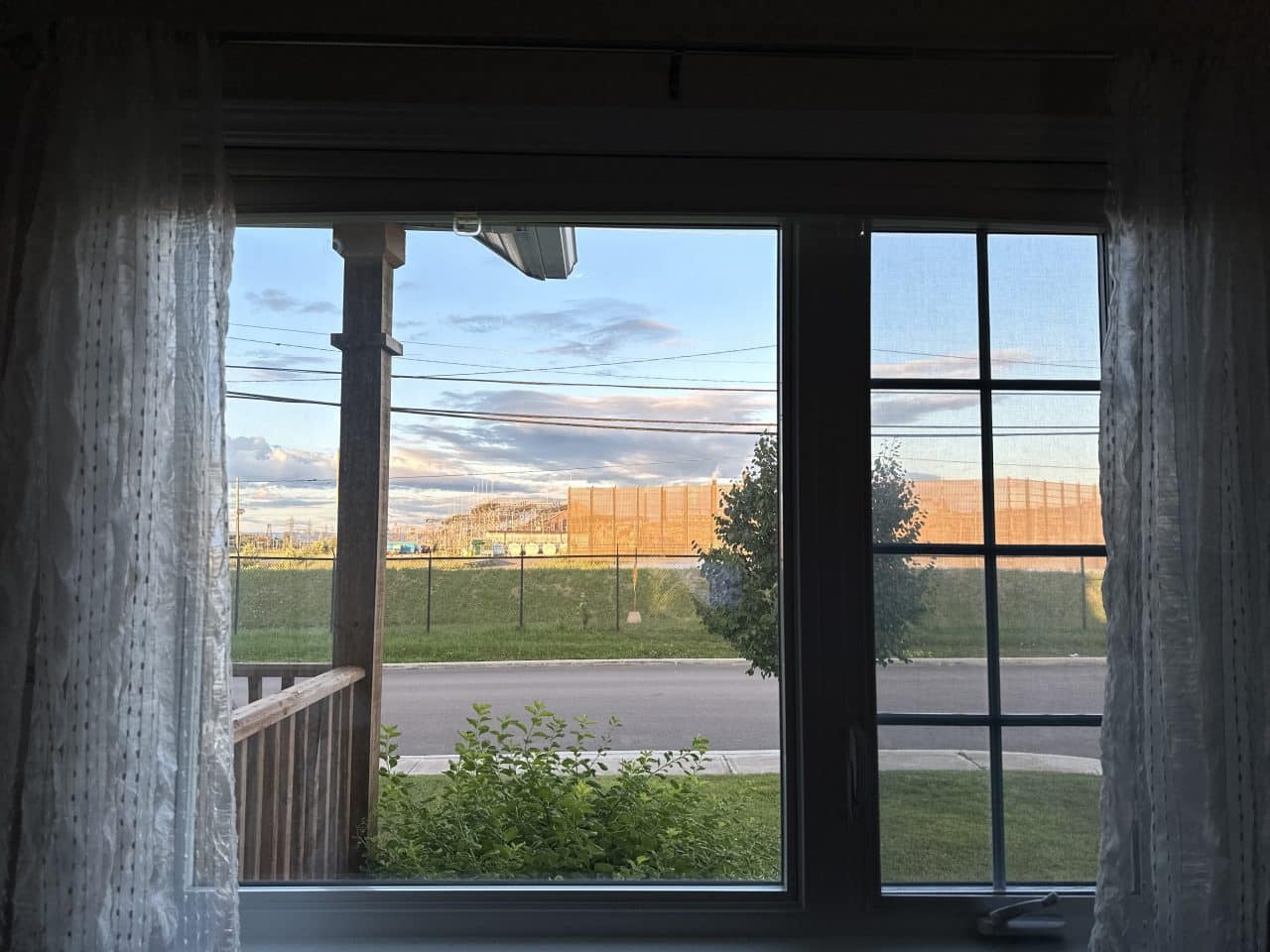
Rio Tinto has said it will eventually close its Arvida smelter that uses highly polluting 1950s-era technology.
The plan, Rio Tinto says, is to replace the smelter with a new facility that will produce more aluminum at half the rate of per-tonne emissions. But the company has been promising a new modernized facility since 2006, and construction on the additional low-emissions pots has been delayed repeatedly.
The latest postponement came this past spring, allowing the Arvida smelter to continue production at current emissions levels until 2025.
The company’s spokesperson listed some specific steps Rio Tinto has already taken, which have reduced its fine particulate emissions by eight per cent.
“We have worked very hard to improve our environmental record, and we have a number of achievements to be proud of,” Rio Tinto’s statement said. “Air quality around the Arvida plant has steadily improved in recent years.”
When the Arvida smelter is shut down, the company could reduce its fine particulate emissions by 90 per cent, the statement also said.
Bauxite in the air brings red snow
The red sludge that results from extracting alumina from the raw material bauxite is highly toxic and corrosive—not exactly something to attract hikers and snowshoers.
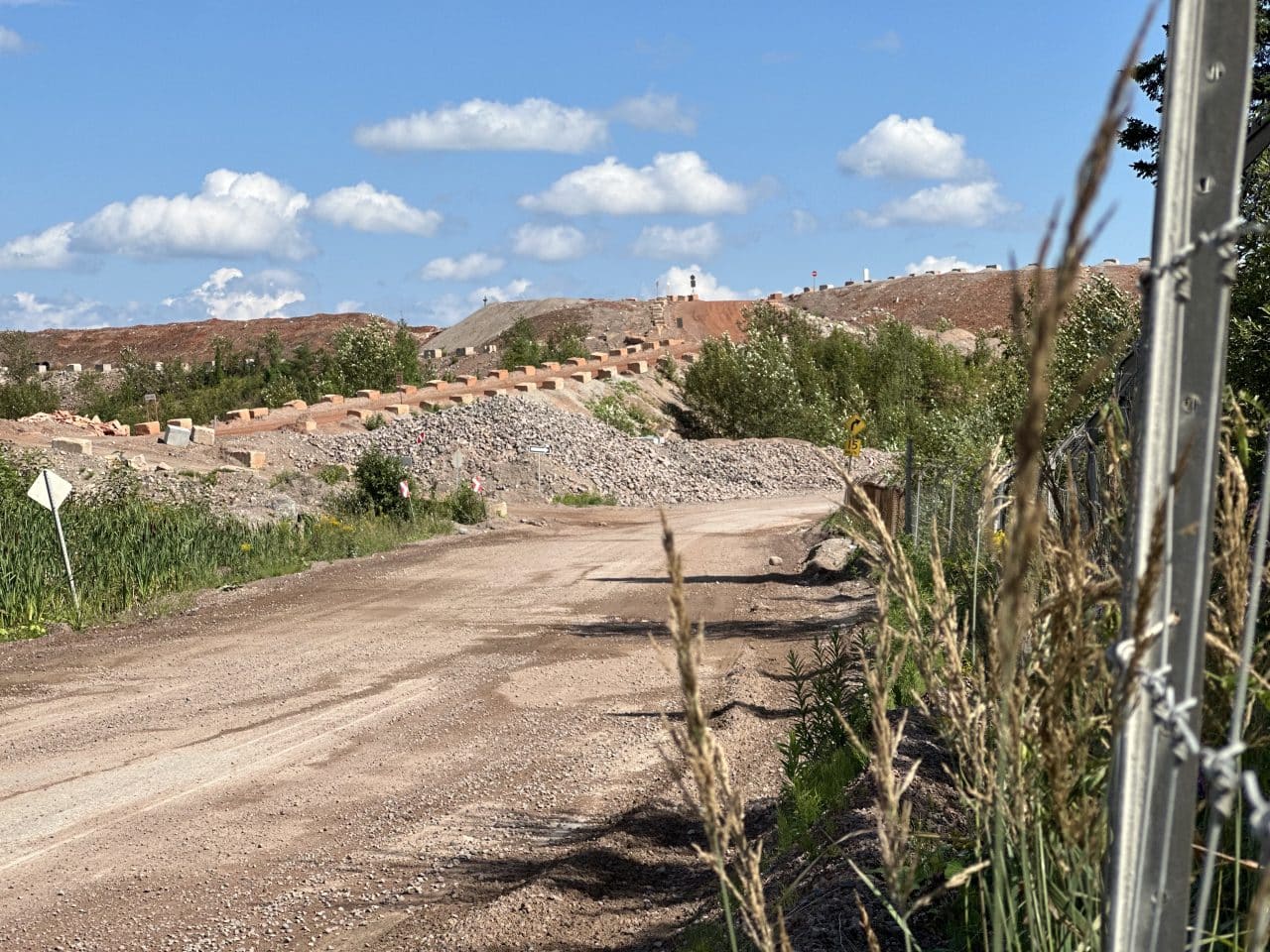
Long-term storage of bauxite residue is harmful to the environment. The sludge is also known to contain radioactive material. These tailings have typically been stored in an artificial reservoir, as with the current waste site at Arvida. Aging bauxite sludge ponds have long raised concerns about their risk of polluting watersheds and ecosystems, as with the devastating tailings accident in Hungary in 2010.
Rico Dallaire, who has lived in his Arvida home for six years, is one of many residents concerned about impacts from the bauxite sludge pond and plant pollution on the watershed. “All the small streams flow into the Saguenay.”
This past winter, bauxite dust blanketed Arvida following a December storm that brought strong winds. Snow, roads, and homes were covered with red dust that was allowed to sit from December until the spring thaw.
“In the winter, the snow was red. There was bauxite in the air,” Dallaire said. “Last year, I called the city to tell them that it’s not normal for the snow to be red. My son was playing in red snow. It’s not normal. Nothing was really done.”
In the aftermath, Québec’s Ministry of the Environment found Rio Tinto to be non-compliant with environmental regulations, but the acknowledgement was more of a slap on the wrist—not unlike the mere $100,000 fine when Arvida facilities leaked hydrochloric acid into the sewer system connected to the Saguenay River.
South-east behind the existing bauxite deposit site—near Pont-Arnaud where Rio Tinto Alcan draws water for the aluminum plant—a small neighbourhood is tucked against a stretch of industrial buildings. Residents who spoke with The Breach said they aren’t as impacted by air pollution from the smelter and bauxite deposit site, but they did express concern with the long-term impacts of the industrial activity on the health of those who live closer to the smelter.
Martin Laforge was cleaning up tools in his yard when he spoke to The Breach. Having lived in the area for 60 years, he sees industrial regions like Saguenay nourishing the demands of large metropolitan areas.
“We don’t have a choice about the plant. If we don’t have this, there’s nothing,” he said. “It’s a bit like the automobile industry in Ontario.”
New waste site to be located in ‘buffer zone’
As its current bauxite deposit site approaches capacity, Rio Tinto has proposed a new site in a forested area. Multiple streams cross this territory spilling into the Saguenay River. Just south of the projected site is a residential development; this proximity has drawn protest from environmental groups.
The new bauxite residue site would also impact a series of mountain bike paths known as the Panoramique. Spanning roughly 42 kilometres, most of the trails are currently on Rio Tinto’s property.
According to Jean-Robert Wells, president of the board of directors for the non-profit organization Vélo Saguenay and former environmental advisor to Rio Tinto, around 20 per cent of the land where the cycling trails are currently located could be taken back by Rio Tinto.
Those lands were intended to be a “buffer zone,” he explained, to protect residents from contaminants.
A spokesperson for Rio Tinto said that the company always tries to reduce the environmental impact of its activities.
“A new bauxite tailings filtration plant has been in operation since 2020, using the greenest industrial filtration technology in the alumina industry today,” a Rio Tinto spokesperson said in an email to The Breach.
“Our dedicated teams are constantly innovating to find new ways of reusing by-products from our operations, generating value from our activities and reducing our environmental footprint.”
Green tech makes other demands on nature
At the provincial level, Québec Premier François Legault has seized the opportunity to harness populist sentiment around the aluminum smelter in primarily working-class Saguenay.
Speaking in June about Québec’s public subsidization of $150 million for Rio Tinto’s expansion, Legault cited Québec’s disparity in wealth between the rest of Canada and the United States. Legault has also referred to a zero-carbon technology Rio Tinto is developing as the means for Québec to “become the world champion of green aluminum,” effectively locking the Saguenay into a servile position to the Australian multinational.
Québec has already choked many of the rivers flowing north and south of the Saint-Laurent, with the Dumoine being the last undammed river in southern Québec. Yet Rio Tinto has said that its new green technologies will require hydroelectricity.
Mashk Assi is a collective of environmentalists and Indigenous guardians from the unceded territory of Nitassinan formed in 2017. The collective has blockaded industrial deforestation projects.
Mahikan Matishu, a spokesperson for Mashk Assi, told The Breach that “we believe that it’s time to put an end to the excessive exploitation of nature.”
“We need to return to a model that respects Mother Earth inspired by our ancestors on the land, and solar could be a feasible option.”
Alice de Swarte, director of Société pour la nature et les parcs du Canada–section Québec (SNAP) spoke with The Breach in Montréal.
“The Saguenay region is sadly known in Quebec for the difficulty of protecting land, first and foremost because it’s a region of natural resources,” de Swarte said.
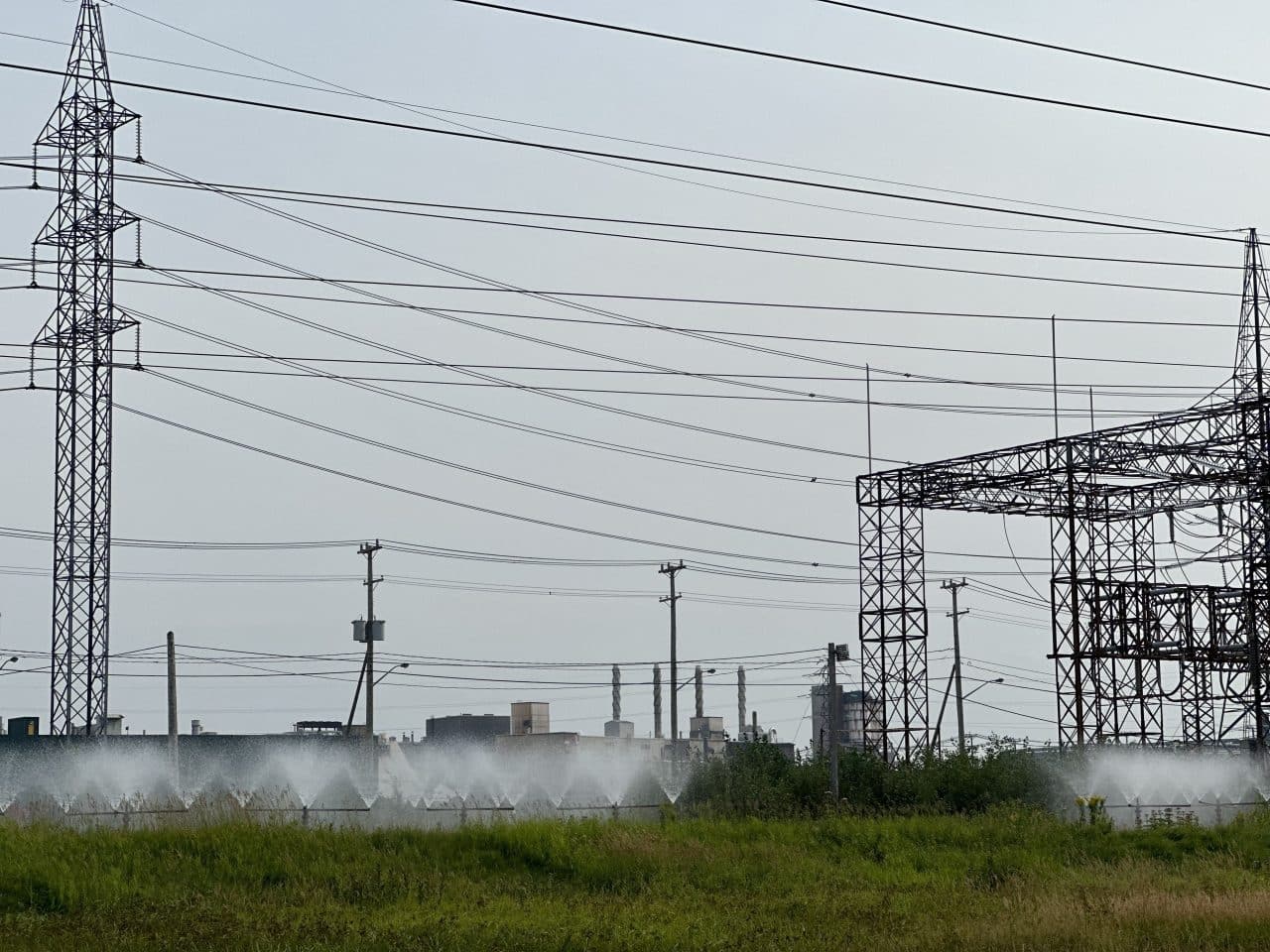
Emphasizing how decarbonizing the economy and reducing greenhouse gases are often taken as the sole indicators for environmental impact, de Swarte warned about the need to tackle the patterns of consumption that drive the market. This same “green tech” continues to strain transportation and energy infrastructures.
“It’s truly problematic because it displaces the problem,” she said.
Jimmy Bouchard, vice president of the borough of Jonquière and president of the sustainable development and environment commission of the City of Saguenay, has been in municipal government since 2019.
In a phone interview with The Breach, Bouchard emphasized the limited powers of Saguenay’s government in diversifying the city’s own economy.
“The strong majority of citizens in the Saguenay-Lac-Saint-Jean region and the city of Saguenay are very content to have Rio Tinto on their land,” he said.
Alix Ruhlmann, planning committee member of the Coalition Fjord, said that Saguenay’s dependence on the aluminum industry is also a political problem.
“On the side of elected officials, it’s difficult because there aren’t many officials who are truly progressive. Saguenay has become a city that is proactive in terms of extractivism,” Ruhlmann told The Breach in an interview. “There is no interest on the part of local elected officials in diversifying the economy to reduce this dependency.”
“What we see from local officials is that we’re going to invest more and more in heavy industry and become increasingly more dependent on multinationals investing in the region, instead of eco-tourism and agro-ecology.”

I often hear that I’m lucky to have a full-time job in journalism.
Critical, bold journalism that isn’t beholden to media monopolies should be the norm—not the exception.
By supporting The Breach, you’re supporting a more robust, progressive media. Join us today.
– Katia Lo Innes, Associate Producer, The Breach