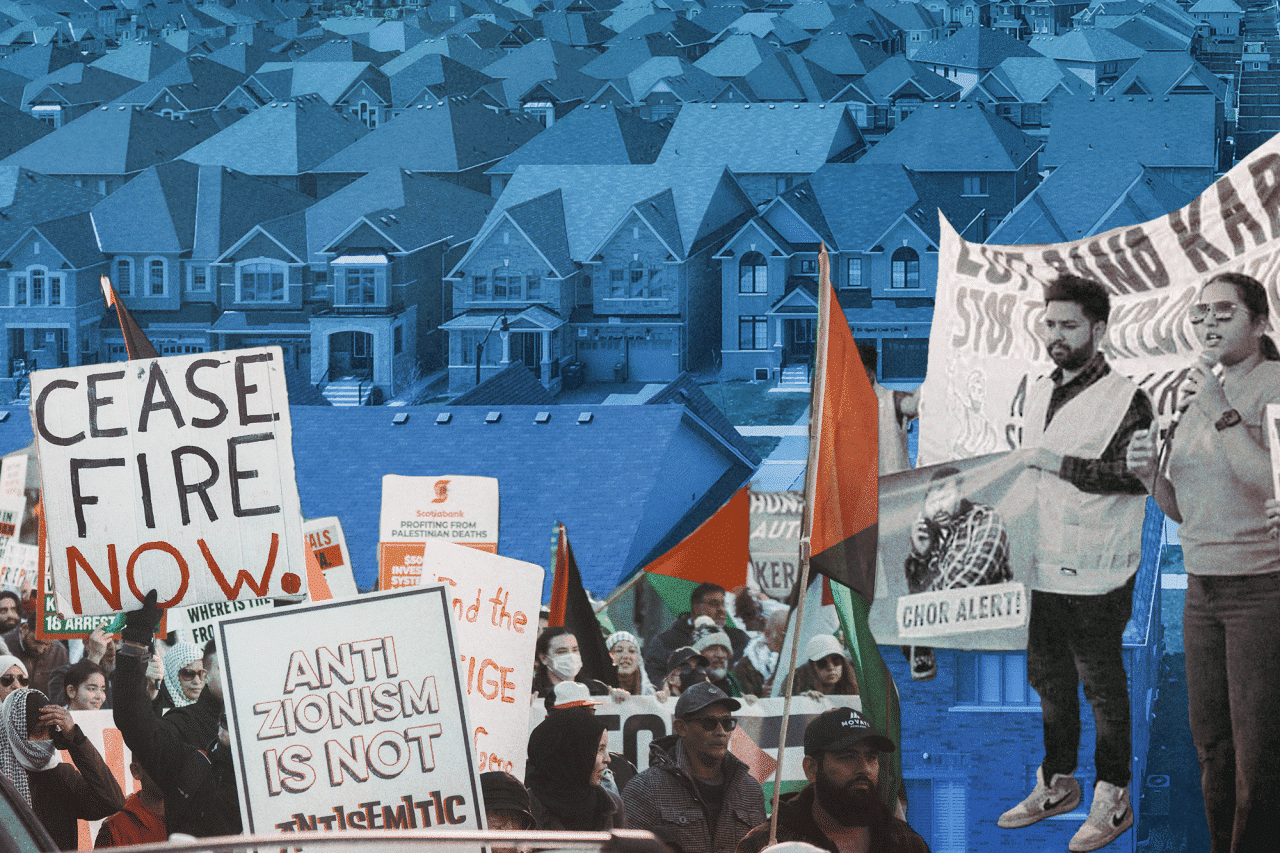
In a grey high-rise in the north of Etobicoke, residents faced a massive increase in rent—until a tenant named Abdi and his neighbours organized and won back millions of dollars from their mega-landlord.
It was Ontario Premier Doug Ford’s gutting of rent control that made such hikes possible, including in this building in Ford’s own riding. Yet Abdi’s take on provincial politics is surprising: “I voted for Doug Ford,” he told The Breach. “He’s good.”
The irony of Abdi’s story has become typical: working-class and visible minority voters across the suburbs are tacking right, apparently against their own interests.
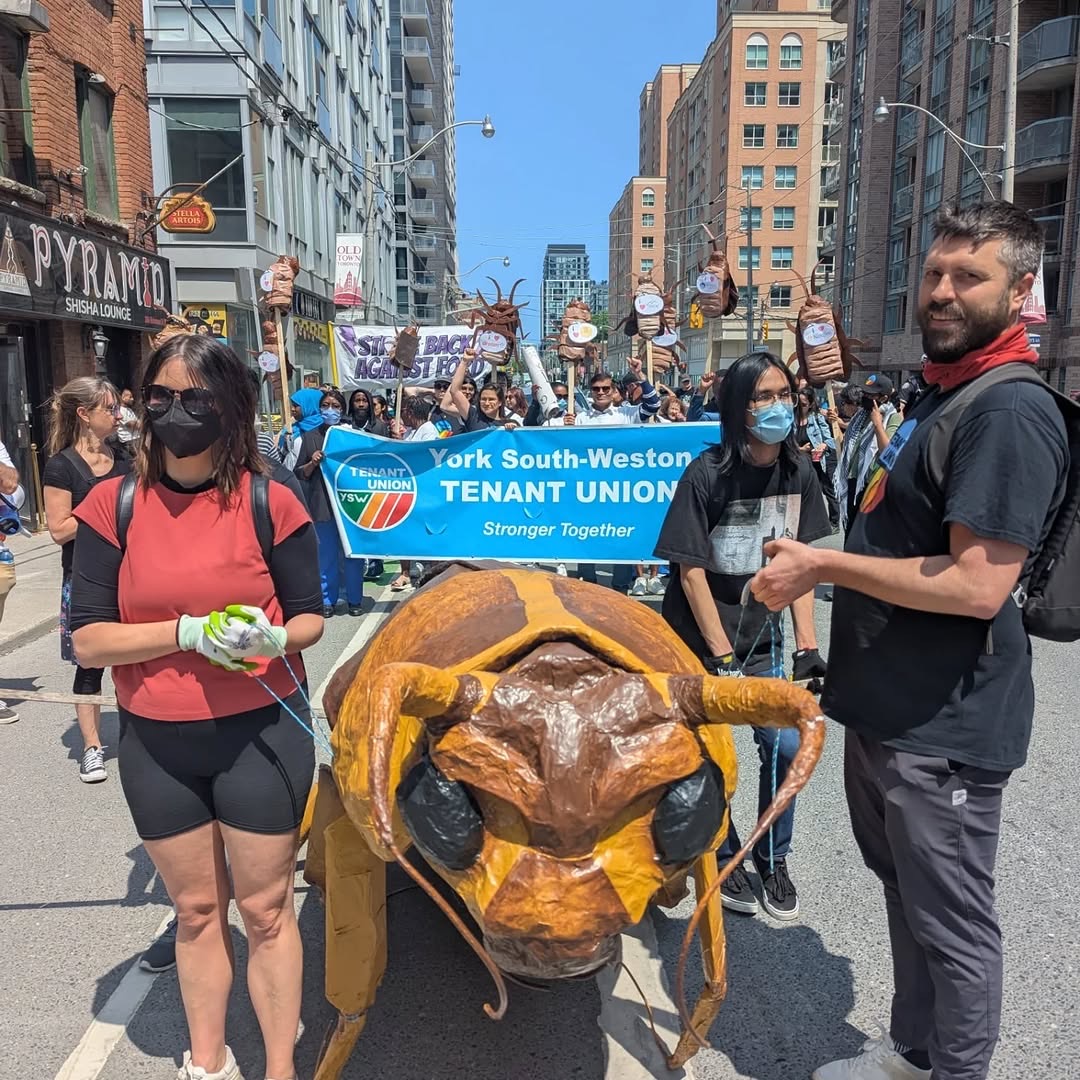
Bruno Dobrusin has seen this before. An organizer with the York South-Weston Tenant Union who helped support Abdi (who asked his full name not be used for fear of landlord retaliation), Dobrusin thinks the Left has been missing in action. “I imagine it’s because maybe Ford is the only one that has ever shown up to anything in their community,” he said.
Canada is a country of suburbs, and right-wing parties are scooping them up one by one. In the 2025 federal election, the Conservatives flipped suburban seats like Brampton West and Richmond Centre-Marpole, making huge gains in vote share across many suburbs. It’s the fruit of decades spent courting immigrants—appealing to the wealthy ones with tax breaks, and to the working class ones with visible-minority candidates who speak the language of affordability and stability.
A weakened left, meanwhile, has all but abandoned the suburbs, retreating to the downtown core to lick its wounds. Its strategies are by and for its university-educated, downtown base, leaving a growing gap with suburbanites. But without organizing the suburbs, the left has no chance of building working-class power or reversing the right-wing tide across the country.
Some organizers are now trying to change that. Working on issues from the future of the NDP to workers’ rights to migrant justice to a free Palestine, they are making initial inroads in Toronto’s suburbs—and with a few of the right ingredients, they say it can be done.
How Conservatives won the suburbs
It’s easy to assume that the infrastructure of the suburbs—designed for people with cars and a down payment on a single-family home—creates right-wing voters. But the fact is that the right has done the work: they showed up consistently in the suburbs, won over wealthy and socially conservative voters, and deftly maneuvered identity politics to speak to the material issues and deep disillusionment of working-class suburbanites.
As tough as that pill is for the left to swallow, in it lies an equally hopeful insight: suburbanites are not inherently conservative. They can equally be organized into a progressive mass movement. But first they need to understand what the right has done.
In the Greater Toronto Area (GTA), most suburbanites are visible minorities, and over 40 per cent are immigrants—a demographic among whom Conservatives have not historically done well. Between the party’s appeals to wealth and whiteness, it’s clear where their real loyalties lie.
But when Bushra Asghar, a first-time federal NDP candidate in Mississauga-Streetsville, knocked on doors, she encountered a different perception. “They believed that the Conservative Party had working-class people’s back,” she told The Breach, “and that they were trying to make life more affordable.”
In the 2025 federal election, the Conservatives increased their vote share by 7.6 per cent nationally, but in ridings like Asghar’s across the GTA—suburban, immigrant-dense, and full of visible minorities—those gains reached as high as 15 or 20 per cent. (None of the Conservative MPs who flipped suburban ridings in the GTA returned interview requests from The Breach.)
According to two reports by Aniket Kali (one of the authors of this article) and University of Toronto sociology professor Emine Fidan Elcioglu, the shift of immigrants and visible minorities to the right in the suburbs has been more than 20 years in the making. Several factors have led to growing frustrations and an appetite for change, especially among young people: stalled careers, unrecognized foreign credentials, long commutes, racism in housing and policing, and a lack of jobs and places to live.
Former Prime Minister Stephen Harper, with help from his cabinet minister Jason Kenney, deliberately courted suburban immigrants, Elcioglu points out. “They engaged through ethnic media, religious institutions, cultural festivals, and diaspora networks,” she said. “They also made symbolic gestures, like apologizing for the Chinese head tax and recruiting visible minority candidates in winnable ridings.”
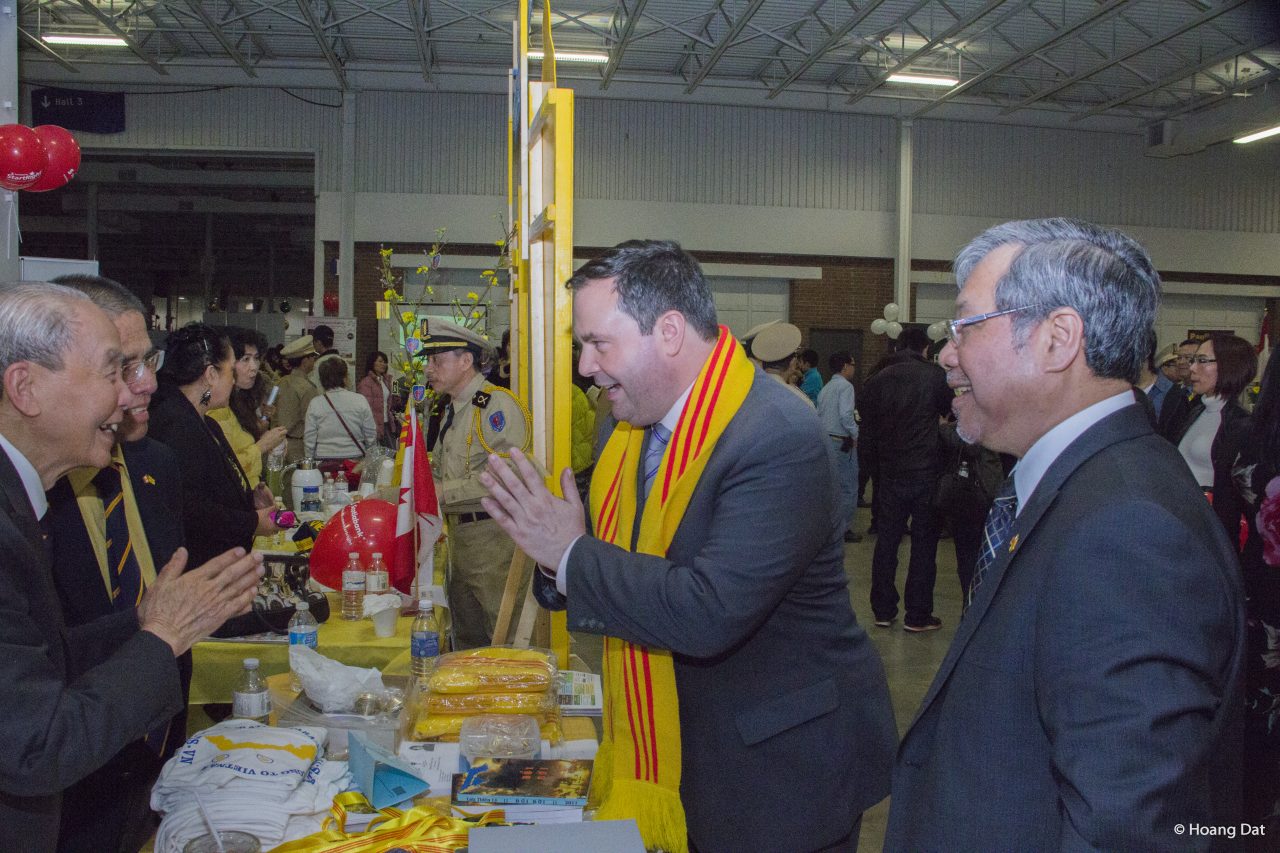
This careful strategy, Elcioglu said, paid off. Suburban immigrants become more “receptive to the Conservatives because many of their messages—low taxes, law and order, parental rights, and support for small businesses—tapped into both the aspirational values and everyday concerns of these communities.”
Indeed, the Conservatives’ appeal to traditional values like stability, together with their regular presence in the community and endorsements from community leaders, have won the loyalty of Hindu Canadians, Chinese Canadians, and—before the genocide in Gaza—Muslim Canadians.
“Folks have the belief that skin folk are kinfolk,” said Eleanor Yang, executive director of the Chinese Canadian National Council Toronto Chapter, even when those assumed allies “are looking out for their [own] best class interests.” A key part of her organization’s strategy is building working-class solidarity across cultures, especially when faced with racism and workplace exploitation.
Abandonment by the Left
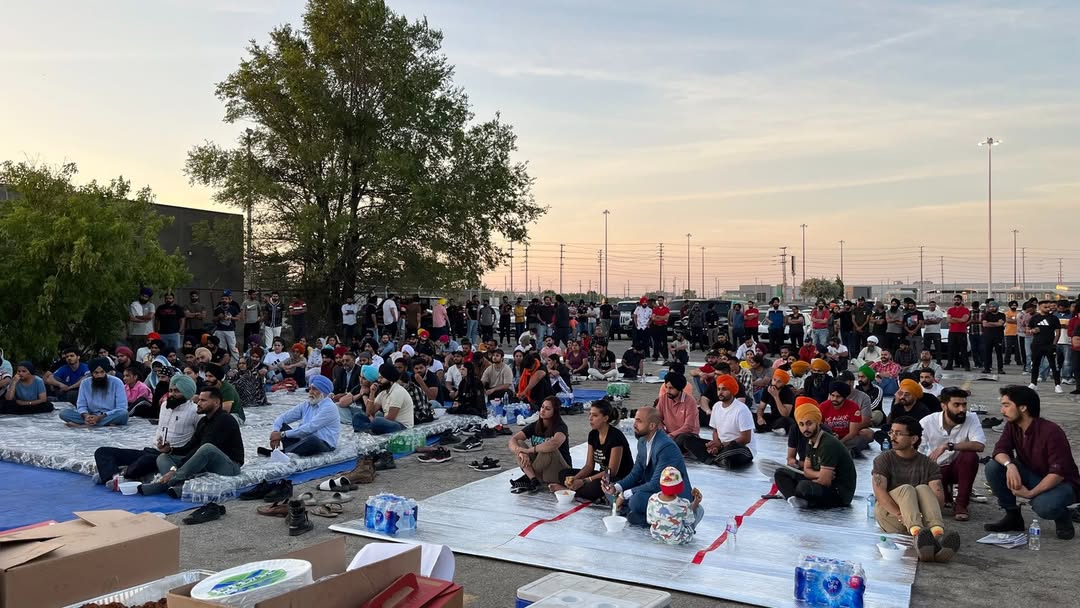
On the night of May 28, 2023, eight students under threat of deporation laid out a tarp under a small canopy at the site of a Canadian Border Services Agency office in Malton, not far from Pearson Airport.
They launched the encampment as dozens of international students faced deportation after being duped by fraudulent immigration agents. Over 18 days, their sit-in grew to hundreds of campers, gained support from labour unions, and received widespread coverage. Ultimately, they won—halting the deportations.
No political party has consistently come out to support these kinds of struggles. International students are, after all, not eligible to vote in elections. But these spaces are exactly where the left should be able to make inroads.
And yet Simran Gill (formerly Dhunna), an organizer with the Naujawan Support Network (NSN) that backed the encampment, recalls that when then NDP leader Jagmeet Singh did make an appearance, “there was something about his tone and presence that left the students feeling really demoralized, like nothing can really be done.” Conservative leader Pierre Poilievre, in contrast, voiced his support for the students in terms that felt “much more approachable and accessible,” Gill said.
Many organizers The Breach spoke to made the same point: the language of the Left is not working. It often feels remote, it’s workshopped among university-educated activists with no feel for working-class struggles. “Maybe we can try to find language that isn’t the same rehashed populist language that the NDP has been using for ages and that isn’t speaking to people,” Gill said.
The disconnect is symptomatic of a bigger problem. UofT sociologist Elcioglu has seen in her research that the main avenue for young people turning left is “post-secondary education in the social sciences.” That’s a very narrow road that fewer and fewer people can afford. And it means newfound political consciousness is too often achieved “in institutions that feel disconnected from everyday working- and middle-class life,” Elcioglu said.
A left whose new recruits are mostly university graduates fails to bring in suburban leaders who emerge from fights for justice within their communities. “[The left’s] key people do not live in the suburbs,” said YSW Tenant Union’s Dobrusin. “It’s not a space where the left has developed.” It’s a challenge, he says, to organize in a way that breaks “out of the silos.”
Temples, churches, mosques, and gurudwaras are some of the few community hubs that exist in the suburbs. But much of the Left eschews them, assuming that people who are religious are unshakeably conservative. Gill says that’s not good strategy.
In the fall of 2024, during a second encampment demanding paths to permanent residency for international students and migrant workers, clashes broke out between Sikh Khalistani activists and Hindus at a temple in Brampton. “The committee of former international students put out a very, very simple video post of them doing a Sikh prayer [and] a Hindu prayer,” Gill recalled. “It was a message of unity between the religions.”
For Gill, the experience holds a useful lesson. “The left doesn’t know how to embrace faith in our organizing or understanding, and we cast it as conservative immediately,” she said. “That attitude is misguided and leads many leftists to dismiss working-class struggles that don’t fit a secular activist mould.”
A recipe for organizing the suburbs
In the spring of 2023, 500 tenants across two pairs of buildings in Toronto’s northwest inner suburbs decided to stop paying rent until their corporate landlords met their demands. Within months, hundreds of their neighbours joined the fight. A pair of year-long rent strikes in the neighbourhood concluded with historic victories: action on concrete demands, court-ordered repairs after years of neglect, and official recognition of the union as the collective voice of tenants.
The Breach asked YSW Tenant Union’s co-chair Chiara Padovani how they scored such powerful wins. She shared four ingredients for suburban organizing: consistency, sharing geographical space, offering a plan to address residents’ material issues, and a nebulous element she called “good vibes.” Many others echoed her advice.
Consistency, not parachutes
“Number one is: we live here,” Dobrusin said. “It helps you understand the perspectives that people have on things, just by living in those spaces, in sharing the same kind of frustrations and problems.”
Living in the neighbourhood helped Padovani and Dobrusin do the slow work of building trust and relationships with fellow tenants. “Getting to a rent strike in one building was five years’ worth of work,” Padovani said.
Parties, including the NDP, have been criticized for “parachuting” candidates into ridings where the party has a weak base. Those candidates, who don’t live in the riding, disappear after losing an election. For the NDP, this practice has created a cycle of disconnect and defeat.
The NDP’s Electoral District Association (EDA) in Erin Mills—revitalized in the last year by socialist organizers—hopes to break the pattern.
During the federal election, the EDA had only enough volunteers to canvass one quarter of their riding, but their goal is to cover every corner before the next vote. Nominating and assembling a team is only the first step for a candidate, said an EDA organizer (who wished to remain anonymous for fear he’d lose his job for doing socialist organizing). Then the real work began: “That team just has to door-knock for the next two, three, four years. And then, in addition, they have to be seen actually solving problems in the community.”
Beating isolation with physical space
In the suburbs, where cafes, libraries, and community centres are dispersed sparsely across the sprawl, finding free or cheap space to hold organizing meetings is a struggle.
Gill said that NSN, which has also organized against wage theft in Brampton, initially held meetings in parks, regardless of the season. “That’s how determined workers were to recover their wages,” she said. Recently, the Peel Region Labour Council has connected the group to union spaces for meetings.
A physical space—especially one with a convenient location and hours—means people can stop by, ask questions, and get involved. The YSW Tenant Union has an office on Eglinton West, which is used for everything from phone banks to movie nights to printing flyers for campaigns. The Chinese Canadian National Council Toronto Chapter, which runs events for youth, elders, and precarious workers, moved their offices in the 2010s from downtown Toronto to Scarborough, closer to the biggest Chinese community in the GTA.
Organizers with Mississauga-Streetsville for Palestine (MS4P) went the route of carving out their own space by tabling weekly in Streetsville Square, a pedestrian-only hangout in Mississauga. They show up with flyers, stickers, chalk, and Salaam Cola (an alternative to Coca-Cola, which operates a factory in an illegal Israeli settlement). One week, a henna artist provided services by donation. Another week, the table offered kitten therapy, which involves interacting with cats to reduce stress.
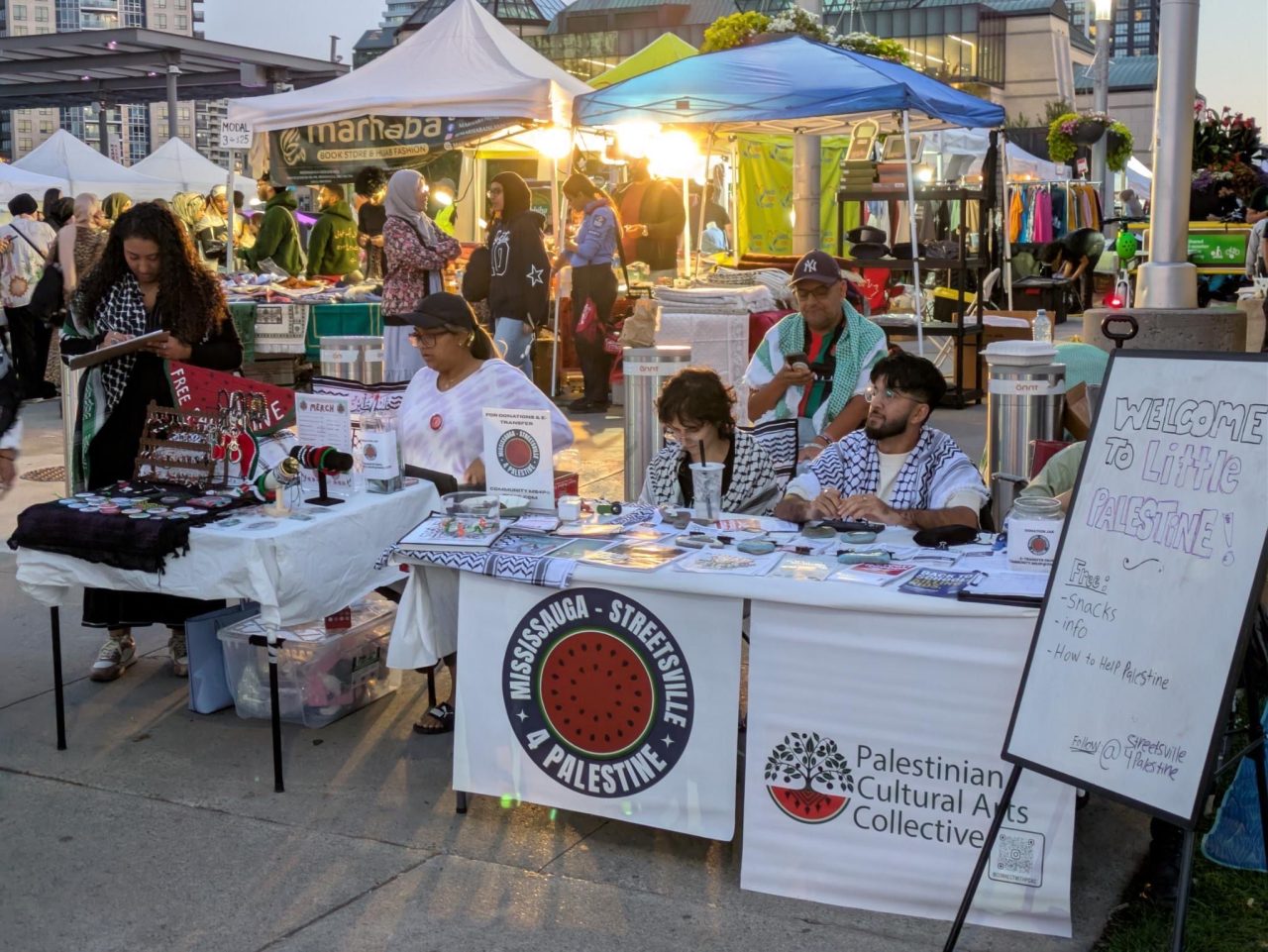
MS4P has sought to counter the echo chamber of social media and shatter the isolation of suburban life. “Without fail,” said MS4P organizer Samina Khaliq, “there’s always someone who comes up to me and is really appreciative and thankful that we’re doing something in Mississauga.”
Tackling material issues
Part of the lure of right-wing narratives is the simple explanations they offer about people’s everyday hardships. “If I was in the NDP riding association,” Dobrusin said, “I would say, ‘Okay, every week we’re going to choose a different TCHC [Toronto Community Housing Corporation] seniors’ building, and go and sign residents up for dental care.” He explains: low-income seniors need free dental checkups, they are eligible to apply for the program the NDP fought for and won, and they turn out to vote in high numbers. When an election rolls around, they’ll remember who helped to improve their teeth.
This laser-focus on meeting people’s needs is a way for suburban organizers to prove their worth. The YSW Tenant Union gives advice to tenants facing exploitative landlords. NSN helps recover workers’ stolen wages. MS4P worked with Asghar’s campaign to oppose an increase to the Peel police budget, arguing that the money should instead go to health care and education.
The NDP’s Erin Mills EDA has adopted a mantra: “mortgages, rents, groceries.” They ask themselves: how can the NDP make these three things 40 per cent cheaper?
Like most of the NDP, Erin Mills candidate Ehab Mustapha had a poor showing in the 2025 federal election, winning only 2 per cent of the vote. Perhaps seeing the writing on the wall, canvassers asked strategic voters how the NDP could earn their vote in the next election. According to the EDA organizer we spoke to, the answer was clear: “They want us to be visible in between the elections.”
Good vibes only
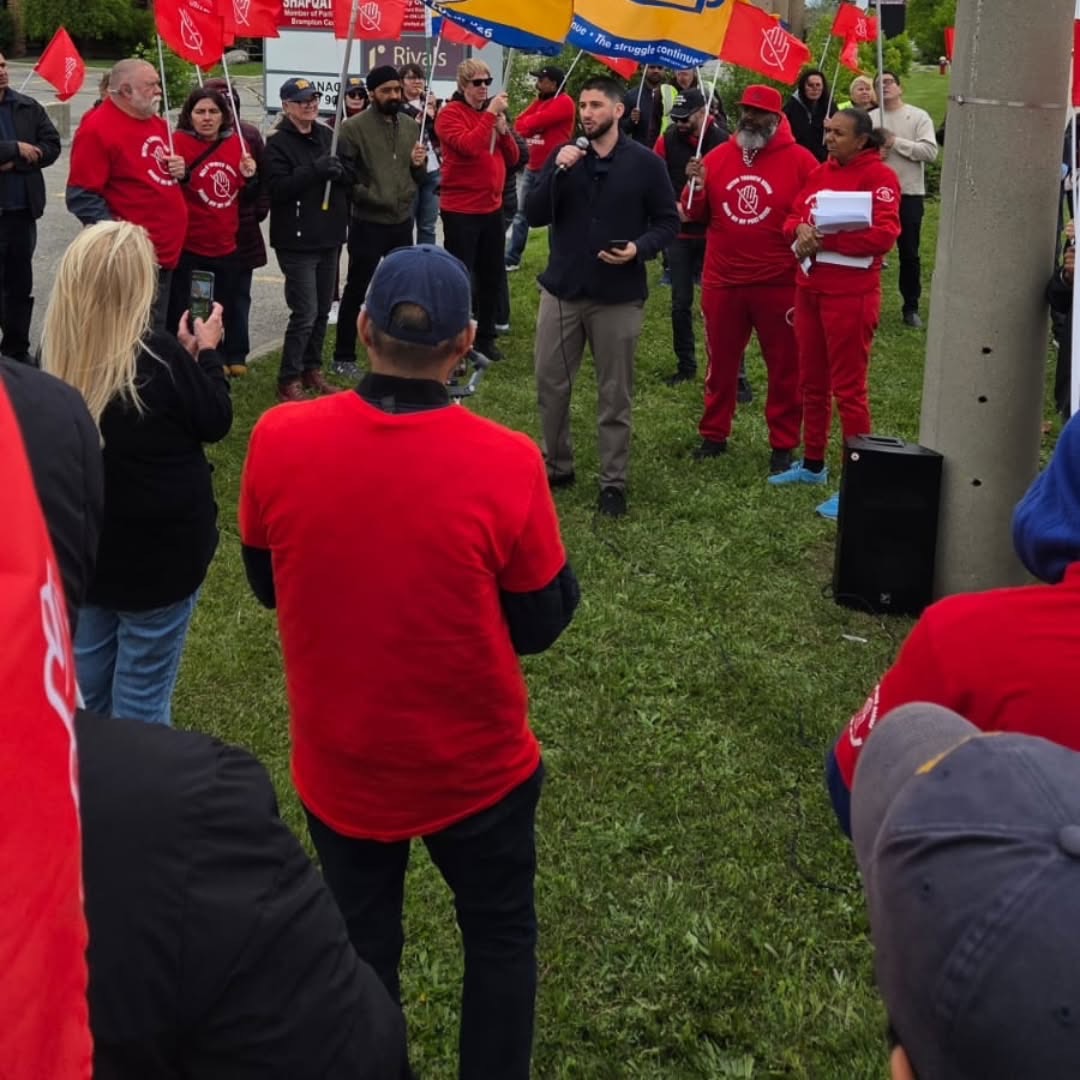
Many people The Breach interviewed raised similar frustrations about Left organizing: discussions clouded with academic jargon, decision-making power that’s jealously guarded by a clique, and constant bickering and (self-)ejecting over small issues. These dynamics prevent movements from growing to include new people.
In the tenant union, Padovani advocates a different philosophy: “Make it fun.”
“We never want to turn someone away who’s interested in coming [to volunteer],” she said. “And we want to try to get back to them, actually, as soon as possible, to show that we’re so happy you want to be part of this.”
At a time when organizers are up against widespread cynicism, Asghar says people need to feel like material change is something they can really win. “You gotta keep it exciting,” she said. “You gotta give people progressive responsibilities and make them feel like they’re part of a movement.”
Part of that effort is about ownership. Three years ago, members of the NSN wanted to organize a meeting with the Ontario Ministry of Labour. After a lot of prep work to make the request, Gill says, the meeting turned out to be a dead end.
“Some NSN members anticipated a futile meeting and argued against pursuing it. Others felt that even a failure would teach us about the nature of government. Their argument carried the day,” she said. “It is important for people new to struggle to experiment with old tactics so that they can arrive at their own conclusions about the way forward.”
“In many organizing spaces or NGO-type organizations, the strategy is decided by a small group of people—typically those not directly affected,” she said. “Our organization believes that any campaign or initiatives have to be deliberated and conducted by workers who are themselves facing and fighting the exploitation.”
‘We can’t continue like this’
The NDP ignores the suburbs, home to over two thirds of Canada’s population, at their peril. When we asked organizers what they’d like to see from the new NDP leader, most of them said: any suburban strategy at all would be an improvement.
“If you can figure out suburban politics, then you can win national-level majority governments,” said Asghar, who since the election has returned to her job as a campaigner for green jobs for youth.
“Surrey and Brampton have extremely similar politics. And they’re a whole continent apart. One could hypothesize that one of the reasons why the NDP has been decimated to the level they have is because they have completely ignored these extremely important places of power.”
The fight to win the suburbs for the left will not be easy, but both in and out of elections, there are real opportunities that organizers can grasp.
Abdi, from the successful fight against a huge rent increase in his north Etobicoke building, has since been talked out of supporting Ford by other tenants in the union. He’s now actively helping plan a rally at Ford’s office to protest the Conservatives’ policies on rent.
And once word of victory in Abdi’s building had spread in the spring of 2025, neighbouring buildings jumped at the chance to organize. What started as just one building taking on their corporate landlords became two, then five, with upwards of 2,500 tenants now organized in the neighbourhood.
At the first tenants union meeting beyond Abdi’s building, Dobrusin recalled what people said. “We just stopped paying rent.” And then, in words that resonate beyond this one suburb: “We can’t continue like this.”

I often hear that I’m lucky to have a full-time job in journalism.
Critical, bold journalism that isn’t beholden to media monopolies should be the norm—not the exception.
By supporting The Breach, you’re supporting a more robust, progressive media. Join us today.
– Katia Lo Innes, Associate Producer, The Breach
History | The NDP’s untapped radical potential

Corporate Power | NDP insiders are trying to fix the leadership race for an establishment candidate

Activism | How movements can organize to defeat Pierre Poilievre

3 comments
Comments are closed.

This was the community contact and organizing approach by the NDP in the 80s. It took ten years to get a change of provincial government from Conservative and Liberal rule. There are no shortcuts.
Really good in-depth reporting. A couple thoughts:
– I would expect a fair amount (at least a third, more with younger people) of the successful conservative persuasion is happening online, rather than through activities in person.
– In the case of the NDP vs Liberal vote share, I would expect most of the recent changes to be about tactical vote considerations, as opposed to actual ideological persuasion. I hope there is eventually a premier or PM with the courage to move away from FPTP instead of sabotaging their own promises.
A factor left out by this article is the issue of vote splitting which pushed through conservative candidates to win in many GTA ridings. For example, in York South Weston, mentioned several times in this piece, the Conservative candidate won with 35% of the vote while 60% of the vote was split between the Liberals and NDP. The failure of both parties to distinguish themselves and have strong messaging means a win for Conservatives even though most voters in the riding didn’t elect them.