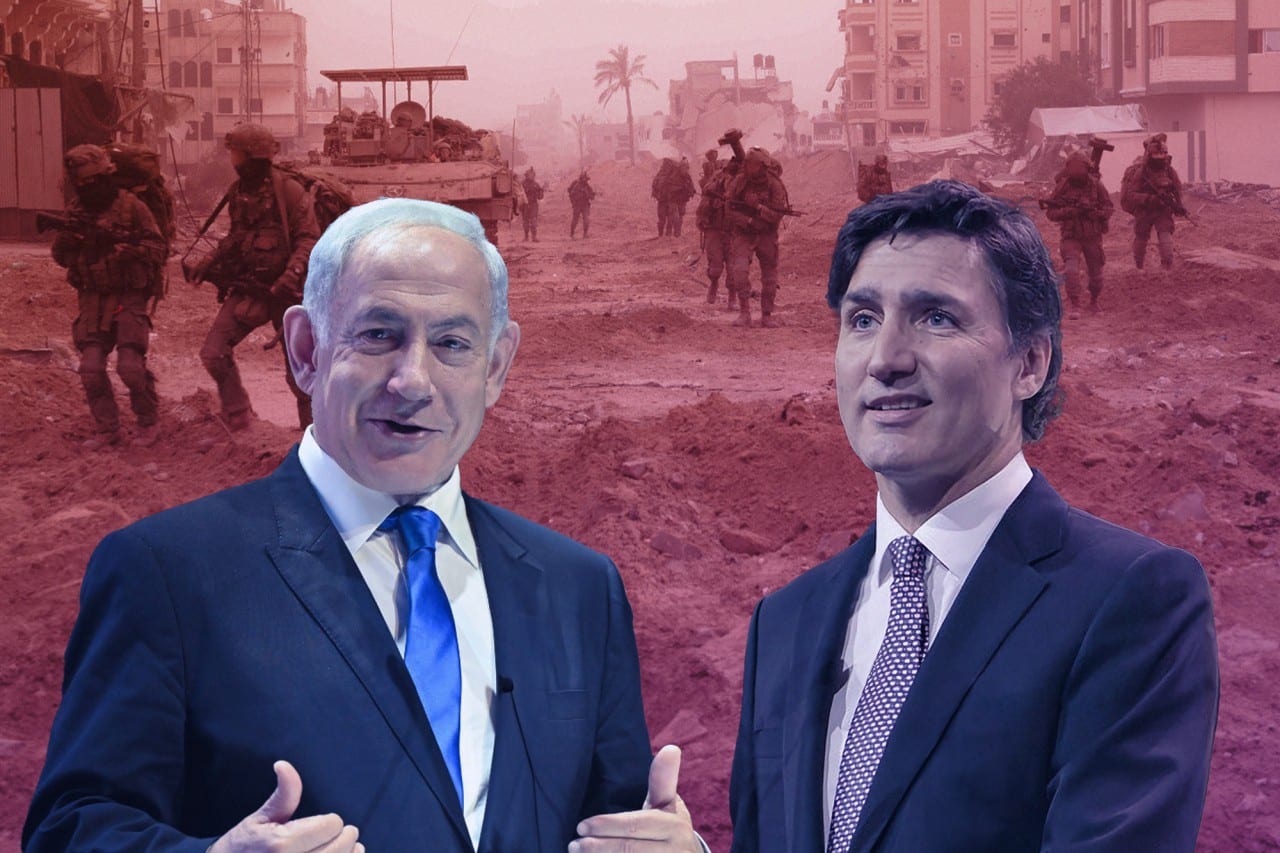
Emma Paling: Welcome to The Breach Show, featuring sharp analysis on politics and social movements in Canada. I’m your host, Emma Paling.
In just the first two months of Israel’s war on Gaza, Canada issued more than $28 million worth of export permits for military goods that would be sent to Israel. That’s more than Canada has ever permitted to be exported to Israel before, over the course of entire years. That means that as Israel’s slaughter of Palestinians ramped up last year, there was a huge increase in Canadian companies asking to send them military goods.
My guest today is the journalist who got his hands on this data, Alex Cosh. Alex is the news editor of The Maple, and despite the many, many reporters on Parliament Hill, he’s the only person in the country reporting on the export permits that Canada has approved for Israel since its attack on Gaza began.
Welcome, Alex.
Alex Cosh: Hi Emma, thank you for having me.
Paling: Thanks for being here. So, export permits are the permits that let the government regulate and control what military goods leave the country and where they go. What did your reporting reveal about the types of goods that Canadian exporters are sending Israel?
Cosh: Military exports in Canada are categorized under the export control list, which I believe is part of the Export and Import Permits Act. All military goods are filed under these things called Export Control List (ECL) categories. Each one of these categories has a kind of numerical code. It’s two dash and then another number.
Unfortunately, these export categories offer only very broad strokes about the exact kinds of goods that are being sold. For example, we saw in this list of goods that were permitted to be exported in November and December and the rest of October, there was an example of an export category which includes bombs, torpedoes and explosive charges.
This doesn’t mean that everything authorized under that is actually like a missile or a bomb or anything like that. It can also include things like demolition gear or the explosive charges or components of these kinds of goods, but we know that there are about $1.7 million worth of permits [issued for Israel] which include items that fall under that category. Again, just to emphasize, we only have very broad strokes. We don’t know for sure what exactly these goods are.
Usually, the way journalists and arms monitoring groups understand exactly what is being sold to countries like Israel is through press releases and public statements that are issued by the arms manufacturers themselves. In many cases, for many export destinations, the companies are very happy to share that information and they do so in public press releases. In the case of Israel, they are much less forthcoming for reasons that I’m sure are obvious because it attracts negative publicity.
It attracts protests and complaints against those companies. In terms of what is going to Israel from Canada, the vast majority of export permits are issued for items that fall under a category, that is things like electronic equipment and software and technology. Exactly what this is being used for, though, we don’t know.
Paling: But they are controlled goods.
Cosh: Exactly. These are items that are intended for a military purpose. It can include items that they call “dual-use goods.” An example of that might be an engine that could be used in a civilian aircraft or also be used in a military aircraft. In the case of electronic goods, I believe it is all equipment or all electronic items that would be used at least by a military or in a military context.
Government arbitrarily withholds certain information
Paling: You mentioned that specifics about the products are not included in the documents that you got. What else was left out? What else did the government not tell you about the exports?
Cosh: The crucial information they leave out is obviously the name of the manufacturer. Really though, it’s interesting what they will sometimes disclose with these permit disclosures and what they won’t. It’s very selective and haphazard.
To give an example, back in December, Amnesty International Canada got hold of redacted or partly redacted permits for military sales to Peru, where there was a very violent crackdown by the state against Indigenous-led protests. The permits that they got hold of didn’t show when the permits were authorized by the government. All they showed was a valid “from date.” In the case of the information that Global Affairs gave to me recently, they did tell me when the permits were actually authorized.
When I asked Global Affairs about the Peru permits back in December, they told me they couldn’t give me that information because of commercial privacy or confidentiality. In the case of Israel, they decided it was okay to give me that information. It’s entirely arbitrarily enforced rules that they use to redact information when it’s convenient and when it’s embarrassing, I suppose.
Paling: One of the interesting details that stuck out to me though in your story was how quickly some of the permits were approved. You noted that one of them had been approved in only four days. What does that suggest?
Cosh: It’s hard to say. We would only be speculating because it might just be that the goods are what the government would consider to be sort of rather innocuous, non-threatening items that don’t require a lot of scrutiny and oversight, but again, that’s entirely speculation.
What is interesting is that according to the most recent annual report that Canada has published on military exports is the 2022 report. They come out around May or springtime. So we’ll have the 2023 report in a few months time.
In the most recent annual report that’s available, they say that their target for what they call “low-risk destinations” for approving permits is 10 days. Now, Israel in 2022 was not listed as a low-risk destination, which is rather interesting now that we’re seeing them come in well below their target turnaround time. So, either they’ve drastically increased the turnaround time right across the board, or they may have added Israel as a low-risk destination, which would be truly scandalous, especially in the context of this ongoing genocide in Gaza.
Paling: Are there other categories? ls Israel categorized as moderate risk or high risk, or is low risk the only category that they differentiate?
Cosh: I believe that’s the only one they actually put on the report. I’m sure they have their own sort of matrix for measuring this behind the scenes, but in terms of what’s in the report, they just have a list of low-risk destinations. Most of these are just other NATO countries and other allied states, I believe.
Paling: The Liberals were not upfront about giving you this information. They changed their story many times over the course of your reporting. What were they saying publicly while they were issuing these permits behind closed doors?
Cosh: It’s been a very confusing set of statements that we’ve heard from all levels of the Liberal party. We’re talking about MPs, ministers and the prime minister himself.
Let’s rewind back to the end of last year. There’s been a lot of protests against the MP offices of some Liberal MPs like Julie Dzerowicz.
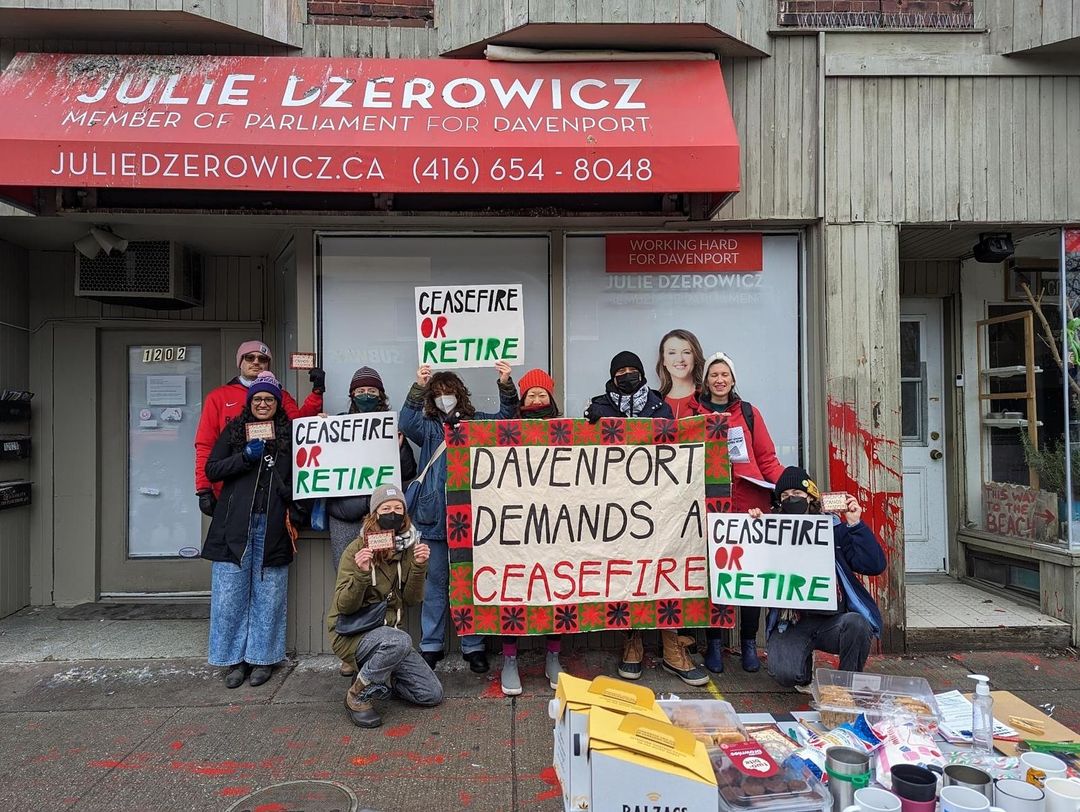
In her statements to people who are protesting against her, she appears to have confused the idea of military aid, what the United States gives to Israel, which is, you know, “We’ll take some supplies from our own defence ministry and give it to you for free,” essentially.
Canada does not do that for Israel in the way that Canada does that for Ukraine. For example, we send military hardware that is donated from our own armoury or that we’ve purchased for Ukraine and it’s shipped there directly.
Julie Dzerowicz and other Liberal MPs I’ve heard have been saying, “Oh no, we don’t send any arms to Israel,” apparently confusing the idea of military aid and military exports.
In a letter to her constituents, which I believe is published in January, Julie Dzerowicz then said something to the effect of apparently realizing this distinction, “Oh right, there’s, there’s military aid and there are arms sales, these are separate things.” Of course, she didn’t admit to confusing them, but that seems to be the subtext of this letter.
I think it’s still on her constituency website saying: “I don’t support arms exports to non-NATO countries.” Israel is not a member of NATO. Neither is Ukraine and neither is Saudi Arabia, which is the largest single buyer of Canadian-made military hardware. I don’t think that’s what she meant. I tried to ask her to clarify that, but they didn’t give me a response.
Misleading statements obscure the issue
What this speaks to, I think, is a confusion and a kind of ignorance within the Liberal government about what we’re dealing with here, certainly among MPs. What we’re seeing with ministers who do understand these distinctions between military aid and permitting exports—they’re using very careful and very selective language to mislead people, I believe.
For one thing, it took a very long time for the Liberals to actually admit that any military exports were being permitted at all. I had to email Global Affairs I think 20 times in total to get a response on that. Even then they only admitted it in sort of in passing. The first thing they said to me was: “We haven’t authorized new permits for full weapons systems. Canada does not sell full weapons systems to Israel and it hasn’t in several decades now.”
That was a meaningless piece of information and didn’t tell us anything about whether they’ve restricted existing exports to Israel. They eventually came around and said, “Okay, we’ve authorized new military exports, but these are all for ‘non-lethal goods.’” Now, this is a term that has no legal definition. Canada has described items such as rifle scopes and laser range finders in its military aid transfers to Ukraine as non-lethal.
Sure, a rifle scope isn’t going to deliver a killing blow, but it is an integral part of a weapon system that does kill people. This is misleading double-speak that they’re using to throw people off the scent. Since we got a hold of this list of export permits or the values of the export permits, this issue has been raised in parliament, I think three times last week, once by Heather McPherson, then by Jagmeet Singh and then by Green MP Mike Morrice.
Now we’re seeing that MPs in Parliament and ministers, including Trudeau and Mélanie Joly are using a very carefully scripted response saying, “We have not authorized new permits for full weapon systems.”
I get the sense now that they’re kind of a bit spooked that they’ve now decided, “Okay, we actually have to be very careful about what we say. We can’t have people thinking we’re selling military goods to Israel. We can say this thing that is technically true. We’re not sending full weapon systems while obscuring the fact that we are still authorizing huge quantities of military exports that allow the Israeli occupation forces to do their job, which in this case is genocide.”
Bureaucrat tried to delay document dump with last-minute call
Paling: Another interesting part of this story is that the Liberals are so publicly supportive of Israel with a few small exceptions, like that one vote for the ceasefire at the UN and some very weak and symbolic words about Palestinian suffering. They seem to want so badly for these numbers to not come out. What do you make of that? They wanted to mislead the public or didn’t want the public to know that they’re providing these arms, despite the fact that we’re such an important ally of Israel?
Cosh: It is very strange. I’ll tell your listeners a quick story about what happened just before I got this information about these permits.
I wasn’t at my house. I was just walking around after an appointment and I got a call and it was an Ottawa number and I assumed it was probably to do with an ATIP request. I answered it and they said, “This is about your request for information about military exports to Israel. We had a cyber attack at GAC [Global Affairs Canada] back in January”—which I believe is true, I’ve seen it reported—“Can we delay your request by a few weeks?” I said, “No,” and they said, “Okay.”
Then the call ended, and by the time I got home in about 20 minutes, I looked at my phone and the documents were right there.
Either we’re expected to believe that it took them just 20 minutes to compile and redact this highly sensitive commercial information, or they had the documents ready to go when they called me and wanted an excuse for it to be delayed. I think the latter explanation is probably the most plausible one because the timing of this was terrible for them.
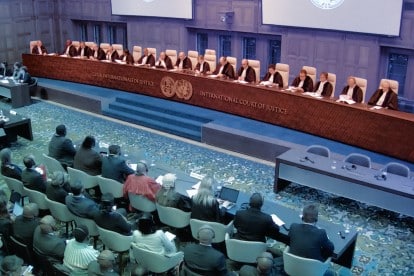
It came in the midst of the onslaught on Rafah. It comes after the ICJ has said there’s a plausible case that Israel is committing genocide in Gaza. I believe it’s politically motivated. I think the Trudeau government wants to kind of speak out of both sides of its mouth. It doesn’t want to upset the apple cart in terms of its geopolitical relations with Washington and Israel. At the same time, it’s trying to quieten increasingly upset and concerned constituencies within Canada who are increasingly vocal about the need to play a role in stopping this massacre.
Military goods shipped through U.S. will never be disclosed
Paling: It’s not just with PR and these very confusing public statements that Canada tries to hide the exports to Israel. Canada also dodges accountability by sending goods through the United States.
Last year on The Breach, we revealed that Canada had funnelled armoured vehicles to Saudi Arabia during its war on Yemen, which killed hundreds of thousands of people, and the Harper government was able to do this in a deal that never got reported because the vehicles were sent to the U.S. first and then to Saudi Arabia later. Do we know whether this happens with Israel?
Cosh: This is a huge black spot in Canada’s so-called transparency system for military exports. That report I alluded to earlier only accounts for exports that go to non-U.S. destinations.
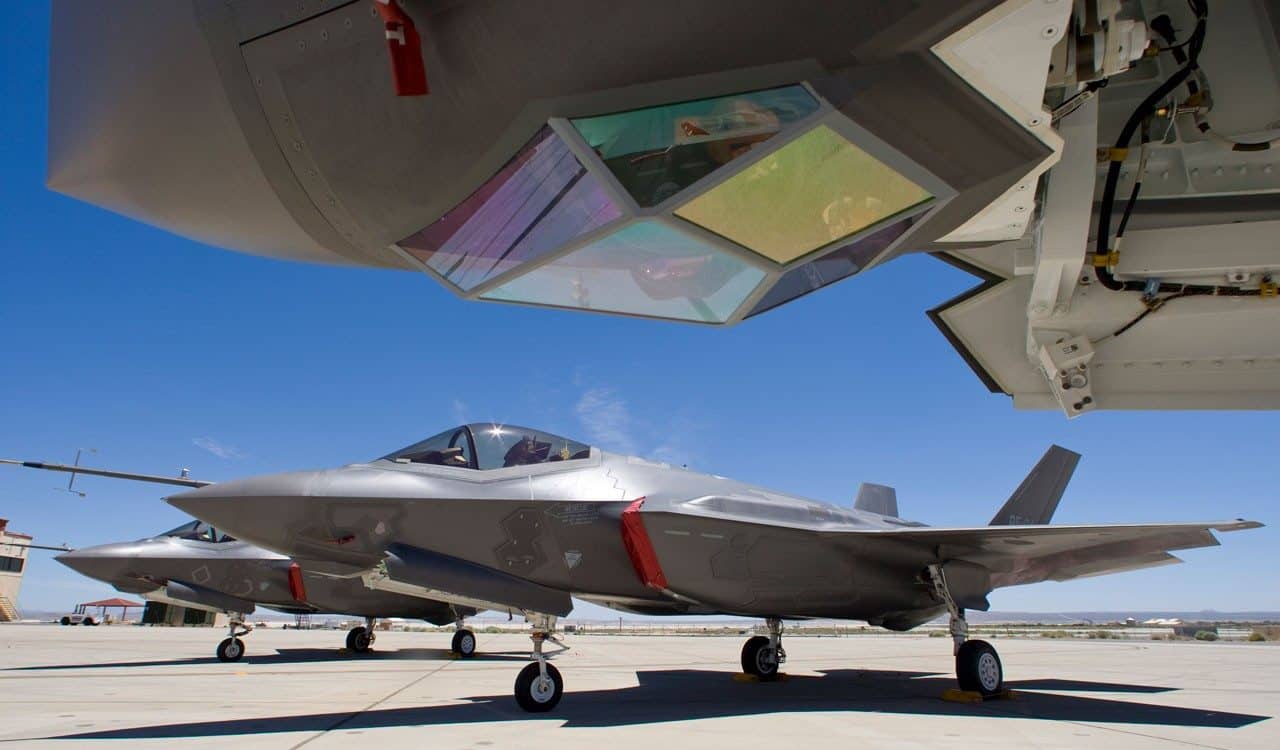
There was a report put out by Project Ploughshares last month documenting potential examples of where Canadian-made military technology is first going to the U.S., being fitted into F-35 fighter jets, which are then ultimately shipped to Israel and are used by Israel in its attack on Gaza.
This is a huge yawning gap in the transparency system that we have for Canada’s export control system.
Something that GAC constantly says in their boilerplate statements about any questions in regards to military exports, whether that’s Saudi Arabia, Peru, or Israel is they say they have one of the most rigorous export control systems in the world under the Arms Trade Treaty, they take human rights concerns very seriously.
We have this $14-billion deal for light-armoured vehicles going directly to Saudi Arabia. I think that’s undermined, for many years now, the credibility that Canada takes this at all seriously, these obligations under the ATT.
We just saw last year at the World Cup, International Development Minister Harjit Sajjan was instructed by GAC to lobby for another light armored vehicle deal with Qatar, which obviously as well does not have a great human rights record.
It’s all a bit farcical, really. It lacks both transparency and it lacks a credible claim to caring about human rights.
Paling: You mentioned the parts in the F-35s. The parts that Canada sells to the U.S. for F-35 fighter jets, those would not have been included in the $28 million in export permits that you reported on, right?
Cosh: Yeah, they wouldn’t because it defines the end user in that case as the United States and that’s not accounted for in Canada’s annual reporting system.
Paling: There’s just a complete black hole of information on any other goods that could be going to the United States first. We don’t have a number or even an estimation on that.
Cosh: That’s correct. Unless, the exception is, like I said earlier, when companies choose to proactively disclose that or brag about it, but Canada’s reporting system does not disclose that information.
Paling: We know that F-35s are being used to drop bombs on Gaza because the IDF [Israel Defense Forces] and Israeli Air Force post photos of the planes loaded with bombs on Twitter.
Cosh: Exactly.
Concerns for human rights disappear when an ally is the perpetrator
Paling: I want to talk more about the political ramifications of the article. Your story has changed the conversation, at least online from what I’ve seen, because now when Trudeau or Joly try to feign concern for what Israel is doing, people have something really tangible to point to and say, “If you’re so concerned, stop issuing these export permits to give weapons to this country.”
What impact do you think this information will have as Trudeau and Joly try to keep this up: this game of approving the exports while trying to pay lip service to Palestinian suffering?

Cosh: Their response so far has been to reiterate their claim that it’s “non-lethal equipment.” Now, as I mentioned earlier, this is a bullshit phrase that doesn’t actually mean anything in terms of legal definitions.
The more obvious question I would ask to the government on this is—when they’re asked to give examples, Joly will often cite things like, “Oh, it’s just night vision goggles and fire extinguishers.”
Even if it was just those items, which I don’t think it is, are we shipping those things to Russia? Would they allow those things to be shipped to Russia? No, they wouldn’t. We know why, right?
Concerns about human rights are applied very, very selectively. When it’s one of our geopolitical adversaries, it’s very stringently enforced. When it’s one of our allies, they’re forgotten about, apparently.
In terms of the political ramifications, the Standing Committee on Foreign Affairs passed a motion ordering Global Affairs Canada to provide all documentation and correspondence on military exports to Israel, going all the way back to 2006, which would potentially provide a lot of documentation for that committee to study and scrutinize. How much they will actually reveal remains to be seen.
There was a part of that order that included an allowance that anything that’s commercially sensitive does not have to be disclosed. Now, as we know that is applied very arbitrarily, very selectively, and that could be used to withhold quite a lot of information. The recourse, if that information is withheld, is pretty minimal, I believe.
I’m actually working on a story about this, but my understanding is that to then compel the government to lift redactions that they believe have been inappropriately used to withhold information would require a vote in Parliament. I can’t see it going to a vote in Parliament. Given the composition of Parliament, I can’t see a vote in Parliament actually compelling the government to do anything about it.
It is an important step towards transparency. This order by the foreign affairs committee should absolutely be commended, and the groups who pushed for this for years should be applauded for their work in doing that, but how much it will actually reveal remains to be seen.
Paling: It’ll be interesting to see if there is any new information out of that committee. It’s great that it was called in response to your story—the NDP cited your work in the press release when they tabled that.
Cosh: We had to ask them to credit us. They might be upset because we’ve been very critical of them for many months but they did credit us. That was nice of them.
Paling: That’s funny. That actually leads beautifully into my next point, which is that the bulk of the media has also participated in burying this story.
Mainstream media ignores Canada’s weapons exports to Israel
To me, this is major, gigantic news that Canada’s issuing more export permits for military equipment to Israel than ever before, while Israel is being accused of genocide and not one of the major outlets, I don’t think, CBC, Toronto Star, The Globe, CTV or Global has picked up your story. Why do you think they failed to report this?
Cosh: It is really weird. I actually don’t have a good explanation for that.
There was one La Presse story that cited the figure and credited the documents that we obtained. It was mentioned on a Canadaland podcast this week. It was mentioned indirectly in a Canadian Press dispatch, which was to do with the protests in Parliament. Protestors entered Parliament calling on Canada to stop arming Israel, and it mentioned in passing in a quote the $28.5 million figure, didn’t say where that came from or really give any details about it. It was kind of just thrown in there.
I don’t have a good explanation for that. When we got the statement from GAC about them admitting that they’ve authorized permits for “non-lethal”—again, I’m using scare quotes—equipment, that was picked up by Radio Canada and The Globe and Mail.
To their credit [the statement] was scrutinized and picked apart, but for some weird reason, this figure has not been picked up and reported on. The documents are right there on our website at the end of the article. They are available for anyone to download and assess themselves to check the figure if they need to verify it for themselves. Very strange.
I don’t have a good explanation for that. Besides the obvious clear Israel bias that has existed since the beginning of this conflict, which you’ve done an incredible job of scrutinizing and bringing to light in your own work, Emma. But yeah, I don’t have a good explanation for why this figure in particular has been ignored.
Paling: That’s what I was getting at, because there really is no journalistic reason. In terms of news judgment, this should be big news. The public is incredibly interested in it. I wonder if the editors at some of the large publications think it’s not news because to them, it’s just obvious.
Israel is Canada’s ally and will continue exporting goods to them. I think it shows the really important role of independent media like The Maple. You get to kind of put those things on the agenda that wouldn’t be otherwise.
Cosh: Definitely. It doesn’t just apply to this story, it applies to all kinds of reporting that The Maple and The Breach have done over the past few months. I think the question of what editors at legacy outlets consider “newsworthy” is a big part of it.
I actually don’t think they care very much about whether Canada’s arming this and probably many of them don’t even think it’s all that big a deal what Israel is doing as has been reflected in just the appallingly biased reporting that the really stomach turning commentary that we’ve seen coming from the opinion pages. Many of them are enthusiastically cheering along this genocide.
I genuinely don’t know what the explanation is. You can ignore certain things as a legacy outlet if you want to suppress certain information, but this just seems a weird one, a brazen one to ignore, especially since it was brought up in Parliament and the National Canadian Council of Muslims have been writing to the PM about this. It’s out there. So why is no one reporting on it? It’s very weird.
Paling: What do you think people who have a problem with this should do next? If people don’t think that Canada should be manufacturing military goods, what’s the next step now that we have this information from your article?
Cosh: Well, I don’t engage in a lot of activism myself. I’m a journalist. I do attend Palestine solidarity rallies, and I would encourage everyone else to do so if this is something they care about. But from what I understand from advocacy groups that are doing so much good work on this, like Canadians for Justice and Peace in the Middle East and World Beyond War and many others—I’m sorry if I’ve left any out—writing to your MP does actually make a difference because it forces them to respond and actually to inform themselves about this issue.
The example I gave earlier of Julie Dzerowicz: my sense is that she probably didn’t know anything about this issue and was kind of pushed by her constituents into articulating a—albeit a kind of incoherent and factually inaccurate—position. But you know, it forces them to engage with the issue. That’s really important.
Also in any election that comes up, I think you’ve got to ask people about this and where they stand on it. I don’t think you should give anyone your vote if this is something you care about if they’re not willing to commit to ending it.
Paling: Thanks for coming, Alex.
If you like what you’ve heard on The Breach Show, please subscribe to the podcast or our YouTube channel. And if you want to support our work, become a sustaining member to help us produce more journalism for transformation. You can do that at breachmedia.ca/support. Thanks for listening.

“We need media that enlarges the sense of what’s possible.”
Naomi Klein, journalist and author
Want to support hope-fuelled journalism? Become a sustaining member.
Israeli Apartheid | ICJ ruling tests ‘Canada’s remarkable double standards’ on Palestine
Israeli Apartheid | Stephen Harper’s firm pours $350M into developing military tech for Israel

Gaza | Canada’s hand in the war on Gaza

3 comments
Comments are closed.
Kudos to the Maple. I’m surprised you got this far. Big media will get around to your scoop when and if their newsrooms sense a change in the wind. Of course you won’t be credited. Diffuse provenance is the new term for scalping a story.
I am strongly opposed to any military support to Israel from Canada-both direct arms sales and less direct sales of products that can be used by military for attacks – eg on people of Gaza, and generally to attack Palestinian ppl or their property.
This looks fine- as I wrote it.