Last month, in the wake of massive layoffs at Bell Media, MPs from every political party lined up at a parliamentary committee to face off against the company’s CEO Mirko Bibic.
Conservative MP Rachel Thomas smiled gamely. “Is it justified that you just laid off 6,100 employees when you have received hundreds of millions in handouts from the federal government?”
Liberal MP Taleeb Noormohamed shuffled some papers and took his shot. “Did you ever consider forgoing your bonuses, equity package, or some portion of your salary—$13 million—to save some of the important jobs of journalists in this country?”
NDP Leader Jagmeet Singh scolded Bell for playing hooky on its taxes. “I’m curious about how much you’re trying to avoid paying taxes again this year?”
It only got less polite from there. The dressing down continued for two hours, with parliamentarians extending the session to get in a few more blows.
Conservative MP Jamil Jivani: “Deplorable.”
Liberal MP Anju Dhillon: “Mind-boggling.”
Conservative MP Kevin Waugh: “You should be ashamed.”
Singh again: “You chose greed.”
For good measure, they interrupted the CEO, sneered at his remarks, and held up posters of the victimized customers of the media conglomerate. (Anything to improve their chances of getting clipped for that night’s news).
This didn’t used to be a sight in Ottawa: politicians elbowing each other aside to slam the carnival sledgehammer on the corporate mark of the hour.
But the trend is unmistakable. Amidst a cost-of-living crisis, everyone is out to channel the simmering rage at industry titans clocking gargantuan profits. All of them, to varying degrees, are doing it for show. It’s Canada’s new circus act: class war pantomime.
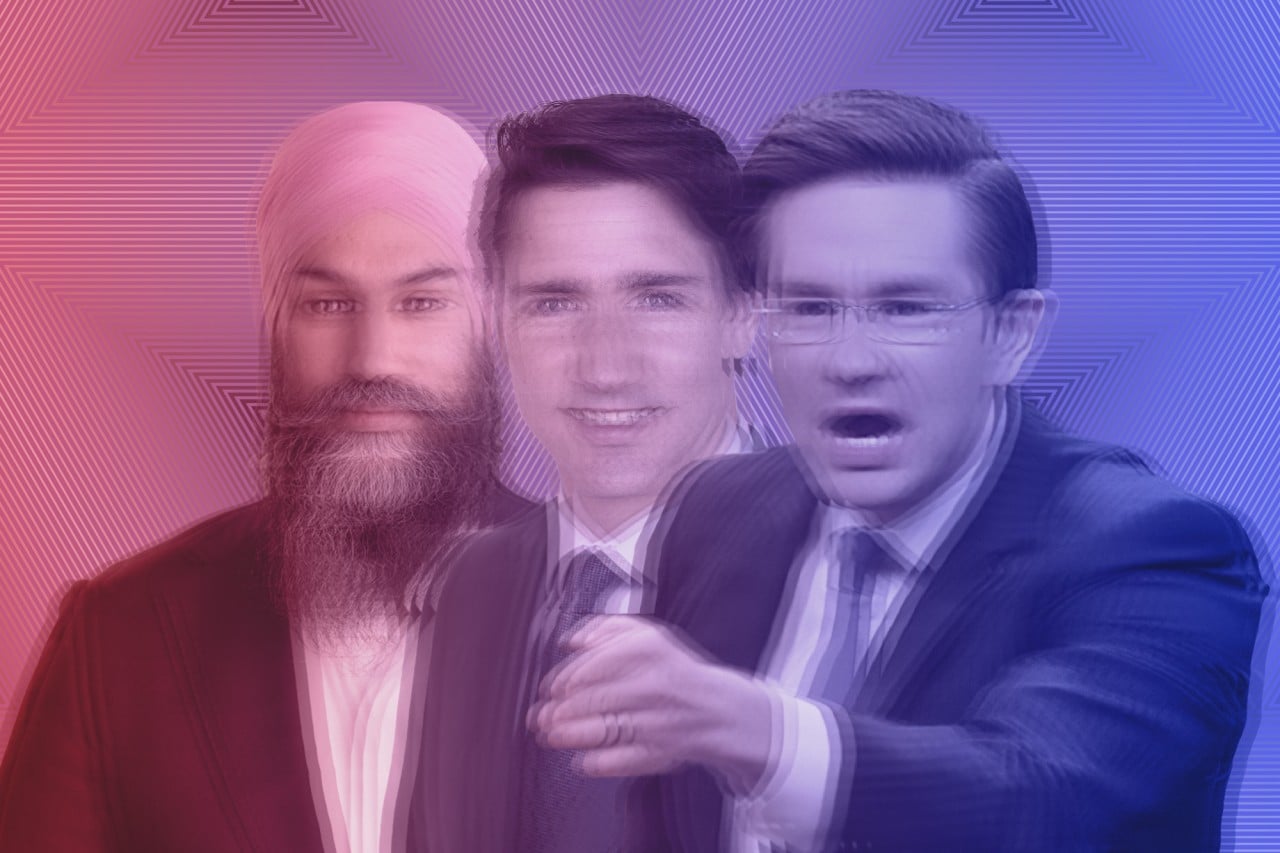
Since running to become Conservative leader, Pierre Poilievre hasn’t stopped jabbing his finger at “elites.” In March, he theatrically chose a speech in front of a business audience in Vancouver to castigate “corporate lobbyists who are utterly useless in advancing any common sense interests for the people on the ground.”
Lagging more than a year behind Poilievre, NDP Leader Jagmeet Singh has upped his own attacks on corporate power. His social media has become a barrage of missives accusing the other two parties of doing the bidding of “billionaire friends” and “Big Bosses.”
Liberal Prime Minister Justin Trudeau is the last to the scene. In February, he called the Bell Media cutbacks a “garbage decision,” adding a melodramatic cuss: “I’m pissed off.” Then in April, the Liberals unveiled a budget that broadened the application of a capital gains tax on Canada’s “ultra wealthy.”
Forceful rhetoric against the elites is popular. Why wouldn’t it be? Half of Canadians are living paycheque to paycheque. More than two-thirds feel “everything is broken in this country.” And the profits of the corporate sector have been smashing record after record.
But rhetoric also comes cheaply. A real peoples’ populism would require policies of major wealth redistribution and historic government reinvestment. Every poll indicates a super majority of Canadians support this and would be ready to vote for its champion.
The tragedy is that Poilievre is the most brazenly insincere adopter of this mantle, and simultaneously the most compelling actor—and Singh, while at least half-committed to the politics, puts on the least convincing performance.
The Conservative leader has a flair for clever populist sloganeering—calling for “more boots, less suits,” fighting against the “have yachts versus the have nots.” His skillfully produced videos, shared on social media platforms, have delivered them to a wide audience.
The establishment media, in turn, have either amplified his anti-corporate message, or reinforced it by bemoaning it. In the Toronto Star, Susan Delacourt tut-tutted about the unfortunate “demonization” of “big business” (before admitting she’s close buds with lobbyists).
They’ve thus let Poilievre wear his chosen mantle, despite all the contradictory evidence: nearly half his governing council are lobbyists, every other week he is hobnobbing and fundraising in their presence, and his main advisor owns not one but two lobby firms.
But he’s keeping up the schtick because it’s working. A few weeks ago, he continued the corporate bashing in an op-ed in the National Post, telling business leaders to “cancel your lunch meeting at the Rideau Club,” “fire your lobbyist,” and “go to the people.”
A rare journalist at iPolitics decided to solicit the view of lobbyists themselves.
“The entire public affairs community in Canada smiled knowingly reading that National Post article,” one veteran lobbyist said . “A government led by Pierre Poilievre with his ministers will absolutely continue to engage the way they have with corporate Canada.”
In other words, they got Poilievre’s message: rest assured, the circus is for the rabble.
Meanwhile, the agenda he’s been ideologically committed to since he was 19 is an even more extreme version of the neoliberal playbook—corporate tax cuts, privatization, deregulation, and freedom for business to do as they wish—that Liberals and Conservatives have presided over for four decades. They empowered the corporate giants they are now claiming they’ll slay.
Liberals and Conservatives empowered the corporate giants they are now claiming they’ll slay.
Trudeau’s government, lacking astute strategists like Gerald Butts, have been playing catchup rhetorically. They’ve started giving nods to the country feeling “broken” (columnist Andrew Coyne called it “stealing Poilievre’s clothing,” though Poilievre was just repeating what any leftist in Canada has been saying forever).
In an effort to pivot in policy, the Liberals changed the inclusion rate of the capital gains tax in the spring budget. (The wealthiest will now pay tax on 66 per cent of their capital profits over $250K, whereas the rest of us pay it on everything we earn). It’s altogether modest, but the shrieks of the corporate class have made it seem more radical. It smacks of Trudeau’s efforts in 2015, when a small proposed personal income tax hike on the richest Canadians helped style himself as an agent of transformative change.
As wedges go, it had some potential: Poilievre’s finance critic won’t give a straight answer as to whether their government would repeal it. And for weeks, journalists have failed to get one out of Poilievre, either. But polls, showing a large and resilient lead for the Conservatives, mean it might be too little, too late.
The most reluctant anti-corporate warrior appears to be the NDP’s leader. That’s ironic, because their membership and potential voting base would most embrace it. With its historic ties to labour unions, the working class and social movements, as well as socialist MPs like Matthew Green, Leah Gazan, and Niki Ashton (who forced Bell’s CEO to those parliamentary hearings), it’s the only party that could genuinely serve as a vehicle for such politics.
Soon after Singh became NDP leader, a top aide told me that he didn’t like using the words “elite” or “establishment.” This was weird, because most Canadians would. As far as I know, the best selling non-fiction book in this country’s history is Peter Newman’s The Canadian Establishment.
Singh has since changed his tune, but his heavily scripted lines always come off half-hearted. It’s a reflection of the timid consultants around Singh that run the party (themselves often connected to corporate lobbying). They noticed the way the wind was blowing, but only when it was already a Tory tornado.
The NDP’s timid consultants noticed the way the wind was blowing, but only when it was already a Tory tornado.
When I spoke to a strategist in Poilievre’s inner circle at the Conservativeparty’s convention in Quebec city this past fall, she was happy to acknowledge her party was eating the NDP’s lunch. I ribbed her for being one of the only people in the country, on any part of the political spectrum, to borrow UK socialist and ex-Labour leader Jeremy Corbyn’s populist slogan “for the many, not the few.”
It wasn’t just her: Poilievre too was “basically talking that way.” While not willing to cop to any cynicism, she readily admitted the left was missing their chance. When she’d travelled with the Conservative leader as he campaigned in northern Ontario, she understood the swing to their camp was by no means guaranteed.
“If they’re not going to get it from a Bernie Sanders on the left, they’ll take it from someone on the right,” she said.
This, for the time being, is the country’s loss. The corporate titans are in desperate need of a real challenge. Canadians are more ready for it than ever. And everyone is promising it to them, but no one has a plan to actually deliver.

When I went to journalism school 10 years ago, my parents thought that they would eventually read my articles in The Montreal Gazette. Today, that newspaper is a husk of its former self. But I get to explain that I’m working towards critical, independent, and sustainable journalism.
Want to be a part of the future of journalism? Support our work with a monthly contribution. Sign up here.
– Amanda Siino, Development Director, The Breach
Corporate Power | Grocery giants paid for friendly Liberal, Tory policy with decades of donations

Conservative Party | Corporate lobbyists are flocking to Pierre Poilievre’s cash-for-access fundraisers

Big Pharma | After pharma lobbying, minister intervened to suspend drug-price reform

5 comments
Comments are closed.

PHAC is controlled by the pharmaceutical industry. What other Government departments are controlled by industry?
For decades politicians stood by and watched while monopolies freely controlled our essential needs like fuel, food, IT. It’s long past time for a leadership of women now and long into the future.
In spite of what politicians say, they are still swayed by lobbyists for personal gain. How about we get rid of lobbyists?
A lot of middle class workers have made sacrifices and worked their butts off to buy a rental property to supplement their income when they retire, also paying taxes on everything they earn just like the rest of us. So if you’re too lazy and unwilling to make those sacrifices don’t take it out on them.
Martin Lukacs latest article is exactly what I think, well done. It is all so very disappointing.