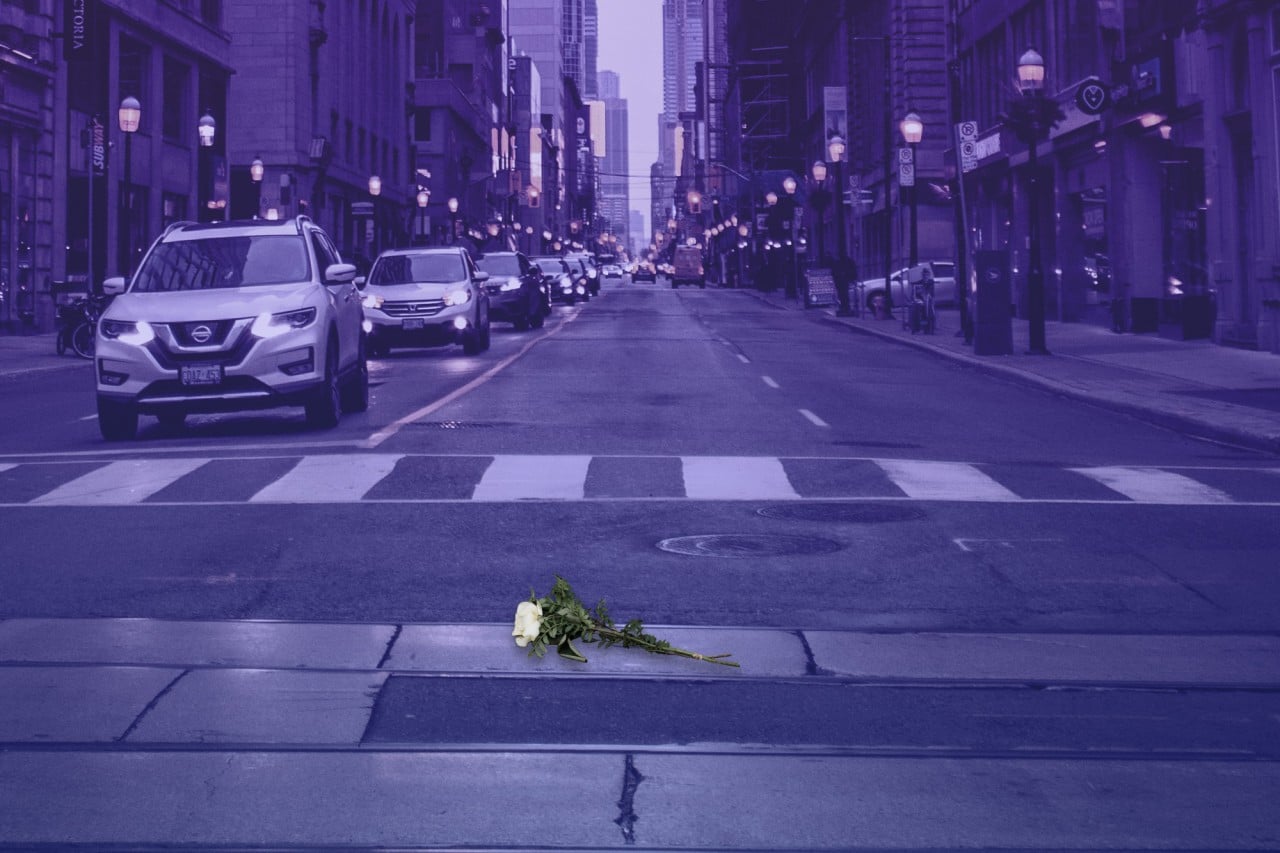
I’ll never forget the first person I found unconscious: lips blue, slumped over. The first person who died despite my trying CPR, because it was too late. The first time I called a mom to tell her that her son was gone, and the wail I heard on the other end of the line.
Over the past decade, as I’ve worked outreach in the downtown east side of Toronto—one of the city’s poorest neighbourhoods, marked by poverty and displacement—these firsts became hundreds. Hundreds of drug poisonings that were not reversed. Hundreds of calls that my colleagues and I made to families, as their sons and daughters lay in morgues. Hundreds—if not more—of preventable deaths.
Across the country, the poisoned drug supply has become a crisis of epidemic proportions. Manufacturers and distributors of drugs, to maximize their profits, are producing fewer drugs but making them far more potent—which is why lethal substances like fentanyl have flooded the streets.
People rarely know what they are buying. Between 2016 and 2020 alone, more than 20,000 people died from opioid toxicity—and things got even worse with the pandemic.
I signed up to be an outreach worker but have become a first responder and funeral director.
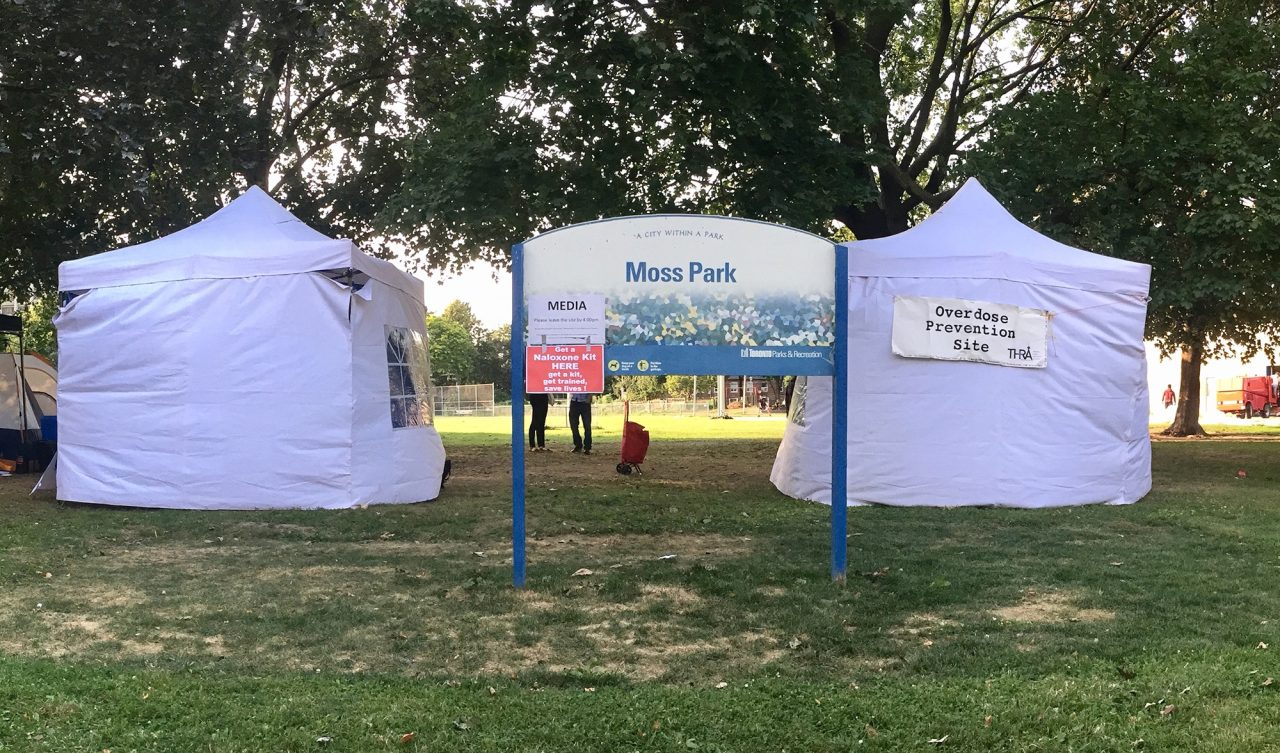
A few years ago, there was cause to believe that this would change. Without waiting for government approval, volunteers opened Toronto’s first unsanctioned supervised consumption site, the Moss Park Overdose Prevention Site.
These are spaces where people can use drugs under the watchful care of staff or volunteers who are prepared to reverse overdoses when they occur. The first such site in North America opened in Vancouver more than two decades ago. Since the first one opened in Toronto, there are now ten more, which have been approved by the government, and more than three dozen others across the country. There have been 40,000 overdoses recorded at these sites by the federal government, and yet not a single one has been fatal.
Those horrifying statistics that I counted in the hundreds have turned to hopeful numbers in the thousands: thousands of lives saved, thousands of visits for wraparound services—support for individuals using a team approach to address physical, mental, emotional and social needs. And millions of dollars have been saved in our healthcare system’s budget, since repeated studies have shown that these sites and safe supply programs result in fewer emergency visits and hospitalizations.
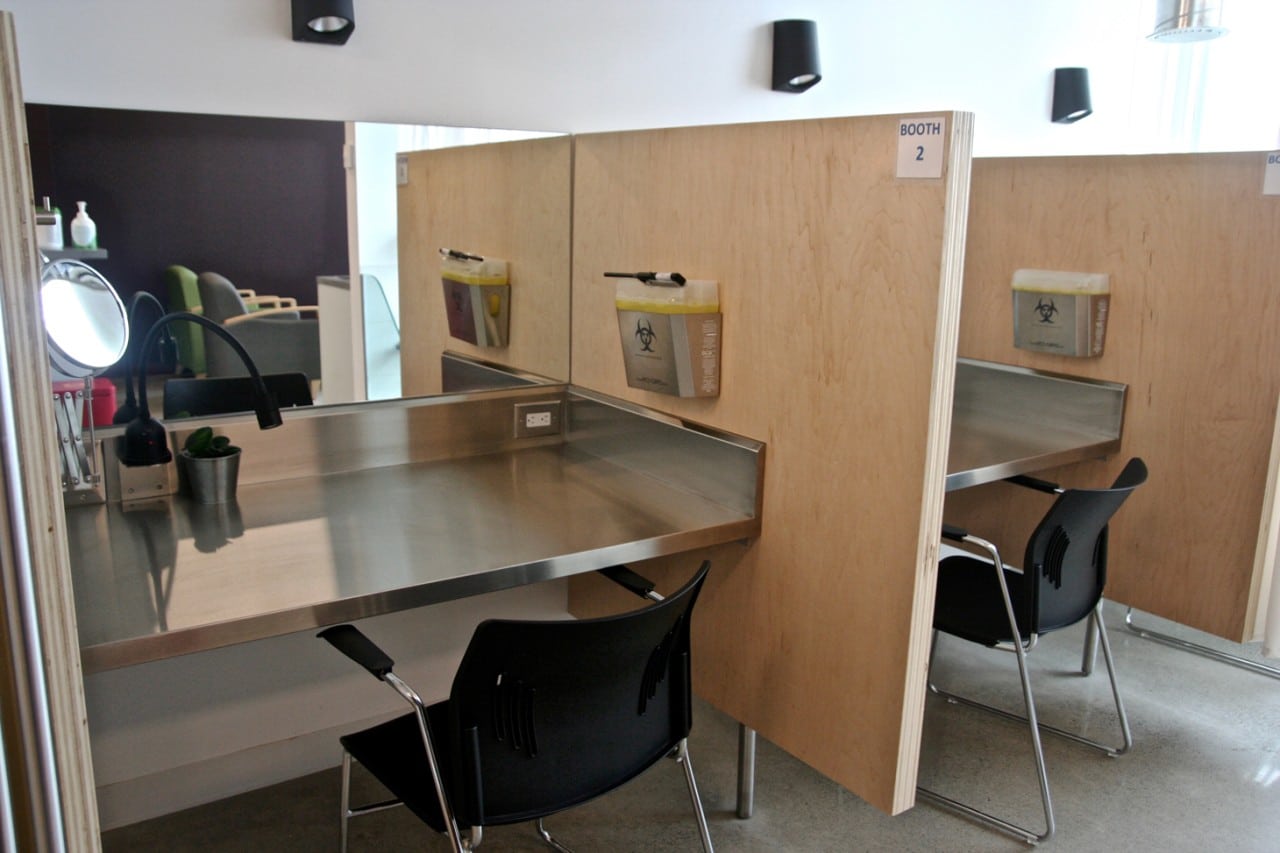
The Ford government has now decided to close many of these sites. Contrary to several of their own Ministry of Health reports that recommend increased funding, Ford is instead doing the opposite, based simply on his “personal opinion.” A week ago, the Ontario government announced it would ban supervised consumption sites from operating within 200 metres of a school or daycare. This will force the closure of 10 sites province wide, five of which are in Toronto.
In their place Ford will open service “hubs” that are supposed to connect people with drug treatment and other social services. But these hubs won’t offer people who are currently using drugs what they most urgently need: a place to use drugs safely and clean supplies.
The result of this change will be more public drug use, more strain on the healthcare system, and more death.
Consumption sites are community spaces
I live near a supervised consumption site. I am so glad it is my neighbour.
The site is a resource for the entire community, and is already doing the work that the proposed “hubs” are intended to do.
I have witnessed the haven this space is for so many. Sure, people come to these sites to use substances that they have already obtained elsewhere. They do so under the supervision of healthcare workers who are ready to reverse drug poisonings. The alternative to using these sites is to risk dying alone and unnecessarily.
As we are seeing a shortage of paramedics and ambulance response times are at a crisis point, these sites are doing lifesaving work while freeing up critical resources for emergency medical teams to respond to other urgent calls.
The demonization of supervised consumption sites has gone into overdrive lately. But in addition to being safe and supervised places to consume substances, people come to these sites for other reasons: to use computers to work on housing applications, navigate getting IDs, open bank accounts, get food and water, and access bathrooms.
People call their moms, contact lawyers, and apply for the kind of treatment programs and counseling that Premier Ford advocates for. They get wound care, clean socks, and vaccinations. And they get clean supplies for drug use—another long-proven, evidence-based public health approach that prevents the spread of diseases like Hepatitis C and HIV.
It isn’t just such practical needs that are fulfilled in these spaces. At these sites, people celebrate birthdays and pregnancies. They hold healing circles and memorials. When community members get good or bad news, they come here first. These are safe spaces for thousands of people who are cared for physically, mentally, socially, and emotionally. Is this not “treatment?”
Supervised consumption sites already are the best version of the addiction recovery hubs that Ford claims he wants to invest in. These sites are already doing the work he says he cares about and more—by ensuring that people live long enough to access these services and that they are cared for.
Sites like these were my friend Jesse’s home. His larger-than-life demeanor could be recognized blocks away, matched by his boisterous laugh and friendly banter. He seemed tough on the outside, but that toughness was paired with a soft spirit, unmatched generosity, and tenderness and warmth in one-on-one interactions. I’ll never forget one of our last conversations: it was mid-autumn 2020 and temperatures had dropped to the low teens. He was layered up in a fashionable jacket and white sleeveless shirt. But he noticed another friend of ours was underdressed.
“Yo, Ducky! Aren’t you cold?” he asked.
Ducky said she had nothing else to wear, so Jesse just took off his jacket and gave it to her. He turned back to me, shoving his hands in the front pockets of his jeans to stay warm, and continued our conversation, shivering. That was like him: to literally give someone the jacket off his back.
Jesse was a regular at Moss Park Overdose Prevention Site. Here he connected with the staff and community. He rested, used drugs safely, accessed the phone, and worked toward getting stable housing. Jesse survived the streets and his goal was to be a youth worker. He talked about it all the time, about wanting to share lessons he had learned with others. He worked hard to get the help he needed in order to qualify for subsidized housing. In November 2020, after years of being on the waitlist for housing, we got the call: Jesse finally had housing.
The celebration was short-lived. My colleagues and I looked everywhere for him that day to relay the good news. But the next morning I got a text: Jesse had died in an alleyway, down the street from Moss Park. Toxic drugs took his life, and no one was around to reverse the effects. If only housing had been more affordable, jobs more available, the social safety net stronger. He never got to sign that lease, become a youth worker, and chase his dreams.
Drug use can’t be swept under the rug
It’s an idea rooted in deep stigma toward poor and racialized people: that only homeless people who use drugs.
The reality is that people are using drugs across class, gender, and race lines. Young people, construction workers, housed people, university students, and more—people from all walks of life. Supervised consumption site closures will lead to preventable deaths in all our communities.
By restricting supervised consumption and shifting the government’s focus almost entirely to “recovery,” the Ford government is prescribing needless death disguised in the language of treatment.
The government’s proposed alternatives are homelessness and addiction recovery treatment hubs, intended to connect people to services that will help them with their addictions. It has also promised “up to 375” supportive housing units—hardly a solution to be proud of given the profound homelessness crisis that this province faces.
What these hubs and beds will not do is allow people who use drugs to do so in an environment where they can be given life-saving treatment, if and when necessary. Nor will they distribute clean drug supplies, an essential public health measure.
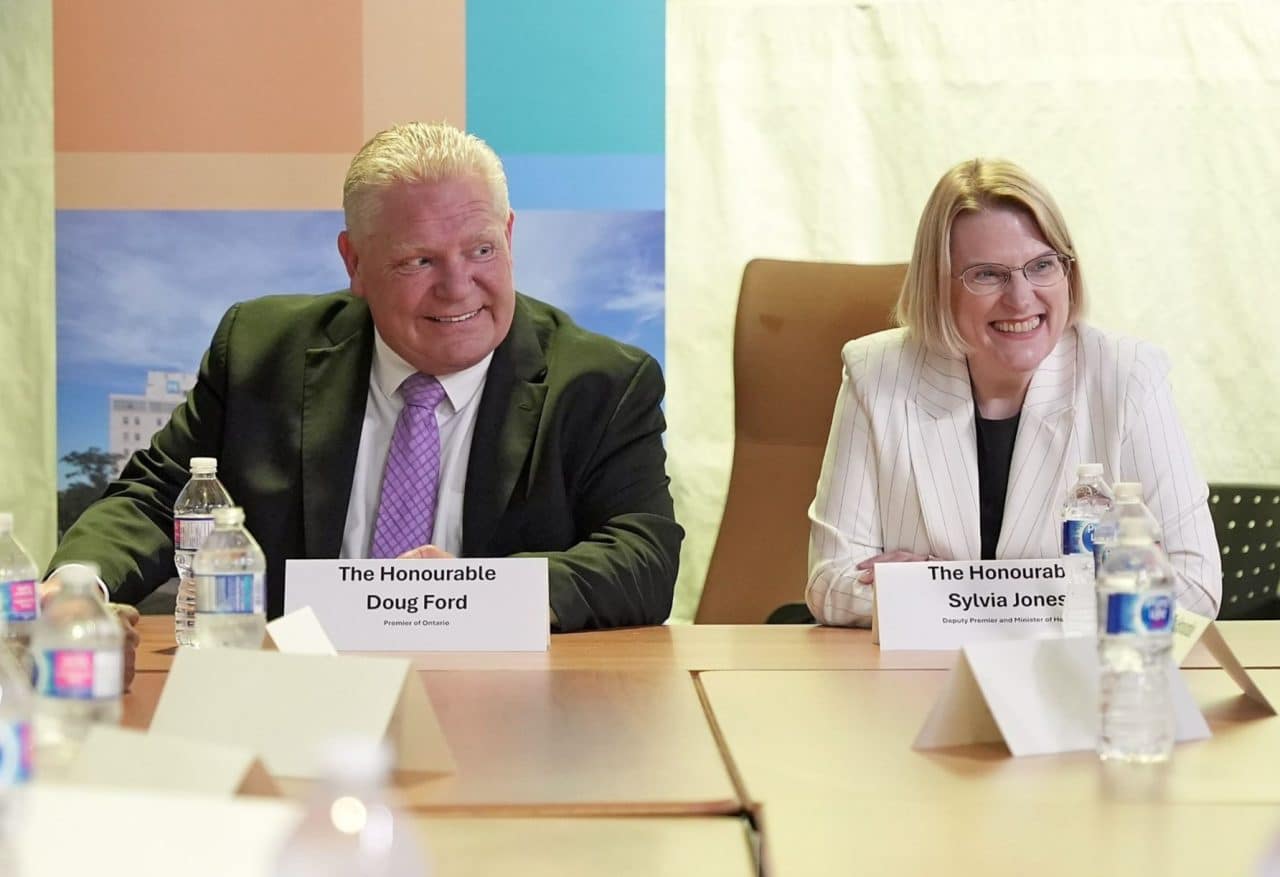
Ford’s proposal to open these hubs in order to “emphasize recovery, treatment and community safety” does not address the reality that toxic drugs still exist. How does a dead person access treatment and rehabilitation? Abstinence-based programs at rehab centres have many barriers to access and often have months-long waitlists. What does one do while waiting for treatment?
What we really need treatment for is the harm that state abandonment has done. We need treatment for the fact that social assistance and minimum wages are unlivable, and for the housing crisis that Ford’s government has done nothing to address. We need treatment for the stigma faced by drug users and poor people.
Rehabilitation programs and supervised consumption sites do not exist as an either-or binary. The choice between either is false. We need both.
Ford’s government says these closures are about the safety of children and protection of schools, but if that were the case, sites could simply be moved. Instead, Health Minister Sylvia Jones has said the government will not fund any replacement sites.
If we are concerned about public drug use and needles on the sidewalks, then we need to scale up services and provide places for people to go instead of shutting them down. Contrary to Jones’ assertion that crime rates have increased because of supervised consumption sites, data shows just the opposite: crime rates dropped in areas where these sites were located. This makes a pretty strong case for these sites being a part of increased community safety.
In the same way that removing tents from parks doesn’t mean that homelessness disappears, closing supervised consumption sites doesn’t mean that drug use ceases. Substance use will still be here, but now people will have nowhere to go.
Deflecting the root causes of the crisis
The Ford government’s decision to restrict supervised consumption sites is a deflection of responsibility, without addressing the decades of cuts to housing, mental health and social services that have exacerbated the poison drug supply crisis. This government has had the past several years to invest in upstream solutions and instead has squandered every opportunity.
We must address the root causes. If we are concerned about drug paraphernalia in public parks, why not create spaces where people can use their substances and dispose of needles? If we are upset at people using drugs on public transit, why not ensure there are alternative spaces? If we are concerned about homeless people in encampments, why not invest in dignified, affordable housing and higher wages?
When a forest fire ravages through a community, would we take away fire fighters?
When a person is drowning, would we tell lifeguards to stand down?
Is good public health policy not about keeping people alive?
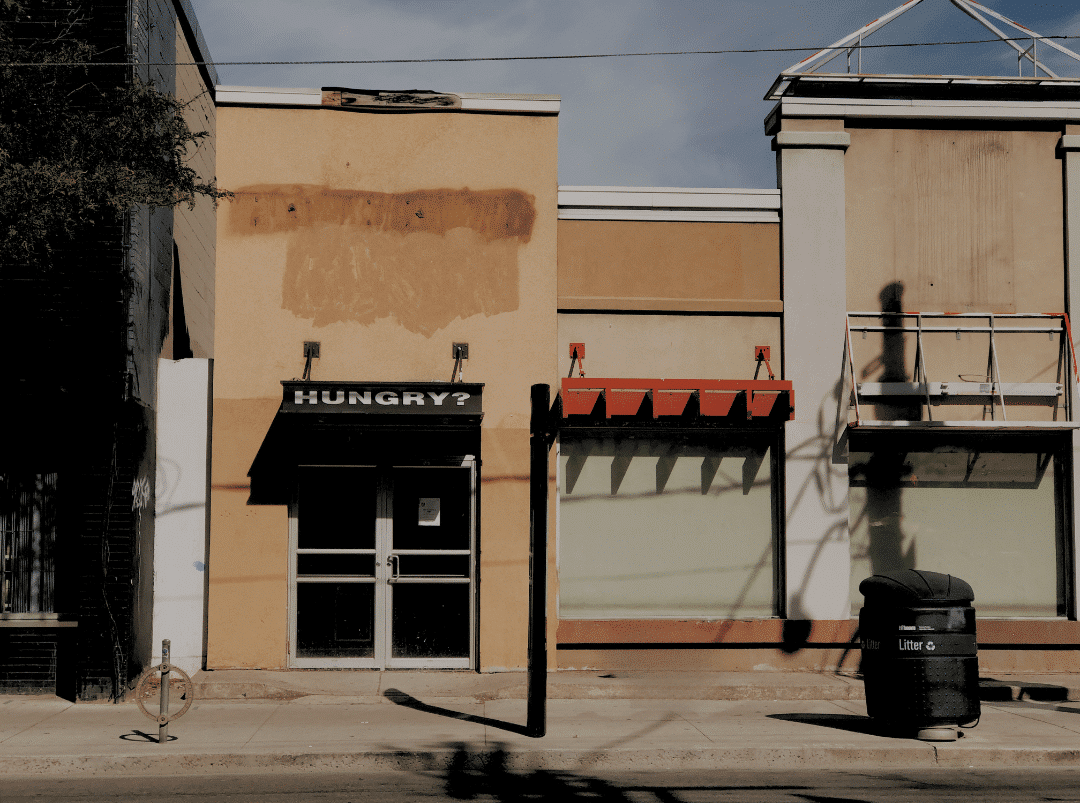
In the middle of February 2017, my friend Pierre died in a KFC bathroom stall in Toronto’s Queen West neighbourhood.
Before he died, I remember seeing him that morning. He and I hung out in a church basement, keeping out of the cold. He noodled on a guitar. He was laughing. Shelters were full. He said he’d try to find somewhere warm. He gave me back my guitar pick and said “see you tomorrow.”
We were 28.
The KFC is not there anymore. While it was, it had become a makeshift respite centre for so many people I knew who had nowhere to go because shelters were full. At times, it was also one of the few available public bathrooms.
I think often about the staff who found Pierre in the bathroom. It was not like in supervised consumption sites, where trained staff and nurses know how to respond to healthcare crises.
This was someone working a minimum-wage job. Someone who was not prepared. The kind of people—workers in fast food chains, transit, and libraries—who will now have to carry the cost of Ford’s closures of supervised consumption sites.
The grief is too much. We have buried so many of our friends and loved ones. Thousands more people will die with Ford’s proposal to close supervised consumption sites. Decades of prohibition got us here, and we must make room for new policies rooted in evidence and compassion. It doesn’t have to be this way.

“It’s about getting to the bottom of things. It’s about unveiling who has the power and what they’re doing with that power.”
Linda McQuaig, journalist and author
As a non-profit, free from powerful corporate interests, we invest in investigations and uncover the cover-ups. Sustain our journalism for transformation.
Labour | Frontline workers fight for safety in ‘Wild West’ recovery sector

Drug Toxicity | Death, fraud, degradation: Inside a revered B.C. drug-treatment centre
Libraries | On frontlines of social crisis, librarians resist fortress mentality
1 comment
Comments are closed.

Very good article on this upcoming exaggerated crisis through (my view) “PC poor ignorant planning”. If we had proportional representation, would this happen?? The only political solution to try is the one championed by Fair Vote Canada, so that articles like this may sometime in the future lead to better outcomes. Otherwise we are just ‘shouting into the wind’. Thank you.