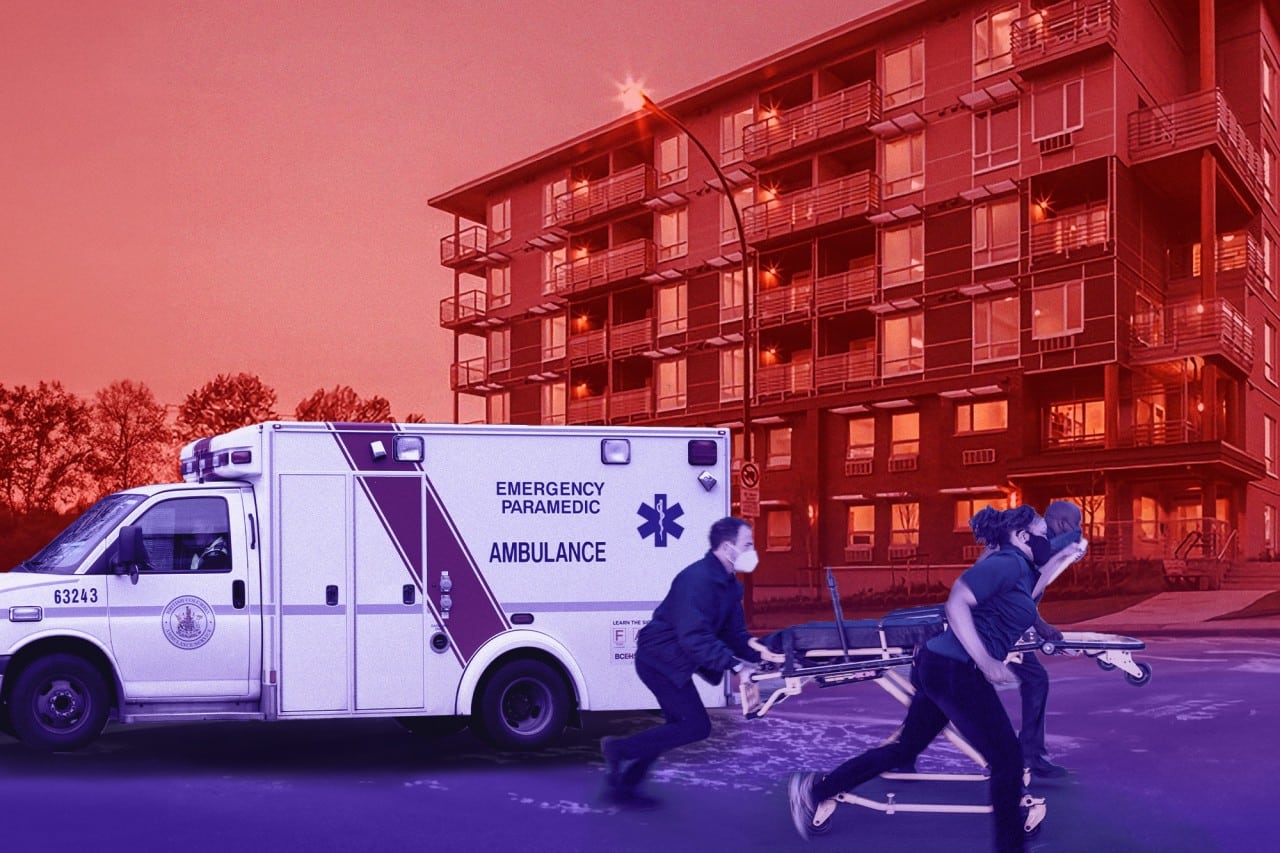
Content warning: this article contains details about suicide and drug toxicity deaths.
The day she first met her partner, Kali said he was “glowing.”
The couple lived together for two and a half years at Rising Sun Villas, a Surrey, B.C. housing project run by the privately operated non-profit Phoenix Society. Rising Sun offers supportive and transitional housing for people who have completed substance use treatment or were previously incarcerated.
Over their years together, Kali said the supports her partner received when he moved into Rising Sun were inconsistent at best. When the COVID-19 pandemic hit, management cancelled support groups he relied on and never offered alternative support, Kali said.
When she last saw him, before he died prematurely at Rising Sun in November 2021, Kali said her partner looked like a skeleton. Kali’s partner was one of seven people since 2020 who have died at Rising Sun due to drug toxicity or causes that have not yet been identified, an investigation by The Breach has revealed.
In an interview with The Breach, Kali (who asked to be identified only by her first name to respect obligations to her employer) named wide-ranging concerns with Rising Sun that both she and a Phoenix Society employee said contributed to her partner’s relapse and ultimate death.
Inconsistent services and a “relapse clause,” which stipulates that residents who use illicit drugs will be evicted—despite the fact that an overwhelming majority of people who attend drug treatment programs relapse shortly after discharge—created a dangerous environment for people in recovery, the sources said.
Kali’s partner was one of three people who were killed by toxic drugs at Rising Sun in the last three years, according to data obtained from the Ministry of Citizens’ Services through a freedom of information request. Four other deaths remain under investigation and one person died of natural causes.
It’s not just Kali and one employee who are concerned. Letters obtained by The Breach show that on three occasions, dozens of staff members rang the alarm about unsafe practices, including their inability to perform wellness checks on residents due to understaffing.
For Kali, the experience at Rising Sun and loss of her partner, “left a gaping hole in my heart that will never heal.”

Big promises
In 2015, Rising Sun was announced as an exciting “new model” for recovery housing in the city of Surrey.
The former CEO of Phoenix Society, the nonprofit that operates the building and other drug treatment programs, has said Rising Sun offers homeownership to “marginalized populations or people no one thought had the opportunity or ability to own their own homes.”
Twenty-three units on two storeys of the building are available to be co-owned with Phoenix; the other four storeys offer transitional and supportive housing for people who were previously incarcerated or are in recovery.
“The Rising Sun Project acknowledges that all citizens in our city need a home,” Phoenix’s website reads. “It also challenges us to change our collective thinking about the root causes of homelessness.”
Within five years, the shine of these promises faded as residents started passing away at an alarming rate.
In response to questions from The Breach, Phoenix Society CEO Justine Patterson said in an email that she is prioritizing “current concerns impacting quality client service delivery or staff wellness,” and did not offer a response to specific allegations.
The Breach previously reported on deaths, fraud and inappropriate staff activity at Phoenix Society’s drug treatment and transitional housing facilities, located a few blocks away from Rising Sun.
The ‘relapse clause’
One current Rising Sun employee, who has been there since 2015, recounted a Sunday daytime shift when a resident jumped out of their window and did not survive. The Breach is not identifying the employee by name in order to protect their employment.
“The police were trying to block people from seeing it, but the dead body was right there in front of the door,” the staff member said in an interview.
According to the employee, Rising Sun management had directed another staff member to stop conducting wellness checks on the person approximately one week before they died.
The person who died was living in one of the homeownership units—which came with a clause that if a resident used illicit drugs, they would be evicted, the Rising Sun employee said.
Residents in housing programs like Rising Sun are considered to have the same tenancy rights as those in substance use treatment. They therefore do not have the same rights as other tenants and can be subjected to evictions that would be illegal elsewhere.
Both Kali and the employee said the policy appeared to be enforced at random.
The relapse clause contributed to this resident and others using drugs in secretive isolation, according to Kali, the current employee and one former employee interviewed by The Breach.
“It’s just an invisible pressure,” the current employee said about the clause. “It’s insurmountable.”
The former employee worked at Rising Sun for just under a year starting in 2022. The person agreed that the relapse clause posed a risk—especially when applied unevenly. The Breach is not identifying the person by name to protect their ongoing employment in the field.
Other residents also struggled with substance use before ultimately passing away as residents of Rising Sun, the current employee said.
All three sources said that some residents were not evicted after relapsing, while others were.
“You can’t have it both ways,” Kali said, explaining that rules around drug use need to be clear for people in recovery.
The current employee agreed with this sentiment. She also pointed out that there were periods of time where no worker was tasked with the role of checking in on some residents and said that instructions were constantly changing as to whether staff should be checking on residents.
The former staff member said that residents who had previously been incarcerated would sometimes be sent back to prison if they used drugs. The former employee also alleged that Rising Sun management labeled some residents as having a “deteriorating attitude”—even if all they had done was vent concerns about their living conditions—and had them sent back to prison.
Byron Wood, a board member of Workers for Ethical Substance Use Policy, told The Breach that many treatment facilities are paternalistic in nature and produce internalized shame.
“People who seek help at residential addiction facilities in B.C. leave the facilities traumatized and worse off than when they went in.” He added that clients “may be subjected to gaslighting, ostracized and told that [they’re] in denial,” if they question approaches to care.
‘No support’ for staff after resident deaths
The former Rising Sun employee said that they were part of a group that attended to a death caused by a drug toxicity overdose in July 2022. They were trying to revive the resident, before paramedics arrived and informed staff that the participant had requested a “Do Not Resuscitate” order. The employee said management should have prepared staff for that situation.
The former staffer said the experience was traumatic. “After it happened, there was no support.”
Kali expressed she felt the building was “severely understaffed” and that there did not appear to be clear standards for hires to have relevant experience, either lived experience or formal education. Both the former and current employees agreed that many people were not formally trained to manage the situations that arose in a building with such a wide-range of programming.
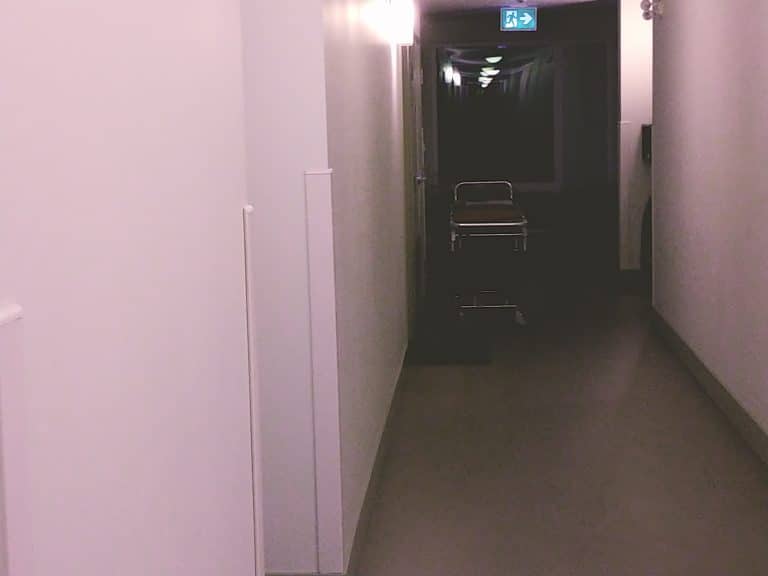
Despite complaints of understaffing, Rising Sun’s management crammed additional residents into the building.
Kitchens were removed from several of the residential units on the supportive and transitional housing floors to squeeze in more beds, according to the current Rising Sun employee. Meanwhile, the second-floor recreation room was converted into a dorm with four beds a few feet apart, the staff member said.
The current employee who spoke to The Breach said that Rising Sun’s operation felt like it had become all “about the money, the stats, the government funding.”
Staff begged for basic supplies during pandemic
In three letters obtained by The Breach, sent between 2021 and 2022, Rising Sun staff spoke out against unsafe working conditions at the housing project. The letters were addressed to Phoenix’s management, its board of directors and Correctional Service Canada—the primary funder of Rising Sun’s programming.
One of the letters, dated May 2022, expressed lengthy concerns about hygiene and the spread of COVID-19.
“Rising Sun sees exceptionally high turnover and is critically and chronically understaffed,” the letter said. “Job responsibilities such as proper note taking, monitoring residents, and fostering a positive culture” were impossible, employees reported.
“As staff, we are continually placed in unnecessarily stressful and unsafe working conditions, only made worse by the organization’s pandemic response and inadequate support in maintaining established safe and effective COVID protocols.”
The staff requested supplies such as gloves, disinfectant, masks and hand sanitizer. They asked for quarantine protocols to be followed properly, writing, “staff who are over-stretched due to scheduling are unsupported in effectively overseeing COVID isolation…leaving all staff and residents vulnerable to increased risk of an institutional outbreak.”
They also asked management to “establish a proper office telephone line.” An existing line that used Wifi was unreliable for emergencies, such as calling for help when a resident overdosed, the staff said.
Kali said the pandemic also took a terrible toll on residents. She said a number of regular programs run by Phoenix for alumni of its first-stage substance use treatment program were halted. This broke the routine and discipline her partner had developed as part of the rigid structure that substance use treatment puts focus on. Then, he relapsed.
While rigid discipline seems to benefit some people who are trying to stop using drugs, questions remain about that approach’s effectiveness, and about the effectiveness of residential drug treatment programs in general.
One study referenced by the B.C. government found that 59 per cent of people who attended residential treatment for opioid use relapsed within one week of discharge and 80 per cent relapsed within a month. Another study, which used a sample of more than 37,000 people, found that inpatient care for opioid use actually made people more likely to overdose. This is in part because of how volatile the unregulated street supply has become—and a person who attends rehab leaves with a lowered tolerance.
Public referrals to private, unregulated recovery housing
Despite the lack of evidence as to inpatient drug treatment’s effectiveness, facilities like those operated by the Phoenix Society receive public funding and referrals from public health care institutions.
The local health authority Fraser Health funds Phoenix Society, the parent organization of Rising Sun, directly. Phoenix received nearly $2.5 million from the authority in one year, according to data obtained by The Breach through an access to information request. That included more than $670,000 for “stabilization and transitional living residence” projects like Rising Sun in the 2022/2023 fiscal year. The funding was provided after four deaths had already occurred on site.
The funding specifically came with the stipulation that all residents be provided supports for their recovery needs and be checked on every 24 hours.
Nurses, doctors and social workers also refer patients to these private programs despite little evidence of their effectiveness and a lack of regulation around programming.
In an email, Fraser Health spokesperson Dixon Tam said the authority “generally” refers patients to provincially-funded programs or programs the authority funds. Tam also said that Fraser Health staff make exceptions to support self-referrals to any private recovery program.
When asked for criteria and whether frontline workers that support these referrals are made aware of issues plaguing recovery centres, such as the allegations that one recovery centre looked the other way while a staff member sexually assaulted residents for years, Tam said, “I don’t have any additional information to share with you.”
Calls for regulation are rising
Ironically, the founders of Phoenix Society have critiqued the ways that the “neoliberalization process”—or the deregulation of industry and reliance on the private sector to deliver services—neglects human and social development. In an essay they published in 2020, Michael and Ann Wilson, who retired from Phoenix in 2017, said they hoped Rising Sun would contribute to making Surrey “more inclusive, democratic and socially just.”
While the Wilsons may have intended to distinguish Rising Sun from some elements of the recovery sector, the housing project now seems to be replicating the very systems they set out to challenge.
More people and institutions are starting to question the lack of regulation and ad-hoc programming at B.C.’s recovery facilities. This is partly because they deal with life-or-death situations and also because they receive millions of dollars in government funding and have been positioned as the government’s main response to the drug toxicity crisis that continues to kill thousands of British Columbians.
A number of groups, including Workers for Ethical Substance Use Policy, Moms Stop The Harm, the BC Humanist Society, Harm Reduction Nurses Association, and the roughly 50,000-member BC Nurses Union have all taken positions that the B.C. recovery industry should be regulated and evidence-based.
Through all the tragedy that unfolded while she resided there, Kali still reminisces about the healing elements of being in a community. She recalled a time when she planted flowers on her balcony at Rising Sun. A group of residents working in the communal garden took notice, and not wanting to be outdone, started planting tomatoes during the Surrey summer.
”It could have been something amazing,” she said.
UPDATE: A previous headline on this article stated that eight people had died at Rising Sun Villas. The headline has been updated so that the resident who died of natural causes is not included.

“We need media that enlarges the sense of what’s possible.”
Naomi Klein, journalist and author
Want to support hope-fuelled journalism? Become a sustaining member.
Drug Toxicity | Death, fraud, degradation: Inside a revered B.C. drug-treatment centre
Abolition | B.C. can’t police its way out of a housing crisis
Opioid Crisis | Vancouver drug users take safe supply into their own hands

1 comment
Comments are closed.

I used to be one of those who, though sympathetic, would look down on those who’d ‘allowed’ themselves to become addicted to alcohol and/or illicit ‘hard’ drugs. Yet I, albeit not in the fentanyl-use category, have suffered enough unrelenting PTSD-related hyper-anxiety to have known, enjoyed and appreciated the great release upon consuming alcohol and/or THC.
Neglecting and therefore failing people struggling with debilitating drug addiction should never have been an acceptable or preferable political or religious option. But the more callous politics that are typically involved with lacking addiction funding/services tend to reflect conservative electorate opposition, however irrational, against making proper treatment available to low- and no-income addicts. … It really is as though some people, unlike most other people, are actually considered disposable.
Even to an otherwise relatively civilized nation, their worth is measured basically by their sober ‘productivity’ or lack thereof. Those people may then begin perceiving themselves as worthless and accordingly live their daily lives and consume their substances more haphazardly.
For me, a somewhat similar inhuman(e) devaluation is observable in external attitudes, albeit perhaps on a subconscious level, toward the daily civilian lives lost in protractedly devastating war zones and famine-stricken nations: The worth of such life will be measured by its overabundance and/or the protracted conditions under which it suffers.
Tragically, many chronically addicted people won’t miss this world if they never wake up. It’s not that they necessarily want to die; it’s that they want their pointless corporeal suffering to end.
Fortunately, the preconceived erroneous notion that drug addicts are simply weak-willed and/or have committed a moral crime is gradually diminishing. We now know that Western pharmaceutical corporations intentionally pushed their very addictive and profitable opiates — which I see as the real moral crime — for which they got off relatively lightly, considering the resulting immense suffering and overdose death numbers.
Still, typically societally overlooked is that intense addiction usually doesn’t originate from a bout of boredom, where a person repeatedly consumed recreationally but became heavily hooked on an unregulated often-deadly chemical that eventually destroyed their life and even those of loved-ones.