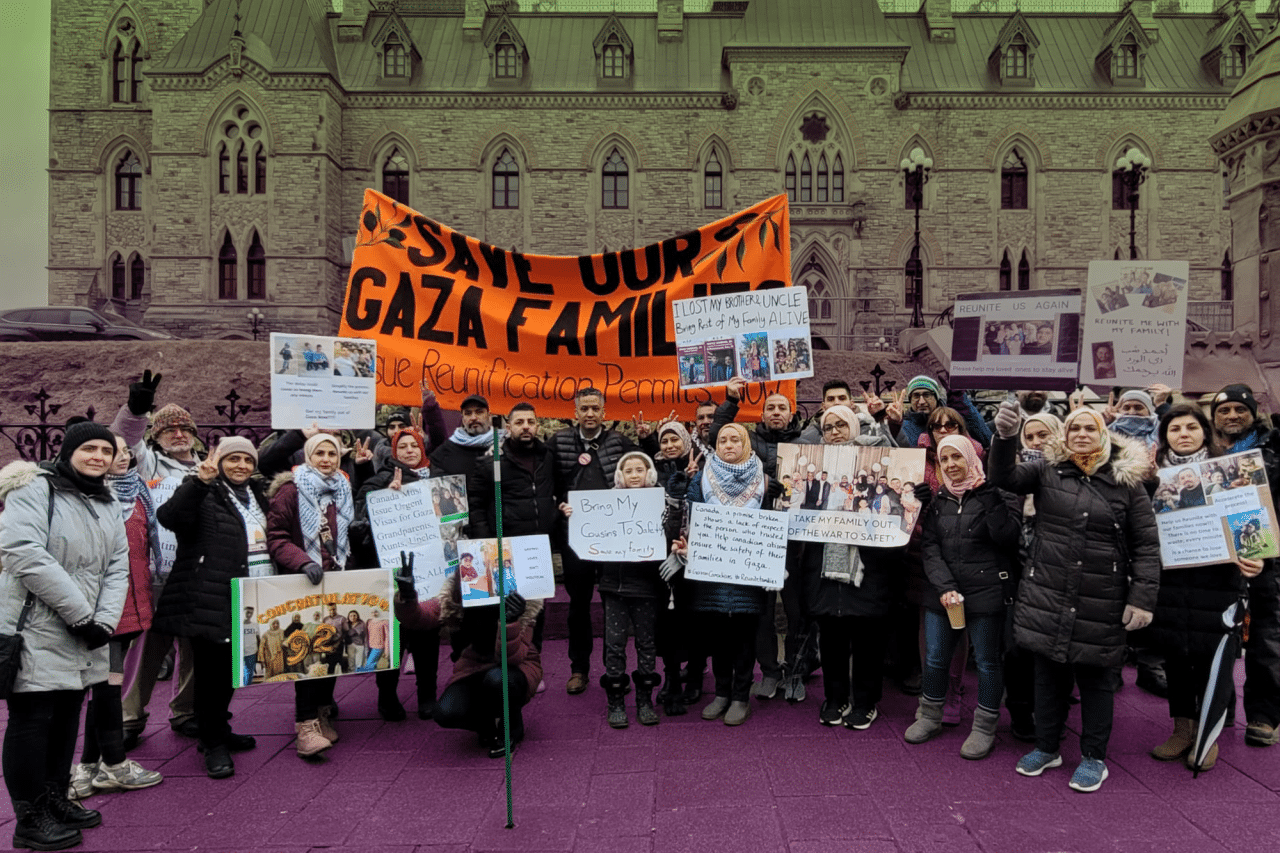
When Raed Hamdan finally got hold of his family in Gaza in mid-January, after trying to reach them for weeks, he could hear the bombardment over the phone. His mother and siblings had been displaced from their homes, and were struggling to find food.
Five months into Israel’s indiscriminate assault on Gaza, Hamdan lost his brother Emad, his uncle Nafez, and his cousin Mohammed. He is now trying to get his mother, his siblings and their families—including three children whose father was killed—to safety in Canada.
“I don’t know if I will be able to get them out before someone else dies,” he said. “I don’t want to lose another person.”
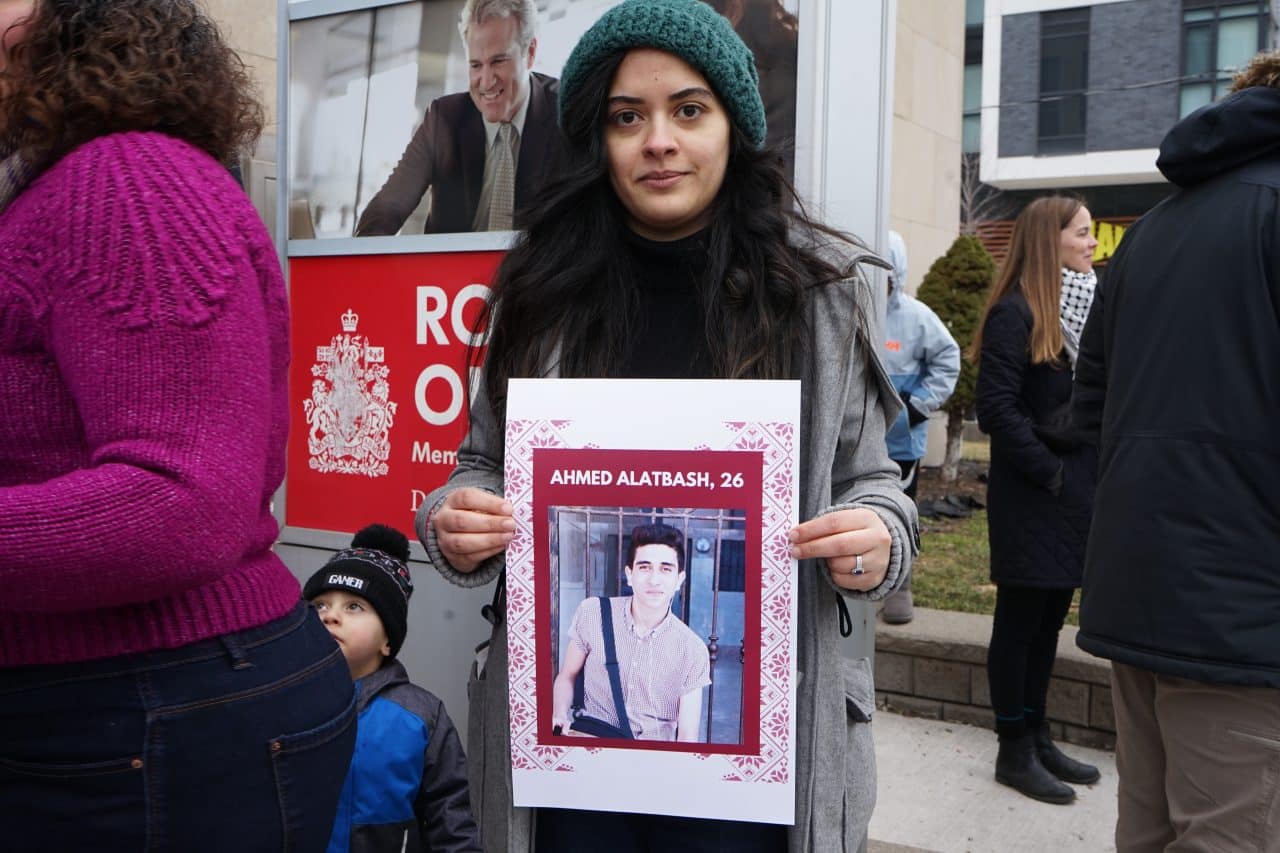
From her home in Cobourg, Ont., Eman al-Atbash, mother of a two-and-a-half year old boy and six months pregnant with another child has also been worried sick about her parents and siblings in Rafah. She has already lost five family members to airstrikes, snipers, and illness, and her remaining loved ones have to survive every day. The threats are long: bombardment, starvation, violent clashes, cold weather, floods, and widespread sickness.
“The news coming from [Gaza] is heart-wrenching,” al-Atbash told The Breach in an interview.
But rather than just agonizing, al-Atbash and Hamdan have been organizing. Alongside fellow Palestinians and allies, they are organizing to pressure the Canadian government to bring their loved ones to safety, as it had promised months ago.
Since December 2023, they have been part of a community of over 2,500 people who connected on WhatsApp over their fear for their loved ones in Gaza, and their frustration with Canada’s slow and confusing visa process.
They have both begun the process to apply for temporary residency visas for their families through the emergency program announced last December. But, to date, not one applicant has been able to come to Canada through the program.
“In the depths of despair, there remains a glimmer of hope, a belief that humanity will prevail,” al-Atbash wrote in a flyer that Hamdan was handing out to protesters in a vigil in Toronto last month.
An organizing group grows online
Omar Omar, a tech worker in Vancouver started the first WhatsApp group at the end of October, when Israel striked the Jabalia refugee camp in Northern Gaza. For him, that was the defining moment when he realized the urgency of the situation, and “Israel’s intention to commit a genocide,” he said.
The group started with 50 people who found each other on social media and by word of mouth. Within 48 hours, the number had ballooned to 1,000.
Since then, the community has been holding brainstorming sessions for peaceful actions, coordinating with lawyers for possible group litigations, meeting with their local MPs, and reaching out to the media to increase public awareness. A steering committee of around 20 people are organizing the collective efforts.
On December 21, 2023, Immigration Minister Marc Miller announced temporary visa measures that would allow Palestinian residents and citizens to apply for family reunification visas for extended family members in the Gaza strip. The program quickly came under heavy criticism for its lack of transparency and racist underpinnings.
A group of immigration lawyers put out a petition detailing the problems with the policy, noting that questions about scars and social media handles were “invasive and never-before-seen.” Refugee rights activist Matthew Behrens also said these questions, and the fact that minister Miller emphasized security concerns when discussing the program, assumed that every potential applicant is a risk or a suspect. This contributed to the racist stereotyping of Palestinians, who have been facing “demonization on steroids since October 7.”
But policymakers didn’t sit down with community members and organizations who could’ve highlighted these problems with the program.
When it was first announced last December, the visa program was capped at 1,000 persons, which made Gazans in Canada panic and rush to put together all the necessary paperwork.
“It became a race to be the first to apply to ensure that our families get there. This was very stressful,” al-Atbash said. But instead of seeing it as a competition, community members were resolute in helping each other, and in asking the government to remove the cap.
Earlier this week, Miller announced the cap would be raised, but it is still unclear by how much.
Eman says that when the applications finally opened, “it felt like running after a bus”—a day of fielding complex requirements, notarized letters, and several calls to the IRCC. Afterward, she let out a big sigh and directly jumped on the WhatsApp group for Gazans in Canada to help others who were still struggling with the process.
She translated requirements and questions from English to Arabic, and shared all the information she had gotten from her calls with IRCC employees regarding confusing questions.
However, all this work is only the first step of the process. After filling this initial form, family members in Canada need to wait for unique codes to be able to submit the actual visa applications. al-Atbash, Hamdan and dozens of others have not been able to proceed.
Meanwhile, since the announcement of the program and its slow rollout, people in the groups have lost a total of 39 family members who would’ve been eligible to come to Canada.
Torment in the face of ‘bureaucratic inertia’
On February 11, al-Atbash, Hamdan, and more than a hundred people gathered at the office of the Parliamentary Secretary to the Minister of Foreign Affairs in Eglinton to mourn their loved ones who were killed and to advocate for the rest of their families before it’s too late. Volunteers printed out pictures of the victims and pamphlets of their stories that were read out loud.
“Do I not matter? Am I not a taxpayer as well? Am I not equal to all others here? Each passing moment is a torment, a reminder of our helplessness in the face of bureaucratic inertia,” al-Atbash had written, passing her statement to another to read because she felt tears and grief would overcome her.
Even though the event—the first public action organized—had no media coverage, Omar believes it helped the community build confidence and trust in each other. That is when they decided that they needed to go bigger and protest in Ottawa.
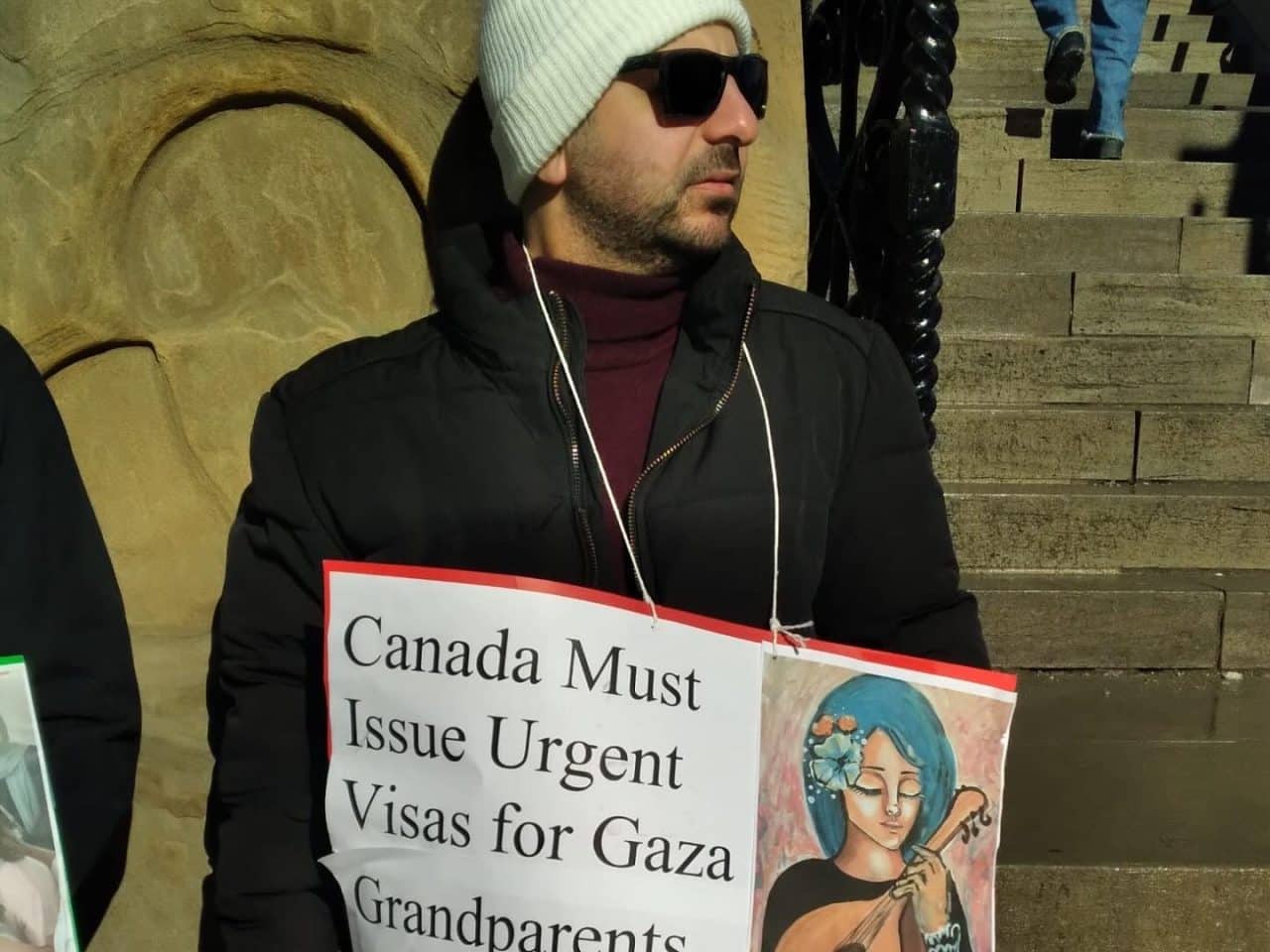
While the House of Commons was in session from February 26 to 28, around 150 people staged a silent protest on Parliament Hill. Organizers decided not to chant or carry flags to avoid being stereotyped as “angry barbaric Arabs,” Omar said. “The fact that it was a silent vigil made the biggest impact.”
Gazan Canadians held pictures of their loved ones, and stood silently for three days. The goal was to deliver the message that the government is being racist and applying double standards when it comes to visas for victims of war, Omar added.
For months, Canada’s immigration office hadn’t answered the organizers’ request for a meeting.
“They haven’t been talking to us, listening to us or trying to build any connection,” Omar said. But when CBC picked up the story from the Parliament Hill protests, things changed.
“Only when I did the interview with CBC, and I was telling the people and Canadians that the government is not listening to us, did people from Immigration Canada contact me to say let’s sit down,” Omar said. However, organizers were told that immigration minister Miller was extremely busy, but his chief of staff was willing to meet them.
“We made a decision not to meet them. We came here for one purpose and this purpose is no less than meeting the minister,” Omar said. “These [organizers] are full Canadians and they deserve to be seen and heard because they have faced a huge injustice by our own government and they need answers.”
‘Fighting in every corner’ for justice
Omar said that the community will keep escalating their peaceful protests until their demands are met.
These include bringing their loved ones to safety, even if just to Egypt through the Rafah border crossing; sending codes to applicants who are still waiting to move on to the second stage of the application process; granting visas; and removing the cap on the number of visas the government is willing to grant.
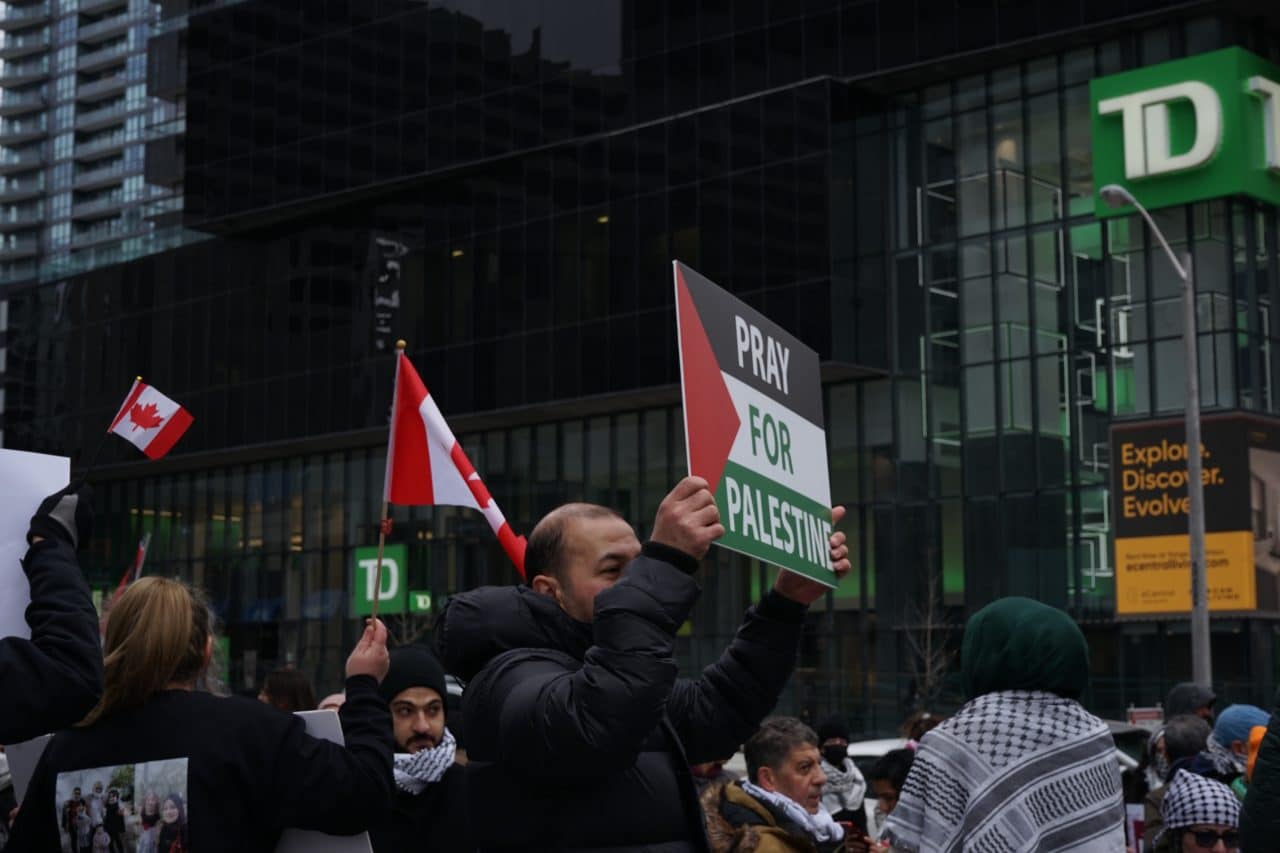
Gazan Canadians planned another silent vigil on Parliament Hill for when the house of Commons meets again on the week of March 18. Al-Atbash and a dozen community members traveled from different provinces to participate in the action, and stood on the sidewalk for hours despite fasting for Ramadan, and despite the freezing weather.
They are also planning a mass hunger strike in March or April.
“We are actually keen to do such a thing because we cannot just see our family members dying of hunger and being starved and just accept to live here as privileged — although as a second class citizen,” Omar said. “I prefer to be in Ottawa, dying from hunger in solidarity, exposing this racist government than just sitting here and doing nothing.”
Meanwhile, al-Atbash and more than 150 others are coordinating with lawyers on three group litigations against the IRCC. One is for families who never received codes. Another is for families who received ambiguous letters stating that documents are missing without specifying which. A third is for families who have received codes, and submitted visa applications, but never received further updates.
A group of lawyers are currently going through all information to submit applications to court. Once filed, they plan on asking for an expedited hearing because the process can usually take eight to 12 months.
“We don’t actually know what’s gonna make this government change the policy or do something so that people can actually get out if they’ve been approved,” said Khatidja Alam, an immigration lawyer on the case. She said empathy and anger have driven her and several other lawyers to adopt the case and advocate along with the families.
While the process is long and holds no promises, the bare fact that the lawyers have filed lawsuits for some of the family moved something behind the scenes. Their clients have finally started receiving answers on their visa applications.
“People may feel hopeless,” Alam said. “How could you not? And I think people are really disappointed with Canada. But there are people fighting in every corner just trying to get a result.”
When asked about actions allies could do to help, Omar listed three items: emailing MPs to push for change at the risk of losing political support, sharing Palestinians’ stories in the media and social media, and showing up to vigils, even for a short time.
This would help take the pressure off families who “don’t have the energy, the mental, physical, or emotional capacity, to keep repeating themselves,” Omar said.
On her end, Al-Atbash also emphasized the importance of solidarity regardless of race or background, and she urged Canadians to look at their Palestinian counterparts with humanity.
“Family is sacred for us and we want to be reunited with them,” al-Atbash said. “We just want to live.”

‘We need an outlet, a source of information that is credible, that is progressive, that we can cling to and believe in’
David Suzuki
Want to support journalism you can believe in? Become a sustainer today.