The Giller Prize, Canada’s most prestigious literary award, is generally a decorous and reserved affair. But last year, it was pro-Palestine protesters, not books, that stole the limelight.
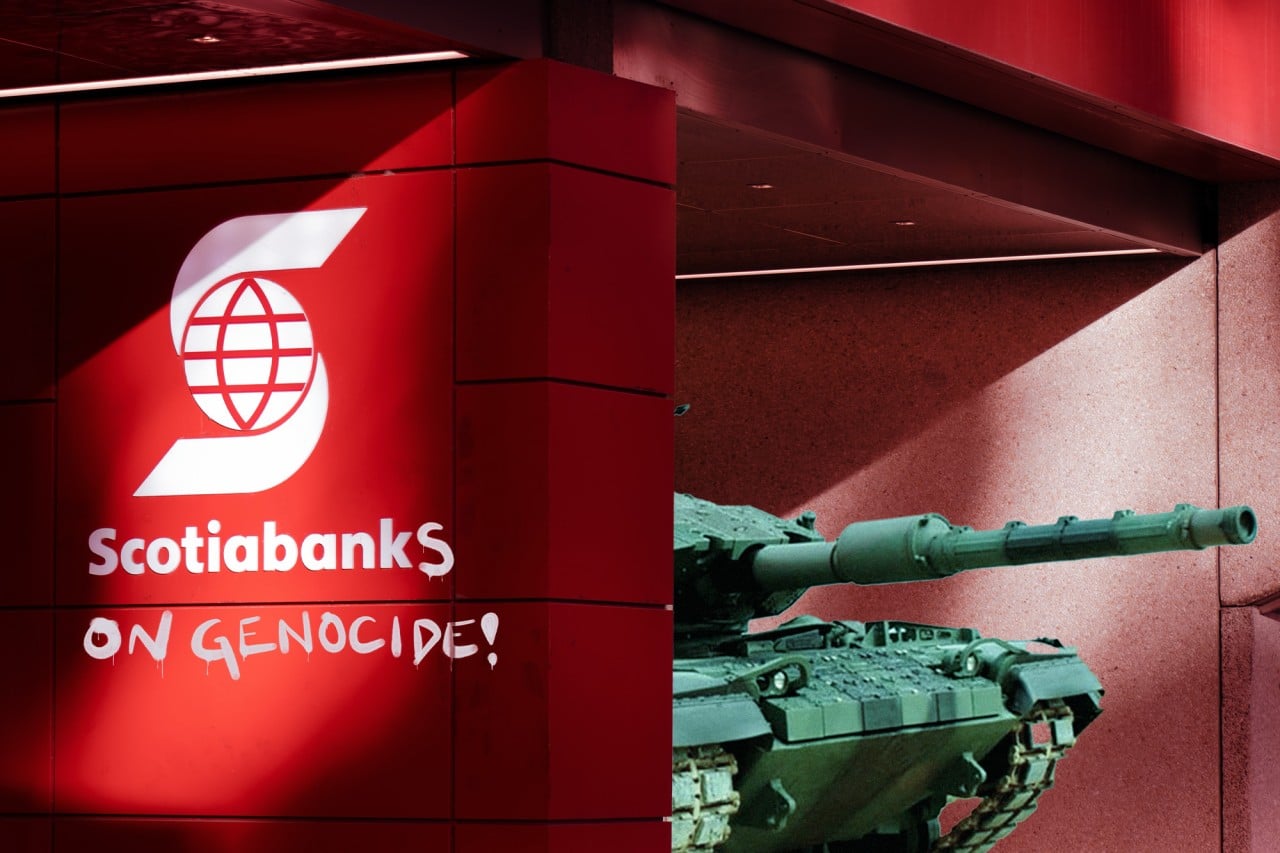
Twice, protesters invaded the stage to protest for Palestine: once early on in the evening, holding signs stating “Scotiabank funds genocide,” and then again as the $100,000 award was being presented to author Sarah Bernstein for her novel Study for Obedience.
Rick Mercer, the evening’s usually-amicable host, had grabbed at the protesters’ signs as the tuxedo-clad attendees booed at them. Both times, the protesters were shuttled off the stage, and were later handed over to police to be criminally charged for the interference.
The protest kicked off a demand that has become louder and louder among artists, authors, filmmakers and organizers over the past year: for our cultural institutions to financially detangle themselves from an unfolding genocide.
“It really sparked this moment of creating a crisis within Canlit,” said Jody Chan, an organizer with Canlit Responds, a group that would go on to play a central role in the organizing.
In the Canadian literary scene, or Canlit, that focus has largely been on Scotiabank—Canada’s third-largest bank, the sponsor of the prestigious Giller Prize, and, as protesters at last year’s ceremony highlighted, a stakeholder in Elbit Systems, Israel’s largest manufacturer of military technology.
In a later statement to the Globe and Mail, Giller Prize executive director Elena Rabinovitch lamented how the protesters “showed disrespect” toward the authors.
But despite admonishments from literary elites, putting pressure on our cultural establishments has yielded results.
This week, days before this year’s ceremony on Nov. 18, Scotiabank filed its latest financial reports to the SEC, showing that the company’s stake in Elbit Systems had dropped to 1.25 per cent—less than half of its stake at the end of 2023.
Over the past year, Scotiabank has consistently reduced its stake in Elbit Systems each quarter. Earlier this year, the weapons manufacturer experienced a drop in share prices.
Although Scotiabank formally denies the protests were related to its decision to reduce its ownership stake, Elbit Systems CEO Bezhalel Machlis admitted in an interview in August that the share price drop was related to investors “experienc[ing] political pressures of some sort and decid[ing] to sell.”
As the Giller prepares to announce its 2024 winner on Monday, the pressure on the prize—and on Canlit at large—to divest from genocide is not letting up.
Scotiabank’s 1.25 percent share price still represents $111 million (US) in financial investment in Elbit Systems, meaning there is still plenty of room to apply further pressure, as well as demanding a broader divestment from Israel at large.
Palestinian solidarity activists in the Canadian literary scene are clear about what they want: a full and complete end to an arts landscape that contributes to Palestinian suffering.
Canlit Responds strikes back
For too long, the Canadian literary environment has been steeped in controversy and a pervasive sense of apolitical individualism, in which authors clamor for lottery-esque chances to win monetary prizes that might finally enable them to reach a sense of security, amid inflation and high living costs.
This has often necessitated that they cast their eyes away from the blood money lurking behind luxe ceremonies—not only in regards to the Giller. The Griffin Poetry Prize, one of the world’s most lucrative awards for poetry also had financial ties with military equipment manufacturer General Kinetics up until 2015.
When the Giller protesters got up on stage to highlight these tensions at the heart of the industry, they evoked a path to a different kind of literary environment in Canada—one that quickly caught on among activists and authors determined to break the link between literary institutions and the funding of Israel’s assault on Gaza.
Two days after the events at last year’s prize, an open letter signed by over two thousand writers and publishers called for the charges against the Giller protesters to be dropped, and for literary institutions to condemn Israel’s occupation and collective punishment of Palestinians.
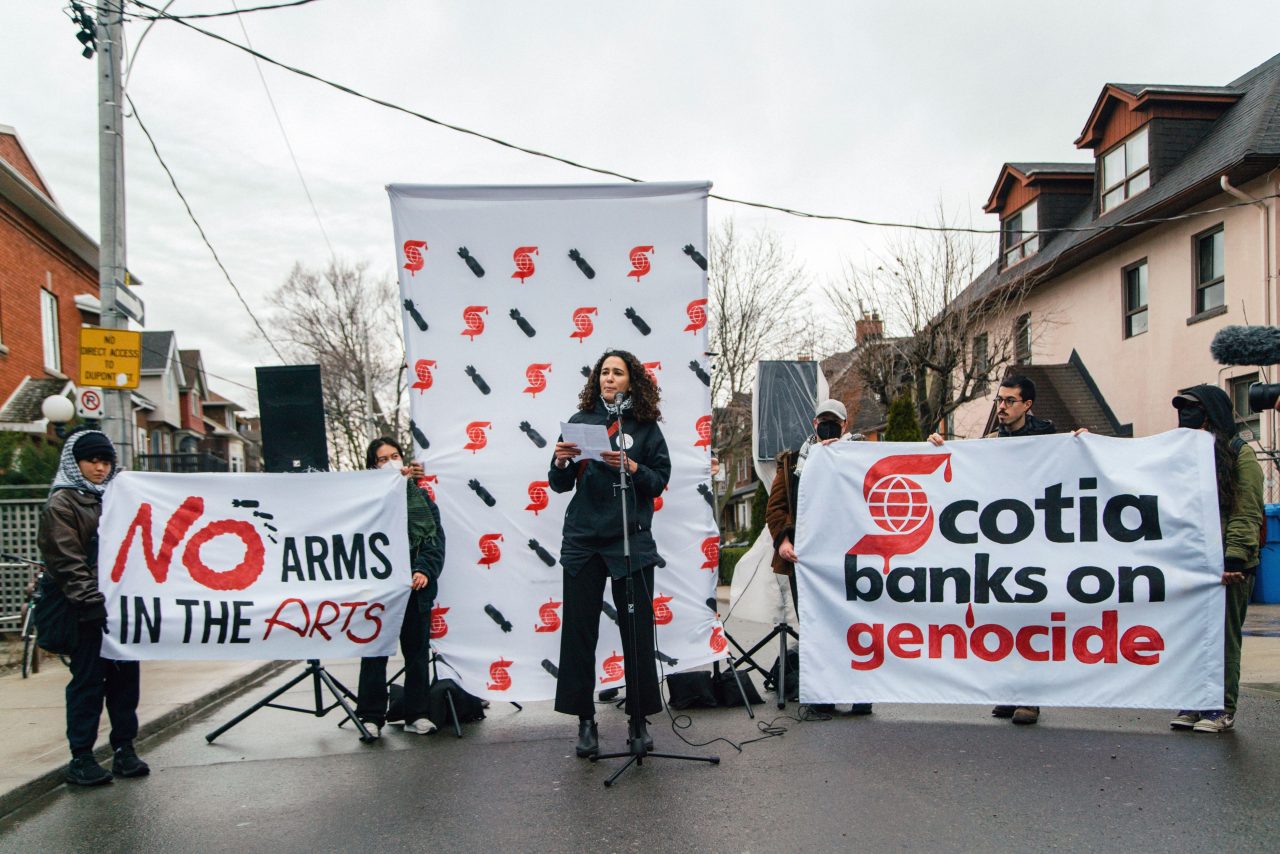
Canlit Responds, the group behind the letter, continued their organizing, resulting in a campaign in July in which first fifteen, and then later dozens, of authors withdrew their books from consideration for the 2024 Giller Prize (myself included).
Other authors committed to refusing participation in future Giller-related activities, including, in an embarrassing turn for the Giller, Sarah Bernstein herself.
The group is part of a fledgling movement around the world. These initiatives are seeking to detangle arts funding from military investments and resist artists’ works being used to artwash occupation and genocide.
They are trying to imagine a new kind of artistic landscape, one in which we are able to create art and form community independent of loyalty to corporate, and often blood-soaked, interests.
‘This meager platform of ours actually has great weight’
When South African apartheid fell in the early 1990s, it was only after lengthy efforts by a concerted movement of actors both domestically and internationally—including cultural workers, who launched boycotts of the state and its racist policy of segregation.
Playwrights and actors like Samuel Beckett or Marlon Brando refused to have their plays or films performed before segregated audiences in South Africa. Groups like Artists United Against Apartheid drew attention to the boycott and publicly criticized those who broke it, like Paul Simon, when he visited South Africa to record Graceland.
Similarly, in the fight for the rights of Palestinians against Israeli occupation, cultural workers have a part to play.
“Israel, for many decades, has had a very clear strategy of normalizing occupation through the cultural sector,” said Chan. “It’s very clear that the cultural sector is an important site of struggle.”
It’s often known as “art-washing,” in which arts and culture is used to distract people from, or legitimize, the human rights abuses or unethical practices of a state or institution.
From participating in international cultural events like Eurovision to hosting musical acts like Radiohead and Lady Gaga, art is used to normalize relationships with Israel and launder the state’s reputation. When Lady Gaga yells “I love you” in Hebrew to a crowd of twenty thousand giddy fans, it helps make Tel Aviv appear less like the capital of an occupying state and more like a glamorous international city.
In 2004, as a response to these efforts toward normalization, the Palestinian Campaign for the Academic and Cultural Boycott of Israel (PACBI) was launched, calling on the international community to refuse to collaborate with or participate in Israeli institutions in the sectors.
This process of reputational laundering also has direct, material ties between the cultural sector and Israel’s occupation.

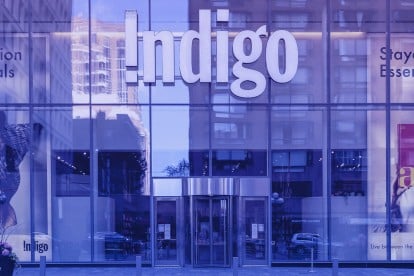
Indigo CEO Heather Reisman uses her wealth accrued in part from book sales and provides funds to soldiers who have served in the IDF using her HESEG Foundation. The charity’s finances the post-secondary education of “lone soldiers,” meaning those who have no other family or other support system in Israel. The benefits encourage foreigners to travel to Israel and serve in the military.
Scotiabank, which financially benefits from its investments in Elbit Systems, uses its money to pay out Giller Prize winners and support the programming of the Hot Docs Film Festival.
Other groups have ramped up their work in the past year to change this reality.
Film Workers for Palestine unites those in the industry in campaigns against art-washing, including targeting Scotiabank’s sponsorship of Hot Docs. Writers Against the War on Gaza is a coalition that has launched boycott campaigns against the New York Times and PEN America in retaliation for the organizations’ anti-Palestinian bias. Artists Against Artwashing demands that cultural institutions across Canada divest from Israel.
This spring, Canlit Responds came together with these groups for the No Arms in the Arts Festival: a ten-day program of film screenings and discussions that operated as a protest and counter to Hot Docs.
“Here today, we remind each other that the arts industries are nothing without artists,” writer Thea Lim wrote in an Instagram post about the campaign.
“This meager platform of ours actually has great weight, if we stand together and recondition ourselves to find meaning in our collective power.”
Launching a wider boycott
Despite a year of protest, the Giller has carried on with Scotiabank as its main sponsor—only dropping “Scotiabank” from its name, a clumsy attempt to sweep the crisis away.
In an interview with Toronto Life, Rabinovitch said the decision was made in order to “keep the focus on writers and the writing.”
In the same interview, Rabinovitch claimed that she supports the right to protest, but muses that the Gillers isn’t the best place to exercise this right. That if the issue is with Scotiabank, it would be more effective to go to the financial institution directly.
There have, in fact, been protests directly targeting Scotiabank, including sit-ins at the bank’s locations across the country. These demonstrations go hand-in-hand with campaigns launched by cultural workers, building pressure from multiple angles.
The pressure has been effective, as demonstrated by Scotiabank’s reduction of its stake in Elbit systems from 5 per cent to 1.25 per cent over the past year.
But even if and when that stake hits zero percent, Canlit Responds and other organizers will not be letting up the fight.
On Nov. 7, Canlit Responds launched a wider boycott campaign, expanding its demands to include that the Giller cut its ties not just with Scotiabank, but additionally with other sponsors Indigo, because of Reisman’s HESEG Foundation, and the Azrieli Foundation, due to, in part, its holdings in the Israeli settlement-funding Bank Leumi.
Even if Scotiabank cuts its divestment entirely—and the past year makes that seem like a distinct possibility—authors and book workers signing on to Canlit Responds will not participate in any Giller-related activities, including promotions, book clubs and other events, until the prize also detaches itself from Indigo and the Azrieli Foundation.
“It’s been really amazing and really heartening seeing this real hunger for a different way of being in relation to each other, other than these neoliberal, individualized ways of imagining what it means to be a writer,” said Chan.
The material impact on the financial ties that our cultural industry has to Israeli occupation has been one thing.
But these groups have a broader ideological aim: expanding the limits imposed on the cultural landscape by our current institutions, and showing cultural workers that there can be a different way of doing things.
“Part of the goal of our campaign has been to just show that there is a counter to the literary environment that exists right now, that we’re conditioned to believe is the only one that can exist,” said Chan.
These campaigns show us that we don’t have to accept the sorrowful conditions set by our cultural institutions, just because they have the funding and prestige that we’ve been conditioned to be hungry for. By coming together and imagining the type of cultural industry we want to be a part of, we can begin to build it, line by line.

When I went to journalism school 10 years ago, my parents thought that they would eventually read my articles in The Montreal Gazette. Today, that newspaper is a husk of its former self. But I get to explain that I’m working towards critical, independent, and sustainable journalism.
Want to be a part of the future of journalism? Support our work with a monthly contribution. Sign up here.
– Amanda Siino, Development Director, The Breach
Palestine | Cops crashed my talk on Palestine (and proved my point about colonialism)

Palestine Solidarity | Naomi Klein to Heather Reisman: Charges must be dropped against Indigo 11

Heather Reisman | In stunning pre-dawn raids, Toronto police ‘terrorize’ Palestine activists
1 comment
Comments are closed.

I’m sure you all saw the leaked information that Reisman was on the phone with Toronto police hours after the protest. I don’t know about you, but I personally do not have a direct line to the TPD. Would’ve been helpful when I was 18.