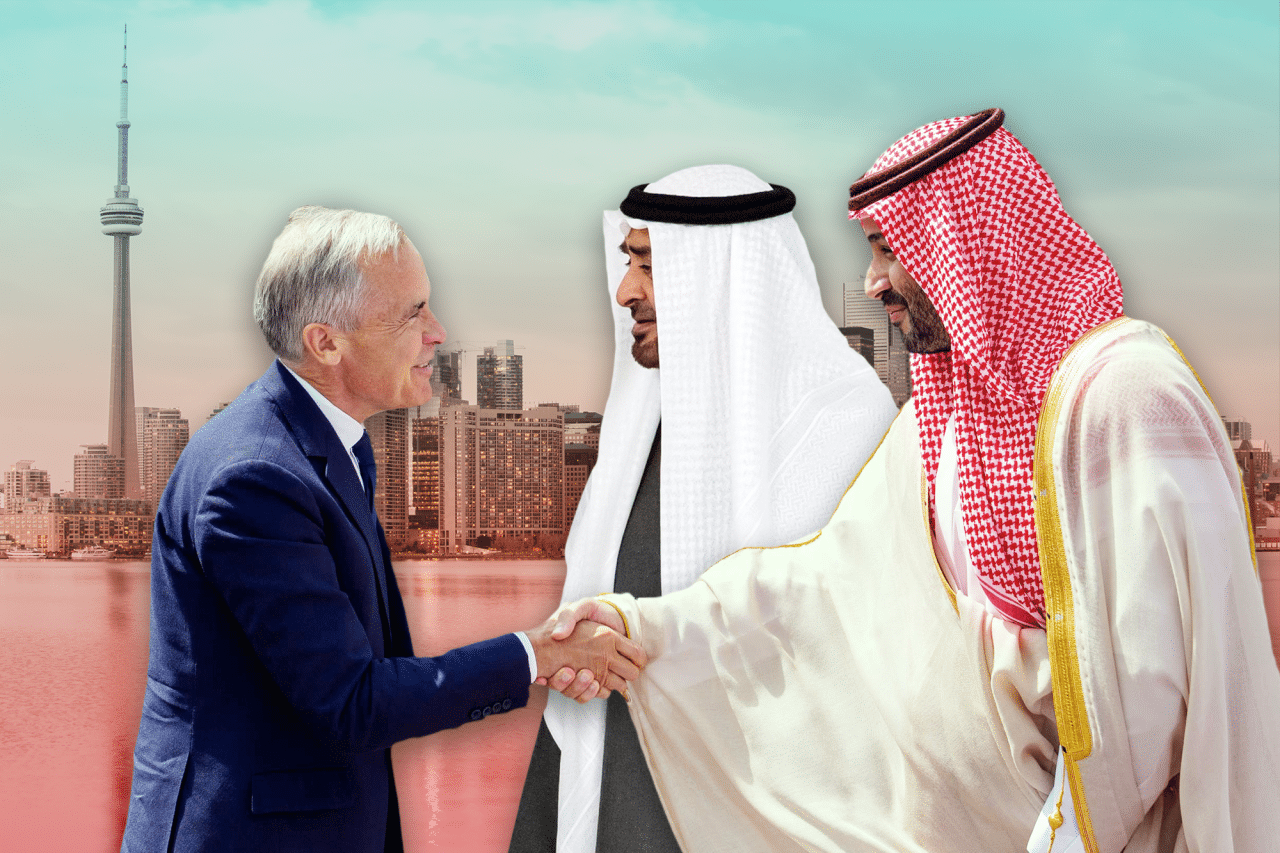
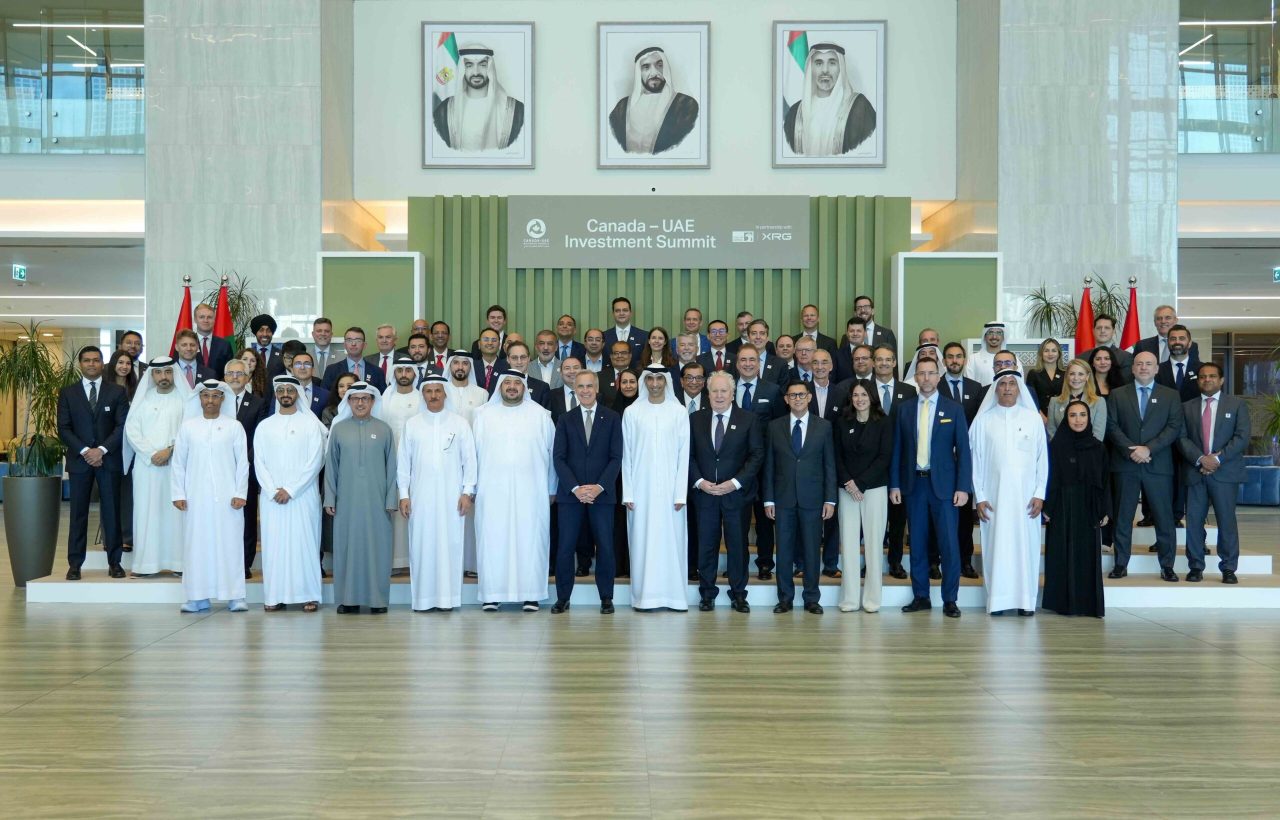
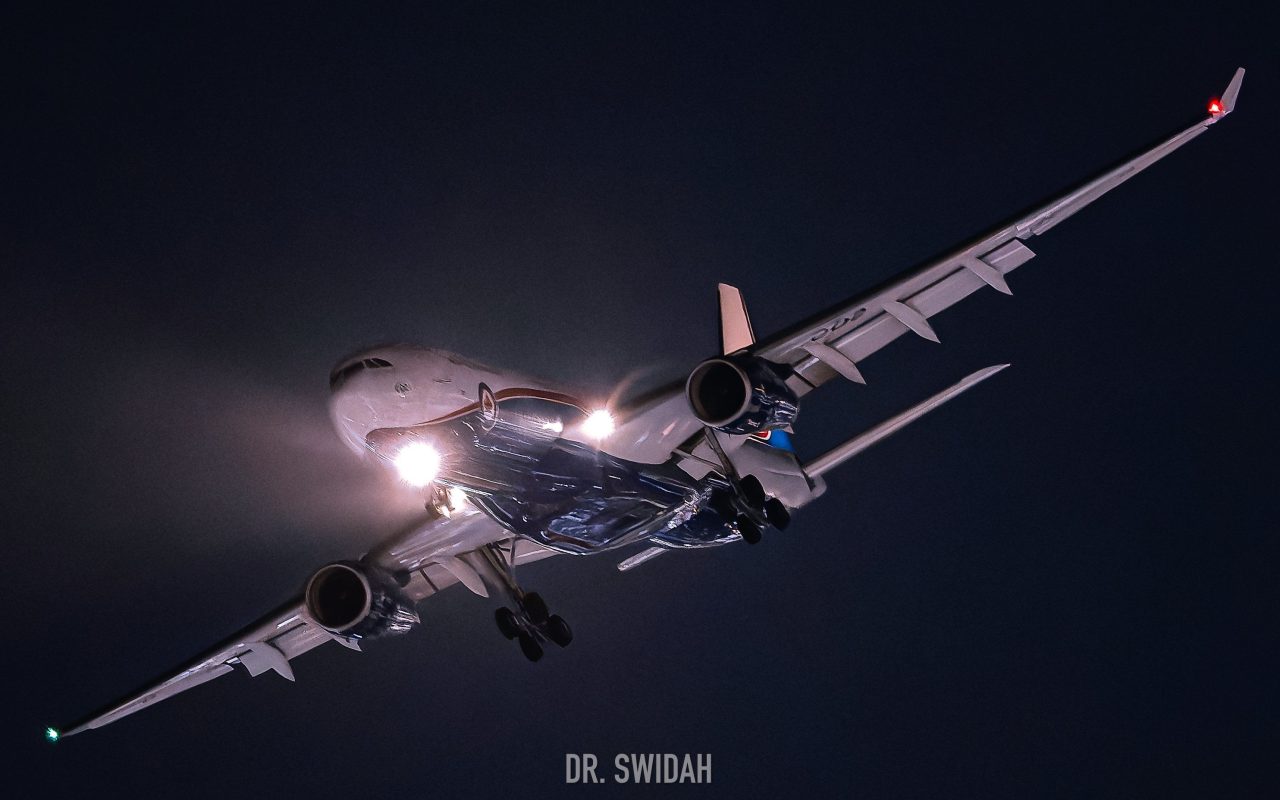
As the private jets of billionaire investors touched down in Toronto this week, their passengers were whisked to meetings inside a billion-dollar investment by Saudi Arabia’s royal family.
The swanky Four Seasons Hotel, the venue for prime minister Mark Carney’s Canada Investment Summit this week, is run by a Canadian company co-owned by Saudi Arabia’s prince Alwaleed bin Talal.
Who runs the hotel is a symbol of what’s transpiring at the summit. The world’s most powerful money managers—including officials from the sovereign wealth fund of the Saudi dictatorship, the Public Investment Fund, which controls an estimated $925 billion in assets—are considering pitches for infrastructure projects that Carney hopes will lure a trillion dollars of new investment.
Carney is making up for lost time with the Saudi royal family. In 2018, a rift opened after then-Foreign Affairs Minister Chrystia Freeland criticized the kingdom’s jailing of women’s rights activists, and Saudi Arabia froze trade with Canada and expelled its ambassador (though oil and militarized vehicles kept flowing between the two countries).
Now, Carney is bent on closing the rift.
It’s one part of a larger strategy that sees the Gulf taking a priority spot in Canada’s effort to diversify its trade relationships. The Prime Minister has been on an 18-month campaign of courting wealthy Persian Gulf countries with shady human-rights records, including the United Arab Emirates (UAE) and Qatar.
Carney has been working to bring to Toronto representatives from the UAE’s trillion-dollar sovereign wealth fund, as well as the investment arms of Dubai, Abu Dhabi, and Qatar. Together, the Persian Gulf’s state-owned investment funds control a staggering $5.6 trillion.
But like a billion-dollar luxury hotel chain, Carney’s hotly-courted investments aren’t going to trickle down to benefit ordinary Canadians. Instead, they’ll enrich the authoritarian despots of Middle Eastern kingdoms, while also offering impunity for their crimes.
For some time, Canada and Gulf countries have walked a public relations tightrope together: private enthusiasm for trade, and public caution over optics. Today, Carney’s splashy visits to the Gulf, and Saudi and UAE representatives getting VIP treatment at the investment summit, are daylighting relationships that are usually kept down-low—and significantly deepening them.
Schmoozing the Saudis, enriching the Emiratis
In January, Carney made a splash calling for global middle powers to band together in the face of an increasingly belligerent and unpredictable U.S. government. “The power of legitimacy, integrity and rules will remain strong if we choose to wield them together,” he claimed.
Since then, he’s been knocking on the doors of middle-power leaders notorious for their authoritarian rule, from Indian prime minister Narendra Modi to Turkish President Recep Tayyip Erdogan.
The latest stops on Carney’s world tour of dictators are Saudi Arabia’s Mohammed bin Salman, the United Arab Emirates’ Mohamed bin Zayed Al Nahyan, and Qatar’s Tamim bin Hamad Al Thani.
In each of the three countries, royal rulers have clamped down on civil liberties and upheld laws to discriminate against women and LGBTQ+ people. Activists and journalists frequently face arbitrary arrests, unfair trials, torture, as well as the death penalty, often for trivial crimes: in 2023, a retired teacher was sentenced to death in Saudi Arabia for criticizing authorities to all of ten followers on Twitter/X.
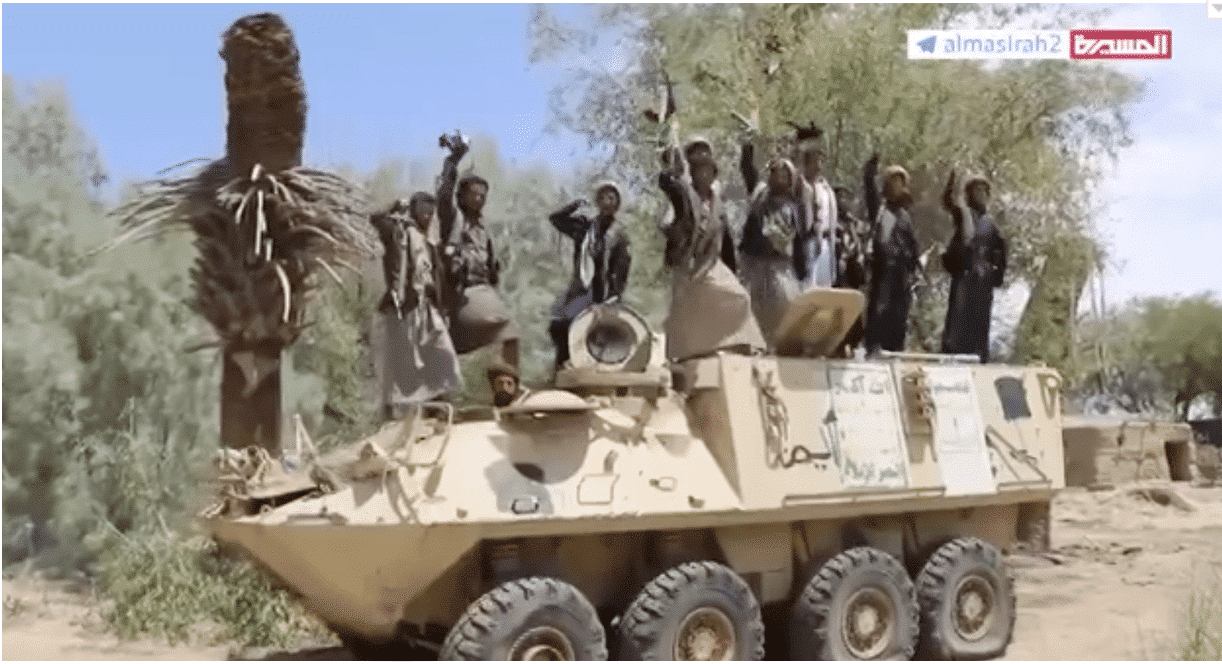
Saudi Arabia has also been pursuing a gruesome war on neighbouring Yemen, where Saudi authorities have attacked food, water, and health infrastructure, killing and starving civilians en masse (using Canadian-made militarized vehicles). Just last week, the bloodshed re-opened when the Saudi-backed Yemeni government launched attacks that crumbled a truce brokered by the U.N. four years ago.
Meanwhile the Emiratis have been backing a genocide in Sudan, arming and supporting the Rapid Support Forces paramilitary group in exchange for Sudanese gold and control of the Horn of Africa. As many as 400,000 Sudanese people have been killed, and over 12 million displaced.
‘A transformational change’ between Canada and the Saudis
None of this bloodshed seems to phase Mark Carney.
Carney made the first visits by a sitting Canadian prime minister to Saudi Arabia in 26 years, the first to the UAE in 42 years, and the first in history to Qatar. His ministers of finance, international trade, foreign affairs, defence, and AI have also been regularly flying out to the Gulf.
Minister of AI Evan Solomon said that the last nine months have seen “a transformational change” of “much deeper economic engagement” between Canada and Saudi Arabia. Indeed, Carney’s visit was capped off with the announcement of $1 billion in new deals between the two countries.
It’s a continuation of Carney’s pre-existing deal-making with Saudis and Emiratis, which started during his time as an investment banker and is now bearing fruit inside and outside of government.
Carney’s former workplace, investment mega-firm Brookfield, last month announced it had secured $2 billion from investors into a new private equity fund targeting Saudi Arabia and the Middle East, with much of the money coming from the Saudis’ Public Investment Fund. That joint venture started when Carney was part of the board of Brookfield—and may have coincided with an ill-defined time when he was elevated from vice-chair to chair of the board.
In the UAE, too, Carney has been working his long-established relationships. He has texted directly with political and economic officials at the highest levels in the UAE, reported The Globe and Mail. That relationship dates back to 2023, when the UAE committed US$1 billion to a Brookfield energy-transition fund as Carney led the board.
In large part thanks to the 2018 rift, Saudi investment in Canada has been overshadowed by that of its neighbour, the UAE. There is over $30 billion of Emirati investment already in Canada: UAE corporations own one of Canada’s largest logistics and transport carriers, and are on the cusp of controlling six different Canadian ports. That includes $6 billion in joint ventures between Quebec’s pension fund and the Dubai-based DP World.
But Carney wants more: last month, Canada and the UAE signed a free trade agreement, facilitating a $70-billion Emirati investment in Canadian mines, ports, and energy. A Canadian government press release boasted it was “one of the fastest agreement negotiations that Canada has ever completed.”
The Canada Investment Summit itself is even modelled after “Davos in the desert,” Saudi Arabia’s annual conference where it lures foreign capital to the kingdom, and which has seen Canadian business elites attend in droves.
The human cost of the relationship
Canadian trade with repressive Gulf monarchies isn’t a politically-neutral economic arrangement. In fact, it has often provided diplomatic cover and even material supplies for the kingdoms’ crimes against civilians.
In 2014, former Prime Minister Stephen Harper infamously signed a $15 billion deal to provide light armoured vehicles (LAVs) to the Saudis—the latest in a string of armoured vehicle sales to the kingdom by Canada, starting in the early 1980s under Pierre Trudeau. The Canadian-made combat trucks were used to crush pro-democracy protests in Bahrain during the Arab Spring; to terrorize the country’s minority Shia community; and to fuel the war in Yemen.
Even when the relationship between the two countries soured, the weapons kept flowing. A 2023 Breach investigation revealed how, under Prime Minister Justin Trudeau, billions of dollars worth of combat vehicles continued to be sold quietly from Canada to Saudi Arabia, with commitments stretching all the way to 2025.
And the logic behind the unbroken flow of trade is clear and crude. A secret analysis written by officials at Global Affairs Canada, which was obtained by The Breach in 2023, explained that Canada kept sending weapons to Saudi Arabia because the kingdom is a “principle guarantor” of cheap oil for western countries. For decades, Canada’s Irving Oil has bought boatloads of Saudi crude oil to refine in its facility in New Brunswick.
Today, with the excuse that Canada must diversify its trade away from the U.S. or else, mainstream media is egging Carney on.
In a Globe and Mail op-ed called “Canada should deepen its ties with Saudi Arabia,” Thomas Juneau cautions that in 2026, Canada “simply cannot afford to focus on [its] differences” with Saudi Arabia.
Those unnamed “differences” are, of course, about whether it’s alright to dismember journalists and kill political critics.
Another piece of Globe and Mail reporting, which makes slightly more effort to muffle its cheering, includes a tiny bit of chastisement: “Some critics accused Mr. Carney of silencing values for economic gain.” But in the end, it concludes that “one day soon, warmer relationships will be judged in the cold terms of investment dollars.”
Carney himself has suggested something similar: that inking deals with a country is a better corrective to human-rights abuses than publicly holding its leader to account. “Engagement is not endorsement,” he told reporters in Jeddah. “Lecturing countries from afar is an ineffective strategy.”
But so far, a lot of deals have been signed, with no visible pressure applied to these newly-favoured despotic trading partners.
The Breach’s investigations don’t just inform our readers—they force the powerful to react.
An exposé on blood plasma privatization led to national headlines. Our revelations about the government’s cozy connections to Big Pharma sparked a parliamentary probe. A report on high-tech price-fixing by mega landlords resulted in a criminal investigation.
From activists to elected officials, people are using The Breach’s journalism to push for transformative change.
– Dru Oja Jay, Board President, The Breach
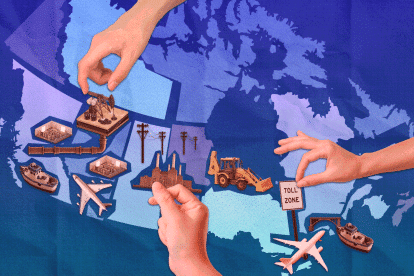
Corporate Power | Carney’s investment summit is putting Canada on the auction block

Privatization | Mark Carney’s investment summit could pave the way to a corporate carve-up of Canada
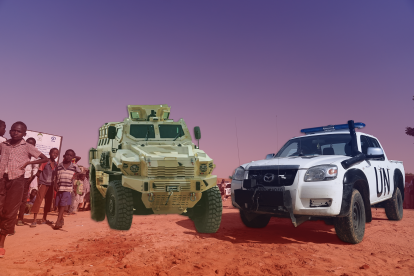
Foreign Policy | In the genocide in Sudan, Canada has a hand in the violence
2 comments
Comments are closed.
You write: None of this bloodshed seems to phase Mark Carney.
I think you mean that it doesn’t faze him.
Un fn real. Sold out to a horrible country. Typical Carey. He wants Canada gone to the highest bidder.