
This article is the third entry in The Breach’s ‘Racism and Housing Series,’ an ongoing investigation into how systemic racism is shaping the housing crisis across Canada. Read parts one and two.
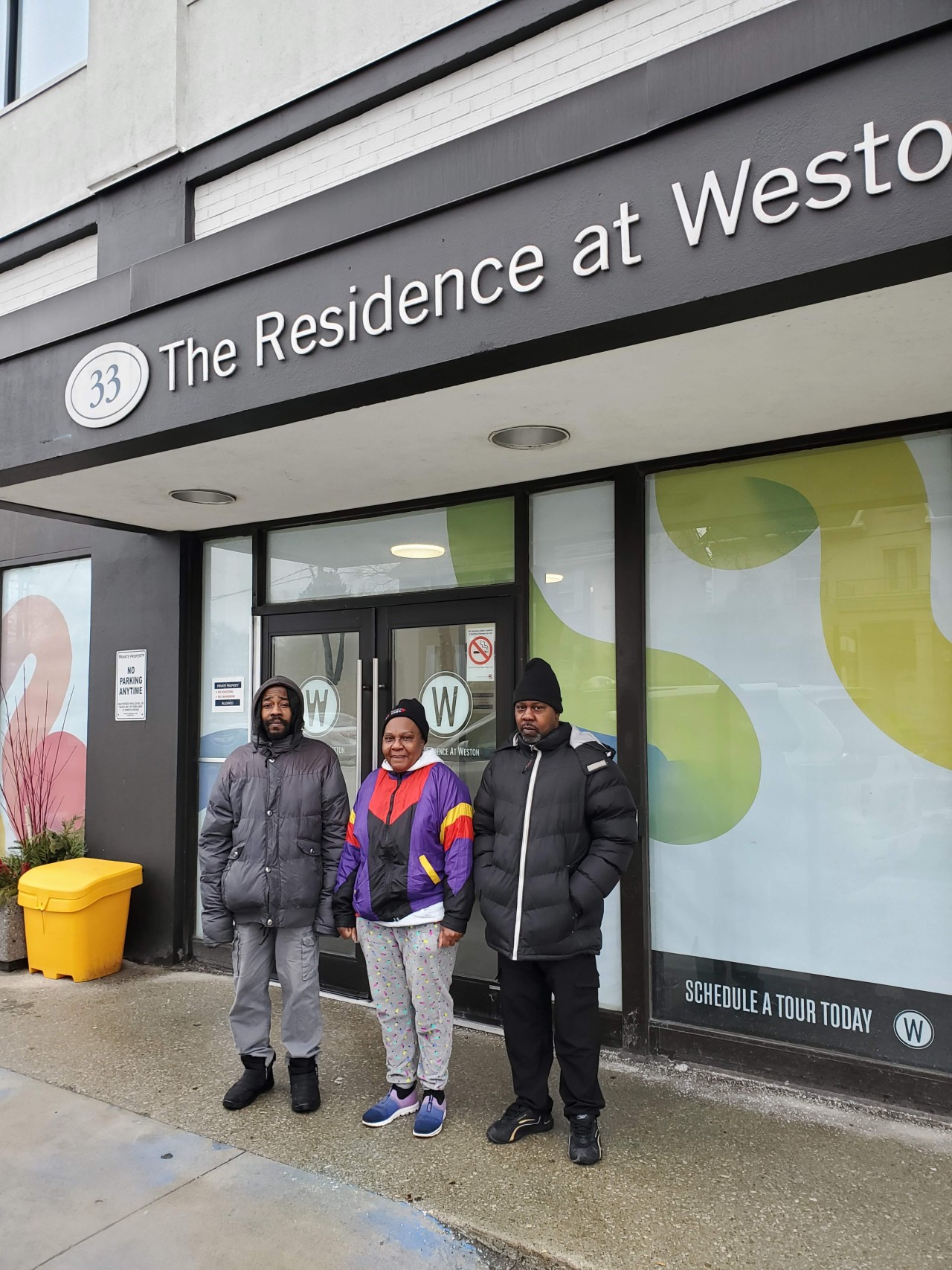
Two days into 2025, Carl and Olliver Henry got a message from their building manager: their landlord was filing to evict them for being one penny short on a rent payment.
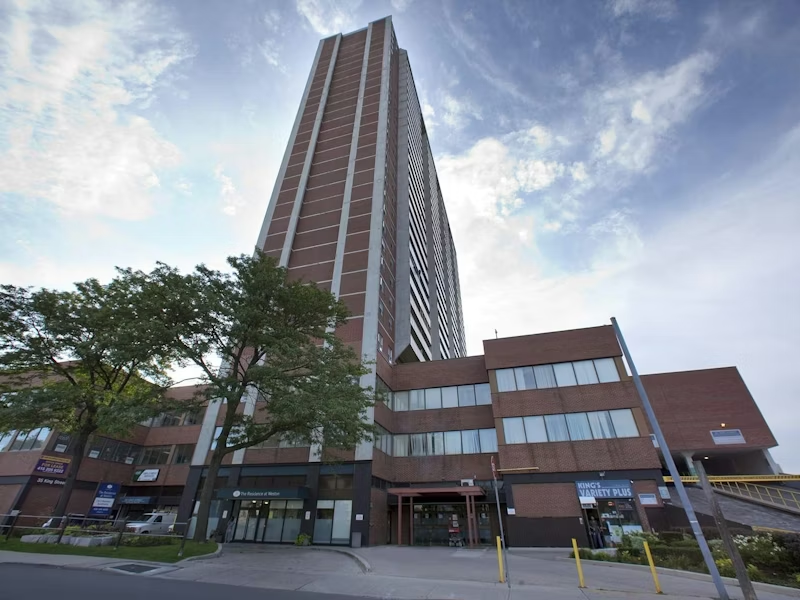
For a decade the brothers, whose family hails from Jamaica, have lived together at 33 King St., an imposing red-brick apartment building in the working-class Weston neighbourhood north-west of Toronto.
“We literally tried to go and pay the penny at the management office,” Carl told The Breach.
Canada stopped minting pennies in 2012, so instead Olliver paid a dollar on his debit card. But the eviction filing marched on. Under Ontario law a tenant can be evicted if they’re “a day late or a dollar short” on a payment plan. Even though the brothers had paid in full, it was too late.
The Henrys are hardly the only Black tenants threatened with eviction in Toronto.
These evictions that displace racialized tenants are part of a broader, city-wide pattern identified by researchers at Toronto Metropolitan University.
A new academic study published by Nemoy Lewis, Dimitri Panou, and Richard Maaranen maps more than 100,000 formal eviction filings in Toronto between 2016 and 2021. They found that financialized landlords file eviction applications at dramatically higher rates in Black communities. Compared to the citywide average, Black renter-majority neighbourhoods see more than five times the number of eviction filings.
“It puts even more people—especially racialized renters, single mothers, and seniors on fixed incomes—at risk of displacement,” said Lewis, an assistant professor in the School of Urban and Regional Planning at Toronto Metropolitan University. “It will tear apart the fabric of our city.”
A ‘certain type’ of tenant
Inside the glass doors of 33 King, the lobby has a fake fireplace and low modern couches. But on the 20th floor, where Carl and Olliver live, the hallways are narrower, more humble, with tracks of fluorescent lighting.
Rents there have skyrocketed in the last decade, and new tenants are paying a lot more than old ones. Carl and Olliver’s mother Beverley, who moved into the building in 2014, said she’s paying $1,469 for her one-bedroom. But a neighbour she spoke to who moved in two years ago is being charged about $2,300 for the same type of unit. Beverley pays $70 a month for parking; her neighbour pays $160.
Tenants who have rented the same unit in an older building for many years often pay below-market rent, since there’s a limit on how much their rent can go up each year. But get them out of that unit, and the cap disappears—meaning a landlord can suddenly charge double or triple the rent.
As Lewis explains, eviction in financialized rental housing is used as a way to push tenants out, reset rents, and remake diasporic neighbourhoods in ways that favour investor appetites.
“It’s not surprising once you look at the broader system,” said Lewis.
“Black renters in Toronto are oftentimes concentrated in neighbourhoods where you have aging rental stock, which is privately owned,” he said. “These are precisely the buildings that [financialized] landlords target for acquisitions,” because tenants are paying below-market rents.
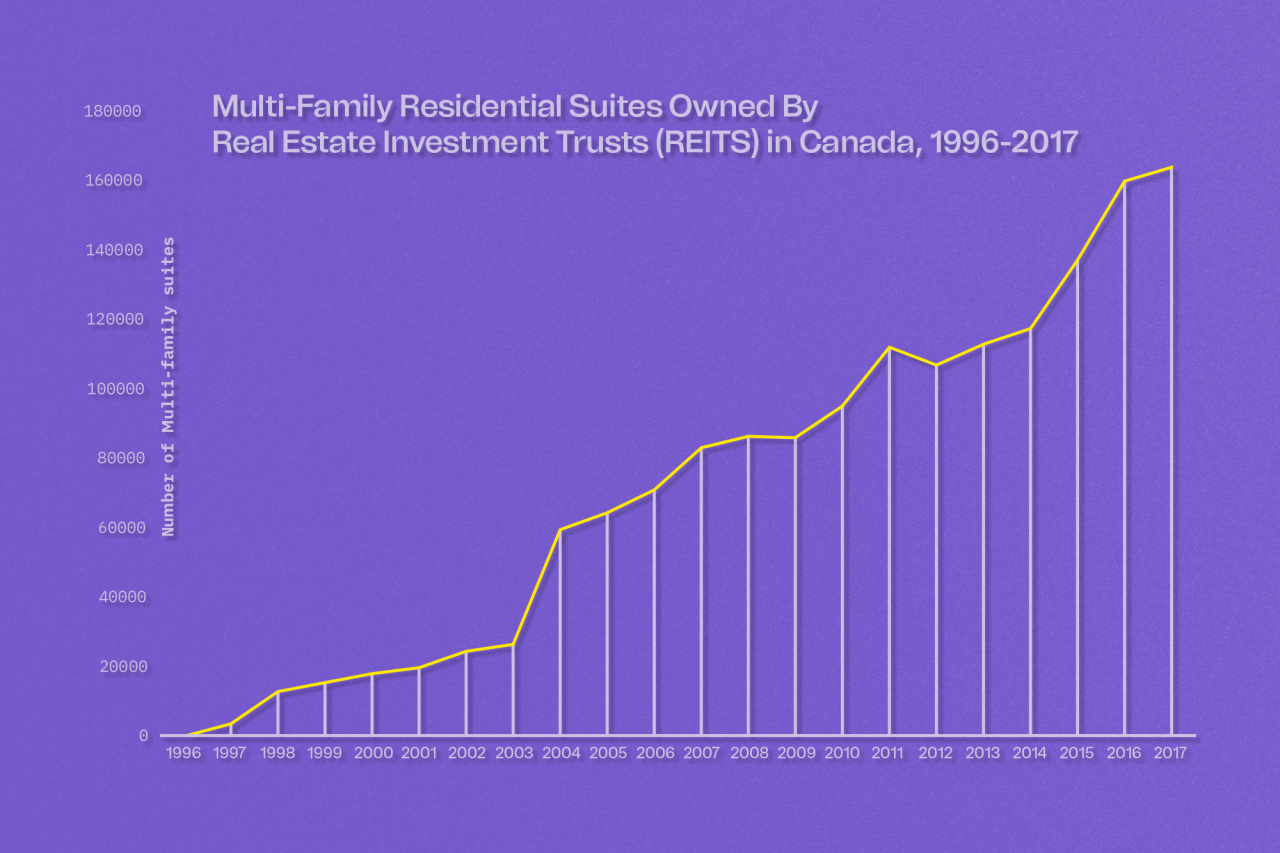
The Henrys’ landlord is Dream Unlimited, a multinational real estate developer and corporate landlord with more than $28 billion in assets under management across North America and Europe. It’s what housing researchers describe as a “financialized landlord,” a firm that treats rental housing primarily as an income-generating asset, often extracting profits through rent hikes and evictions rather than providing stable, long-term housing.
In working-class neighbourhoods like Weston, landlords have been reported to employ shady tactics to force renters from their homes: harassing tenants with notices and threats, or deferring maintenance to create conditions justifying eviction. Beverley and Carl told The Breach that they had been dealing with a persistent cockroach problem in their units.
Lewis has previously warned that calling this process “displacement” understates both its violence and its racism. In earlier research, he adopts scholar Ananya Roy’s concept of “racial banishment” to describe how financialized landlords, backed by government policies, do not merely push tenants from one neighbourhood to another but systematically expel racialized and low-income people from cities altogether.
Refugees and new immigrants may not understand their rights, said Lewis, and might be reluctant to push back against a rent hike or eviction. Challenging these decisions requires navigating a tribunal process that is often complex and difficult to access without legal support. For tenants with limited English proficiency or precarious immigration status, the administrative burden itself can function as a deterrent.
“[P]artly because of the fear that there would be some adverse impacts on their status to remain within the country, they don’t want to jeopardize that,” he said. “There’s nothing more fundamental to being settled in a country than having a roof of your own over your head.”
Spurious evictions to squeeze out extra profit aren’t something that happens only to Black tenants. It’s widespread in Toronto. “Every working-class tenant has a target on their back,” said Bruno Dobrusin, an organizer in the York South-Weston Tenant Union.
But even in wealthier Black communities, Lewis found that the rate at which financialized landlords file for eviction is significantly higher than in white neighbourhoods.
This Toronto pattern echoes national dynamics outlined in earlier reporting in this series. In part one, we showed how mega-landlords across Canada—from Blackstone to CAPREIT to Hazelview—target Black and Arab neighbourhoods for acquisition precisely because they can be bought inexpensively and developed to fetch higher rent. In part two, the mass eviction and demolition of Ottawa’s Heron Gate—a vibrant multicultural community—revealed the playbook at work: buy cheap, push out long-term residents, and rebuild for higher-income, whiter renters.
“Housing has become a cut-throat business driven purely by profit,” Lewis said. “The social sense of what housing provides has largely been eroded.”
Displacement by design
Three years ago, after their landlord continuously raised their rent above provincial guidelines, the residents of 33 King—including Carl, Olliver, and Beverley—went on a rent strike. For more than 12 months, they withheld their rent until they came to a successful settlement. The payment that Carl and Olliver were a penny short on was going toward clearing their rent arrears owed from that strike.
Dream said that its rent hikes at 33 King were needed to pay for retrofits that would help “decarbonize” the building. But it spoke more plainly to its investors.
In the landlord’s 2022 sustainability report, they said that the expected benefits of emissions-reduction initiatives included “returns to our investors” and “increase in rents, GHG reductions, returns, and attraction of certain tenants.”
Who are these “certain tenants” that landlords want to attract?
“They meant like young executive types, like what they hire in their offices. That’s what it means,” said Beverley. “They don’t want no people of colour, but there are people who’ve been living here for over 30 years, and most of them are people of colour.”
When they got the notice that they would be evicted, the brothers immediately called the York South-Weston Tenant Union, the organization that had supported the residents of 33 King through the rent strike.
The tenant union discovered that in a December 2024 rent arrears payment the siblings had in fact overpaid their landlord. That overpayment reduced the total amount they owed, but it didn’t subtract from the sum they had to fork over the next month. So when they were a hair short in January 2025, the landlord considered them to have breached the agreement.
The tenant union immediately requested an emergency hearing at the Landlord and Tenant Board. Once the tenants had a chance to speak to the landlord, they agreed to drop the eviction.
The Henry family’s experience is not an isolated blip. It’s part of a patterned and persistent shock that continues to rattle communities already under strain across Toronto, Canada’s most populous and diverse city.
“Evictions have become a revenue tool,” Lewis said, used not as a last resort but as a systematic way to drive tenants out in order to increase rents and “reset” the profitability of real estate portfolios.
Recent changes like Ontario’s Bill 60 have further tilted the balance toward landlords. The law strips away hard-won renter protections, giving landlords new ways to remove tenants.
According to Dobrusin, “One thing that the government could change is bringing back vacancy control.”
In Ontario, landlords are permitted to raise rent an unlimited amount when a tenant moves out, creating a strong incentive to replace long-term renters with new ones. It also means tenants face a “moving penalty,” having to pay far more for a comparable apartment if they’re forced out of their old one. But governments can place a cap on how much rent can rise when the tenancy turns over. It’s rare in Canada—it existed in B.C. from 1974 to 1983, but was later repealed—but it could make a comeback.
“It will basically cut all of this, because there will be no incentive to evict people, financially,” Dobrusin explained.
Asked if Beverley plans to stay in 33 King despite her sons being threatened with eviction and her rent creeping up, she seems stuck.
“Where would I go?” she asks. “They are the ones that are making people homeless.”

“We need media that enlarges the sense of what’s possible.”
Naomi Klein, journalist and author
Want to support hope-fuelled journalism? Become a sustaining member.
Racism | The corporate blueprint behind the eviction of Ottawa’s most diverse neighbourhood

Housing | Financialized landlords are targeting Black and Arab neighbourhoods across Canada
Immigration | Migrants are building Canada’s homes—while getting blamed for housing policy failures

1 comment
Comments are closed.


There’s no evidence any of this is racially driven. You basically admit as much in your own article when you say that the renters are concentrated in neighborhoods with aging rental stock. So you managed to point to the actual issue of lower income people being in more precarious housing situations but you couldn’t resist playing that race card even though it’s not actually correlated to the evictions.
Faceless corporations that own millions of dollars worth of property and have never met their tenants aren’t targeting minorities, that’s a fantasy based on nothing. They are maximizing profit, which isn’t a good thing for renters, but it has nothing to do with their race.
By making this about race you’re burying the lead and delegitimizing any real argument worth making.