
In a small, sleepy industrial park in the east end of Ottawa, a Canadian company is making essential parts for warplanes bombing Palestinians.
According to a Breach investigation, Gastops is the only company in the world that produces engine sensors that go into U.S.-made F-35 combat jets—including the ones dropping 2,000 pound bombs in Gaza.
The revelation is “very important,” according to one Canadian arms-control expert.
“It’s usually impossible to know whether parts made in Whitby or Winnipeg or Laval actually end up in the F-35s that Israel is using in its operations in Gaza, but in this case it’s certain,” said Kelsey Gallagher, a senior researcher at Waterloo, Ont.-based Project Ploughshares.
In other countries, civil society groups are using the existence of such “sole-source” manufacturers to petition domestic courts to recognize that exports of weapons parts violate international law.
A campaigner with the Netherlands’ largest peace organization, which earlier this year won a court challenge to halt the Dutch government’s transfers to Israel, told The Breach that discovering a sole-source company has been “vital” to their lawsuit.
Earlier this week, Canada’s Foreign Affairs Minister Mélanie Joly announced the government suspended 30 permits for arms sales to Israel over the summer and that it is opposed to a deal to send 50,000 Quebec-made “highly explosive” mortars to the Israeli army via the United States.
While Gallagher welcomed that decision, he pointed out that Canada has not stopped the shipment of F-35 parts to the United States, where Lockheed Martin makes the warplanes destined for Israel.
More than a hundred Canadian companies provide components for the F-35, but Gastops is the only sole-source supplier The Breach was able to identify.
Lockheed Martin has boasted that its components are “critical tech” that Gastops “provide for every single [F-35] produced globally.”
As scrutiny of weapons transfers to Israel has rapidly grown, there are signs of unease at the U.S. weapons maker.
This spring, Lockheed Martin scrubbed Canadian supplier information that was previously on its website, as well as information about companies from a dozen other countries, according to The Breach’s review of its archived pages.
A coalition of civil society organizations in Canada have been campaigning for the Canadian government to impose a full and immediate two-way arms embargo on Israel.
On Tuesday, Joly said that “we will not have any form of arms, or parts of arms, be sent to Gaza,” and that “how they’re being sent and where they’re being sent is irrelevant.” Her statement is contradicted by the continuing shipment of F-35 jet parts to the United States.
“From a human rights perspective, Canada has clear and binding arms control obligations,” Gallagher said. “It cannot provide weapons systems to countries that are going to misuse them—and it’s absolutely clear that risk is evident with Israel.”
‘This is technology no one else has’
For the past decade, the Israeli military has increasingly relied on airstrikes, with an Israeli Air Force officer referring to the strategy as “playing billiards with a bowling ball.”
The Israeli military first obtained F-35 combat jets in 2016, and their precise, devastating capacity has become key in its nearly year-long assault on Gaza.
The Palestinian death toll has reached more than 41,000. By January of this year, aerial bombardment had already destroyed or damaged at least half of Gaza’s buildings.
To make the F-35 warplanes sold to Israel, Lockheed Martin has relied on a global supply chain for components, with critical contributors from Canada, the UK, and Australia.
Their manufacturing operates on a vulnerable “just-in-time supply chain,” with parts intended to arrive as needed.
Gastops makes unique Oil Debris Monitor (ODM) ‘Metalscan’ sensors that are designed to detect engine wear and tear and “keep aircraft in the air,” resulting in “less downtime, more flight time,” according to the company.
Approximately two dozen employees are responsible for making the sensors at the company, which produced at least 3,500 of them over the past decade.
“This is technology that nobody else has,” according to the vice-president of industry lobby group Aerospace Industries Association of Canada.
The Breach reached out to Gastops for comment but did not receive a response.
Export of ‘unique,’ ‘sole-source’ F-35 parts key to Dutch lawsuit
In the Netherlands, PAX for Peace and other human rights organizations have clocked some initial victories in taking the Dutch government to court over its export of F-35 components directly to Israel.
An appeals court ordered the Netherlands to halt the exports, with the judge concluding that “there is a clear risk that Israel’s F-35 fighter jets might be used in the commission of serious violations of international humanitarian law”.
The Dutch government has appealed the decision, and has found a loophole to avoid the spirit of the ruling, rerouting F-35 components to the United States.
In pursuing the case, human rights organizations have emphasized the role of a single-source supplier, Dutch company Fokker, which makes various jet parts.
“We could see that every Israeli F-35 would have Dutch components because of advertisements and promotional materials from Lockheed Martin and Fokker,” said Frank Slijper, who heads up the Arms Trade project at PAX for Peace. “That’s how we established that any F-35 built after around 2010 would contain Dutch parts.”
The single-source nature of Fokker’s contributions to the F-35 program helped establish the clear relationship between Israel’s assault on Gaza and the responsibility of the Dutch state.
“It’s vital to realize that these are unique companies that contribute to the aircraft, and it really makes a difference if the Dutch government properly exercises its export control duties—it has an effect on the Israeli Air Force and the way that they can bomb Gaza,” Slijper said. “So it was really important for us to make sure that Dutch companies were actively contributing to the Israeli F-35 program.”
In March, Palestinian Canadians and human rights lawyers in Canada launched a similar lawsuit against Foreign Affairs Minister Mélanie Joly, asking for a halt to weapons exports.
As part of the proceedings, several companies have asked the court to keep details of their exports secret.
Lockheed Martin wipes mentions of supply partners on website
Efforts to prevent the sale and export of parts and weapons going to Israel have been ongoing for years, but ramped up significantly since October 2023.
Since then, Canadian activists have organized blockades of arms manufacturer offices, carried out protests and lobbied government representatives to call for an immediate embargo. Similar activism has grown worldwide.
That appears to have put pressure on Lockheed Martin to disguise their suppliers.
In February, Lockheed purged its website of all supplier information from its 19 partner nations. That included removing a Canadian “industry partner” image from its website, according to its archived pages.
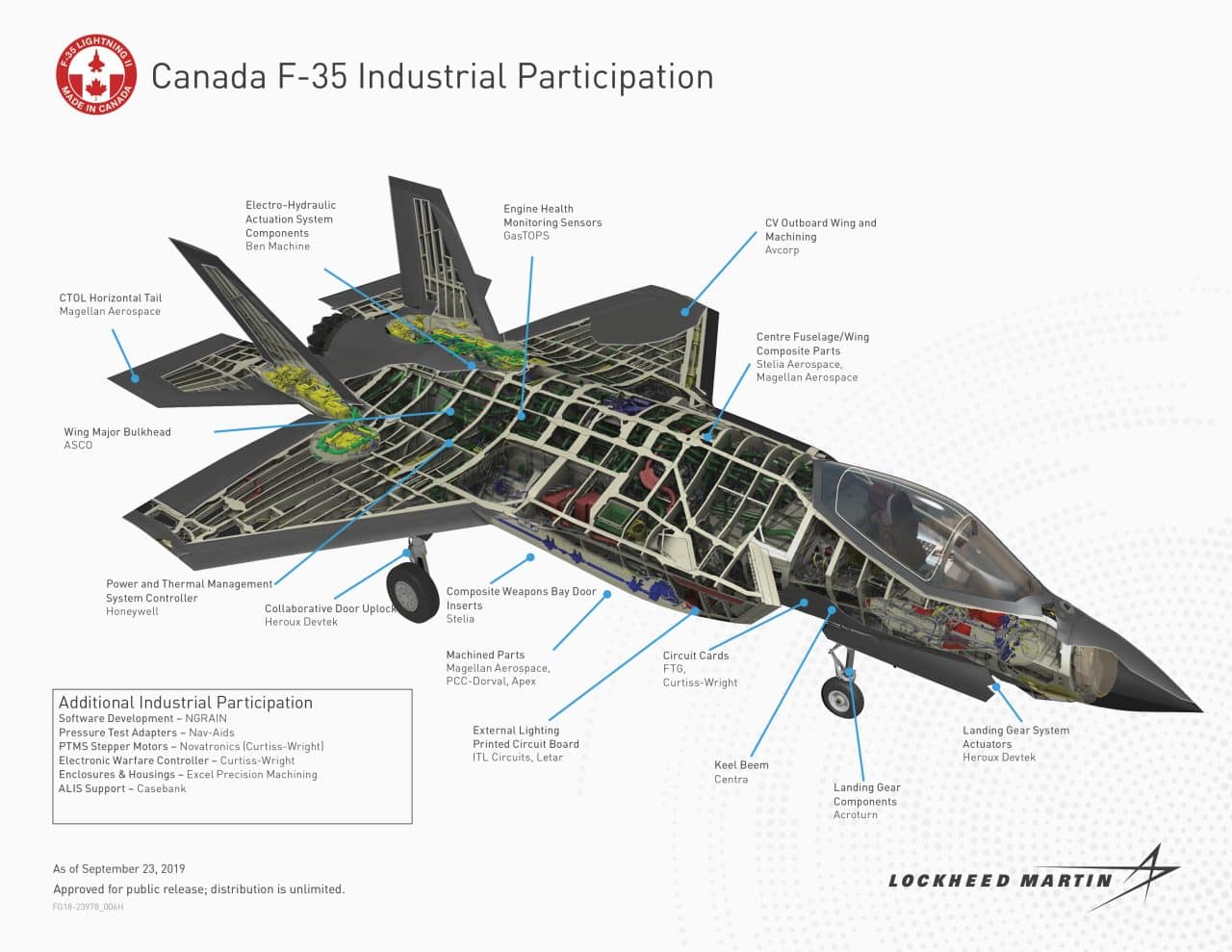
After The Breach produced a video about Canadian companies supplying key parts for the F-35 in April, Lockheed scrubbed all remaining Canadian supplier information from its website—shrinking the Canadian webpage by 80 per cent.
Project Ploughshares’ Kelsey Gallagher told The Breach that sole-source suppliers like Gastops “can be seen as an Achilles heel” for organizations hoping to interrupt the flow of components.
The government blocking its export “would interrupt the procurement chain and interrupt the production of F-35s,” he said.
He believes the Canadian government would come up against enormous “pressure” from the United States not to make such a move.
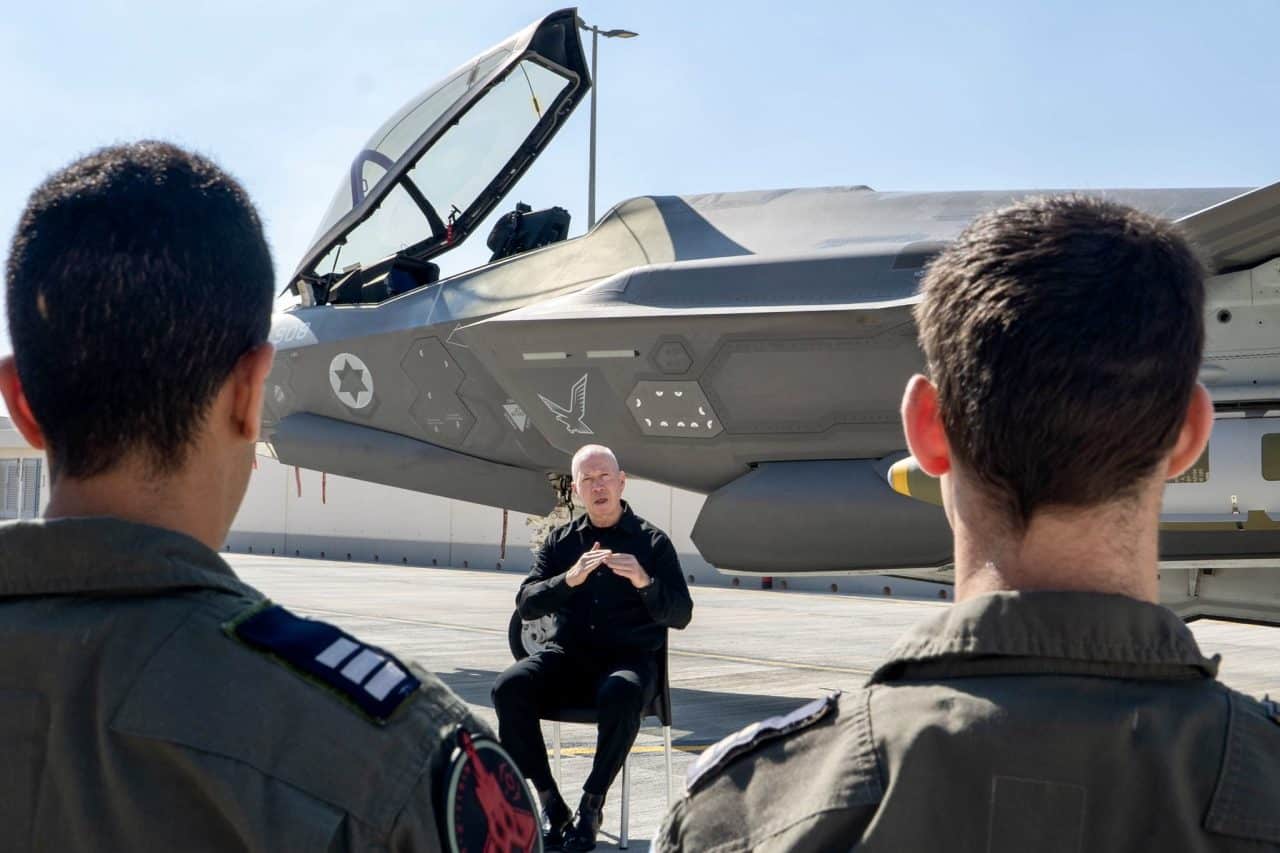
In July, the Israeli military confirmed that it had used F-35s to drop three 2000 pound bombs on the Al-Mawasi tent camp in Gaza. The attack on a declared “safe zone” killed 90 people, injured at least 300 more, and destroyed a desalination plant where Palestinian refugees gathered to collect drinking water.
The next day, Israeli Defence Minister Yoav Gallant did a photo-op in front of an F-35, thanking the pilots.
Inside that F-35 were parts made on Canadian soil, sold and shipped by Canadian manufacturers, that the Canadian government could choose to stop exporting.

“It’s about getting to the bottom of things. It’s about unveiling who has the power and what they’re doing with that power.”
Linda McQuaig, journalist and author
As a non-profit, free from powerful corporate interests, we invest in investigations and uncover the cover-ups. Sustain our journalism for transformation.
Gaza | How Canada helps build Israel’s fighter jets
Israeli Apartheid | Canadian pension funds invested $1.6 billion in companies tied to Israeli apartheid

Press Freedom | The Breach barred from weapons show for ‘critical anti-war journalism’
1 comment
Comments are closed.


It’s a race…rush the parts to Israel vs. Hamas and complicit terrorists surrender so Palestine can be built into a world class destination and friend of Israel.