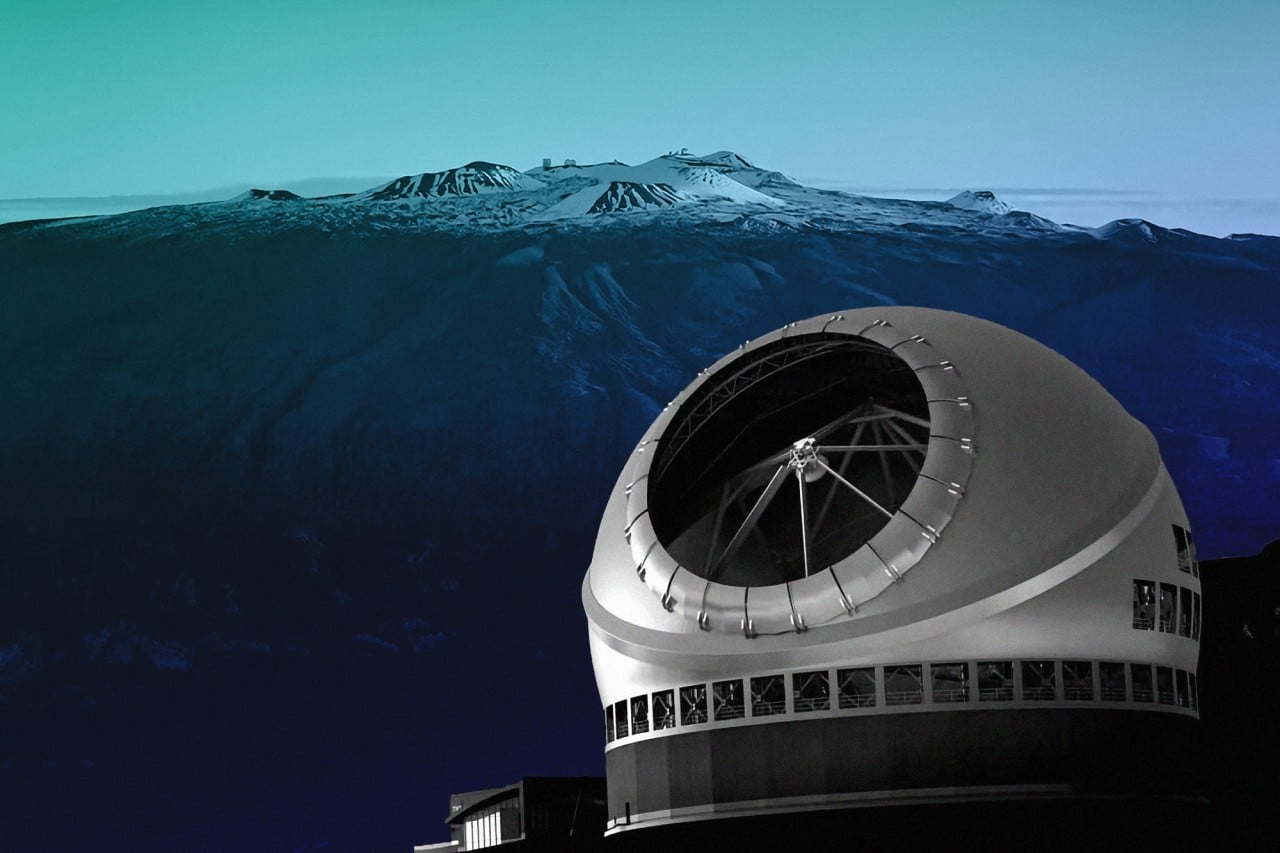
In July 2019, Uahikea Maile left Toronto to join hundreds of Kānaka Maoli land defenders, Elders and activists who had blockaded the road up to the Mauna Kea volcano on the Big Island of Hawaii.
By the time he arrived, dozens of people had been arrested at the blockade, which was set up to prevent construction of a massive telescope atop the 14,000-foot volcano.
Maile might have been arrested too, had he not left the country to accept a position teaching Indigenous politics at the University of Toronto.
At the blockade, Maile met up with other Native Hawaiian professors who were opposed to the project. They talked about “Kuleana and Kulana,” Maile recalled in an interview, referencing the ʻŌlelo Hawaii terms for “responsibilities and obligations.” As educators, they decided their fight wouldn’t be on the ground, but inside their institutions.
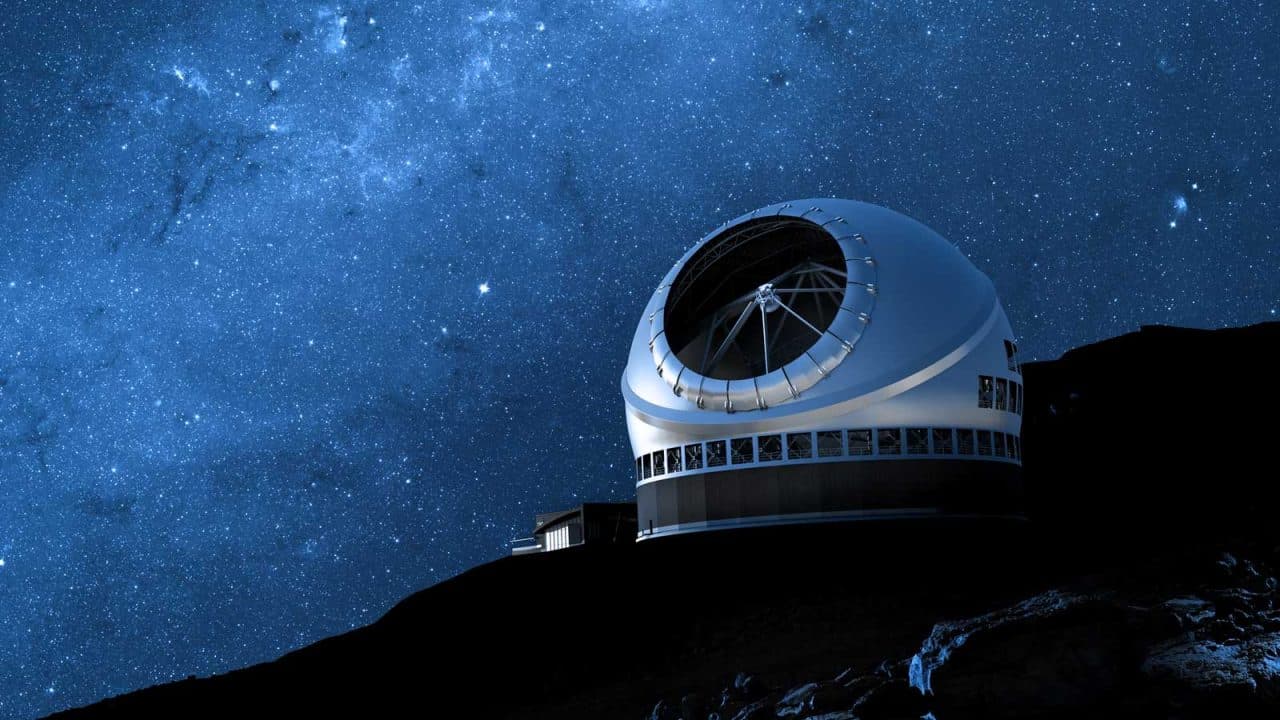
The University of Toronto, it turned out, was home to key Canadian players in the controversial Thirty Meter Telescope (TMT) project. Maile saw an opportunity to learn about the project and convey how Kānaka Maoli feel about the continued desecration of a place that holds enormous spiritual and cultural significance to them.
“I accepted that responsibility and worked on that obligation from that point on,” Maile told The Breach.
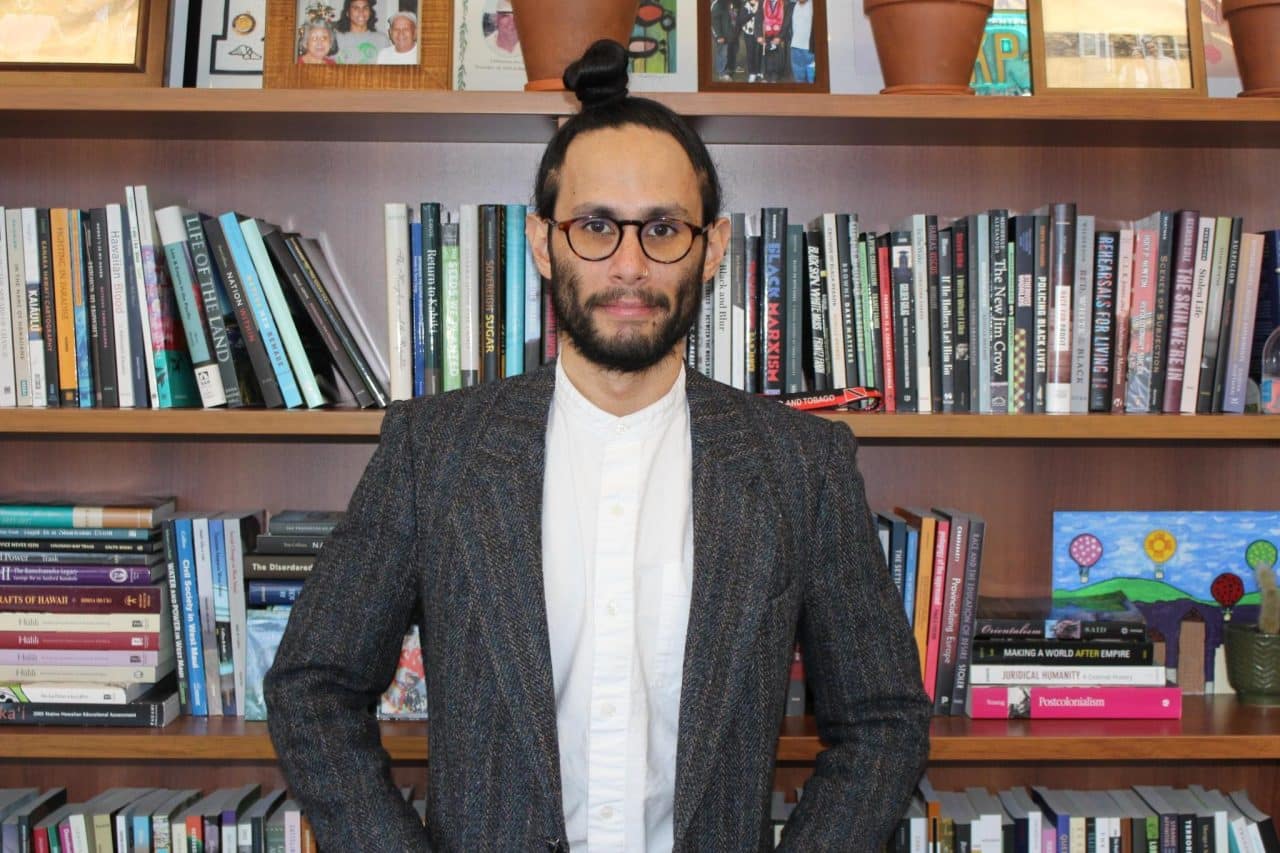
Uahikea Maile is an assistant professor of Indigenous politics at the University of Toronto and a member of a coalition asking the United Nations to intervene in Canadian violations of human rights in Hawaii. Credit: Ziibing Lab
On the fourth anniversary of the 2019 blockades, Maile and a coalition of others are now asking the United Nations to intervene in what they say are deliberate and ongoing violations of international and domestic human rights laws by the Canadian government, Canadian astronomical associations and corporations.
“These include violations of Native Hawaiian rights to self-determination and the principle of ongoing free, prior, and informed consent; violations of collective land, spiritual, and cultural rights; and violations of civil and political rights,” reads the petition the coalition sent to the UN Committee on the Elimination of Racial Discrimination on Friday.
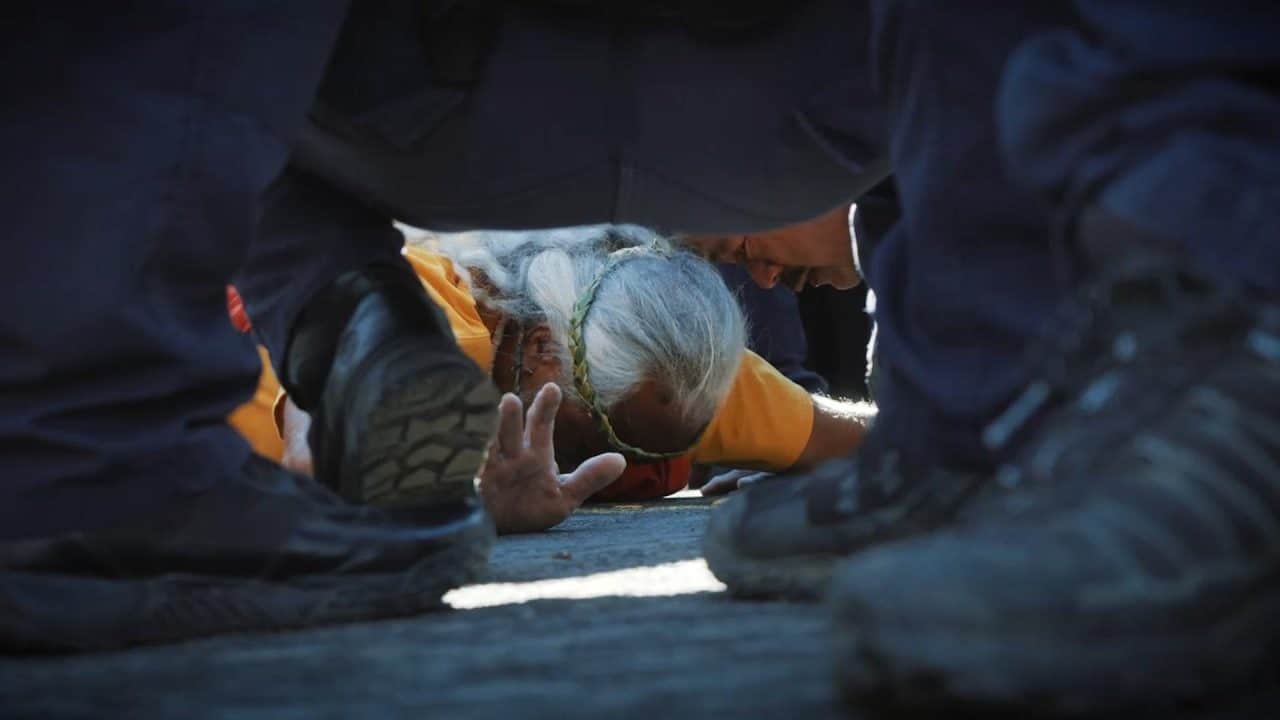
Among the feet of police officers, a demonstrator at the Mauna Kea volcano blockade touches their head and arms to the ground. Dozens of land defenders were arrested during the peaceful protest. Credit: Mikey Inouye
‘Coming for your grandmother’
When astronomers started thinking about what a telescope TMT’s size would mean for scientific research, the technology to build one didn’t exist. But in 2004, the TMT Observatory Corporation—a partnership between the California Institute of Technology, the University of California, and the Association of Canadian Universities for Research in Astronomy—began designing one, in part with $22 million in funding from Canada.
The TMT project’s website says that if built, the telescope will “allow astronomers to address fundamental questions in astronomy ranging from understanding star and planet formation to unraveling the history of galaxies and the development of large-scale structure in the universe.”

In 2009, the alliance chose Mauna Kea as the site for the “first of the next generation of extremely large telescopes,” said Ray Carlberg, the project’s founding director for Canada.
The international partnership evolved into the non-profit TMT International Observatory and grew to include Japan, China and India. With 13 telescopes already situated on Mauna Kea’s summit, the coalition didn’t anticipate any problems with expansion. They were wrong.
“When we say that Mauna Kea is an ancestor and an Elder to us, we mean that in a literal way,” said Shelley Muneoka, a board member of KAHEA: The Hawaiian-Environmental Alliance, a co-author of the UN petition. “So if somebody is coming for your grandmother or your grandmother’s house, it’s very clear for us that it’s our obligation to protect that place.”

Kānaka Maoli have strongly opposed the telescope’s construction since the very beginning. In October 2014, they halted the project’s groundbreaking ceremony at Mauna Kea’s summit. The following spring, they staged a blockade on the road to the summit.
Days after a dozen land defenders were arrested at that blockade, the Harper government announced it would invest up to $243.5 million in the project over 10 years. A few weeks later, the Office of Hawaiian Affairs—a semi-autonomous Hawaii state agency and advocacy organization for Native Hawaiians—rescinded its support for the project.
Tensions soared again in 2019 when then-Hawaii Governor David Ige declared a state of emergency amid ongoing blockades. The move empowered militarized police to arrest 38 Native Hawaiian Elders and their caregivers. That was the day Maile and his fellow educators acknowledged their responsibilities to work in service of their people and of Mauna Kea.
Construction on the telescope has been stalled ever since. Protests, legal challenges to the State of Hawaii’s jurisdiction in permitting the project, and clear opposition from Kānaka Maoli have brought the project to a standstill.
But with a new oversight body taking over the management of Mauna Kea this year, the future of the project is unclear.
For the coalition seeking UN intervention, the fight isn’t over.
“Though construction of the TMT on Mauna Kea has been temporarily adjourned due to mass opposition, this construction may potentially restart at any time,” they say in the petition. The UN’s intervention “is thus necessary to prevent further and irreparable harm to Native Hawaiians’ lands, practices, and sacred sites.”
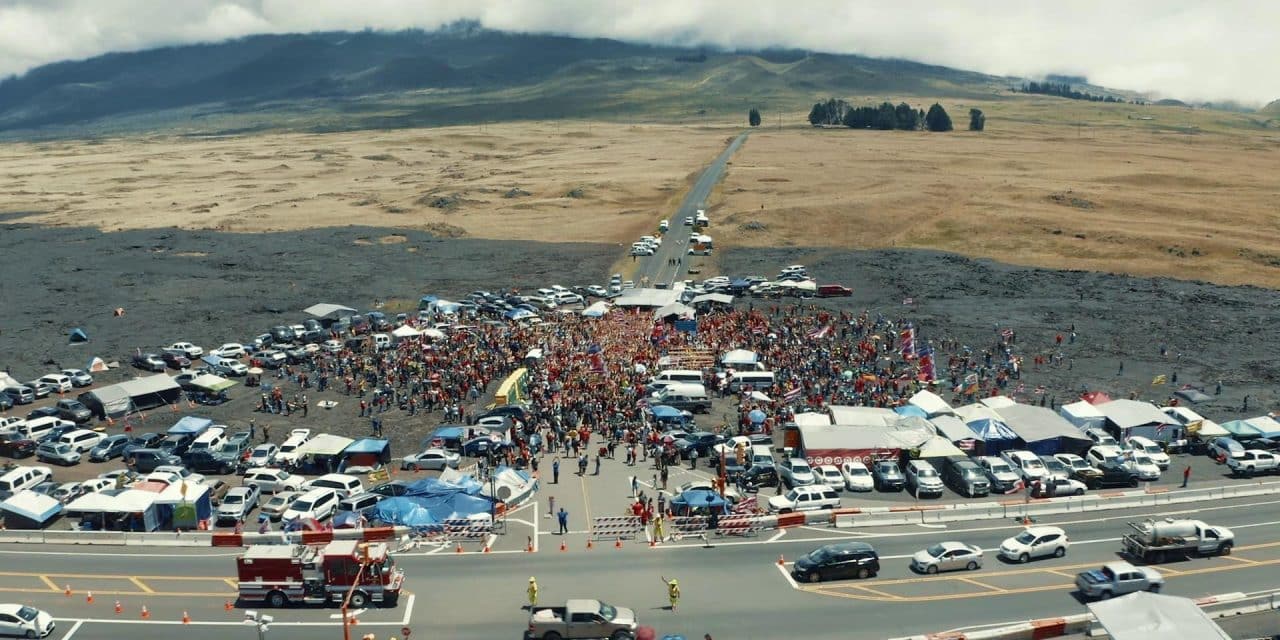
Aerial images of the blockade show the significant number of Hawaiians who oppose the telescope. Uahikea Maile said the astronomy community has tried to “manufacture consent” for the project. Credit: Mikey Inouye
Astronomy community flip flops on support for the project
Back in Toronto, Maile began advocating for Canada’s withdrawal of support and divestment from the project. Over the past four years, he has been invited to educate and advise Canadian astronomers, government officials and others on the telescope’s impacts on Kānaka Maoli. He has repeatedly explained why and how the project violates Native Hawaiians’ rights. Each time he makes his case, he explains the concept of free, prior and informed consent and stresses that anything short of divestment from the telescope represents an infringement on the self-determination and sovereignty of Kānaka Maoli.
He points out that in addition to the protests, a 2019 survey found that 88 per cent of Native Hawaiians were opposed to construction of the telescope on Mauna Kea.
As the conflict made international headlines, Canadian universities distanced themselves from the project. “The ownership position built up in the universities was transferred to the [National Research Council] as part of the Canadian federal funding announcement in 2015,” Carlberg wrote in July 2019.
A professor of astronomy and astrophysics at University of Toronto, Carlberg explained that his institution and others have told the Association of Canadian Universities for Research in Astronomy (ACURA) that their “institutional values are quite fundamentally opposed to the construction and operation of research facilities through police and military force.”
Days earlier, then-University of Toronto vice president Vivek Goel—a member of the team that advises the Canadian government on the telescope—issued a statement saying the university “does not condone the use of police force in furthering its research objectives.”
In May 2021, the Canadian Astronomical Association—which partners with ACURA on the project’s advisory committee—announced that “unless the TMT project has consent from the Native Hawaiians, Canada’s astronomical community cannot support its construction on Mauna Kea.”
The group added, “Astronomical discovery cannot come at the expense of human rights for the people on whose lands we operate our telescopes—anywhere in the world.”
Muneoka said when she learned of the research community’s position, “it was really encouraging and kind of exciting.” But then she found out that in 2019, they had knowingly misrepresented Native Hawaiians’ position on the telescope.
In a series of reports in September and October of that year, Canada’s TMT advisory committee referenced the Office of Hawaiian Affairs’ endorsement of the project, but failed to mention that the office withdrew its support in 2015.
Maile believes the willful omission of that fact was an attempt by the astronomical community to “manufacture consent” for the project.
Muneoka said the move “really rang some alarm bells for me.” She wonders who Canadian astronomers are accountable to when it comes to misrepresenting Native Hawaiians’ position on the telescope, especially when they are advising the federal government. “And so it felt necessary to go above the state actors, and the UN seemed like a logical place to go for that.”
Canada is violating its own laws, professor says
Vincent Wong is a law professor and a member of the Transnational Law and Racial Justice Network at the University of Windsor. He’s also a co-author of the UN petition.
“It’s not just international human rights law that Canada is violating here,” he told The Breach. “It’s violating its own provisions on the implementation of UNDRIP in domestic law.”
The coalition also argues the Canadian astronomical societies “are violating their own internal policies on the requirement to secure free, prior, and informed consent from Indigenous groups,” Wong explains. “We’re making the argument that Canada has international legal obligations, domestic legal obligations, and internal astronomical society policies that it’s breaching here. And it needs to immediately course-correct and be in compliance.”
They are asking the UN to urge Canada to provide the details of the project’s agreement between the five countries. That agreement has not been made public, and the coalition believes it lays out penalties for a partner country that would withdraw from the project.
The petition also asks the UN to ask the Canadian government, astronomical associations, and Canadian corporations involved in the project to “immediately cease funding and divest support from the TMT project on Mauna Kea to comply with their legal obligations.”
Last year, the State of Hawaii established a new oversight board to take over the governance and management of Mauna Kea from the University of Hawaii and the Hawaii Department of Land and Natural Resources. This year, the Maunakea Stewardship and Oversight Authority begins a five-year transition to assume that role, which will include granting new leases for projects on Mauna Kea once current leases expire.
The new oversight board gives Native Hawaiians voting powers for the first time. Last year Ige appointed eight members, six of whom are Native Hawaiian. The board also consists of three ex-officio voting members and one non-voting member.
Neither the Canadian Astronomical Society, the Association of Canadian Universities for Research in Astronomy, nor their joint Thirty Meter Telescope advisory committee responded to The Breach’s request for comment.
A National Research Council spokesperson said in an emailed statement that Canada “is committed to the principles of the United Nations Declaration on the Rights of Indigenous Peoples.” They also said the TMT International Observatory “will work with the new Maunakea Stewardship and Oversight Authority to advance programs that support astronomy and education, and are in harmony with the culture and environment of Maunakea.”
While the telescope’s future hangs in the air, one widely discussed possibility would see the project approved with the condition that multiple other telescopes be decommissioned, in order to lower astronomers’ overall footprint on Mauna Kea.
For Muneoka, the matter is straightforward. “I don’t know how many other ways we can say it,” she said. “If we say no, that should be the end of that conversation.”

“It’s about getting to the bottom of things. It’s about unveiling who has the power and what they’re doing with that power.”
Linda McQuaig, journalist and author
As a non-profit, free from powerful corporate interests, we invest in investigations and uncover the cover-ups. Sustain our journalism for transformation.