
As homelessness surges across Ontario, the looming election is yet another reminder of the province’s decades-long war on the very poor.
Nowhere is this more evident than in the housing allowance provided through Ontario Works, the social assistance program for the unemployed.
At just $390 a month for a single person, the so-called housing allowance isn’t a lifeline—it’s a poverty trap.
This paltry amount is a cruel joke in a province where the average rent for a one-bedroom apartment is nearly four times that.
More of an attack than a form of assistance, Ontario’s housing allowance sends a stark message: The unwaged poor are not only a burden, but lazy and undeserving. It pits them against the idea of the “hard-working” poor, who struggle to get ahead but deserve a break.
Doug Ford echoed this very narrative earlier this month when he claimed at a campaign event that “everyone around Ontario is sick and tired of working hard, paying their taxes, and watching people not pay and take from the system.”
This incendiary rhetoric is a smokescreen. It’s intended to distract from the fact that government policies have deliberately kept the unwaged poor trapped in poverty.
This election cycle, the poorest residents of Ontario are once again being cast aside, with no party offering a vision that can reverse three decades of legislated poverty.
Poverty by design
The numbers speak for themselves: Ontario Works (OW) offers a single person a maximum of $390 a month towards their housing. A family of four gets a maximum of $756.
Recipients are barred from accessing other forms of social assistance for rent, and they are only eligible for the program if they have no other income. This means their ability to pay rent depends entirely on what they receive through the OW allowance.
With the average cost of a one-bedroom rental in Ontario currently at $1,540, the payout is an insult.
The rates have in fact fallen over the last 20 years. In 2005, the maximum housing allowance for an individual was $335. Adjusted for inflation, today’s rate is far less.
Back then, rent was cheaper, too—the average one-bedroom cost $888. It was possible to use the housing allowance to at least rent a room or comfortably share an apartment with other tenants. Today, those options are almost entirely out of reach.
While an inadequate food allowance can still buy a little something to eat, an inadequate and capped housing subsidy means people simply have nowhere to live.
The rules for receiving a rent allowance also force people into dangerous, overcrowded housing and leave them at the mercy of predatory landlords.
The allowance is only paid to those who can provide a letter from a landlord, leaving out an estimated 80,000 people living on the streets or in shelters who qualify for OW but not for the housing support.
The province is, in effect, incentivizing people to lie about their situations, and it forces them into unsafe and unlivable conditions in the few places that will accept the OW pittance.
In cities and towns across the province, individuals and families cram themselves into small units because they can’t afford anything else.
Shady landlords offer illegal rooming houses and unregistered basement apartments—both of which have sprung up everywhere in recent years—taking advantage of those with few other options.
Low-income residents in these spaces are more likely to die in fires, deal with pest infestations, and forgo necessary repairs to avoid interactions with landlords.
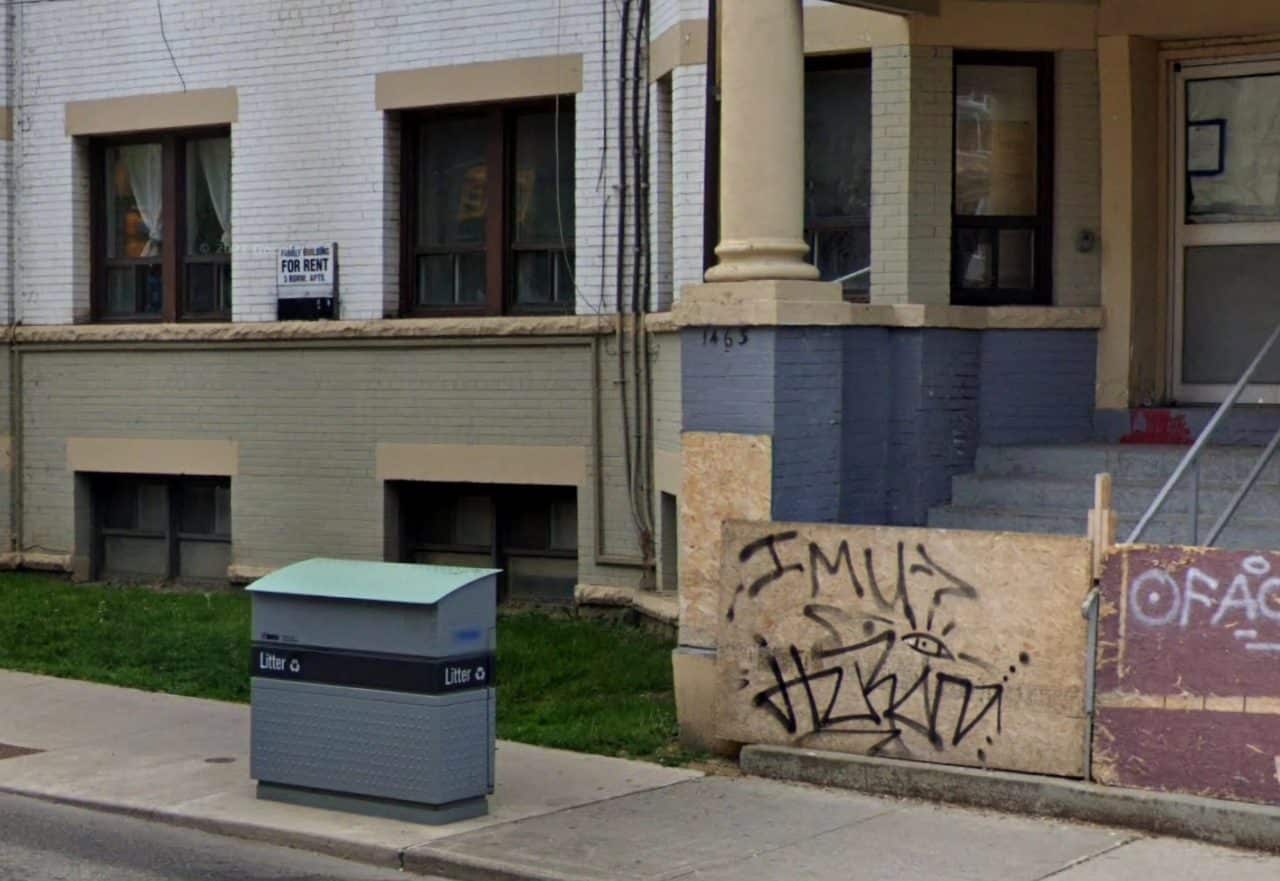
For many, securing housing is also made impossible by arbitrary barriers set up by landlords: credit checks, employment histories, co-signers, reference letters, post-dated cheques, and hefty deposits.
While the law doesn’t require prospective tenants to jump through these hoops, landlords are free to reject anyone unable or unwilling to meet their demands.
Perhaps the clearest indication of the OW housing allowance’s inadequacy is the contrast with the federal government’s pandemic response.
As Ish Aderonmu, who receives Ontario Works, noted in a recent column, the Canada Emergency Response Benefit—introduced to soften the economic blow of the pandemic’s early days—provided recipients with $2,000 a month, without a fixed amount set for rent.
The federal government’s response recognized what we’ve always known: A real safety net can’t come with a starvation allowance.
A war on the unwaged poor
For three decades, consecutive governments in Ontario—Conservative and Liberal alike—have abandoned the unwaged poor.
Ontario Works was first implemented by Mike Harris’ Progressive Conservative government in 1996 as part of the neoliberal restructuring of the welfare state, which also included slashing social assistance rates by more than 20 per cent.
Harris’ Liberal successors, Dalton McGuinty and Kathleen Wynne, promised a more compassionate Ontario but did little to reverse the damage.
Doug Ford has picked up where Harris left off—rolling back even the meagre social assistance increases under Wynne and scapegoating the poor for the province’s failures.
The goal of the Ontario Works, as its name implies, has always been to push recipients to actively search for work.
The Fraser Institute, a right-wing think tank, summed up the grim vision behind this “workfare” approach as a way to “help recipients make a quick transition back into the workforce, while at the same time reducing welfare dependency by making assistance less attractive for new applicants.”
Rather than acting as a safety net, the system intentionally keeps support so low that few would want it long-term, trapping people into a cycle of poverty they can’t escape.
Many OW recipients cannot find work, are considered unemployable by the workforce, or have simply fallen back on welfare because their claims for the Ontario Disability Support Program (ODSP) have been denied or are still being processed.
While they’re expected to find work, those on OW struggle just to find and keep housing, often losing their health, possessions, and social connections in the process.
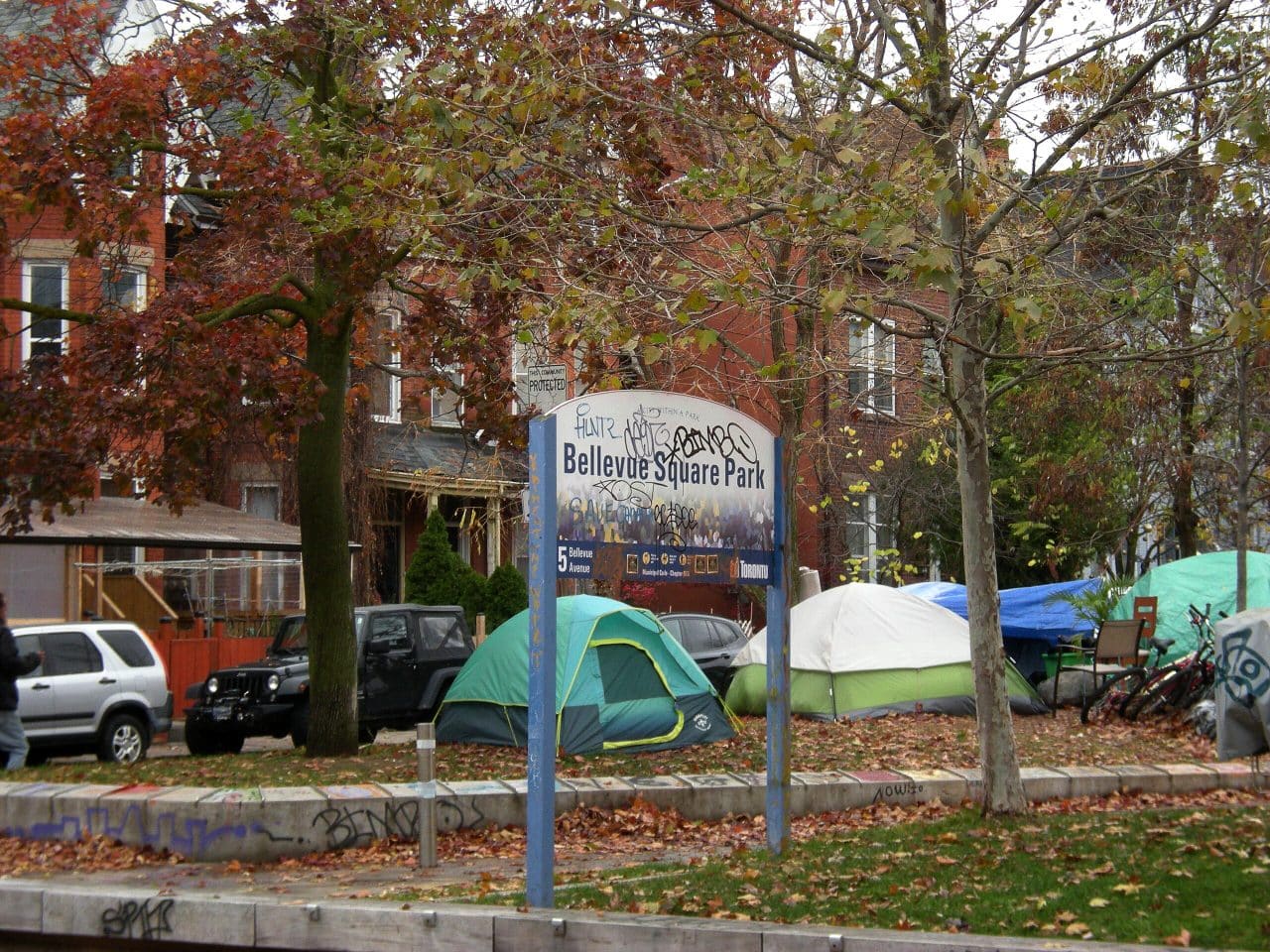
Yet, despite the growing housing crisis and rising homelessness, Ontario’s major political parties have failed to propose adequate changes to OW, even as they decry the explosion of encampments that symbolize decades of governmental indifference.
Liberal leader Bonnie Crombie, whose party has been polling a distant second to the Conservatives, is promising only to index the current rate to inflation. While that would stop the current dismally low rate from falling further behind, the proposal does nothing to fundamentally address poverty and homelessness.
The New Democratic Party and the Green Party go slightly further. NDP leader Marit Stiles says her party will double welfare rates if elected. Mike Schreiner of the Green Party also pledges to double the rates, and to index them to inflation going forward.
Even Schreiner’s plan, which is the most ambitious and detailed, would still provide a housing subsidy well short of average market rents in Ontario.
What Ontarians need isn’t just a few extra dollars—it’s a complete overhaul of how we envision the role of governments in providing for the very poor.
Over 30 years, successive governments have gutted welfare programs so thoroughly that the very idea of a housing allowance in line with rents seems like a distant dream.
But if Ontario can’t provide OW recipients with enough support to house them in the private market, then it’s time for one of the most ambitious subsidized housing plans of our lifetimes.
For now, the housing supports under Ontario Works are so inadequate, and the rules so restrictive, that many are unable to secure even the most basic shelter.

“It’s about getting to the bottom of things. It’s about unveiling who has the power and what they’re doing with that power.”
Linda McQuaig, journalist and author
As a non-profit, free from powerful corporate interests, we invest in investigations and uncover the cover-ups. Sustain our journalism for transformation.
Tenant Rights | Competition Bureau investigating high tech price-fixing by Canadian landlords

Corporate Power | Investors, not immigrants, are fuelling the housing crisis

Housing | How Canada’s media manufactures sympathy for the landlord class
1 comment
Comments are closed.


Hi, was just having a discussion about the recent ontario election. The reason they’re is never any change (poverty trap) is because low middle income/low income people don’t vote. Look up the statistics and include those statistics in your next article about poverty. I live in parkdale/high park riding in toronto. Voter turnout was dismal and most of the voting was from high park area (upper middle class/wealthy area) if people don’t vote there will be no change. You see, the poor don’t look at voting as a civic responsibility, its too much of a bother. Middle class and up do and look at it as a way to make their voice heard. The statistics are available but no one wants to talk about this little fact. Why? Everyone complains. But can’t be bothered to vote. Guess people like the way things are.