From Edmonton to Toronto, Pride events are facing a new backlash.
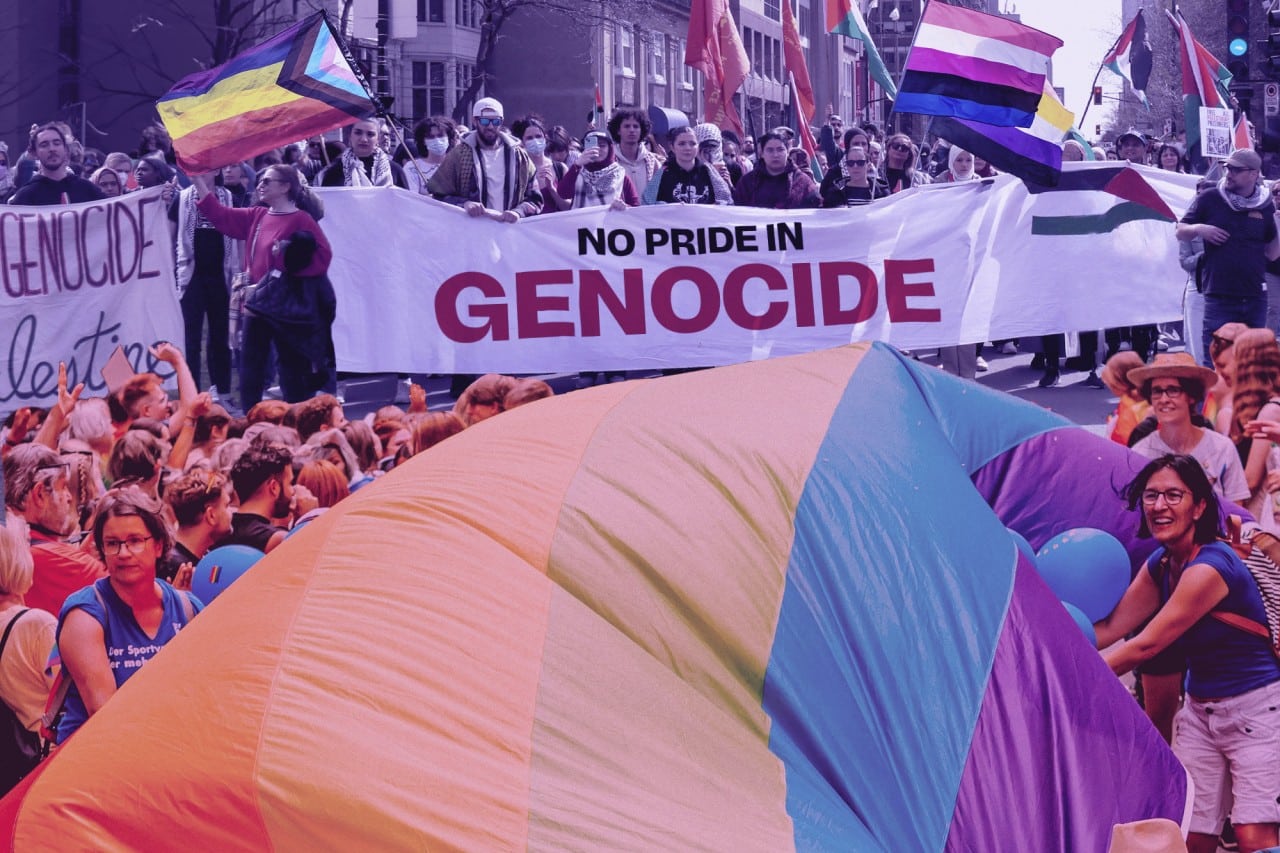
Where once it was a call to ban police in parades, now the issue is Palestine.
After eight months of an Israeli bombardment and invasion in Gaza that has killed 36,000 Palestinians, many LGBTQ+ community members are distancing themselves from corporate-sponsored Pride events that ignore Israel’s war and align with businesses aiding its brutality.
Across the country, smaller, local groups are organizing Grassroots Pride events and protests, demanding that big city festivals cut ties with weapons manufacturers and speak out in support of Palestinians.
In Toronto, the No Pride in Policing Coalition has zoned in on the festival’s key sponsor, TD Bank, and its $16-million investment in General Dynamics, an aerospace and weapons company that makes arms for Israel.
No Pride in Policing has planned an Abolitionist Pride at the same time as Pride Toronto’s parade, which is the biggest in Canada, on June 30.
Similar grassroots groups in cities like Edmonton and Winnipeg also planned alternate Pride events without corporate sponsorships, and blocked a Pride parade route.
Queers for Palestine and various other groups have been mobilizing queer and trans contingents at pro-Palestine marches across Canada since last year, asserting that LGBTQ+ liberation and Palestinian liberation are intrinsically linked.
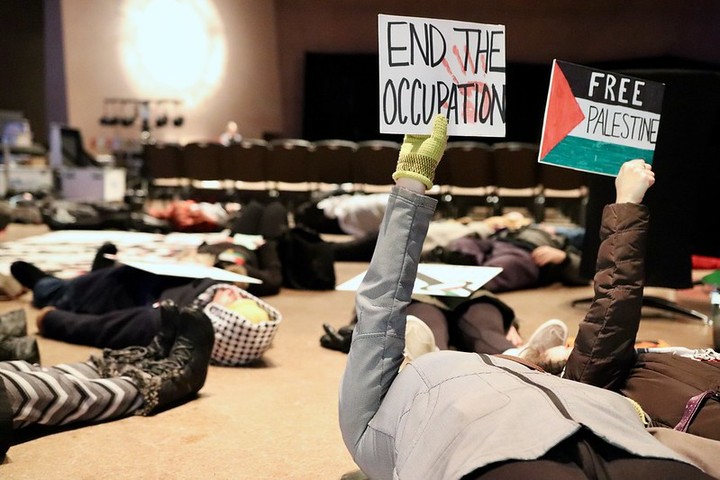
Now, solidarity with Palestine is becoming part of a list of demands for growing alternate queer groups like No Pride in Policing—which first held an Abolitionist Pride event in 2020—that originally called for a ban on police in Pride parades.
According to a number of LGBTQ+ activists who talked to The Breach, corporate ads and sponsorships have been a growing problem in mainstream Pride events, particularly since wider acceptance of gay rights ushered in a rush of companies looking to capitalize on the movement.
Queer and trans activists in the 2000s started using the term “pinkwashing” to describe how the Israeli state and its defenders use the country’s pro-LGBTQ+ policies to justify or distract from its violence against Palestinians.
For many, the current war in Gaza has made that connection too strong to ignore.
Pride flags fly at Palestine encampments
In Toronto, No Pride in Policing joined five other organizations—Jews Say No to Genocide, Queer Muslim Network Toronto, Queer Ontario, Standing Up for Racial Justice Toronto, Queers 4 Palestine Toronto—and more than a dozen current Pride Toronto members in signing a letter that called on organizers to meet and discuss the Liberatory Demand from Queers in Palestine.
The letter from queer Palestinians calls on queer and feminist activists and groups to reject Israeli funding and join the Boycott, Divest and Sanction (BDS) movement. Its signatories include 41 queer, trans and allied organizations in Canada and more than 550 around the world.
Gary Kinsman, a sociologist and longtime LGBTQ+ activist, resigned from Pride Toronto in April over its refusal to discuss the Liberatory Demand.
Kinsman has long advocated for Palestine within the queer community. In 2014, Halifax Media Co-op reported that he was told by Halifax Pride organizers to stop talking about the Israeli assault on Gaza that year, near a booth at the event that was promoting gay tourism to Tel Aviv.
According to Kinsman, there will be plenty of actions happening across Canada this June to show queer and trans people support Palestinians and oppose Israel’s genocidal actions.
“And if the mainstream groups won’t change their positions, we will develop real alternatives,” he said.
Kinsman said he has visited pro-Palestine student encampments in numerous cities on a recent speaking tour, and noted pride flags at every one.
Student groups are also calling for their universities to divest from weapons companies implicated in Israel’s assault on Gaza, and cut ties with Israeli universities.
Mainstream Pride events across Canada are frequently sponsored by TD and other financial institutions like Scotiabank—which has a $500 million stake in Israel’s biggest military and arms company, Elbit Systems Ltd., making it the company’s largest non-Israeli shareholder.
“How can we, in good faith, see this organization as having any relevance to the lives of queer and trans [people] who are actually working to create a world that’s much more just for all of us?” said Beverly Bain, an organizer with Toronto’s No Pride in Policing Coalition and a professor of Women, Gender and Sexuality Studies at the University of Toronto.
The alternative in Toronto is this year’s Abolitionist Pride event, dubbed ‘From Tkaronto to Palestine and Beyond’, that will focus on calling for an end to genocides around the world and celebrating queer and trans resistance.
‘A reckoning for people in the queer community’
In Winnipeg, dozens of protesters blockaded the city’s annual Pride parade on Sunday, carrying a “No Pride for Genocide” banner and issuing a list of demands for Pride Winnipeg organizers.
Their demands include asking the organization to refuse sponsorships from corporations that “fund or profit from the occupation of Palestine,” ban police from participating in the parade, and make a public statement calling for a search of Winnipeg-area landfills for the remains of missing and murdered Indigenous women and girls.
According to the Winnipeg Free Press,, the blockade ended and the parade continued once Pride Winnipeg organizers signed a note agreeing to discuss the demands.
In Edmonton, a group called Pride Corner on Whyte will stage its first official Pride march this Saturday, with no corporate sponsors, police, or politicians. The city has gone without an official, corporate-sponsored parade since the Edmonton Pride Festival Society dissolved in 2019.
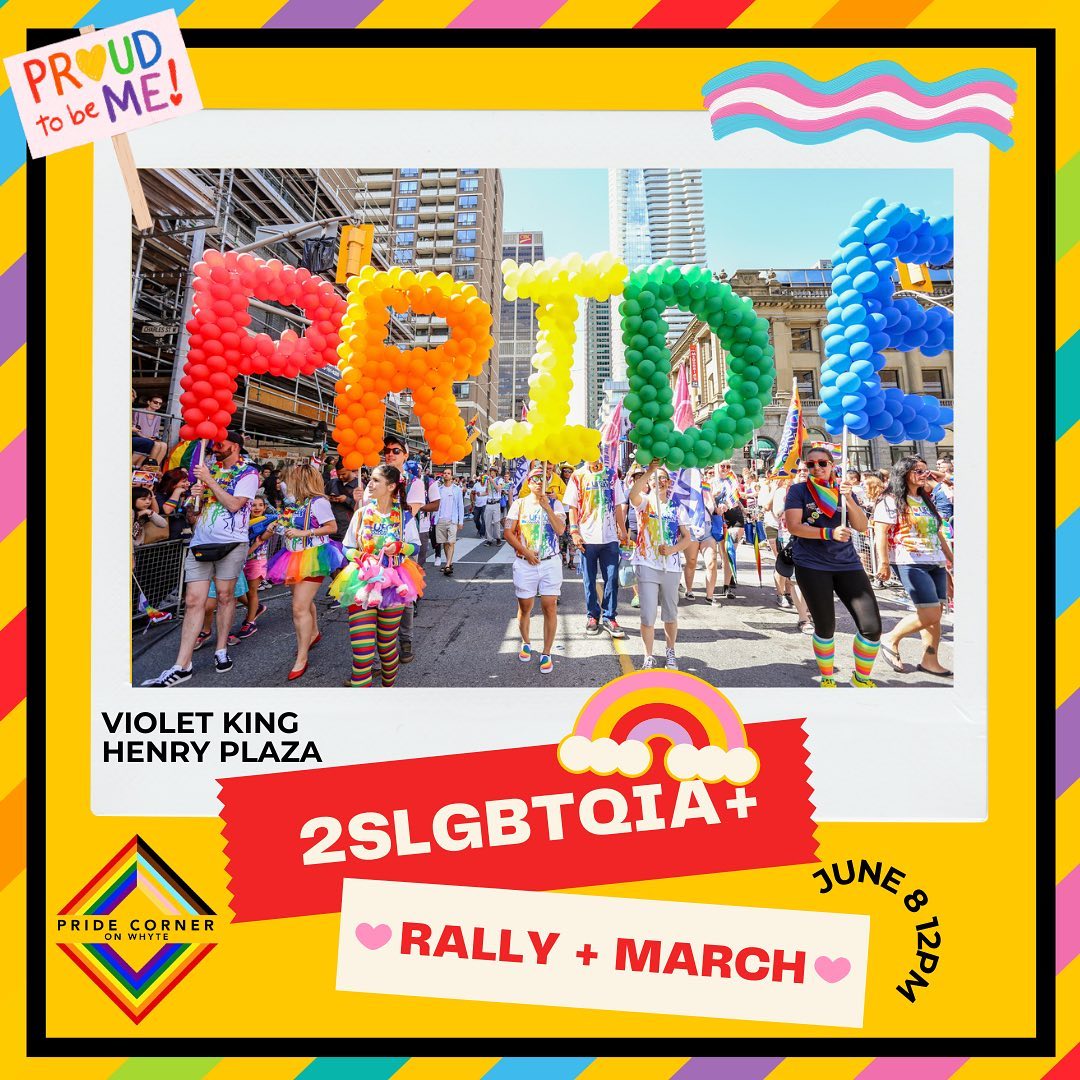
Pride Corner is “vehemently pro-Palestine” and co-ordinated its schedule with pro-Palestine rally organizers so demonstrators can attend both events on Pride weekend, according to organizer Erica Posteraro.
Posteraro told The Breach that Pride Corner took “a lot of heat” for posting “Free Palestine” on its Instagram page back in October, but public sentiment has shifted since then.
“I think it’s a bit of a reckoning for people in the queer community,” Posteraro said. “Do you stand with people who are oppressed, or don’t you? Do you see intersectionality as being at the heart of liberation for all of us, or don’t you?”
Posteraro added that there seems to be a big push for Palestine and a feeling of solidarity, especially among genderqueer activists, with recent events highlighting the importance of intersectionality in the fight for LGBTQ+ rights.
Pride Corner members were part of the University of Alberta student encampment that police violently tore down in May, using batons and chemical sprays against protesters.
Solidarity that doesn’t ring hollow
After months of protests, some mainstream Pride organizers did issue solidarity statements—but without any concrete action.
Halifax Pride issued a statement in March highlighting its “commitment to solidarity with the Palestinian Liberation movement” and demanding “the creation of a free (state of) Palestine.”
But TD Bank remains Halifax Pride’s main sponsor. Neither event organizers nor TD Bank responded to requests for comment.
Pride Toronto also issued a statement in late March, more than five months into the war in Gaza, calling for an “immediate and permanent ceasefire.”
But this statement was roundly condemned, with Palestine solidarity activists saying it failed to outline any concrete actions.
Pride Toronto did not respond to repeated requests for comment from The Breach.
According to Bain in Toronto, a reliance on funding from corporations and the Canadian government has made pride festivals and other major LGBTQ+ organizations, like Egale and Rainbow Canada, beholden to those funders.
“They are forced into silence,” Bain said, referring to mainstream Pride organizers. “They have chosen to be silent as well, because they have chosen to accept the funding. And they have chosen to align themselves with state policies that actually support Israel, and then also support the pinkwashing that Israel does.”
Apart from sponsorships, there have also been calls to claw back federal funding from LGBTQ+ organizations that support Palestine.
When the Pride Centre of Edmonton posted an Instagram image that read “We at PCE stand against apartheid, genocide, colonization and state violence,” on Oct 21, for example, the Centre for Israel and Jewish Affairs and other groups publicly called for the Centre to lose its federal government funding.
The Breach also contacted Pride organizers in Montreal and Vancouver, where official pride events take place in August, about criticisms over their silence on Gaza and working with TD Bank.
Vancouver Pride did not respond, while Fierté Montréal spokesperson Nathalie Roy said “We do not comment on current issues that do not relate to our actions.”
According to Kinsman, many in LGBTQ+ communities are angry at what is happening in Gaza, and pride organizations that refuse to take a strong stance should understand they are “going to face an awful lot of opposition and rage.”
“These organizations want to construct the Palestinian struggle as somehow completely apart from, and different from, that queer and trans struggle for liberation and pride,” Kinsman said.
“I don’t accept that, because there are queer and trans people in Palestine. They’re being murdered and killed right now, along with everyone else.”

‘We need an outlet, a source of information that is credible, that is progressive, that we can cling to and believe in’
David Suzuki
Want to support journalism you can believe in? Become a sustainer today.