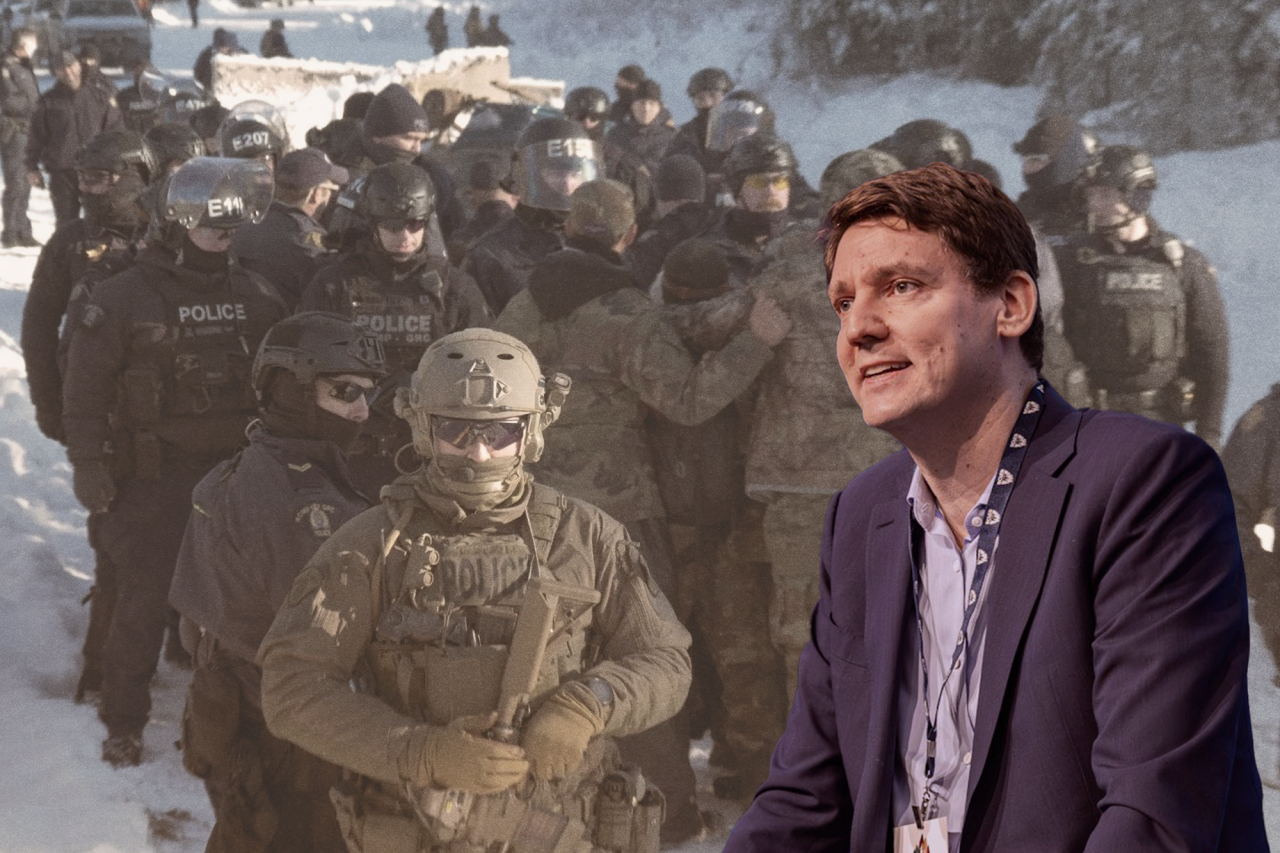
A RCMP unit criticized for violent and unlawful conduct will be involved in enforcing new laws in British Columbia that will fast-track resource and infrastructure projects, The Breach has learned.
Newly obtained documents show the RCMP’s Community-Industry Resource Group (C-IRG) will work with secretive provincial committees that monitor and respond to opposition to major projects—projects that may be pushed through under new legislation B.C. Premier Eby says is necessary to deal with a tariff war launched by Donald Trump.
The notorious unit was recently rebranded and given a permanent policing role in the province, despite an ongoing federal probe into its conduct. Hundreds of formal complaints have been made about its excessive force, illegal tactics, and racism during crackdowns on blockades against gas pipelines and old-growth logging operations.
Now, the newly-branded unit, renamed the Critical Response Unit–BC (CRU-BC), will be at the forefront of policing resistance to new fast-tracking legislation, Bills 14 and 15, according to internal government documents obtained by The Breach through an access-to-information request.
With its policing of pipeline and logging demonstrations having been deemed a “national best practice” by the RCMP, there is potential that this model—and its criminalization of Indigenous and climate protest—could be replicated in other provinces, as resistance heats up against a wave of environmental deregulation being pushed by Prime Minister Mark Carney and several premiers.
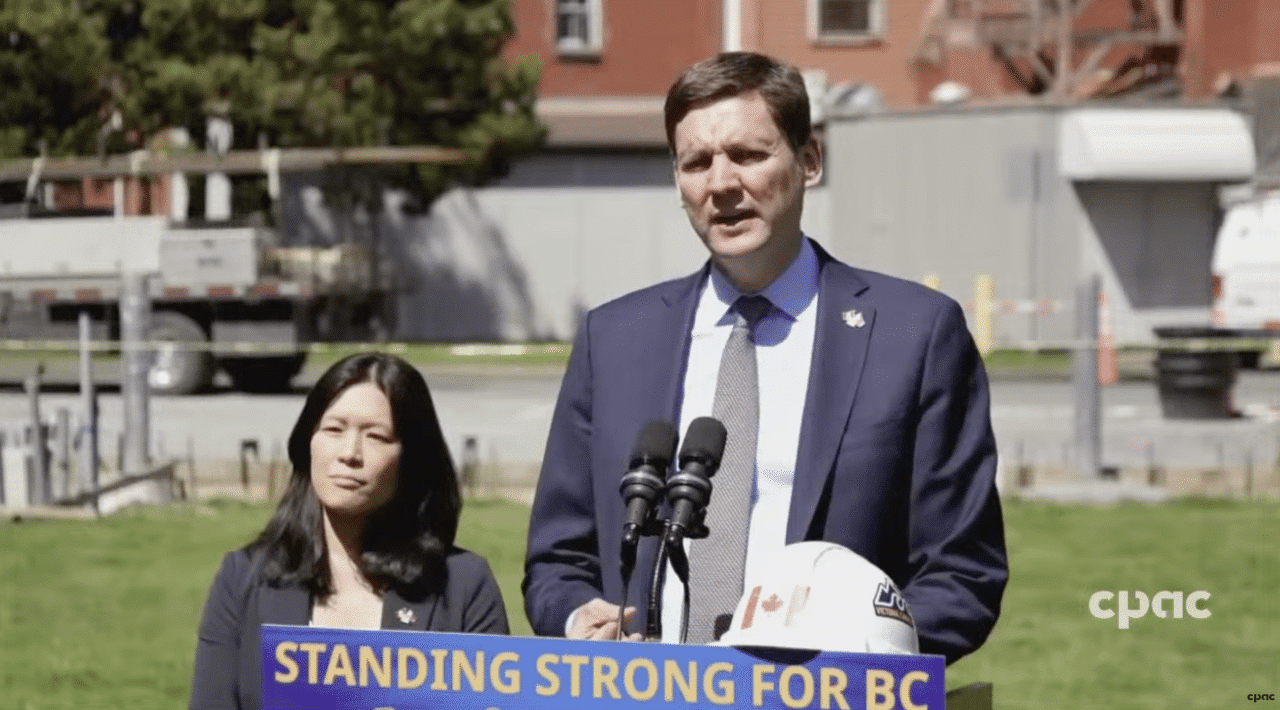
Tapped to gather intelligence by government committees
An internal RCMP background document lays out how the rebranded unit is participating in two secretive provincial committees—the Critical Incident Secretariat and the Civil Disobedience/Public Order group—that coordinate intelligence between police, government, and industry and respond to opposition around major resource and infrastructure projects.
With the recent passage of laws accelerating these projects, the RCMP unit will be central to any government moves.
A spokesperson for the B.C. Ministry of Public Safety and Solicitor General acknowledged that the unit would be involved with these provincial committees, but told The Breach that “operational decisions, including the enforcement of court-issued injunctions, occur independently of government.”
“CRU-BC’s involvement in provincial committees is focused on coordination, planning, and resource readiness across B.C. police agencies,” they said. “These committees allow police to share expertise, develop consistent approaches, and ensure smaller or remote communities have access to trained, skilled resources without diverting officers from other critical duties.”
But reports over the last few years have painted a different picture of its goals.
The basis for its new role was laid in 2021, when the BC government quietly launched a Civil Disobedience Work Plan, a province-wide strategy to manage protests.
According to the plan, the government aimed to create an “integrated protest response team,” expand surveillance, and attempt to shape public perceptions about police actions, The Tyee reported last year.
The plan also enhanced the role of the Critical Incident Secretariat, a shadowy arm of the government with no public-facing website that provides “situational awareness” on natural resource sector protests, maintains an RCMP liaison, and briefs senior provincial officials.
The newly-obtained documents confirm the RCMP unit is participating directly in these operations.
The government backgrounder on the evolution of CRU-BC states that it “is instrumental in providing strategic and expert feedback” regarding its response to civil disobedience, helping “effectively and holistically address public order, critical incidents, and unlawful protest activities.”
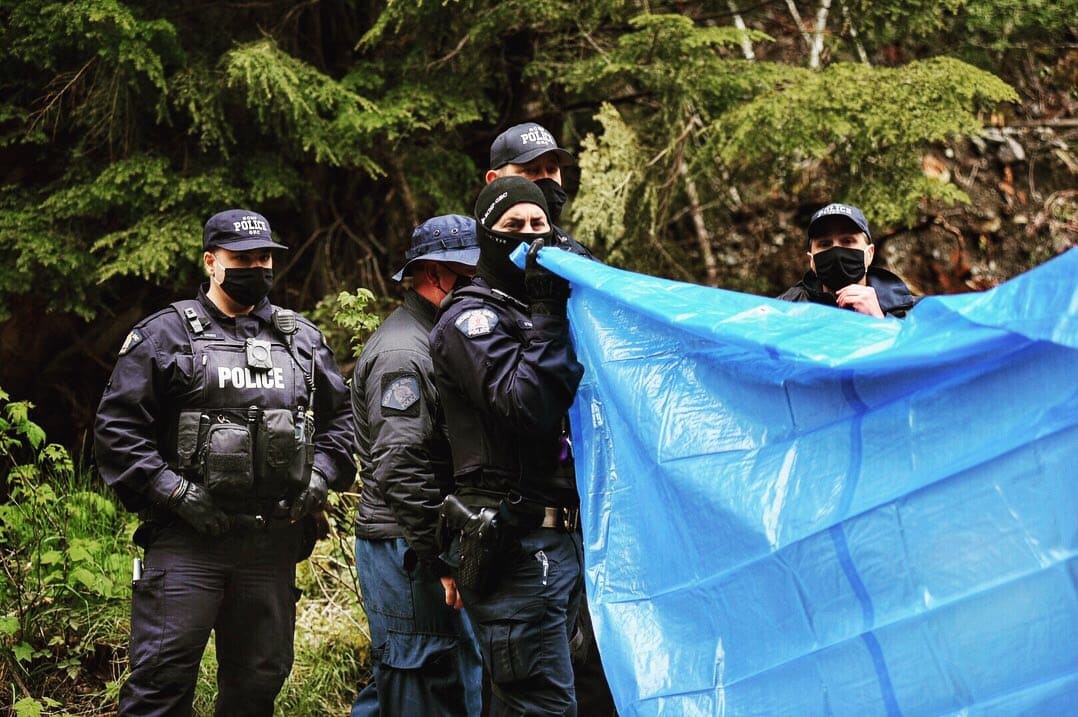
One of the key roles of the unit on these two committees is intelligence coordination. The unit now has dedicated resources to monitor opposition to proposed and active infrastructure projects.
Weekly reports from the RCMP to the BC government, obtained by The Breach, show that in 2024 CRU-BC was keeping tabs on opposition to the controversial LNG and gas projects across the province.
This monitoring allows the unit’s liaison team to approach communities to gather information and attempt to counter potential disruptions, while maintaining ties to industry proponents and sharing intelligence with corporate and contracted private security personnel.
The unit’s operations extend beyond provincial borders: one internal report notes it will engage with “national and international counterparts on issues which affect BC.”
By having it participate in these committees, the province now has a permanent, heavily-armed police unit formally participating in a government-wide strategy to monitor, gather intelligence, and respond to opposition—including protests against projects fast-tracked under newly passed legislation.
From temporary taskforce to permanent police
C-IRG was originally formed in 2017 as a temporary emergency response, when police were worried that Indigenous resistance at Standing Rock, North Dakota would lead to similar protests in BC.
The unit went on to take central command of the Trans Mountain and Coastal GasLink pipeline battles, as well as the Fairy Creek logging blockade, grabbing national headlines for its heavily-armed raids.
By 2023, its surveillance and enforcement expanded to include anti-trans protests at schools and Palestine solidarity rallies.
According to the spokesperson for the B.C. Ministry of Public Safety and Solicitor General, the unit “assists police agencies across B.C. in managing complex events using measured, skilled approaches that emphasize early engagement, negotiation, and preventing escalation.
“CRU-BC’s focus is on public safety, protecting both the public and police, and supporting lawful, peaceful protest.,” they said.
But its conduct has drawn repeated calls for its disbandment.
The force has faced multiple lawsuits, threats of legal action from journalists blocked from reporting on its activities, hundreds of civilian complaints, and ongoing systematic review by the Civilian Review and Complaints Commission of the RCMP. The UN Committee on the Elimination of Racial Discrimination has also raised concerns about the unit’s conduct.
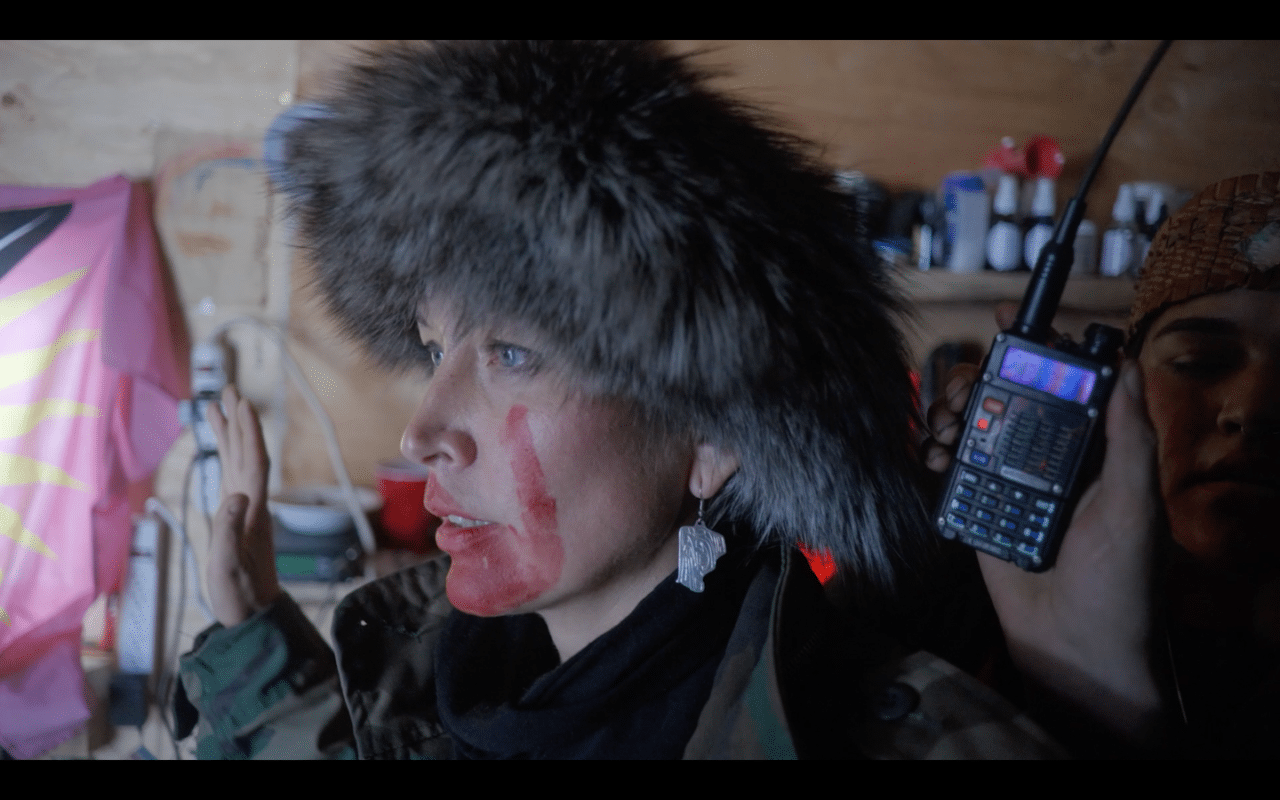
In February 2025, a BC court ruled that C-IRG officers violated the Charter Rights of three Wet’suwet’en land defenders during a prior raid enforcing a corporate injunction for the Coastal GasLink pipeline. The unit’s violence had sparked nationwide #ShutDownCanada protests, shutting roads, ports, railways, and major urban intersections from coast to coast.
Yet the internal documents show the BC RCMP cited C-IRG’s past operations as a “success” and a rationale for giving it a permanent status.
In 2023, one commander argued that C-IRG had “outgrown its temporary role,” noting a future need to expand its numbers, and recommended formalizing and expanding it.
By the following year, the unit was quietly made permanent and rebranded as the Critical Response Unit-BC (CRU-BC), with support from the BC NDP government, which dedicated funding for additional full-time positions and an expanded mandate.
Suppressing opposition to fast-tracked projects
The recent passage of Bills 14 and 15 gives the BC government sweeping authority to accelerate resource and infrastructure projects and bypass Indigenous consultation.
It has already triggered considerable opposition.
Bill 14, the Renewable Energy Projects (Streamlined Permitting) Act, allows the government to remove regulations to expedite projects, with Premier Eby already suggesting that privately-backed oil pipelines are not “off the table” for approval.
Bill 15, the Infrastructure Projects Act, has a much broader scope, granting the province power to fast-track approvals for any public or private major infrastructure project, without any clearly-defined criteria. It allows the BC Energy Regulator to ignore parts of the Environmental Assessment Act, despite its poor track record, and it expands private sector influence by allowing private consultants to issue project certifications instead of environmental regulators.
The two secretive committees in which the unit is embedded are directly tied to the implementation of these bills.
Those that involve natural resources and energy extraction will automatically trigger the oversight of the Critical Incident Secretariat. If these projects face public opposition, the Civil Disobedience/Public Order committee would be brought in.
Both committees coordinate information-sharing between law enforcement and government agencies, as well as industry. Since CRU-BC is an integral component of these committees and the lead for public order responses, it will play a key role in managing opposition to projects greenlit under the new legislation.
The stakes extend beyond the provincial level.
Federal legislation like Bill C-5 (the One Canadian Economy Act) also removes environmental regulation to expedite projects in the “national interest,” potentially without Indigenous consent.
When Indigenous peoples contest expedited projects that are approved without respecting their jurisdiction and decision-making authority, CRU-BC may be dispatched.
At a moment when governments across Canada are ramming through laws that sideline Indigenous rights and environmental protections, British Columbia is putting a disgraced policing unit in charge of enforcing them—turning struggles for Indigenous sovereignty and climate justice into criminal matters.

When I went to journalism school 10 years ago, my parents thought that they would eventually read my articles in The Montreal Gazette. Today, that newspaper is a husk of its former self. But I get to explain that I’m working towards critical, independent, and sustainable journalism.
Want to be a part of the future of journalism? Support our work with a monthly contribution. Sign up here.
– Amanda Siino, Development Director, The Breach
Indigenous Sovereignty | Canada’s new fast-track laws double down on false promise of ‘economic reconciliation’
Policy | Mark Carney’s first 100 days a blitz of pro-corporate, Trump-friendly moves
Indigenous Rights | ‘Inherently racist’: Wet’suwet’en leader on the crime of defending her land
2 comments
Comments are closed.

Re the RCMO’s “ C-IRG “ unit: it seems like it’s evolution and use against rightful protest contains illegalities , and offences to our civil rights. Why I wonder why therecisxnonongoing series of legal challenges against it and tge government? Is the legal fraternity itself unconcerned. How do we effectively lean against this ?
The provincial government has clearly committed to use thugs to suppress our democratic right to freedom of expression. Are they wearing brown shirts now?