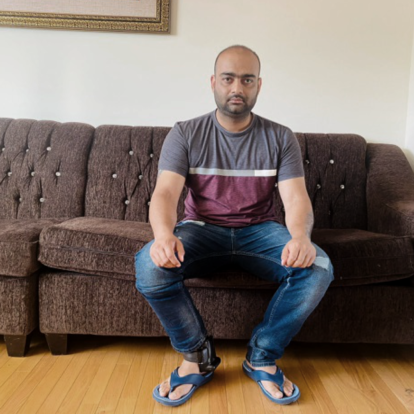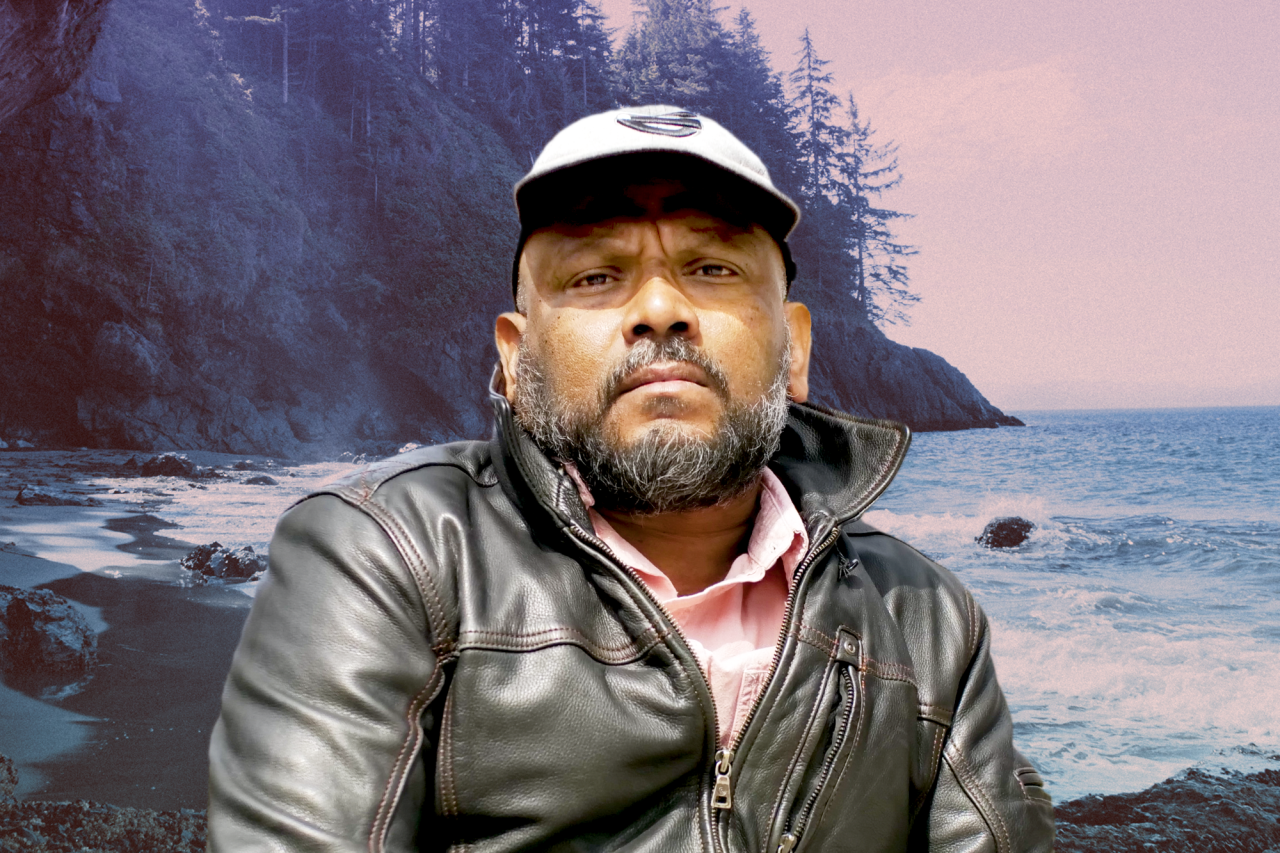
Kumar Thuraisinkam arrived to Canada in a ramshackle cargo ship in 2010, after a perilous, months-long journey across the Pacific Ocean, crammed alongside hundreds of Tamil refugees fleeing genocide in Sri Lanka.
He filed an asylum claim the day the vessel, the MV Sun Sea, docked at Vancouver Island.
But 15 years later, Thuraisinkam still lacks status. He has struggled with mental health and addiction challenges stemming from the trauma of the journey.
Now, he is set to be deported, despite pleading with the government to stay.
The Minister who could stop his deportation knows his plight surprisingly well.
Gary Anandasangaree, the Minister of Public Safety, who has final say on deportations, is also Tamil and came to Canada as a refugee. He spent years advocating for Tamil asylum-seekers like Thuraisinkam.
On the 10-year anniversary of the arrival of the MV Sun Sea, Anandasangaree, who at that time was already an MP, wrote an opinion piece in the Toronto Star decrying the government’s mistreatment of the MV Sun Sea passengers.
Anandasangaree wrote that the government “broke” the refugees “mentally and spiritually” while they were in detention. He referenced a passenger on the MV Sun Sea who had been deported, whom he said the Harper government had sent “to face death at the hands of Sri Lankan authorities” after getting tortured in a government prison.
But now, in a position of power to act to defend a fellow Tamil refugee, no intervention has been forthcoming from the Minister.
In fact, according to Thuraisinkam’s lawyer, the government appears determined to deport him. She alleges that border agents introduced deliberate errors into travel documents to justify removing him from Canada.
Multiple court documents confirm that he arrived on the MV Sun Sea in 2010. However, when the Canadian government issued travel papers to Sri Lanka in an effort to deport him, a document stated incorrectly that he had arrived in 2018.
Those who arrived on the MV Sun Sea have a stronger argument for why they would face serious danger if deported. This is largely because of public demonization they faced in Canada after being cast as members of a Tamil liberation group deemed a terrorist organization by the federal government.
“I came to Canada because there were problems back home and if I go back, I fear I may face the problems again.” Thuraisinkam told The Breach last week in an interview through a translator. “It’s very difficult.”
Despite Tamil returnees being jailed and tortured in Sri Lanka, the Canadian government hasn’t stopped trying to deport the passengers of the MV Sun Sea. Amid a high-water mark for deportations in Canada, Thuraisinkam’s struggle to stay in Canada illuminates 15 years of anti-immigrant policies that stretch back to the Harper Conservative government, and forward to the present day.
Anandasangaree’s Toronto Star article was entitled “We failed the people who fled conflict on the MV Sun Sea.”
His Liberal government appears ready to fail them again.
Tamils were branded as “terrorists”
In the summer of 2010 Prime Minister Stephen Harper and the Conservative government went on the offensive at the news that 492 Tamil passengers, among them 49 children, were about to arrive on the MV Sun Sea.
They were fleeing Sri Lanka a year after the government there had won a 30-year civil war against the Liberation Tigers of Tamil Eelam (LTTE).
A year earlier, when another boat called the MV Ocean Lady carrying 76 Tamil asylum-seekers had landed, the government vowed to prevent future mass arrivals.
But now Harper’s public safety minister Vic Toews escalated his rhetoric further.
Even before the MV Sun Sea arrived at port, he called some of its passengers “suspected human smugglers and terrorists,” rather than refugees fleeing a genocide.
Reporting in Canadian media echoed the Harper government’s messaging.
The Canada Border Services Agency (CBSA) instructed its staff to “take maximum advantage” of immigration detention for the Tamil passengers, and to “ensure that a deterrent for future arrivals is created.”
Using the government’s narrative that these were not legitimate refugee claimants, border agents made security arguments to prolong their detentions—including those of children—and denied many of their asylum claims.
Some passengers were also issued deportation orders.
One deportee, Sathyapavan Aseervatham, was jailed after being returned to Sri Lanka in 2011. He said that he was tortured, starved, and left without clothing during his incarceration.
Aseervatham died in Sri Lanka the following year in a car crash, with his family and community advocates suspecting that he was murdered.
In the aftermath, his lawyer insisted that Sri Lanka was not a safe place for Tamil asylum seekers, and demanded a moratorium on deportations there.
But even after this cautionary tale, Canada is still trying to deport MV Sun Sea passengers.
A banner year for deportations
Today, the recent rise of anti-immigrant sentiment in Canadian politics and media echoes the Sun Sea era.
Federal Conservative leader Pierre Poilievre deploys the same language of “queue jumpers” and “illegal migration” that marked Harper’s tenure, while the Trudeau and Carney Liberals have continued his practice of sending Tamil refugee claimants back to the country they crossed an ocean to escape.
The 22,500 people the Carney government deported in 2025 is the highest annual number in the nation’s history. Families and communities have been fighting the removals, pleading in the media to try and keep people in Canada.
Reversing individual deportations is costly and onerous, and growing more so at a time when public xenophobia and anti-immigrant policy are increasing in lockstep.
The final hope for any person facing deportation is an intervention by the Minister of Public Safety, Gary Anadasangaree.
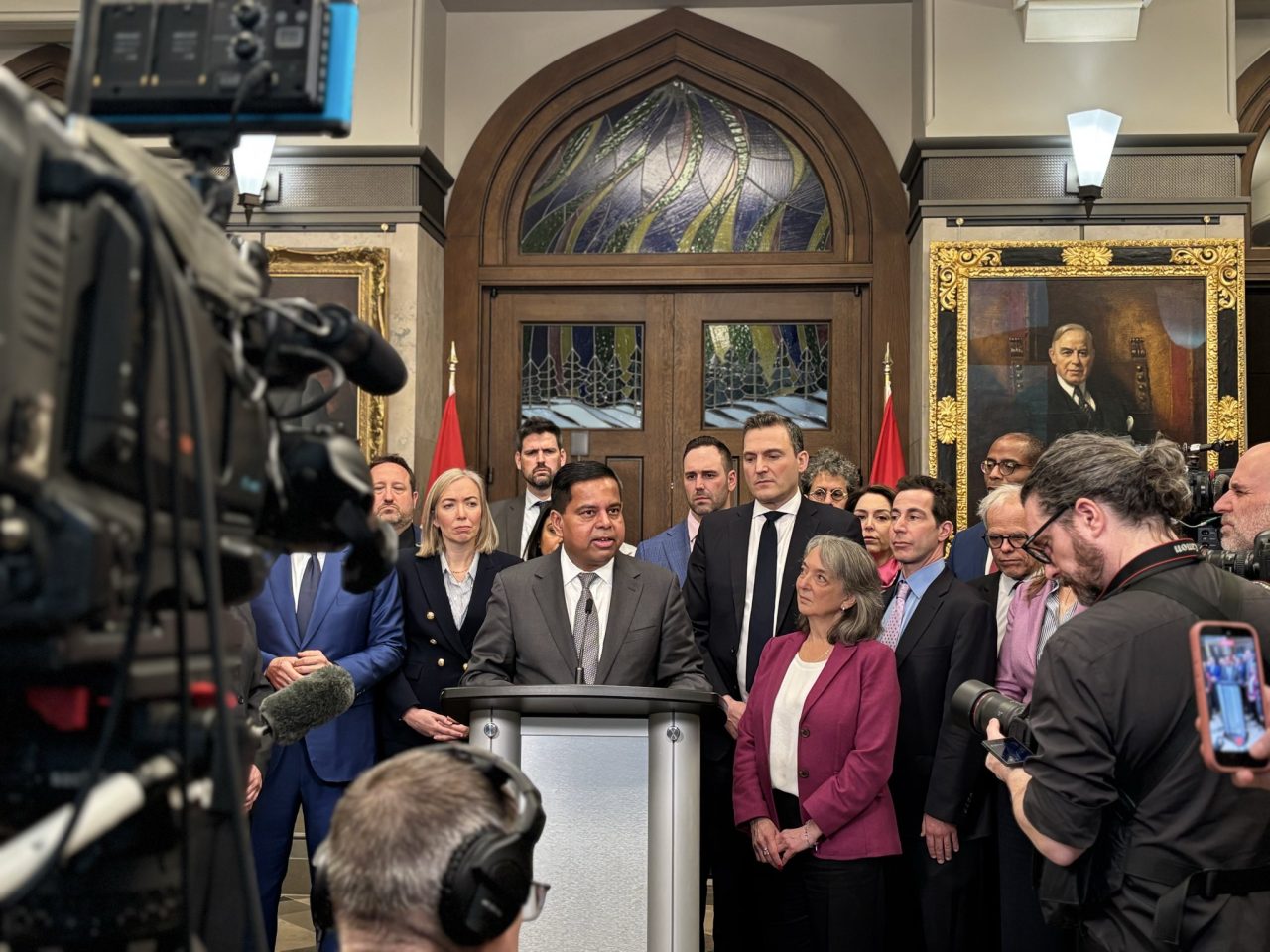
Anandasangaree met with and advised most of the MV Sun Sea detainees in 2010 while working as a lawyer. He has described himself as a “principal coordinator for a global community response to the arrival” of Tamil asylum seekers, and has advocated extensively for their rights and dignity, including as an MP.
Anandasangaree announced last year that he was stepping back from national security decisions related to the Tamil community “to ensure that there is no perception of any conflict.”
But he provided few details about the kinds of issues he would no longer handle, and how the government would decide when he needed to recuse himself. The federal Ethics Commission later determined that Anandasangaree was under no legal obligation to be screened from national security issues related to the Tamil community.
The Breach asked Anandasangaree’s office about his current views on MV Sun Sea passengers, and if he planned to intervene in Thuraisinkam’s case. A spokesperson from the Ministry of Public Safety acknowledged our request, but the office did not respond to our questions.
Tamil refugees used as “pawns”
Thuraisinkam can’t forget his traumatic voyage.
He told a psychiatrist who assessed him in 2024 about another man who died on the ship and was buried at sea.
“This young man had recently become a father, and this weighed heavily on Mr. Thuraisinkam and all other individuals on the boat,” the psychiatrist wrote.
Court documents show that CBSA initially detained Thuraisinkam for three months. Upon his release he moved to Toronto, got a work permit, and took up a trade. “I did some carpentry work, like doing the stairs of the house or doing hardwood flooring,” he said.
Thuraisinkam’s refugee claim was denied in 2012—the refugee board cited inconsistencies in his accounts that Sri Lankan officials had linked him and his family to the LTTE. His lawyer at the time also failed to make the case that MV Sun Sea passengers would face persecution if deported. His status has been precarious ever since.
Although Thuraisinkam was devastated at the rejection of his refugee claim, he kept renewing his work permit and maintained his employment. But his mental health began to decline. He developed an alcohol addiction, and was involved in a car accident while intoxicated.
Thuraisinkam’s psychiatric assessment points to the car crash as a turning point for his well-being, after which he began to experience psychosis and drink heavily. He was subsequently diagnosed with Major Depressive Disorder and Alcohol Use Disorder.
Immigration documents filed by Thuraisinkam’s lawyer outline serious mental illness he has developed since his arrival in Canada. He has been unable to reunite with his wife and three children who remain in Sri Lanka. He has slept outdoors while experiencing homelessness, and has spent time in immigration detention under CBSA custody.
He was unable to get a work permit after 2019, but struggled to work even before then due to his poor mental health.
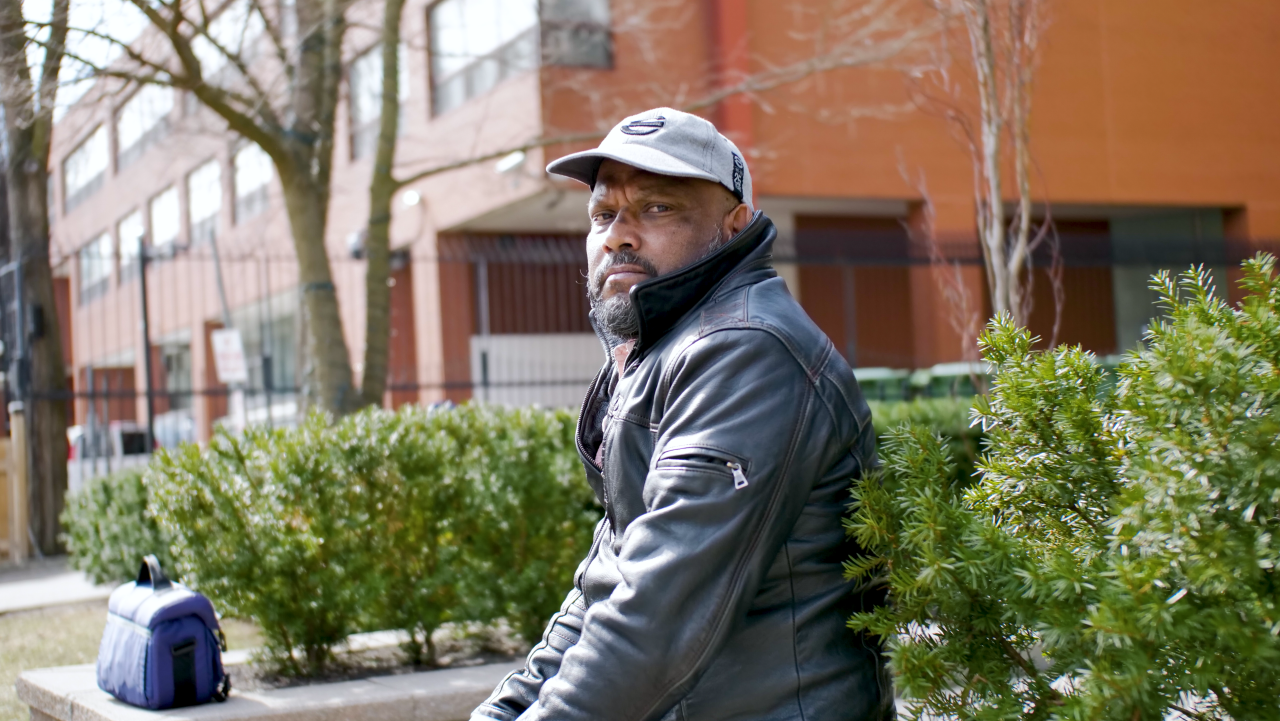
Today Thuraisinkam lives in a shelter, fighting to remain in Canada.
Reflecting on the tumult he’s experienced in Canada, Thuraisinkam said, “I wanted to live in this country, despite all the struggles or hurdles, because I’m determined not to go back to Sri Lanka.”
In his legal documents Thuraisinkam says that he fears “imprisonment, torture, arbitrary and indefinite detention and even death” if he was deported to Sri Lanka because he is perceived as a supporter of the LTTE, particularly since he was a passenger on the MV Sun Sea. His legal arguments cite the torture of Aseervatham and the detention of another Sun Sea passenger deported in 2012 as evidence he will also be mistreated.
A controversial 2019 travel document application claims Thuraisinkam arrived in 2018—implying that he did not arrive on the MV Sun Sea—and is therefore a critical discrepancy in his case.
The document contains a declaration written in the first person, as well as Thuraisinkam’s signature. But his legal documents say that he is illiterate and cannot communicate in English.
Thuraisinkam’s legal submissions suggest that CBSA drafted the document and had him sign it without understanding what it said: “In not disclosing the true date of the Applicant’s arrival in Canada, this strongly suggests that even the CBSA/Canadian government accept there is risk to MV Sun Sea returnees in Sri Lanka.”
The Breach asked the agency if it acknowledged that Thuraisinkam arrived in Canada in 2010, and whether it had changed this information in the 2019 travel document to create a different narrative about his arrival.
At first CBSA would provide a comment, but then did not answer these questions, stating in an e-mail that it cannot provide information about a person’s immigration file without their consent. “The CBSA is committed to removing as soon as possible all foreign nationals who are inadmissible to Canada and subject to an enforceable removal order,” the spokesperson added.
Thuraisinkam also says that he would be stigmatized in Sri Lanka because of his complex mental health conditions, including his history of attempted suicides. One of his immigration appeals states that in Sri Lanka “many people with serious and chronic mental health conditions are institutionalized under conditions that do not meet international norms and standards.”
In a statement released this morning, the Tamil Feminist Collective condemned the government’s plan to deport Thuraisinkam. “As Tamils, we are especially ashamed that it is now a Tamil minister overseeing this deportation,” the statement says.
“It has been sixteen years of successive Canadian governments (both Conservative and Liberal) using our community members as pawns. Sixteen years of using our stories and our pain to buy votes and win elections.”
CBSA plans to deport Thuraisinkam on April 16, 2026. An intervention by Anandasangaree may be his only hope of remaining in Canada.
A defender disappears
In his Toronto Star op-ed six years ago, Anandasangaree decried the detention, intimidation, and racist fear-mongering that the passengers of the MV Sun Sea stepped into when their boat docked.
And he displayed sensitivity to their struggles after arrival: “Today, while they mark a decade in Canada, they are struggling with prolonged separation from their children and spouses, depression, substance dependency, and the lasting trauma of war,” he wrote.
He ended the piece by urging Canadians never to repeat the treatment of Tamil asylum seekers: “Being a refugee is neither a choice nor a crime; it is a necessity. When people take extraordinary risks to their lives to get to safety, let us give them a fair shot at success.”
Thuraisinkam is still waiting for his fair shot, and has spent nearly a third of his life in Canada fighting for permanent status.
When asked what he would say to minister Anandasangaree if given the chance, Thuraisinkam’s reply was simple: “I would like to request not to send me back home.”

I often hear that I’m lucky to have a full-time job in journalism.
Critical, bold journalism that isn’t beholden to media monopolies should be the norm—not the exception.
By supporting The Breach, you’re supporting a more robust, progressive media. Join us today.
– Katia Lo Innes, Associate Producer, The Breach
Right-Wing Politics | Carney stole his policy book. So Pierre Poilievre is going full anti-immigrant
Immigration | ‘Deeply hypocritical’: Pierre Poilievre slammed ‘illegal border crossers,’ but his own relative crossed and stayed

Immigration | Canada deported people to 132 countries during pandemic, data shows