It was the night of Oct 15, 2022, and members of Vancouver’s left-wing Coalition of Progressive Electors were nursing their wounds in a bar on the east side of the city.
They had just suffered a devastating defeat—dropping to their lowest vote share in two decades, failing to reelect well-known anti-poverty activist Jean Swanson, and electing just one school board trustee.
As empty bottles of cheap beer piled up around them, they worried about the incoming ABC administration, which they knew would quickly shed its centrist garb and govern to the hard right, inflicting pain on the poor, homeless, and struggling.
“We’re not going out like this,” Zakir Suleman, a 34-year old COPE organizer in the Downtown East Side, recalled thinking.
He and another organizer jumped on stage for the next karaoke set. Soon they were erupting in song to Rage Against the Machine’s “Killing in the Name.”
“It’s a pretty aggro song, right?” Suleman said. “Back then, COPE was also an older party, and there were a lot of older folks in the room.”
But by the time they hit “Fuck you, I won’t do what you tell me,” everybody in the room, seniors included, was screaming the lyrics in unison.
“I think that was the energy behind our rebuild,” Suleman told The Breach. “We’re down, we’re kind of out. But it’s not over, and we’re gonna build back. We all went home and cried, and then hours later were planning what we were going to do next.”
Four years later, that “fuck you” energy has paid off.
The democratic socialist organization has reestablished itself as the dominant left-wing party in the city. Their policies focus on non-market solutions, from public grocery stores to social housing, as well as public wifi and faster, cheaper transit.
After electing a socialist city councillor in a by-election last year, their membership, now much younger, has nearly tripled over four years to 2,200 members.
Instead of sitting on their laurels, they started shaping city politics. In the lead-up to the Oct 17 municipal election this year, COPE was instrumental in organizing a “people’s primary” for the mayoral race, uniting the left-of-centre parties behind one mayoral candidate. And COPE itself is expected to elect a number of candidates for city council and school board.
This comeback wasn’t a guarantee. Close to the edge of extinction, they clawed their way back through introspection and by making the organization approachable and accessible to new members. Now, they’re demonstrating one form a democratic socialist political party can take, and building a potential model for socialists elsewhere in Canada.
‘I thought COPE was dead’
As Shawn Vulliez was out canvassing for the party in Vancouver in 2024, he was approached by a “sweet old lady.”
“I thought COPE was dead,” she told him.
She wasn’t the only one. “It was treated as just the accepted reality that COPE was a spent political force,” said Vulliez, COPE’s 36-year old campaign director. A self-described “library socialist,” he’s the host of a long-running podcast called SRSLY WRONG, and is something of a political technician on Vancouver’s left. He’s managed several campaigns, including Jean Swanson’s successful election to city council in 2018 as well as Svend Robinson’s unsuccessful attempt at a comeback with the federal NDP a year later.
The widely-proclaimed death of the party was the latest twist in COPE’s long history. It was first founded in 1968 as a coalition of members of the Vancouver District Labour Council, activists, and NDP members. It existed as a consistent but small presence in municipal politics.
In 2002, it was suddenly catapulted into power.
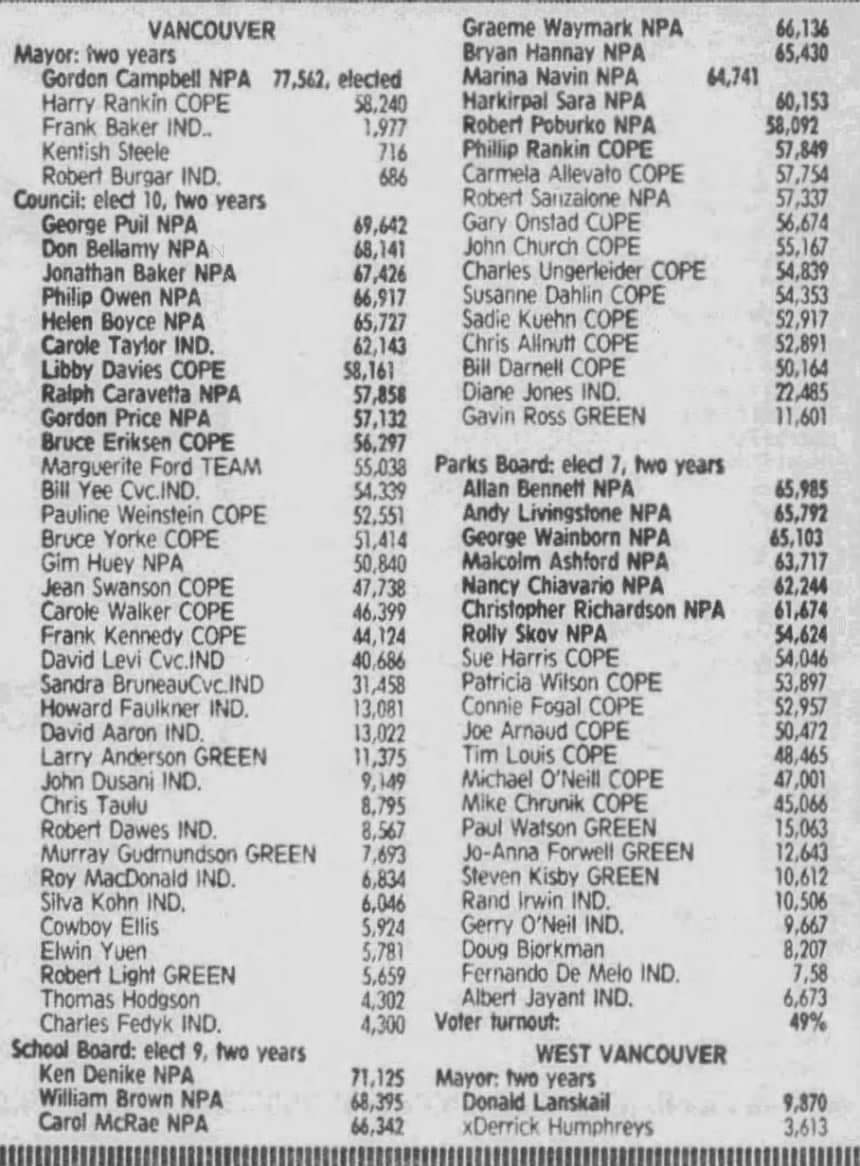
In the run-up to the 2002 municipal election, COPE had drifted to the right. Its mayoral candidate was former RCMP officer Larry Campbell (an inspiration for the CBC show Da Vinci’s Inquest). Frustration at the governing right-wing party brought COPE into government, winning not only the mayor’s seat but a majority of seats on council.
But the party was largely ineffectual in office. Fights over tax policy ended up dividing COPE between the left and right. The rightwing earned the name “Diet COPE” in the media.
The experience in power ushered in a decade of decline. Campbell and others abandoned COPE, forming the centrist Vision Vancouver in 2005. While Vision Vancouver would dominate Vancouver’s politics for a generation, COPE languished on the sidelines.
Jean Swanson’s election to council in 2018 rang in a new era. Swanson had been a longtime anti-poverty activist in Vancouver and her back-to-back runs for office helped build a new crew of organizers who were inspired by a vision of bringing democratic socialism to municipal governance, with policies like a mansion tax and a city-wide rent freeze.
In 2024, a new spot on city council opened when a progressive councillor stepped down. It was an opening for the left that Vulliez couldn’t ignore.
“My partner asked me, ‘Are the left-wing parties going to be able to get their shit together?’” said Vulliez. “I was cooking dinner, and I remember I started stirring angrily, and I was like, ‘They’re not. It’s gonna be bad.’”
But then he and others jumped into action. The first step was pushing through the nay-saying from friends and comrades telling them it wasn’t worth the effort.
The second step was uniting the left.
Sean Orr—a writer, dishwasher, and punk musician—had put in a good showing when he ran unsuccessfully for city council in 2022 on a platform of social housing, free public transit, and supporting safe supply. But he had run with Vote Socialist, a new party composed primarily of younger socialist activists who had split from or never been involved with COPE.
“I’d worked with a lot of [the Vote Socialist] people, they’re good organizers,” said Vulliez. “One of our big priorities was, how can we bring these people back in?”
The split, in Vulliez’s view, happened in part because of COPE’s structure that was weighed down by exacting and tedious procedures. Vote Socialists was less procedural, and that encouraged members to participate. Changing COPE’s meetings and rejigging its constitution and bylaws made the party more accessible.
Orr agreed to run with COPE in a by-election in 2025, consolidating the perception that COPE was the left option in the by-election. The campaign that followed would help forge the party into something different.
No longer ‘a little enclave’
As COPE tried to transform, they cast around for models they could emulate.
They studied successful examples of municipal socialism, including the Democratic Socialist of America (DSA). While it wasn’t a perfect structure, it provided insights into how to organize a party that made membership meaningful.
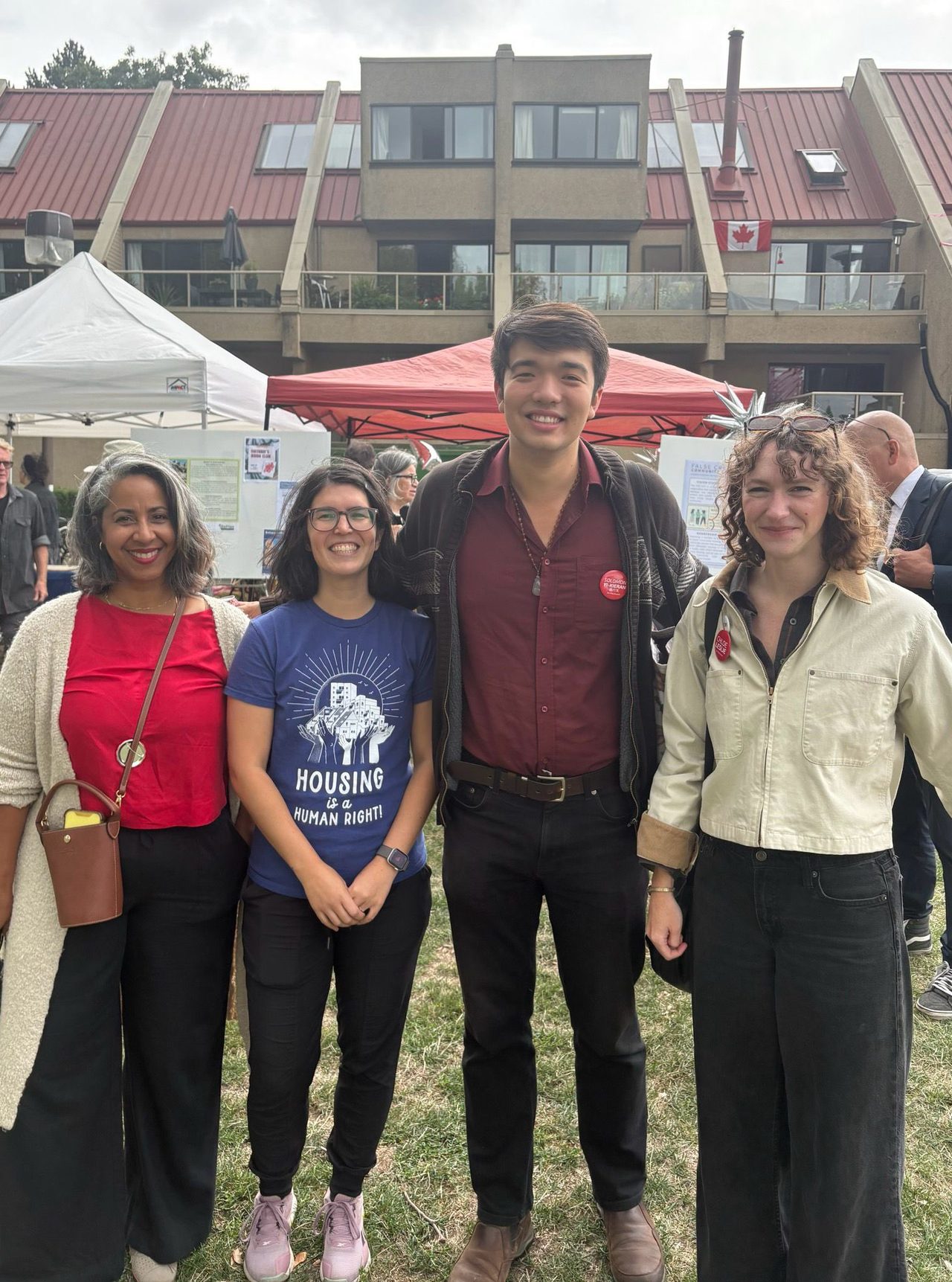
Chloe Leslie, a 32-year old COPE candidate for city councillor, had been an organizer in the food sector for years. Despite her socialist politics, it wasn’t until COPE’s recent transformation that she considered joining as a member.
“I felt like the party was not as accessible at that time to my generation,” said Leslie. “It didn’t feel like there was an easy path.”
COPE organizers also looked to fill gaps in the local political environment. They launched a biweekly meetup at a local arts bar, with drinks and chicken wings, called Left Wings. The event started small, but now regularly attracts over 50 people—a crowd that’s younger and more racially diverse than before.
“When we talk about community, it’s about meeting people who have related interests, but also have something that you’re going to do with those interests, right?” Suleman said.
Left Wings has inspired podcasts, helped people find new roommates, and even sparked some romance. “I think it’s a sign of health,” Suleman said. “We’re improving the quality of the network between all these people in terms that will lead to other things.”
It was reshaping COPE into a new kind of party.
“I think that if you’re going to be a movement party, you need to be a movement yourself,” he added.
For Suleman, the role of a movement party is to be the gateway for people looking to become involved in left-wing politics. “We stopped trying to just be a little enclave for organizers, and started being a friendly first stop for people.”
Class war in a playground of the rich
The by-election last fall with Sean Orr running for city council started with just a handful of organizers.
But the campaign seized on an unspoken anger in the zeitgeist of Canada’s most class-divided city.
In Vancouver, expensive sports cars roar through gentrifying neighbourhoods. Workers are evicted and sent searching for housing outside the city. Downwardly-mobile university graduates email their resumes into the void.
In the face of all this, COPE’s left populism resonated, surprising even Vuilliez and the party’s organizers.
“We were running Facebook ads, and we were sending each other screenshots of people who were commenting on the posts saying, ‘I like this Sean guy,’” Vulliez said. But the most avid commenters weren’t the Gen Z or millennial voters COPE expected to attract. They were senior citizens. “If Gladys is voting for us, then we’re gonna win,” someone joked to Vulliez. “She had a nice haircut and everything. She wasn’t someone who’d been in COPE for 70 years. She was someone who was just being convinced.”
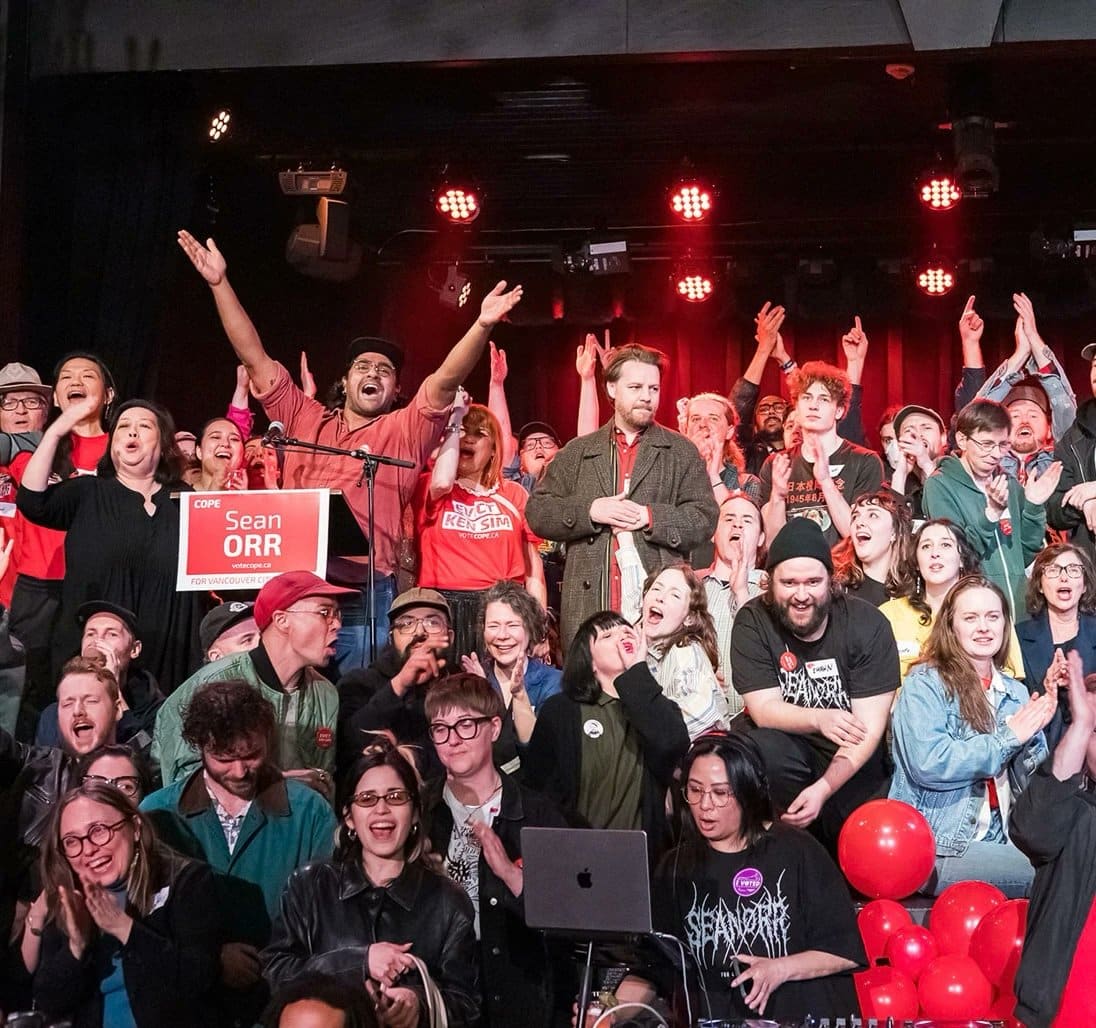
Two years on from their depressing but defiant karaoke night, they gathered again at a bar on the night of the by-election. But this time the feeling was different: the room was packed, the energy was high, and the news flashing in on the television was the result everyone had hoped for: Sean Orr had won.
Amid the hugging and screaming, Vuillez sensed they had the fuel to accelerate their rebuild. It was a repudiation of everything that COPE had been told three years ago, and they knew it.
‘Sewer socialism’ comes to Vancouver
Heading into the 2026 municipal election, COPE was on steadier ground.
The Vancouver District Labour Council now endorsed COPE’s slate of candidates. Orr had proven himself not just a popular figurehead but an effective legislator. During his first year on council he had passed more motions and amendments than any other councillor.
His motions included calling on the federal government to ban blindingly bright high-beams on cars, establishing an arts and culture land trust, and bringing in a $25 low-income monthly transit pass.
Vulliez compares COPE’s politics to “sewer socialism,” a form of municipal socialism originating in Milwaukee in the 1900s that focussed on improving material conditions for workers. At the time, it meant the rollout of a modern public sewer and sanitation system, as well as the construction of public amenities like parks and pools.
Today, it’s been revived by politicians like New York City Mayor Zohran Mamdani, who has committed to making local government more effective and efficient, fixing potholes and having city buses run on time.
“It’s very pragmatic and small-scale, but it’s also very aspirational,” Vuillez said.
Echoes of Mamdani can be found in COPE’s policies, which include a municipal grocery store pilot—an idea that federal NDP leader Avi Lewis popularized in Canada.
“Grocery store prices are astronomical,” said Leslie, the councillor candidate. “We’re really excited to be able to champion a publicly-supported grocery store, using the city’s buying power and procurement power to actually bring down prices by about 25 to 30 per cent.”
COPE’s Fight for Vancouver platform consultations also reflected their commitment to membership engagement and grassroots democracy. These consultations involved over 500 people. One on the theme of arts and culture gave the party a chance to hear directly from artists and musicians.
The current platform includes democratic socialist policies like developing a municipal housing acquisition fund, increasing public washroom access, and expanding library open hours to seven days a week.
‘A theatre full of socialists’
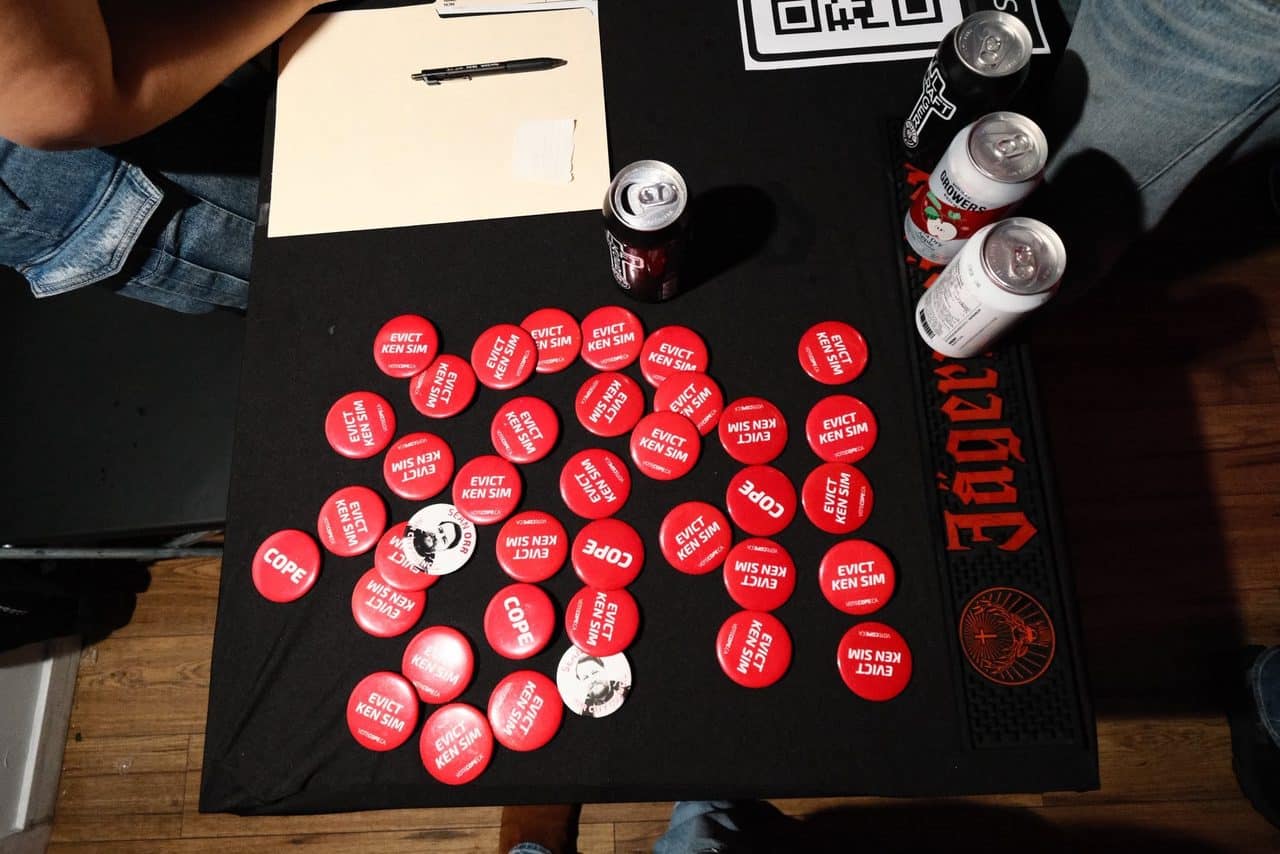
Tapping into Vancouver’s rising class war ethos also involved adopting provocative slogans targeting the city’s right-wing mayor, like “Evict Ken Sim.”
The slogan has become a local meme. Bright red buttons bearing the slogan have been spotted on tote bags, backpacks, and rain jackets across the city. They became so iconic that Ken Sim recorded a video staring pensively at one while waxing poetic about how hurtful the slogan is.
“On the first day the buttons were printed, they were all gone,” said Vulliez. “People were taking the last ones off of our shirts.”
COPE was also influential in creating a “people’s primary,” a process to have the left-of-centre parties each field a mayoral candidate, and whittle down the candidates to the strongest one in order to prevent vote-splitting. A CBC columnist dismissed the idea, saying that progressives uniting their support behind one challenger would be “unlikely.” It was the kind of skepticism COPE had gotten used to hearing.
Yet, their plan worked. After early polling showed Green mayoral candidate Pete Fry was in the lead, COPE mayoral candidate Stephanie Allen dropped out. The move built up pressure on the other remaining progressive candidate, from OneCity, and he soon dropped out too, leaving Fry as the unity candidate. Fry is now polling competitively with Sim.
COPE’s move—holding the primary, with COPE’s own candidate willing to leave the race for the greater good—showed that the group was serious about “evicting” Sim.
In the lead-up to this fall’s election, the party’s nomination meeting for its slate of candidates was a testament to the success of their rebuild.
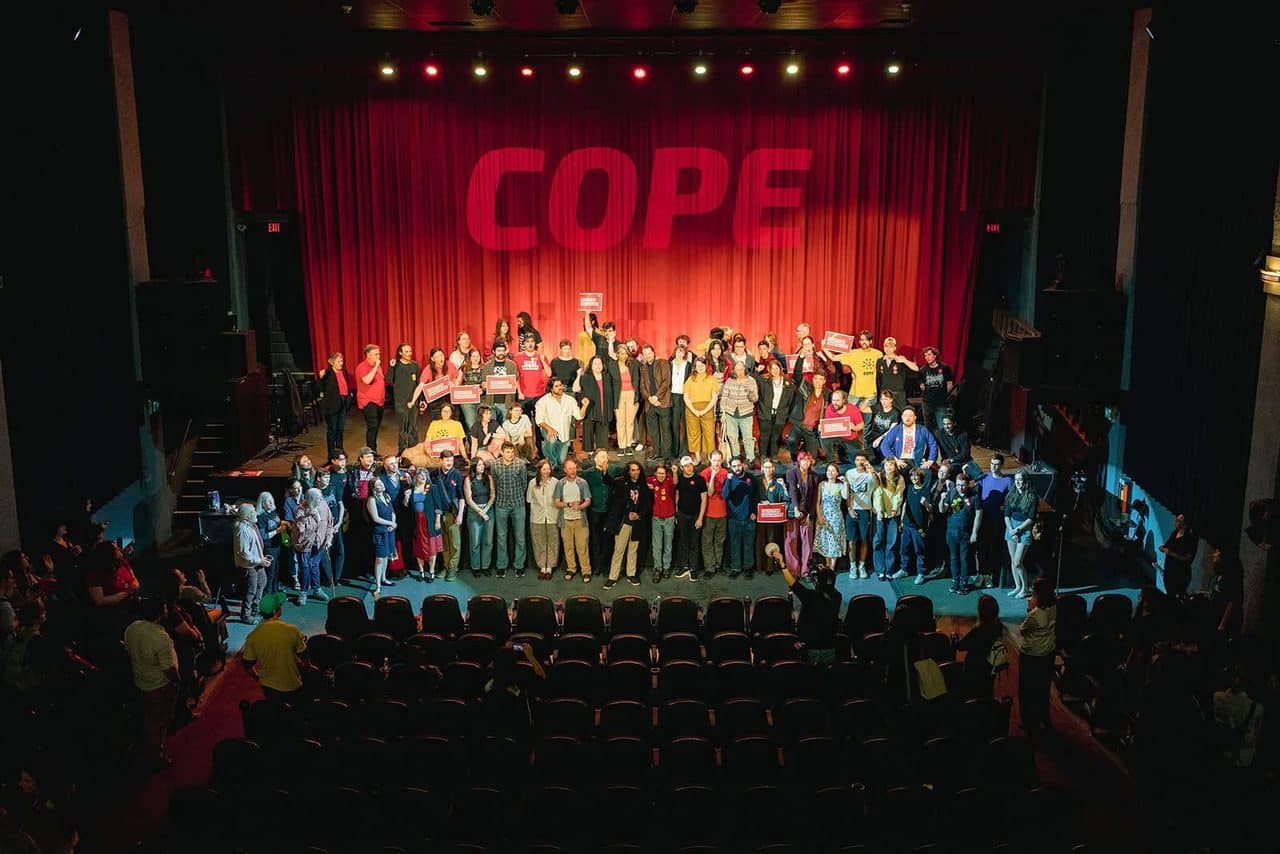
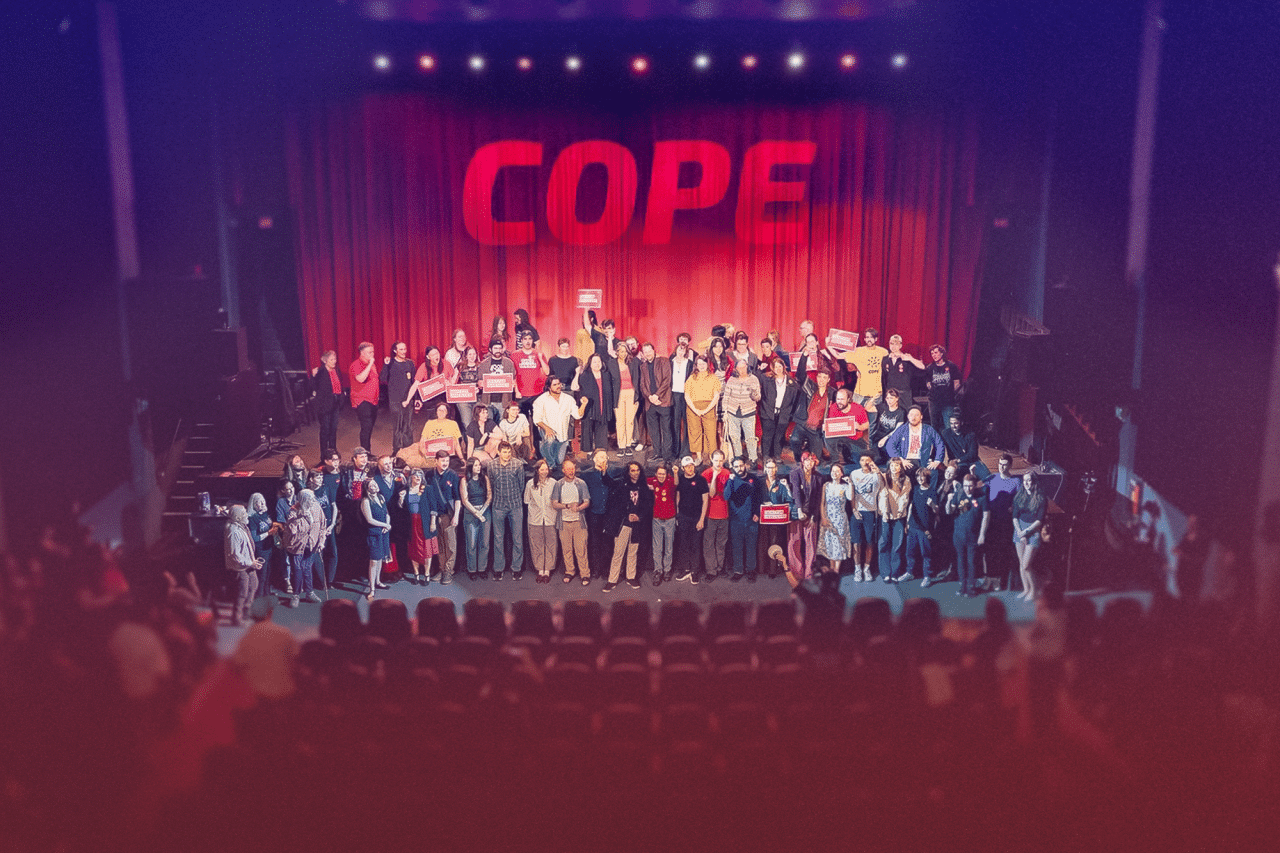
In mid-May, a line wrapped around the block to get into the city’s historic Rio Theatre. Members entering were greeted by red curtains behind the stage, with a huge COPE logo projected on them. There were over 600 people, with more online watching the live stream. As the party’s candidates were confirmed—Sean Orr, Chloe Leslie, Devyani Singh, and Solomon Yi-Kieran—the room erupted.
“It’s the first contested nomination race that COPE has had in like 20 years, which just speaks to both the popularity and the energy,” Suleman said. “Seeing a room full of people joyously and excitedly engaging in socialist politics in Vancouver was like being in a dream.”
“My mentor used to say, ‘If an enemy spy went to your meetings, would [they] be worried?’” Sulemain recalled. “I think our enemy’s spy should be worried about a theatre full of socialists in Vancouver.”
COPE was supposed to die, but its members had other plans:
“Fuck you, I won’t do what you tell me.”

I often hear that I’m lucky to have a full-time job in journalism.
Critical, bold journalism that isn’t beholden to media monopolies should be the norm—not the exception.
By supporting The Breach, you’re supporting a more robust, progressive media. Join us today.
– Katia Lo Innes, Associate Producer, The Breach
Big Tech | Inside the rising country-wide movement against AI data centres

Socialism | Opportunity or distraction? 5 organizers debate how to work with a Lewis-led NDP
Housing | Liberal Housing Minister ‘wining and dining’ B.C.’s biggest real estate CEOs